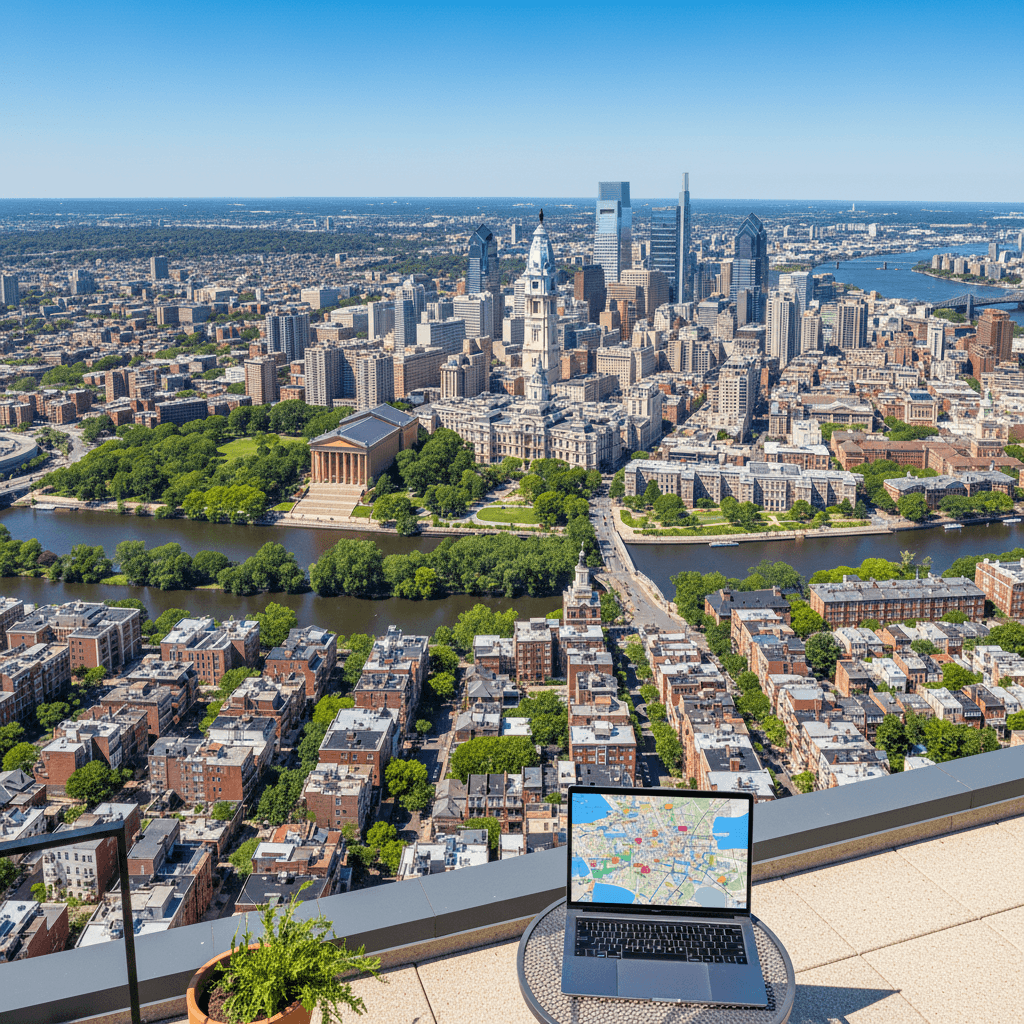
Philadelphia
🇺🇸 United States
The City of Brotherly Love (and Grit)
Philadelphia isn't here to impress you with a polished, corporate facade. It is a city that wears its history on its sleeve and its "gritty" reputation as a badge of honor. For digital nomads, it offers a refreshing alternative to the astronomical prices of New York or San Francisco, sitting at roughly 30% cheaper while maintaining a high-speed infrastructure with average download speeds of 252 Mbps.
The energy here is a mix of colonial gravitas and modern, creative hustle. One morning you might be walking past the Liberty Bell or the Museum of the American Revolution, and by the afternoon, you're sipping a craft brew in a converted warehouse in Fishtown. It is compact, intensely walkable, and unapologetically real. Travelers often say the city feels like a collection of small towns, each with a distinct neighborhood pride that can be both welcoming and intimidatingly local.
The Nomad Experience: Pros and Cons
Most nomads find Philly to be a high-value transitional hub. It is perfect for those who want a big-city lifestyle without the $4,000 rent checks. You'll find a thriving foodie scene, world-class museums like the Philadelphia Museum of Art, and a community that values authenticity over status.
- The Upside: Incredible affordability for the East Coast, a top-tier coffee culture, and easy 90-minute train access to NYC or DC.
- The Downside: The "urban grit" is literal. You will encounter grimy streets, visible social issues, and areas like Kensington that are best avoided entirely. Some nomads feel the city lacks a "polished" feel, which can wear on you during a long-term stay.
Living Costs & Neighborhood Vibes
Expect a monthly budget of around $3,200 for a comfortable mid-range lifestyle. While you can scrape by on $2,500 by sharing a house and eating $10 cheesesteaks at Reading Terminal Market, most expats prefer a more curated experience.
Center City
- Best for: Professionals and short-term nomads who want to be in the heart of the action.
- Rent: $1,800 to $2,500 for a 1BR.
- Vibe: High-energy, central to WeWork and historic sites, but can feel crowded.
Fishtown & Northern Liberties
- Best for: Creatives, solo travelers, and nightlife lovers.
- Rent: $1,500 to $2,200 for a 1BR.
- Vibe: Trendy, filled with street art and eclectic cafes. It is a bit noisier at night, but it is where the "cool" Philly lives.
Rittenhouse Square
- Best for: Expats with a higher budget or families.
- Rent: $2,200 to $3,000 for a 1BR.
- Vibe: Upscale, green, and safe. You will spend your mornings at Bluestone Lane and your afternoons in the park.
Work, Play, and Socializing
Working here is a breeze if you know where to go. Indy Hall is the gold standard for community-focused coworking, while various WeWork locations in Center City offer a more traditional corporate setup for $200 to $400 a month. If you prefer cafes, the laptop culture is strong in Northern Liberties, though some spots have strict "no-tech" zones during peak brunch hours.
Socially, the city is easy to crack if you have a hobby. Expats recommend joining yoga classes in Rittenhouse or using the Punta app to find local nomad meetups. For a unique night out, skip the tourist traps and head to the bars in Northern Liberties or take a "Bad Ass Women's History Tour" to see a different side of the city's past. Just remember the local etiquette: when ordering a cheesesteak, know if you want it "Wiz wit" (Cheez Whiz with onions) before you reach the front of the line.
When to Visit
The sweet spots are April to May and September to October. During these months, the weather is a mild 50 to 75 degrees, perfect for walking the city's cobblestone streets. Avoid July and August if you can; the humidity is stifling and makes the urban heat island effect feel much worse than the thermometer suggests.
The Price of the "City of Brotherly Love"
Philadelphia sits in a sweet spot for nomads who want East Coast energy without the eye watering price tags of New York or DC. Most digital nomads find they can live comfortably here on a monthly budget of $3,200. That is roughly 30% cheaper than what you would burn through in Manhattan, and you still get the world class food and historic architecture. It is a city of neighborhoods, so your costs will swing wildly depending on whether you want a luxury loft in Rittenhouse or a creative studio in Fishtown.
Expats generally categorize their spending into three tiers. Budget travelers can scrape by on $2,500 by sharing housing and sticking to the legendary street food scene. A mid range lifestyle hits that $3,200 mark, covering a private one bedroom and plenty of nights out. If you are looking for the high end experience with a luxury apartment, coworking memberships, and upscale dining, plan to budget $4,500 or more.
Housing and Neighborhood Breakdown
Rent is your biggest variable. Short term rentals for nomads are easier to find in the trendy North Philly hubs or the professional center. Here is what you should expect to pay for a one bedroom or studio in 2026:
- Center City: The heart of the action. Rent runs between $1,800 and $2,500. It is pricey but puts you within walking distance of the best coworking spots like WeWork.
- Fishtown and Northern Liberties: The creative pulse of the city. Expect to pay $1,500 to $2,200. It is grittier but has the best coffee shops and nightlife.
- Rittenhouse Square: The "old money" vibe. This is the safest and most polished area, with rents landing between $2,200 and $3,000.
Daily Sustenance and Socializing
Philly is a food town, and you can eat well on almost any budget. You will quickly learn that a $10 to $15 cheesesteak from a spot like Reading Terminal Market is a legitimate, filling meal. For a standard sit down dinner at a mid range bistro, you are looking at $20 to $40 per person. If you are celebrating at an upscale spot in Rittenhouse, expect the bill to top $50 before drinks.
Socializing often revolves around the city's "BYOB" culture, which is a massive money saver for expats. Many top tier restaurants allow you to bring your own wine or beer with no corkage fee, keeping your night out surprisingly affordable. When you do hit the bars in Northern Liberties, a craft beer will usually set you back $7 to $9.
Work and Connectivity
The internet here is fast, averaging 252 Mbps, so you won't struggle with video calls. While many nomads work from cafes like Bluestone Lane, those who need a dedicated desk usually head to coworking spaces. Indy Hall is the local favorite for its community vibe, while WeWork offers more corporate reliability. Expect to pay $200 to $400 a month for a hot desk or dedicated spot. For mobile data, travelers recommend the GigSky eSIM, which you can set up for about $10 to get started.
Getting Around
Philadelphia is surprisingly compact. If you stay in Center City, your transport cost might be zero because it is so walkable. For everything else, the SEPTA system is the way to go. A monthly transit pass costs $96, or you can pay $2.50 per ride. Rideshares like Uber or Lyft are plentiful but can add up quickly, usually costing between $15 and $25 for a cross town trip. Many locals use the Indego bike share program, which costs $4.25 for a quick 30 minute ride, perfect for zipping between meetings.
For Digital Nomads: Fishtown and Northern Liberties
If you want to be where the creative energy is highest, head north of Center City. Fishtown is the undisputed hub for nomads who prioritize a gritty, artistic atmosphere over corporate polish. You'll find the streets lined with impressive street art and some of the best coffee shops in the city. Most nomads here congregate at Indy Hall, a legendary community focused coworking space that feels more like a clubhouse than an office.
Expect to pay between $1,500 and $2,200 for a one bedroom apartment in this area. While it's noisier at night due to the high density of bars and music venues, the trade off is immediate access to incredible food. You can grab a world class meal for $15 at a local spot and then hop on the Market Frankford Line to get downtown in ten minutes. Northern Liberties is just a short walk away, offering a slightly more established feel with eclectic cafes like Bluestone Lane where laptop work is generally welcomed.
- Rent: $1,500 to $2,200
- Coworking: Indy Hall, WeWork
- Vibe: Creative, edgy, and social
For Expats and Professionals: Center City
Expats who need to be in the middle of the action usually land in Center City. This is the professional heart of Philadelphia, home to the major transit hubs and the most reliable infrastructure. It's the best spot if you're planning to commute or if you need to be within walking distance of the Reading Terminal Market for your daily groceries. The internet speeds here are lightning fast, often averaging 252 Mbps, making it ideal for those with heavy video call schedules.
Living here isn't cheap by Philly standards, with one bedroom units ranging from $1,800 to $2,500. However, you're paying for convenience. You'll have multiple WeWork locations at your disposal and easy access to the SEPTA regional rail for weekend trips to New York or DC. Travelers often note that while it's crowded, the walkability is unbeatable; you can cross the entire downtown core on foot in about twenty minutes.
- Rent: $1,800 to $2,500
- Best for: Networking, transit access, and history
- Apps to use: Punta for meeting other professionals
For Families and Upscale Seekers: Rittenhouse Square
Rittenhouse Square is the most polished version of Philadelphia. It's centered around a beautiful public park where you'll see locals doing yoga or reading on benches. For families or expats who want a safer, more manicured environment, this is the place to be. It feels less like a "gritty" city and more like a high end European neighborhood. The streets are cleaner, the cafes are more upscale, and the pace is significantly more relaxed than the rest of the city.
This luxury comes at a premium. Rent for a nice one bedroom or small family apartment usually starts at $2,200 and can easily climb past $3,000. You'll find top tier healthcare nearby at Penn Medicine and Jefferson, which is a major draw for long term residents. While it lacks the "starving artist" energy of Fishtown, it provides a stable, comfortable base for those with a higher monthly budget of $4,500 or more.
- Rent: $2,200 to $3,000+
- Pros: Safety, green space, and premium dining
- Cons: Expensive and a bit corporate
For Solo Travelers: South Philly and Passyunk
Solo travelers looking for an authentic local experience often gravitate toward South Philly, specifically around East Passyunk. This area is famous for its food scene, from traditional Italian markets to the iconic cheesesteak spots. It's a great place to meet people because the neighborhood feels like a tight knit community. You can get by on a tighter budget here, with shared housing options often bringing monthly costs down toward $2,500.
The vibe is residential but lively. You'll spend your days working from local bakeries and your nights at neighborhood dive bars. While it doesn't have the big coworking spaces found in Center City, the Indego bike share system makes it easy to commute to a desk when you need one. Just keep an eye on your surroundings at night; like much of Philly, the safety can be block by block, so stick to well lit corridors.
- Budget: $2,500 monthly total
- Food: $10 to $15 for street eats
- Transport: $4.50 for a 30 minute bike rental
Connectivity Infrastructure
Philadelphia packs a punch when it comes to raw speed. With average download speeds around 280 Mbps, you won't struggle with video calls or heavy uploads. The citywide fiber and cable networks are reliable, and most rentals in neighborhoods like Center City or Northern Liberties come pre-wired for high-speed service. If you're coming from abroad, skip the hassle of finding a physical store. Most nomads recommend using an eSIM app for instant data activation. If you prefer a physical SIM, you can grab one at the airport or any CVS or Walgreens pharmacy across the city.
Top Coworking Spots
The coworking scene here is more about community and grit than corporate polish. Indy Hall is the local favorite for a reason. It's not just a desk; it's a social hub where creatives and developers actually talk to each other. It’s perfect if you're looking to escape the "lonely nomad" trap. For those who need a more traditional, professional environment with multiple locations, WeWork has several outposts in Center City. You can expect to pay between $200 and $400 per month for a hot desk or dedicated spot, depending on how much 24/7 access you need.
The Cafe Culture Reality
Working from cafes in Philly is a mixed bag. While the coffee is excellent, the "laptop-friendly" vibe varies by neighborhood. In Rittenhouse Square, Bluestone Lane is a reliable go-to where staff won't hover if you stay for a couple of hours. Fishtown and Northern Liberties have plenty of eclectic spots, but many smaller independent shops have limited seating or "no laptop" policies on weekends. It’s always smart to have a backup plan or a hotspot if a cafe feels too crowded or loud for a deep work session.
Digital Nomad Logistics
- Average Monthly Coworking Cost: $200 to $400 for a hot desk.
- Internet Speed: Approximately 280 Mbps citywide.
- Hardware Support: Numerous Apple-authorized service providers and local repair shops are clustered in Center City if your gear fails.
Which Neighborhood Fits Your Workflow?
- Center City: Best for those who want to be steps away from WeWork and the main transit hubs. It's professional, fast-paced, and expensive.
- Fishtown: Ideal for creative nomads who prefer a gritty, artistic vibe. You'll find more street art than suits here, and the social scene after work is top-tier.
- Northern Liberties: A middle ground with plenty of vibrant cafes and a slightly more relaxed pace than the downtown core.
- Rittenhouse: The upscale choice. It's walkable and safe, with high-end cafes that feel more like a temporary office for the expat crowd.
Most travelers find that while the city lacks the massive nomad "hubs" found in places like Medellin or Lisbon, the combination of fast internet and affordable coworking makes it a highly functional base. Just be prepared for a less polished experience. Philly doesn't hide its rough edges, but for a productive work stint, the infrastructure is exactly where it needs to be.
The Reality of the Urban Grit
Philadelphia is a city of sharp contrasts. Most nomads and expats find it perfectly manageable if they stick to the well trodden paths of Center City, Rittenhouse Square, and Fishtown. These areas are generally safe during the day and have a steady flow of foot traffic. However, Philly has a reputation for being gritty, and that's not just marketing. You'll see visible social issues and urban decay in certain pockets that can feel jarring if you're coming from a more polished metro area.
The golden rule for Philadelphia is to avoid the Kensington neighborhood entirely. Travelers often describe it as a warzone due to high rates of open drug use and crime. While the city is improving in many ways, you still need to keep your wits about you at night. Stick to well lit streets in Northern Liberties or Center City, and if you're traveling solo after 10:00 PM, it's smarter to call an Uber or Lyft rather than walking through unfamiliar blocks.
Staying Safe on the Ground
Street smarts go a long way here. Most petty crime is avoidable if you don't leave valuables visible in your car or flash expensive tech in quiet areas. If you have an emergency, dial 911. For non-emergencies, like reporting a noise complaint or a minor incident, call the police line at 215-686-1776. Local nomads recommend staying aware of your surroundings, especially when using your laptop in public parks or less secure cafes.
- Safe Zones: Rittenhouse Square, Washington Square West, and the main drags of Fishtown.
- Use Caution: Areas bordering Temple University or deep South Philly late at night.
- Avoid: Kensington and parts of North Philadelphia.
World Class Healthcare
On the flip side of the urban grit is some of the best medical care in the world. Philadelphia is a massive healthcare hub, often referred to as an "eds and meds" city. If you get sick or injured, you're in excellent hands. Institutions like Penn Medicine and Jefferson Health are top tier and handle everything from routine checkups to specialized emergencies.
For minor issues like a cold or a small cut, you'll find a CVS or Walgreens pharmacy on nearly every other corner in Center City. Many of these have "MinuteClinics" where you can see a nurse practitioner without a prior appointment. Most nomads use Genki or similar international health insurance, which is widely accepted at private practices across the city.
Health and Wellness Contacts
- Emergency Services: Dial 911
- Major Hospital: Penn Medicine (Hospital of the University of Pennsylvania)
- Quick Care: Vybe Urgent Care or Jefferson Health Express
- Pharmacies: CVS and Walgreens (Check for 24 hour locations in Center City)
Expats generally find the healthcare system easy to navigate but expensive if you aren't properly insured. Expect to pay between $100 to $200 for a basic urgent care visit if you're paying out of pocket. Always keep a digital copy of your insurance card on your phone, as most receptionists will ask for it the moment you walk through the door.
Navigating the Grid
Philadelphia is one of the most walkable cities in the United States, built on a logical grid system that makes it hard to get truly lost. Most nomads find they can handle 90% of their daily life on foot, especially if they're staying in Center City or Rittenhouse Square. The city is compact; you can walk from the Delaware River on the east to the Schuylkill River on the west in about 30 minutes.
When your legs give out, the SEPTA system is your primary lifeline. It’s a mix of subways, buses, and trolleys that covers the entire city. While it has a reputation for being a bit "gritty," it’s efficient for getting between neighborhoods like Fishtown and the urban core. You’ll want to grab a SEPTA Key card or just tap your contactless credit card at the turnstile. A single ride costs $2.90, and if you’re staying for a month, the $116 monthly pass is a solid investment for unlimited transit.
Public Transit Breakdown
- The Broad Street Line (Orange): Runs north to south. This is your route for sports games or heading toward South Philly for a cheesesteak.
- Market-Frankford Line (Blue): Runs east to west. Locally called "The El," this connects the trendy spots in Fishtown and Northern Liberties to the office hubs in Center City.
- Regional Rail: These are the cleaner, more comfortable trains that head to the suburbs. Most importantly, the Airport Line runs every 30 minutes and gets you from PHL Airport to the city center in about 20 minutes (fare varies, around $8-$13 depending on zones).
Wheels and Rideshares
Biking is a massive part of the local culture, though you’ll need to keep your wits about you near busy intersections. The city’s bike-share program, Indego, has stations everywhere. It costs $4.25 for a 30-minute ride, or you can opt for a monthly membership if you prefer two wheels over the subway. Many expats recommend the Schuylkill River Trail for a scenic, car-free ride when you need a break from the screen.
For late nights or grocery runs, Uber and Lyft are ubiquitous. Expect to pay between $15 and $25 for a typical cross-town trip. If you’re heading out to Kensington or other outskirts, rideshares are often safer and more reliable than waiting for a bus after dark. However, traffic in Center City can be a nightmare during rush hour, so walking is often faster than sitting in a car.
Practical Transit Tips
- Download the SEPTA App: It has real-time tracking, though "real-time" can sometimes be an optimistic suggestion rather than a fact.
- Cheesesteak Etiquette: If you’re taking a bus to Reading Terminal Market, have your payment ready before you board. Philly drivers and commuters aren't known for their patience.
- Safety First: While the trains are generally fine during the day, nomads often prefer rideshares late at night, especially when traveling between the Fishtown nightlife scene and other neighborhoods.
- Regional Travel: One of the best perks of Philly is its location. You can hop an Amtrak or a cheaper Megabus and be in New York City or Washington D.C. in under two hours for a weekend getaway.
The Local Vernacular
In Philadelphia, English is the absolute standard. You won't need a translator app to get by, but you might need a moment to adjust to the local cadence. The city has a distinct, fast paced way of speaking that reflects its gritty personality. Most nomads find the locals direct and unfiltered, which can feel blunt if you are coming from more soft spoken regions. It is a city where people say exactly what they mean.
While 100% English proficiency is the norm, you will hear Spanish frequently in diverse pockets of the city, particularly in North Philly and parts of South Philly. If you are an expat from a Spanish speaking country, you'll find plenty of communities where your native tongue is spoken, though professional environments and coworking spaces like Indy Hall remain strictly English centric.
Philly Slang and "Cheesesteak Etiquette"
Communication in Philly often revolves around its food culture. You’ll quickly learn that "Wiz Wit" isn't a foreign language; it is the standard way to order a cheesesteak with Cheez Whiz and fried onions. If you want it without onions, it’s "Wiz Witout." Travelers often say that mastering this shorthand is the fastest way to feel like a local at Reading Terminal Market.
Beyond the food, you might hear "jawn," a catch-all noun that can literally mean anything: a person, a place, a thing, or an idea. "That jawn is cool" could refer to a new mural in Fishtown or a coffee shop in Northern Liberties. You don't need to use it, but understanding it will help you follow conversations in more casual social settings.
Digital Communication and Connectivity
Staying connected is seamless. Most expats recommend skipping the hunt for a physical SIM card at the airport and downloading the GigSky eSIM app for affordable data plans starting under $20 instead. You can get an instant data plan before you even leave the arrivals hall. If you prefer a traditional setup, CVS and Walgreens pharmacies are on almost every corner in Center City and sell prepaid SIMs from major carriers like AT&T or T-Mobile.
For remote work, the city is a powerhouse. With average speeds of 252 Mbps, video calls are rarely an issue. However, nomads often mention that while Rittenhouse Square has beautiful cafes like Bluestone Lane, they aren't always laptop friendly during peak brunch hours. If you need to hunker down for a long day of Slack messages and Zoom calls, it is better to book a day pass at WeWork or head to a neighborhood spot in Fishtown where the vibe is more conducive to digital work.
Social Etiquette and Networking
The "City of Brotherly Love" moniker is a bit tongue in cheek. The communication style here is honest and sometimes sarcastic. When networking at events hosted via the Punta app, don't be surprised if the conversation turns to sports or local politics quickly. Philadelphians are fiercely proud of their city and its history.
- Tipping: Standard communication for good service is a 15% to 20% tip. It is expected at bars, restaurants, and for rideshare drivers.
- Politeness: Simple "Thanks" and "Excuse me" go a long way, especially in the tight, crowded aisles of local markets.
- Directness: If you're lost or need help, just ask. People will give you the truth, even if it's delivered with a bit of urban edge.
For those looking to build a social circle, the language of the city is best learned through shared activities. Expats often meet people through yoga in Rittenhouse Square or by joining the Bad Ass Women’s History Tour by Beyond the Bell. These spaces are generally very welcoming to newcomers, provided you can handle the local brand of "tough love" communication.
The Seasonal Cycle
Philadelphia is a city of extremes. You'll experience the full weight of all four seasons here, which can be a shock if you're coming from a more temperate nomad hub. The city sits in a humid subtropical zone, meaning the air gets thick in the summer and the wind bites hard in the winter.
Most expats and long term travelers find that the city's "gritty" reputation extends to its weather. It isn't always pretty, but when the timing is right, the parks in Rittenhouse Square and the murals in Fishtown look spectacular. You just have to know when to book your stay to avoid the worst of the humidity and the slush.
When to Visit: The Sweet Spots
If you want the best possible experience, aim for the shoulder seasons. These windows offer the most comfortable temperatures for walking between coworking spots like Indy Hall and the various cafes in Northern Liberties.
- Spring (April to May): This is arguably the prime time to arrive. Temperatures hover between 50°F and 75°F (10°C to 24°C). The city’s many green spaces wake up, and it's perfect weather for the Bad Ass Women’s History Tour or outdoor yoga.
- Fall (September to October): This is the local favorite. The summer humidity breaks, leaving crisp air and clear skies. Expect similar temperatures to spring, ranging from 50°F to 75°F. It’s the best time for walking the compact 10 block stretch around Reading Terminal Market without breaking a sweat.
The Challenging Months
Philadelphia summers and winters can be grueling if you aren't prepared. Nomads who stay through these periods often find themselves retreating to air conditioned coworking spaces or heated apartments more than they’d like.
- Summer (June to August): It gets hot and incredibly sticky. Highs frequently hit 90°F (32°C), but the humidity makes it feel much worse. July and August are often cited as the worst months to visit because the urban heat island effect makes the "gritty" streets feel even more intense.
- Winter (December to February): Expect cold, gray days with temperatures between 25°F and 45°F (-4°C to 7°C). While the city doesn't always get massive snowstorms, the damp cold and wind tunnels between Center City skyscrapers can be piercing.
What to Pack and Plan For
Because rain is a year round reality in Philly, a solid waterproof jacket is a better investment than a flimsy umbrella that will likely flip inside out on a windy street corner. Spring and fall are the wettest seasons, so keep that in mind when planning outdoor meetups via the Punta app.
If you’re moving here for a few months, your wardrobe needs to be versatile. Layers are your best friend. In the fall, you might start the day in a light jacket but end up in a t-shirt by lunchtime. If you're here in the winter, a heavy parka is non negotiable. For the summer, breathable fabrics are the only way to survive the walk from your 1BR in Fishtown to the nearest SEPTA station without needing a second shower.
Seasonal Events and Vibe
The weather heavily dictates the social scene. In the warmer months, the city comes alive with beer gardens and street festivals. You'll find nomads and locals alike congregating in Rittenhouse Square or grabbing $10 to $15 street food in Fishtown. When the temperature drops, the action moves indoors to the cozy bars of Northern Liberties and the bustling aisles of Reading Terminal Market. While the winter can feel a bit more isolating, the lower humidity makes the city’s historic architecture look particularly sharp against a clear blue sky.
Connectivity and Tech Setup
You won't have to hunt for a signal here. Philadelphia averages a blistering 252 Mbps, so video calls and heavy uploads are rarely an issue. For your phone, skip the hassle of finding a physical store at the airport. Most nomads recommend using the GigSky eSIM app for instant activation. You can grab a basic data plan for about $10 the moment you land.
If you prefer a physical SIM or a local contract, head to a CVS or Walgreens in Center City. For long-term banking, big names like Chase and Wells Fargo have ATMs on nearly every corner. If you're coming from abroad, stick to Wise or Revolut to avoid the predatory exchange rates local banks often charge.
Money and Budgeting
Philadelphia is famously the "affordable" alternative to New York or DC, often costing 30% less than its neighbors. However, prices are creeping up. Expect to spend roughly $3,200 per month for a mid-range lifestyle. Here is how that breaks down by budget tier:
- Budget ($2,500/month): You'll be looking at shared housing in parts of Northern Liberties or South Philly, eating $10 cheesesteaks at Reading Terminal Market, and relying strictly on the SEPTA bus and subway system.
- Mid-Range ($3,200/month): This covers a private 1BR in Fishtown, regular dinners out in the $20 to $40 range, and occasional Ubers when you don't feel like walking.
- Comfortable ($4,500+/month): This buys you a luxury high-rise in Rittenhouse Square, a dedicated desk at a top-tier coworking space, and high-end dining.
Getting Around the City
The city's core is incredibly compact and walkable. You can cross the main downtown area on foot in about 20 minutes. If you're going further, the SEPTA system is your best bet. A single ride is $2.50, but if you're staying for a month, the $96 monthly pass is a no-brainer. For quick trips, the Indego bike-share is everywhere; it costs $4.25 for a 30-minute ride.
Getting in from Philadelphia International Airport (PHL) is easy. The SEPTA regional rail line costs $8 and drops you at Suburban Station in the heart of Center City in about 20 minutes. If you're carrying heavy luggage, an Uber or Lyft will set you back between $15 and $25 depending on the time of day.
Safety and Local Etiquette
Philadelphia has a reputation for being "gritty," and that's not just marketing. While Center City, Rittenhouse, and Fishtown are generally safe during the day, you need to stay alert at night. Expats and locals alike suggest avoiding the Kensington neighborhood entirely, as it struggles with significant social issues and higher crime rates. Stick to well-lit, populated streets and use common sense.
Socially, Philadelphians are blunt but helpful. When ordering a cheesesteak, know your order before you hit the front of the line. The standard lingo is "Whiz wit" (Cheez Whiz with onions) or "Provolone without." Also, tipping is a big deal here. Expect to add 15% to 20% to your bill at restaurants and bars. Anything less is considered a slight to the staff.
Best Times to Visit
The weather can be temperamental. If you can, aim for April to May or September to October. These shoulder seasons offer mild temperatures between 50°F and 75°F, perfect for walking the historic cobblestone streets. Avoid July and August if you hate humidity; the city turns into a steam room with temperatures hitting 90°F. Winters are cold and gray, but the lower rent prices during January and February might appeal to budget-conscious travelers.
Finding Your Community
It can be tough to break into local social circles, so many nomads use the Punta app to find meetups at coffee shops. For a more structured environment, Indy Hall is the gold standard for community-focused coworking. If you want something more corporate and professional, WeWork has several locations in Center City with hot desks ranging from $200 to $400 per month. For a casual work session, Bluestone Lane in Rittenhouse is laptop-friendly, though it gets crowded on weekends.
Need visa and immigration info for United States?
🇺🇸 View United States Country GuideEasy Landing
Settle in, no stress