Perugia
🇮🇹 Italy
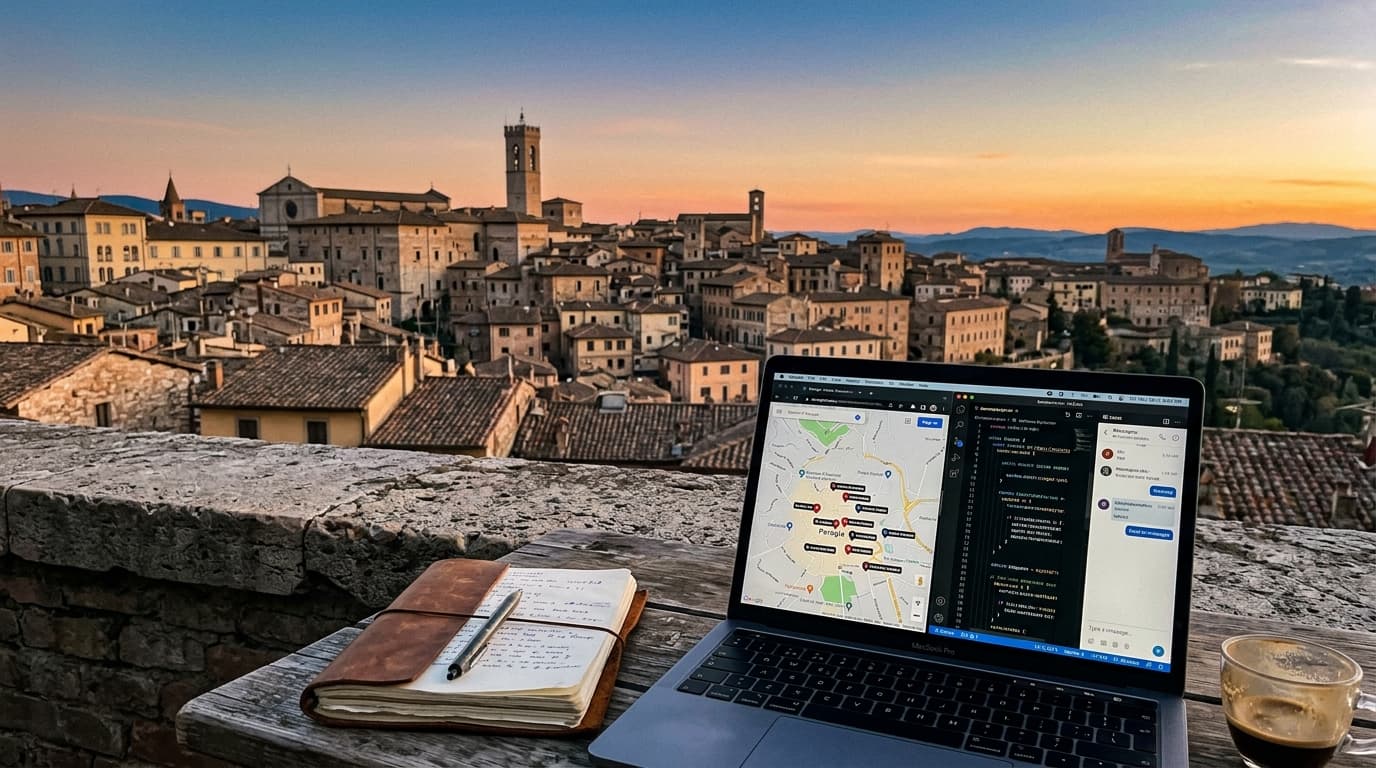
Perugia feels like a real city that still belongs to its residents, not a polished nomad product. It’s compact, artsy and full of students, so you get medieval lanes, espresso bars that open early and enough daily life to keep things interesting without the constant churn of a bigger place.
The center sits on a hill, which sounds romantic until you’ve dragged groceries uphill in winter rain. The upside is obvious, though, you can walk almost everywhere, hear church bells, catch street musicians near Corso Vannucci and look out over Umbria’s green hills when the sky clears.
Most nomads who settle here want routine more than nightlife. Writers, language learners, educators and remote workers tend to like it because it’s calmer and cheaper than Florence or Milan, with a strong cultural calendar and a student population that keeps cafés, bars and festivals from feeling sleepy.
The trade-offs are pretty clear. Nightlife is limited, bureaucracy can be maddening and the city still runs on old-school Italian timing, paper forms and in-person errands. Rent is more manageable than in the big-name cities, but you won’t find the same plug-and-play nomad setup you’d get in Lisbon or Barcelona.
Where it feels best
- Centro Storico: Best for first stays, car-free living and being in the middle of the action. Expect stone streets, older flats and festival noise.
- Elce: Student-heavy, cheaper and practical, with simple bars, pizzerias and a lot of shared housing.
- Monteluce: Good for university access and a slightly quieter pace, though the housing can feel plain.
- Fontivegge: Cheaper and close to the station, but rougher around the edges than the center.
Daily life is pleasantly ordinary here. You’ll smell coffee and exhaust in the morning, hear scooters bouncing off narrow streets and feel that sharp winter cold in apartments with old tile floors and patchy heating. That’s part of the deal, along with easy train trips, good regional food and access to nature when you need a break from the stone and stairs.
Perugia works best for people who like a slower rhythm and don’t need a city to entertain them every night. It’s a solid base if you want culture, walkability and lower costs, with enough friction to remind you you’re living in Italy, not an expat bubble.
Perugia is cheaper than Milan, Florence and most of the bigger Italian city breaks, but it’s not bargain-bin cheap. A single person usually lands around €1,050 to €1,450 a month with rent and that number moves fast once you add winter heating, buses and the occasional aperitivo that turns into dinner.
The city suits people who don’t need a car and don’t mind climbing hills. The old center is compact, so you’ll hear church bells, scooters and the clack of heels on stone streets, then step into a quiet apartment with cold tile floors and spotty radiators. That’s Perugia in a nutshell, charming and slightly inconvenient.
Typical monthly costs
- Rent: A room in a shared flat often starts around €350, while a decent one-bedroom in or near the center usually runs €500 to €750.
- Food: Espresso is about €1.20 to €1.50, cappuccino and a pastry about €3 to €4 and a simple trattoria meal usually falls between €12 and €18.
- Groceries: Basic staples are reasonable, with bread around €1.35, milk about €1.20 and apples near €1.80 per kilo.
- Transport: A monthly city pass is roughly €55 to €60, depending on the specific zone and concessions available, though plenty of people just walk or use the Minimetrò when the hills start winning.
- Utilities and internet: Expect about €180 to €270 for utilities in a medium flat, plus around €27 for home internet.
What different neighborhoods cost
- Centro Storico: Studio €450 to €650, one-bedroom €500 to €750. Best for walkability, worst for parking and old-building quirks.
- Elce and Monteluce: Studio €400 to €550, one-bedroom €450 to €650. Cheaper, student-heavy and noisier during term time.
- Fontivegge: Studio €380 to €520, one-bedroom €430 to €600. Usually the lowest rents near the station, though the area can feel rough around the edges.
- Ponte San Giovanni and Madonna Alta: Studio €350 to €500, one-bedroom €430 to €650. Good if you want more space and don’t care about living in the postcard part of town.
Budget nomads can scrape by on €900 to €1,200 a month with a shared flat and very little nightlife. A more comfortable setup, with a private one-bedroom, coworking a few days a week and some regional trips, usually sits closer to €1,300 to €1,700. If you want newer housing, regular dinners out and a bit more breathing room, plan on more than that.
Perugia works best for people who want a walkable city with real neighborhood differences, not a glossy expat bubble. The center is compact, the hills are steep and the student presence keeps the streets lively without turning them chaotic. You’ll hear scooters echoing off stone walls, church bells cutting through the afternoon and the scrape of café chairs on cobblestones.
For nomads: Centro Storico and Elce
Centro Storico is the obvious base if you want cafés, wine bars and everything within a 15-minute walk. Corso Vannucci, Piazza IV Novembre and the lanes around via dei Priori are where the old town feels most alive, though the apartments can be cramped, drafty and noisy during festivals.
- Rent: About €500 to €750 ($540 to $810) for a one-bedroom.
- Best for: Short stays, writers, remote workers and people who hate commuting.
- Downside: Parking is a pain and climbing home with groceries gets old fast.
Elce is the budget-friendly nomad pick. It’s close to the university, so you get cheap bars, simple pizzerias and a steady student crowd, but less postcard charm and more everyday noise.
For expats: Monteluce and Madonna Alta
Monteluce sits near the university belt and feels practical without being dull. Housing is usually a bit better value than the center and you’re still close enough to walk in when you want aperitivo or a late dinner.
- Rent: About €450 to €650 ($485 to $700) for a one-bedroom.
- Best for: Long-term renters who want a calmer base and easy bus access.
- Downside: Some streets feel residential and plain after dark.
Madonna Alta and nearby commuter areas suit expats who care more about space than atmosphere. You’ll get larger apartments, bigger supermarkets and less medieval inconvenience, though you lose the daily buzz of the center.
For families: Ponte San Giovanni and Ferro di Cavallo
Ponte San Giovanni is one of the more sensible family choices because it’s flatter, more residential and easier for errands, schools and parking. It’s not romantic, but it’s practical and that matters when you’re dealing with strollers, shopping bags and winter rain.
- Rent: About €430 to €650 ($465 to $700) for a one-bedroom, more for larger flats.
- Best for: Families who want supermarkets, space and easier road access.
- Downside: You’ll rely on buses or a car more than in the center.
Ferro di Cavallo is similar, with affordable housing and a more suburban feel. For most families, it beats the historic center on comfort, even if it’s less pretty.
For solo travelers: Centro Storico or Fontivegge
Solo travelers who want atmosphere should stay in the historic center and skip the train-station area unless price is the only issue. Fontivegge is cheaper, but it feels rougher around the edges, especially late at night, with more traffic, fewer lingering cafés and a less pleasant walk home.
- Best pick: Centro Storico for charm and safety on foot.
- Cheaper option: Fontivegge if you need transport links and lower rent.
- Skip if you can: Quiet streets here don’t always mean a peaceful stay.
Perugia’s internet is good enough for remote work, but it doesn’t have the slick, plug-and-play feel of Lisbon or Barcelona. In the Centro Storico, fiber is common enough in newer apartments, but some old stone flats still have patchy Wi-Fi, weird dead zones and cold floors that make long workdays feel longer than they should. If you’re staying a month or more, ask for a speed test before you book.
Most nomads end up splitting time between home and a coworking space or café. That works here because the city is walkable, compact and full of students, so there’s usually somewhere to sit with a laptop, an espresso and enough background noise to stay awake. The tradeoff is that Perugia’s charm comes with hills, stairs and winter heating bills that can make a cozy apartment less cozy.
Best areas for working online
- Centro Storico: Best for cafés, quick errands and a car-free routine. Internet can be hit or miss in older apartments, but the daily convenience is hard to beat.
- Elce: Student-heavy, cheaper and easier for longer stays. Expect more basic housing, but decent connectivity and plenty of low-key places to work.
- Monteluce: A solid middle ground near the university belt, with quieter streets and easier apartment hunting than the historic core.
- Fontivegge: Usually cheaper and practical for train access, though the area feels rougher and less pleasant for day-to-day life.
Coworking options are still limited compared with bigger Italian cities, but the ones that exist are useful. Day passes usually run about €15 to €25 ($16 to $27) and monthly hot desks tend to sit around €150 to €250 ($163 to $272). Ask about meeting rooms, backup internet and whether the space actually fills up with locals or just looks good in photos.
Local workflow tip: a lot of remote workers use cafés for light work and coworking spaces for calls. Around Corso Vannucci and the university streets, you’ll find plenty of espresso bars where a cappuccino costs about €3 to €4 ($3 to $4) and nobody rushes you out the door if you’re not hogging a table.
Practical setup
- Home internet: Around €27 ($29) a month for a standard connection, though service quality depends heavily on the building.
- Mobile backup: Worth having, especially if you live in an older flat or work odd hours.
- Power and comfort: Winter heating can push utilities well above summer levels, so don’t ignore that when choosing a place.
Perugia suits people who can handle a few hiccups. The internet isn’t perfect, the bureaucracy can be maddening and the city moves at its own pace, but for writers, educators and other remote workers who like routine, it does the job without draining your wallet.
Perugia feels pretty safe for a small Italian city, especially in the historic center, Elce and Monteluce where there’s always foot traffic, students and café spillover. You’ll still want normal city instincts after dark, though. The main annoyances are petty theft, late-night drunk noise near bars and the usual station-area grit around Fontivegge, where the air smells faintly of exhaust and fast food and the mood drops fast once the trains slow down.
Most expats and long-stay visitors treat Perugia as a low-drama base, not a place that needs constant caution. Pickpocketing can happen in crowded events like Umbria Jazz, Eurochocolate or packed Minimetrò rides, so keep your phone zipped away and don’t leave a bag hanging off a chair at aperitivo. Solo travelers, including women, generally say the city is manageable, but the hills, dim side streets and quiet staircases can feel a bit lonely late at night.
Where to stay
- Centro Storico: Best overall for day-to-day safety, because there are people around and streets stay active into the evening.
- Elce and Monteluce: Good if you want students, buses and cheap food close by. Noise is the tradeoff.
- Fontivegge: Cheaper, but rougher around the edges. Fine for a short stay near the station, less appealing for long-term life.
Healthcare is solid for routine stuff. Perugia has public hospitals, private clinics, pharmacies on nearly every main street and plenty of English-speaking doctors in the university orbit, though don’t expect every receptionist to be fluent. For anything non-urgent, the farmacia is usually the easiest first stop, especially for advice on minor infections, allergies or quick over-the-counter meds.
For serious issues, use the public system or private care depending on your insurance and how fast you need help. The Ospedale Santa Maria della Misericordia is the main hospital people mention first and private visits are often much quicker if you’re willing to pay out of pocket. Expect winter colds to spread through the student crowd and summer heat can hit harder than you’d think on those stone streets.
Practical healthcare tips
- Pharmacies: Look for the green cross and check opening hours before you need one. Night and Sunday service exists, but it’s not always near you.
- Insurance: If you’re staying long term, make sure your policy covers private visits and hospital treatment in Italy.
- Appointments: Book early. Bureaucracy here can be slow and phone calls still beat email more often than they should.
If you have a prescription, bring the exact medication name and an Italian translation if you can. That saves time and sometimes a lot of shrugging.
Perugia is small enough that you can cross the center on foot, but the hills will make you earn it. The historic core is full of stone lanes, sudden staircases and long ramps that seem to appear just when your legs are getting comfortable. In return, you get a city where a morning coffee, a library run and a late aperitivo can all happen without getting in a taxi.
The walkability is the big win here, especially around Corso Vannucci, Piazza IV Novembre and the streets behind it. Buses help for the outer neighborhoods and the Minimetrò is handy if you’re staying near the station or coming up from the valley, but don’t expect metro-style convenience. Schedules can feel a bit old-school, so most locals still plan around the clock, not around spontaneity.
- On foot: Best for Centro Storico, Elce and Monteluce if you don’t mind hills, cold winter mornings and the occasional calf burn.
- Bus: Good for getting to Ponte San Giovanni, Madonna Alta and other outer areas. Monthly passes are usually about €43.
- Minimetrò: Useful for a quick lift between the lower city and the center, especially if you’re carrying groceries or luggage.
- Car: Handy for Umbria day trips, annoying in the center. Parking is tight, ZTL rules are real and fines aren't a cute surprise.
For daily life, most nomads find the city easy to manage without a car. Grocery shopping, café hopping and getting to coworking spots all work fine on foot or by bus and the compact center keeps transport costs low. If you live outside the core, though, the terrain can turn a simple errand into a sweaty uphill haul, especially in summer when the stone streets throw heat back at you.
Best area for no-car living: Centro Storico, Elce and Monteluce. Best for cheaper rent and more space: Madonna Alta, Ferro di Cavallo and Ponte San Giovanni.
Ride-hailing and taxis exist, but they’re not something most people lean on every day. A car makes sense if you want weekend escapes to Lake Trasimeno, Assisi or the smaller hill towns, because that’s where Perugia starts to feel wonderfully connected and a little less practical.
For remote workers, the real rhythm is simple, walk, bus, coffee, repeat. It’s a slower city than Milan or Rome and that’s part of the appeal. If you want door-to-door convenience and flat streets, Perugia will test your patience. If you’re fine with a bit of climbing and a lot of character, it works.
Perugia is easy enough to get by in if you speak only English for a short stay, but long-term life runs on Italian. In cafés, shops and bus stations, people will switch if they can, though the level of English drops fast once you’re dealing with landlords, plumbers, immigration offices or anyone over 50. The city feels relaxed, but the paperwork isn’t. Visas, tax codes and residency appointments still happen in very old-school Italian, with forms, stamps and a fair bit of waiting around.
For nomads, that means a little language prep goes a long way. Learn the basics for greetings, food, transport and housing, then keep DeepL or Google Translate handy for everything else. Italians in Perugia are generally patient if you try and even a rough "buongiorno" or "vorrei un cappuccino" changes the tone fast. Skip the tourist politeness script and use simple, direct Italian, it works better here.
Local communication is also shaped by the city’s student population. Around the university streets, especially Elce and Monteluce, you’ll hear a mix of Italian, English and other languages, plus the usual bar chatter, scooter engines and café cups clinking on saucers. In the center, older shopkeepers may speak little English, so don’t assume the answer will be in English just because the person is friendly.
What helps most
- Basic Italian phrases: Enough for restaurants, buses and rentals.
- Translation apps: DeepL is better for longer messages, Google Translate is fine in a pinch.
- WhatsApp: Most landlords, service providers and casual contacts prefer it over email.
- Paper copies: Keep scans of your passport, codice fiscale and visa documents because offices still ask for them.
Phone and internet communication are pretty straightforward once you’re set up. A local SIM or eSIM is easy to get and mobile coverage in the center is solid, though thick stone buildings can make indoor signal patchy. Home internet is usually reliable in newer flats, but some older apartments still crawl on rainy afternoons, so ask before you sign anything.
Perugia isn’t a city where you can bluff your way through everything in English and never feel it. You can get by, sure, but the smoother route is to learn enough Italian to handle daily life and keep your documents, messages and appointments organized. That saves time and in Italy, time is usually what bureaucracy eats first.
Perugia gets a proper seasonal swing and that’s part of the appeal. Spring and fall are the sweet spots, with mild days, cool evenings and enough sun to keep the stone streets warm without turning them into a furnace.
April, May, Sept. and Oct. are usually the easiest months to live here. You can walk the center without sweating through your shirt, café terraces are busy but not slammed and the air often smells like wet earth, espresso and the odd blast of exhaust from scooters threading up the hills.
Summer is a different story. July and Aug. can be hot, sticky and noisy, especially in the historic center where the stone holds heat long after sunset. The upside is festival season, long aperitivo hours and plenty of late-night life around Corso Vannucci, but you’ll want air conditioning if you’re staying put.
Winter is manageable, though it’s not cozy in the easy Italian way people imagine. The hills get cold, the floors in older apartments can feel icy underfoot and heating bills jump fast, especially in drafty flats with ancient windows. Fog and rain can make the city feel a bit shut in, though the students keep it from going quiet for long.
Best months by travel style
- For mild weather and walking: April to June, then Sept. to Oct.
- For festivals and energy: July for Umbria Jazz, then late Oct. for Eurochocolate.
- For lower prices and fewer crowds: Nov. to March, if you don’t mind gray skies and chilly nights.
Digital nomads who want to settle in for a while usually do best in shoulder season. You’ll get easier apartment hunting, less tourist traffic and a better chance of finding a calm routine in neighborhoods like Monteluce, Elce or Centro Storico without fighting peak-season chaos.
If you’re coming for a short stay, skip the hottest weeks unless you really like heat. Perugia’s charm is in the walkability, the views and the slow rhythm and those all work better when you’re not drenched in sweat climbing the streets above Piazza IV Novembre.
Perugia works best if you like a city you can actually learn. The center is compact, the streets are steep and the routine is slower than in Bologna or Milan, but that’s part of the appeal. You’ll hear espresso cups clinking at the bar, buses grinding uphill and students spilling out of lecture halls. It’s not plug-and-play nomad life, though. Bureaucracy still moves at the pace of old-school Italy and if you need instant everything, this city will test you.
Getting around: walk first, then use the Minimetrò and buses when the hills get annoying. Perugia’s historic center is easy on foot, but it’s not flat, so budget for calf pain and the occasional sweaty climb in summer. A monthly city pass is about €55 to €60, with prices varying slightly by tariff and reductions, and single tickets are cheap enough that most people only drive if they live outside the core.
Best areas for nomads:
- Centro Storico: Best if you want cafés, events and a car-free life. Rent is usually higher and parking is a nightmare.
- Elce: Cheaper, student-heavy and practical for long stays. Expect simple flats and noise during term time.
- Fontivegge: Often the lowest rents, around €380 to €520 for studios, but the area feels rough in places, especially late at night.
- Madonna Alta or Ponte San Giovanni: Better if you want more space and don’t mind bussing in.
Budget reality: a single person can live here on about €1,050 to €1,450 ($1,144 to $1,579) a month with rent and a decent one-bedroom in the center usually lands around €500 to €750 ($545 to $816). Coffee is still one of the few bargains left, with an espresso at a bar for about €1.20 to €1.50. Groceries are reasonable too, but heating isn’t and winter utilities can bite.
Work setup: coworking is available, but don’t expect the density you’d get in Lisbon or Barcelona. Day passes usually run €15 to €25 and monthly hot desks are often €150 to €250. Many nomads just split time between home, a café and a library because the internet is fine but not magical.
One thing people underestimate is the rhythm of the place. Afternoons can feel sleepy, summer gets sticky and the city smells like warm stone, frying oil and exhaust near busy roads. Still, if you want culture, students, walkability and easy trips into the countryside, Perugia makes a lot of sense.
Frequently asked questions
How much does it cost to live in Perugia as a digital nomad?
What is the best neighborhood in Perugia for digital nomads?
Is Perugia good for remote work?
How much is rent in Perugia?
Which area of Perugia is cheapest for housing?
Is Perugia safe for solo travelers and long-term visitors?
How reliable is internet in Perugia apartments?
Need visa and immigration info for Italy?
🇮🇹 View Italy Country GuideEasy Landing
Settle in, no stress