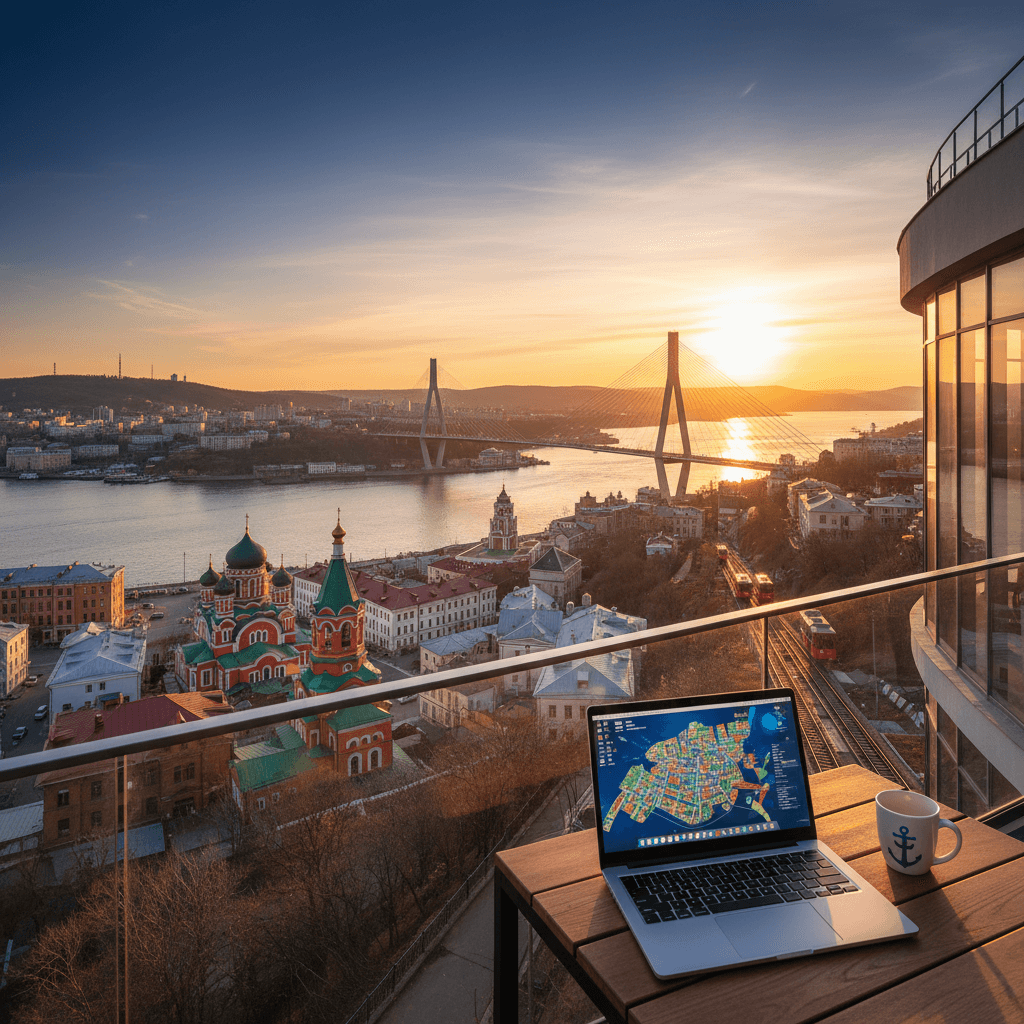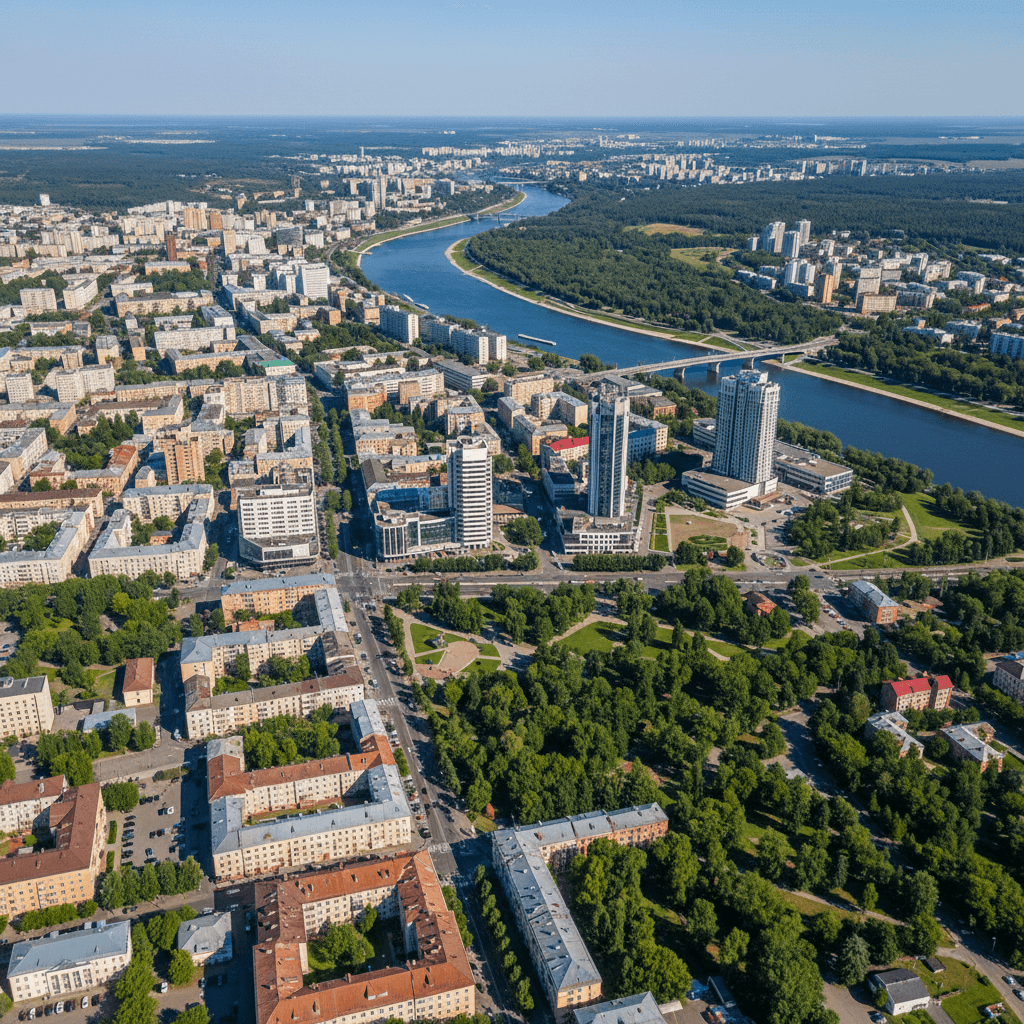
Perm
🇷🇺 Russia
The Industrial Soul of the Urals
Perm is a bit of an enigma for the average nomad. It doesn't have the frantic, gold-leafed energy of Moscow or the imperial museum-vibe of St. Petersburg. Instead, you get a city that feels honest. It's a place where massive Soviet-era factories sit alongside a surprisingly edgy contemporary art scene. There is a gritty, creative pulse here that feels like a Russian version of Berlin before it got too expensive.
The city stretches along the massive Kama River, and that water defines the layout. In the summer, the riverfront is where everyone hangs out, but in the winter, the city turns into a snowy fortress. It’s a place for those who prefer cultural depth over tourist traps. You'll find world-class ballet at the Tchaikovsky Opera and Ballet Theatre and avant-garde installations at the PERMM Museum of Contemporary Art, often just blocks away from a no-frills pelmeni shop where the recipe hasn't changed since the eighties.
The Nomad Experience: Reality Check
Living here in 2025-2026 requires a bit of "MacGyvering" your digital life. Because of the current geopolitical climate, your Visa or Mastercard won't work at the local supermarket. Most expats rely on a mix of cash, crypto, or opening a local account with a bank like Tinkoff once they arrive. You also can't survive without a solid VPN. Accessing Instagram, YouTube, or even some Western work tools is a constant game of cat and mouse with local firewalls.
The language barrier is real. Outside of the younger tech crowd and the arts community, English is rare. You'll want to have Yandex Translate pinned to your home screen. That said, the locals are often genuinely curious about foreigners who choose Perm over the bigger hubs. Once you break the ice, the hospitality is intense; expect to be invited for tea or a banya session much faster than you would in a more "westernized" city.
Cost of Living & Infrastructure
The biggest draw for the budget-conscious nomad is the price tag. Perm is roughly 30% to 50% cheaper than Moscow. You can live a very comfortable, "upper-middle-class" lifestyle here for a fraction of what you'd spend in Europe or the US.
- Housing: A modern studio in the city center near Komsomolsky Prospekt will run you between $400 to $550. If you look toward the outskirts, prices drop to $200, though the commute gets bleak in February.
- Food: A quick lunch at a blini stand is about $7, while a nice dinner for two at a mid-range spot costs around $25.
- Connectivity: Mobile data is incredibly cheap and fast. A local SIM from MTS or Beeline with plenty of data costs under $10. Public WiFi is everywhere, from the trams to the cafes.
- Transport: The tram system is a lifesaver. It’s efficient and heated. A monthly pass is about $25, and Yandex Go (the local Uber) is so affordable that many nomads use it as their primary way to get around.
The Vibe: Why Perm?
Expats who stick it out in Perm usually do so because they love the "secret" feel of the place. It’s not a nomad hub yet, so you won't find many "digital nomad cafes" filled with people on MacBooks. Instead, you'll be working from Cup by Cup or other local coffee houses, surrounded by local students and entrepreneurs. It’s a city that rewards the curious. One day you’re exploring the Kungur Ice Caves on a weekend trip, and the next you’re at a tech meetup in a converted industrial loft.
It can feel isolating if you don't make an effort to socialize. Most nomads recommend joining Telegram channels or Facebook expat groups early on to find your tribe. It’s a city of layers; the more you peel back the gray, industrial exterior, the more you find a warm, intellectually curious community that is fiercely proud of their Ural roots.
The Cost of Living in Perm
If you are coming from Moscow or Saint Petersburg, Perm will feel like a massive discount. It is a gritty, industrial powerhouse in the Urals that lets you live well for a fraction of the price you would pay in the capital. While Moscow prices have climbed, Perm remains grounded, offering a mid-sized city lifestyle that is easy on the wallet if you have a remote income in a stronger currency.
Most nomads find they can live comfortably here on $1,200 to $1,800 per month. This range covers a modern apartment in the city center, plenty of dining out, and weekend trips into the Ural mountains. If you are on a tighter budget, you can easily scrape by on $800 to $900 if you stick to local markets and live slightly outside the main drag of Komsomolsky Prospekt.
Housing and Rent
Rent is your biggest saving. While finding a short-term lease can be tricky without local help, platforms like Sutochno.ru are the go-to for many expats. Expect to pay significantly more for "Western-style" renovations, which usually include modern appliances and faster internet setups.
- Budget Studio: Expect to pay between $200 and $350. These are usually located in residential districts like Motovilikha or the outskirts of the Sverdlovsky district.
- Mid-Range 1BR: A renovated flat in the center, near the Opera House or the Kama River embankment, will run you $500 to $700.
- Premium Living: Large, high-end apartments in new developments can go for $800 or more, which is still a steal compared to European hubs.
Food and Dining
Perm has a surprisingly soulful food scene. You will find plenty of pelmeni houses and blini stands for a quick, cheap fix. For a sit-down meal, the city center is packed with cafes where a business lunch (a three-course set menu) is the standard way to save money during the day.
- Street Food and Quick Bites: A hearty plate of pelmeni or a filled crepe usually costs between $3 and $5.
- Mid-Range Restaurants: A dinner for two with drinks at a nice spot in the center typically lands between $25 and $40.
- Groceries: If you shop at local chains like Magnit or Pyaterochka, $200 to $300 a month will keep your fridge very well-stocked.
Transport and Connectivity
The city is serviced by a reliable network of trams and buses that handle the brutal winters surprisingly well. Most nomads use the Yandex Go app for everything from taxis to food delivery. It is cheap, efficient, and avoids the language barrier since you don't have to talk to the driver.
- Monthly Transport Pass: A pass for trams and buses costs around $25 to $35.
- Taxi Rides: A 15-minute ride across town usually costs less than $5.
- Mobile Data: A local SIM from MTS or Beeline with a massive data package is roughly $10.
- Coworking: Dedicated desks in Perm usually average around $200 to $300 per month, though many people just camp out in cafes for the price of a coffee.
Practical Financial Tips
The biggest hurdle right now isn't the cost, it is the logistics. Because of international sanctions, your Western Visa or Mastercard will not work at Russian ATMs or terminals. Expats recommend bringing a significant amount of cash to exchange or looking into crypto-to-ruble transfers once you arrive. You will also need to factor in the cost of a high-quality VPN, which is a non-negotiable expense if you need to access Instagram, YouTube, or Western banking apps while connected to local WiFi.
The Central Hub (Leninsky District)
If you're a digital nomad looking to be within walking distance of a decent flat white and a reliable WiFi connection, the City Center around Komsomolsky Prospekt is your best bet. It's the most polished part of Perm, where the industrial grit gives way to wide sidewalks and the city's best architecture. You'll find yourself spending a lot of time near the Perm Opera and Ballet Theatre, which serves as a landmark for the most walkable streets.
Living here means you're close to coworking spots and the best cafes for remote work. Expect to pay between $500 and $700 for a modern one bedroom apartment in a renovated building. While it's the most expensive area in town, the convenience of having Yandex Go drivers arrive in under three minutes makes it worth the premium. Most nomads find this the only area where English is even slightly understood in shops and restaurants.
- Rent: $500 to $700 per month for a central studio.
- Vibe: Urban, social, and relatively fast paced.
- Best for: Nomads who need to be near the action and reliable infrastructure.
Motovilikha District
For expats and families planning a longer stay, Motovilikha offers a much more residential feel without being completely isolated. It's located just north of the center and feels significantly greener. You'll trade the immediate access to bars for larger apartment floor plans and better access to local parks. It's a bit of a commute if you're heading into the center every day, but the tram system is efficient and handles the winter snow better than you'd expect.
The cost of living drops noticeably here. You can snag a comfortable family sized apartment for $350 to $500. It's a quieter life, but you'll need to rely more on translation apps like Yandex Translate since you're moving away from the international bubble. Expats recommend this area if you want to see how locals actually live, away from the "Red Line" walking tours of the center.
- Rent: $350 to $550 for larger, multi room apartments.
- Vibe: Quiet, green, and family oriented.
- Best for: Long term expats and those traveling with children.
Sokol and the Youth Hubs
Solo travelers and younger remote workers often gravitate toward the Sokol neighborhood or the streets tucked behind the main university buildings. This area has a bit more of an edgy, youthful energy. It's where you'll find the dive bars and the small, independent galleries that define Perm's modern art scene. It's less "polished" than the Leninsky District but has much more character.
The nightlife here is the main draw, though it can get a bit noisy on Friday and Saturday nights. You'll find plenty of students and young professionals, making it the easiest place to meet people if you're traveling alone. Rent is affordable, usually hovering around $300 to $450 for a decent flat. Just keep in mind that the buildings here are often older Soviet era blocks, so check the heating and internet reliability before signing anything.
- Rent: $300 to $450 for a standard flat.
- Vibe: Artistic, social, and slightly gritty.
- Best for: Solo travelers looking for a social scene and nightlife.
The Kama Riverfront
While not a district in itself, the area stretching along the Kama River is becoming a hotspot for those who value views and morning runs. Developers have been busy here, and you'll find some of the city's newest "business class" apartment complexes overlooking the water. It's a bit of a hybrid area, attracting both successful locals and wealthy expats.
During the summer, this is the place to be. You've got the river breeze and easy access to the renovated embankment. However, in the dead of winter, the wind off the Kama can be brutal. If you choose a high rise here, make sure it's close to a Whoosh scooter station or a bus stop so you aren't stuck walking in -15°C temperatures for too long.
- Rent: $600 to $800+ for premium river views.
- Vibe: Modern, scenic, and slightly upscale.
- Best for: Travelers who want high end amenities and scenic views.
Connectivity and the VPN Reality
Internet speeds in Perm are surprisingly snappy and reliable, often outperforming what you'll find in Western Europe. Most central apartments come with fiber optics as standard, and you can expect speeds between 50 Mbps and 100 Mbps for a fraction of the price you'd pay in the States. Public WiFi is everywhere, from the trams to the cafes along Komsomolsky Prospekt, but there's a catch. Most public networks require a Russian phone number for SMS authentication.
The elephant in the room is the digital "Iron Curtain." You won't be scrolling Instagram or checking your favorite Western news sites without a solid VPN. Expats here recommend setting up at least two different VPN providers before you land, as the government regularly plays cat and mouse with these services. Without one, you'll find yourself locked out of the tools you need to run a remote business.
For mobile data, grab a SIM card from MTS, Beeline, or Megafon as soon as you arrive. You can find kiosks at the Perm International Airport (PEE) or scattered throughout the city center. A monthly plan with plenty of data usually runs between $5 and $10. Just bring your passport, as it's required for registration.
Top Coworking Spaces in Perm
While Perm doesn't have the massive "nomad hubs" found in Moscow, the local tech scene is growing. Coworking spaces here are functional, quiet, and very affordable. You'll likely be sharing a desk with local software developers and architects rather than fellow travelers. While specific venues frequently change ownership or names, you can generally find reliable desk space in the city center by checking local business listings upon arrival.
Cafe Culture and Remote Work
If you prefer the hum of a coffee shop, Perm has a thriving cafe culture. Local nomads often spend their afternoons at Cup by Cup or Krapiva. These spots are laptop friendly and have decent WiFi, provided you've got your local SIM card ready for the login process. Most cafes expect you to order something every couple of hours, but with a flat white costing around $2 to $3, it won't break the bank.
Keep in mind that while the younger generation in these cafes might speak some English, the staff generally won't. Having Yandex Translate downloaded on your phone is a lifesaver for navigating the menu or asking for the WiFi password. Most workers find that the "work from cafe" lifestyle is perfectly acceptable here as long as you aren't taking loud meetings in the middle of the lunch rush.
Managing Finances and Logistics
The biggest hurdle for nomads in 2025 and 2026 is the banking situation. Western credit cards like Visa and Mastercard won't work at local ATMs or terminals due to ongoing sanctions. Most long term expats use a combination of crypto exchanges and local digital banks like Tinkoff to manage their daily spending. You'll want to join a local Telegram or WhatsApp expat group to get the latest advice on moving money, as the "best way" changes almost monthly.
- Monthly Coworking Budget: Plan for $200 to $300 if you want a fixed desk in a premium spot.
- Daily Hot Desk: Usually around $12 in central locations.
- Essential Apps: Yandex Go for taxis, Whoosh for electric scooters, and Telegram for basically all communication.
Perm feels like a well kept secret compared to the frantic pace of Moscow, but staying safe and healthy here requires a bit of local savvy. Most nomads find the city center, especially around Komsomolsky Prospekt, to be highly polished and well lit. You can walk these streets comfortably at night, but travelers often say it's best to avoid the industrial outskirts like Motovilikha after dark unless you're with locals who know the layout.
Personal Safety and Street Smarts
Violent crime is rare in the central districts, though petty theft and pickpocketing can happen in crowded spots like the Central Market or on busy trams. Keep your phone tucked away and don't flash expensive tech while waiting for a bus. Since the city is a major industrial hub, it has a gritty, salt of the earth atmosphere. People might look stern on the street, but they're generally helpful if you approach them with a polite "Izvinitie" (Excuse me).
- Emergency Number: Dial 112 for all services. Operators might not speak fluent English, so having a translation app ready is a lifesaver.
- Walking at Night: Stick to the Green Line walking route. It's a self guided tour path through the city center that hits the safest, most populated areas.
- Winter Hazards: From December to March, the real danger isn't people, it's ice. Falling icicles and slick sidewalks cause more injuries than crime. Wear boots with serious grip.
Healthcare and Medical Services
The quality of care in Perm is decent, but there's a noticeable gap between public clinics and private centers. Most expats recommend skipping the state hospitals for anything non urgent and heading straight to private clinics like Filosofiya Krasoty i Zdorovya or Medsi. You'll pay out of pocket, but the equipment is modern and the wait times are much shorter.
Pharmacies, marked by a green Apteka cross, are on almost every corner. Many are open 24/7. While many pharmacists are knowledgeable, don't expect them to speak English. Have your symptoms translated on your phone before you walk in.
Health Check Checklist
- Insurance: Standard travel insurance is okay, but ensure it covers medical evacuation. Since Western cards aren't working, you'll likely need to pay in Rubles cash and seek reimbursement later.
- Tap Water: Don't drink it. Even locals boil it or buy 5 liter jugs from the local supermarkets like Semya or Pyaterochka. It's fine for showering, but stick to bottled for the kettle.
- Air Quality: Since Perm is an industrial powerhouse, those with sensitive lungs might notice the air getting heavy during stagnant winter weeks. Check local air quality apps if you have asthma.
Digital Safety and Connectivity
Safety in Perm also extends to your digital life. Because of current restrictions, a VPN is mandatory to access your bank, Instagram, or even some news sites. Nomads suggest setting up at least two different VPN providers before you arrive, as one might get throttled. For local coordination, use Telegram; it's the primary way everyone from your landlord to your local coffee shop communicates.
If you're taking a taxi, stick to the Yandex Go app. It's the local equivalent of Uber and tracks your ride via GPS, which adds a layer of security. Avoid "gypsy cabs" or unmarked cars offering rides at the airport or train station; they'll almost certainly overcharge you 300% or more.
Mastering the Perm Commute
Moving around Perm is surprisingly straightforward once you download the right apps. While the city doesn't have a metro system like Moscow, its network of trams and buses is the backbone of local life. Most nomads find the trams particularly charming; they cut through the city center and offer a reliable way to avoid the peak hour traffic jams on Komsomolsky Prospekt.
The public transport system is built for the Ural winter, meaning vehicles are heated and run frequently even when the snow is piling up. You can pay for your fare using a contactless card or the Permskaya transport card. A monthly pass usually runs between $20 and $30, making it one of the most affordable ways to get around a major Russian city.
Ride-Hailing and Apps
Forget Uber or Lyft here. In Perm, Yandex Go is the undisputed king. It's more than just a taxi app; it handles food delivery and courier services too. Most expats recommend keeping this app pinned to your home screen. A typical ride across the city center will cost you about $3 to $5, while a trip out to the Perm International Airport (PEE) usually lands between $10 and $20 depending on the time of day.
For those who prefer to be behind the wheel, car-sharing apps like Delimobil are active in the city. However, unless you're comfortable with Cyrillic road signs and aggressive winter driving, sticking to the back seat of a Yandex is generally the stress-free choice.
Micromobility and Walking
When the ice finally melts in late May, the city transforms. Perm has a growing culture of electric scooters. You'll see Whoosh and Urent scooters parked on almost every corner in the central Leninskiy district. You just scan the QR code with your phone and go. It's a great way to zip between a cafe on Lenin Street and the PERMM Museum of Contemporary Art.
The city center is remarkably walkable, especially along the "Green Line" and "Red Line" walking routes. These are actual painted lines on the sidewalk that guide you past the city's main historical and cultural landmarks. Most travelers say that if you stay near Komsomolsky Prospekt, you'll rarely need a vehicle for your day-to-day errands.
Key Transport Tips
- Download Yandex Maps: It's far more accurate than Google Maps for bus schedules and finding specific building entrances in Perm.
- VPN is Mandatory: Since many Western apps are restricted, ensure your VPN is active before trying to access your saved locations or international travel apps.
- Late Night Travel: Public transport stops around midnight. After that, Yandex Go is your only reliable option.
- Airport Transfers: While there are buses to the airport, they can be slow with luggage. The $15 taxi is worth the convenience after a long flight.
Estimated Monthly Transport Costs
- Budget Traveler: $25 (Monthly bus/tram pass plus occasional walking).
- Mid-Range Nomad: $40 (Pass plus a few Yandex rides per week).
- High-End/Convenience: $60+ (Daily Yandex Go usage and airport transfers).
If you're planning to base yourself in the Urals, your first hurdle isn't the cold, it's the Cyrillic alphabet. Unlike Moscow or St. Petersburg where you might find English menus in the city center, Perm is a deep dive into the Russian language. Outside of high-end hotels and the most popular spots on Komsomolsky Prospekt, English proficiency is generally low. You'll find that younger people in the tech scene or at the PERMM Museum of Contemporary Art might speak some English, but the average shopkeeper or bus driver won't.
The Language Barrier
Most nomads find that getting by requires a mix of technology and patience. You'll need to learn the Cyrillic alphabet before you land; it makes identifying street signs and grocery items much easier. Expats recommend downloading the Yandex Translate app specifically, as it often handles Russian grammar and slang better than Google Translate. The "camera translation" feature will be your best friend when staring at a menu at a local pelmeni house.
- Privet: Hello (informal)
- Spasibo: Thank you
- Gdye WiFi?: Where is the WiFi?
- Ya ne govoryu po-russki: I don't speak Russian
Digital Communication and VPNs
Staying connected in Perm is a bit of a paradox. On one hand, the digital infrastructure is top-tier. You can get a local SIM card from MTS, Beeline, or Megafon for roughly $5 to $10 with massive data buckets, and the city's public transport and cafes usually offer fast, free WiFi. On the other hand, the "Great Firewall" effect is real. Major Western platforms like Instagram and YouTube are often restricted or blocked entirely.
A high-quality VPN is mandatory. Travelers often say that having two different VPN providers is the safest bet, as one might get throttled while the other remains stable. Without one, you'll find it nearly impossible to access your usual social media or even certain Western banking apps. Make sure you install and test your VPNs before you enter the country, as many VPN provider websites are blocked once you're on Russian soil.
Apps You Actually Need
To navigate Perm like a local, your phone needs a specific suite of Russian apps. Since Western apps like Uber or Google Maps don't always provide the most accurate local data, nomads rely on these alternatives:
- Yandex Go: The local equivalent of Uber and DoorDash. It handles ride-hailing and food delivery with incredible efficiency.
- 2GIS: This is the gold standard for navigation in Perm. It works offline and provides detailed maps of building entrances, which is vital when you're looking for a specific coworking space tucked inside a massive industrial block.
- Whoosh: If you're visiting in the summer, this is the go-to app for electric scooter rentals.
- Telegram: This is how everyone communicates. From expat groups to local business channels, Telegram is the primary social and professional hub in Perm.
Social Etiquette and Networking
Communication in Perm is often more direct than what you might be used to in the West. Don't mistake a lack of "service smiles" for rudeness; it's just a different cultural norm. Once you break the ice, locals are often incredibly hospitable. Expats recommend joining local WhatsApp or Slack groups to find community. While there isn't a massive organized nomad scene, the tech and "creative class" in Perm is growing. Attending a weekend event at a coworking space or a gallery opening is usually the best way to meet English-speakers and build a social circle to combat the isolation that can come with living in a mid-sized Russian city.
Survival Guide to the Seasons
Perm is the gateway to the Urals, which means you're going to experience the full, unfiltered spectrum of a continental climate. It's a city that transforms completely between June and January. You'll go from sun-drenched river walks along the Kama to navigating sidewalks that feel like an Arctic expedition. For digital nomads, your choice of when to land here depends entirely on your tolerance for the dark and your appetite for heavy coats.
The Golden Window: June to August
Summer is easily the best time to base yourself in Perm. Temperatures usually hover between 20°C and 25°C (68°F to 77°F), though heatwaves can occasionally push things toward 30°C. This is when the city wakes up. You'll find locals spending their evenings on the Kama River embankment, and the cafe culture on Komsomolsky Prospekt hits its peak.
- The Vibe: Long daylight hours mean you can finish a deep-work session at 6:00 PM and still have an entire "day" of sunlight left for exploring.
- Outdoor Life: This is the prime season for day trips to the Kungur Ice Cave or hiking in the nearby Perm Krai forests.
- Nomad Tip: Most apartments don't have central AC. If you're sensitive to heat, check with your landlord or host before booking a long-term stay for July.
The Shoulder Seasons: May and September
If you prefer a quieter atmosphere, the "edge" months are excellent. May sees the city turn green almost overnight, while September brings a crisp, autumnal chill that makes the local coffee shops feel extra cozy. Temperatures fluctuate between 10°C and 15°C.
Expats often recommend September for its stability. The summer rains have usually tapered off, and the "White Nights" frenzy has died down, making it easier to maintain a regular sleep schedule. Just be ready for the occasional gray day; Perm gets a fair amount of overcast weather during these transitions.
The Deep Freeze: December to March
Winter in Perm isn't just a season; it's a lifestyle. Temperatures regularly sit between -10°C and -15°C, and it's not uncommon for the mercury to dip to -25°C during a cold snap. The city is well-prepared, though. Trams and buses are heated, and the central heating in apartments is usually so aggressive you'll find yourself opening windows just to cool down.
- The Reality: Blizzards are frequent. You'll need high-quality boots with good grip, as the sidewalks can become ice rinks.
- The Upside: The city looks stunning under a thick blanket of snow, and the local ice sculpture festivals are world-class. It's a great time to lean into the "hermit" nomad lifestyle, focusing on projects while sipping tea in a warm cafe.
- Connectivity: Winter is when you'll appreciate Perm's reliable public WiFi. You can hop from a heated bus to a library or coworking space without losing your connection for more than a few minutes.
When to Avoid
Most travelers suggest avoiding late October and November. This is the "Rasputitsa" or mud season. The first snows usually melt immediately, creating a slushy, gray mess across the city. The sky stays stubbornly overcast, and the lack of sunlight can be a real drain on your productivity and mood. If you're prone to seasonal blues, this is the time to head south or ensure your VPN is working well enough to stream plenty of distractions.
Packing Essentials by Season
- Summer: Light linens, a sturdy umbrella for sudden thunderstorms, and high-SPF sunscreen.
- Winter: Thermal base layers (Uniqlo Heattech is a nomad favorite here), a heavy down parka rated for -20°C, and wool socks.
- Year-round: A reliable power bank and a pre-installed VPN. Cold weather drains phone batteries significantly faster, and you'll need the VPN to access your usual stack of Western work tools regardless of the temperature.
Connectivity and Digital Survival
Living in Perm as a nomad requires a bit of a digital toolkit. Since many Western websites and social media apps are restricted, a high quality VPN is your most important purchase. Don't wait until you land to install one; set up at least two different providers on your devices before you cross the border. Most nomads find that local SIM cards from MTS or Beeline are incredibly cheap, usually costing between $5 and $10 for a hefty data package.
The city's WiFi infrastructure is surprisingly robust. You'll find free, fast connections in most central cafes and even on public transport. However, because of international sanctions, your Western Visa or Mastercard likely won't work at local shops or ATMs. Expats usually rely on cash or opening a local account with Tinkoff if they are staying long-term. Some travelers use crypto to manage funds, but always keep a physical stash of Rubles for smaller transactions.
Getting Around the City
Perm is an industrial hub, but the center is remarkably walkable. For longer distances, the tram and bus system is efficient and runs like clockwork, even when the temperature drops to -15°C. You can track your ride in real time using the Yandex Maps app, which is far more accurate in Russia than Google Maps.
For door to door service, download Yandex Go. It's the local version of Uber and it is very affordable. A cross-town trip rarely exceeds $5, and a ride from Bolshoye Savino Airport (PEE) to the city center typically costs between $10 and $20. If you're feeling brave in the summer, look for Whoosh electric scooters parked near Komsomolsky Prospekt.
Visas and Paperwork
Russia doesn't offer a specific digital nomad visa yet. Most remote workers enter on a standard tourist visa or the e-visa (Check current e-visa duration; typically up to 60 days for eligible nationalities). If you plan to stay longer, you'll need to look into a business visa or a multi-entry tourist visa through an agency. Remember that you must register your stay with the migration authorities within seven business days of arrival. Most hotels do this automatically, but if you're renting an apartment via Sutochno.ru, make sure your host is willing to help with the paperwork.
Local Etiquette and Language
English proficiency is quite low in the Urals compared to Moscow or St. Petersburg. You'll want Yandex Translate pinned to your home screen for daily interactions. Learning the Cyrillic alphabet is a weekend project that pays off immediately when you're trying to read street signs or menus.
- Shoe Culture: Always take your shoes off when entering someone's home. Hosts will usually provide a pair of tapochki (slippers).
- Social Circles: People might seem reserved on the street, but they are incredibly warm once you're invited for tea. To meet people, check out the Perm City Center coworking vibes or look for expat groups on Telegram, which is the primary app for communication here.
- Safety: Stick to well lit areas like Lenina Street at night. While violent crime is rare, pickpocketing happens in crowded markets.
Seasonal Survival
The weather dictates the lifestyle here. If you're visiting between December and March, high quality thermal layers aren't optional. The city is beautiful under the snow, but the "grey" period in late autumn can be tough on your mood. Most nomads prefer the window from May to September, when the Kama River embankment comes alive and the sun stays up until late evening.
Need visa and immigration info for Russia?
🇷🇺 View Russia Country GuideHidden Gem
Worth the effort
Monthly Budget Estimates
More cities in Russia
Chelyabinsk
🇷🇺 Russia
Krasnoyarsk
🇷🇺 Russia
Kazan
🇷🇺 Russia