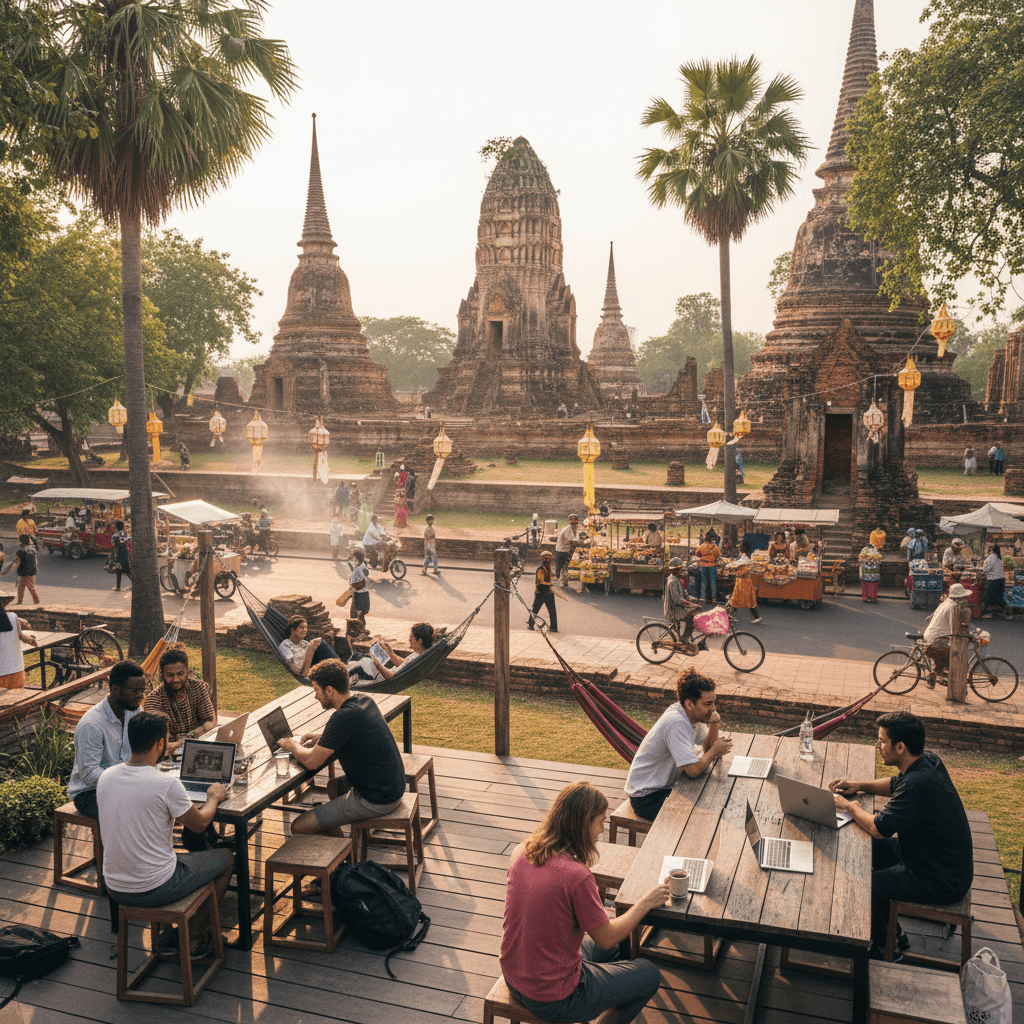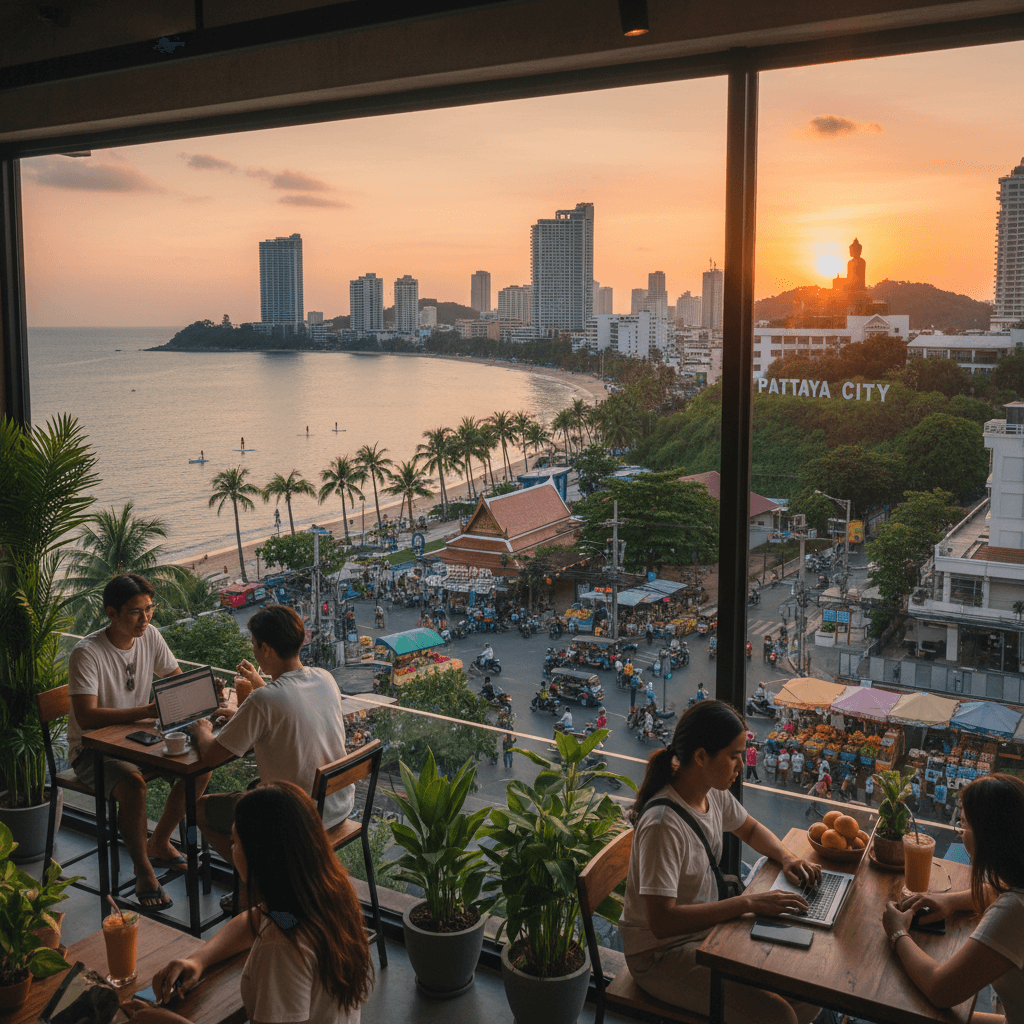
Pattaya
🇹🇭 Thailand
The Dual Soul of Pattaya
Pattaya is a city of stark contrasts that doesn't try to hide its rough edges. It’s a place where you can spend your morning on a high-speed fiber connection in a sleek Pratumnak Hill condo and your evening navigating the neon-soaked chaos of Walking Street or Soi 6. Many nomads find that the city’s reputation often overshadows its practical appeal: it’s one of the most affordable coastal hubs in Southeast Asia with infrastructure that rivals Bangkok.
The vibe here is less "spiritual retreat" and more "high-energy playground." You’ll share the sidewalk with retirees, young remote workers, and a heavy presence of international tourists. While the central area can feel loud and congested, the emotional payoff comes from the convenience. Everything you need, from 7-Eleven snacks to Lazada deliveries, is at your fingertips, making it an easy place to settle into a productive routine without the high price tag of Phuket.
Life on the Ground: Cost & Neighborhoods
Your lifestyle in Pattaya depends entirely on which neighborhood you call home. Experienced expats often recommend Jomtien Beach for those who want a cleaner, family-friendly environment with a more relaxed pace. If you prefer to be in the heart of the action with maximum walkability, Central Pattaya is the go-to, though travelers often note the constant noise can be a drain on focus.
- Central Pattaya: Best for solo travelers who want to be near coworking spaces. Expect to pay 15,000 to 25,000 THB for a modern 1BR.
- Jomtien: Offers the best value for money. You can find studios starting as low as 8,500 THB, and the area feels much more like a traditional seaside town.
- Pratumnak Hill: The "Beverly Hills" of Pattaya. It’s quiet and green with great views, with rents typically ranging from 15,000 to 30,000 THB.
- East Pattaya: Known as the "Dark Side" by locals, this area is inland and suburban. It's ideal for families needing large houses for 10,000 to 20,000 THB, but you’ll definitely need a car or scooter.
The cost of living remains a massive draw. A single nomad can live comfortably on $1,100 to $1,500 per month. Street food staples like Pad Thai or grilled seafood will only set you back 30 to 60 THB, while a mid-range dinner at Maha Thai Cuisine costs around 100 to 200 THB. Even upscale sunset dining at VIEW Pattaya is accessible at 500+ THB.
Work, Connectivity, and Community
Internet reliability is a highlight here. While mobile data averages around 19 Mbps, fixed broadband in most modern condos easily hits 200 to 600 Mbps. If you need a dedicated workspace to escape the humidity, the city has several solid options. Grindtime Co-Workspace in Pratumnak is a favorite for its community feel, with monthly passes typically starting around 3,000 THB. Letswork Pattaya and Regus Harbor Mall are also popular for those needing a more corporate environment.
Socializing usually happens organically at these coworking spots or through active Facebook and InterNations groups. For a more casual meet-up, nomads often gather at Bake n’ Brew or attend local socials. If you need a break from the screen, the ferry from Bali Hai Pier to Koh Larn is a quick, cheap escape to turquoise waters.
Staying Safe and Moving Around
Getting around is simple thanks to the iconic Baht Buses, blue pickup trucks that run set loops for just 10 to 20 THB. For direct trips, Grab and Bolt are essential apps to have on your phone, with most local rides costing around $3. While the city is generally safe, seasoned travelers suggest keeping a close eye on your belongings in crowded areas to avoid pickpockets.
Healthcare is world-class, which provides peace of mind for long-term stays. Bangkok Hospital Pattaya is JCI-accredited and the top choice for emergencies, while Pattaya International is another reliable option. For everyday needs, pharmacies are on nearly every corner, and the staff usually speak enough English to help with basic ailments.
The Practical Side
- Weather: Aim for November to February for the best weather. Avoid September and October if you don't like torrential rain.
- Connectivity: Pick up an AIS Super Tourist SIM at the airport or any 7-Eleven for roughly $36 for 30 days of unlimited data.
- Etiquette: Always remember to remove your shoes before entering someone’s home or smaller boutiques, and a polite Wai greeting goes a long way.
The Cost of Living in Pattaya
Pattaya offers a unique balance for digital nomads who want a beach-city lifestyle without the high price tag of Phuket or the landlocked feel of Chiang Mai. You can live comfortably here on a wide range of budgets, with monthly costs for a single nomad typically falling between $1,105 and $1,552 including rent. Many travelers find that their money goes significantly further here than in Western hubs, especially when it comes to high-end condos and dining out.
Experienced expats recommend starting your search in Jomtien if you want value, where studios and one-bedroom apartments range from 8,500 to 18,000 THB ($250-$530). If you prefer being in the heart of the action, Central Pattaya or Pratumnak Hill will cost more, usually between 15,000 and 25,000 THB ($440-$735) for a modern space. For those moving with a family or needing extra room, East Pattaya offers larger houses near Mabprachan Lake for 10,000 to 20,000 THB, though you'll likely need to rent a scooter or car to get around.
Eating and Drinking
Your food budget in Pattaya depends entirely on how much you embrace the local scene. You'll find nomads grabbing quick meals like Pad Thai or grilled meats from street stalls for 30 to 60 THB ($1-$2). Mid-range spots like Mae Sai Thong offer sit-down meals for 100 to 200 THB ($3-$6), while an upscale sunset dinner at VIEW Pattaya can easily run 500 THB ($15) or more.
Groceries are affordable if you stick to local markets, but imported goods at supermarkets can add up quickly. Most residents suggest using apps like Grab or LINE MAN for food delivery when you're working through a deadline, as delivery fees are usually less than a dollar.
Connectivity and Workspace
Reliable internet is a major draw for the remote work crowd. While mobile data averages around 19 Mbps, fixed broadband in most modern condos reaches speeds between 200 and 600 Mbps. You can pick up a 10GB mobile data plan for about $7, or go for an unlimited 30-day "Super Tourist" SIM from AIS for roughly $36.
If you need a professional environment, Pattaya has several established coworking hubs:
- Grindtime Co-Workspace Pratumnak: A popular nomad favorite with day passes for 250 THB ($7) and monthly memberships around 3,000 THB ($88).
- Letswork Pattaya: Offers a more premium feel at 500 THB per day or 3,999 THB per month.
- Regus Harbor Mall: Best for those needing a corporate setting, with monthly desks around 4,430 THB.
Transport and Practicalities
Getting around is cheap if you use the local "baht buses" (songthaews), which follow set routes for just 10 to 20 THB. For direct trips, travelers often note that the Bolt and Grab apps are the most reliable way to get around, with average rides costing around $3. If you're comfortable on two wheels, monthly scooter rentals hover around 3,000 THB ($88), but be wary of the city's chaotic traffic and frequent police checkpoints.
Healthcare is world-class but can be pricey without insurance. Bangkok Hospital Pattaya is the top choice for expats due to its international accreditation, while Pattaya Memorial is a solid mid-range alternative. For daily expenses, keep a Wise or Revolut card handy, but carry some cash for street vendors and small shops, as many still don't accept international credit cards.
For Digital Nomads and Solo Travelers: Central Pattaya
If you want to be in the heart of the action, Central Pattaya is your go-to. Many nomads find this area ideal because it's the most walkable part of the city, packed with shopping malls, gyms, and endless dining options. You'll find a high concentration of coworking spaces here, including Letswork Pattaya and Regus Harbor Mall, where monthly memberships hover around 3,999 to 4,430 THB.
Solo travelers often note that while it's convenient, it can get incredibly noisy and crowded, especially near Walking Street or Soi 6. It's a high-energy environment where you'll pay between 15,000 and 25,000 THB for a modern 1-bedroom condo. To get around, just hop on a baht bus for 10 to 20 THB; they run constant loops through the main avenues until 10 pm.
For Expats and Remote Workers: Jomtien Beach
Experienced expats recommend Jomtien if you want a more relaxed beach-city vibe without the sensory overload of the center. It's a favorite for those staying long-term because rents are significantly lower, ranging from 8,500 to 18,000 THB for a studio. The beaches here are cleaner, and the sidewalk cafes provide a great backdrop for afternoon emails.
You won't be isolated here, either. Jomtien has a strong community feel with plenty of expat-focused bars and restaurants like Maha Thai Cuisine, where a solid meal costs 100 to 200 THB. While it's a bit farther from the main malls, Grab and Bolt rides are cheap and plentiful, usually costing around $3 for a quick trip into town.
For Families and Quality Seekers: East Pattaya and Naklua
Families often gravitate toward East Pattaya, specifically around Mabprachan Lake. It's a suburban escape where you can rent a large house for 10,000 to 20,000 THB, offering much more space than the coastal high-rises. It’s close to international schools like Tara Pattana and Rugby, though you'll definitely need a car or scooter to get around as it's not walkable.
For a more upscale, "resort" lifestyle, Naklua and Wongamat are the top choices. These neighborhoods feature serene beaches and luxury condos. Travelers often note these areas feel more exclusive and quiet, making them perfect if you’re moving with children or just want to avoid the city’s seedy reputation. For a high-end night out, VIEW Pattaya offers sunset dining with meals starting around 500 THB.
For Retirees and Couples: Pratumnak Hill
Often called the "Beverly Hills" of Pattaya, Pratumnak Hill sits right between Central Pattaya and Jomtien. It's the best of both worlds: quiet, green, and elevated enough to offer great sea views. Retirees love this area for its upscale villas and the popular The Sky Gallery, which offers day passes for 250 THB if you still have a few projects to finish.
Condo prices here are mid-range to high, typically 15,000 to 30,000 THB per month. The terrain is quite hilly, so most residents rely on motorbike taxis or the Line Man Taxi app to navigate the slopes. It feels like a private enclave, yet you’re only a five-minute ride away from the main piers and nightlife hubs.
Practical Neighborhood Tips
- Connectivity: No matter where you land, grab an AIS or True tourist SIM at a 7-Eleven. Unlimited plans range from 449 to 1,199 THB.
- Safety: Stick to well-lit areas at night and use Grab rather than walking home in the dark through Walking Street or LK Metro to avoid petty scams.
- Transport: If you're staying in the hills or the East, a monthly scooter rental for 3,000 THB is the most efficient way to move.
- Healthcare: Most expats head to Bangkok Hospital Pattaya for international-standard care; it's JCI-accredited and centrally located.
Connectivity and Speed
You won't have much trouble staying connected in Pattaya. The city's fixed broadband is surprisingly robust, with speeds typically ranging between 200 and 600 Mbps. Most modern condos and cafes provide reliable fiber connections that can handle video calls and heavy uploads without breaking a sweat.
For mobile data, travelers often note that the "nomad average" sits around 19 Mbps, which is plenty for basic tasks but might feel sluggish for data-heavy work. Experienced expats recommend grabbing a local SIM card immediately upon arrival. You can find AIS, True, or DTAC tourist plans at the airport or any 7-Eleven for 449 to 1,199 THB ($13, $35), depending on whether you need it for 8 or 30 days.
If you're planning a longer stay, many nomads prefer the AIS Super Tourist plan, which offers 300GB for 30 days at roughly $36. It's a solid insurance policy for those days when the cafe WiFi decides to take a nap.
Top Coworking Spaces
Pattaya has a growing list of dedicated workspaces that cater to different vibes. Whether you want a social atmosphere or a quiet corner to grind, you've got options:
- Grindtime Co-Workspace (Pratumnak): This is a favorite for those staying on the hill. It’s affordable and functional, with day passes at 250 THB ($7) and monthly memberships around 3,000 THB ($88).
- Letswork Pattaya: A more premium option that many nomads find worth the extra cost for the amenities and community. A day pass is 500 THB, while a monthly spot goes for 3,999 THB.
- Regus (Harbor Mall): If you need a corporate, professional environment for serious meetings, this is the spot. Monthly access starts around 4,430 THB.
Work-Friendly Cafes
If you prefer the hum of a coffee shop over a formal office, Pattaya’s cafe scene is expanding. Bake n' Brew is a staple for the laptop crowd, offering comfortable seating and decent power outlet access. Travelers often note that while Central Pattaya has the most options, the cafes in Jomtien and Pratumnak tend to be quieter and less crowded during peak hours.
Just remember the "cafe etiquette" most expats follow: if you're staying for several hours, it's best to order a meal or a second coffee to keep the staff happy. Most places are accommodating as long as you aren't camping out on a single espresso all afternoon.
Digital Nomad Logistics
Managing your workflow in Pattaya is relatively seamless if you use the right tools. For getting to your coworking space, Grab and Bolt are the essential apps to have on your phone. Rides usually cost around $3 for a 3km trip, making it easy to hop between your condo and your favorite workspace.
For financial management, many nomads recommend using Wise or Revolut to avoid the steep 220 THB fee charged by local ATMs. If you do need to withdraw cash, try to take out the maximum amount (usually 10,000 to 20,000 THB) to minimize the impact of those fees. For long-term housing near these hubs, platforms like Hipflat or DotProperty are the go-to resources for finding monthly rentals in neighborhoods like Central or Jomtien.
One thing to keep in mind: while the internet is great, the local authorities occasionally conduct checks on foreigners. Travelers often suggest carrying a digital copy of your passport and your latest entry stamp on your phone just in case you're asked for ID while working in public spaces.
Staying Safe in Pattaya
Pattaya is generally safe for digital nomads, but it requires a bit more street smarts than your average beach town. While violent crime against foreigners is rare, the biggest physical risk is actually the chaotic traffic. Many nomads find that navigating the narrow streets on a scooter can be intimidating, so if you aren't an experienced rider, it's better to stick to Grab or Bolt for getting around.
In terms of personal security, travelers often note that pickpocketing and petty scams are the primary concerns, particularly in high-traffic nightlife zones like Walking Street, Soi 6, and LK Metro. It’s best to keep your phone and wallet secure in these areas, especially late at night. Experienced expats recommend carrying a digital copy of your passport on your phone rather than the physical document to avoid losing it during a night out.
While the city has a heavy 24-hour party reputation, solo female travelers often find that Jomtien Beach or Pratumnak Hill offer a much more relaxed and comfortable environment. Many nomads mention that while the central areas can feel a bit seedy due to the sex tourism industry, the residential neighborhoods feel like a completely different, safer world. You might occasionally see police checkpoints targeting foreigners; usually, they're just checking for valid motorcycle licenses or helmets, so always keep your paperwork in order.
Healthcare & Hospitals
If you get sick or injured, you're in good hands. Pattaya is a major hub for medical tourism, and the private hospitals here are world-class. Bangkok Hospital Pattaya is the gold standard, it’s JCI-accredited and has English-speaking staff available 24/7. You can reach them at 1719 or +66 38 259 999.
For more routine issues or if you're looking for slightly lower costs, travelers also recommend:
- Pattaya International Hospital: Centrally located and very efficient for minor emergencies or consultations (+66 38 428 374).
- Pattaya Memorial Hospital: Another reliable option in the city center (038-488-777).
- Local Pharmacies: These are everywhere, and the pharmacists are often highly trained and can provide over-the-counter advice for minor ailments like "stomach issues" or heat exhaustion.
Most nomads use international health insurance, but for out-of-pocket visits, a standard consultation at a top-tier hospital usually starts around 1,500 to 3,000 THB. It's affordable compared to Western prices, but it adds up quickly without a policy.
Emergency Contacts
Save save these numbers in your phone as soon as you land. The Tourist Police are specifically trained to help foreigners and usually speak excellent English.
- Tourist Police: 1155 (Your first call for safety issues or scams)
- General Police: 191
- Ambulance & Rescue: 1669 or 1337
Overall, if you stay aware of your surroundings and avoid the late-night drama of the main bar strips, you'll find Pattaya to be a functional and secure base for your remote work stint.
The Baht Bus Experience
Navigating Pattaya is unique because of the Songthaew, more commonly known as the Baht Bus. These dark blue pickup trucks with benches in the back circulate fixed routes around Beach Road and Second Road 24/7. You don't need to ask where they're going; just hop on and ring the buzzer when you want to get off.
The standard fare is just 10 to 20 THB per person. Experienced expats recommend keeping small change handy, as drivers don't always like breaking large bills. If a driver is parked and empty, they might try to negotiate a private "taxi" price, so it's usually better to flag down one that's already moving to keep the local rate.
Ride-Hailing and Apps
While Central Pattaya is relatively walkable, you'll need apps for almost everything else. Bolt and Grab are the most popular downloads here. Bolt is often the cheaper choice for budget-conscious travelers, while Grab offers more consistent service and LINE MAN Taxi is a great backup during peak hours.
A typical 3km trip via ride-hailing usually costs around $3 (100-110 THB). For solo travelers, motorbike taxis (look for the guys in orange vests) are the fastest way to slice through the city’s notorious traffic. They're particularly useful for getting up the steep inclines of Pratumnak Hill where Baht Buses don't frequently roam.
Renting Your Own Wheels
If you're staying for a month or more, many nomads find that renting a scooter offers the most freedom. Monthly rentals typically start around 3,000 THB ($88). It’s a cost-effective way to get from residential areas like East Pattaya or Jomtien to the central coworking hubs.
However, travelers often note that Pattaya’s traffic is chaotic and can be dangerous for the inexperienced. You’ll need an International Driving Permit (IDP) and a helmet to avoid frequent police checkpoints. If you aren't comfortable on two wheels, sticking to the apps is a much safer bet.
Getting to and from the Airport
Most nomads arrive via Bangkok’s Suvarnabhumi Airport (BKK), which is about a 90-minute to 2-hour drive away. You can book a private transfer for 1,000 to 1,500 THB, or use the Roong Reuang Coach bus service for around 143 THB, which drops you at the Jomtien Bus Station.
If you’re flying domestically or from select international hubs, U-Tapao Airport is even closer (about 45 minutes). A Grab or private car from U-Tapao usually runs between 600 and 1,000 THB. For those heading to the islands, Bali Hai Pier is the main terminal for ferries and speedboats to Koh Larn.
Navigating the Neighborhoods
- Central Pattaya: Highly walkable with the highest density of 7-Elevens and malls, but very noisy.
- Jomtien: Better for long-term stays; you'll rely heavily on the 10-baht bus line that runs along the coast.
- Pratumnak Hill: Quiet and scenic but hilly; you'll definitely want a scooter or a Bolt account here.
- East Pattaya: Located "darkside" (east of the Sukhumvit highway), this area is car-dependent and best for those with their own transport.
Navigating the Linguistic Landscape
In Pattaya, you'll find a unique linguistic blend. While Thai is the official language, the city’s status as a massive international hub means English is the primary bridge for commerce, nightlife, and tourism. In neighborhoods like Central Pattaya and Jomtien, you’ll rarely struggle to order a meal or book a tour using English.
However, travelers often note that English proficiency drops significantly once you step away from the main tourist strips or head into East Pattaya. Many nomads find that while shopkeepers and hotel staff speak functional English, deep conversations can be a challenge. You'll likely encounter a "Pattaya English", a simplified version of the language used to navigate daily transactions.
There is also a heavy international presence that shapes the local sounds. Experienced expats recommend being prepared for a significant amount of Russian signage and speech, particularly in Pratumnak Hill and Jomtien, where the Eastern European community is most concentrated.
Essential Thai Phrases for Daily Life
Even though you can get by with English, locals genuinely appreciate when you make an effort. Using a few Thai words often results in better service and a warmer reception. It’s also a practical way to show respect for the local culture.
- Sawasdee krub (male) / ka (female): Hello / Goodbye.
- Khop khun krub / ka: Thank you.
- Tao ryy nao?: How much? (Essential for markets and street food).
- Mai phet: Not spicy (Crucial if you aren't ready for Thai chili levels).
- Chai / Mai chai: Yes / No.
Communication Tools and Apps
Technology is your best friend when the language barrier feels too high. Most digital nomads rely on Google Translate, specifically the camera feature which allows you to scan menus and street signs in real-time. For those looking to go deeper, the Learn Thai - 5,000 Phrases app is a popular choice among long-term residents.
For daily logistics, Grab and Bolt are indispensable. These apps allow you to input your destination in English, eliminating the need to explain directions to drivers who may not speak your language. Similarly, LINE is the king of communication here; almost every business, from your landlord to your local laundry service, will prefer to chat via LINE rather than phone calls.
Connectivity and SIM Cards
Staying connected is easy and affordable. You don't want to rely on spotty hotel WiFi when you're out and about. You can pick up a SIM card at the airport upon arrival or at any 7-Eleven across the city. The main providers are AIS, True, and DTAC.
- AIS Tourist Plans: Offer up to 50GB for 30 days for around 900 THB (~$25).
- Standard Tourist Plans: Usually range from $13 to $35 (449, 1,199 THB) for 8 to 30 days of unlimited data.
- Mobile Data: Expect to pay around $7 per 10GB if you are topping up a local prepaid card.
While the city's mobile internet averages around 23 Mbps, fixed broadband in condos often reaches 100-1000 Mbps depending on the provider. This makes Pattaya a reliable base for those who need to jump on video calls without lag.
Social Etiquette and Non-Verbal Cues
Communication in Thailand isn't just about what you say. The Wai, placing your palms together at chest height and bowing slightly, is the standard greeting. It’s a sign of respect that goes a long way. Experienced expats suggest always carrying a physical copy of your passport or a clear photo on your phone, as you may occasionally need to show it if stopped by local authorities or when checking into certain venues.
Lastly, remember that Thai culture values "saving face." If there is a misunderstanding, stay calm and keep a smile on your face. Raising your voice or showing frustration is considered rude and is usually the least effective way to get what you need.
The Three Seasons of Pattaya
Pattaya stays hot year-round, with temperatures typically hovering between 28°C and 33°C. However, the humidity and rainfall patterns change significantly depending on when you visit. Most nomads divide the year into three distinct phases: the cool and dry season, the hot season, and the monsoon season.
The dry season runs from November to February and is widely considered the best time to settle in. During these months, temperatures are a comfortable 23°C to 31°C, and rain is almost non-existent. You'll get clear blue skies and calm seas, which is perfect for working from beachside cafes in Jomtien or taking the ferry from Bali Hai Pier to Koh Larn for a day trip.
From March to May, the heat intensifies, often peaking around 35°C. This is the "hot season," where the humidity can make even a short walk in Central Pattaya feel like a workout. If you're here in April, prepare for Songkran, the Thai New Year water festival, which turns the entire city into a giant water fight for several days.
The rainy season takes over from June to October. While it doesn't rain all day every day, you can expect short, torrential downpours that occasionally cause flash flooding on streets like Soi Buakhao. September and October are the wettest months, seeing up to 21 rainy days and 259mm of precipitation. Many nomads find this a great time to buckle down at coworking spaces like Grindtime or Letswork since outdoor activities are more limited.
Monthly Weather Breakdown
- January: Highs of 30.6°C with only 1 day of rain on average. This is peak season, so expect higher prices for short-term rentals in Pratumnak Hill.
- February: Similar to January but slightly warmer. It's the last month of "perfect" weather before the humidity climbs.
- March: The transition to the hot season. Highs reach 32°C, and the air starts to feel much heavier.
- April: The hottest month of the year, averaging 32.9°C. You'll want to stay near Central Festival or other air-conditioned malls during the afternoon.
- May: High temperatures continue, but the first cooling thunderstorms begin to arrive, averaging 12 rainy days.
- June - August: A mix of sun and clouds. Rainfall is frequent but usually predictable, happening in the late afternoon or evening.
- September: The wettest month with roughly 17 days of rain. Travelers often note that traffic becomes even more chaotic during these storms.
- October: The tail end of the monsoon. It remains very wet, but by late October, the breeze starts to shift, signaling the return of the dry season.
- November: The rain stops abruptly. Skies clear up, and the "high season" officially kicks off as temperatures drop back to a pleasant 30°C.
- December: One of the driest months. It's the most popular time for digital nomads to arrive, so it’s wise to book your condo through Hipflat or DotProperty well in advance.
When to Visit: The Nomad Perspective
If you're looking for the best balance of weather and social life, aim for November through January. Experienced expats recommend this window because the humidity is low enough to enjoy outdoor spots like VIEW Pattaya or the hills of Pratumnak without constant sweating.
Budget-conscious travelers often prefer the "shoulder months" of May or June. While you'll deal with some rain, accommodation prices in Jomtien can drop significantly, and the popular coworking spots are less crowded. Just make sure you have Grab or Bolt installed on your phone; you won't want to be caught waiting for a 10 THB baht bus in the middle of a tropical downpour.
Regardless of when you arrive, the coastal breeze makes Pattaya's heat more manageable than the stagnant air of Bangkok. Just remember to pack light, breathable clothing and keep a 7-Eleven poncho handy if you’re visiting during the autumn months.
Getting Around Like a Local
Navigating Pattaya is a mix of old-school charm and modern convenience. The most iconic way to get around is the Baht Bus (Songthaew), which follows set routes for just 10-20 THB. You simply hop on the back and ring the buzzer when you're ready to get off.
For more direct trips, download Grab, Bolt, or LINE MAN Taxi. These apps are essential for avoiding the "tourist tax" often added to unmetered street taxis. A typical 3km ride costs around $3. If you’re staying in the hills of Pratumnak, motorbike taxis are available 24/7 to zip you up the steep inclines.
Many experienced expats recommend renting a scooter for about 3,000 THB per month if you're comfortable with chaotic traffic. Just keep in mind that outside of Central Pattaya, the city isn't very walkable, so you'll definitely want a set of wheels or a reliable app.
Staying Connected
Digital nomads often note that Pattaya’s infrastructure is surprisingly robust. You can expect fixed broadband speeds between 200-600 Mbps in most modern condos. For mobile data, travelers find the AIS Super Tourist SIM (around $36 for 300GB) or plans from DTAC and True to be the most reliable options.
If you need a professional environment, Grindtime Co-Workspace in Pratumnak is a favorite, offering day passes for 250 THB and monthly memberships for 3,000 THB. Other solid options include Letswork Pattaya and Anchor Coworking. For a more casual vibe, Bake n' Brew is a popular cafe where you'll often see people working on laptops.
Money and Budgeting
Pattaya remains incredibly affordable compared to Western hubs. A single nomad can live comfortably on $1,105 to $1,552 per month. Rent varies significantly by neighborhood: a studio in Jomtien might cost 8,500-18,000 THB, while a high-end 1BR in Central or Pratumnak ranges from 15,000-25,000 THB.
- Street food: Expect to pay 30-60 THB for Pad Thai or basic seafood dishes.
- Mid-range dining: Places like Maha Thai Cuisine usually cost 100-200 THB per meal.
- Banking: Use Wise or Revolut to manage transfers. ATMs are everywhere, but they usually have a 10,000 THB withdrawal limit and a local fee.
Safety and Health
While Pattaya is generally safe, nomads often warn about petty theft and scams in high-traffic areas like Walking Street, Soi 6, and LK Metro. It's best to keep your wits about you after dark. The biggest physical risk is actually the traffic, so always wear a helmet if you're on a bike.
The healthcare here is world-class. Bangkok Hospital Pattaya is JCI-accredited and the go-to for serious issues, while Pattaya International and Pattaya Memorial are also reliable. Pharmacies are on almost every corner and can handle most minor ailments. In an emergency, dial 1155 for the Tourist Police or 1669 for an ambulance.
Cultural Etiquette and Language
English is widely understood in tourist zones, but learning a few Thai phrases like Sawasdee (hello) and Khop khun (thank you) goes a long way. Use the Google Translate app for more complex interactions. Locals appreciate the Wai greeting (pressing your palms together), and it’s mandatory to remove your shoes before entering someone's home or certain small shops.
Always carry a copy of your passport and be mindful of laws regarding the monarchy, which are strictly enforced. To fit in, dress a bit more conservatively when visiting temples or official buildings, save the beachwear for the sand.
Weather Windows
The best time to visit is from November to February. The weather is dry and sunny with manageable temperatures between 23°C and 31°C. Many travelers find September and October less ideal because of torrential rains, though the lower prices during this "green season" can be a draw for budget-conscious nomads.
Need visa and immigration info for Thailand?
🇹🇭 View Thailand Country GuideNomad Haven
Your home away from home
Monthly Budget Estimates
More cities in Thailand
Chanthaburi
🇹🇭 Thailand
Phuket City
🇹🇭 Thailand
Krabi Town
🇹🇭 Thailand