Paro
🇧🇹 Bhutan
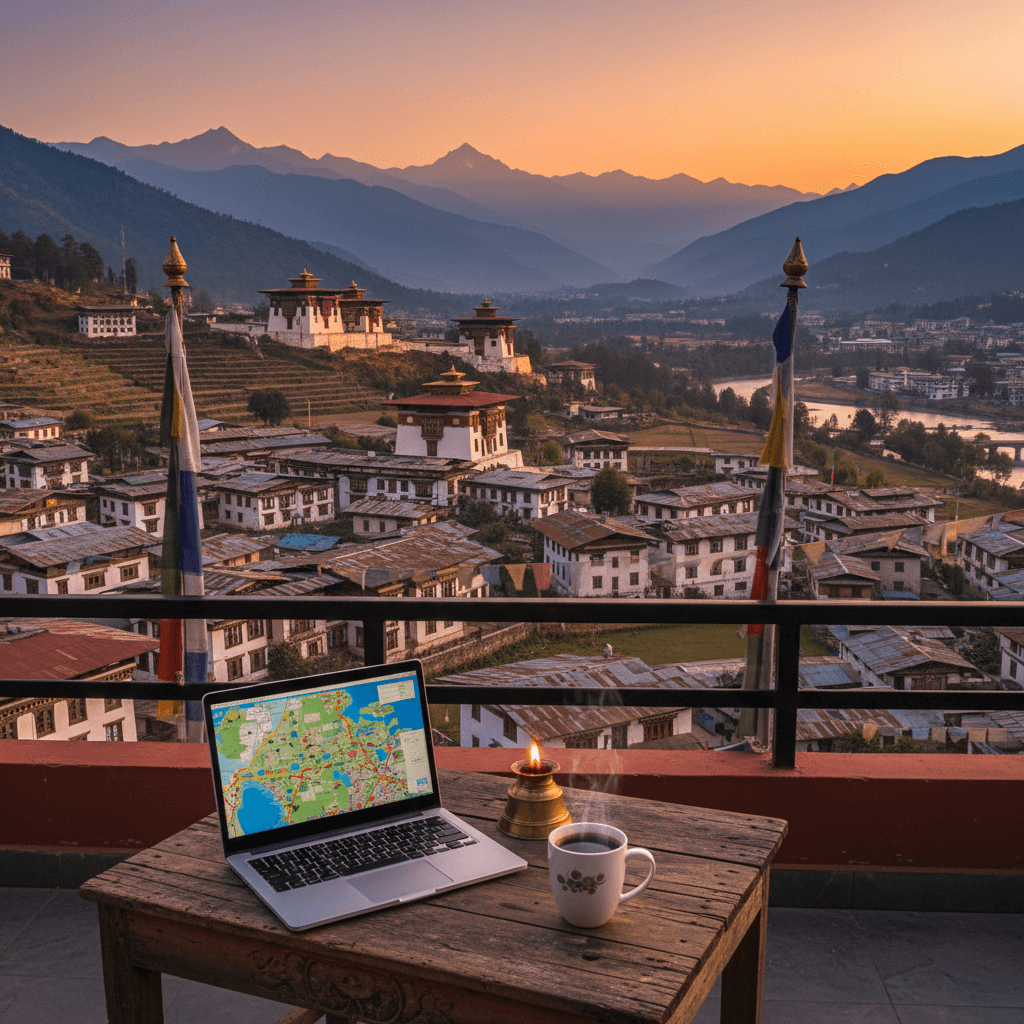
Paro feels slow in a way most places only pretend to be. The valley opens up with rice paddies, prayer flags and the dark shape of dzongs against the hills, then Tiger’s Nest sits above it all like a dare and honestly, the whole place runs on quiet mornings, tea breaks and a very Buddhist idea of time.
That calm is the draw. Not the infrastructure. Digital nomads come for deep focus, clean air and the fact that a basic month can stay around $400 to $900, but they also run into weak WiFi, a tiny expat circle and stretches of isolation that can feel lovely on a Tuesday and maddening by Friday.
What it feels like
- Daily rhythm: Soft, unrushed and a little stubborn, with temple bells, road dust and the smell of chili cheese drifting from lunch spots.
- Social scene: Small enough that you’ll recognize faces fast, which, surprisingly, can feel both comforting and claustrophobic.
- Focus: Excellent for writing, planning or solo work, if you can live with a slower pace and occasional internet hiccups.
Paro Town Center is the easiest base, with walkable cafés, restaurants and Dzong views, while Bondey feels more rural and cheaper, Drukgyel is the pick if you want wilderness and fewer distractions and Shaba near the airport is handy if you’re in and out a lot. The tradeoff is simple, convenience costs more noise and peace usually means a longer taxi ride.
Practical vibe check
- Internet: Usually 10 to 20 Mbps in town, good enough for calls and email, spotty for heavy uploads.
- Getting around: Walk the center, grab taxis for short hops or use Drukride if you don’t want to flag one down.
- Costs: Local meals are cheap, rent outside town is lower and a mid-range setup with a 1BR and café days lands around $600.
Safety isn’t the issue here, boredom can be. The town feels clean and calm, people are polite and you don’t really get the usual city stress, but if you need nightlife, coworking variety or constant social churn, Paro will feel thin fast and that’s the honest read.
Paro can be cheap, but it isn't bargain-basement cheap. A single person spends about $450 a month on average with rent or roughly $267 without it and that number climbs fast once you start paying for taxis, imported snacks and the occasional hotel coffee that tastes better than it should.
The sweet spot for most nomads is around $600 a month, though honestly that depends on how much you care about a private room, a proper desk and not eating momos every night. Budget travelers can scrape by near $400 with shared housing and local food, while a more comfortable setup lands closer to $900 if you want cafes, better WiFi and a few lazy dinners out.
Typical monthly costs
- 1BR in town: about $181 in the center, closer to $135 on the outskirts.
- Lunch: around $2.80 for a local menu or street food plate.
- Dinner for two: about $16.90 at a mid-range spot.
- Fast food: roughly $4.20.
- Transport: about $39 a month, though short taxi rides are cheap.
- Internet: around $21 monthly and the speed can be flaky, weirdly enough for such a peaceful place.
Housing is where your budget really shifts. Paro Town Center costs more, but you get walkability, restaurants and views of the dzong, so most solo travelers pay the premium and accept the noise of scooters, dogs and the odd horn blast outside their window.
Where people spend
- Paro Town Center: best for convenience, social life and walkable errands.
- Bondey: cheaper, quieter, more farmland and farmhouse energy.
- Drukgyel: remote, scenic and better if you want silence near Tiger's Nest.
- Shaba/Airport Area: practical for frequent flyers, less pretty, more functional.
Food stays affordable if you eat like a local. Sonam Trophel and similar places will keep you fed without wrecking your budget, but imported cheese, wine and Western brunch habits can push costs up fast, especially when the rain starts hammering on tin roofs and you keep ordering another coffee to stay warm.
There aren't many real coworking options, so people patch things together. Hotel business centers charge about $5 to $15 a day, cafes are fine for a few hours if you buy enough coffee and the internet, frankly, works well enough for email and calls, then randomly sulks when you try to upload anything heavy.
If you're used to Bangkok or Tbilisi prices, Paro can feel calm and affordable. If you're expecting a polished digital nomad bubble, it'll feel sparse, quiet and a little lonely, though the tradeoff is clean air, low stress and a monthly bill that doesn't make your stomach drop.
Nomads
Paro Town Center is the obvious base if you want to work, walk, eat, repeat. Cafes, small shops and Dzong views are all close together and honestly that saves you a lot of taxi haggling when the afternoon rain starts tapping on tin roofs. The tradeoff is noise, with honking, school kids and the occasional tour group spilling out near the main streets.
- Best for: Walkable living, quick coffee stops, easy social contact
- Rent: Around $80 to $200 for a modest 1BR, more if you want nicer finishes
- Internet: Usually fine for email and calls, though uploads can crawl
If you work online, this is the least annoying option, weirdly enough, because the internet is still shaky but the practical stuff is all nearby. You can grab coffee at Brioche Café or Mountain Café, then shift to a hotel business center like Zhiwaling when you need a quieter desk. Don't expect a coworking scene, there isn't one in the usual sense.
Expats
Shaba, near the airport, suits expats who want cleaner logistics and newer guesthouses. Flights are ten minutes away by taxi, which, surprisingly, matters a lot when you're carrying gear, dealing with weather delays or just sick of valley roads. It feels less scenic than central Paro, but it's easier to live with day to day.
- Best for: Frequent flyers, short stays, practical setups
- Rent: Mid-range guesthouses and serviced places, often around town pricing or a bit higher
- Downside: Less atmosphere, fewer places to linger after dark
Shaba works if you want decent access without being in the thick of town noise. You'll still rely on taxis and the social scene is thin, so if you want dinner chats and a little foot traffic, Paro Town Center still wins.
Families
Bondey is the calmer pick, with farmhouse-style living, fields and fewer tourists in your face. Kids have more room to breathe, the air smells like wet earth after rain and the pace is slower, though you'll be driving into town for most errands. It's cheaper than the center and that's the main reason families look here.
- Best for: Space, quiet, a more local feel
- Rent: Often cheaper than town, with some places around $50 to $120 in the outskirts
- Downside: About 10 minutes from town, so you can't just wander out for everything
Families who stay here usually want a simple routine, not nightlife or convenience at every corner. The roads can be dusty, the hills get chilly at night and you'll hear farm dogs before sunrise, but if your priority is calm, Bondey makes sense.
Solo Travelers
Drukgyel is the move if you're here for monasteries, mountain air and a bit of silence that actually sticks. It's the best fit for solo travelers who want the Tiger's Nest area nearby and don't mind feeling remote, because amenities are thin and dinner options dry up fast. Bring a good book and a backup SIM.
- Best for: Spiritual stays, hiking, unplugged time
- Rent: Often modest, but you're paying for location and views more than convenience
- Downside: Sparse shops, patchy connectivity, long quiet evenings
If you want people around, don't pick Drukgyel. If you want stillness, go there, then come back to town for laundry, better food and the tiny bit of nightlife Paro has, which mostly means cafes staying open late and locals lingering over tea.
Paro’s internet is fine for normal remote work and a little annoying for anything heavy. On Bhutan Telecom fiber, you’re usually looking at 10 to 20 Mbps download, with 4G LTE in town sitting in a similar range, good enough for email, Slack and video calls, but uploads can crawl when the weather turns wet or the line gets congested.
Honestly, that’s the Paro tradeoff, quiet mornings, clean air, prayer flags snapping in the wind and then a connection that sometimes feels like it’s thinking about your request before answering. If you’re uploading large design files or living in cloud backups, plan for delays, because the network gets spotty outside the town center and the monsoon months make it worse.
Where to Work
- Hotel business centers: Zhiwaling and Gangtey Palace are the easiest paid options, usually around $5 to $15 a day, with a decent desk, quieter rooms and staff who won’t care if you stay all afternoon.
- Cafes: Coffee culture is small but useful and places like Brioche Café, Mountain Café and Thermion’s are where most nomads park with a laptop, buy a coffee and stretch a few hours into half a day.
- Retreat spaces: LiveBeyond-style work retreats bundle workspace with lodging, but they’re more immersion than practical coworking and the price tag, frankly, is high if you just need a desk.
There isn’t a real coworking scene here, so don’t arrive expecting glass walls, beanbags or a room full of startups. The city is too small for that and weirdly, that’s part of the appeal, because the lack of distraction makes deep work easier if you can live with the occasional router tantrum.
Connection Tips
- SIM cards: Buy B-Mobile or TashiCell prepaid service at the airport or in town, tourist plans are cheap enough for backup data.
- eSIMs: Airalo and similar services can save you the hassle of hunting for a shop after landing.
- Backup habits: Download files before calls, keep offline copies and don’t leave a big upload for the end of the day, because evening speeds can get patchy.
If you need reliable office energy, Paro isn’t that place. If you want a mountain valley, low noise and a reason to leave your phone alone for a few hours, it works and honestly, that calm is what a lot of nomads end up remembering most.
Paro feels safe in a way that’s hard to fake. Crime is low, people leave doors unlocked more often than you’d expect and you can walk around town without that constant little scan over your shoulder, though the streets do get quiet fast after dark.
The bigger risk is boring, inconvenient stuff, not street crime, honestly. A twisted ankle on the Tiger’s Nest trail, a bad stomach bug, a scooter fall on a wet road, that’s the kind of thing that actually interrupts your week and in Paro the clinic options are limited enough that you’ll want a clear plan before anything goes wrong.
Healthcare Basics
- Primary care: Paro Hospital handles basic treatment, checkups and first response, but don’t expect a big-city setup.
- Serious cases: You’ll usually be sent to JDWNRH in Thimphu, about 1 to 1.5 hours away by road, which, surprisingly, can feel longer if the weather turns ugly.
- Pharmacies: Easy to find in town for routine meds and minor issues, though stock can be patchy, so bring your own prescriptions.
- Emergency: Dial 112.
Travel insurance isn’t optional here, it’s the thing that keeps a headache from turning into a disaster. Bring coverage that includes evacuation and hospital transfer, because if you need anything beyond basic care, the transfer to Thimphu can eat up half a day once you add the road, paperwork and waiting around.
Where It Feels Easiest
- Paro Town Center: Best if you want quick access to pharmacies, taxis and the hospital, plus you’re close to cafés and shops.
- Shaba, near the airport: Handy for frequent flyers and decent if you want newer guesthouses with simpler logistics.
- Bondey: Quieter and more rural, but you’ll be relying on a car more often.
The air is clean, the valley’s calm and that does help your nerves, but don’t mistake serenity for convenience. If you’ve got asthma, a chronic condition or you’re travelling with kids, pack meds, copies of prescriptions and a few basics like rehydration salts and blister care, because once rain starts tapping on tin roofs and the hills disappear into mist, you’ll be glad you came prepared.
Paro is small enough that you can cross town on foot in 15 to 20 minutes and honestly, that’s how most people get around. The streets are quiet, the air smells like woodsmoke and curry at dinner time and if you’re in the center you won’t need much beyond a decent pair of shoes.
That said, don’t expect a big-city transit system. There are no public buses in town, taxis fill the gap and short rides usually cost about $1 to $2, which is cheap until you start using them every day.
On Foot
- Best for: Town center, riverside walks, cafés, dzong views
- Why it works: Most of Paro is flat enough for easy walking, though the air gets thin on steeper side roads
- Watch for: Cold mornings, slippery rain and the occasional barking dog at dusk
Walking is the default here and it’s the smartest choice if you’re staying near Paro Town Center. Shops, restaurants and guesthouses are clustered tightly together, so you can grab momos, cross the river, then head back without ever hailing a cab.
Taxis and Ride-Hailing
- Short rides: About $1 to $2
- Longer trips: Roughly $18.80 for 8 km
- App: Drukride for cab hailing and some bus tickets
- Airport run: Around 10 minutes from town
Taxis are the workhorse here and the meter culture you might expect elsewhere just doesn’t really exist in the same way. Drukride helps, which, surprisingly, makes the whole thing less awkward than waving down a cab and guessing the fare while traffic hums and horns echo off the valley.
Bikes, Drivers and Day Trips
- Bike rentals: Often available through hotels, good for valley paths
- Car plus driver: About $30 to $50 a day
- Use it for: Tiger’s Nest access points, Drukgyel, Haa Valley, rural sightseeing
Bikes work well if you want a slower ride through the valley, but they’re best for people who don’t mind uneven roads and the occasional gust of dusty wind. For anything beyond town, a car and driver is the move, because the routes out toward Haa Valley or Drukgyel are too spread out for casual self-driving and frankly, you’ll waste half a day trying to piece it together yourself.
If you’re staying near the airport area, you’ll trade some scenery for convenience. It’s quick, it’s practical and that’s the point. If you want the valley feeling, stay central and walk more.
Language in Paro is pretty straightforward, even if daily life has a slight rhythm shift. Dzongkha is the main language, Nepali is spoken by a minority and English is widely used in hotels, restaurants and most places that deal with foreigners, so you can usually get by without sweating every conversation.
That said, don't expect flawless English everywhere. A café server may understand your order just fine, then blank out on anything more nuanced, and, honestly, that's part of the charm and the friction, especially when you're trying to sort a taxi, ask about SIM cards or explain that your WiFi keeps dropping again.
Useful phrases help. Tashi delek works for hello, goodbye and good luck, which, surprisingly, covers a lot of ground. Shu lay log jay gae means see you later and Naba che gae means see you tomorrow, both handy if you end up chatting with a guesthouse owner or driver for a few days.
- Greeting: “Tashi delek”
- See you later: “Shu lay log jay gae”
- See you tomorrow: “Naba che gae”
Google Translate is the workhorse here and it usually gets the job done for menus, signs and simple back and forth. For more detailed stuff, like rental terms or medical questions, ask the other person to repeat slowly, because a rushed conversation in a quiet room with a fan humming overhead turns messy fast.
For digital nomads, the practical language issue isn't vocabulary, it's context. Taxi drivers, hotel staff and café workers are used to visitors, but local conversation can move fast, with clipped Dzongkha phrases, the occasional Nepali and English that shifts depending on who's speaking, so keep your expectations loose and your questions simple.
If you’re staying near Paro Town Center, you’ll hear the most English around shops and cafes, while places like Bondey or Drukgyel feel quieter and more local. That’s usually fine, though if you're trying to work out logistics for a driver, a phone call or a pharmacy run, speak slowly and don’t bury the main point.
Paro’s weather is one of the reasons people stay longer than they planned. The air is cool, the mornings smell like wet pine and wood smoke and the valley usually feels calm enough for deep work. Still, the wrong month can be a drag, honestly, because rain turns the roads slick and the humidity clings to your clothes.
Best time: October to December. You’ll get clear skies, crisp days and those big Himalayan views that make Tiger’s Nest look unreal in the early light. Daytime temperatures usually sit around 15 to 20°C, nights drop to 5 to 10°C and you can walk around town without getting drenched or freezing your fingers off.
Spring is decent too. March to May brings mild temperatures, more flowers and a busier feel around town, though you can still get some rain, weirdly enough, so don’t assume every sunny morning will last. It’s a good time for hikes and monastery visits, just pack layers because the sun can feel warm in the afternoon and chilly again after sunset.
Month by Month
- Jan to Feb: Cold, dry and quiet, with highs around 10 to 15°C and lows near 0 to 5°C.
- Mar to May: Mild and comfortable, with highs around 15 to 20°C and moderate rain.
- Jun to Sep: Monsoon season, heavy rain, humid days and muddy trails, frankly the worst stretch for most visitors.
- Oct to Dec: Clear, dry and scenic, with the best mountain visibility and the most reliable weather for walking and sightseeing.
Skip July and August unless you really don’t mind getting soaked. The rain can be relentless, rooftops rattle, the valley gets misty and even short taxi rides feel damp and irritating, because everything takes longer and the views disappear behind low cloud.
If you’re working remotely, aim for autumn. Internet in Paro can already be patchy enough without monsoon weather slowing your day further and a sunny window seat in Paro Town Center beats staring at fog all afternoon. Winter’s fine if you don’t mind cold mornings and icy bathroom tiles, though the dry air does make the skies look sharp.
Paro runs on a slower clock and if you want that glossy, hyper-connected nomad life, this town will annoy you fast. The scenery is ridiculous, sure, but the internet is patchy, the social scene is tiny and after dark you’ll hear rain on tin roofs, stray dogs and the occasional taxi honk, not much else.
SIM and data: Buy a B-Mobile or TashiCell SIM at the airport or in town and expect to pay about $10 to $20 for a prepaid data plan. eSIMs through Airalo can save you a queue, but speeds still hover around 10 to 20 Mbps on a good day, so video calls work and big uploads drag, frankly, when the connection decides to sulk.
- Banking: Bhutan NDI works for local wallets, though foreigners still lean on ATMs and Visa or Mastercard acceptance can be hit or miss.
- Cash: Keep ngultrum handy for taxis, snacks and small guesthouses, because not every place wants a card.
- Internet backup: Cafes and hotel business centers can bail you out, but don’t plan your workday around them.
Where to stay: Paro Town Center is the easiest base for first-timers, with quick access to shops, cafes and the Dzong, while Bondey feels quieter and more rural, with farmhouses and colder mornings. Shaba, near the airport, is handy if you’re flying in and out a lot, though it feels less scenic and Drukgyel suits people who’d rather wake up near open hills than near restaurants.
Rent and stays: Long-term apartments are usually arranged through local agents or hotel owners, not Airbnb and serviced apartments on Expedia can start around $50 a night. A decent one-bedroom in town can sit around $80 to $200 a month for a basic local place, while comfortable setups with better heat, WiFi and views push higher.
- Budget: Around $400 a month, with shared housing, local food and lots of walking.
- Mid-range: Around $600, with a town apartment, cafe lunches and the odd taxi.
- Comfortable: Around $900, if you want private space, more dining out and fewer compromises.
The town is walkable, but the roads can be dusty in dry weather and slick in monsoon season, so sandals aren’t always smart. Taxis are cheap for short hops, Drukride helps with hailing rides and a driver for day trips to Tiger’s Nest, Drukgyel or Haa Valley usually runs $30 to $50.
Be polite and you’ll be fine. Take off your shoes at homes and temples, use your right hand for passing things and say Tashi delek often, because locals appreciate it and tourists who skip the basics can come off rude, weirdly fast.
Need visa and immigration info for Bhutan?
🇧🇹 View Bhutan Country GuideHidden Gem
Worth the effort