Panajachel
🇬🇹 Guatemala
The Gateway Pulse
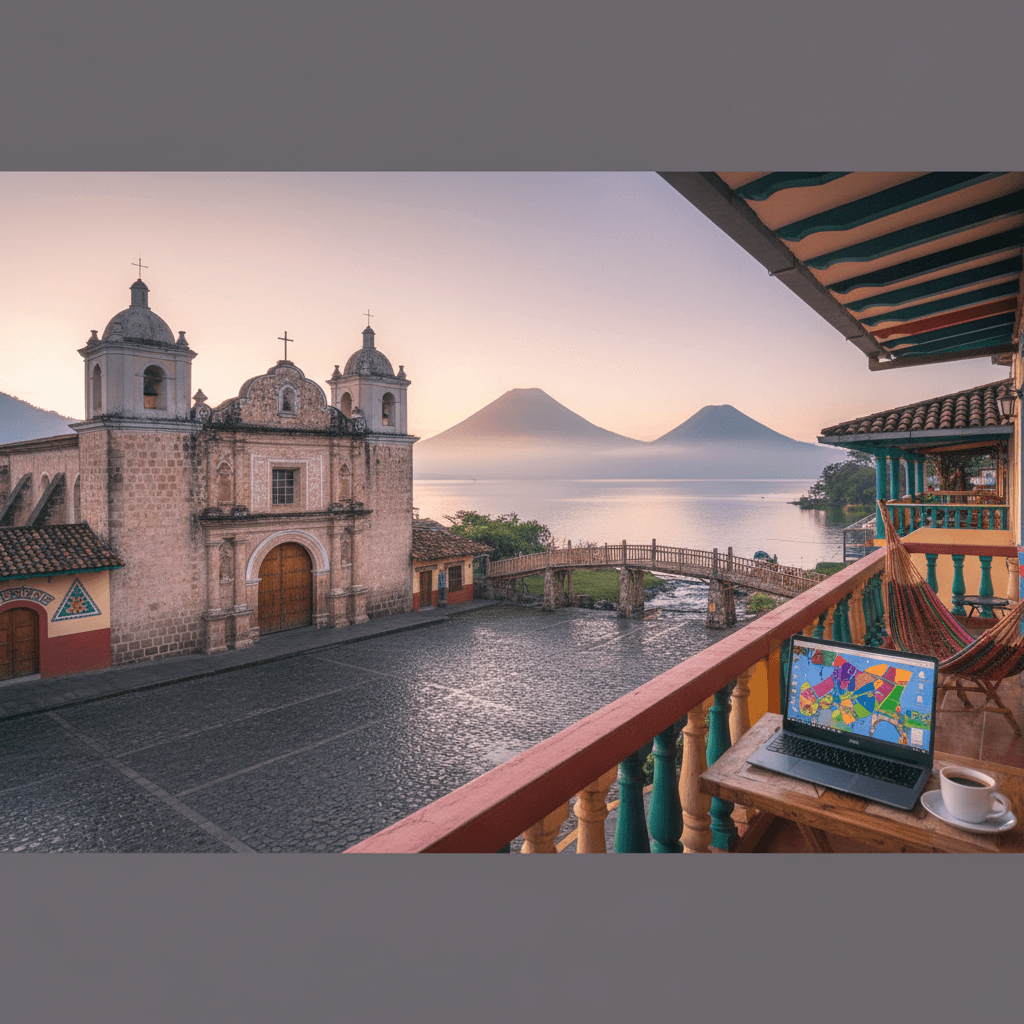
Panajachel, or Pana as everyone calls it, is the beating heart of Lake Atitlan. While other villages around the crater focus on yoga retreats or backpacker parties, Pana is where the actual business of living happens. It is a high altitude crossroads where ancient Kaqchikel traditions collide with modern nomad logistics. You will feel it the moment you step off a shuttle: the smell of diesel and roasting coffee, the blur of colorful textiles on Calle Santander, and that first, jaw dropping view of the three volcanoes across the water.
Most nomads choose Pana as their home base because it is the only place on the lake that does not feel like a compromise. You get the fastest WiFi in the region, easy access to ATMs that actually work, and the best grocery selection for miles. It is functional, but it has a gritty, energetic soul that keeps it from feeling like a sterile tourist trap. The emotional high comes at sunset; as the wind known as the Xocomil picks up, the lake turns a deep indigo and the volcanoes go dark against a purple sky.
The Daily Rhythm
Life here centers around the lake's "eternal spring" climate. Days are a comfortable 21 to 25 degrees Celsius, though you will quickly learn to carry a sweater for the sharp drop in temperature once the sun dips. Most of the nomad action happens around Calle Santander, the main artery running down to the docks. It is touristy, yes, but it is also where you will find the best cafes for working and the most reliable infrastructure.
- Morning: Grab a coffee and head to Selina Atitlan. It is the primary social and professional hub, offering stable coworking and a community of travelers that makes networking effortless.
- Afternoon: When the 2:00 PM lull hits, hop on a lancha (public boat) for Q25. Within twenty minutes, you can be in a different village entirely, though most veterans return to Pana by dusk to avoid the choppy afternoon waves.
- Evening: Dinner is a mix of Q20 street tacos and upscale lakeside dining. While Pana is safer than Guatemala City, expats generally stick to the well lit main strips after dark and use tuk-tuks for a few dollars to get back to uphill rentals.
What You will Spend
Pana is affordable, but it is no longer the dirt cheap secret it once was. A comfortable solo nomad life here typically averages around $1,949 per month. You can live on significantly less if you stick to local markets and shared housing, but the middle ground offers a high quality of life for the price.
Budget Tiers
- The Budget Setup ($800 to $1,200): You are likely staying in a hostel dorm or a very basic room away from the water. You eat mostly street food like empanadas, use cafe WiFi, and stick to walking rather than private shuttles.
- The Mid Range Nomad ($1,200 to $1,800): This covers a private one bedroom apartment or a nice Airbnb for $400 to $1,000. You have a dedicated desk at Selina, eat out at mid range cafes, and take regular boat trips to explore the lake.
- The Comfortable Expat ($1,800 to $2,500+): You are renting a villa with a volcano view, likely in the quieter outskirts or a luxury complex. This budget allows for private boat charters, high end dining, and frequent trips to Guatemala City for specialized shopping or healthcare.
The Infrastructure Reality
The internet is the big draw. While the smaller villages often struggle with 10 Mbps and frequent outages, Pana averages a solid 64 Mbps. Most serious remote workers pick up a TIGO SIM card for about $13 as a backup. It is a cash heavy society, so expect to pay for almost everything in Quetzales. While the "bustle" can be loud, the trade off is that you are never more than ten minutes away from a pharmacy, a hardware store, or a boat that can take you into the wild silence of the surrounding mountains.
The Price of Paradise
Living in Panajachel is a balancing act between local affordability and the premium you pay for being in the lake's most developed hub. While it's no longer the dirt cheap backpacker secret it was decades ago, it remains remarkably accessible for those earning in USD or Euros. A solo nomad can live quite comfortably here for around $1,949 a month, though your mileage will vary depending on how often you trade street tacos for lakeside cocktails.
Cash is still the undisputed king in Pana. While you can swipe a card at Selina or higher end spots like Jose Pinguino's, you'll need a steady supply of Quetzales for almost everything else. Most nomads find it best to use the ATMs along Calle Santander to withdraw the maximum amount possible to minimize those pesky per transaction fees.
Monthly Budget Tiers
- The Budget Traveler ($800 to $1,200): This lifestyle involves staying in shared hostel dorms or very basic local rentals, eating primarily at street stalls or the public market, and sticking to the public lanchas for transport.
- The Mid-Range Nomad ($1,200 to $1,800): This is the sweet spot for most. You'll snag a decent one bedroom apartment or a nice studio, eat out at solid cafes like Crossroads Coffee, and maintain a dedicated desk at a coworking space.
- The High End Resident ($1,800 to $2,500+): At this level, you're looking at private villas with volcano views, frequent dinners at upscale spots like Hotel Atitlan, and the luxury of private boat charters or shuttles to Guatemala City.
Housing and Accommodation
Rent is your biggest variable. If you're looking for a short term fix, Posada de los Volcanes is a reliable choice for its central location. For longer stays, most expats turn to Airbnb or local Facebook groups to find furnished apartments. A central, nomad friendly studio usually lands between $400 and $1,000 a month. If you want more space and quiet, look toward the uphill outskirts, but remember to factor in the cost of daily tuk tuk rides to get back to the action.
Daily Expenses
- Dining out: You can grab a quick meal of street empanadas for about Q20 to Q50 ($2.50 to $6.50). A sit down lunch at a mid-range cafe usually runs Q50 to Q100 ($6.50 to $13), while a fancy dinner by the water will easily top Q150 ($20).
- Groceries: Shopping at the local market is significantly cheaper than the small supermarkets. Expect to spend about $200 to $300 a month if you're cooking most of your meals.
- Connectivity: A TIGO SIM card with 8GB of data is a steal at roughly Q100 ($13). For a professional workspace, a day pass at Selina Atitlan costs between $10 and $20.
Getting Around
Pana is very walkable, but the hills and the heat might make you reach for a tuk tuk. A standard ride within town is usually Q10 to Q20 ($1.30 to $2.60). If you're heading out to explore other villages, the public lanchas (boats) from the Pana dock are your best bet, costing between Q10 and Q25 depending on the distance. For a bit more privacy or a late night return, a private boat will cost you closer to Q150 ($20).
When it's time to head back to the airport, shared shuttles are the standard. Expect to pay $30 to $50 for the four to five hour journey to Guatemala City. It's a long haul, so many nomads recommend booking with established operators like Adrenalina Tours to ensure a bit more comfort and reliability.
The Solo Nomad Base: Calle Santander & Central Pana
If you're landing in Panajachel for the first time, you'll likely end up near Calle Santander. It’s the town’s primary artery, stretching from the main road down to the lakefront. Most nomads choose this area because it’s the only place on the lake where you can truly count on the infrastructure. You’re within a five minute walk of Selina Atitlan, which serves as the unofficial headquarters for the remote work community. A day pass there runs between $10 and $20, giving you access to the most reliable fiber optic internet in the region.
Living here means you don't need a car or even a frequent tuk-tuk. Everything is walkable, from the TIGO shop where you'll grab your local SIM card to the various ATMs that actually stay stocked with cash. The trade-off is the noise. Between the roar of tuk-tuks and the constant flow of travelers, it’s rarely quiet. However, the convenience of having popular spots like Crossroads Coffee right outside your door usually outweighs the evening clamor.
- Monthly Rent: $400 to $1,000 for a furnished studio or one-bedroom.
- Vibe: High energy, social, and incredibly convenient.
- Best For: First timers who need 60+ Mbps speeds and proximity to the boat docks.
The Expat Retreat: Upper Panajachel and Outskirts
Expats who have been in town for a few months often migrate away from the lakefront and toward the hills or the quieter residential pockets on the eastern edge of town. These areas feel more like a traditional Guatemalan neighborhood and less like a tourist hub. You'll find walled villas and small apartment complexes that offer more square footage for your money. It’s a bit of a hike, but most locals just flag down a tuk-tuk for Q10 to Q20 to get back and forth from the center.
Reliability is still decent here, though you’ll want to double check the WiFi situation before signing a long term lease. Many long termers prefer these spots because they offer a sense of privacy that the Santander corridor lacks. You’re close enough to the action to grab a Q50 lunch, but far enough away that you aren't waking up to the sound of street vendors every morning.
- Monthly Rent: $600 to $1,200 for larger, multi-bedroom houses.
- Vibe: Residential, quiet, and authentic.
- Best For: Long term residents who want a "real" home and don't mind a short commute.
The Family Setup: Quiet Villas & Gated Compounds
Families generally gravitate toward the outskirts or specific developments like Atitlan Villas. These spots provide the space and safety that parents are looking for, often with gated entries and small gardens. While Panajachel is generally safe, having a contained area for kids to play is a major plus. You’ll be further from the docks, so plan on budgeting more for private transport and grocery runs into the center of town.
The "Eternal Spring" weather means you won't need AC, but you will want a place with a good fireplace or space heaters for those chilly 1,500 meter altitude nights. Families often use Pana as a launchpad for weekend trips to San Marcos for nature or Santa Cruz for hiking, returning to the comfort of a larger kitchen and reliable utilities in the evening. Most families find a comfortable monthly budget sits around $1,800 to $2,500 when factoring in private shuttles and higher end rentals.
- Monthly Rent: $1,000 to $1,800 for detached villas.
- Vibe: Secure, spacious, and family oriented.
- Best For: Those traveling with children who need a kitchen and a yard.
The Social Traveler: San Pedro and San Marcos (Day Trips)
While Pana is the logistical king, solo travelers looking for a specific "scene" often use it as a base before scouting the other villages. If you want a party atmosphere and Q20 street tacos, you'll spend your weekends taking the Q25 lancha over to San Pedro. If you're into yoga, meditation, and plant-based dining, San Marcos is the place to be. Most nomads find that staying in Pana and visiting these spots by boat is the smartest move, as the internet in the smaller villages can drop to 10 Mbps or less without warning.
- Boat Transport: Q25 for public lanchas, up to Q150 for private trips.
- Vibe: San Pedro is for socialites; San Marcos is for wellness seekers.
- Best For: Meeting people and exploring the diverse subcultures of the lake.
Connectivity on the Lake
If you're planning to work from Lake Atitlan, Panajachel is your best bet for a stable connection. While the smaller villages around the water often struggle with infrastructure, Pana acts as the region's digital anchor. You can expect average speeds of 20-50 Mbps, which is plenty for video calls and heavy uploads. Most cafes and hotels along Calle Santander provide reliable WiFi, though it's always smart to have a backup plan for the occasional mountain power flicker.
For mobile data, grab a local TIGO SIM card as soon as you arrive. You can get 8GB of data for about Q100 (roughly $13 USD) at shops in the center of town. TIGO generally has the most consistent coverage around the lake, allowing you to hotspot if your accommodation's router acts up. If you prefer a digital setup, Airalo eSIMs work well here too, though they might be slightly more expensive than local plastic.
Coworking Spaces
The undisputed headquarters for the nomad community is Selina Atitlan. It’s more than just a place to sit; it’s where the social scene happens. They offer day passes ranging from $10 to $20, giving you access to high speed internet, ergonomic chairs, and a dedicated quiet zone. It’s common to see people transitioning from their laptops to the bar for community events or networking sessions once the sun starts to set.
While Selina is the main hub, some nomads looking for a change of pace head to Impact Hub in nearby Antigua if they're doing a multi city stint. However, within Pana itself, the "coworking" scene often extends to the local cafes. As long as you're ordering coffee or lunch, most places are happy to let you linger for a few hours.
Laptop-Friendly Cafes
The cafe culture in Pana is strong, and you'll find plenty of spots where the volcano views are as good as the espresso. Local favorites often sit right on the water or tucked away in garden courtyards. Most nomads recommend these spots for a few hours of deep work:
- Cafe Loco: Known for its creative drinks and reliable connection, it's a popular haunt for the laptop crowd on Calle Santander.
- Selina’s Playground: Even if you don't buy a full coworking pass, the common areas are often filled with people working in a more relaxed, social environment.
Practical Workflow Tips
Power outages aren't a daily occurrence, but they do happen, especially during the rainy season from May to October. Experienced nomads keep their devices fully charged and maintain a TIGO hotspot for emergencies. If you're moving between villages like San Marcos or San Pedro, don't expect the same speeds you find in Pana; those areas often drop to 10 Mbps or less, making Panajachel the superior choice for anyone with a demanding meeting schedule.
Cash is still king in most of Guatemala. While you can pay for your Selina pass or a high end meal with a card, most smaller cafes and SIM card vendors only take Quetzales. Pana has the most reliable ATMs on the lake, so stock up here before heading out to the quieter villages where machines are frequently out of service or empty.
Staying Safe in Pana
Panajachel is widely considered the safest home base on Lake Atitlan. Because it functions as the region's commercial engine, there is a constant police presence and a local community that is very protective of its tourism reputation. Most nomads feel perfectly comfortable walking the length of Calle Santander or the lakeside boardwalk during the day. Locals are welcoming, and the vibe is generally communal rather than predatory.
That said, you shouldn't let the relaxed atmosphere make you careless. Petty theft is the most common issue, usually involving unattended bags at cafes or phones sticking out of back pockets. Expats generally advise against walking alone on the outskirts of town or on the beach after dark. If you are heading home late from a bar, spend the Q10 to Q20 on a tuk-tuk. It is a small price for peace of mind, and the drivers generally know every corner of town.
When you head out on the water, stick to the public lanchas. While private boats are available, the public ones are regulated and more reliable. If you plan on hiking popular trails like Indian Nose or Cerro de la Cruz, many travelers recommend going with a guide or a group. Occasional robberies have happened on isolated trails, so there is safety in numbers.
Healthcare and Medical Facilities
For a small town, Pana is surprisingly well equipped for day to day health needs. You will find a Farmacia Galeno or Farmacia Batres on almost every other block. These pharmacies are often better stocked than what you might find in the US or Europe, and pharmacists can often provide basic medical advice or suggest over the counter treatments for common "traveler's stomach" issues.
If you need to see a doctor, Centro Clinico Panajachel (Hospitalito) is the primary facility in town. It is fine for stitches, diagnostic blood tests, or treating infections. For anything requiring specialized surgery or advanced imaging, most expats and nomads make the four hour trek to Guatemala City, where the hospitals are world class and many doctors are US trained.
- Centro Clinico Panajachel (Hospitalito): Good for minor emergencies and general consultations.
- Dental Clinics: There are several reputable dentists in town who charge a fraction of Western prices for cleanings and fillings.
- Emergency Numbers: Dial 110 for the National Civil Police or 122/125 for an ambulance.
Practical Wellness Tips
The biggest health hurdle for newcomers is usually the altitude and the water. Pana sits at 1,500 meters, so you might feel winded for the first few days. Drink plenty of water, but never from the tap. Even locals avoid it. Most rentals provide Ecofiltros or five gallon jugs of purified water; use this for brushing your teeth too.
Keep a stash of cash for medical visits. While some clinics in town are beginning to take cards, many private doctors and smaller pharmacies remain cash only. If you have a specific prescription, bring a three month supply with you. While you can find most things here, specific brand names can be hit or miss, and you might have to settle for a local generic equivalent.
Finally, don't underestimate the sun. Because the air is cool and "eternal spring" like, nomads often forget they are at high altitude near the equator. A morning working on a lakeside terrace can result in a nasty sunburn before you've even finished your first coffee. Lather up with SPF 30 or higher before you head to the docks.
The Daily Commute: On Foot and Two Wheels
Panajachel is the most walkable hub on Lake Atitlan. If you are staying near Calle Santander, the town's main artery, you can reach most cafes, grocery stores, and the lakefront within a ten minute stroll. The layout is straightforward, though the sidewalks can get crowded with market stalls and fellow travelers during the day.
When your legs need a break or you are hauling groceries back to a rental in the uphill outskirts, look for a tuk-tuk. These small, three wheeled taxis are everywhere. A standard ride within the town center usually costs between Q10 and Q20 (roughly $1.30 to $2.60). It is common practice to confirm the price with the driver before you hop in, especially if you are heading further out toward places like Atitlan Villas.
For those who want more autonomy, local shops offer bike and scooter rentals starting around Q50 per day. While a scooter is great for exploring the immediate area, keep in mind that the roads leading out of Pana are steep, winding, and often shared with large colorful buses, so stay alert.
Mastering the Lanchas
Since there is no road that circles the entire lake, the public boats, or lanchas, are your primary way to visit neighboring villages. Think of them as the lake's bus system. Most nomads head to the Tzanjuyu dock at the end of Calle del Embarcadero to catch a ride.
- Public Lanchas: These run frequently from dawn through the late afternoon. Expect to pay between Q10 and Q25 depending on how far you are going. San Marcos and San Pedro are the most popular stops.
- Private Boats: If you miss the last public boat or want a direct trip without stops, you can hire a private lancha. These typically cost around Q150 ($20), though you can often negotiate if you are in a group.
- The "Gringo Tax": Travelers sometimes report being quoted higher prices at the docks. Experienced expats suggest carrying small bills and paying the standard fare directly to the captain's assistant when you disembark.
Arriving from the Airport
Getting to Pana from La Aurora International Airport in Guatemala City is a journey of its own. The drive usually takes 4 to 5 hours depending on the notorious traffic leaving the city. Most nomads avoid the "chicken buses" for this initial trip because they require multiple transfers and aren't great for luggage security.
Shared shuttles are the standard choice. Companies like Adrenalina Tours run daily services for $30 to $50 per person. If you value comfort or are arriving late at night, a private transfer is a better bet, though it will cost significantly more. There is no Uber service available for the long haul to the lake, so booking your shuttle at least 24 hours in advance is a smart move.
Navigation and Apps
While Panajachel doesn't have ride-hailing apps like Uber or Lyft, Google Maps is surprisingly accurate for walking directions and locating specific businesses. For the surrounding villages, nomads often rely on the Lake Atitlan Digital Nomads Facebook group to check for updated boat schedules or road closures during the rainy season. If you are planning to hike between villages, travelers recommend using AllTrails, but always check with locals about trail safety before heading out on your own.
Language Landscapes
While Spanish is the primary language you'll hear on the streets of Panajachel, the linguistic landscape is more layered than it first appears. Pana serves as a crossroads where Kaqchikel, one of the major Mayan languages, is spoken daily by locals. Unlike the more secluded villages around the lake where indigenous languages dominate, Pana is a true melting pot. You'll hear a mix of Spanish, Kaqchikel, and English as you walk down Calle Santander.
Most nomads find that English proficiency is moderate to high within the tourist core. If you're hanging out at Selina Atitlan or grabbing a coffee at a lakeside cafe, the staff will likely speak fluent English. However, moving just a few blocks away from the main strip into the local markets or residential uphill areas changes the dynamic. Knowing some Spanish isn't just helpful; it's the key to getting fair prices and building rapport with the community.
Practical Communication Tips
Expats recommend learning a few phrases in Kaqchikel to show respect for the local heritage. A simple "Maltiox" (thank you) goes a long way with vendors at the market. For daily logistics, Spanish is your workhorse. If your skills are rusty, download the Google Translate offline Spanish pack before you arrive. It’s a lifesaver when you're trying to explain a specific hardware need or negotiating a monthly rate on a tuk-tuk.
- Greeting Culture: It's polite to acknowledge people when entering a shop or small restaurant. A quick "Buenos días" or "Buenas tardes" is expected.
- Language Schools: If you're looking to level up, Pana has several affordable Spanish schools. Many nomads spend their first two weeks here doing intensive 1-on-1 lessons for about $10 to $15 per hour.
- Digital Tools: Use WhatsApp for everything. From booking a shuttle with Adrenalina Tours to ordering delivery or talking to your landlord, it is the universal communication tool in Guatemala.
Staying Connected
Reliable internet is the reason many nomads choose Pana as their base over quieter spots like San Marcos. You can expect average speeds of 64 Mbps in the center of town. While most rentals come with WiFi, power outages can happen during the rainy season from May to October. Having a local backup is non-negotiable for anyone with a Zoom schedule.
Travelers usually head straight to a TIGO shop on the main road to grab a physical SIM card. You can get roughly 25GB of data for Q100 (about $13 USD), and the signal is strong enough to use as a hotspot if your Airbnb WiFi flickers. If your phone supports it, an Airalo eSIM is a convenient alternative, though it usually costs a bit more for less data. Just keep in mind that once you hop on a lancha to the smaller villages, your speeds will likely drop to 10 Mbps or less, so plan your heavy upload days while you're in Pana.
Key Phrases for Your First Week
- "¿Cuánto cuesta?" (How much does it cost?): Essential for the market and tuk-tuks.
- "¿Dónde está el baño?" (Where is the bathroom?): Self-explanatory but vital.
- "La cuenta, por favor" (The check, please): Useful in the many cafes along the waterfront.
- "¿Tiene WiFi?" (Do you have WiFi?): The nomad's most uttered phrase.
Most travelers say that while you can survive in Pana with zero Spanish, your experience will be much richer if you put in the effort. The locals are incredibly patient and generally appreciative of any attempt to speak the local tongue, whether it's Spanish or a few words of Kaqchikel.
The Land of Eternal Spring
Panajachel sits at an elevation of 1,560 meters, which gives it a climate locals call the eternal spring. You can expect daytime temperatures to hover between 21°C and 25°C (70°F to 77°F) year round. It is rarely sweltering and rarely freezing, making it one of the most comfortable climates for remote work in Central America.
While the temperature stays consistent, the moisture does not. The year is split into two distinct periods: the dry season (Verano) and the rainy season (Invierno). Most nomads find that their experience of the town changes significantly depending on when they arrive.
The Peak Season: November to April
This is widely considered the best time to base yourself in Pana. The skies are generally clear and deep blue, providing unobstructed views of the San Pedro, Tolimán, and Atitlán volcanoes across the water. Humidity is low, and the air feels crisp.
- January to April: These are the driest months. You won't need to worry about rain ruining your afternoon boat trip to San Marcos or your hike up Indian Nose.
- Temperature Check: While days are sunny and warm, nights at this altitude get chilly. It is common for temperatures to drop to 10°C (50°F) or lower once the sun goes down.
- Nomad Tip: Most apartments in Pana do not have central heating. Expats recommend packing a heavy fleece or buying a local wool blanket from the vendors on Calle Santander.
The Rainy Season: May to October
Don't let the term rainy season scare you off. It rarely rains all day. Instead, you'll usually enjoy sunny mornings perfect for getting through a deep work session at Selina, followed by heavy, predictable downpours in the late afternoon or evening.
- September and October: These are the wettest months of the year. If you aren't a fan of grey skies and potential power flickers during storms, you might want to head elsewhere during this window.
- The Upside: The landscape turns a brilliant, lush green, and the dust from the dry season disappears. You'll also find that accommodation prices can be more negotiable during these months.
- Logistics: Heavy rains can occasionally affect the boat schedules or make the mountain roads to Guatemala City a bit slower due to mudslides. Give yourself extra travel time if you have a flight to catch.
At a Glance: Monthly Climate Breakdown
- Dry Months (Nov to Apr): Average highs of 23°C to 25°C. Very low rainfall. Ideal for outdoor activities and photography.
- Shoulder Months (May to Aug): Average highs of 22°C to 24°C. Moderate rainfall, usually in short bursts. Great balance of lower prices and decent weather.
- Wet Months (Sep to Oct): Average highs of 22°C. High rainfall. Best for those who plan to hunker down and focus on indoor projects.
If you're planning a three month stint, aim for November through January. You'll catch the end of the green season, enjoy the clearest volcano views, and experience the town's holiday festivities without the peak heat of late spring.
Connectivity and Tech
Panajachel is the undisputed king of connectivity on Lake Atitlan. While other villages struggle with spotty signals, Pana offers the most stable fiber optic lines with speeds averaging 64 Mbps. Most nomads set up shop at Selina Atitlan on Calle del Embarcadero. It is the town's primary coworking hub, offering day passes between $10 and $20. It is a reliable fallback when your Airbnb WiFi decides to take a siesta.
For your mobile data, don't rely on roaming. Head to a local shop and grab a TIGO SIM card. You can get 8GB of data for about Q100 ($13). If you are planning to hop between villages, keep an Airalo eSIM as a backup, though TIGO generally has the best coverage across the highlands.
Money and Banking
Cash is still the primary way of life here. While upscale hotels and some spots on Calle Santander take cards, you will need Quetzales for street food, tuk-tuks, and local markets. Pana is home to the most reliable ATMs on the lake, so stock up here before heading to smaller villages like San Marcos or Santa Cruz, where machines are often broken or empty.
Expats usually recommend withdrawing the maximum amount allowed (often Q2,000) to minimize the Q30 to Q50 transaction fees. Digital banks like Wise or Revolut work well for transfers, but always keep a stash of small bills for boat rides and tips.
Getting Around
The town center is incredibly walkable, but the hilly outskirts require some wheels. Tuk-tuks are the local taxis and should cost between Q10 and Q20 for a ride within town. Always agree on the price before you hop in so there are no surprises at the end of the trip.
To reach other parts of the lake, head to the public docks (muelles). Public lanchas (boats) run frequently and cost between Q10 and Q25 depending on the distance. If you are in a rush or traveling with a large group, private boats are available for around Q150 ($20). For arrivals from the airport in Guatemala City, skip the public chicken buses and book a shared shuttle through Adrenalina Tours for roughly $30 to $50.
Health and Safety
Pana is generally safe for solo travelers and nomads, though it pays to be smart. Stick to well lit areas like Calle Santander at night and avoid walking alone on the outskirts after dark. Petty theft happens, so don't leave your laptop unattended at a cafe while you grab a refill.
If you get sick, Hospital Santa Catalina handles basic medical needs and has a decent reputation among the expat community. Pharmacies are everywhere and can provide most over the counter medications without a fuss. For anything serious, you will want to head to Guatemala City, which is about a 3 to 4 hour drive away.
Local Etiquette
Mayan culture is deeply rooted here. A simple Buenos dias goes a long way when passing people on the street. If you want to take photos of locals, especially those in traditional dress, always ask for permission first. It is a sign of respect that opens a lot of doors. Also, remember that the lake is sacred to the local community; be mindful of your environmental impact and avoid using harsh soaps if you go for a swim.
The Nomad Budget
- Budget Tier: $800 to $1,200 per month. This covers a bed in a shared hostel, plenty of Q20 street tacos, and using cafe WiFi.
- Mid-range Tier: $1,200 to $1,800 per month. This buys you a private 1BR rental, a mix of local and international dining, and a dedicated coworking membership.
- Comfortable Tier: $1,800 to $2,500+ per month. Expect a private villa with volcano views, private shuttles, and frequent upscale lakeside dinners.
Need visa and immigration info for Guatemala?
🇬🇹 View Guatemala Country GuideEasy Landing
Settle in, no stress