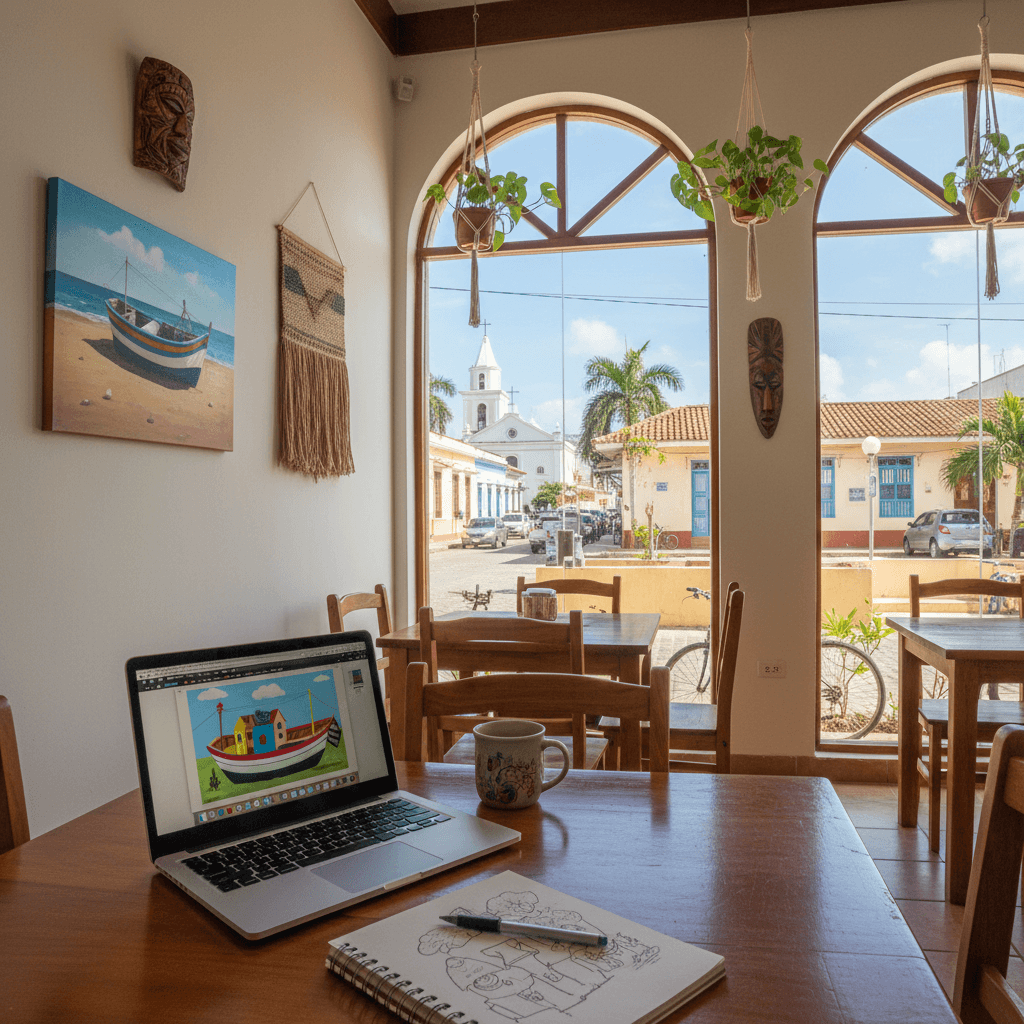
Pampatar
🇻🇪 Venezuela
The Salt-Air Capital of Isla Margarita
Pampatar doesn't feel like the rest of Venezuela, and it certainly doesn't feel like the sterile resort towns you'll find elsewhere in the Caribbean. It is a place where colonial history sits right against high-end gastronomy and a rugged, salt-sprayed coastline. While the rest of the island can feel a bit chaotic, Pampatar maintains a polished, almost Mediterranean swagger. It is the culinary and social heart of Margarita, attracting a mix of local entrepreneurs, kite surfers from nearby El Yaque, and a growing crowd of crypto-migrants.
The vibe here is defined by "low-key luxury" mixed with local grit. You might spend your morning working from a cafe overlooking the Castillo de San Carlos Borromeo, then spend your afternoon watching fishermen haul in the day's catch right in front of world-class restaurants. It is a town of contrasts. You have the historic center with its whitewashed walls and cobblestones, and then you have the modern skyline of Avenida Aldonza Manrique, where the nomad life actually happens.
A Frontier for the Brave
Being a nomad here isn't for the person who needs a seamless, high-speed bubble. It is for the traveler who finds beauty in the workaround. You'll need to get comfortable with the "Margarita pace." Things take time, the sun is relentless, and the internet can be a fickle friend. However, the payoff is a lifestyle that feels like a well-kept secret. Most nomads find that the sheer affordability and the warmth of the "Margariteños" make the logistical hurdles worth it.
The emotional experience of Pampatar is one of intense freedom. Because the traditional systems of tourism and banking are so different here, you're forced to live in the moment. There is a palpable energy in the air, especially around the CryptoCity community. It is a sense that you are on the ground floor of something new, a place where people are reimagining how to live and work outside the standard global grid.
What Sets It Apart
- The Crypto Factor: Unlike many Latin American hubs, there is a serious push for crypto-integration here. You'll find merchants and tech-forward locals who are more comfortable with digital wallets than physical bolívares.
- The Gastronomy: For a town of its size, the food scene is staggering. It is widely considered the best place to eat in the country, with chefs focusing on "Cocina de Autor" using fresh Caribbean ingredients.
- The Coastal Fortress Aesthetic: Working with a view of a 17th-century fort while the turquoise water of Playa Pampatar laps at the shore is a mood you won't find in Medellin or Mexico City.
- The Resilience: There is an infectious "can-do" spirit. If the power blinks, the generators hum to life and the coffee keeps flowing. You'll learn to appreciate the infrastructure that does work.
Expect to spend your evenings at Faro Punta Ballena, watching the lighthouse beam sweep across the salt flats and the ocean. It is a place that demands you put down your phone and actually look at the horizon. If you can handle the cash-heavy economy and the occasional connectivity hiccup, Pampatar offers a soulfulness that more polished destinations have long since lost. It is raw, it is beautiful, and it is stubbornly authentic.
The Financial Reality
Living in Pampatar feels like a strange paradox. You are surrounded by high-end shopping malls and upscale condos, yet the underlying economy remains volatile. Most nomads find that a monthly budget of $1,800 to $2,000 allows for a very comfortable lifestyle, though you can certainly spend more if you lean into the luxury side of the island. It is not the dirt-cheap destination it was five years ago, but your dollar still goes a long way for high-quality seafood and oceanfront views.
The most important thing to understand is the cash economy. You need to bring crisp, high-denomination US Dollar bills. While some places accept international cards or apps like Zelle, cash is king and often gets you a better rate. Don't expect to rely on local ATMs; they are notoriously unreliable for foreign cards.
Monthly Budget Breakdown
- Housing: $600 to $1,200 for a modern apartment with a generator.
- Groceries: $300 to $450 depending on how many imported goods you buy.
- Dining Out: $15 to $35 for a meal at a nice spot in Playa Varadero.
- Local Transport: $50 to $100 for taxis and occasional private drivers.
- Data and Connectivity: $30 to $60 for a mix of local SIMs and backup satellite data.
Rent and Neighborhoods
Prices fluctuate based on one specific amenity: a reliable power backup. Because Isla Margarita deals with frequent blackouts, apartments in buildings with "planta eléctrica" (electric plants) command a premium. Most expats recommend staying within Pampatar proper or the nearby Jorge Coll area to stay close to the action.
Pampatar Bay Area
- Rent: $800 to $1,300 for a two-bedroom with sea views.
- Vibe: High-end, walkable to the best restaurants, and generally considered the safest pocket for foreigners.
Jorge Coll / Maneiro
- Rent: $500 to $850 for a comfortable condo.
- Vibe: More residential and suburban. You will get more space for your money here, but you will likely need a car or a regular taxi contact to get to the beach.
Daily Expenses
Eating out is one of the highlights of living here. A quick lunch of empanadas at the street stalls will only cost you about $3 to $5, but the culinary scene in Pampatar is sophisticated. If you head to the upscale restaurants along the shore, expect to pay $20 for a fresh lobster dinner or $8 for a well-crafted cocktail.
Grocery shopping can be surprisingly expensive because many goods are imported. Sigo and Rattan are the big supermarkets where you will find familiar brands. A liter of milk is usually around $1.50, and a dozen eggs will run you about $2.50. Local produce like mangoes, avocados, and fresh fish from the morning market are where you will actually save money.
For getting around, most nomads avoid the public buses and stick to trusted taxi apps or private drivers. A short trip across town usually costs $5 to $10. If you plan on staying more than a month, it is worth negotiating a weekly rate with a specific driver you trust.
The Coastal Core (Nomads)
If you're landing in Pampatar to work, you'll want to stay as close to the Calle Joaquin Maneiro area as possible. This is the town's heartbeat, where the colonial charm of the Castillo de San Carlos Borromeo meets a surprisingly modern dining scene. Most nomads gravitate here because it's the most walkable part of the city, meaning you won't have to rely on patchy taxi apps or precarious bus schedules to grab a coffee.
- The Vibe: Historical, breezy, and social. You'll see locals jogging by the salt flats in the morning and nomads working from cafes in the afternoon.
- Internet Reality: While the island has its struggles, many high end rentals in this pocket now install private satellite links or dedicated fiber. Always ask for a speed test before booking.
- Rent: Expect to pay between $500 and $900 for a serviced apartment with a backup generator, which is a non negotiable requirement here.
Playa El Angel (Expats)
For those planning to stay longer than a month, Playa El Angel is the neighborhood of choice. It's technically sits between Pampatar and Porlamar, offering a more residential, upscale feel. It's where you'll find the most reliable grocery stores and the Centro Comercial Vela, which serves as a de facto hub for air conditioning and stable electricity during the hotter hours of the day.
- The Vibe: Polished and secure. This is where the local business community and long term foreign residents live.
- Practicality: It's home to some of the best private clinics on the island, making it the safest bet for those worried about healthcare access.
- Rent: Modern two bedroom condos typically range from $700 to $1,200 depending on the ocean view.
La Caranta (Solo Travelers)
If you're here for the views and don't mind a bit of a climb, La Caranta is the spot. This hillside neighborhood overlooks the entire bay and puts you within walking distance of Playa Pampatar. It's ideal for solo travelers who want to be near the beach bars and the Faro Punta Ballenas lighthouse without the noise of the main strip.
- The Vibe: Authentic and slightly rugged. It feels more like a traditional fishing village than a tourist hub.
- Safety Tip: It's perfectly fine during the day, but solo travelers should take local taxis back up the hill after dark rather than walking the quiet side streets.
- Rent: You can find smaller studios or rooms in local posadas for $300 to $500 per month.
The Crypto Corridor (Tech Enthusiasts)
While not a traditional neighborhood in the center of town, the area stretching toward Playa El Yaque is becoming a magnet for the "CryptoCity" crowd. It's about a 30 minute drive from Pampatar's center, but it's where the most innovation is happening. Expats here are building a self sufficient ecosystem that bypasses traditional banking hurdles.
- The Vibe: High energy, tech focused, and adventurous. It's heavily influenced by the windsurfing and kitesurfing community.
- Payment Culture: You'll find more merchants here accepting Binance Pay or Bitcoin than anywhere else on the island.
- Rent: Prices are volatile but generally sit around $600 for a beachside bungalow.
Jorge Coll (Families)
Families often land in Jorge Coll due to the proximity to private schools and gated residential complexes. It's a quiet, suburban feeling area that stays away from the late night noise of the Pampatar bars. You'll need a car if you stay here, as it's not particularly walkable, but it offers the most "normal" lifestyle for those with kids in tow.
- The Vibe: Quiet, green, and family oriented.
- Amenities: Close to Sigo, one of the largest supermarkets on the island, which is vital for stocking up on imported goods.
- Rent: Large family houses can be found for $800 to $1,500.
The Connectivity Reality
Working from Pampatar requires a bit of a strategic mindset. Unlike the digital hubs in Medellin or Mexico City, you won't find a high speed fiber connection in every corner cafe. The island infrastructure has its quirks, and speeds can fluctuate depending on the time of day or even the weather. Most nomads find that while the base speeds might seem lower on paper, it is generally enough for video calls and standard workflow if you prepare properly.
Most local posadas and modern apartments in the Playa El Angel area now offer dedicated Wi-Fi, but you should always ask for a speed test screenshot before booking. Do not just take their word for it. Look for hosts who mention fiber optic installations, as these are becoming more common in the upscale pockets of the city. If you are handling large video files or doing heavy backend development, you will need to be picky about your base of operations.
Coworking and Work-Friendly Spots
Pampatar does not have a massive inventory of dedicated coworking spaces like a major capital, but the scene is growing. You will mostly find yourself working from cafes or specialized hubs that cater to the local business community and the CryptoCity crowd.
- Sambil Margarita: This is the largest mall in the area and a reliable backup. It has several cafes with decent Wi-Fi and, perhaps more importantly, consistent air conditioning and power backups.
- Avenida Aldonza Manrique: This strip is the heart of the digital nomad life in Pampatar. You will find several modern bistros and coffee shops here where seeing a laptop is perfectly normal.
- Playa El Yaque: While it is a short drive from Pampatar, many nomads head here for the day. The beachfront hotels often have the most stable connections on the island to support the international windsurfing community.
Mobile Data and Backups
A secondary data source is non-negotiable here. You want a local SIM or an eSIM to bridge the gap when the Wi-Fi decides to take a siesta. Most travelers recommend setting up an Airalo eSIM before you even land at the airport in Porlamar. It is the fastest way to get online without hunting for a physical kiosk immediately.
For a more permanent stay, getting a physical SIM from Digitel or Movistar is the way to go. Digitel generally has a reputation for better data speeds on the island. You will need your passport to register the line. Expect to pay around $10 to $20 for a generous monthly data package, which is a steal for the peace of mind it provides as a hotspot backup.
Power and Stability
It is no secret that Venezuela has faced utility challenges, but Pampatar is somewhat shielded because it is a premier tourist zone. Many of the higher end buildings and hotels have their own power plants (plantas electricas). When choosing where to live and work, this is more important than the view. Always confirm that your accommodation has a backup generator that covers the outlets and the Wi-Fi router, not just the common area lights.
If you are serious about your uptime, consider bringing a small UPS (Uninterruptible Power Supply) for your laptop and router. It is a common pro-tip among the expat community in Margarita. It gives you that 15 to 20 minute window to finish a call or save your work if the grid flickers.
The Crypto Influence
Pampatar and the surrounding areas are becoming a bit of a playground for crypto enthusiasts. Because of the local economic situation, digital currencies like Bitcoin and Dash are often accepted at local businesses. This community has driven a demand for better internet, so if you find a cafe or shop flying a "Crypto Accepted" sign, there is a very high chance their Wi-Fi is among the best in town.
Staying Safe on the Island
Pampatar is generally considered one of the safer pockets of Margarita Island, but it's important to keep your wits about you. While the town has a more relaxed, upscale feel compared to the dense urban sprawl of nearby Porlamar, Venezuela's broader economic situation means petty crime is a reality. Most nomads find that the rules here are similar to those in Medellin or Quito: don't flash your tech in public, keep your phone tucked away while walking, and avoid wandering into unlit residential areas after dark.
The local police presence is visible in the gastronomic zone and near the historic fort, which adds a layer of comfort for those walking between dinner spots. However, you'll want to rely on trusted taxi apps or pre-arranged drivers rather than hailing cars on the street at night. If you're staying in a posada, the owners usually have a "trusted guy" they can call for you. It's a small-town vibe where word-of-mouth is your best security feature.
- Cash is King: You need to carry USD cash in small, crisp denominations. Local ATMs are unreliable for foreign cards, and while some high-end spots in Pampatar accept international credit cards, the system often goes down.
- Street Smart Essentials: Leave the expensive watch at home. Use a discreet crossbody bag and keep your primary passport locked in your accommodation's safe, carrying only a digital copy or a physical photocopy.
- The "CryptoCity" Factor: If you're hanging around the El Yaque or Pampatar crypto scenes, be mindful of "digital kidnapping" or phishing. Keep your hardware wallets secure and don't brag about your portfolio in local bars.
Healthcare and Medical Realities
Healthcare in Pampatar is a bit of a mixed bag. For minor issues like stomach bugs or skin infections, you'll find plenty of well-stocked pharmacies (farmacias) where pharmacists can offer basic advice and over-the-counter meds. For anything more serious, you'll need to head into the private clinics in the greater Porlamar-Pampatar area. Private healthcare in Venezuela is actually quite good if you have the funds, but public hospitals are often under-resourced and should be avoided by travelers.
Expats typically recommend Clinica El Valle or Centro Medico El Valle for emergencies or specialist consultations. These private facilities generally expect payment upfront in USD cash or via Zelle, which is a surprisingly common payment method across the island. Make sure your travel insurance specifically covers Venezuela, as many standard policies have exclusionary clauses for the country due to government travel advisories.
- Drinking Water: Never drink the tap water. Even locals use bottled water for brushing teeth sometimes. Stick to the 5-liter jugs you can buy at any bodega.
- Mosquito-Borne Illness: Dengue and Zika can pop up, especially during the rainy season. Use repellent if you're working from an outdoor terrace at dusk.
- Emergency Contacts: Keep the number for your embassy in Caracas saved, though be aware they have limited footprints on the island. Your best bet is a local contact who can navigate the private hospital system for you.
Connectivity and Power
You can't talk about safety without mentioning the grid. Power outages (administración de carga) happen. Most high-end apartments and hotels in Pampatar have backup generators, but it's a good idea to keep your devices charged and have a heavy-duty power bank ready. If the power goes out, the cell towers often get congested, making it hard to call for a ride or use GPS. Staying connected is your primary safety tool, so download offline maps for the entire island on Google Maps before you arrive.
For data, grab a Movistar or Digitel SIM card. You'll need your passport for the registration process. Alternatively, the Airalo eSIM works for basic messaging, but it can be sluggish for heavy video calls. Most nomads find that having two different providers is the best way to ensure you're never totally offline during a localized outage.
The Logistics of Local Life
Movement in Pampatar is a mix of old school island vibes and modern app based convenience. You aren't going to find a sleek subway system or a reliable municipal bus schedule here. Instead, you'll rely on a combination of private cars, shared taxis, and the occasional walk through the historic center. Given the island's heat and the spread out nature of the coastal spots, most nomads find that having a set transportation plan is the first thing to figure out after landing at Santiago Marino Caribbean International Airport.
Ride-Hailing and Taxis
While global giants like Uber haven't made it to Margarita Island, local alternatives have filled the gap. These apps are the gold standard for safety and price transparency. You'll want to download these before you arrive:
- Yummy Rides: This is the most popular choice for digital nomads. It works just like the apps you're used to, showing you the driver's info and a fixed price in USD or local currency.
- Ridery: Another solid backup that competes directly with Yummy. It's smart to have both installed to compare wait times during peak beach hours.
- White Taxis: These are the official airport taxis. They don't use meters, so you must negotiate the fare before you put your bags in the trunk. A ride from the airport to Pampatar usually runs between $20 and $30.
Public Transport: Carritos and Microbuses
If you want to live like a local and save some cash, the carritos (shared sedans) and microbuses are the way to go. They follow set routes, usually indicated by a sign in the windshield. They are incredibly cheap, often costing less than $1 for a trip across town. However, they can get cramped and don't always have air conditioning. Most expats recommend using these for short hops during the day but sticking to registered apps once the sun goes down.
Walking the Historic Zone
Pampatar is one of the few places on the island where walking is actually pleasant, provided you time it right. The area around the Castillo de San Carlos Borromeo and the main bay is compact and pedestrian friendly. You can easily bounce between seaside cafes and colonial ruins on foot. Just keep in mind that the Caribbean sun is brutal between 11:00 AM and 3:00 PM. If you're walking, stick to the shade and carry plenty of water.
Renting Your Own Wheels
For those planning to stay a month or more, renting a car provides a level of freedom that's hard to beat. It allows you to explore the wilder western side of the island or head down to Playa El Yaque for a kitesurfing session without waiting on a driver.
- Daily Rates: Expect to pay between $40 and $60 per day for a basic economy car.
- Fuel: Gas prices in Venezuela are famously low, but availability can fluctuate. Locals often use apps or Telegram groups to track which stations have the shortest lines.
- Requirements: You'll need a valid driver's license from your home country and your passport. Most agencies will ask for a cash deposit up front.
Navigation and Connectivity
Don't rely on the island's cellular network to keep your maps updated in real time. Google Maps works, but the accuracy drops off once you leave the main roads of Pampatar and Porlamar. Most travelers recommend downloading offline maps of the entire island. Because internet speeds can be spotty, having a physical SIM card from a provider like Digitel or Movistar is better than relying on roaming. If your phone supports it, an eSIM from Airalo is a quick way to get data the second you touch down, though it might be slightly more expensive than a local prepaid plan.
The Local Lingo
Spanish is the heartbeat of Pampatar. On Isla Margarita, you will notice a distinct Caribbean flair to the speech. It is faster, more rhythmic, and often drops the "s" at the end of words compared to the Spanish you might hear in Bogota or Mexico City. If you are coming here with zero Spanish, you are going to struggle. While high end hotels and some restaurants in the historic center and Playa El Yaque areas might have staff who speak basic English, the vast majority of your daily interactions at the panaderia or with a taxi driver will happen entirely in Spanish.
Most nomads find that a "survival level" of Spanish is the bare minimum required to get by. You do not need to be fluent, but knowing how to negotiate a price in cash or ask for directions when Google Maps glitches is vital. Locals are incredibly patient and generally thrilled when a visitor makes an effort to speak their language. If you want to make friends in the growing CryptoCity community, you will find a higher concentration of English speakers there, but the real magic of Pampatar happens when you can joke around with the vendors at the local fish market.
Staying Connected
Internet in Venezuela has a reputation for being spotty, and while that is still true in remote areas, Pampatar is one of the better equipped spots on the island. That said, do not rely on a single source of connection. Most expats recommend a "failover" strategy. If your posada's fiber optic line goes down, you need a backup immediately.
- Physical SIM Cards: Digitel and Movistar are the two main players. Digitel generally has better data coverage around the Pampatar bay area. You can pick these up in Porlamar, but be prepared for a bit of paperwork; you will usually need your passport and some patience.
- eSIM Options: For the easiest transition, download the Airalo app before you land. You can activate a data plan the moment you touch down at the airport in Porlamar. It is more expensive than a local SIM, but it saves you the headache of finding a shop on day one.
- Speeds: Do not expect 500 Mbps. You are more likely to see speeds between 10 and 20 Mbps in decent rentals. It is enough for Zoom calls, but maybe not for 4K streaming while you work.
Communication Apps
In Pampatar, WhatsApp is the king of communication. You will use it for everything. Want to book a room at a local posada? WhatsApp them. Need to check if a restaurant is open? Message their Business account. Even local delivery services and taxi drivers operate almost exclusively through the app. If you do not have it installed and tied to a working number, you are essentially invisible to the local economy.
For navigation, Google Maps is your best bet, though it is not perfect. Because the internet can be sluggish in certain pockets of the island, download the offline map area for Isla Margarita before you leave your accommodation. It will save you if you lose signal while scouting out a new beach spot or heading toward the Faro Punta Ballenas lighthouse.
The Language of Money
Communication in Venezuela often involves talking about money in a way that feels foreign to many travelers. Because of the local economic situation, you will often hear prices quoted in "verdes" (US dollars) even if you are paying in bolivares or crypto. Always clarify the currency before agreeing to a service. Most nomads find it easiest to carry small denominations of US cash, as making change for a $20 or $50 bill can be a logistical nightmare for a small shop owner.
The Tropical Rhythm
Pampatar sits on the eastern edge of Isla Margarita, and the climate here is best described as an eternal summer. Unlike the lush, rainy landscapes you might find in other parts of the Caribbean, this region is surprisingly arid. You are looking at a semi-arid climate where the sun is fierce and the breeze is constant. Average temperatures hover around 27°C (81°F) year-round, rarely dipping below 24°C (75°F) at night or climbing above 32°C (90°F) during the day.
The humidity is generally manageable because of the trade winds. These breezes are a lifesaver when you are working from a balcony or a beachfront cafe. Without them, the midday heat would be punishing. Most nomads find that they don't even need air conditioning during the evenings, though it's a must-have for your dedicated workspace during the afternoon peak.
Dry Season: December to June
This is arguably the prime time to park yourself in Pampatar. The skies stay a deep, consistent blue, and rain is almost non-existent. If you are a fan of outdoor activities like kitesurfing at nearby Playa El Yaque or hiking up to the Faro Punta Ballenas for the sunset, this window is your best bet. The air is slightly cooler and crisp between December and February, which locals consider their "winter," though you'll still be in shorts and flip-flops.
One thing to keep in mind is the peak holiday periods. Semana Santa (Holy Week) and the weeks around Christmas and New Year see a massive influx of domestic tourists from Caracas. Prices for short-term rentals can double, and the usually quiet beaches become packed. If you prefer a quiet environment to get deep work done, try to schedule your arrival for late January or May.
Rainy Season: July to November
Don't let the term "rainy season" scare you off. In Pampatar, this usually means short, intense bursts of rain followed by immediate sunshine. It rarely rains for days on end. The landscape turns a bit greener during these months, which is a nice break from the usual dusty browns. However, September and October are the hottest months. The wind often dies down, and the heat can feel heavy and oppressive. This is the time when you will definitely want to ensure your accommodation has a reliable backup generator, as the increased use of air conditioning across the island can sometimes strain the local power grid.
The Digital Nomad Sweet Spot
For the best balance of weather, cost, and community, aim for April to June. The holiday crowds have vanished, the weather is bone-dry, and you can often negotiate better monthly rates on posadas or apartments. You'll also find the local crypto-community and surf crowd more relaxed and open to networking during these shoulder months.
- Peak Season: December to January, plus Holy Week (busy and more expensive).
- Best Weather: January to May (sunny, breezy, and dry).
- Hottest Months: September and October (high humidity, less wind).
- Windy Season: January to June (perfect for windsurfing and kitesurfing).
Whenever you decide to visit, remember that the tropical sun here is no joke. Even on cloudy days, the UV index is high. Most expats recommend doing your errands or outdoor exercise before 10:00 AM or after 4:00 PM to avoid the harshest rays. The midday hours are best spent in the shade with a strong signal and a cold drink.
Money Matters
Cash is still king on Isla Margarita, and you need to plan accordingly before you land. Bring plenty of US dollars in crisp, clean bills. Small denominations like $1, $5, and $10 are your best friends here because change can be hard to come by in smaller shops. While many upscale spots in Pampatar now accept international credit cards or Zelle, you can't rely on ATMs to work with foreign cards. Most nomads find that having a thick stack of cash is the only way to avoid getting stuck when the power or the internet goes down.
Staying Connected
Internet reliability is the biggest hurdle for remote work in Pampatar. While the broader island has some dead zones, Pampatar is generally better equipped. Don't rely on your posada's basic WiFi if you have important Zoom calls. Many expats recommend getting a local SIM card immediately. Digitel usually has the best coverage in the area, but Movistar is a solid backup. If your phone supports it, download the Airalo app and set up an eSIM before you arrive at the airport in Porlamar. It gives you immediate data so you can navigate to your accommodation without hunting for a signal.
Getting Around
Public transport is informal and can be confusing for newcomers. Most travelers rely on taxis or private drivers. It's best to get the WhatsApp number of a driver recommended by your host. If you're feeling adventurous, you can use the local "carritos" (shared vans), but they aren't ideal if you're carrying expensive gear. Google Maps is generally helpful for finding your way around the main streets of Pampatar, but the accuracy drops off quickly once you head toward the more remote beaches. Always download offline maps before you head out for the day.
Safety and Local Knowledge
Pampatar is generally more relaxed than mainland cities like Caracas, but you still need to be street smart. Keep your laptop and expensive camera gear out of sight when you're walking between cafes. Stick to well lit areas at night, especially around the Faro Punta Ballenas or the main beach strips. Most safety issues are crimes of opportunity, so don't leave your phone sitting on a table at a beach bar. If you're looking for a community of like minded people, keep an eye out for the CryptoCity crowd near Playa El Yaque. They're often the best source for the latest tips on which cafes have the fastest fiber optic lines.
Local Logistics
- Power: Power outages happen. Invest in a good power bank and consider staying in a place that specifically advertises a backup generator.
- Water: Never drink the tap water. Most nomads buy the large 20 liter jugs (botellones) for their apartments.
- Spanish: English proficiency isn't very high outside of high end hotels. Learning basic phrases for ordering food and giving directions will make your life much easier.
- Health: For any minor issues, pharmacies (farmacias) are well stocked, but for anything serious, you'll want to head to a private clinic in Porlamar rather than a public hospital.
Navigation and Apps
Since you won't find a reliable Uber service here, WhatsApp is your most important tool. It's how you'll book tours, order food delivery, and talk to your landlord. Many local businesses don't bother with websites; they run everything through an Instagram page and a WhatsApp link. If you need to check the current exchange rate or find out if a specific business is open, checking their Instagram Stories is usually more accurate than looking at their Google Business profile.
Need visa and immigration info for Venezuela?
🇻🇪 View Venezuela Country GuideOff the Radar
Pioneer territory