Palomino
🇨🇴 Colombia
The Jungle-Sea Fusion
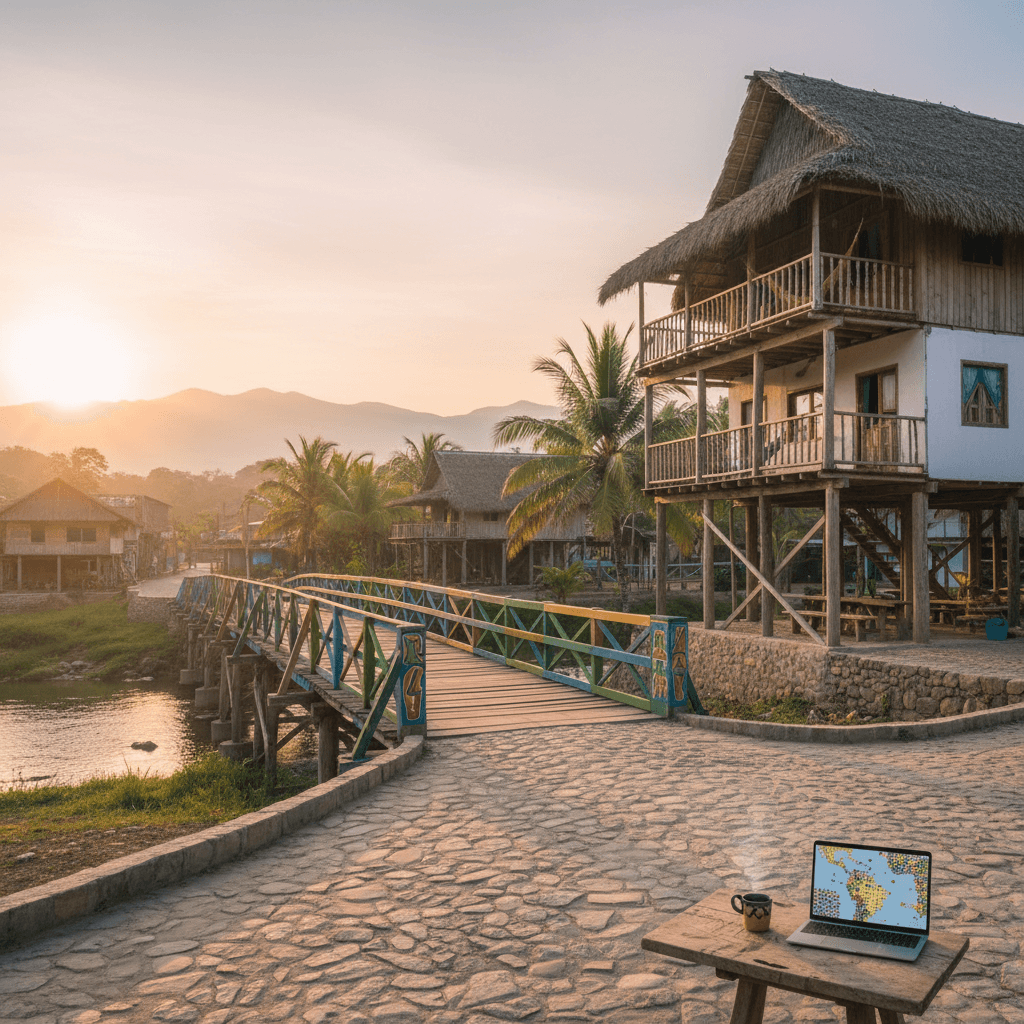
Palomino isn't your typical digital nomad hub. It’s a dusty, single-street coastal town in La Guajira where the Sierra Nevada mountains literally tumble into the Caribbean Sea. You won't find glass-walled coworking spaces or high-speed fiber optics on every corner. Instead, the vibe is a raw, unpolished blend of backpacker energy and indigenous Wayuu influence. It’s the kind of place where you’ll find yourself working from a wooden desk under a thatched roof, surrounded by exotic birds and the constant, rhythmic sound of heavy surf.
Most nomads treat Palomino as a "digital reset" rather than a long-term base. It’s perfect for a 2 to 6 week stint when you want to trade city noise for jungle trails and river tubing. The town moves at a glacial pace; people walk barefoot down the Troncal del Caribe and the biggest decision of your day is whether to eat a 14,000 COP street arepa or head to the beach for fresh ceviche. It feels like a secret that’s slowly getting out, attracting those who value nature immersion over infrastructure.
The Reality of Remote Work
Living here requires a flexible mindset. The internet can be temperamental, especially during the afternoon rains or the occasional power outage. Experienced nomads usually steer clear of heavy video call schedules while in town. However, the arrival of Starlink at spots like Casa Aloha and Amazing House has been a game-changer, offering speeds up to 200 Mbps and making it possible to actually get things done between surf sessions.
You'll likely spend your mornings at Cafe Artesanal Nevada, which serves as an informal headquarters for the remote work crowd. It’s where you buy your local SIM cards and swap tips on which hostels currently have the most stable signal. The community is small but tight-knit; you’ll see the same faces at the beach bars for sunset and at the local wellness spots for morning yoga. It’s an easy place to be solo because the social scene happens naturally in the hammocks and shared gardens.
Life on the Dusty Trail
The town is divided into a few loose zones, though everything is walkable. The Main Street area is the heartbeat of the town, filled with cafes and gear shops. It gets dusty and can feel a bit chaotic, but it’s where the best budget food is. If you move toward the Beachfront, things get more relaxed and a bit pricier, dominated by hostels with pools and sea-view lounges. For those who need absolute quiet, the Jungle-edge near the river offers a more secluded, lush experience.
The cost of living is a major draw. A budget-conscious nomad can get by on $800 to $1,200 per month, while those looking for a private villa with solar backups and a pool should budget closer to $1,800. You’re paying for the access to Tayrona National Park and the unique opportunity to tube down the Palomino River, where you can drift from the jungle all the way to the ocean. It’s a sensory experience that compensates for the lack of big-city amenities.
What Makes Palomino Different
Unlike Medellin or Santa Marta, Palomino doesn't try to cater to your every whim. There’s a beautiful friction here. You have to navigate the lack of ATMs, the humidity, and the language barrier, as English proficiency is quite low outside the main hostels. But that’s exactly why people stay. There’s a certain magic in watching the sunset over the Guajira desert peaks while sitting on a beach that feels like the edge of the world. It’s a place for the nomad who wants to disconnect from the "hustle" and reconnect with the elements.
- Best for: Nature lovers, surfers, and those needing a low-cost mental break.
- The Trade-off: You’ll need a Tigo or Claro SIM as a backup for the patchy WiFi.
- The Highlight: The "jungle-to-sea" geography that you won't find anywhere else in Colombia.
Palomino is one of those rare spots where your biggest monthly expense might actually be the private Starlink connection you need to stay online. It remains one of the most affordable coastal escapes in Colombia, attracting nomads who want to trade the high-rise prices of Cartagena for a dusty, barefoot lifestyle. While it’s cheap, the trade-off is infrastructure; you’re paying less because the town is still catching up to the digital age.
Monthly Budget Tiers
Most nomads find they can live comfortably here for significantly less than in Medellin or Bogota. Here is how the monthly spending typically breaks down:
- Budget Nomad ($800 to $1,200 USD): This covers a bed in a high-end hostel or a basic studio for around 1.5M to 2.5M COP. You'll be eating mostly street food like 14,000 COP arepas or menu del dias, and keeping your entertainment to beach days and hiking.
- Mid-Range ($1,200 to $1,800 USD): This allows for a private 1-bedroom apartment in the center for 2.5M to 4M COP. You can eat at sit-down spots like Cafe Artesanal Nevada regularly and afford the occasional private mototaxi or weekend trip to Tayrona.
- Comfortable ($1,800+ USD): This tier is for those booking premium villas like Amazing House or Casa Aloha. You’re looking at 5M COP or more for rent, but you get perks like a private pool and, most importantly, solar backup and Starlink.
Housing and Rent
Rent is your primary variable. If you’re just passing through, Airbnb is the easiest route, with spots like Casa Ocaso offering a modern garden setting for solo travelers. For longer stays of a month or more, expats recommend negotiating directly with owners or checking local boards near the Troncal del Caribe. Central studios usually hover between 2M and 4M COP, but prices spike during the dry season from December to April.
Food and Dining
Eating out is a highlight here because the prices stay low even near the water. You can grab a quick street meal for about $3.50 USD. A mid-range dinner at a popular spot on the main road will run you between 30,000 and 50,000 COP ($7.50 to $12.50 USD). If you want the upscale experience with fresh seafood and cocktails at a beachfront resort, expect to pay 80,000 COP ($20 USD) or more. Most nomads save money by hitting the local markets for fruit and staples, though selection is more limited than in the big cities.
Connectivity and Logistics
You have to factor "digital insurance" into your budget. Since the local grid is prone to outages during afternoon rain, travelers often buy multiple SIM cards from Tigo or Claro as backups. You can pick these up at Cafe Artesanal Nevada. Using an eSIM like Saily is a popular move for instant data, but having a physical local SIM is cheaper for the long haul. Banking is straightforward if you use Wise or Revolut, but keep in mind that the local ATMs can be finicky; it’s a good idea to carry some cash for the smaller vendors who don't take card.
Transport and Utilities
Transport costs are negligible because the town is so compact. You’ll spend most of your time walking the dusty path between the main road and the beach. When you need to move fast or carry groceries, mototaxis and tuk-tuks are everywhere and cost just a few dollars. If you're heading to the airport in Santa Marta or Riohacha, a private transfer is the comfortable choice at around 1 to 2 hours of travel time, though the local buses running along the highway are a fraction of the cost for those on a strict budget.
For Digital Nomads: The Jungle Edge
If you're coming to Palomino with a laptop, your biggest hurdle isn't the heat, it's the infrastructure. Most nomads gravitate toward the Jungle Edge, specifically the area surrounding Casa Aloha. This isn't a formal neighborhood, but rather a cluster of properties tucked back from the main road toward the river. It’s the smartest play for anyone needing to hit deadlines because this zone has the highest concentration of Starlink terminals and solar backups.
You can expect to pay around 2.5M to 4M COP ($625 to $1,000 USD) for a decent one bedroom or a modern studio like those at Casa Ocaso. You'll be far enough from the beachfront hostels to avoid the 2:00 AM bass lines, but close enough to walk to Cafe Artesanal Nevada when you need a caffeine fix or a local SIM card top up. It’s quiet, green, and feels more like a workspace than a vacation rental.
- Vibe: Focused, green, and tranquil.
- Connectivity: Best in town; look for "Starlink" in the listing description.
- Local Tip: Stock up on Tigo or Claro data at the main street shops; even the best WiFi here can dip during a heavy tropical downpour.
For Solo Travelers: The Main Street (Troncal del Caribe)
Solo travelers usually want to be where the logistics are easiest. The area flanking the Troncal del Caribe, Palomino’s dusty main artery, is the heartbeat of the town. It’s not "pretty" in a traditional sense, but it’s incredibly practical. You’re steps away from street food stalls selling 14,000 COP ($3.50) meals and the bus stops for quick trips to Tayrona National Park.
Budgeting here is easy. You can find hostel beds or basic private rooms for 1.5M to 2.5M COP ($375 to $625) a month. It’s the best place to meet people naturally. You'll find yourself bumping into the same faces at the juice stands or while waiting for a mototaxi. Just be prepared for the dust; the main road is unpaved and the breeze keeps things moving.
- Pros: Everything is walkable; high social turnover.
- Cons: Noisy and dusty; basic accommodation standards.
- Top Spot: Grab an arepa on the corner and watch the town move; it's the best people watching in La Guajira.
For Expats and Short-Term Escapists: The Beachfront Zone
If work isn't your primary focus and you have a higher budget, the Beachfront Zone is where you'll find the breezy, Caribbean lifestyle you likely came for. This area is dominated by upscale hostels and private villas like Amazing House. These properties often feature private pools and manicured gardens, with monthly rents for premium villas starting at 5M COP ($1,250) and climbing quickly.
Expats who settle here for a month or two enjoy the immediate access to the surf and the higher end seafood restaurants. However, keep in mind that the beach can get crowded on weekends when tourists from Santa Marta arrive. The internet here is notoriously fickle compared to the jungle edge, so it's a better fit for those on a "slowmad" schedule or a total reset.
- Vibe: High end tropical; barefoot luxury.
- Cost: Expect to spend $1,800+ USD per month for a comfortable, private setup.
- Warning: Sea spray is tough on electronics; keep your laptop in a dry bag when you aren't using it.
For Families: The Southern Residential Pockets
Palomino isn't a traditional family destination due to the lack of schools and medical facilities, but for a short adventure, families tend to prefer the quieter residential pockets south of the main road. These areas offer a bit more space and privacy away from the backpacker bars. You can find multi bedroom homes with gated yards that provide a safer environment for kids to play.
Transport for families is usually handled via private transfers or the occasional mototaxi. Most families find that 2 to 4 weeks is the sweet spot here before the limited infrastructure becomes a chore. It’s a great base for teaching kids about Wayuu culture or taking them on a slow tube ride down the Palomino River.
- Rent: 4M to 6M COP for a larger family house.
- Safety: Very safe; the community is tight knit and welcoming.
- Healthcare: Keep in mind the nearest major clinics are 1 to 2 hours away in Riohacha or Santa Marta.
The Connectivity Reality Check
If your job involves back to back video calls or uploading massive video files, Palomino will test your patience. The town's infrastructure is still catching up to its popularity. Power outages happen, especially during the rainy season from May to November, and the local grid can be temperamental in the afternoons. Most nomads find that while the "vacation" WiFi is fine for emails, you need a solid backup strategy to work here seriously.
The good news is that the Starlink revolution has hit the jungle. A few forward thinking properties have installed satellite internet, offering speeds up to 200 Mbps. Without Starlink, you're looking at patchy speeds that fluctuate wildly. Always ask your host for a speed test screenshot before booking, and specifically ask if they have a solar backup or a generator to keep the routers humming during blackouts.
Coworking and Work-Friendly Cafes
You won't find a traditional "WeWork" style office with ergonomic chairs and soundproof booths here. Instead, Palomino offers a "laptop under a pergola" kind of lifestyle. Most remote workers rotate between their hostel common areas and a handful of reliable cafes.
- Casa Aloha: This is the gold standard for nomads in town. They offer dedicated garden desks, reliable Starlink, and solar backups. It’s one of the few places where you can actually take a meeting without fearing a sudden disconnect.
- Cafe Artesanal Nevada: Located on the main street, this is the unofficial nomad hub. The coffee is excellent, the WiFi is decent for light tasks, and the staff can help you navigate local SIM card setups.
- Hostel Common Areas: Many hostels along the Troncal del Caribe have decent WiFi in their lounge areas, but the noise levels can be high during peak backpacker hours.
Mobile Data and SIM Cards
A local SIM card isn’t just a convenience; it’s a requirement for survival here. When the town's fiber lines go down, your phone's hotspot is your only lifeline. Tigo and Claro generally have the best coverage in the area, though Movistar is a solid third choice. You can pick these up at Cafe Artesanal Nevada on the main street.
For those who want to hit the ground running, an eSIM is the way to go. Saily is a popular choice among the local nomad community for its ease of setup. Just keep in mind that even 4G signals can struggle inside thick walled concrete buildings, so try to work near a window or in an open air patio.
Practical Tips for Remote Success
To make a 2 to 6 week stint work, nomads recommend a few specific habits. First, do your "heavy lifting" tasks like large downloads or video uploads early in the morning when the network load is lighter. Second, invest in a high quality power bank for your phone and laptop; you'll thank yourself when the lights go out at 2:00 PM on a Tuesday.
Most importantly, manage your clients' expectations. Let them know you're working from a remote coastal village. If a tropical storm rolls in and the internet cuts out for an hour, it's just part of the Palomino experience. If you need 99.9% uptime, you're better off staying in Santa Marta and visiting Palomino on the weekends.
Stay Smart and Stay Safe
Palomino is generally a peaceful, welcoming town where the biggest threat to your workflow is a power outage rather than a security issue. The community is tight-knit and laid-back, so you'll likely feel comfortable walking the main dusty road or the beach during the day. Most nomads find the town safer than Colombia's major metros like Medellín or Bogotá, largely because there isn't the same culture of aggressive street crime.
That said, don't let the relaxed Caribbean vibe make you careless. Use common sense after dark; while the main street is walkable at night, the beach and unlit jungle paths can be isolated. Expats recommend keeping your electronics out of sight when you're moving between your accommodation and a cafe. If you're staying at a spot further out near the jungle edge or the river, consider taking a mototaxi back home after a late dinner rather than walking alone.
- Emergency Services: Dial 123 for national emergencies.
- Personal Safety: Avoid walking alone on the beach late at night; stick to the areas where the hostels and bars are concentrated.
- Valuables: Use the lockers or safes provided by your hostel or villa. If you're working from a cafe like Cafe Artesanal Nevada, keep your laptop bag within reach.
Healthcare and Medical Realities
Healthcare in Palomino is basic at best. You'll find several pharmacies in town that can handle minor ailments like "traveler's tummy," sunburns, or insect bites. For anything more serious than a bandage or a round of antibiotics, you'll need to leave town. The local clinics aren't equipped for major emergencies or specialized care.
If you require a hospital or a private clinic, you're looking at a 1 to 2 hour drive. Most expats head to Santa Marta or Riohacha for reliable medical services. For this reason, it's vital to have comprehensive travel insurance that covers private medical transfers. If an emergency strikes, your best bet is to arrange a private car through a host or a local contact rather than waiting for public transport.
- Minor Issues: Local pharmacies (droguerías) on the main street can provide basic medical advice and over-the-counter meds.
- Serious Care: Santa Marta is the preferred destination for high-quality private clinics and specialists.
- Vaccinations: While not strictly required for the town, many travelers get the Yellow Fever vaccine if they plan on hiking deep into Tayrona or the surrounding Sierra Nevada mountains.
Practical Wellness Tips
The tropical heat and high humidity can catch you off guard, especially if you're spending your days outside. Dehydration and heat exhaustion are common complaints among newcomers. Stick to bottled or filtered water, as the tap water in Palomino isn't safe to drink. Most nomad-friendly stays like Casa Aloha or Amazing House will provide large jugs of filtered water for guests.
Mosquitoes can be persistent, particularly during the rainy peaks of October and November. Dengue fever is a known factor in the region, so high-quality repellent is a must. If you're sensitive to the sun, remember that the Caribbean rays are intense; buy your sunscreen in a larger city before arriving, as prices in Palomino's small shops are often marked up for tourists.
Navigating the Dusty Streets
Palomino is a town where your primary mode of transport will be your own two feet. The layout is simple: one main road, the Troncal del Caribe, and a handful of dirt paths leading down to the beach. Most nomads find that staying within this central grid makes life easy, as you can walk from a morning surf to a cafe for emails in under 15 minutes. Be prepared for some dust or mud depending on the season, so leave the fancy footwear in your suitcase.
Tuk-Tuks and Mototaxis
When the heat hits 32°C or you're carrying groceries, you'll want to grab a ride. Local transport is dominated by two options:
- Mototaxis: These are the fastest way to zip around. You'll see drivers hanging out at the main intersection or cruising the dusty lanes. A short hop within town usually costs around 8,000 to 10,000 COP.
- Tuk-Tuks: If you have luggage or a partner, these three-wheeled taxis are the go-to. They are slightly more expensive than a moto but offer some shade. Expect to pay 5,000 to 10,000 COP for most trips within the town limits.
Regional Travel and Buses
If you're heading out of town for a weekend in Santa Marta or a day trip to Tayrona National Park, the green and white buses running along the Troncal del Caribe are your best friend. There's no formal terminal; you just stand by the side of the highway and wave one down. The ride to Santa Marta takes about 2-3 hours and costs roughly 40,000-50,000 COP. These buses run frequently, usually every 15 to 20 minutes during daylight hours.
Getting to the Airport
Palomino doesn't have its own airport, so you'll likely fly into Riohacha (RIH) or Santa Marta (SMR). Both are about 1.5 to 2 hours away. While the public bus is the cheapest route, most nomads and expats recommend booking a private transfer for arrival, especially if you have tech gear. Places like Casa Aloha can arrange door-to-door pickups. A private car usually runs between 150,000 and 250,000 COP depending on your negotiation skills and the time of day.
Renting Your Own Wheels
For those staying 2 to 6 weeks, renting a bicycle or a scooter adds a layer of freedom. Many hostels and local shops near the beach zone offer daily or weekly rates. Bicycles are great for reaching the quieter parts of the Palomino River, while a scooter is better if you want to explore the jungle-edge areas or nearby surf breaks without relying on a driver. Just keep in mind that ride-hailing apps like InDrive or Uber are virtually non-existent here; you'll be relying on local connections and cash for almost everything.
Practical Navigation Tips
- Carry Cash: Drivers don't take cards, and the local ATMs can be temperamental. Keep small denominations of COP for your daily rides.
- Offline Maps: Download the Palomino area on Google Maps. While the town is small, cellular signals can drop out when you're heading toward the jungle-edge or the river.
- The "Punta" App: This is a growing resource for nomads in the area to coordinate shared rides or find local transport recommendations.
- Night Safety: Walking is generally safe, but the streets are poorly lit. A phone flashlight is a necessity to avoid potholes or the occasional stray dog after dark.
The Language Landscape
In Palomino, Spanish is the undisputed king. You are in a remote corner of La Guajira where the pace of life is dictated by the tides rather than international business. While the town has become a favorite for travelers, English proficiency remains low once you step outside the gates of the major hostels. You will find that staff at spots like Casa Aloha or Cafe Artesanal Nevada speak enough English to help you with a SIM card or a room booking, but the local shopkeepers and mototaxi drivers generally speak only Spanish.
The local flavor of Spanish here is the Caribbean dialect, which is fast, melodic, and often involves dropping the "s" at the end of words. You might also hear Wayuunaiki being spoken by members of the Wayuu indigenous community who come into town. It is a distinct, beautiful language that adds to the town's unique cultural identity, though you won't be expected to learn it to get by.
Getting by as a Nomad
If your Spanish is rusty, you will definitely want to download offline maps and translation packs for Google Translate or DeepL. Because the internet in Palomino is notoriously patchy, especially during the afternoon rains, relying on a live cloud-based translator is a recipe for frustration. Most nomads find that a basic grasp of "travel Spanish" is enough to navigate daily life, but if you plan to stay for the recommended 2 to 6 weeks, learning a few specific phrases will make your life much easier.
- "¿Cuál es la contraseña del WiFi?" (What is the WiFi password?) is easily the most used phrase by remote workers here.
- "¿Aceptan tarjeta?" (Do you accept card?) is important, as many smaller kiosks are cash-only.
- "¿Cuánto cuesta el pasaje a Santa Marta?" (How much is the fare to Santa Marta?) for when you're catching the bus on the Troncal del Caribe.
Communication Tools and Connectivity
Staying connected is the biggest hurdle in Palomino. Since you can't always rely on the person across from you speaking English, your phone becomes your primary communication tool. Expats recommend heading straight to Cafe Artesanal Nevada on the main street to sort out your local SIM card. Tigo and Claro are the most reliable providers for the area, though Movistar is also an option. If you want to skip the physical SIM card hunt, a Saily eSIM is a popular choice for instant data upon arrival.
For digital nomads, communication isn't just about talking to locals; it's about staying in touch with clients. Since the power can go out without warning, having a data plan with a hotspot is a non-negotiable backup. Even if your villa has Starlink, a heavy tropical storm can interfere with the signal, making those offline translation apps even more vital for coordinating with local hosts or arranging private transfers during an outage.
Social Etiquette
The vibe in Palomino is incredibly laid-back, but politeness goes a long way. Always start your interactions with a "buenos días" or "buenas tardes." It is a small gesture that signals respect for the local culture. You'll find the community is welcoming and patient with learners. If you're looking to practice, the social atmosphere at beach bars and hostel common areas is the perfect low-pressure environment to try out your Spanish over a 14,000 COP street food meal or a cold beer.
Tropical Rhythms and the Dry Season Sweet Spot
In Palomino, the weather dictates the pace of life more than any calendar. You are looking at a classic Caribbean tropical climate where the thermometer stays parked between 28°C and 32°C (82-90°F) year-round. It is humid, salty, and warm, meaning your wardrobe will mostly consist of linen and swimsuits. While the temperature is consistent, the rainfall is anything but, and for a nomad, the rain brings more than just a wet commute; it often brings the internet to a grinding halt.
The absolute best time to base yourself here is from December to April. This is the dry season, characterized by endless blue skies and reliable sunshine. It is the peak window for tubing down the Palomino River or hiking into Tayrona National Park without sliding through mud. For remote workers, these months are the safest bet because power outages and connectivity drops are less frequent when the skies are clear.
Navigating the Rainy Season
The rain starts to creep in around May and lingers through November. You will experience heavy, dramatic downpours that usually happen in the late afternoons. While the jungle turns an incredible shade of neon green during this time, the infrastructure struggles to keep up. Most nomads find that October and November are the most challenging months to stay productive. These are the wettest months, and the combination of humidity and frequent lightning can lead to persistent power flickers.
If you do visit during the rainy season, seasoned travelers suggest having a backup power bank and a local SIM card from Tigo or Claro. When the hostel WiFi dies during a storm, a hotspot is often your only lifeline to finish a deadline. On the plus side, the town is much quieter, and you can often negotiate better long-term rates at places like Casa Ocaso or Casa Aloha during the off-peak months.
What to Expect Month-by-Month
- December to February: The busiest time. Expect higher prices and more crowds, but the best weather for surfing and socializing.
- March and April: The "Goldilocks" zone. It is still dry and sunny, but the holiday crowds have thinned out, making it easier to snag a quiet garden desk at Cafe Artesanal Nevada.
- May to September: The shoulder season. You will see intermittent rain, but it’s rarely a washout. It’s a great time for those who prefer a slower, more authentic vibe.
- October and November: Peak rain. Only recommended if you are on a strict budget or looking for a true "off-the-grid" experience where work takes a backseat to nature.
Practical Survival Tips for the Heat
The humidity in La Guajira is no joke. Most budget accommodations only provide fans, which can make mid-afternoon Zoom calls a sweaty endeavor. If you are sensitive to heat, look for higher-end villas like Amazing House that offer climate control or better airflow. Expats often suggest timing your most intensive work for the early mornings when the air is still relatively cool, leaving the scorching afternoons for a dip in the ocean or a nap in a hammock.
Keep an eye on the local wind patterns too. During the dry season, the "Brisa Loca" can kick up quite a bit of dust on the main Troncal del Caribe road. It keeps you cool, but you will want a protective sleeve for your laptop if you are working in open-air cafes. Despite the heat and the occasional storm, the trade-off is a lifestyle where the sunset marks the end of the workday and the Caribbean Sea is your backyard.
Connectivity and Power
Internet in Palomino is the single biggest hurdle for anyone trying to clock a forty hour week. While the town has seen improvements, the connection remains temperamental, especially during the afternoon humidity or heavy tropical rain. Most nomads rely on Starlink, which has become the gold standard here. If your accommodation doesn't specifically mention it, expect speeds to hover around 10-20 Mbps at best.
Power outages are a regular part of life on the coast. Locals take them in stride, but they'll kill your flow if you're in the middle of a meeting. Savvy remote workers book stays at places like Casa Aloha because they have solar backups and dedicated workspaces. Always have a local SIM card ready to tether. Tigo and Claro tend to have the best coverage in the area. You can pick up a physical SIM or get help with an eSIM at Cafe Artesanal Nevada on the main street.
Money and Budgeting
Cash is still king in this corner of La Guajira. While more restaurants are starting to accept cards, many of the best local spots and mototaxis are cash only. There are a few ATMs on the Troncal del Caribe, but they frequently run out of money or have high withdrawal fees. It's smart to carry a healthy stash of pesos from Santa Marta or Riohacha before you arrive.
Your monthly budget will stretch much further here than in Medellin or Cartagena. A Budget lifestyle costs roughly $800 to $1,200, which covers a hostel bed or a basic studio and plenty of 14,000 COP street food meals. A Mid-range setup sits between $1,200 and $1,800, allowing for a private 1BR apartment and regular dinners at beachside spots. If you want a Comfortable villa with a private pool and Starlink, like Amazing House, expect to pay $1,800+ per month.
Getting Around
Palomino is small enough that your own two feet are usually the only transport you'll need. The town is centered around one long, dusty road that runs from the highway down to the beach. If the midday heat is too much, hop on a mototaxi. They're everywhere and usually cost just a few thousand pesos for a quick lift.
- Airport Transfers: Most people fly into Santa Marta or Riohacha. A private car takes about 1 to 2 hours and is the most reliable way to get your luggage through the humidity.
- Public Bus: The green and white buses running along the main highway are an easy, cheap way to reach Tayrona National Park for a day trip.
- Walking: Stick to the main paths at night. While the town is generally safe, the lack of street lighting in some areas makes a phone flashlight a necessity.
Healthcare and Safety
For minor scrapes or a stomach bug, the local pharmacies can handle most needs. However, Palomino lacks a full scale hospital. If anything serious happens, you'll need to head to Riohacha or Santa Marta. Most expats keep a private insurance policy that covers medical evacuations just in case. For emergencies, the national number is 123.
Safety is mostly about common sense. Don't leave your laptop unattended on a beach chair while you go for a swim. The community is tight knit and welcoming, but the "no dar papaya" rule still applies. Keep an eye on your belongings in crowded hostels and avoid walking alone on isolated stretches of the beach after dark.
Local Etiquette
The pace of life here is slow. If your coffee takes twenty minutes, just enjoy the view. Being pushy or rushed won't get you anywhere faster. It's also important to remember that you're near indigenous Wayuu territory. Respect their land and traditions, especially when visiting the river or more remote coastal areas. A simple "buenos días" goes a long way with the locals, even if your Spanish is limited to the basics.
Need visa and immigration info for Colombia?
🇨🇴 View Colombia Country GuideOff the Radar
Pioneer territory
Monthly Budget Estimates
More cities in Colombia

Cali
🇨🇴 Colombia
Sabaneta
🇨🇴 Colombia
Barranquilla
🇨🇴 Colombia