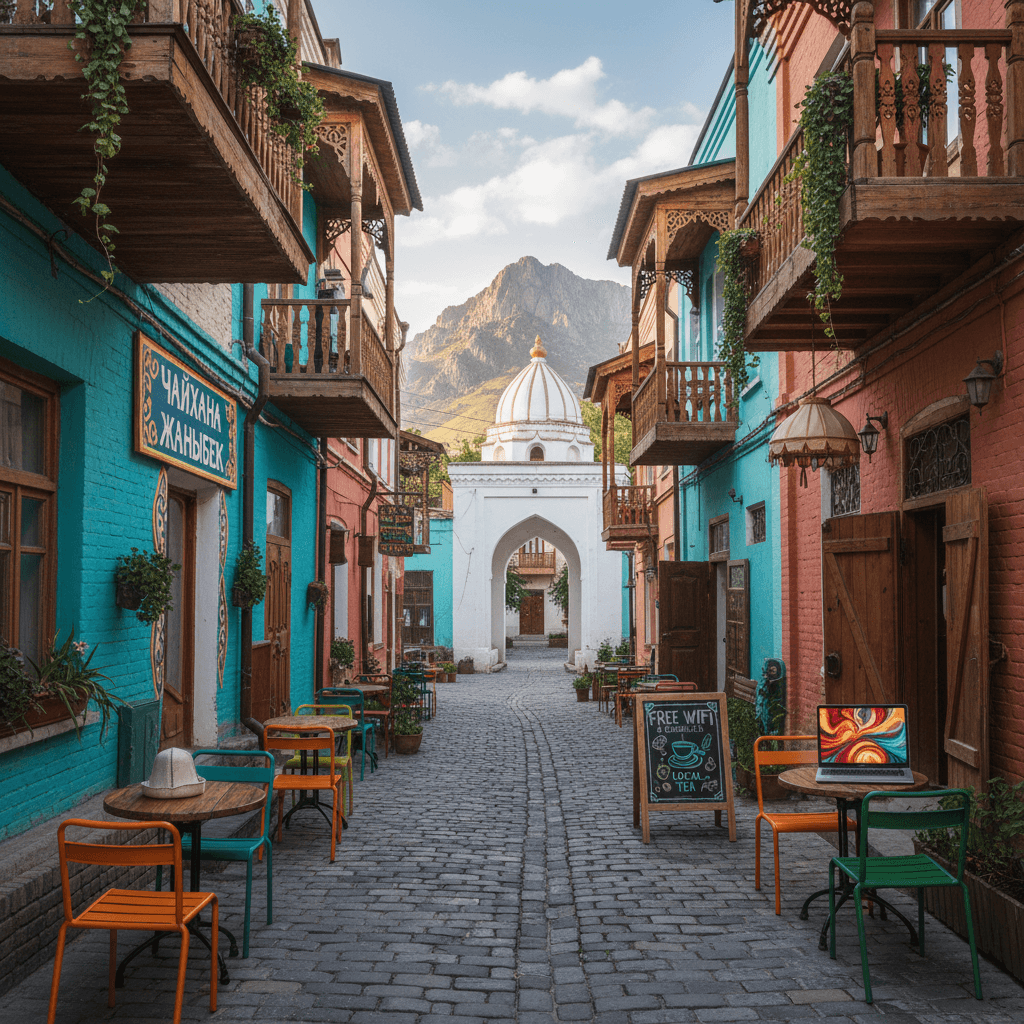
Osh
🇰🇬 Kyrgyzstan
The Soul of the Silk Road
If Bishkek is the frantic, modern engine of Kyrgyzstan, Osh is its ancient, beating heart. This is a city where the pace of life slows down to match the rhythm of the tea houses and the afternoon sun hitting the brickwork. It feels less like a corporate hub and more like a bohemian crossroads. You won't find the same polished infrastructure here as you would in Almaty or even Bishkek, but that is exactly why nomads are starting to trickle in. It is a place for those who want to feel like they are actually somewhere different, rather than just another gentrified digital nomad bubble.
The vibe is undeniably southern. It is warmer, more traditional, and more diverse than the north. You'll spend your mornings working from a cafe and your afternoons wandering through the Osh Bazaar, which has been a trade staple for thousands of years. There is a refreshing independence here; you aren't fighting for a seat at a communal table with fifty other laptop users. Instead, you're part of a city that is still figuring out its relationship with the remote work world, which makes every discovery feel a bit more personal.
The Nomad Experience
Living in Osh is incredibly affordable, even by Central Asian standards. Most nomads find they can live comfortably on $800 to $1,200 per month, covering everything from a central apartment to daily dining out. The trade off for these low costs is a smaller community. You won't find a different networking event every night, but the connections you do make at spots like ololo Creative Hub tend to be deeper and more sincere. It is a city that attracts builders and explorers rather than tourists.
- The Draw: Unbeatable affordability, authentic Silk Road history, and a gateway to the Pamir Mountains.
- The Friction: Limited high-end coworking options, less English spoken than in the capital, and underdeveloped infrastructure in the suburbs.
- The Sweet Spot: Late spring and early autumn, when the fruit markets are overflowing and the heat is manageable.
Neighborhoods & Basecamps
Osh is relatively compact, but where you park your laptop matters. Most remote workers stick to the center to stay within walking distance of the few reliable WiFi spots and the best food.
Central Osh (Near the Bazaar)
- Rent: $250 to $450 for a decent one bedroom apartment.
- Vibe: High energy, walkable, and close to the action. It is the best spot for solo travelers who want to be near the markets and street art.
- Food: Street snacks like samsas for $1 or a full plov dinner for $5.
Park Areas & Outskirts
- Rent: $200 to $350 for larger, quieter spaces.
- Vibe: Slower and greener. Expats with families often prefer these areas for the quiet, though you will rely more on marshrutkas or the Yandex Go app to get around.
- Pros: More peace and closer to nature; Cons: Street lighting can be poor at night and cafes are sparse.
Connectivity & Work Culture
Internet speeds in Osh are surprisingly resilient, usually hovering around 30 Mbps. Fiber is common in central apartments, and 4G coverage via providers like O! is cheap and reliable enough to use as a hotspot. For a dedicated workspace, ololo Creative Hub is the undisputed king. It is a stylish, well equipped space where a day pass costs between $5 and $10. It is also the best place to meet the local tech crowd and find out about weekend trips to the mountains.
When you aren't at a desk, the city is your playground. The food scene is a major highlight, with a heavy influence from Uzbek cuisine. You'll find yourself eating world class lagman and naan for prices that feel like a mistake. Safety is rarely an issue; the city is welcoming and ranks well on global peace indices. Just keep your wits about you in the unlit outskirts after dark, much like you would in any city. If you're looking for a destination that rewards curiosity over convenience, Osh is waiting.
The Nomad Budget: Living Large for Less
Osh is one of those rare spots where your bank account finally gets a breather. While Bishkek is becoming more cosmopolitan and pricey, Osh remains stubbornly affordable. Most nomads find they can live comfortably on $800 to $1,200 a month without really trying to save. If you are on a strict budget, you could easily get by on $600 if you stick to local markets and basic apartments.
The food scene is a major highlight here. You can grab a filling plate of street food or a massive bowl of lagman for $2 to $5. Even when you want to treat yourself to a sit down meal at a nicer spot, you will rarely see a bill over $15 per person. It is the kind of place where you stop checking prices before you order.
Finding Your Base
Osh is smaller and more walkable than the capital, but where you park your laptop matters. Most solo travelers and nomads head straight for the center to stay close to the action.
Central Osh (Near the Bazaar)
- Best for: Walkability, foodies, and short term stays.
- Rent: $250 to $450 for a decent one bedroom.
- The Vibe: It is loud and chaotic in the best way. You have the massive Osh Bazaar right there for fresh fruit and cheap textiles.
- Pros: Everything is within a ten minute walk; plenty of cafes.
- Cons: It can get dusty and noisy; some buildings are older Soviet blocks.
Park Districts & Outskirts
- Best for: Families, long term expats, and light sleepers.
- Rent: $200 to $350 for larger spaces.
- The Vibe: Slower and greener. You get more breathing room and easier access to the hiking trails around Sulayman-Too.
- Pros: Quiet nights and better air quality.
- Cons: You will need to rely on the Yandex Go app or local marshrutkas to get into the city center.
Connectivity and Workspace
The internet in Kyrgyzstan has improved massively, but Osh still feels a step behind Bishkek. You can expect average speeds around 30 Mbps. Most cafes have decent WiFi, but for a stable connection and a community feel, ololo Creative Hub is the place to go. It is the heart of the nomad scene here, offering day passes for $5 to $10. It is stylish, has reliable power, and is usually where you will meet the few other nomads in town.
For mobile data, grab a SIM from O! as soon as you land. You can get a weekly package with plenty of data for just a few dollars. It is reliable enough that many nomads use their phone as a hotspot when the cafe WiFi gets spotty.
Getting Around
Public transport is dominated by the marshrutka, those white minibuses that go everywhere for about $0.30. They are cramped but efficient once you figure out the routes. For more comfort, Yandex Go is the standard ride hailing app. A cross town trip rarely costs more than $2 or $3. If you are staying central, you will likely find yourself walking most of the time, which is the best way to stumble upon the city's famous street art.
Health and Safety
Osh feels remarkably safe. People are genuinely welcoming, and the "capital of the south" has a warm, hospitable energy. That said, the outskirts can be poorly lit at night, so it is better to take a cheap taxi home after dark. For healthcare, there are basic hospitals and plenty of pharmacies, but for anything serious, most expats recommend heading to a private clinic or even flying back to Bishkek. Make sure your insurance covers medical evacuation just in case.
The Fine Print
- Banking: Cash is king. While some spots take cards, you will want a stack of Som for the markets and small shops. Apps like Wise or Revolut work at ATMs.
- Language: English is not widely spoken. You will want Google Translate and a few Kyrgyz phrases like "Rahmat" (thank you) to get by.
- Visa: The new Digital Nomad Visa is a game changer, offering up to 10 years for citizens of 61 countries. It is still a bit of a bureaucratic maze, so many nomads just use the standard visa free entry for shorter stays.
Osh doesn't have the clearly defined district borders of a Western metropolis, but where you choose to drop your bags determines whether you're living the Silk Road dream or just stuck in a dark suburb. The city is a patchwork of Soviet apartment blocks, sprawling private garden homes, and one of the most legendary bazaars in Central Asia. It's smaller and slower than Bishkek, which is exactly why people come here.
The general rule of thumb is to stay central. While the outskirts offer more space, the lack of street lighting and the scarcity of English speaking hubs make them a tough sell if you don't have a car. Most of the action, and the reliable fiber internet, is clustered around the Ak-Buura River and the base of Sulaiman-Too mountain.
For Digital Nomads
If you're here to work, you want to be in the Central District, specifically near the ololo Creative Hub. This is the heartbeat of the small but growing nomad scene. Staying within walking distance of the hub means you aren't reliant on the crowded marshrutkas to get to a professional desk. You'll find the best balance of work-life infrastructure here, with plenty of cafes that won't mind if you flip open a laptop for an hour.
- Rent: Expect to pay $200 to $400 for a decent one-bedroom apartment in this area.
- Vibe: Bohemian, active, and surprisingly artistic with street art popping up on old Soviet walls.
- The Draw: Proximity to the Osh Bazaar for cheap, fresh fruit and the best street food in the country.
- Connectivity: This is where you'll find the most reliable 30 Mbps fiber connections and the best 4G coverage from providers like O!.
For Solo Travelers
Solo travelers usually gravitate toward the area surrounding Sulaiman-Too. It's the city's most iconic landmark and serves as a natural compass. Living near the mountain means you're close to the major parks and the most popular teahouses. It's the safest area for walking at night because the main thoroughfares are better lit than the residential "microdistricts."
- Rent: Guesthouses and small studios often go for $15 to $25 per night if you aren't committing to a monthly lease.
- Social Life: You'll likely meet other travelers at the mountain trailheads or in the cafes near the National Historical and Archaeological Museum.
- Safety: Very high during the day; just stick to the main roads after dark to avoid the unlit side streets.
For Expats and Long-Termers
Expats who are staying for six months or more often look toward the Microdistricts or the quieter residential pockets just south of the center. These areas offer more "real life" feel. You get larger apartments and a break from the noise of the bazaar, but you'll need to get comfortable with the Yandex Go app or the $0.30 marshrutka rides to get into town for meetings or social events.
- Rent: Prices can drop to $150 to $250 for larger, older apartments if you're willing to negotiate in Russian or Kyrgyz.
- Food: Local markets in these neighborhoods are even cheaper than the main bazaar, with full meals at neighborhood cafes costing $2 to $5.
- Pros: A much quieter, more authentic experience with plenty of green space and local parks for lounging.
- Cons: English proficiency is almost zero here; you will need translation apps for everything from paying utilities to buying bread.
For Families
Families usually prefer the areas near the Navoi Park. It's the city's primary green lung and offers a bit of an escape from the dust and traffic of the main roads. The pace is slow, and the atmosphere is very welcoming to children. While Osh doesn't have the international school infrastructure of Bishkek, the central parks provide plenty of space for kids to run around.
- Environment: Plenty of shaded walking paths and seasonal amusement rides.
- Housing: Look for newer "Elite House" developments which offer better security and more modern plumbing than the older Soviet stock.
- Healthcare: You're close to the central pharmacies and private clinics, which are the preferred choice for expats over the public hospitals.
The Connectivity Reality
Osh isn't a high tech hub, and that's exactly why people come here. While it lacks the dense infrastructure of Bishkek, the internet situation is surprisingly reliable for a city that feels like a Silk Road time capsule. You can expect average speeds around 30 Mbps, which handles video calls and standard remote work without much fuss. Fiber optics serve most central apartment buildings, and 4G coverage is solid enough that you can tether from a park bench if you need a change of scenery.
Most nomads rely on local SIM cards as their primary or backup connection. Providers like O! are the go to choice, offering weekly data packages for just a few dollars. You can pick these up at the airport or small kiosks around the city center. Just bring your passport and they'll have you set up in ten minutes.
Coworking in the South
If you're looking for a traditional office vibe, your options are limited but high quality. The undisputed king of the scene is ololo Creative Hub. It's a stylish, well equipped space that serves as the heart of the tiny local nomad community. It's more than just a desk; it's where you'll meet the few other remote workers in town and find out about weekend trips to the mountains.
- ololo Creative Hub: Expect to pay between $5 and $10 for a day pass. They offer high speed WiFi, ergonomic chairs, and a community atmosphere that fights off the isolation of solo travel.
- Networking: Keep an eye on their event board for workshops or social mixers, which are often the only organized nomad meetups in the city.
The Cafe Office Scene
Since dedicated coworking spaces are sparse, the local cafe culture picks up the slack. The bohemian vibe in Osh means many owners are happy to let you linger over a coffee for a few hours. The central areas near the parks and the main markets have the best density of spots with reliable WiFi and power outlets. While specific "laptop cafes" aren't branded as such, the general rule is that if they serve espresso and have a modern interior, they're fair game for a work session.
Most travelers find that working from these cafes is a great way to soak in the local atmosphere. You'll be surrounded by street art and the hum of the city rather than the sterile environment of a corporate office. Just remember to keep your sessions respectful during busy lunch hours, as space can be at a premium in the more popular spots.
Practical Tech Tips
While the digital infrastructure is growing, Osh still has its quirks. Power outages aren't common in the center, but they aren't unheard of either. It's smart to keep your devices charged and have a power bank handy. If you're planning on staying for a month or more, expats recommend finding an apartment in the central district to ensure you're on the most stable part of the grid.
- Digital Nomad Visa: Kyrgyzstan has introduced a visa for remote workers from 61 countries that can last up to 10 years. It's a game changer if you want to make Osh a long term base.
- Apps to Download: Make sure you have Yandex Go for cheap rides around town and Google Translate for communicating with landlords or shopkeepers, as English proficiency is quite low.
- Connectivity Costs: Budget around $10 to $15 per month for a generous mobile data plan and occasional coworking day passes.
Ultimately, Osh is for the nomad who values independence over polished amenities. You won't find a coworking space on every corner, but the low cost of living and the "off the beaten path" energy make the minor tech hurdles well worth the effort.
Stay Smart and Safe
Osh has a reputation for being the more traditional, conservative sibling to Bishkek, but for most nomads, it feels remarkably safe. The city moves at a slower pace, and the locals are famously hospitable. You'll find that the "capital of the south" is generally peaceful, though it's wise to keep your wits about you after dark. Stick to the well lit central areas near the parks and the major thoroughfares. Like many Central Asian cities, the outskirts can get pretty dark at night, and the sidewalks aren't always in the best shape, making a late night stroll a bit of a trip hazard.
Petty crime isn't a major issue here, but it's always smart to keep an eye on your bag in crowded spots like the Osh Bazaar. Most travelers find that the biggest "danger" is simply the language barrier or the occasional overzealous taxi driver. If you ever run into trouble, the emergency numbers are 102 for the police and 103 for an ambulance. It's helpful to have a translation app downloaded for offline use, as English isn't widely spoken among the local authorities.
Healthcare Realities
When it comes to your health, Osh is fine for the basics but limited for anything serious. There are plenty of pharmacies (Apteka) scattered around the city center where you can grab over the counter meds for cheap. For anything beyond a cold or a minor stomach bug, most expats and long term nomads head to private clinics rather than public hospitals to avoid long waits and aging infrastructure. If you have a serious medical emergency, you'll likely want to get to Bishkek or even fly to Istanbul or Dubai for specialized care.
- Private Clinics: Look for modern facilities in the center; they usually have better equipment and occasionally a staff member who speaks some English.
- Insurance: Always carry a policy that includes medical evacuation. It's better to have it and not need it in a place where high level care is a flight away.
- Water Safety: Stick to bottled or filtered water. While some locals drink from the tap, most nomads find it's not worth the risk of a ruined week.
Digital Nomad Logistics
The 2025 Digital Nomad Visa is a game changer for those looking to stay long term. It's open to citizens from 61 countries and can grant you residency for up to 10 years. You'll need to apply through the Immigration Office, and while the process is still finding its feet, it's a clear sign that the government wants you here. Most people find the initial paperwork a bit of a headache, so many choose to hire a local fixer or consultant to help with the translation and filing.
Practical Safety Tips
- Yandex Go: Use this app for all your taxi rides. It's safer than hailing a random car on the street because the price is fixed and the driver is tracked. A ride across town usually costs around $1.50 to $3.00.
- Solo Travel: Solo female travelers generally report feeling safe, though you might receive some curious stares. Dressing a bit more modestly than you would in Europe, especially when visiting the south, goes a long way in terms of comfort and respect.
- Local Connections: The community at ololo Creative Hub is your best resource. If you're feeling unsure about a neighborhood or need a recommendation for a doctor, the people there are usually happy to point you in the right direction.
The Logistics of Life in the South
Osh moves at a different speed than the capital. While Bishkek can feel like a rush of Soviet architecture and modern traffic, Osh is where the Silk Road heritage actually breathes. Getting around here is less about mastering a complex metro system and more about embracing the local rhythm of shared vans and walkable central boulevards.
Most nomads find that if they stay near the city center, they rarely need a wheels-up transport plan. The area around the main bazaar and the central parks is highly walkable. You can grab a coffee, hit the market for fresh apricots, and walk to your desk without ever breaking a sweat or checking a map.
Public Transport and Ride-Hailing
The backbone of Osh transport is the marshrutka. These white minibuses follow set routes and cost about $0.30 per ride. You just hop on, pass your coins to the driver, and shout when you want to get off. It is chaotic at first, but it is the most authentic way to see the city.
For those times when you do not feel like squeezing into a van, Yandex Go is your best friend. It works just like Uber or Bolt. You’ll find that a 20 minute cross-town trip rarely exceeds $3 or $4. If you are heading to Osh International Airport, expect to pay between $5 and $10 for a 30 minute ride from the center.
- Marshrutkas: Frequent, cheap, and cover almost every corner of the city.
- Yandex Go: Reliable ride-hailing app with transparent pricing.
- Bicycles: Seasonal rentals are popping up near tourist hubs, though the infrastructure is still catching up.
Connectivity and Remote Work
Internet in Osh is surprisingly punchy, but you need to know where to go. National speeds average around 30 Mbps, which is plenty for Zoom calls and uploading content. Most nomads congregate at ololo Creative Hub. It is the gold standard for working in the south, offering a stylish environment and reliable fiber for about $5 to $10 for a day pass.
For mobile data, do not rely on roaming. Pick up a local SIM from O! as soon as you land. You can get a weekly package with plenty of data for just a few dollars. 4G coverage is solid throughout the city, though it can dip if you head too far into the surrounding mountains for a weekend hike.
Cost of Living Breakdown
Osh is one of the most affordable hubs in Central Asia. Your dollar goes significantly further here than in Almaty or even Bishkek. Most nomads living a comfortable mid-range lifestyle spend between $800 and $1,500 per month, including a private apartment and dining out frequently.
Central Osh
- Rent: $200 to $400 for a decent one-bedroom apartment.
- Coworking: $5 to $10 for a day pass at ololo.
- Street Food: $2 to $5 for local staples like samsas or plov.
- Mid-range Dinner: $5 to $10 per person in a nice cafe.
Safety and Practicalities
Travelers often say they feel more welcomed in Osh than in larger regional cities. It is a safe place to wander, though you should stick to well-lit central areas after dark. The outskirts can be poorly lit, making navigation a bit tricky at night. For healthcare, there are basic hospitals and pharmacies, but expats recommend using private clinics for anything beyond a common cold.
Language is the one hurdle you will face daily. Kyrgyz and Russian are the primary languages; English proficiency is quite low outside of the staff at ololo or younger crowds in trendy cafes. Download Google Translate with the offline Russian pack, it will save you at the bazaar when you are trying to figure out the price of a kilo of tomatoes.
The Linguistic Landscape
In Osh, language is more than just a tool for communication; it is a reflection of the city's position as a crossroads of Central Asia. Unlike the more Russified atmosphere of Bishkek, Osh feels distinctly more traditional. You will hear a mix of Kyrgyz and Uzbek on the streets, reflecting the city's diverse ethnic makeup. While Russian remains the lingua franca for business and official matters, Kyrgyz is the primary heart language here.
Most nomads find that English proficiency is quite low once you step outside the youth circles at ololo Creative Hub. You won't find many menus in English, and older shopkeepers at the bazaar likely won't speak a word of it. It is a place where you have to be comfortable with a bit of trial and error, but the locals are famously patient and welcoming to those trying to learn.
Survival Phrases
Learning a handful of words in Kyrgyz goes a long way in building rapport. People genuinely appreciate the effort, often rewarding a simple greeting with a wider smile or a better price at the market. Stick to these basics to get started:
- Salam: Hello (Informal)
- Kandaysiz?: How are you?
- Rahmat: Thank you
- Kancha turat?: How much does it cost?
- Ooba / Jok: Yes / No
- Eseptep koyunuzchu?: The bill, please
Tech to the Rescue
Since you cannot rely on English for daily errands, Google Translate is your best friend. Make sure to download the Russian and Kyrgyz language packs for offline use, as you will need the camera translation feature for restaurant menus and grocery labels. For getting around, Yandex Go is the standard ride-hailing app; it bypasses the need to negotiate fares in broken Russian and ensures the driver has your exact GPS coordinates.
If you are planning to stay for more than a month, expats recommend picking up a local SIM card from O! or Beeline immediately. You can get a weekly data package for just a few dollars, which is vital for using translation apps on the fly. Most of these kiosks are located near the central markets or the Osh International Airport arrivals hall.
The Social Context
Communication in Osh is often high-context and relational. It is common for a simple transaction at the bazaar to turn into a longer conversation about where you are from. If you are working out of a cafe, don't be surprised if a local student approaches you to practice their English. These interactions are the primary way nomads build a social circle here, as the formal expat community is much smaller than in the capital.
For those looking to dive deeper, joining the Expats in Kyrgyzstan Facebook group can help you find local tutors or language exchange partners. While you can survive with just a translation app, learning the Cyrillic alphabet is a weekend project that pays off immediately. Being able to read signs for "Pharmacy" (Apteka) or "Grocery" (Dukon) will make your life significantly easier as you navigate the city's slower, bohemian pace.
When to Touch Down in the South
Osh has a climate that demands some strategic planning. Unlike the more temperate regions of Northern Kyrgyzstan, the south gets properly hot. You'll want to aim for the sweet spots in May, June, September, and October. These months offer that golden balance where the parks are lush, the outdoor cafes are in full swing, and you aren't melting into the pavement during your walk to the coworking space.
If you're a fan of local produce, September is arguably the best month to arrive. The legendary Osh Bazaar overflows with watermelons, grapes, and stone fruits at prices that feel like a steal. The air starts to crisp up in the evenings, making it perfect for long walks along the Ak-Buura River without the oppressive humidity of mid-summer.
The Summer Heat (July to August)
Summer in Osh isn't just warm; it's a dry, intense heat that often climbs between 25°C and 35°C. During these months, the city slows down significantly in the afternoons. Most nomads find themselves working from the air-conditioned comfort of ololo Creative Hub or staying indoors until the sun starts to dip. If you're here in July, do what the locals do: head to the nearby mountains or find a shaded spot in the city's many parks to wait out the peak temperatures.
The Winter Reality (December to March)
Winter is the season most seasoned travelers suggest skipping if you have the choice. While it's not quite as brutal as the Siberian winds that hit the north, temperatures still hover between -5°C and 5°C. The city takes on a grittier, grey tone, and the bohemian outdoor vibe that makes Osh special largely disappears. Since many buildings rely on older heating systems, you might find yourself bundled up even when you're indoors. Unless you're using Osh as a cheap base for winter sports in the surrounding peaks, the December to March window is generally the worst time for a productive stay.
Seasonal Breakdown for Nomads
- Spring (April to June): This is the prime window. The landscape turns bright green, and the temperature is ideal for exploring. Expect highs around 20°C to 25°C. It's the best time for hiking the nearby Solomon’s Throne without breaking a sweat.
- Summer (July to August): It’s hot and dusty. You'll want a place with reliable AC. On the plus side, the city feels alive at night, and the fruit markets are at their peak.
- Autumn (September to November): A close second to spring. The harvest is in, the crowds thin out, and the weather is stable. November starts to get chilly, but it's still manageable for most.
- Winter (December to March): Cold, damp, and quiet. Many of the best outdoor social spots close down. It’s the most affordable time for rent, but the trade-off in lifestyle is significant.
Practical Weather Tips
Pack in layers, even in the summer. If you plan on taking weekend trips into the mountains, temperatures can drop 10 or 15 degrees the moment you gain some altitude. While the city might be roasting, a mountain pass could still have snow in June. Most nomads recommend keeping a light jacket and a pair of sturdy boots handy regardless of when you visit. For daily updates, Yandex Weather tends to be more accurate for this region than the standard apps pre-installed on your phone.
Living Costs and Budgeting
Osh is significantly more affordable than Bishkek, making it a prime spot for nomads looking to stretch their dollars. You can live comfortably here on a budget of $800 to $1,500 per month. If you're really pinching pennies, you could even get by on under $800, though that usually means sticking to local guesthouses and street food.
Renting a decent one bedroom apartment in the city center typically runs between $200 and $400. Dining out is a highlight; a quick meal of samsa or lagman at the market costs about $2 to $5, while a nicer dinner at a sit down restaurant will rarely exceed $15. For getting around, the local minibuses, known as marshrutkas, are incredibly cheap at roughly $0.30 per ride.
Neighborhoods to Call Home
- Central Osh: Most nomads gravitate toward the area surrounding the Osh Bazaar. It's the most walkable part of the city and puts you right next to the best food and markets. It can be a bit chaotic during the day, but it's where the action is.
- Park Zones: The areas near the city's various green spaces are quieter and popular with families or those who want to be away from the market noise. You'll get more peace and nature, but you'll likely need to rely on taxis or marshrutkas to get to your favorite cafes.
Internet and Productive Spaces
While Osh feels more traditional than the capital, the tech infrastructure is surprisingly solid. Fiber internet is common in the city center, usually averaging around 30 Mbps. For mobile data, pick up a SIM card from O! mobile right when you arrive. They offer cheap weekly data packages for just a few dollars that work reliably even in more remote spots.
When you need a professional environment, ololo Creative Hub is the place to go. It's a stylish, well equipped coworking space that serves as the heart of the small but growing nomad community in Osh. Day passes usually cost between $5 and $10. Beyond ololo, many nomads work from the various bohemian cafes in the center, which generally have decent WiFi and a relaxed vibe.
Health, Safety, and Logistics
Osh is generally safe, though it's best to avoid unlit outskirts after dark. The local culture is famously welcoming, and you'll often find people going out of their way to help you. For healthcare, stick to private clinics for anything beyond a basic pharmacy run. In an emergency, dial 102 for police or 103 for an ambulance.
The city is quite walkable, but for longer distances, Yandex Go is the standard app for ride hailing. If you're flying in, the trip from Osh International Airport to the center takes about 20 to 30 minutes and costs roughly $5 to $10 by taxi.
Timing Your Stay
The best time to visit is from May to October. Summers can get hot, with temperatures between 25°C and 35°C, but it's perfect for exploring the nearby mountains. Avoid the winter months from December to March if you can; the weather turns harsh and cold, often hovering around -5°C to 5°C, which can make the city feel a bit bleak.
The Nomad Visa
Kyrgyzstan has recently introduced a Digital Nomad Visa aimed at citizens from 61 countries. It can grant residency for up to 10 years, though the application process is handled through the Immigration Office and can be a bit fluid. Most nomads still enter on standard tourist visas or visa free entries, but the new program is a great long term option if you fall in love with the southern capital.
Need visa and immigration info for Kyrgyzstan?
🇰🇬 View Kyrgyzstan Country GuideHidden Gem
Worth the effort