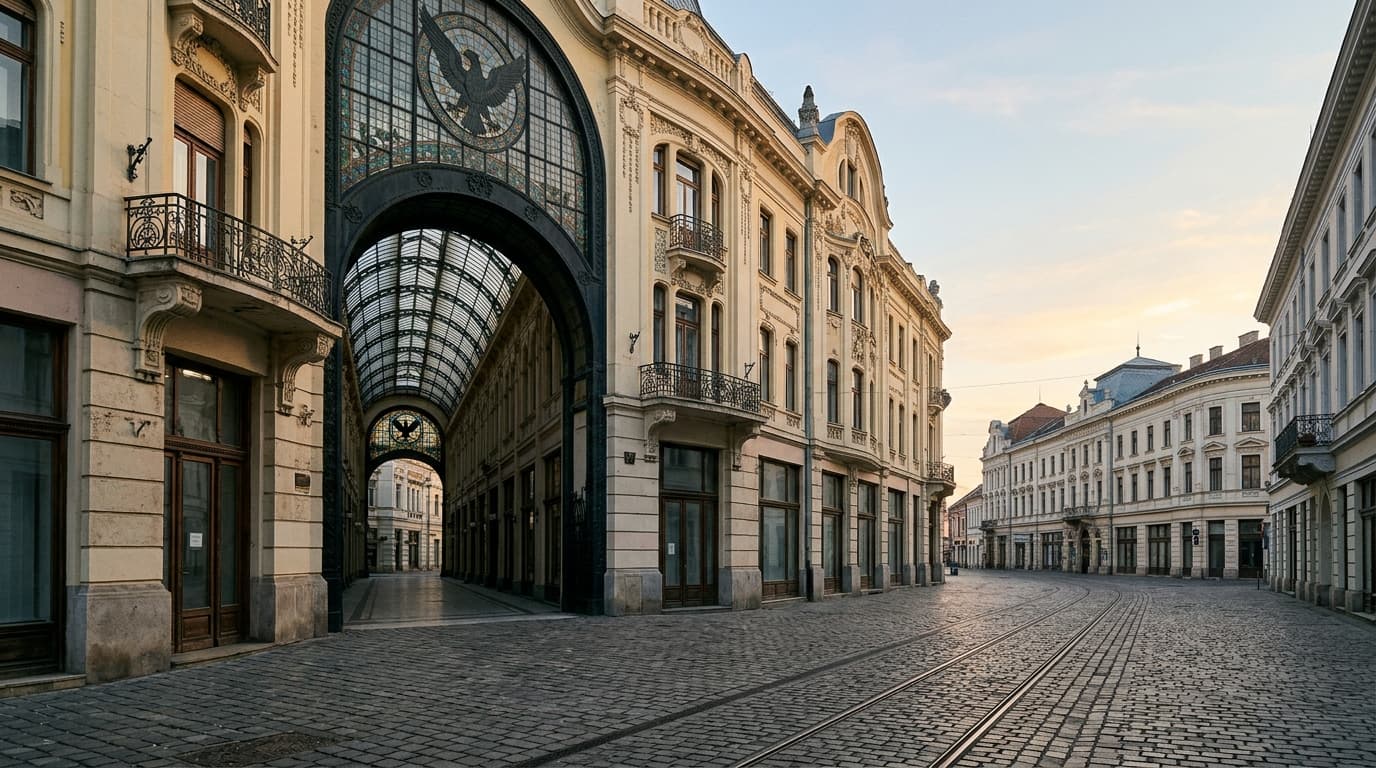
Oradea
🇷🇴 Romania
Oradea is the kind of place remote workers pick when they want calm, low costs and a city that still looks cared for. Oradea has roughly 180,000 residents, depending on the source and whether you count the city or metro area. The center feels compact, polished and easy to read, with Art Nouveau facades, the Black Eagle Passage, the Crișul Repede river and renovated squares that are busy without feeling rushed.
The mood is slower than Bucharest or Cluj. You’ll hear tram bells, church bells and the low hum of cafés on Piața Unirii, then step a block away and it gets quiet fast. That’s a big part of Oradea’s appeal, though it also means the city can feel a little too sleepy if you’re used to a bigger nomad scene, late-night bars and constant meetups.
Most nomads here like the basics: cheap rent, decent internet, safe streets and a walkable center. The city is also handy for weekend hops into Hungary, with Budapest and Debrecen close enough to matter, especially when Oradea’s own flight options feel thin.
What people usually like
- Cost: Rent, groceries and meals out are far cheaper than in Western Europe.
- Safety: Petty crime feels low and many solo travelers say they’re comfortable walking at night in the center.
- Walkability: You can live near the Old Town, cafés and coworking without needing a car.
- Infrastructure: Newer trams, a refurbished airport and solid internet make day-to-day life easy.
What gets old
- Scene size: The expat and nomad crowd is small, so community takes effort.
- Nightlife: It’s fine for weekends, but it can start to repeat itself after a few months.
- Winter: Grey skies, sub-zero nights and damp cold floors are part of the deal.
For neighborhoods, most foreigners stay around the Old Town, the Civic Center or the riverfront near Oradea Fortress. Old Town is the prettiest but noisier. The Civic Center is a better fit if you want modern apartments and access to places like Work+ Offices. Near Lotus Center and the trade area, you’ll find more contemporary housing and a few practical cafés, though the charm drops off fast.
Oradea isn’t flashy. That’s the point. It’s a place where you can work, walk, soak in a thermal bath and grab a flat white for 14 RON without feeling like you’re paying a premium for the privilege.
Oradea is cheap by Western European standards and still feels livable, not stripped-down. A single remote worker can stay fairly comfortably here on about 4,100 to 5,200 RON a month and if you’re frugal, you can get below 3,500 RON without living like a monk.
Rent does most of the damage, but even that stays sane. A central one-bedroom in the Old Town, near Piața Unirii or along the river, usually runs 1,600 to 2,400 RON, while a decent studio outside the core can drop to 1,000 to 1,400 RON. The center is pricier for a reason, though, you’re paying for cobbled streets, restored facades and being able to walk out for coffee without hailing a taxi in the rain.
Typical monthly costs
- Groceries: 700 to 1,000 RON for one person who cooks at home most days.
- Cheap eats: 15 to 25 RON for shaorma, kebab or a slice of pizza.
- Lunch menu: 20 to 30 RON at a simple cantina.
- Mid-range meal: 45 to 70 RON per person, more if you add drinks and dessert.
- Coffee: 7 to 10 RON for an espresso, 12 to 18 RON for a cappuccino or flat white.
- Public transport pass: roughly 80 to 120 RON a month.
Eating out doesn’t wreck your budget, but it’s easy to spend more than you expect if you linger over beer and dessert in the Black Eagle Passage or by the Crișul Repede river. The city has plenty of affordable lunch spots and the smell of grilled meat, coffee and pastry drifts out of the center most afternoons.
Coworking options include FIX Makerspace and Work+ Offices; pricing should be checked directly with the spaces before publishing.
What different budgets look like
- Budget: 2,600 to 3,400 RON, with a room or simple studio, home cooking and little nightlife.
- Mid-range: 4,100 to 5,200 RON, with a central one-bedroom, some restaurant meals and the odd taxi.
- Comfortable: 5,500 to 7,300 RON, with a nicer apartment, coworking and regular meals out.
Oradea isn’t expensive, but it’s not dead cheap if you want the nicer version of the city. The good part is that your money buys comfort, decent internet, walkability and enough cafés to keep remote work from feeling like a punishment.
For nomads
Stick close to Piața Unirii, Pasajul Vulturul Negru and Aurel Lazăr if you want to walk out for coffee, work and a beer without dealing with taxis. This is the prettiest part of Oradea, with Art Nouveau facades, tram bells and terrace cafés that smell like espresso and pastry at breakfast.
It’s not cheap by Oradea standards, though. A furnished studio here usually runs 1,300 to 1,800 RON and a 1BR can push 1,600 to 2,400 RON if the place is newly renovated and actually quiet.
For expats
Near Center, around Piața Emanuil Gojdu, the fortress and the riverfront, is the smart pick if you want central access without weekend noise. It feels a bit more businesslike, with newer apartment blocks, office buildings and easier access to coworking at FIX Makerspace or Work+ Offices.
Most expats like this area because it’s still walkable to Old Town, but you’re less likely to hear drunk karaoke drifting through an open window at 1 a.m. Rent is usually a touch lower than the core and you’ll find more practical apartments than postcard ones.
For families
Podgoria and the residential belts near Lotus Center and Trade Center make more sense if you want bigger apartments, parking and less weekend foot traffic. The trade-off is charm, because you’re trading cobblestones and café terraces for newer blocks, shopping runs and a more ordinary suburban feel.
Families usually care more about space and routines than atmosphere. In these areas, a furnished studio often starts around 1,000 to 1,400 RON and a 1BR around 1,200 to 1,700 RON, which leaves room for food, trams and the occasional thermal bath day.
For solo travelers
Old Town is the easiest base if you’re in Oradea for a week or two and want the city on your doorstep. You can stumble home from dinner under the Black Eagle Passage, hear the river at night and still be five minutes from breakfast the next morning.
Solo travelers who hate noise should avoid the bars-facing streets on Friday and Saturday nights. The center can get lively, but Oradea isn’t a party city, so the problem is usually repetition, not chaos.
Best fit by area
- Old Town: best for short stays, car-free living and café-heavy routines.
- Near Center: best for remote workers who want quieter nights and easy coworking access.
- Podgoria and Lotus area: best for longer stays, families and people who prefer modern blocks.
If you’re staying more than a month, don’t overthink it. Pick the center if you want atmosphere, Near Center if you want calm and the outer residential belts if you care more about space than scenery.
Oradea’s internet is one of the city’s quiet strengths. In the center, fiber connections are common, speeds are solid for video calls and uploads and you won’t spend your morning fighting with flaky Wi-Fi the way you might in smaller Romanian towns. Power cuts aren’t a normal part of life here, either.
The bigger issue is less technical and more social. Oradea’s nomad scene is still small, so you can go a few days without hearing English at the next table. That’s great if you want a calm base, but it can feel a bit silent if you’re used to the constant churn of places like Cluj or Lisbon. The upside is that cafés aren’t packed with laptop armies, so getting a seat usually isn’t a battle.
Best coworking options
- Work+ Offices: This is an operating coworking/office space in Oradea; pricing should be confirmed directly with the operator. It offers a polished office feel for those seeking a professional environment.
- Café fallback: Sago at the Trade Center and a few cafés around Piața Unirii are the most work-friendly bets. Come earlier in the day, order more than one coffee and don’t assume every place wants you camped there until dinner.
For day-to-day work, the center is the easiest base. Around Piața Unirii, Pasajul Vulturul Negru and the riverfront, you’ll find the best mix of coffee, decent internet and walkability. The area near Oradea Fortress and Piața Emanuil Gojdu is a good compromise if you want newer buildings, less noise and a shorter hop to coworking.
Most nomads here end up doing a mix of coworking and café work. That’s not because the cafés are magical, it’s because the city is compact, the sidewalks are pleasant and the main annoyance is usually just the clink of cups, tram bells and the occasional burst of traffic on a sunny afternoon.
Work setup basics
- Internet: Reliable in central apartments and most modern buildings.
- Backup: Grab a local SIM or eSIM for tethering. It’s cheap insurance.
- Quiet hours: Weekends can get noisy near bars in Old Town.
- Best fit: Freelancers, founders and remote staff who don’t need a giant nomad bubble.
If you want constant networking, Oradea may feel too quiet. If you want fast internet, low costs and a place where you can hear your laptop fan over the street rather than the other way around, it works very well.
Oradea feels calm in a way that can catch newcomers off guard. The center is clean, the trams are new and most evenings sound like cafe chatter, bike bells and the occasional burst of music from a terrace near Piața Unirii. Petty crime is generally low and many remote workers say they feel comfortable walking home late from the Old Town or the riverfront.
That said, quiet has a downside. The nomad scene is still small, so if you want a packed social calendar or a constant stream of meetups, Oradea can feel thin after a while. It’s not the place for late-night chaos and that’s part of the appeal. Just don’t expect the kind of around-the-clock buzz you’d get in Bucharest or Cluj.
Safety
For day-to-day life, Oradea is straightforward. The areas around Piața Unirii, the Black Eagle Passage, the fortress and the river promenade are easy to read and generally safe, even after dark. Most complaints are the boring kind, bad parking, loud weekends near bars, the occasional drunk argument, not real street danger.
Normal city caution still applies. Keep an eye on your phone in busy cafes, use a ride app if you’re crossing town late and don’t leave a laptop visible in a car parked near the center. Winters can make the streets slick and miserable, with cold wind off the river and that hard, wet chill that gets into your shoes.
Healthcare
Oradea has decent access to basic medical care for a city this size. You’ll find private clinics, dentists and labs in and around the center, plus pharmacies that stay well stocked. For something minor, most expats go private because it’s fast, cheaper than in much of Western Europe and usually easier than dealing with a public queue.
If you need prescriptions or a doctor visit, bring your passport and any insurance details. English is common enough in private clinics, but it’s still smart to keep key medical terms written down in Romanian, especially for allergies, asthma and medication names. For serious treatment, people often look to larger hospitals or head to Budapest if they want a second opinion.
Practical tips
- Pharmacies: easy to find near the center and malls, with many open late.
- Private clinics: best for quick GP visits, blood tests and specialists.
- Emergency care: know the local emergency number and keep your insurance card handy.
- Water and food: tap water is generally fine, but if your stomach’s sensitive, buy bottled water in the first few days.
The biggest risk in Oradea isn’t crime or chaos. It’s boredom or just the wrong apartment in a noisy street. Pick a place near the center or river, keep a basic health kit at home and you’ll probably find the city far easier to live in than most places this affordable.
Oradea is easy to live in if you like short trips, light planning and not wasting half your day in traffic. The center is compact, the streets around Piața Unirii and Pasajul Vulturul Negru are very walkable and most day-to-day errands can be done on foot. You’ll hear tram bells, café chatter and the occasional dog barking off a courtyard, not the constant honking you get in bigger Romanian cities.
For most nomads, walking is the default. The old center, riverfront and nearby coworking spots are close enough that a bike only starts to make sense if you’re staying longer term or living outside the core. Sidewalks are decent in the historic areas, though winter slush and cracked paving can make a simple 10-minute walk feel annoyingly slippery.
Public transport is simple and cheap. Oradea’s buses and trams cover the main residential belts, the fortress area and the center and monthly passes usually land somewhere around 80 to 120 RON. Single tickets are low-cost and most locals just tap into a routine rather than overthinking it.
If you need a taxi, they’re easy to grab through local apps or by phone and short rides usually won’t hurt your budget. A short cross-town taxi ride is usually affordable by local standards, which is why lots of people skip the car unless they’re living farther out or doing weekend runs to the baths and malls.
- Walking: Best for Old Town, Piața Unirii and the riverfront. Cheap, pleasant and usually faster than waiting around.
- Trams and buses: Good for commuting from Civic Center, the fortress area and outer neighborhoods. Not flashy, but they get the job done.
- Taxis and ride-hailing: Handy late at night or in rain and snow. Fares stay reasonable by Western standards.
- Bikes and scooters: Useful in warm months, less fun in winter when the air is raw and the streets get grimy.
If you’re flying in, don’t expect a huge airport network. Oradea Airport has improved, but connections are still limited, so many expats lean on Budapest or Debrecen for more flight choices. That’s one of the few places where the city feels small.
For longer stays, a car can be useful if you’re living in a quieter residential zone or planning regular weekend trips into Hungary. For everyone else, Oradea works best as a mostly car-free city and that’s part of its appeal. The center stays calm, the air feels cleaner than in many regional cities and you don’t spend your week in gridlock.
Oradea doesn’t ask you to learn Romanian on day one, but it helps fast. In cafés around Piața Unirii, at the tram stop or while ordering a daily menu near the Black Eagle Passage, people usually switch to basic English without drama, then back to Romanian among themselves. You’ll also hear a lot of Hungarian, especially near the border and in older neighborhoods, so the city can feel a little bilingual in a very practical, no-fuss way.
For remote workers, the main language problem isn’t speaking, it’s paperwork. Rental contracts, utility setups and local bureaucracy still tend to run through Romanian and some landlords aren’t eager to explain things twice. If you’re staying longer than a few weeks, having a Romanian-speaking friend or translator app on hand will save you from awkward guessing and a few wasted afternoons.
Day to day, the city is easy enough to get through with a mix of English, gestures and patience. People are generally polite, but they’re not going to perform friendliness for visitors, which I prefer. Oradea feels more matter-of-fact than touristy, so don’t expect everyone in a restaurant or shop to be instantly chatty.
Here’s what most nomads end up using:
- Google Translate: Best for menus, rental messages and signs.
- DeepL: Better for longer emails and contract text.
- WhatsApp: Common for landlords, drivers and local business chats.
- Romanian phrases: “Bună ziua” for hello, “Mulțumesc” for thank you, “Cât costă?” for how much.
Don’t overthink pronunciation. A rough attempt in Romanian usually gets a better response than perfect English shouted slowly and people appreciate the effort. If you’re working in places like FIX Makerspace or cafés near Lotus Center, English is usually enough for basics, but outside the center the comfort level drops fast.
One practical note: signage is improving in the center, yet not everything is translated. Bus apps, ticket machines and local service sites can still be clunky, so expect a few screens in Romanian and the occasional tiny-font menu that’s impossible to read in winter glare. If you’re here for months, learning the basics will make the city feel less frictionless and more livable.
Oradea has a short sweet spot and a pretty unforgiving winter. Late spring through early fall is the best stretch, with the city at its easiest between May and June, then again in September and early October. The center feels made for walking then, with terrace cafés spilling onto Piața Unirii, the riverfront busy but not frantic and the air warm without the sticky, tiring heat that shows up in midsummer.
July and August can be rough if you’re sensitive to heat. It’s not the kind of dry heat that disappears at night, either, the kind that sits on the old stone and makes the evening air smell faintly of exhaust, grilled meat and hot pavement. You’ll still get good café weather, but long afternoon walks can feel sluggish and sun on the open squares gets intense fast.
Winter is where Oradea loses points. From December through February, it’s grey, cold and often damp, with sub-zero nights, occasional snow and that particular chill that goes straight through a coat when the wind cuts across the Crișul Repede. The upside is lower prices, empty cafés and the thermal baths, which make more sense in cold weather than anywhere else in town.
Best months
- May to June: Best balance of mild weather, long days and outdoor dining.
- September to early October: Still warm, less crowded and usually more comfortable than peak summer.
- November to March: Cheapest and quietest, but grey skies and cold nights can drag.
What to plan for
- Heat: July and August can be hot enough to make midday sightseeing a bad idea.
- Rain: Spring showers happen, so a light jacket and umbrella help.
- Cold: Pack proper winter gear if you’re staying through January or February.
Most nomads aiming for a longer stay pick late spring or early fall, then build their social life around cafés, coworking and evening walks. If you want the cheapest months and don’t mind quiet streets, winter works, but don’t expect much energy from the city. Oradea is pleasant; it just isn’t trying to impress you every day.
Oradea is easy to live in, but it’s not the sort of place where you can coast on instinct. The center is compact and walkable, trams run often enough to be useful and a lot of daily life still happens in plain sight, which is part of the appeal. You’ll hear church bells, tram squeals and the low hum of café chatter around Piața Unirii, then hit a quieter street two minutes later.
For most nomads, the main trade-off is simple, Oradea is comfortable and affordable, but the scene is small. If you want constant meetups, big coworking energy and a nonstop social calendar, you’ll get restless. If you want a calm base with decent internet, clean streets and easy access to thermal baths after work, it fits well.
Getting around
Skip the car unless you’re planning regional trips. Parking in the center can be annoying and the old streets weren’t built for modern traffic anyway. Use trams, buses, Bolt or local taxis, then walk the rest.
- Public transport: Monthly passes usually land around 80 to 120 RON and single rides are cheap.
- Taxis and ride-hailing: A short city ride is usually inexpensive by local standards.
- Airport access: Oradea Airport is small, so Budapest or Debrecen can be better for flights.
Where to base yourself
Old Town works if you want cafés, terraces and the Black Eagle Passage on your doorstep. It’s lively in the evening, sometimes noisy on weekends and rent is higher. Near the fortress and riverfront is quieter and still central, which most remote workers prefer.
- Old Town: Best for short stays, walkability and nightlife.
- Near the fortress: Better for quieter long stays and coworking access.
- Podgoria and Lotus Center area: More modern, less charming, often practical for longer rentals.
Money, work and daily habits
Groceries are still cheap by Western standards and a decent lunch menu can cost less than a coffee back home. Specialty coffee is easy to find around the center, with espresso usually 7 to 10 RON and flat whites around 12 to 18 RON. For coworking, FIX Makerspace is the name that comes up most often, though plenty of people just work from cafés until they get kicked out by closing time.
Winter can feel bleak. The sky goes flat, the wind bites hard off the river and the pavements get slick, so don’t expect a sunny, outdoor-living routine year-round. Still, if you want a safe, low-friction base with a slower rhythm and decent infrastructure, Oradea does the job without draining your wallet.
Frequently asked questions
How much does it cost to live in Oradea as a digital nomad?
How much is rent in Oradea's city center?
Is Oradea good for remote work and internet?
Where should digital nomads stay in Oradea?
What are the best coworking spaces in Oradea?
Is Oradea safe for solo travelers?
Is Oradea a good city for nightlife and community?
Need visa and immigration info for Romania?
🇷🇴 View Romania Country GuideEasy Landing
Settle in, no stress