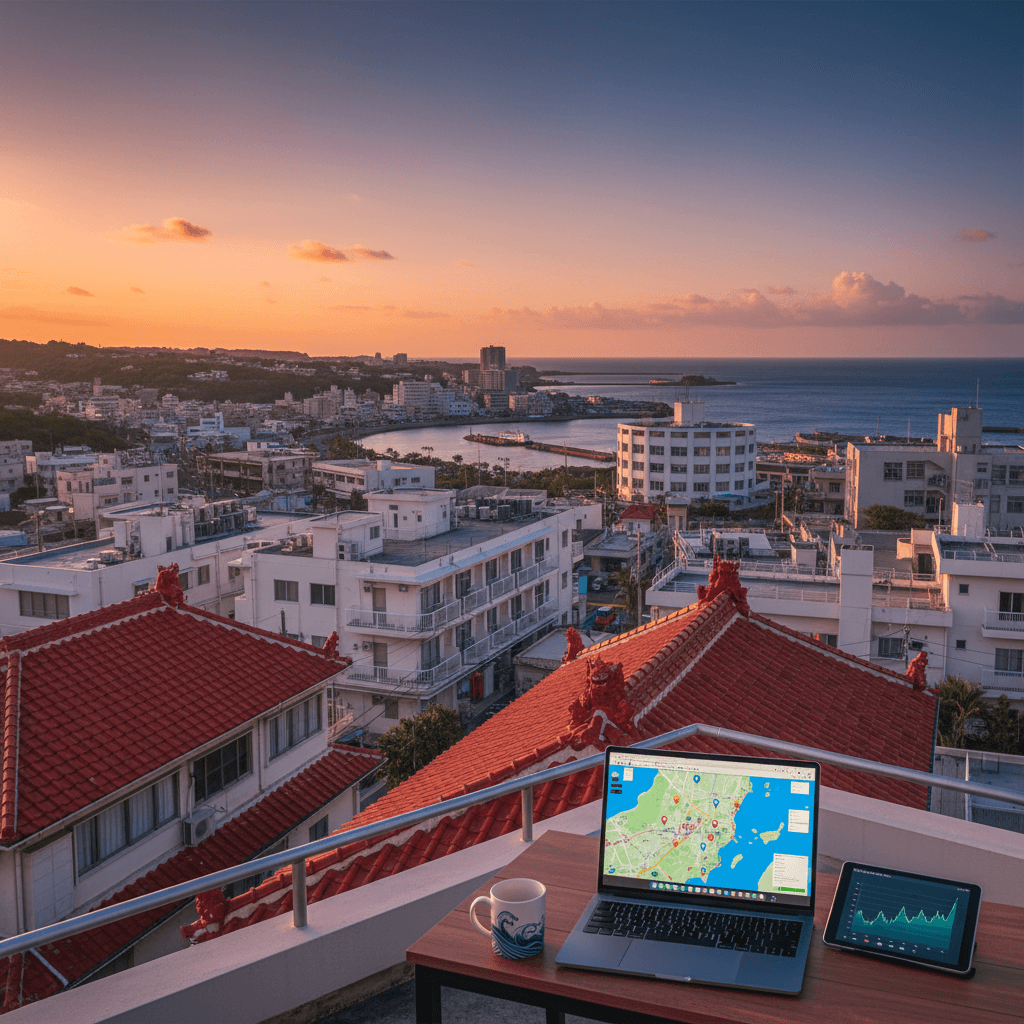
Okinawa City
🇯🇵 Japan
The Island of Slow Time
Okinawa City doesn't feel like the rest of Japan. If Tokyo is a high speed rail, Okinawa is a leisurely bike ride along a sea wall. It's a place where the rigid Japanese work ethic softens under the tropical sun, replaced by a philosophy locals call Nankuru Nai Sa, a belief that things will eventually work out. For nomads, this means a lifestyle that prioritizes sunset swims over late night office hours.
The vibe here is a unique blend of Ryukyuan heritage, Japanese convenience, and a heavy dash of American influence due to the military presence. You'll see this in the architecture and the food, where traditional soba shops sit right next to 1950s style diners. It's less polished than Kyoto and more rugged than Fukuoka, giving it an authentic, lived in feel that appeals to those who find the major metros a bit too sterile.
A Hub for the Modern Nomad
The local government is making a massive push to turn the island into a premier remote work destination. They've recently launched the NomadResort initiative, which has already brought in professionals from over 27 countries. This isn't just a vacation spot anymore; it's a functional ecosystem where you can find high speed fiber optics even in relatively rural areas.
Most nomads find that the community is split between the urban density of Naha and the surf vibes of the central coast. While Naha provides the most networking opportunities, areas like Chatan and Nago are where the real island magic happens. You'll find people working from beachside cafes with 44 Mbps connections, then heading out for a dive session at 4:00 PM.
What to Expect on the Ground
Living here requires a shift in mindset. English is much more common here than in mainland Japan, which takes the edge off the initial culture shock. However, the island's layout means your feet won't get you everywhere. Most expats recommend renting a car or a scooter immediately, as the public transit system doesn't have the legendary efficiency of the Shinkansen. It's a small price to pay for the freedom to explore the northern jungles on a Tuesday afternoon.
- Daily Life: Expect a slower pace where shops might open late and people actually stop to talk to you.
- Connectivity: Reliable Wi-Fi is standard in most rentals, and the digital nomad attraction programs have ensured that coworking spaces are popping up in even the smallest beach towns.
- Social Scene: It's easy to meet people. Between the local "izakaya" culture and the growing nomad meetups, you won't be lonely for long.
The Financial Reality
Okinawa is generally more affordable than Tokyo, but it's not a "budget" destination like Southeast Asia. You're paying for Japanese safety, infrastructure, and some of the cleanest air in the region. Most nomads find they can live comfortably on a mid range budget of around $2,210 to $2,506 per month. If you're looking to live like a local and stick to a tighter budget, you can get by on roughly $1,641, while those wanting luxury villas with ocean views should prepare to spend $4,000 or more.
The real draw is the longevity of the experience. Many participants in recent pilot programs have expressed interest in investing 10 to 30 million Yen into local real estate. There's a sense that once you settle into the Okinawan rhythm, it's very hard to justify leaving.
The Price of Paradise
Living in Okinawa City is a unique financial balancing act. While it's significantly cheaper than the cramped apartments of Tokyo or Osaka, you'll face costs here that don't exist in Japan's mainland hubs. Most digital nomads find they can live comfortably on a mid range budget of $2,210 to $2,506 per month, though you can scrape by on $1,641 if you're disciplined with your dining habits and stick to local neighborhoods.
The island economy is tiered. If you stay near the American Village in Chatan or the high end resorts of Onna, you'll pay a premium for English menus and western amenities. However, in Okinawa City proper (often called Koza by locals), prices drop. You're trading the convenience of a metropolitan subway for a more rugged, tropical lifestyle where your biggest expense might actually be your mobility.
Monthly Budget Breakdown
To give you a realistic idea of what to expect, here is how the monthly costs typically shake out for a solo remote worker.
- Housing: $600 to $1,200. A modern studio near the center costs around $750, while beachside lofts can easily double that.
- Groceries: $350 to $450. Local markets like Chanpuru Ichiba are great for cheap produce, but imported goods at San-A or Aeon Mall Rycom will eat into your funds.
- Dining & Social: $400 to $600. A bowl of Okinawa Soba usually runs about $6 to $9, while a night out in the Gate Street area averages $40.
- Utilities & Mobile: $150 to $200. Electricity is expensive in the summer because the humidity makes air conditioning a survival requirement.
- Transport: $300 to $500. This includes a cheap car rental or lease, gas, and occasional parking fees.
The Car Factor
This is the one area where Okinawa catches nomads off guard. Unlike the rest of Japan, the public transit here is limited to a monorail in Naha and a bus system that requires patience. To actually enjoy the island and reach coworking spots like Startup Lab Lagoon in Okinawa City, you'll likely need a "K-car" (small engine vehicle). Budget around $400 a month for a long term rental. If you refuse to drive, you'll be tethered to a very small radius, which usually results in higher housing costs to stay central.
Accommodation by Neighborhood
Where you plant your flag determines your burn rate. Prices fluctuate based on proximity to the water and the nearest US military base.
Okinawa City (Koza)
- Estimated Monthly Total: $1,800 to $2,100
- Rent: $550 to $800 for a standard apartment.
- Vibe: Gritty, artistic, and affordable. It's the best spot for those who want an authentic feel without the tourist markup.
Chatan (Mihama Area)
- Estimated Monthly Total: $2,600 to $3,500
- Rent: $1,100 to $1,800 for "foreigner friendly" housing.
- Vibe: High end and westernized. You're paying for the sunset views and the ability to walk to cafes where everyone speaks English.
Nago (Northern Hub)
- Estimated Monthly Total: $1,700 to $2,200
- Rent: $500 to $750.
- Vibe: This is where the NomadResort pilot programs are focused. It's quieter and much cheaper, but you are far from the nightlife of the south.
Value Hacks for Nomads
If you're looking to stretch your Yen, shop at the "Michi-no-Eki" (roadside stations). These spots offer incredibly fresh local produce at a fraction of supermarket prices. For your workspace, skip the expensive daily passes at hotels and look for community focused spots like Lagoon, which often has flexible tiers for residents. Lastly, keep an eye on the NomadResort 2025 initiatives; the government is actively subsidizing certain experiences to attract remote talent, which can provide significant savings on weekend excursions.
For the Social Nomad: Chatan (Mihama)
If you want to be where the action is, Chatan is the undisputed hub. It's home to the American Village, a sprawling seaside entertainment district that feels like a mix of San Diego and Tokyo. Most nomads gravitate here because it's the most walkable part of the island, which is a rare find in a place where car culture dominates. You'll find a high concentration of English speakers and a community that's already plugged into the remote work lifestyle.
- The Vibe: Sunset views, craft beer, and laptop friendly cafes.
- Daily Life: You'll spend about $1,200 to $1,800 a month on a decent serviced apartment near the water. For food, grab a coffee at Zhyvago Coffee Works; it's practically the unofficial office for local creatives.
For the Long Term Expat: Okinawa City (Koza)
Okinawa City, specifically the Koza area, offers a grittier, more authentic feel than the touristy coast. It's historically significant and has a deep connection to the local music scene. Expats who want to stay for six months or more often choose this area because rents are more reasonable and the community is incredibly tight knit. It's less about the beach and more about the culture, jazz clubs, and local markets.
- The Vibe: Retro, artistic, and slightly edgy with a strong international influence.
- Where to Work: Startup Lab Lagoon (Lagoon Koza facility) is a fantastic resource. It's a startup hub and coworking space that frequently hosts networking events for entrepreneurs and developers.
- Daily Life: Expect to pay around $700 to $1,100 for a spacious two bedroom apartment. You'll save money on food by hitting up the Ichibagai Arcade for local produce and cheap eats.
For Families: Ginowan
Located just south of Chatan, Ginowan is the sweet spot for families who need space but want to stay close to international schools and large parks. It's quieter than the American Village but still offers easy access to the Ginowan Tropical Beach. The neighborhood is dotted with large supermarkets like San-A and Convention City, making the weekly grocery run much simpler than it is in the cramped quarters of Naha.
- The Vibe: Suburban, safe, and family oriented with plenty of green space.
- Where to Work: Many parents end up working from Gwave cafe, which offers some coworking amenities near the bypass.
- Daily Life: Family sized homes or large condos typically range from $1,500 to $2,300. You'll definitely need a car here to get the kids to school and explore the nearby parks.
For Solo Travelers and Explorers: Nago
If you're coming to Okinawa to escape the city entirely, head north to Nago. This is the gateway to the Yanbaru jungle and the island's most pristine beaches. It's recently become a focal point for the NomadResort pilot program, meaning the local government is actively making it easier for solo travelers to find community. It's the best place to base yourself if your "out of office" time involves hiking, diving, or snorkeling.
- The Vibe: Lush, tropical, and adventurous. It's the "real" island life.
- Where to Work: nagonova coworking space is a popular spot for those participating in the regional nomad programs. It provides a solid base for work before you head out to the mountains.
- Daily Life: Costs are lower here, with guesthouses and small apartments averaging $600 to $900 a month. Just keep in mind that the internet can be a bit more variable than in the south, usually hovering around 25 to 35 Mbps.
Connectivity and Speed
You'll find that Japan's reputation for high-speed fiber isn't just limited to Tokyo towers. In Okinawa City and the surrounding areas, internet speeds typically hover between 9 Mbps and 44 Mbps, though many dedicated workspaces and modern apartments easily push into the 100+ Mbps range. Most nomads find the local infrastructure more than capable for heavy video calls or large file uploads, provided you aren't working from a remote beach shack in the far north.
Public Wi-Fi is surprisingly decent, especially in the larger shopping hubs like Aeon Mall Okinawa Rycom, where remote work has become totally normalized. That said, for a reliable daily setup, most expats recommend picking up a local SIM or a pocket Wi-Fi device at Naha Airport upon arrival. It's the best way to stay connected while exploring the coast where signals can occasionally get spotty.
Top Coworking Spaces
The coworking scene here is evolving fast, moving away from stuffy offices toward "resort work" vibes. You'll find a mix of dedicated professional spaces and work-friendly cafes that cater to the growing nomad community.
- Startup Lab Lagoon: Located right in the heart of Okinawa City on Koza Gate Street, this is the go-to hub for entrepreneurs. It's got a gritty, creative energy and is great for networking with local Japanese founders. Expect to pay around 1,000 to 1,500 yen for a day pass.
- Howlive (Rycom Branch): Situated inside the massive Rycom mall, this space is incredibly convenient. It offers ergonomic chairs, private booths, and high-speed enterprise Wi-Fi. It's perfect if you want to knock out four hours of deep work and then grab dinner or groceries in the same building. Daily rates usually start around 2,200 yen.
- Okinawa Dialogue: Technically located in nearby Naha but a favorite for those living on the southern edge of Okinawa City. It’s a hybrid event space and coworking spot that feels more like a community center. It's a solid choice for meeting other creatives.
Work-Friendly Cafes
If you prefer the hum of a coffee shop over a quiet office, Okinawa City has several spots where you won't get side-eye for opening a laptop. The "beach town" culture means many owners are used to people lingering over a latte while they code.
- Zhyvago Coffee Works: While located in the American Village area just a short drive from Okinawa City, this is the unofficial headquarters for digital nomads. The industrial aesthetic and high-quality beans make it a top pick. It gets crowded, so arrive early if you need a seat near a power outlet.
- BB Coffee: A local favorite along the coast that offers a "morning set" where you get toast and eggs with your coffee. It's relaxed, has decent Wi-Fi, and the ocean view helps when you're stuck on a difficult project.
- Espresso Tokyo (Okinawa Branch): A reliable spot with plenty of table space and a quieter atmosphere than the tourist-heavy seaside joints.
Logistics and Setup
Most long-termers suggest using a Sakura Mobile or Mobal SIM card. They are foreigner-friendly and don't require a Japanese bank account, which is a common hurdle. If you're staying for more than a month, look into a WiMAX portable router. These offer unlimited data and are much more stable than tethering from your phone.
Keep in mind that while the "NomadResort" programs are making the island more accessible, the best spots for working often require a car. Public transit in Okinawa City doesn't compare to the mainland, so factor in a rental or a cheap "K-car" if you plan on hopping between different coworking hubs during your stay. Monthly car rentals can range from $400 to $600, but they open up the best quiet cafes in the northern hills.
A Culture of Mutual Aid
You'll quickly notice that Okinawa feels different from mainland Japan. While the country is globally famous for safety, the island operates on a concept called Yuimaru, which translates to a spirit of mutual assistance. It's the kind of place where you can leave your laptop on a cafe table to use the restroom without a second thought. Street crime is almost non-existent in Okinawa City, though you should exercise the usual common sense around the nightlife districts near Gate Street late on weekends.
The most pressing safety concerns aren't people; they're the elements. Typhoon season typically runs from June to October. Modern buildings in Okinawa City are built like bunkers to handle these storms, but you'll want to download the NERV Disaster Prevention app. It provides real-time English alerts for weather and seismic activity. If a major storm hits, the local government is incredibly efficient at clearing roads and restoring power, often within hours.
Navigating the Healthcare System
If you need a doctor, you're in good hands. Okinawa City has a high concentration of medical facilities due to the large international population. For general needs, Chubu Kyodo Hospital is a reliable choice with staff who are used to assisting foreign residents. If you're looking for English-speaking specialists, many nomads head to Adventist Medical Center in nearby Nishihara; it's about a 20-minute drive but worth it for the ease of communication.
Health costs are manageable compared to the US, though they're higher than in SE Asia. A standard consultation without insurance usually runs between ¥5,000 and ¥10,000. If you're staying longer than three months on a specialized visa, you'll likely enroll in the National Health Insurance (NHI), which covers 70% of your costs. Most clinics don't require appointments for general visits; you just walk in, take a number, and wait.
Pharmacies and Emergency Services
For minor ailments, look for a Drug Eleven or Matsumoto Kiyoshi. These pharmacies are everywhere and stock everything from high-end skincare to basic cold meds. If you have a specific prescription from home, bring a Yunyu Kakunin-sho (import certificate) to ensure you can clear customs with it, as Japan has strict rules on certain stimulants and painkillers.
- Emergency Number (Ambulance/Fire): Dial 119. Operators usually have access to English translators.
- Emergency Number (Police): Dial 110.
- Japan Help Line: A 24/7 non-profit offering English assistance for various emergencies.
Environmental Awareness
Since you'll likely be spending time in the water, keep an eye out for Habu Jellyfish during the summer months. Most popular beaches like Araha Beach have netted areas to keep them out. If you're hiking in the northern forests of Yanbaru, watch your step for the Habu snake. They aren't aggressive, but they're venomous. Staying on marked trails is usually enough to keep you perfectly safe. For daily life in Okinawa City, your biggest health "risk" is simply the intense subtropical sun; high-SPF sunscreen and staying hydrated are mandatory if you're working from a patio.
The Car Culture Reality
If you're coming from Tokyo or Osaka, the first thing you'll notice is the distinct lack of a massive train network. Apart from the Yui Rail monorail that services Naha, Okinawa is a car-dependent island. Most nomads realize quickly that if they want to see the northern beaches in Nago or hit the surf at Sunabe Seawall, they need wheels. Relying solely on taxis or buses gets expensive and frustratingly slow.
For short stays, Times Car Share is the gold standard. You'll see their yellow signs everywhere. If you have an International Driving Permit, you can book a car via their app and unlock it with a card. For longer stays of a month or more, look into lease-to-buy or long term rentals from local shops like OTS Rent-a-Car. Expect to pay around $450 to $600 per month for a reliable "kei" car (the small, boxy ones), which are perfect for the narrow streets of Okinawa City.
Public Transit and the Monorail
The Yui Rail is fantastic if you're staying in the capital, Naha. It connects the Naha Airport to the city center and Shuri Castle. A one day pass costs 800 yen and is worth it if you're scouting neighborhoods. However, once you head north toward Okinawa City (Koza) or Chatan, the rails disappear.
Buses are the primary public option for getting between cities. The Highway Bus (Line 111 or 117) is the fastest way to get from the airport to Nago or the northern hubs. For local routes, use the のりもの NAVI Okinawa app (successor to BusNavi Okinawa). It's the best way to track real time arrivals. Be prepared for "island time" though; buses here are rarely as punctual as their mainland counterparts.
Navigating by Bike and Scooter
In neighborhoods like Chatan or Okinawa City, a bicycle is often enough for your daily coffee run or commute to a coworking space. Many expats opt for electric bicycles because the humidity from June to September makes pedaling a standard bike a sweaty ordeal. You can find used bikes at Manga Souko or local "recycle shops" for under 15,000 yen.
Scooters are another popular middle ground. A 50cc scooter is cheap to run and easy to park, which is a huge plus since parking in Naha can cost 1,000 yen or more per day. Just remember that you'll need a valid motorcycle license or a specific endorsement on your international permit to ride anything over 50cc.
Ride Sharing and Taxis
Uber exists here, but it mostly functions as a hailing service for licensed taxis rather than private drivers. GO and DiDi are the two apps you actually need on your phone. They're reliable and allow you to pin your location, which saves you from trying to explain your address in broken Japanese.
- Monorail (Naha only): 230 to 370 yen per trip.
- Taxi Base Fare: Usually starts around 560 yen.
- Monthly Car Rental: Budget 65,000 to 85,000 yen including basic insurance.
- Gas Prices: Generally higher than mainland Japan, hovering around 170 to 185 yen per liter.
Most nomads find that the freedom of having a car outweighs the cost. It turns the island from a series of isolated pockets into a playground. Without one, you're mostly stuck in your immediate neighborhood, which defeats the purpose of living on a tropical island. If you aren't planning to drive, stick to the Makishi or Omoromachi areas in Naha where everything is walkable.
The Language Landscape
You'll find that communication in Okinawa City is a bit of a departure from the rest of Japan. Because of the heavy international presence and the long history of the local military bases, English is much more visible here than in places like Osaka or Fukuoka. In areas like Koza or near Gate Street, menus are almost always bilingual, and shop owners are generally used to interacting with non Japanese speakers.
That being said, don't expect everyone to be fluent. While you can get by with English for basic transactions in the city center, the "island vibe" extends to communication too. People are incredibly patient, but the further you venture toward the northern coasts or local markets in Awase, the more you'll need to rely on translation tools and basic Japanese phrases.
Okinawan Japanese vs. Uchinaaguchi
Locals speak a dialect called Okinawa-ben, which has a softer, more rhythmic flow than the standard Japanese you hear in Tokyo. You might also hear older residents using Uchinaaguchi, the indigenous Ryukyuan language. While you aren't expected to learn it, dropping a few local words will instantly win you points with the residents. Most nomads find that a simple "Haisai" (hello for men) or "Haitai" (hello for women) opens doors much faster than a standard "Konnichiwa."
- Haisai / Haitai: Hello / Good day
- Nifeedeebiru: Thank you
- Mensore: Welcome
- Kusuichi: Cheers / Bottoms up
Digital Tools for Getting Around
Since you'll likely be driving a car to get the most out of the island, communication apps are your best friend. Most expats recommend having Google Lens ready for reading mail, utility bills, or specialized menus in smaller izakayas. For actual conversation, VoiceTra is a popular alternative to Google Translate that often handles Japanese sentence structures more accurately.
If you're staying long term, Line is the non negotiable communication tool. Whether you're booking a hair appointment, talking to a landlord, or joining a local nomad meetup group, everything happens on Line. Most local businesses won't even use email; they'll just have a QR code at the counter for you to scan and message them directly.
Learning the Basics
If you want to move beyond the "tourist" level of communication, there are several ways to pick up the language locally. Many nomads head to Okinawa International Center or check out community classes at the Okinawa City Hall. These classes are usually very affordable, often costing around 500 to 1,000 yen per session, and they're a great way to meet other expats who are navigating the same hurdles.
For more formal study, ICLC (International Center for Language and Culture) in nearby Naha is the go to for intensive courses. Even a month of part time study there can make a massive difference in how you experience the island. Being able to read basic Katakana is especially helpful for identifying western loanwords on menus and signs, which are very common in Okinawa City.
Communication Etiquette
Okinawan culture is generally more relaxed and "low pressure" than mainland Japan. The social hierarchy is still there, but it's less rigid. When communicating, a small bow is always appreciated, even if you're speaking English. Most travelers say that the "Okinawa Time" concept applies to communication too; people might take a little longer to get to the point, and there's a heavy emphasis on maintaining a harmonious atmosphere during any interaction.
- Always carry cash: Many local spots don't take cards, and explaining why you can't pay is a stressful communication barrier you can easily avoid.
- Learn your address: Keep your address written in Japanese on your phone. If you're using a taxi or getting a delivery, the Japanese postal code system is much easier for locals to navigate than an English street name.
- Soft "No": Like the rest of Japan, a direct "no" is rare. If someone says something is "difficult" or "maybe later," it's usually a polite refusal.
The Sweet Spot: March to May
If you want the absolute best of Okinawa, aim for the window between March and May. During these months, the humidity hasn't reached its peak yet, and the temperatures sit comfortably between 20°C and 25°C (68°F to 77°F). It is the ideal time for working from a patio in Nago or taking your laptop to a beachside cafe without melting. The ocean is usually warm enough for a dip by April, but you'll beat the massive crowds that descend during the summer holidays.
The Summer Humidity and Typhoon Risk
From June through August, things get intense. Temperatures regularly climb above 30°C (86°F), but it's the 80 percent humidity that really defines the season. You will find yourself moving from one air conditioned "cool spot" to another. Most nomads spend these months hunkered down in coworking spaces like Okinawa Dialog or Startup Lab Lagoon in Okinawa City just to stay dry.
This is also peak typhoon season. While Okinawan infrastructure is built like a fortress to handle storms, a direct hit can ground flights and keep you indoors for 24 to 48 hours. Most locals just stock up on Orion beer and snacks and wait it out. If you're planning a short stay, keep a close eye on the Windy app or the Japan Meteorological Agency website during these months.
The Rainy Season (Tsuyu)
Unlike mainland Japan, Okinawa's rainy season usually starts earlier, typically around early May and lasts until mid June. It is not always a constant downpour; often it's a heavy, tropical mist that makes everything feel damp. If you're a surfer, this can actually be a great time to visit as the swells pick up, but for those relying on scooters or bicycles to get around, it can be a logistical headache.
Winter: The Underrated Choice
Winter in Okinawa, from December to February, is surprisingly pleasant for deep work. The temperature rarely drops below 15°C (59°F). You won't be swimming in the ocean without a wetsuit, but the island is quiet, accommodation prices at local guesthouses drop significantly, and the air is crisp. It is a fantastic time for hikers and those who prefer a focused, "monk mode" work environment. Plus, January is when the cherry blossoms bloom here, weeks before they appear in Tokyo or Osaka.
Key Dates to Watch
- Golden Week (Late April to Early May): Expect prices for Airbnbs and hotels to double or triple. Domestic tourists flood the island, and car rentals become nearly impossible to find.
- Obon (August): A major cultural period where many local businesses might close for family festivities, and travel costs spike.
- Lunar New Year: Okinawa has deep ties to Chinese culture, so some traditional areas like Shuri or the Makishi Public Market get particularly festive and crowded during this time.
Monthly Climate Snapshot
- January to February: Cool and breezy. Highs of 19°C (66°F). Great for hiking and whale watching.
- March to April: The "Goldilocks" zone. Highs of 21°C to 24°C (70°F to 75°F). Perfect for outdoor work.
- May to June: Rainy season. High humidity and frequent showers. Highs of 27°C (81°F).
- July to September: Hot, humid, and typhoon prone. Highs of 32°C (90°F). Peak beach season.
- October to November: The second best time to visit. The heat breaks, the typhoons subside, and the water stays warm. Highs of 25°C (77°F).
Getting Around the Island
Unlike Tokyo or Osaka, you won't be relying on a massive subway network here. Okinawa is a car culture through and through. If you're staying in Naha, you can get by with the Yui Rail monorail, but it only covers a small portion of the city. For anything outside the capital, you'll want a set of wheels. Expect to pay around $400 to $600 a month for a long term K-car rental, those tiny boxy vehicles that are perfect for narrow island roads.
Most nomads find that an International Driving Permit is the first thing they should pack. Without it, you're stuck with buses that, while reliable, can turn a twenty minute drive into an hour long odyssey. If you aren't driving, the Bus Navi Okinawa app is your best friend for figuring out schedules and routes in real time.
Connectivity and Power
Internet speeds are generally solid, usually hovering between 20 Mbps and 50 Mbps in most guesthouses and rentals. If you're doing heavy video editing or constant calls, grab a pocket Wi-Fi from the airport or a local Bic Camera. It usually costs about $50 to $70 a month for an unlimited data plan. Japan uses Type A and B plugs, the same as the US, and the voltage is 100V. Most of your modern electronics will handle it fine, but your hair dryer might be a bit weaker than usual.
Money and Banking
While Japan is slowly moving toward digital payments, Okinawa still loves cash, especially at those small seaside taco rice shacks. Keep a stash of yen on you at all times. For withdrawals, 7-Eleven ATMs are the gold standard for international cards. They're everywhere and the fees are transparent. For daily spending, most expats recommend setting up PayPay or using a Suica card on your phone, which works for vending machines and convenience stores.
Health and Safety
Okinawa is incredibly safe, even by Japanese standards. You'll often see locals leave their car engines running while they pop into a Lawson for a snack. However, the sun and the sea are your biggest risks. The UV index here is brutal. Most travelers recommend buying local sunscreen like Biore Aqua Rich, which is designed for this specific humidity. For medical needs, the Adventist Medical Center in Nishihara is well known for having English speaking staff and high quality care.
Local Etiquette
The vibe here is "Uchinaa Time," a local concept meaning things happen when they happen. It's much more relaxed than the mainland. When you're at a restaurant, don't tip; it's not expected and can sometimes cause confusion. Instead, a simple "Gochisosama-deshita" after your meal shows you appreciated the food. If you're visiting a beach that isn't part of a resort, make sure you take every bit of your trash with you. The locals are protective of the reefs and the coastline, and for good reason.
Language Basics
You'll see more English signage here than in many other parts of Japan because of the historical US presence, but learning a few phrases goes a long way. Download Google Translate for the camera feature, which is a lifesaver for reading menus and grocery labels. Most nomads find that a simple "Sumimasen" (excuse me) and "Arigato" (thank you) will get them through 90 percent of daily interactions.
Need visa and immigration info for Japan?
🇯🇵 View Japan Country GuideHidden Gem
Worth the effort