Okayama
🇯🇵 Japan
The Land of Sunshine and Slow Living
If Tokyo is a high-speed chase and Osaka is a neon-soaked street party, Okayama is the deep breath you take afterward. Known among locals as the "Land of Sunshine" for its remarkably mild climate, this city represents the sweet spot of Japanese urban life. It is large enough to have every modern convenience you need, but quiet enough that you can actually hear yourself think while walking through the castle grounds.
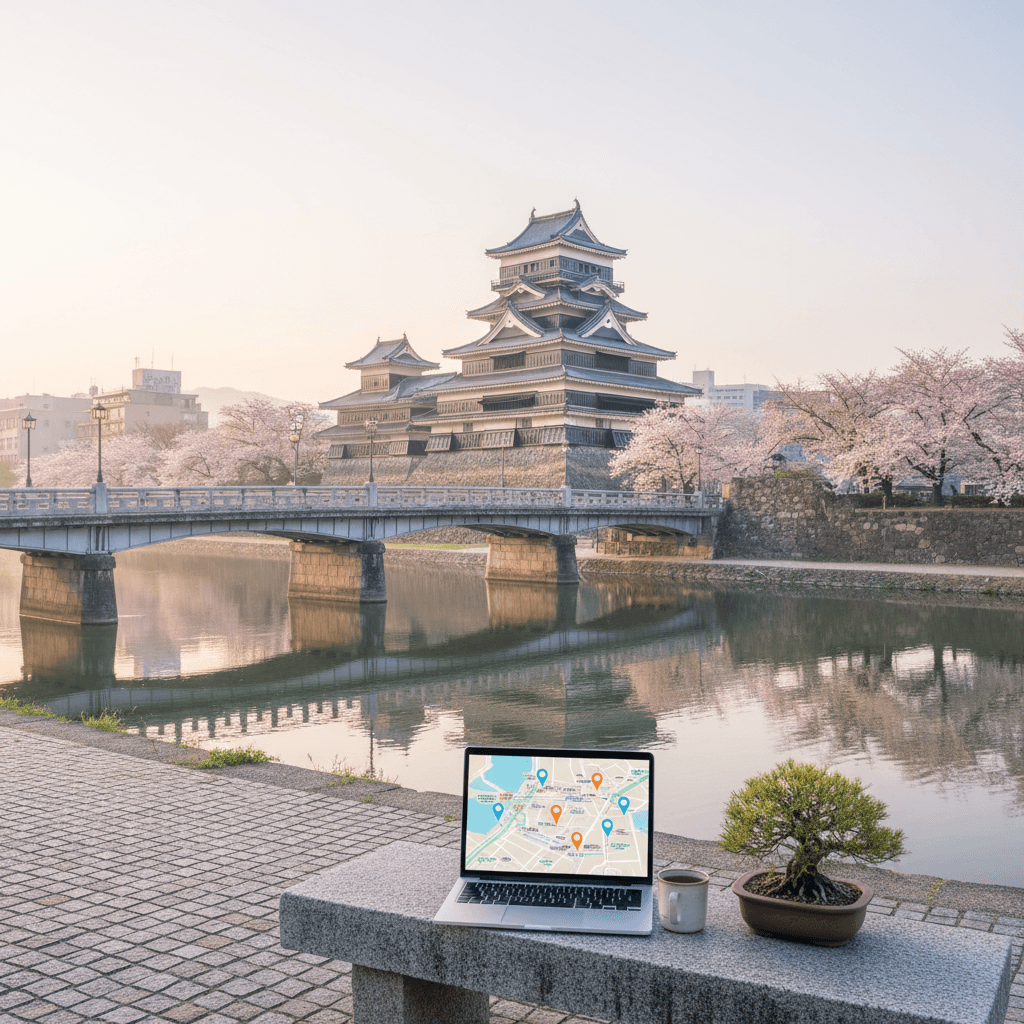
Most nomads arrive here and immediately notice the change in tempo. The city feels spacious and intentional. You have the iconic black Okayama Castle and the sprawling Korakuen Garden right in the center, providing a massive green lung that keeps the urban sprawl at bay. It is a place where you can spend your morning finishing a project at a high-speed coworking hub and your afternoon cycling through peach orchards or taking a short ferry to the world-class art installations on Naoshima Island.
What It Costs to Live Here
Your yen goes considerably further here than in the Kanto region. While it is not "dirt cheap" by Southeast Asian standards, it is comfortably affordable for anyone earning a remote salary. A single traveler can live quite well on ¥150,000 to ¥300,000 per month depending on how much they prioritize luxury and travel.
- Budget (¥150,000): This covers a shared house or a modest studio in the suburbs, plenty of ¥400 conbini meals, and a dedicated coworking desk.
- Mid-range (¥220,000): This is the sweet spot for most. You can snag a nice 1BR near the station for ¥70,000, eat out at local izakayas three nights a week, and still have a healthy budget for weekend trips.
- Comfortable (¥300,000+): This buys you a premium central apartment, frequent kaiseki dinners near the gardens, and the freedom to use the Shinkansen like a private taxi.
The Neighborhood Breakdown
Okayama is compact and highly bikeable, so you are never truly "stuck" in one area. However, your choice of base will dictate your daily friction levels.
Kita Ward (Station Area)
- Best for: Short-term nomads and solo travelers who want everything within walking distance.
- Rent: Roughly ¥70,000 to ¥100,000 for a 1BR.
- The Vibe: Convenient and surprisingly calm despite being the main transport hub. You are steps away from Regus Okayama and the best coffee shops.
Naka Ward (Tamase Area)
- Best for: Expats and those staying 3+ months who want a "neighborhood" feel.
- Rent: Expect to pay ¥40,000 to ¥60,000 for a studio.
- The Vibe: Greener and quieter. It is near the gardens and the river, though you will want a bicycle for the 15 minute ride to the station.
Minami Ward
- Best for: Artsy types and those who want to be near the water.
- Rent: Very affordable, often around ¥50,000.
- The Vibe: A bit more rugged and coastal. It is the gateway to the ferry terminals, making it perfect if you plan on spending every weekend on the art islands.
Work, Connectivity, and Social Life
The internet infrastructure is flawless. Expect fiber speeds between 200 and 500 Mbps as a standard. If you need a professional environment, Regus near the station is the go-to, but local spots like Okayama Impact Hub offer a more community-focused atmosphere. For the "cafe nomad" lifestyle, the Starbucks Okayama Ekimae is reliable, though local chains like Doutor are often quieter for deep work.
The social scene is where Okayama shows its smaller-town roots. You won't find the massive expat meetups of Fukuoka or Kyoto here. Instead, social life revolves around the The Hub pub or small izakayas like Okabe near the station. It is a "smile and nod" kind of city; locals are incredibly friendly but English proficiency is low. You will definitely want Google Translate downloaded for offline use, and learning basic phrases like "Sumimasen" will open doors that remain closed to the average tourist.
Safety is a non-issue. You can walk home at 2:00 AM through the station area without a second thought. If you get sick, Okayama University Hospital is a top-tier facility with decent English support for emergencies. Just remember to carry cash, as many of the best local peach vendors and small ramen shops still haven't fully embraced the digital payment revolution.
The Price of Sunshine
Okayama hits a sweet spot for nomads who find Tokyo's prices draining and Osaka's energy a bit too much. It's a mid tier city where your yen stretches significantly further than in the capital, yet you aren't sacrificing the high speed infrastructure Japan is known for. Most solo nomads find they can live a high quality life here on ¥200,000 to ¥300,000 per month, depending on how often they're hitting the Shinkansen for weekend trips.
The biggest savings come from housing. While a central studio in Tokyo might eat up half your budget, Okayama offers modern apartments near the station for ¥50,000 to ¥80,000. If you're willing to bike ten minutes from the city center, those prices drop even more. This leaves plenty of room for exploring the local food scene, which is famous for its high quality fruit and fresh seafood from the Seto Inland Sea.
Monthly Budget Tiers
- The Budget Nomad (¥150,000): You're likely living in a suburban studio or shared housing for ¥40,000, relying on 7-Eleven onigiri and ¥300 street food like kibi dango, and using a bicycle as your primary transport.
- The Balanced Professional (¥220,000): This covers a comfortable 1BR apartment for ¥70,000, a dedicated desk at a coworking space like Regus, and eating out at local izakayas like Okabe three or four times a week.
- The High Life (¥300,000+): You'll secure a premium central apartment for ¥90,000, enjoy frequent kaiseki dinners near Korakuen Garden, and have a healthy ¥85,000 leftover for travel and shopping.
Neighborhood Breakdown
Where you plant your flag determines your daily overhead. Most nomads stick to Kita Ward near Okayama Station because it's the hub for everything. You'll pay a premium for the convenience, but you'll save on transport since coworking spots and major shops are walkable.
Okayama Station Area (Kita Ward)
- Best for: Maximum convenience and social access.
- Rent: ¥70,000+ for a 1BR.
- Vibe: Fast internet, walkable, and the closest thing Okayama has to a nightlife scene.
Naka Ward (Tamase/Korakuen)
- Best for: Quiet focus and green space.
- Rent: ¥40,000 to ¥60,000 for a studio.
- Vibe: Peaceful and residential; it's a short bike ride to the station but feels worlds away from the concrete.
Minami Ward
- Best for: Artsy types and sea views.
- Rent: ¥50,000 for a studio.
- Vibe: Coastal and relaxed, though you'll spend about 20 minutes getting to the city center.
Connectivity and Work
Internet in Okayama is world class, with fiber speeds typically hitting 200 to 500 Mbps. If you're working from home, your biggest hurdle will be the lack of English support from some local ISPs, so many nomads opt for pocket WiFi or eSIMs like Airalo for short stays. For a more professional setup, Regus Okayama near the station offers hotdesks for around ¥25,000 a month.
If you prefer the cafe route, Starbucks Ekimae is a reliable standby with plenty of power outlets. For a more local feel, Doutor is a staple for a quiet afternoon of emails. Just keep in mind that while Japan is safe and reliable, the cafe work culture is quieter than in the West; keep your calls to a minimum or use a headset.
Daily Essentials
Transport is affordable if you stick to the city's trams and buses, which cost about ¥200 per ride. Pick up an ICOCA card at the station and load it with ¥5,000 to ¥10,000 to cover your monthly local travel. For food, a standard lunch set at a local ramen shop will run you about ¥800 to ¥1,000, while a nice dinner with drinks at an izakaya averages ¥2,000. It's a cash heavy society, so keep a Wise or Revolut card handy to withdraw fee free yen at 7-Bank ATMs.
For Digital Nomads: Kita Ward (Okayama Station Area)
If you're landing in Okayama to work, this is your base camp. The area surrounding the main Shinkansen station is the city's heartbeat, offering the fastest internet and the most convenient access to coworking hubs like Regus Okayama. Most nomads find the walkability here a huge plus; you can hop off a train from Tokyo and be at your desk in ten minutes.
- The Vibe: Efficient and surprisingly calm for a transit hub. It's got that "big city" convenience without the claustrophobia of Shinjuku.
- Rent: Expect to pay between ¥70,000 and ¥100,000 for a modern 1BR apartment.
- Best Perk: Proximity to Starbucks Okayama Ekimae and local cafes with reliable power outlets for those days you don't want to pay for a desk.
- Trade-off: It's the priciest part of town and can feel a bit corporate if you're looking for historic charm.
For Expats and Long-Termers: Naka Ward (Tamase/Korakuen)
Expats who've settled in Okayama often gravitate toward Naka Ward, specifically the areas bordering the Asahi River and the legendary Korakuen Garden. It's the cultural soul of the city. You'll find a more established international community here and a pace of life that matches the "Land of Sunshine" nickname.
- The Vibe: Green, historic, and residential. It's where you go to actually live the Japanese lifestyle rather than just visit it.
- Rent: Slightly more affordable than the station area, with studios starting around ¥50,000 and larger family-style units around ¥80,000.
- Best Perk: Morning jogs through one of Japan's top three gardens and easy access to the Okayama University Hospital for English-speaking healthcare.
- Trade-off: You'll likely want a bicycle. It’s a 15-minute ride to the station, and nightlife is practically non-existent.
For Solo Travelers and Artists: Minami Ward
If you're in Okayama to tap into the Seto Inland Sea art scene, Minami Ward is the spot. It's closer to the coast and serves as a gateway to the ferry terminals for Naoshima and Teshima. Travelers on a budget often find this area more approachable, and it attracts a creative crowd looking for sea views and quiet studios.
- The Vibe: Artsy, salty, and a bit rugged. It feels like a coastal town that happens to be attached to a city.
- Rent: Very budget-friendly. You can find decent studios for ¥50,000 or less.
- Best Perk: Being the first in line for the morning ferries to the art islands and enjoying cheaper seafood at local izakayas like Kampachi.
- Trade-off: It’s a 20-minute commute to the city center. You'll feel a bit isolated if you don't speak basic Japanese.
For Families: Higashi Ward
Families looking for space and a quiet environment usually head east. Higashi Ward is suburban Japan at its most functional. It's safe, clean, and offers the kind of square footage you simply won't find in Kita Ward. It's a great place to integrate if you're staying for a year or more.
- The Vibe: Purely residential and very quiet. It's dominated by parks and local schools.
- Rent: The best value in the city. Large apartments or even small houses can be found for ¥40,000 to ¥60,000.
- Best Perk: Massive grocery stores and wide sidewalks that are perfect for strollers.
- Trade-off: You’re far from the action. While the train connects you, most families find they eventually need a car or a Hello Cycling subscription to get around efficiently.
Connectivity and Speed
You won't have to worry about the "Land of Sunshine" being a dead zone for your Zoom calls. Okayama benefits from Japan's world class fiber infrastructure, with residential and commercial speeds typically ranging between 200 and 500 Mbps. Even in older buildings, you'll rarely see speeds dip below a functional level for heavy data lifting. If you're staying in a local apartment or an Airbnb, ask the host specifically for a speed test, as older "VDSL" setups in some buildings can bottleneck at 100 Mbps.
For mobile data, most nomads skip the overpriced airport rentals and go straight for an eSIM. Airalo or Ubigi are the standard choices for short stays, but if you're settling in for a few months, Rakuten Mobile or IIJmio offer much better value. You can expect to pay around ¥2,000 to ¥4,000 per month for a solid 20GB plan. Public WiFi is available at Okayama Station and major convenience stores like 7-Eleven, but it's often spotty and requires a frustrating login process. A dedicated mobile hotspot or a generous data plan is a better bet for consistent work.
Coworking Spaces
While Okayama doesn't have the massive nomad hubs you'll find in Tokyo or Chiang Mai, the scene is professional and focused. It's an ideal setup for those who actually need to get work done rather than just "network" over lattes.
- Regus Okayama: Located right near the station, this is the most corporate and reliable option in town. It's great if you need a professional backdrop for client calls or a dedicated desk. Expect to pay around ¥25,000 a month for a hot desk or up to ¥40,000 for a more permanent setup.
- Momotaro Startup Cafe: A central hub for entrepreneurs and remote workers. It provides a modern environment for those looking to connect with the local business ecosystem while getting through their daily tasks.
The Cafe Office Culture
If you prefer a change of scenery, Okayama has a functional cafe culture, though you have to know where to go. Japanese etiquette generally discourages "camping" in small, family owned cafes for hours. Stick to the larger chains or specific work friendly spots where you see other laptops open. Starbucks Okayama Ekimae is a reliable fallback with plenty of power outlets, though it gets crowded in the afternoons when students arrive.
Doutor Coffee and Tully's are also safe bets for an hour or two of light work. Most nomads recommend checking for the "Power Outlet" icon on Google Maps reviews before heading out. If you're near the station, the Aeon Mall Okayama has several quiet corners and cafes with decent WiFi, though the atmosphere is more "shopping mall" than "digital nomad sanctuary."
Practical Tips for Working Remotely
Banking and payments are becoming more digital, but Okayama still has its "cash is king" moments. For your monthly coworking fees or long term rentals, Wise or Revolut are the best ways to handle transfers without losing a fortune in fees. If you need to withdraw cash, the 7-Bank ATMs inside 7-Eleven stores are the most reliable for foreign cards and usually offer the fairest exchange rates.
One thing travelers often mention is the lack of English support in local administrative offices. If you're trying to set up a long term internet contract for a private apartment, bring a translation app like Google Translate or a Japanese speaking friend. Most coworking managers will speak enough English to get you through the signup process, but don't expect deep technical support in English if your connection hits a snag.
A Safe Haven in the Land of Sunshine
Okayama is arguably one of the safest spots in a country already famous for its low crime rates. You'll quickly notice the relaxed pace here compared to the frantic energy of Tokyo. Most nomads feel perfectly comfortable walking home from a late night izakaya session near the Kita Ward station area or cycling through the darker stretches of Naka Ward without a second thought. Petty theft is so rare that locals often leave their umbrellas or even bags unattended for a moment while grabbing a coffee.
While the city is incredibly safe, keep an eye on the weather during the summer months. Despite its "Land of Sunshine" nickname, the region can experience heavy rains in June and July, and occasionally typhoons in late summer. Download the NERV Disaster Prevention app; it provides English alerts for earthquakes or weather warnings that are far more reliable than local sirens.
Healthcare Standards and Access
The medical care in Okayama is top tier, largely thanks to Okayama University Hospital. It's a major research institution and the best bet for nomads who need English speaking staff or specialized treatment. For everyday issues or prescriptions, the Red Cross Hospital is another reliable landmark. You won't find the massive wait times typical of major US or UK cities, though first time visits to large hospitals often require a small "referral fee" if you don't have a note from a local clinic.
For minor ailments, look for the Kokumin or Matsumoto Kiyoshi pharmacy chains. Most pharmacists there use translation apps to help you find what you need, and basic English signage is common for over the counter meds. If you're on the new Digital Nomad Visa, you'll need private health insurance, but those on longer term residency will likely use the National Health Insurance (NHI), which covers 70% of medical costs.
Emergency Contacts and Practicalities
If you find yourself in a bind, the emergency numbers are straightforward. Dial 119 for an ambulance or fire, and 110 for the police. There is a "Tourist Police" kiosk right at Okayama Station where the officers are accustomed to helping foreigners with lost items or directions. Most expats recommend keeping a digital copy of your passport and insurance policy on your phone, as hospitals will ask for these immediately upon arrival.
- Ambulance/Fire: 119
- Police: 110
- Top English Support: Okayama University Hospital
- Pharmacy Chains: Kokumin, Matsumoto Kiyoshi
Wellness and Local Living
Health in Okayama isn't just about hospitals; it's about the lifestyle. The city's layout encourages movement. Many nomads find their "healthcare" comes from the daily 15 minute bike ride from Naka Ward into the city center or morning jogs around the Asahi River near Korakuen Garden. The air quality is consistently excellent, and the abundance of fresh, local produce like white peaches and Muscat grapes makes maintaining a healthy diet significantly easier than in Japan's more industrial hubs.
One thing to keep in mind is the "quiet" nature of the city. While the lack of stress is a health boost, the smaller expat community means you might have to put in more effort to find social support groups. Joining the InterNations Okayama chapter or local Facebook groups for Digital Nomads Japan can help bridge the gap if you're feeling isolated during a long stay.
Getting Around Okayama
Okayama is a breath of fresh air if you are coming from the sensory overload of Tokyo. It is a compact, flat city that rewards those who prefer to move at a slower pace. You can cross most of the central district on foot, but the city infrastructure is robust enough that you will rarely feel stranded without a car.
The Train and Tram Network
Everything revolves around JR Okayama Station. It is the regional heartbeat, connecting you to the Shinkansen line for quick strikes to Hiroshima in 40 minutes or Osaka in 50 minutes. For daily life, the local trains are punctual and easy to use with an ICOCA card. You can pick one up for a ¥2,000 initial deposit and tap your way through turnstiles and even at most 7-Eleven or Lawson stores.
The city also maintains a charming tram system, known locally as the Okaden. It is one of the smallest tram networks in Japan but incredibly useful for reaching the castle or Korakuen Garden. Rides are a flat ¥120 or ¥140 depending on the distance, making it a cheap way to save your legs on a humid afternoon.
Two Wheels are Better Than Four
Most nomads living here eventually realize that a bicycle is the ultimate Okayama hack. The "Land of Sunshine" lives up to its name with dry weather, and the terrain is almost entirely flat. You will see locals of all ages cycling everywhere. If you aren't ready to buy a used bike at a local shop, use Hello Cycling. It is a bike-sharing app that lets you rent electric-assist bicycles for around ¥130 per 30 minutes or ¥1,800 for a full day. Stations are scattered all over the Kita and Naka wards.
Apps and Ride-Hailing
While Japan isn't big on Uber in the traditional sense, the GO app is the gold standard for summoning taxis. It works exactly like ride-sharing apps you are used to, and you can link your credit card to avoid fumbling with cash. Short hops around the station area usually run between ¥800 and ¥1,500. For route planning, Google Maps is incredibly accurate for bus and train schedules, though it sometimes struggles with the specific exits of the sprawling underground mall beneath the station.
Getting to the City
If you are flying in, Okayama Airport (OKJ) is your gateway. It is a smaller, stress-free airport about 30 minutes north of the city center. A dedicated limousine bus meets most arriving flights and costs ¥770 for a one-way trip to the main station. Taxis are available but will set you back about ¥5,000, so the bus is the smarter play for most budgets.
- ICOCA Card: Essential for trains, buses, and vending machines.
- Hello Cycling: The best way to explore the backstreets of the Naka Ward.
- GO App: Your best bet for late-night transport when the trams stop running.
- Walking: The station to the Castle district is a pleasant 20-minute stroll.
Expats often mention that while the bus network is extensive, the schedules can be a bit confusing if you don't read Japanese. Stick to the trams and trains for your first few weeks, or just grab a bike and follow the river paths. It is hard to get truly lost in a city this well-organized.
The Local Linguistic Reality
In Okayama, Japanese is the undisputed king of communication. Unlike the tourist saturated streets of Kyoto or the international hubs of Tokyo, you'll find that English proficiency drops off significantly once you leave the Shinkansen gates at Okayama Station. Most nomads find this to be part of the city's charm, but it does mean you'll need to rely on more than just "hello" to get through a week.
The local dialect, Okayama-ben, is famous for being a bit more rugged and direct than the polite standard Japanese you might hear in textbooks. While you don't need to master it, locals love it when you drop a "de-ree" (very) instead of the standard "totemo." It's a quick way to break the ice at an izakaya like Okabe or while chatting with a barista at a local cafe.
Digital Tools for Daily Life
Since you won't find English menus at every corner ramen shop, your phone will be your best friend. Expats and long term travelers recommend these specific tools for Okayama:
- Google Translate: Download the offline Japanese language pack immediately. The camera feature is a lifesaver for reading labels at the Kokumin pharmacy or deciphering mail in your apartment.
- Voice-to-Voice Apps: Using the conversation mode in Google Translate is common and socially acceptable when trying to explain a specific request to a landlord or a doctor at Okayama University Hospital.
- DeepL: If you're dealing with official documents or emails for a long term rental via GaijinPot, DeepL provides much more natural translations than other platforms.
Essential Phrases for Nomads
You can manage most daily interactions with a handful of phrases. Most locals are incredibly patient and will use gestures or drawings to help you out if they see you're trying. Start with these basics:
- Sumimasen: Use this for "excuse me," "sorry," or even "thank you" in some contexts. It's the Swiss Army knife of Japanese social interaction.
- Eigo hanasemasu ka?: "Can you speak English?" It's polite to ask this before launching into a question.
- Kore o onegaishimasu: "This, please." Perfect for pointing at a specific peach at the market or a dish on a menu.
- Wi-fi arimasu ka?: Vital for the cafe hopping nomad. Even if the answer is no, they'll usually point you toward the nearest Starbucks or Doutor.
Social Nuances and Non-Verbal Cues
In the "Land of Sunshine," people are generally friendlier and more relaxed than their counterparts in the bigger cities, but traditional etiquette still matters. A small bow when greeting someone or saying thank you goes a long way. Remember that silence is common on public transport like the Hiroden trams; keep your phone calls for when you're back at your coworking space.
When it comes to numbers and prices, most shops use digital displays, so you'll see your total clearly. For everything else, having a few 1,000 yen notes and 100 yen coins is helpful, as Okayama remains a cash heavy environment compared to the west. While apps like GO can help you hail a taxi without saying a word, knowing how to say your neighborhood name, like "Kita-ku" or "Naka-ku," will ensure you get home without a hitch.
Building a Community
Because the expat scene is smaller here, you'll likely find yourself using Facebook groups like "Digital Nomads Japan" or "Okayama International Center" to find language exchange meetups. These are great for meeting locals who actually want to practice their English, creating a win-win situation for your social life. If you're feeling isolated, a quick 1 hour Shinkansen ride to Osaka can put you in touch with a much larger international crowd for the weekend.
The Land of Sunshine
Okayama earns its nickname for a reason. It sees more sunny days than almost anywhere else in Japan, making it a reliable base for nomads who get the seasonal blues in gloomier climates. The weather here is mild and temperate, shielded by the Chugoku Mountains to the north and the Shikoku Mountains to the south. This creates a rain shadow effect that keeps the city dry and pleasant for most of the year.
If you're planning your stay, aim for April and May or October and November. Spring brings the cherry blossoms to the banks of the Asahi River, with temperatures hovering around 20°C (68°F). It is perfect for outdoor deep work sessions. Autumn is equally stunning; the humidity of summer breaks, and the Japanese maples in Korakuen Garden turn a deep crimson. You can expect highs of 24°C (75°F) in October, which is ideal for weekend trips to the nearby art islands.
When to Stay Away (or Prepare)
The only time Okayama feels a bit relentless is during the summer peak. July and August are notoriously humid. Temperatures often climb to 30°C (86°F) or higher, and the "Land of Sunshine" can feel like a sauna. This is also when the rainy season hits its stride in June and July, bringing about 200mm of precipitation. While Okayama is less prone to the heavy deluges seen in Kyushu, you'll still want a solid umbrella and a desk at a coworking space with strong AC like Regus Okayama.
Typhoon season typically peaks in August and September. While Okayama's geography offers some protection, travelers often see train delays or temporary shop closures during high wind warnings. If you're here in January, it gets crisp and dry with lows of 2°C (36°F). It rarely snows enough to stick, so it’s a great time for those who prefer a quiet, chilly atmosphere for focused projects.
Seasonal Highlights for Nomads
- Spring (March to May): The best time for networking. Locals head to the parks for hanami (flower viewing) parties. It’s the easiest time to meet people outside the small expat circles.
- Summer (June to August): Peach season. Okayama is famous for white peaches and Muscat grapes. While the heat is high, the fruit is world class. Just keep your laptop away from the humidity.
- Autumn (September to November): The most stable weather for digital nomads. Reliable sunshine and cool breezes mean you can work from cafe terraces without breaking a sweat.
- Winter (December to February): Quiet and affordable. Rent prices on platforms like Airbnb sometimes dip, and the city feels peaceful. It’s the best time to visit the local onsens without the crowds.
Packing Essentials
Because the weather shifts from humid heat to dry cold, layering is your best friend. In the summer, you'll want breathable fabrics; Japanese offices and trains keep the AC cranked, so a light linen shirt is a lifesaver. For the "sunny" months, don't forget sunglasses and sunscreen. Even though it’s not a tropical beach destination, the UV levels can be surprisingly high during those long stretches of cloudless days. If you're visiting in the winter, a medium weight coat is plenty; you won't need heavy arctic gear here.
Most nomads find that a simple weather app like Tenki.jp or the standard Yahoo! Weather app for Japan provides the most accurate local forecasts. Since Okayama is a transport hub, checking the weather is also about checking the wind; high winds can occasionally pause the marine liners heading to Naoshima or the Great Seto Bridge trains to Shikoku.
The Land of Sunshine Vibe
Okayama feels like Japan's best kept secret for those who find Tokyo too frantic and Kyoto too crowded. Known as the Land of Sunshine, the city enjoys more clear days than almost anywhere else in the country. It is a mid sized hub where historical landmarks like the black Okayama Castle sit alongside a highly efficient Shinkansen station. Nomads love the balance here; you get the high speed infrastructure of a major metropolis but with a significantly lower price tag and a slower, friendlier pace of life.
Cost of Living Breakdown
Budgeting for Okayama is straightforward because your money goes much further than in the capital. Most nomads find they can live comfortably on ¥220,000 to ¥300,000 per month, depending on how often they travel to nearby islands or dine out.
- Budget Tier (¥150,000): This covers a shared house or a suburban studio, plenty of convenience store meals, and a basic coworking membership.
- Mid Range Tier (¥220,000): The sweet spot for most. You can afford a nice 1BR apartment, eat out at izakayas three times a week, and keep a dedicated desk at a local hub.
- Comfortable Tier (¥300,000+): This allows for a central apartment near the station, high end kaiseki dinners, and frequent weekend trips to places like Naoshima.
Where to Set Up Base
The city is compact, so choosing a neighborhood depends mostly on your desired proximity to the train tracks or the greenery.
Okayama Station Area (Kita Ward)
This is the heart of the action. It is perfect for short term stays because everything is walkable. You are minutes from the Shinkansen and the best coworking spots. Rent for a 1BR here typically runs ¥70,000 to ¥100,000.
Naka Ward (Tamase)
Located near the famous Korakuen Garden, this area is a favorite for expats and those staying longer. It is quieter and greener, though you will want a bicycle for the 15 minute ride to the center. Expect to pay ¥40,000 to ¥60,000 for a studio.
Minami Ward
If you want a coastal feel and easy access to the art island ferries, head south. It is much more affordable, with some studios dipping to ¥50,000, but it feels more disconnected from the city's nightlife.
Connectivity and Coworking
Internet speeds in Okayama are world class, usually ranging between 200 and 500 Mbps. You won't struggle with video calls here. For a professional setup, Regus Okayama near the station is the most reliable option, with hot desks starting around ¥25,000 a month. Local spots like Okayama Impact Hub offer a more community focused vibe.
If you prefer working from cafes, the Starbucks at Okayama Ekimae has reliable power outlets and WiFi. For mobile data, most expats recommend Rakuten Mobile or IIJmio, which cost between ¥2,000 and ¥4,000 for a generous data package. Grab an eSIM via Airalo before you land for an easy transition.
Getting Around and Staying Safe
The city center is highly walkable, but the local tram system is a charming and cheap way to get around at ¥200 per ride. Pick up an ICOCA card at the station and load it with ¥2,000 to start; it works on trams, buses, and at convenience stores. For longer hauls, the GO app is the standard for hailing taxis.
Safety is almost a non issue. Crime is incredibly low, and even the station area remains calm at night. If you need medical help, Okayama University Hospital is top tier and has staff who can assist in English for emergencies. For daily needs, look for the Kokumin pharmacy chain.
Practical Survival Tips
- Cash is still king: While big shops take cards, many local ramen spots and temples are cash only. Use the 7 Bank ATMs inside 7-Eleven stores for the lowest fees on foreign cards.
- Language: English proficiency is lower here than in Osaka. Download the Google Translate offline Japanese pack. Learning "Sumimasen" (excuse me) will get you through most daily interactions.
- Timing: Aim for April or October. The weather is perfect for exploring. Avoid July and August unless you enjoy intense humidity and 30°C+ heat.
- Social: The nomad scene is small. Join the "Digital Nomads Japan" Facebook group or look for language exchange meetups at local cafes to meet people.
Need visa and immigration info for Japan?
🇯🇵 View Japan Country GuideEasy Landing
Settle in, no stress