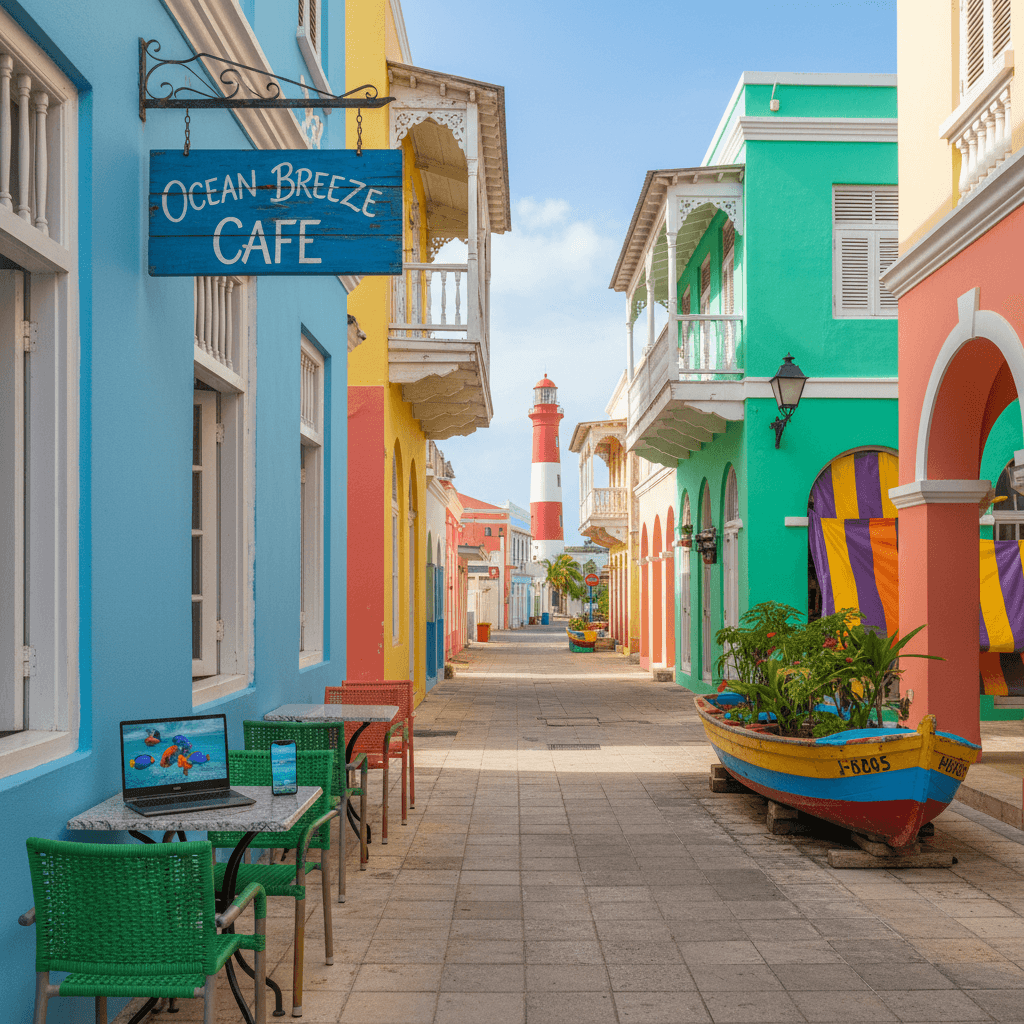
Oistins
🇧🇧 Barbados
Oistins isn't trying to impress you. That's the whole point.
While the west coast polishes itself for luxury travelers and the capital Bridgetown handles the business crowd, Oistins just does its thing: fishing boats coming in at dawn, the smell of grilled mahi-mahi drifting down Bay Street on a Friday night, locals and expats sharing plastic tables under string lights like they've known each other for years. It's, honestly, one of the most unpretentious places you can land in the Caribbean.
The town sits on Barbados's south coast, about 15 minutes from the airport and it draws a specific kind of person. Not the all-inclusive crowd. More the "I want to actually live somewhere" crowd, the nomads who stay three months and end up renewing their visa, the expats who came for a holiday in 2019 and never quite left. The pace is slower than you'd expect, the community is small enough that you'll recognize faces within a week and the south coast beaches are genuinely good without being overcrowded.
The Friday night fish fry is the social glue of the whole area. Hundreds of people pack into the market, the sound is all soca and laughter and sizzling oil and a full plate of flying fish with macaroni pie costs you maybe $12. Skip it once and you'll feel like you missed something, it's that central to the rhythm of the place.
That said, Oistins isn't without friction. Getting around without a car gets old fast, the cost of imported groceries is genuinely annoying and Friday nights near the fish fry can attract petty theft, so keep your phone in your front pocket. Violent crime, turns out, has also ticked up island-wide in recent years, though it's concentrated well away from tourist areas.
What makes Oistins different from other nomad spots is the lack of performance. There's no coworking-cafe-with-a-rooftop-pool trying to sell you a lifestyle. It's just a working fishing town that happens to have good internet, affordable rent and a beach you can walk to in under ten minutes. Most nomads find that refreshing, at least at first and then they just find it home.
Oistins isn't cheap. It's cheaper than the west coast, sure, but don't come expecting Southeast Asia prices. Most nomads land here and spend their first week recalibrating their budget expectations.
Rent is, honestly, the biggest variable. A studio or one-bedroom in Oistins center runs $800 to $1,300 USD a month and you can shave a couple hundred off that by moving slightly inland into quieter residential streets. Three-bedroom places for families or groups sit around $1,400 to $2,200. Landlords here don't negotiate much, that's just the market and beachfront anything will push you well past $2,000 without blinking.
Food is where Oistins actually earns its reputation. The fish fry on Friday nights runs $10 to $20 for a full plate of fresh mahi-mahi or flying fish with sides and it smells incredible, all charcoal smoke and seasoned fish drifting off the bay. Sit-down restaurants are a different story. A casual meal at an inexpensive spot still runs $20 to $35 per person and a mid-range dinner for two will set you back $80 to $125 once you add drinks. Groceries for two people land around $500 to $750 a month, though imported goods are, turns out, noticeably marked up across the island.
Other monthly costs to factor in:
- Utilities (electricity, water, garbage): $75 to $150 USD
- Home internet (60+ Mbps): $50 to $80 USD
- Mobile data (10GB+ plan): around $50 USD via Digicel or Flow
- Public bus (one-way): under $1 USD; the route network is weirdly good for a small island
- Taxi (per mile): $5 to $7 USD
- Coffee at a cafe: $5 to $7 USD
Put it all together and here's what you're actually looking at monthly, rent included:
- Budget: $1,200 to $1,500 USD
- Mid-range: $1,800 to $2,300 USD
- Comfortable: $2,500 to $3,500 USD
Electricity bills are the sneaky killer. Air conditioning runs constantly in the Caribbean heat and that alone can double your utilities. Expats here almost universally say they underestimated power costs in their first month, don't make the same mistake.
For Digital Nomads: Oistins Center
Most nomads end up in Oistins itself and honestly, it makes sense. Rent runs $800 to $1,300 a month for a studio or one-bedroom, you can walk to the fish fry and the public buses run constantly along the south coast corridor. The smell of grilled fish drifts through the streets on Friday nights, the bass from sound systems carries well past midnight, it's not a place for early sleepers on weekends.
The airport is 15 minutes away, which nomads who travel frequently will appreciate more than they expect. The downside? Friday and Saturday nights bring crowds and petty theft in packed areas is a real concern, keep your phone in your front pocket.
For Expats: Worthing and Hastings
Expats tend to drift slightly west toward Worthing and Hastings, where things are, turns out, noticeably calmer without sacrificing much convenience. You're still on the south coast, still close to beaches, still within easy reach of Oistins, but the street noise drops off considerably. Rent here runs a touch higher, think $1,000 to $1,500 for a decent one-bedroom and there's a stronger established expat community to plug into.
The cafes are better for working, the restaurants are more varied, the vibe is less chaotic. It's not as raw or local-feeling as Oistins, some expats miss that energy after a while.
For Families: Residential Areas Outside the Center
Families generally want space and quiet, so the residential pockets just outside the Oistins center make more sense than staying in the thick of it. Three-bedroom places in these areas run $1,400 to $2,200 a month, which is frankly reasonable by Caribbean standards for what you get. Schools and supermarkets are accessible, the pace slows down considerably and you're not waking up to Friday night traffic at 2am.
For Solo Travelers: Stick to Oistins
Solo travelers should skip the west coast entirely. Holetown and Speightstown are beautiful, weirdly quiet and 48 to 57 percent more expensive than the south coast. Oistins is where you'll actually meet people, stumble into conversations at the fish fry and feel like you're somewhere real rather than a resort brochure.
Barbados has, honestly, better internet infrastructure than most Caribbean islands and Oistins benefits from that. Home broadband runs 60+ Mbps for around $50 to $80 USD a month through Digicel or Flow. That's fast enough for video calls, large uploads and anything else remote work throws at you.
Mobile data is reliable too. Both Digicel and Flow sell prepaid SIM cards at their stores; bring your passport and make sure your phone's unlocked before you go. Monthly plans with 10GB or more run about $50 USD. If you'd rather skip the SIM card hassle entirely, Nomad and Ubigi both offer eSIM coverage on Barbados with flexible data packages starting from 1GB.
Coworking Spaces
There's no dedicated coworking space in Oistins itself, which is the honest downside of basing yourself here instead of Bridgetown or Warrens. You'll need to travel for a proper desk setup, it's not far though, most spots are 15 to 25 minutes by car.
- Regus One Welches (Warrens): 24-hour access, contemporary fit-out, reliable high-speed WiFi. Dedicated desks run roughly $300 to $400 a month. Professional, a bit corporate, good if you need a proper office environment.
- Spaces Coworking (Bridgetown, Warrens, Hastings): Multiple locations, flexible memberships, ergonomic desks and printing. The Hastings location is, turns out, the closest to Oistins and popular with south coast nomads.
Cafe Working
Most nomads in Oistins skip the coworking spaces entirely and just work from cafes. Surfer's Cafe is the go-to: it sits right on Oistins Bay, opens at 7:30 AM, has free WiFi and power outlets and the breeze off the water makes it genuinely pleasant to sit in for a few hours. The smell of salt air and whatever's coming off the kitchen grill doesn't hurt either.
The WiFi there's solid for calls, weirdly more reliable than some of the formal coworking spots on a bad day. Open Kitchen and Cafe 195 up in Warrens are worth knowing if you need a change of scenery or a quieter environment without the weekend fish fry crowd filtering in.
One thing to plan for: power cuts do happen occasionally, short ones usually, so keep your laptop charged and have mobile data as a backup. Most long-term nomads here treat that as standard practice, not a crisis.
Barbados is, honestly, one of the safer islands in the Caribbean. That doesn't mean it's without risk. The crime index sits around 47, which puts it well below Jamaica and the Bahamas, but violent crime has increased in recent years. Most of that violence happens in specific inner-city pockets of Bridgetown and has nothing to do with tourist areas or the south coast.
For nomads based in Oistins, the realistic concern is petty crime. Pickpocketing and bag snatching happen, especially on Friday nights when the fish fry draws big crowds and it's loud and chaotic and everyone's distracted by the smell of grilled mahi and the sound of soca bleeding out of three different speakers at once. Keep your phone in your front pocket, don't leave bags unattended and you'll probably be fine.
Areas to Be Cautious
- Baxter's Road and The Ivy (Bridgetown): Skip these after dark. Locals are straightforward about it.
- Oistins fish fry crowds: Watch your belongings. It's not dangerous, just opportunistic.
- Unlit beach stretches at night: Don't walk them alone, it's not worth it.
Expats consistently say the same thing: use common sense, don't flash expensive gear and Oistins feels genuinely comfortable day to day. Violent incidents targeting tourists are rare, they do happen, but they're not the norm.
Healthcare
The Queen Elizabeth Hospital in Bridgetown is the main public facility, about 20 minutes from Oistins. It handles emergencies but wait times can be brutal and the facilities are, frankly, stretched. Most expats and long-stay nomads opt for private care instead.
- Bayview Hospital (Bridgetown): The go-to private option, well-regarded by the expat community.
- Sandy Crest Medical Centre (Holetown): Popular on the west coast, good for non-emergency care.
- Pharmacies: Well-stocked across the south coast; Collins Pharmacy in Worthing is convenient from Oistins.
Travel insurance isn't optional here. Medical evacuation to the US or UK is expensive, turns out shockingly so and basic treatment at private clinics adds up fast. Get coverage before you arrive, not after something goes wrong.
Oistins sits on the south coast, which means you're honestly pretty well connected to most of the island without much effort. The airport is 15 minutes away. Bridgetown takes about 20 minutes by car or longer if you catch the bus during the midday crawl.
Most nomads and expats end up renting a car or scooter within their first few weeks, because the bus system, while cheap, runs on its own logic. Routes cover the south and west coasts reasonably well and a one-way fare is BBD $3.50 (under $2 USD) [1], so it's not about money. It's about time. Buses don't run on a fixed schedule in any meaningful sense, they come when they come and if you're trying to make a coworking session at Regus One Welches or catch a meeting, that unpredictability gets old fast.
The ZR vans are the faster, louder alternative. They're privately operated minibuses that blast soca music and take the same routes as public buses, they stop wherever you flag them down, which is either charming or chaotic depending on your mood. Fare is the same BBD $3.50 (under $2 USD) [1]. Most travelers who stay longer than a week end up preferring ZRs for short hops around the south coast.
Taxis are straightforward but not cheap. A one-mile ride runs roughly $5 to $7 USD and fares aren't metered, so agree on the price before you get in. Expats recommend negotiating the rate clearly before starting your journey, especially at night.
Renting a car gives you the island. Rates start around $50 to $70 USD per day for a small automatic and you'll drive on the left. Roads in and around Oistins are, turns out, narrower than they look on Google Maps, especially once you head inland. Parking near the fish fry on Friday nights is its own adventure.
- Public bus/ZR van: BBD $3.50 per ride (under $2 USD) [1], covers south and west coasts
- Taxi: $5 to $7 USD per mile, negotiate the price beforehand
- Car rental: $50 to $70 USD per day, drive on the left
- Scooter rental: $30 to $45 USD per day, good for solo riders
English is the official language of Barbados, so communication isn't a barrier here. That said, Bajan Creole, the local dialect, is a whole different thing and honestly, it can catch you off guard even when you're confident in your English.
Bajan Creole blends English with West African linguistic patterns and the rhythm is fast, the vowels shift and certain words just don't map to anything you'd recognize. Locals speaking casually among themselves can sound almost unintelligible to a fresh arrival, the cadence rolls quickly and syllables get clipped in ways that take time to tune your ear to. Don't panic. Most Bajans will switch to standard English when speaking with visitors and they're generally patient about it.
A few things to know about communication culture here:
- Greetings matter. Jumping straight into a question or request without saying "good morning" or "good afternoon" first is considered rude and you'll notice the difference in how people respond to you if you skip it.
- Pace is slower. Conversations aren't rushed and interrupting or pushing for a quick answer can come across as aggressive. Slow down.
- Bajan slang. "Wunna" means "you all," "liming" means hanging out with no particular agenda and "bare" is used as an intensifier, as in "bare people" meaning a lot of people. You'll pick these up fast.
Phone and data communication is, turns out, pretty straightforward. Digicel and Flow are the two main providers, both offer prepaid SIM cards you can grab with a passport and coverage across the south coast is solid. WhatsApp is the dominant messaging platform here, locals use it for everything from business inquiries to coordinating at the fish fry, so download it before you land.
Most businesses, restaurants and coworking spaces communicate via WhatsApp or Instagram DMs rather than email, which surprises a lot of nomads expecting a more formal back-and-forth. Email isn't dead, it's just slow and response times can be frustratingly unpredictable. If you need something confirmed quickly, WhatsApp is the move.
Expats recommend learning even a handful of Bajan phrases early, not because you need them, but because the goodwill it generates is real. People notice the effort, it opens conversations and Oistins is small enough that those relationships actually matter.
Barbados sits in the southern Caribbean, which means it dodges most of the region's worst hurricane activity. The island gets clipped occasionally, but it's far enough east that direct hits are rare. That's genuinely good news if you're planning a longer stay.
There are two seasons to know. The dry season runs roughly December through May and this is when Oistins is at its most seductive: low humidity, steady trade winds off the Atlantic, temperatures hovering around 27°C (80°F) and skies that are almost offensively blue. The fish fry on Friday nights smells incredible in this weather, salt air mixing with grilled mahi-mahi and festival bread. It's also peak tourist season, so accommodation prices climb and the south coast gets crowded.
The wet season runs June through November. Honestly, it's not as bad as people make it sound. Temperatures barely shift, sitting around 28°C to 30°C (82°F to 86°F) and rain tends to come in short, heavy bursts rather than all-day misery. You'll feel the humidity, though, it clings to everything, your clothes, your laptop bag, your mood by week three. September and October are the most active months for tropical weather and while Barbados rarely takes a direct hurricane hit, you can get days of grey skies and choppy seas that make beach work a lot less appealing.
Most nomads and expats find the sweet spot is January through April. The weather's predictable, the island's social scene is at full volume and the trade winds keep things comfortable even in the midday heat. The downside is cost; landlords know exactly what those months are worth and short-term rental prices reflect it.
If you're on a tighter budget, consider arriving in late November or early December. The wet season is winding down, prices haven't spiked yet and you'll get most of the good weather without the premium. Same logic applies to May, which is, turns out, one of the most underrated months on the island.
- Best overall months: January, February, March, April
- Best value months: Late November, December, May
- Avoid if possible: September and October
- Average temperature year-round: 27°C to 30°C (80°F to 86°F)
Barbados runs on Barbadian time and you'll need to adjust your expectations accordingly. Services are slower than you're used to, shops close early and Sunday is genuinely quiet. That's not a complaint, just reality.
The currency is the Barbadian dollar (BBD), fixed at 2:1 to the USD, which makes mental math easy. Most businesses accept USD, though you'll get change in BBD, so don't let the pile of local notes confuse you at first.
Getting Around
- Buses: Public ZR minibuses run frequently along the south coast for BBD $3.50 (under $2 USD), they're loud and packed but honestly the most local experience you'll have.
- Taxis: No meters, so agree on the price before you get in. Oistins to Bridgetown runs roughly $15 USD.
- Car rental: Strongly recommended if you want to explore beyond the south coast; expect $40-60 USD per day and a local driving permit ($5 USD) from the rental agency.
You'll also need to drive on the left. Turns out most nomads forget this the first time they pull out of a parking lot, so consider yourself warned.
SIM Cards & Connectivity
Pick up a Digicel or Flow SIM on arrival. Bring your passport, make sure your phone's unlocked and grab a prepaid plan with 10GB or more for around $50 USD monthly. Coverage across the south coast is solid, frankly better than you'd expect for an island this size.
Safety Habits Worth Keeping
- Crowded areas: The Friday fish fry draws big crowds; keep your phone in a front pocket, not dangling in your hand.
- At night: Stick to lit streets in Oistins, don't wander unfamiliar areas alone after midnight.
- Accommodation: Use the locks. Petty burglary does happen, it's preventable with basic precautions.
A Few Miscellaneous Things
Tap water is safe to drink, which, surprisingly, catches people off guard after traveling elsewhere in the Caribbean. Tipping is 10-15% at restaurants, though many add a service charge automatically so check your bill before you double-tip. Electricity is 115V/50Hz, compatible with US plugs, European visitors will need adapters.
Need visa and immigration info for Barbados?
🇧🇧 View Barbados Country GuideEasy Landing
Settle in, no stress