Ohrid
🇲🇰 North Macedonia
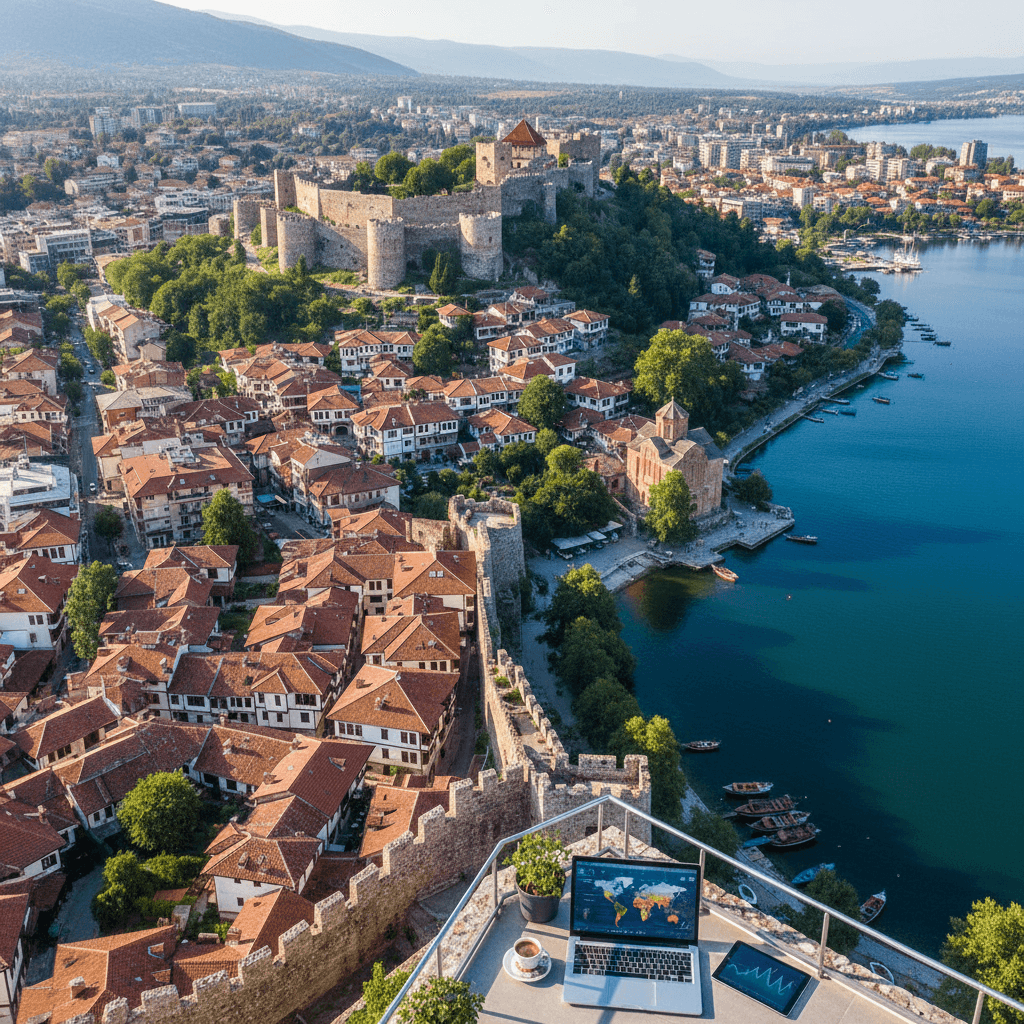
Ohrid moves at lake speed, which is exactly why a lot of nomads stick around. The old town feels half monastery, half holiday strip, with church bells, gulls, grill smoke and the occasional burst of turbo-folk drifting off a terrace, while the mix of Macedonian, Albanian and Turkish influences gives the place a feel you don’t get in cleaner, more polished nomad hubs.
It’s cheap. A single person can live on about $735 a month and if you’re smart about rent and groceries, you can keep things under €600 without living like a monk. Center and Old Town are pricier, with 1BRs often around €400 to €600, while 7th November is the value play, honestly, with rough monthly rents around €130 to €230 and a longer walk into the center.
Where people actually stay
- Center, Old Town: Best for solo nomads, lake views, cafes, nightlife and fast WiFi, but summer crowds can make the waterfront feel packed and a bit smug.
- 7th November: Best for budget stays, CoWorkOhrid access and quieter residential streets, though the Soviet-style blocks aren’t pretty and the 30-minute walk to town gets old.
- Koshishta and Voska: Good for longer stays and families, with lower prices and beach access, though you’ll have fewer cafes nearby.
The work setup is better than people expect. WiFi usually lands in the 28 to 47 Mbps range, cafes are fine for a few hours and CoWorkOhrid charges about €13 a day or €50 a week, with Kasarna Hub cheaper at around €5 a day, so you don’t need to force yourself into noisy espresso culture if you’d rather get things done.
It’s safe. Common sense still applies after dark, especially on unlit shore paths, but crime is low and most locals are friendly in that slightly reserved Balkan way, where they’ll help you without making a performance out of it. English is decent around the lakefront, then drops off fast in the neighborhoods, so Google Translate helps, weirdly more than you’d expect.
Food is part of the rhythm here. A kebab or street bite runs about €3 to €5, taverns serve tavche gravche and stuffed peppers for €5 to €10 and if you want to splurge, lakeside dinners at places like Cun can hit €20 to €30, with the smell of charcoal, garlic and river fish hanging in the air after sunset.
The downside? The nomad scene is still small and winters can feel a little too quiet. Still, if you want low costs, lake views, decent internet and a town where you can hear your own thoughts between the church bells and the evening traffic, Ohrid does the job.
Ohrid is cheap, but not dirt-cheap. A single person usually lands around $700-1100 a month including rent and if you cook most meals and share a place, you can get under €600 without living like a monk, though the summer tourist squeeze pushes prices up fast.
The sweet spot depends on how much lakefront charm you want, because Center and Old Town look lovely and cost more, while 7th November is the value play if you can live with Soviet-looking blocks and a longer walk into town. Honestly, most nomads either pay for the view or save money and take the extra steps.
Typical Monthly Budget
- Budget: under €600, shared room, home cooking, very little eating out.
- Mid-range: €800 to €1,200, one-bedroom apartment, some restaurants, decent comfort.
- Comfortable: €1,500 to €2,000, nicer flat, frequent dinners, lakeside drinks, less compromise.
Rent and Daily Costs
- Center / Old Town: €300 to €500 for a studio or one-bedroom, sometimes higher in summer, with fast access to cafés and the lake.
- 7th November: €130 to €230 for a one-bedroom, which, surprisingly, buys you a lot of space for the money.
- Meals: kebabs and street food run €3 to €5, mid-range spots like Leonardo Pizzeria or Antico sit around €6 to €10 and lakeside dinners at places like Cun can hit €20 to €30.
- Transport: about €30 a month if you use taxis and buses sparingly, though the center is walkable anyway.
- Coworking: CoWorkOhrid around €13 a day (confirm current), Kasarna Hub around €5 a day, so daily desk time adds up faster than people expect.
Food is one of the nicer surprises. Taverns serve tavche gravche and stuffed peppers for reasonable money, the smell of grilled meat drifts through the old streets and a Turkish coffee usually costs less than a fancy bakery pastry in Western Europe.
Still, don’t expect everything to be cheap. Lakeside cocktails, tourist menus and summer rentals climb quickly and if you want a proper one-bedroom in Center with a view, you’ll pay for it in quiet little bites all month.
If you’re staying long-term, 7th November is the smartest budget move and center is better only if you care about walking out your door and hitting the lake promenade, cafés and nightlife without thinking about taxis. For most remote workers, that trade-off is the whole game.
Source 1 | Source 2
Nomads
Center, especially the lakefront and Old Town, is where most remote workers land first. It’s walkable, the cafes are close, the WiFi’s usually solid and you can work one hour with church bells and scooter noise drifting in, then eat by the water ten minutes later. Not cheap. Expect €400 to €600 for a decent one-bedroom and summer crowds can make the place feel crowded and a bit overpriced, honestly.
If you want the easiest day-to-day setup, this is it, because CoWorkOhrid is nearby, the bus station isn’t far and you’ve got plenty of coffee shops where nobody minds if you sit with a laptop and a Turkish coffee for a while. Internet speeds are generally good enough for video calls and the smell of grilled meat and espresso hangs around the center in the evening, which, surprisingly, makes it easier to stay out late and still get work done the next morning.
Expats
For longer stays, 7th November is the value play. It’s a plain, residential area with Soviet-style blocks, lower rents and a slower rhythm, so you’ll hear more barking dogs and apartment doors than tourist chatter and that suits people who want fewer interruptions. Quiet. A one-bedroom can run €130 to €230 and you’re still within reach of shops, taxis and CoWorkOhrid.
- Rent: €130 to €230 for a 1BR
- Best for: Long stays, budget living
- Downside: About a 30-minute walk to center
Koshishta and Voska work well if you want a bit more breathing room without drifting too far out and some expats like being closer to the beach while keeping prices sane. You won’t get the same cafe density as the center, though, so if you’re the kind of person who needs three lunch options and a bakery on every corner, you’ll probably grumble.
Families
Families usually do best in 7th November or Koshishta, where apartments are cheaper, streets feel calmer and daily life is less exposed to summer tourist noise. The tradeoff is simple, you’ll spend more time walking or taking taxis into town and the buildings can feel a bit tired, but the grocery run is easier and the pace is gentler. Frankly, that matters more than lake views for most parents.
Voska is a sensible middle ground if you want nearby amenities and access to the beach without paying Old Town prices. You’ll get local shops, a more residential feel and less of the late-night bar noise that spills out around the center, though English can be patchy and some errands take patience.
Solo Travelers
Stay in Center or Old Town if you want to meet people fast. You can walk to Octava Lounge Bar, lakeside restaurants and the old bazaar, then end up talking with expats or travelers over wine while the lake air turns cool and the streets carry that mix of frying oil, cigarettes and wet stone after rain. Safe. Just don’t wander unlit paths by the shore late at night.
- Best social scene: Center, Old Town
- Best budget pick: 7th November
- Good meetup spots: Belvedere, cafes, boat tours
If you’re after easy conversation and low hassle, this city works best when you accept its quirks, some locals are warm right away, others keep things reserved and the nomad crowd isn’t huge. That said, a few Facebook groups and recurring Saturday meetups are enough to build a circle without much effort and the lakefront sunsets do a lot of the heavy lifting.
Ohrid’s internet is, honestly, better than most people expect for a small lake town. Average speeds sit around 28 to 47 Mbps download, which is enough for calls, uploads and a normal workday, though a storm can still make the WiFi twitchy and your patience thinner.
The coworking scene is tiny. CoWorkOhrid on 7-mi Noemvri 179 is the main name, day passes available (check current rates on site), plus free coffee and Kasarna Hub is cheaper at around $5/day, weirdly good value if you just need a desk and decent air con.
- Best all-round area: Center and Old Town, because the cafes, lakefront WiFi and evening walkability make work feel less painful.
- Best budget area: 7th November, where a 1BR can run €130 to €230 and you’re closer to CoWorkOhrid, though you’ll walk 30 minutes to the center.
- Quiet long-stay pick: Koshishta or Voska, cheaper than the lakefront and calmer, but there are fewer cafes when you want a change of scene.
Cafes do a lot of the heavy lifting here. Lakeside spots usually give free WiFi and that whole Turkish coffee culture means people linger, talk and work slowly, with the clink of cups, the smell of grilled meat drifting in from nearby kitchens and a pace that’s pleasant until you’ve got a deadline.
Get a local SIM if you need backup. A1 and Vodafone both sell plans with about 10GB for €5 to €20 and you can usually buy one without ID at a shop or the airport, which, surprisingly, makes life simpler than in many bigger European cities.
- Home internet: Usually solid in Center and Old Town, but always test the apartment before you sign anything.
- SIM backup: Cheap, easy and worth having for tethering when your cafe WiFi drops.
- Coworking rhythm: Not many events, not a huge nomad crowd and frankly that’s either peaceful or lonely depending on your mood.
If you want social energy, go work from a cafe near the lake, then stick around for dinner or a drink at Octava Lounge Bar, where people actually talk instead of just typing. The downside is real, though, because outside the tourist core English can be patchy and the nomad scene isn’t big enough to feel like a built-in community.
Ohrid feels safe in the way a small lake town should, calm streets, familiar faces and not much of the tense energy you get in bigger Balkan cities. Petty theft can happen, especially in summer when the promenade fills up, but violent crime is rare and most nomads just use the usual street smarts after dark.
Stick to the lit lakefront and main roads at night, don't cut across empty paths by the shore and you'll be fine. The old town can feel quiet to the point of eerie once the restaurants close, with cicadas humming, motorbikes buzzing past and that damp lake air hanging around longer than you'd expect.
Common-sense safety
- Night walks: Keep to the center, lakefront and other well-lit areas.
- Tourist season: Watch phones, bags and wallets in crowded spots, because pickpocketing is more of a nuisance than a trend.
- Transport: Use licensed taxis or the OhridTaxi app and agree the fare if a driver isn't using the meter.
- Remote work: Cafes are generally relaxed, but don't leave a laptop on the table and wander off, that's asking for trouble.
There aren't any neighborhoods most people actively avoid, though 7th November and the quieter edges of town can feel dead after dark. Honestly, the biggest annoyance is darkness itself, unlit side streets, uneven paving and the occasional barking dog that sounds much closer than it's.
Healthcare basics
- Main hospital: General Hospital Ohrid handles emergencies and cardiology care and it’s the place to go for anything serious.
- Pharmacies: They're easy to find around town, so minor stuff like painkillers, cold meds and bandages won't be hard to sort out.
- Emergency number: 112.
- Clinic visits: For routine issues, expect a slower pace than Western Europe, but the basics are covered.
Medical care is decent for a city this size and the rebuilt hospital is a real improvement, which, surprisingly, locals talk about with some pride. For anything complex, people usually head to larger regional centers, so if you've got a chronic condition, keep your prescriptions, insurance details and travel documents handy.
Pharmacies are your friend and the staff can usually point you in the right direction even if English is patchy. Pack any specific medication you rely on, because while you probably won't struggle to find standard treatment, you also shouldn't expect a huge choice of brands or same-day specialist appointments.
Ohrid is easy to live in and that’s the whole appeal. The old town, the lakefront and Center are compact enough that most days you can just walk, with church bells, scooter engines and the smell of grilled meat drifting through the streets.
Short trips are simple, longer ones are a bit clunkier. There’s no Uber, buses are cheap but infrequent and taxis are the default when you’re tired, in a rush or carrying groceries uphill in the heat.
Walking
- Best for: Center, Old Town, lakefront errands
- Cost: Free
- Reality: The center is very walkable, though some streets in Varosh are steep, uneven and a little brutal after rain.
Most nomads barely need transport inside the core. Honestly, if you’re staying near the lake, you can get by on foot for cafés, coworking, restaurants and the evening stroll when the promenade fills with locals and tourists.
Taxis
- Typical fare: Around €5 to the center
- Airport transfer: Roughly €15-20, about 15 minutes
- Tip: Agree the fare first, because meters and expectations can get messy
Taxis are the quickest fix, especially if you’re coming back late or heading to the airport with bags. The price is usually fine, but don’t assume every driver will quote the same number and frankly, arguing over a few euros wastes more time than it saves.
Buses
- Best for: Cheap local travel
- Downside: They’re infrequent
- Use case: Good if you’re not in a hurry
Local buses work, weirdly, more as a backup than a real daily habit. If you’re living in 7th November and commuting into town, they can help, but most people still end up walking or taking a taxi when the bus timing feels like guesswork.
Bikes
- Rental: About €10 to €25 per day
- Best for: Flat lakeside rides and quick exploring
- Watch out for: Traffic can be a little sloppy, so stay alert
Bike rentals make sense if you want the lakefront without the foot traffic. Drivers here are usually respectful, which helps, though the roads can still feel tense when people park badly or cut corners with zero patience.
Neighborhood cheat sheet
- Center, Old Town: Walk everywhere, easiest for nomads
- 7th November: Cheaper, but expect a longer walk into town
- Koshishta and Voska: Solid for longer stays, still close enough for regular trips
If you’re based outside the center, plan around distance rather than convenience. Turns out, Ohrid is small enough to feel simple, but spread out enough that a bad apartment location can get old fast, especially in summer heat when the pavement bakes and every uphill walk feels longer than it should.
Ohrid’s communication style is, honestly, pretty easy once you get your bearings. Macedonian is the main language, Albanian is common too and English works fine with younger locals, hotel staff and anyone who spends time around tourists, though plenty of people outside the center speak very little. That can make a simple errand feel weirdly slow, especially when you’re trying to sort out a SIM card or ask about rent and only half the room speaks English.
Learn a few basics, it helps more than you’d think. “Zdravo” for hello, “Kako si?” for how are you, “Fala” for thanks and “Molam” for please go a long way and people usually warm up fast when you make the effort.
Signs in Ohrid are mostly in Cyrillic, so the first few days can feel like decoding grocery shelves and bus stops with one eye squinted. Google Translate is the tool most nomads end up leaning on and frankly, it saves a lot of awkward pointing and guessing.
How people actually talk
- Macedonian: Main language in daily life, especially outside tourist spots.
- Albanian: Common in some parts of town and in mixed workplaces.
- English: Good with younger people, patchier with older residents and in residential neighborhoods.
The tone here is reserved, not cold. Locals can seem quiet at first, but they’re usually helpful once you’ve said hello and a little patience matters because many conversations move at a slower pace than what nomads are used to, especially in shops, taxis and apartment searches.
Expect a few language hiccups. Not a disaster. If you’re asking for directions, buying coffee or negotiating a taxi fare, keep sentences short, show the address on your phone and don’t assume the driver or shop owner wants to chat in English, because sometimes they simply can’t.
What makes life easier
- Translation app: Keep Google Translate ready for Cyrillic and quick back-and-forths.
- SIM cards: A1 and Vodafone are easy to buy, with shop staff usually used to simple setup questions.
- Face-to-face help: In cafes and small shops, pointing and smiling works better than long explanations.
For remote workers, the language gap is manageable, but it’s still real. If you stay near the lakefront, the old town or coworking spots like CoWorkOhrid and Kasarna Hub, you’ll hear more English and more tourist-friendly service, while neighborhoods like 7th November feel more local and less polished.
That’s fine, by the way. Just don’t expect everyone to switch languages for you, because Ohrid works best when you meet it halfway, with a few phrases, a translation app and a bit of stubbornness.
Ohrid’s weather is one of the reasons nomads stay longer than planned. Summers are warm and
Ohrid’s practical side is pretty easy to like, but it does have a few annoyances. The center is walkable, taxis are cheap and a month here can land around $735 for one person if you live sensibly, cook at home and avoid too many lakeside dinners. Not cheap. Not bad either.
Where to Stay
- Center, Old Town: Best if you want cafes, lake views and everything within walking distance, though summer crowds can make the narrow streets noisy and slow.
- 7th November: The budget choice, with one-bedrooms often around €130 to €230, quieter blocks and easy access to CoWorkOhrid, but you’ll be a longer walk from the action.
- Koshishta and Voska: Good for longer stays, with lower rents and decent local services, just expect fewer cafes and more everyday residential life.
For rent, Center and Old Town usually run higher, often €300 to €500 for a studio or one-bedroom and that goes up if you want lake views or a proper balcony. 7th November is where budget nomads do the math and grin, because the savings are real, even if the buildings look a bit Soviet and the walk back after dinner feels long.
Money, Internet, Daily Life
- SIM cards: A1 and Vodafone are the easy picks, €8 to €20 usually gets you around 10GB and you can buy them in shops or at the airport.
- Internet: Speeds around 28 to 47 Mbps are common, which, surprisingly, is enough for calls, uploads and normal remote work.
- Coworking: CoWorkOhrid around €13 a day or €50 a week (confirm), Kasarna Hub around €5 a day and both beat trying to work through the clatter of coffee cups at a busy cafe.
- Banking: Wise and Revolut work for many people, ATMs are widespread and cash still matters in smaller spots.
Food is affordable if you don’t go wild. Kebab shops and street food usually sit around €3 to €5, decent sit-down meals are more like €6 to €10 and lakeside places such as Cun can jump to €20 to €30, which feels fair once the sun drops and the water goes silver. Honestly, you’ll hear more cutlery clinking than music in most places, then the evening quiet settles in.
Getting Around and Other Basics
- Walkability: The center is compact, so most daily errands are on foot.
- Taxis: Usually €5 to the center, but agree the fare first.
- Airport transfers: Expect about €15-20 by taxi.
- Day trips: Boats to Sveti Naum or Bay of Bones are a solid spend, usually around €25.
People are reserved at first, though friendly once they warm up and English gets patchier outside tourist zones, so Google Translate helps more than you’d think. Shoes off indoors, coffee late at night and don’t expect rush-hour energy, because Ohrid moves at its own pace and frankly that’s part of the appeal.
Frequently asked questions
How much does it cost to live in Ohrid as a digital nomad?
Which Ohrid neighborhood is best for budget housing?
Where do most digital nomads stay in Ohrid?
Is the internet good enough to work remotely in Ohrid?
How much do coworking spaces cost in Ohrid?
Is Ohrid safe for solo digital nomads?
How easy is it to get by in Ohrid if I only speak English?
Need visa and immigration info for North Macedonia?
🇲🇰 View North Macedonia Country GuideEasy Landing
Settle in, no stress