Ocho Rios
🇯🇲 Jamaica
Ocho Rios doesn't pretend to be a digital nomad hub. It's a Jamaican beach town first, a cruise ship stop second and a place where remote workers happen to land somewhere further down the list. That tension is, honestly, a big part of its appeal.
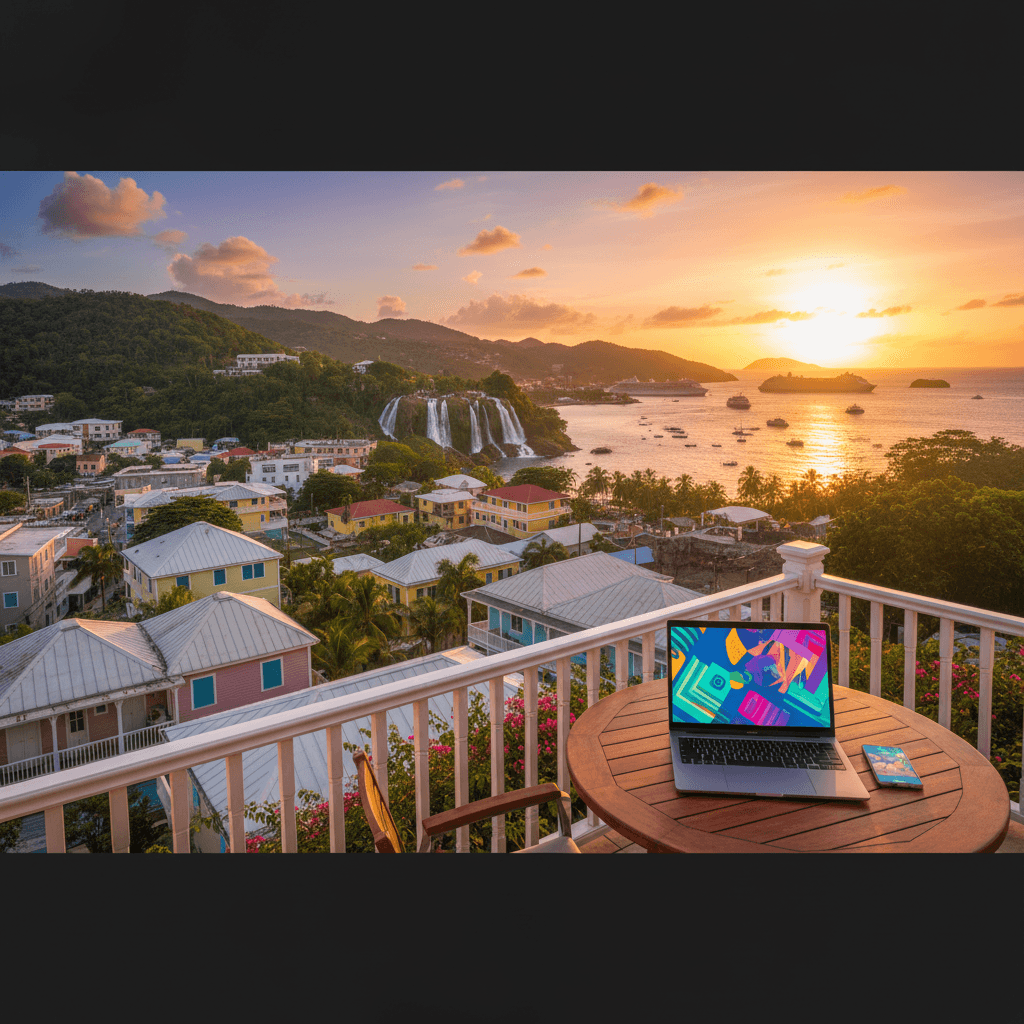
The town sits on Jamaica's north coast, backed by the Blue Mountains and fronted by the Caribbean. You'll smell jerk smoke before you see the beach, hear reggae drifting out of rum bars at noon and feel the humidity the second you step outside. It clings to you. That's just life here.
The vibe is genuinely relaxed in a way that isn't performed for tourists. Locals greet strangers with "Wah gwaan," time moves loosely and nobody's rushing anywhere. Most nomads find this either deeply refreshing or quietly maddening depending on their deadlines, the pace is real, not a marketing angle.
What makes Ocho Rios different from, say, Playa del Carmen or Chiang Mai is that it hasn't been smoothed out for foreign workers. The infrastructure has gaps. Internet is, frankly, unreliable outside coworking spaces. Public transport is irregular at best. There's no polished nomad neighborhood with cold brew and standing desks on every corner and that's exactly why some people love it here.
The upside is real, though. Cost of living is low, with mid-range budgets sitting around $1,500 to $2,500 USD per month covering a one-bedroom, mixed dining and taxis. The outdoor access is absurd: Dunn's River Falls, the Blue Hole and empty beaches are all within 30 minutes. Expats who stay longer than a month tend to stop counting the waterfalls and start treating them like their backyard.
The Rastafarian cultural presence adds something you won't find elsewhere. It's not a museum exhibit, it's woven into daily life, music, food, conversation and a genuine philosophy about slowing down that, turns out, pairs well with burnout recovery.
Safety is a real consideration. Tourist areas are fine during the day, stick to red-plate taxis and well-lit spots after dark. It's not a place to be careless, but it's also not the threat level some travel warnings imply for the central areas where most nomads actually spend their time.
Come for a week, stay for a month. Most people don't expect to like it this much.
Ocho Rios is, honestly, cheaper than most Caribbean destinations, but it's not the budget paradise some nomads expect. You can live comfortably here without burning through savings, though your actual monthly spend depends heavily on whether you're eating jerk chicken from a roadside drum or sitting down at a restaurant with an ocean view.
Most nomads land somewhere in the $1,500 to $2,500 range per month. That gets you a decent one-bedroom, mixed home cooking and restaurant meals, taxis when you need them and a coworking day pass a few times a week. Budget tighter and you're sharing a place and riding route taxis. Spend more and you're in a nicer apartment with AC that actually works.
Budget Tier ($1,000 to $1,500/month)
- Rent: $190 to $300 for a studio outside the center
- Food: ~$300, mostly street food and market meals
- Transport: ~$100, route taxis and buses at roughly 150 JMD a ride
- Coworking: ~$100, drop-in days only
Mid-Range Tier ($1,500 to $2,500/month)
- Rent: $300 to $500 for a one-bedroom in or near downtown
- Food: ~$500, mixing home cooking with places like Miss T's Kitchen
- Transport: ~$200, taxis plus occasional inDrive or Uber
- Coworking: ~$300, regular access at Regus or Spaces
Comfortable Tier ($2,500+/month)
- Rent: $500 or more for a proper apartment near Turtle Beach
- Food: $800 or more, including dinners at Evita's or Christopher's
- Transport: $300 or more, mostly rideshares and private taxis
- Coworking: $500 or more, dedicated desk with reliable WiFi
Groceries run reasonable if you shop local, turns out imported goods carry a painful markup. A meal at an inexpensive spot costs around 1,500 JMD, two people at a mid-range restaurant will run you roughly 10,000 JMD, the tourist pricing is real and it stings if you're not paying attention.
Home internet averages around 7,700 JMD a month, it's workable but don't expect consistency during peak hours. Most expats recommend a Digicel SIM as backup, 20GB plus calls for about $45 USD every 28 days, because some days you'll need it.
Where you stay in Ocho Rios shapes your entire experience, honestly more than any other decision you'll make. The town's small enough that nothing feels impossibly far, but the difference between neighborhoods is real.
Digital Nomads: Downtown Ocho Rios
Downtown is, turns out, the most practical base if you're working remotely. You can walk to taxis, restaurants and the beach without depending on anyone, which matters a lot when public transport is this unreliable. The noise is real though, reggae thumping from open-air bars, cruise ship crowds flooding Main Street by 9am, motorbikes weaving through traffic that smells like diesel and jerk seasoning all at once.
Rent runs around 50,000 to 60,000 JMD monthly for a 1BR. Not cheap for Jamaica. Still, the tradeoff is walkability and access to coworking options like Regus, where you'll actually get 60+ Mbps instead of whatever your guesthouse WiFi is pretending to be.
Expats: Oracabessa Outskirts
Long-term expats tend to drift toward Oracabessa, about 15 to 25 minutes east of town. It's quieter, the air feels cleaner and rent drops noticeably closer to 30,000 to 40,000 JMD for decent space. The tradeoff is that you'll need a car or you're stuck and there's no coworking within easy reach, so most expats here work from home setups with Digicel broadband.
Families, weirdly, often land here too. The beaches are calmer, the pace suits kids and the community is tight-knit in a way downtown never will be.
Solo Travelers: Turtle Beach and Island Village
If you're in town for a few weeks and want a social scene, Turtle Beach and the Island Village area deliver, bars within stumbling distance, beach access, people to meet. It's pricier and busier than the rest of town, don't expect a quiet evening. But solo travelers consistently say the energy here makes it easy to connect with other visitors without much effort.
Who Should Skip the Center
- Families with young kids: Downtown noise and crowds get exhausting fast.
- Light sleepers: Nightlife runs late, walls are thin.
- Anyone without a car planning to live outside the center: Rural edges of Ocho Rios are genuinely isolating, transport options drop off sharply once you're away from the main road.
WiFi in Ocho Rios is, honestly, the biggest frustration most nomads run into. Speeds are inconsistent, tourist season makes things worse and the hotel connection you were counting on will probably let you down mid-call. That said, it's workable if you plan around it.
Dedicated coworking is your best bet. Regus has a presence in the area with day passes available, offering ergonomic setups and reliable connections. It is not cheap for Jamaica, but you're paying for the consistency; verify current pricing directly with Regus Jamaica before booking.
For something more casual, Courthouse Gallery Cafe lets you set up with a laptop, decent coffee and a plate of Jamaican food without anyone hovering. Most nomads treat it as a half-day option rather than a full workday base, the WiFi holds up well enough for emails and light calls, just don't schedule a two-hour Zoom from there.
Home broadband, if you're staying longer term, runs about 7,700 JMD per month. Setup takes time, the process is slow and technician windows are loose, so factor that in if you're arriving and expecting to be online within 48 hours.
For mobile data, Digicel is the clear winner on coverage. Their 20GB plan with calls runs $45 USD for 28 days, you can grab a SIM at Sangster Airport before you even reach Ocho Rios and eSIMs are increasingly popular with nomads who don't want to swap cards. Flow is the other option but most people find the coverage patchier outside the center.
A few practical things worth knowing:
- Peak slowdowns: Expect degraded speeds during cruise ship days when tourist traffic spikes
- Backup plan: Keep mobile data topped up; it'll save you more than once
- Home broadband: ~7,700 JMD/month, slow to set up
- Best SIM: Digicel, 20GB + calls for $45 USD/28 days
The infrastructure is improving, turns out, faster than most older guides suggest. It's not Medellín or Chiang Mai, but for a beach town with reggae drifting out of every doorway, it's genuinely usable.
Jamaica carries a reputation that's, honestly, worse than the reality in Ocho Rios. The U.S. State Department has it at Level 2 (exercise caution), same as France and a dozen other popular destinations. Tourist areas are generally fine during the day, the problems tend to cluster in residential zones that visitors have no reason to visit anyway.
That said, don't get lazy about it. Stick to well-lit streets after dark, avoid wandering past the main drag alone at night and only take taxis with red license plates, those are the licensed ones. Unlicensed taxis are where most tourist incidents happen, it's an easy risk to eliminate. Most nomads who've spent time here say they felt safe moving around in groups or using ride-hailing apps like Uber or inDrive.
A few practical rules that expats swear by:
- Transport: Red-plate taxis only. Save the number for Ocho Rios Taxi (+1-876-974-5051) or use Uber.
- Nightlife: Spots like Beezy's Reggae Pub and Bcloud9 are fine; just don't wander off into unlit side streets afterward.
- Valuables: Leave the flashy stuff at your accommodation. This applies everywhere in the Caribbean, not just here.
Healthcare is adequate, not exceptional. There are private clinics in Ocho Rios that can handle most standard issues and pharmacies are easy to find around town. You'll pay upfront at private facilities, so travel insurance with medical coverage isn't optional, it's the one thing you shouldn't skip. Public hospitals are functional but slow and ambulance response times in anything outside the center can be genuinely frustrating.
Emergencies: police is 119, ambulance is 110. Save both before you need them.
One thing that catches people off guard is how quickly minor illnesses hit in the heat and humidity, that thick, sticky air that doesn't let up even after dark. Stomach bugs from street food are, turns out, pretty common in the first week or two. Stick to cooked food from busy stalls like Miss T's Kitchen where turnover is high, drink bottled water and your body will adjust faster than you'd expect.
The short version: Ocho Rios is manageable, just stay aware.
Getting around Ocho Rios is, honestly, one of the more frustrating parts of living here. The town itself is walkable if you're staying downtown near the cruise pier, but step outside that core and your options thin out fast.
Route taxis are the local workhorse, shared minibuses and cars running fixed routes for around 150 JMD per trip. They're cheap, they're loud and they run on their own schedule, which means you might wait 40 minutes in the heat and exhaust fumes or jump in immediately depending on the day. Don't count on them for anything time-sensitive.
Uber works here, which surprises most people and inDrive is popular too. Both apps function reliably in the town center, fares are reasonable and you'll avoid the haggling that comes with unlicensed cabs. If you do take a local taxi, stick to red-plate vehicles only. Those are the licensed ones, it's a real distinction, not just a preference.
For airport transfers from Montego Bay, budget around $100 USD and two hours of driving. Private transfers through operators like Jamaica Customised Tours are the standard move, shared shuttles exist but the timing is unpredictable and the stops are annoying.
There are no bike-share programs and scooter rentals aren't widespread. Weirdly, that's not as limiting as it sounds if you're based downtown, but expats living out toward Oracabessa say the car situation becomes a real issue fast. Without a rental car, you're dependent on taxis for every grocery run.
- Route taxis: ~150 JMD per trip, shared, irregular schedules
- Uber/inDrive: App-based, available in the town center, most reliable option
- Licensed taxis: Red plates only; Ocho Rios Taxi at +1-876-974-5051
- Airport transfer (Montego Bay): ~$100 USD, roughly 2 hours
- Rental cars: Worth it if you're staying longer than a few weeks or living outside the center
Walkability is decent in the center, turns out that's about the only place it's. Most nomads staying a month or more end up renting a car eventually, the freedom is worth the cost once you're tired of coordinating rides for every errand.
English is the official language, so you won't hit a wall trying to order food or ask for directions. Tourist areas like downtown Ocho Rios and Island Village have high English proficiency, most locals working in hospitality are genuinely easy to talk to and you'll rarely need a translation app just to get through a day.
That said, Patois (Patwah) is what you'll actually hear on the street. It's not a dialect, it's honestly its own language and it can catch you completely off guard the first time someone rattles it off at full speed. The sounds are musical but dense, a rapid mix of English roots twisted into something that doesn't always map back to what you expect.
A few phrases go a long way socially:
- "Wah gwaan?" What's up? Use it as a greeting and locals will warm to you immediately.
- "Irie" Good, all good, no problem. You'll hear this constantly.
- "A beg yuh" Please or asking a small favor politely.
- "Tanks" Thanks. Simple, but saying it in Patois rather than stiff formal English reads as respectful, not performative.
Most nomads find that making even a small effort with Patois breaks the ice fast, it signals you're not just another cruise ship tourist passing through for six hours. Locals notice and the conversations you get into after that are, turns out, some of the best parts of being here.
Google Translate has a Patois option that's passable in a pinch, though it stumbles on slang and regional expressions. Don't rely on it for anything important, use it as a rough guide and ask locals to clarify. They'll usually find it funny and explain anyway.
One thing that trips people up: communication style here runs indirect and unhurried. Pushing for a direct yes or no, especially in service situations, can land awkwardly. Frankly, patience reads better than persistence and "island time" isn't just a cliche people throw around, it's the actual operating rhythm of most interactions outside tourist-facing businesses. Adjust your expectations early and you'll find it genuinely less frustrating than fighting it.
Ocho Rios sits at a steady 75 to 86°F (24 to 30°C) year-round, so the temperature itself is rarely the issue. Humidity is. That thick, clinging heat that makes your shirt stick to you by 9am is just part of life here and you get used to it faster than you'd think.
The real variable is rain. Ocho Rios gets a lot of it, especially compared to the drier parts of Jamaica, because the mountains behind town catch moisture coming off the Caribbean. The rainy season runs May through November and honestly, it doesn't mess around. October is the worst of it, with around 16 rainy days and rainfall pushing past 250mm that month. November isn't much better. You'll hear heavy downpours hammering on rooftops in the afternoon, roads flood quickly and the humidity spikes to genuinely uncomfortable levels.
October and November also sit inside hurricane season. Direct hits are rare, but tropical storms still bring flooding and downed power lines, which, surprisingly, can knock out already-unreliable internet for days at a time. Not ideal if you're mid-deadline.
The dry season, December through April, is when Ocho Rios is at its best. February and March average only about 6 rainy days each, the air feels lighter and the town fills up with tourists and cruise ship crowds. That's the trade-off: better weather means busier streets, higher short-term rental prices and more competition for beach space.
July is, turns out, a decent middle ground that most nomads overlook. Rainfall drops to around 79mm, it's technically rainy season but the showers tend to be short and sharp rather than all-day events and the tourist crowds thin out compared to peak winter months.
- Best months: December through April for dry, sunny weather
- Shoulder sweet spot: July, lower rainfall and fewer crowds than peak season
- Avoid: October and November, peak rain, hurricane risk, flooding
- Rainy season: May through November, with afternoons being the worst
If you're planning a longer stay, frankly, the dry season is worth paying a bit more for. Arriving in October to save on rent is a gamble, it's a gamble that experienced nomads here mostly say isn't worth it.
Get a Digicel SIM at Sangster Airport before you even leave Montego Bay. Short-term plans start around $15 USD and their 20GB + calls package runs about $45 USD for 28 days. Flow is the other option, it's cheaper in some cases, but most nomads find Digicel's coverage holds up better once you're out of the tourist corridor.
Internet is, honestly, the biggest frustration here. Coworking spaces like Regus run day passes from around 1,700 JMD and deliver reliable 60+ Mbps, but café WiFi can drop to something embarrassing during peak cruise-ship hours. If your work depends on a stable connection, don't rely on your Airbnb's router, budget for coworking from day one.
For cash, NCB and Scotiabank ATMs are widespread downtown. Wise works well for transfers and keeps fees low, most expats use it alongside a local ATM card rather than carrying USD everywhere. Tipping isn't mandatory but it's expected in restaurants, 10-15% is standard.
Getting around is, turns out, more annoying than the travel blogs suggest. Uber and inDrive both work in Ocho Rios and they're genuinely the safest, most predictable option for getting between neighborhoods at night. Route taxis are around 150 JMD and run frequently enough during the day, but the schedules are loose at best. Always use red-plate taxis, that's the licensed standard, not a suggestion.
Safety is fine in the tourist areas during daylight. At night, stick to lit streets and don't wander past the edges of downtown alone, the risk isn't dramatic but it's real. Police are reached at 119, ambulance at 110 and ambulance response in rural areas is slow, so private transport to a clinic is often faster.
A few cultural things that actually matter:
- Language: English is official, but Patois is what you'll hear constantly. "Wah gwaan" means what's up, "irie" means good, "tanks" is thanks. Nobody expects you to be fluent, but trying earns you real warmth.
- Rastafari customs: Respect them. Don't offer pork to someone who hasn't asked for it and don't treat Rastafarian culture as a photo opportunity.
- Island time: Things run late. Appointments, deliveries, tradespeople. Build buffer into everything, fighting it will just exhaust you.
For apartments, Facebook Marketplace and Expat Exchange are where most nomads find short-term rentals, local agents can help too but weirdly the best deals often come through Facebook groups.
Need visa and immigration info for Jamaica?
🇯🇲 View Jamaica Country GuideEasy Landing
Settle in, no stress