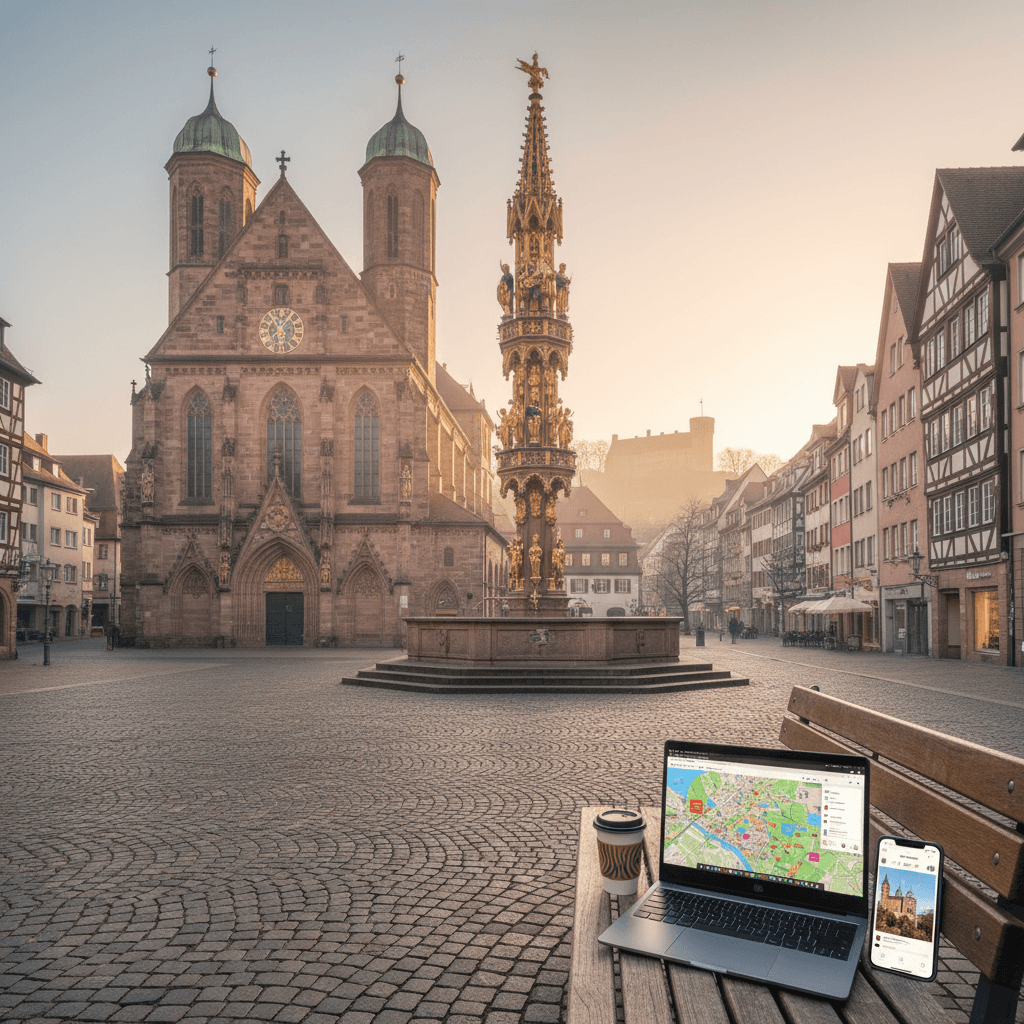
Nuremberg
🇩🇪 Germany
The Historic Slow-Burn
Nuremberg is the city you choose when you are tired of the frantic energy of Berlin but aren't quite ready for the high-octane price tag of Munich. It feels like a well-kept secret for nomads who prioritize deep work and weekend hikes over 4:00 AM techno sets. The vibe is decidedly medieval meets industrial, where half-timbered houses in the Altstadt sit just a short U-Bahn ride away from gritty, street-art-covered neighborhoods.
Living here feels structured and predictable in the best way possible. You get the efficiency of German infrastructure, the safety of a mid-sized town, and a daily backdrop of imperial history. Most nomads find the city strikes a "middle ground" balance. It is quiet enough to actually finish a project, yet central enough that you can hop on a train and be in Bamberg or the Bavarian Alps in under an hour.
What Makes It Different
Unlike many nomad hubs that feel like they were built for tourists, Nuremberg feels lived-in. You’ll spend your afternoons grabbing a €8 tray of Nürnberger Rostbratwurst at Bratwursthäusle or sitting by the Pegnitz River with a local beer. It lacks the "international buzz" of a global capital, which means you have to work a little harder to find your community, but the connections you make tend to be more intentional.
The personality of the city is rooted in Franconian culture, which is distinct from the rest of Bavaria. It is a bit more direct, a bit more humble, and very proud of its culinary staples like gingerbread and smoked beer. Travelers often say the city feels like a village that happens to have half a million people and a world-class subway system.
The Nomad Reality Check
It isn't all fairytale castles and efficient trains. If you rely on lightning-fast fiber for heavy video editing, the local average of 97 Mbps download might frustrate you. You'll want to scout out specific spots like Impact Hub or Cafe Grund to ensure a stable connection. The social scene is also smaller; you won't find a nomad meetup every night of the week, so most expats recommend joining Facebook groups like Expats in Nuremberg or attending InterNations events to break the ice.
Neighborhood Snapshots
Where you park your laptop matters here. Each pocket of the city offers a different version of the Nuremberg experience.
- Gostenhof (GoHo): The artsy, hip heart of the city. It’s full of vintage shops, creative studios, and the best third-wave coffee.
- Rent: Roughly €800 for a 1BR.
- Vibe: Edgy, bike-friendly, and diverse.
- Altstadt: Living inside the city walls. You’re steps from the Imperial Castle and the main markets.
- Rent: Expect €1,000+ for a 1BR.
- Vibe: High-energy, touristy, and incredibly walkable.
- St. Johannis: A leafy, upscale area favored by families and long-term expats who want peace.
- Rent: Around €900 for a 1BR.
- Vibe: Quiet, green, and close to the Hesperidengärten gardens.
Monthly Budget Estimates
Nuremberg is mid-range for Germany. You can live comfortably on $3,500 USD per month, though budget-conscious travelers can scrape by on $2,000 if they utilize shared housing via WG-Gesucht.
- Housing: €800 to €1,400 depending on the neighborhood and apartment size.
- Food & Drink: €15 to €25 for a mid-range meal at a spot like Bürgerbräu; €3 for a cappuccino.
- Transport: €50 for a monthly VGN pass, which covers the entire regional network.
- Coworking: €200 to €250 for a hot desk at Impact Hub or Regus.
Ultimately, Nuremberg suits the "slowmad" who wants a stable base, high safety standards, and a touch of old-world charm without the frantic pace of a larger metropolis.
The Price of Precision
Nuremberg sits comfortably in the middle of the German cost spectrum. It isn't as eye-wateringly expensive as Munich, but it definitely commands a premium over eastern cities like Leipzig. A single nomad should budget around $3,596 USD per month to cover a comfortable lifestyle including a private apartment, eating out, and a dedicated workspace. If you're willing to live like a local student in a shared flat (WG), you can squeeze that budget down toward $2,000 USD.
Housing and Neighborhood Costs
Rent is your biggest variable, and the market here is competitive. Most nomads use WG-Gesucht.de to find short-term rooms or Immobilienscout24.de for longer stays. Expect to pay more for the privilege of living inside the city walls or in the hip pockets of town.
- Gostenhof: This is the go-to for the creative crowd. You can find 1-bedroom apartments for €800 to €1,000. It's artsy, slightly gritty, and filled with the best independent cafes.
- Altstadt: Living in the historic center means beautiful views and high noise levels. Expect to pay at least €1,100 for a small studio. It's convenient, but you'll pay a "tourist tax" on your monthly rent.
- St. Johannis: A great middle ground for those who want quiet streets and parks. Prices hover around €900 for a decent 1-bedroom flat.
- Südstadt: If you want modern builds and luxury amenities, this area offers high-end apartments starting at €1,400, though it lacks the medieval charm found elsewhere.
Dining and Groceries
You can eat well here without breaking the bank if you lean into the local Franconian staples. A quick lunch of Nürnberger Rostbratwurst at a street market will set you back about €8. For a proper sit-down dinner at a place like Bürgerbräu, expect to pay between €15 and €25 for a main course and a beer.
If you're cooking at home, shopping at Rewe or Edeka is standard, while Aldi and Lidl will keep your weekly grocery bill around €50. For a high-end night out at Albrecht Dürer Stube, budget at least €45 per person. Most expats find that €400 to €500 a month covers a mix of home cooking and frequent social dining.
Transport and Connectivity
Nuremberg is incredibly walkable, but the VGN public transport system is flawless. A monthly pass costs about €50 and covers the U-Bahn, S-Bahn, and trams. If you prefer wheels, Nextbike rentals are everywhere, costing roughly €1 to unlock and a few cents per minute. For the occasional late night, a FREE NOW or Bolt ride across the city usually stays under €15.
Workspaces are another fixed cost. While the internet in Nuremberg averages around 97 Mbps download, coworking spaces offer the stability you'll need. A hot desk at Impact Hub or Regus runs about €220 to €250 a month. If you need a permanent desk and 24/7 access, budget closer to €400.
Daily Essentials
- Coffee: €3 to €4 for a flat white at Cafe Grund.
- Beer: €4 to €5 for a local half-liter draught.
- Gym: €30 to €50 per month for a standard membership.
- Phone: €10 for a 20GB prepaid plan with Aldi Talk.
Overall, Nuremberg offers a high quality of life for the price. It's a stable, predictable city where your money goes further than in London or Paris, provided you're happy with a slower pace of life and a smaller, more intimate social circle.
For Digital Nomads: Gostenhof (GoHo)
If you're looking for that creative energy without the overwhelming chaos of Berlin, Gostenhof is your spot. Locally known as GoHo, this neighborhood has transitioned from a gritty industrial district into the city's undisputed hub for freelancers and artists. It's the most bike friendly part of town and feels genuinely lived in, rather than polished for tourists.
The streets are lined with vintage boutiques, street art, and third wave coffee shops. Most nomads gravitate here for the proximity to Impact Hub Nuremberg, where a monthly pass runs about €220. You'll find plenty of people working from laptops at local cafes, though it's polite to keep your calls to a minimum. Cafe Grund is a reliable favorite for a solid €3 cappuccino and decent WiFi.
- Rent: Expect to pay €900-€1200 for a one bedroom apartment.
- Vibe: Gritty, artistic, and community focused.
- Drawback: It's still gentrifying, so some corners can feel a bit rough late at night, though it's generally safe.
For Expats and Professionals: St. Johannis
St. Johannis is the sweet spot for those who want a high quality of life with easy access to the city center. It's an up and coming area that feels sophisticated but approachable. The neighborhood is famous for its Hesperidengärten, beautiful baroque gardens that offer a quiet escape after a long day of remote work.
Expats often choose this area because it strikes a balance between traditional Franconian charm and modern convenience. It's less about the nightlife and more about long brunches and evening walks along the Pegnitz River. You're still only a short tram ride or a 15 minute walk from the main action in the Altstadt.
- Rent: A comfortable one bedroom usually lands around €900.
- Vibe: Leafy, historic, and polished.
- Drawback: Nightlife is limited, so you'll be heading to GoHo or the center if you want a late drink.
For Solo Travelers and History Buffs: Altstadt
Living in the Altstadt means you're right in the heart of Nuremberg's medieval history. You'll be steps away from the Imperial Castle and the famous main market square. For solo travelers, this is the most convenient base because everything is walkable and the transport links to the rest of Bavaria are right at your doorstep.
The area is packed with traditional taverns like Bratwursthäusle, where you can grab a plate of Nürnberger Rostbratwurst for €8. While it's undeniably touristy, the convenience is hard to beat. You'll always find people out and about, making it the easiest place to meet others if you're new to the city.
- Rent: Prices are higher here, often €1,000 or more for a central flat.
- Vibe: Busy, historic, and very walkable.
- Drawback: It gets noisy on weekends and during the Christmas market season, and grocery options are more limited than in residential zones.
For Families: Südstadt
Südstadt is a practical choice for families or those looking for modern infrastructure. It's a vast, diverse district that offers more bang for your buck in terms of square footage. You'll find larger apartment complexes, modern shopping malls, and plenty of green spaces like Luitpoldhain park for the kids to run around.
While some travelers find the vibe a bit bland compared to the medieval center, families appreciate the proximity to international schools and excellent healthcare facilities like Klinikum Nuremberg. It's well connected by the U-Bahn, though many residents here find having a car more convenient for grocery hauls and weekend trips.
- Rent: You can find larger, luxury style apartments for €1,400 and up.
- Vibe: Practical, multicultural, and residential.
- Drawback: It lacks the "Old World" charm of the northern neighborhoods and can feel a bit car dependent.
Connectivity and Speeds
Nuremberg isn't exactly a high speed tech oasis compared to Berlin, but it provides a very stable environment for getting work done. Most nomads find the average download speeds of 27 Mbps a bit underwhelming, especially since the national German average is significantly higher. However, fiber upgrades are rolling out across the city center via providers like Vodafone and 1&1, so your experience will depend heavily on your specific street.
For mobile data, skip the expensive contracts and head to a Rewe or Aldi supermarket. You can grab an Aldi Talk SIM for about €10, which usually includes 20GB of data. If you prefer the convenience of an eSIM before you land, Jetpac or Lebara are the go to choices for nomads who need to tether their laptops immediately. Just remember that German law requires an ID check for SIM activation, so keep your passport handy.
Top Coworking Spaces
The coworking scene here is professional and structured. You won't find a massive party vibe, but you will find reliable desks and quiet environments. Most expats recommend these spots for a consistent routine:
- Impact Hub Nuremberg: This is the heart of the local social entrepreneurship scene. A monthly pass runs around €220. It's great for networking and hosts regular events, making it the best spot to meet people if you're staying for more than a month.
- Regus Nuremberg City: If you need a corporate, "no nonsense" environment with high end facilities, this is the standard. Hot desks start at €250 a month, while a dedicated desk will cost you closer to €400.
Laptop-Friendly Cafes
Working from cafes is common in Nuremberg, but the local etiquette is strict. Don't expect to sit for five hours on a single espresso. Most owners expect you to order something every 90 minutes, and taking Zoom calls in a crowded cafe is generally frowned upon.
- Cafe Grund: Located in the Altstadt, this is a favorite for many solo workers. The coffee is about €3, the WiFi is reliable, and the atmosphere is cozy without being too loud.
- Gostenhof Coffee Shops: If you're staying in the artsy Gostenhof neighborhood, you'll find plenty of small, independent roasteries. These are perfect for deep work sessions, though many nomads suggest bringing a backup hotspot just in case the guest WiFi gets bogged down.
Digital Nomad Community
The nomad community in Nuremberg is relatively small and spread out. You won't find the massive Telegram groups or daily meetups common in places like Lisbon or Chiang Mai. Instead, most people connect through InterNations or the Expats in Nuremberg Facebook group. Travelers often say the social scene is friendly but requires a bit more effort to break into. The best way to meet people is usually through hobby groups or the occasional Nomad List meetup, which tends to happen sporadically throughout the year.
Staying Safe in Nuremberg
Nuremberg is one of those places where you can breathe a sigh of relief. It feels remarkably secure, even compared to other major German hubs like Berlin or Frankfurt. Most nomads find they can walk home late at night through the Altstadt or St. Johannis without a second thought. The city has a structured, predictable energy that makes it easy to relax.
That said, it isn't completely immune to petty crime. Like any city with a heavy tourist presence, pickpockets occasionally work the crowds around the Hauptmarkt during the Christmas market season or near the Hauptbahnhof (central station). Expats generally suggest keeping an eye on your bags in these high traffic areas. There's one specific spot to be a bit more cautious: the Südbahnhof area. While it's not "dangerous" by international standards, it can feel a little sketchy after dark, so it's best to stick to well lit main streets if you're staying nearby.
- Emergency Number: Dial 112 for fire and medical emergencies, or 110 for the police.
- Solo Travelers: You'll find the city very accommodating. Stick to the Gostenhof neighborhood if you want a social vibe that still feels community oriented and safe.
- Walking at Night: Most central districts are perfectly fine, but use common sense near the main train station late at night.
Healthcare Infrastructure
The healthcare here is world class, which is a major perk if you're planning a longer stay. Klinikum Nürnberg is the heavy hitter in town. It's a massive, top rated hospital system with two main locations (North and South). Most of the specialists and ER staff speak excellent English, so you won't have to struggle through a language barrier during a crisis.
For day to day issues, you'll see pharmacies, or Apothekes, on almost every corner. Look for the big red "A" sign. Apotheke am Hauptmarkt is a reliable central choice. Keep in mind that German pharmacies are strictly for medicine and health products; you won't find snacks or magazines here like you would in a US drugstore. Also, they take turns staying open for 24 hour emergency service (Notdienst), and you can find which one is "on call" via a sign in any pharmacy window.
Health Insurance for Nomads
If you're an EU citizen, your EHIC card works for urgent care, but digital nomads from outside the EU will need private coverage. Most expats in Nuremberg use providers like Feather or Ottonova because they're digital first and handle everything in English. If you're here on a freelancer visa, you'll eventually need to look into the German public system (GKV) or a qualifying private plan to satisfy the local authorities.
- Klinikum Nürnberg Nord: Best for general emergencies and specialist consultations.
- English Speaking Doctors: Use the Doctolib app to book appointments. It lets you filter by language, which is a lifesaver for finding a GP who speaks fluent English.
- Cost of a GP Visit: If you're paying out of pocket, a standard consultation usually runs between €40 and €60.
Practical Wellness Tips
The tap water in Nuremberg is some of the cleanest in Europe. It's perfectly safe to drink, so don't waste money on bottled water. Just grab a reusable bottle and fill up at your Airbnb. If you need a mental health break, follow the lead of the locals and head to the Wöhrder Wiese. It's a massive green space right in the city where people go to jog, bike, or just sit by the water to decompress after a long day of Zoom calls.
The VGN Network: Your Ticket to the City
Nuremberg is a masterclass in German efficiency. Most nomads find they don't need a car at all, thanks to the VGN (Verkehrsverbund Großraum Nürnberg) network. It’s a seamless web of U-Bahn (subway), S-Bahn (suburban trains), and trams that run like clockwork. The U-Bahn is particularly impressive; the U2 and U3 lines are fully automated, which is a fun bit of tech to witness while you're commuting to a cafe.
For most travelers, the monthly VGN pass is the way to go. At around €50, it covers the entire city zone and allows you to hop on and off without fumbling for change. If you're just visiting for a few days, the TagesTicket Plus is a steal; it covers two adults for the price of one on weekends. You can manage everything through the VGN Fahrplan app, which gives real time updates on delays or platform changes.
Pedal Power and Walkability
The city's historic core, the Altstadt, is almost entirely walkable. You can cross the medieval center in about 20 minutes on foot, though the cobblestones can be a bit punishing on your ankles. Local expats recommend wearing sturdy sneakers rather than fashionable boots if you're planning a day of exploring the castle grounds.
When you need to go further, like heading out to the artsy streets of Gostenhof, grab a bike. The city is crisscrossed with dedicated lanes that feel safe even for nervous cyclists. Nextbike is the primary bike sharing service here. It costs €1 to unlock and then roughly €0.10 per minute. Many nomads find this the best way to get some fresh air between deep work sessions.
Ride-Hailing and Taxis
While public transport is the gold standard, sometimes you just want a direct ride after a late night at a bar in the Südstadt. Uber isn't the dominant force here; instead, download FREE NOW or Bolt. A standard trip across the city usually lands between €10 and €15. Taxis are reliable and clean but significantly more expensive. You'll find them lined up at the Hauptbahnhof (Central Station) and major squares like Plärrer.
Getting to and from the Airport
Nuremberg Airport (NUE) is refreshingly close to the action. Forget the hour long hauls typical of Berlin or Munich. The U2 subway line connects the airport directly to the Hauptbahnhof in exactly 12 minutes. A single ticket costs about €4, making it one of the cheapest airport transfers in Europe. If you've got heavy luggage and prefer a taxi, expect to pay around €30 for a ride into the city center.
- Standard Subway Ticket: €3.50 to €4.00
- Monthly VGN Pass: €50.00
- Bike Rental: €1.00 unlock fee
- Taxi to Airport: €30.00
Regional Day Trips
One of the perks of Nuremberg's location is the ease of regional travel. The S-Bahn and regional trains make it simple to escape the city for a afternoon. Expats frequently head to Bamberg for its smoked beer or Rothenburg ob der Tauber for the quintessential fairy tale aesthetic. These trips usually take between 40 and 60 minutes and cost roughly €15 to €20. If you're planning several trips in a month, look into the Deutschland-Ticket, which for €63 gives you unlimited regional travel across the entire country.
The Local Linguistic Landscape
In Nuremberg, you'll find a city that's comfortably bilingual but still deeply rooted in its regional identity. While German is the official language, English proficiency is remarkably high, especially among the under 40 crowd and within the tech and startup scenes. Most nomads find they can navigate daily life, from ordering a €8 platter of Nürnberger Rostbratwurst to setting up a €250 hotdesk at Regus, using English alone.
However, Nuremberg isn't Berlin. In the more traditional corners of the Altstadt or when dealing with local bureaucracy at the Bürgeramt, the atmosphere shifts. You'll encounter the Franconian dialect, Fränkisch, which can sound a bit softer and more melodic than the standard "High German" you might have heard in language apps. Don't let it throw you off; locals are generally patient with expats, though they'll certainly appreciate it if you lead with a few German basics.
Digital Tools for Seamless Communication
Since the local internet speeds average around 97 Mbps download, you'll want to make sure your translation apps are downloaded for offline use before you head out to more remote cafes in St. Johannis. Expats recommend a specific toolkit to keep things moving:
- DeepL: Far more accurate than other translators for German grammar and professional emails.
- Google Translate: Use the camera feature for deciphering complex menus or those confusing recycling instructions on your apartment bins.
- Dict.cc: A favorite among long term expats for finding specific technical terms or slang.
Social Nuances and Etiquette
Communication here is direct and efficient. If a waiter or a shopkeeper seems blunt, they aren't being rude; they're just being German. Punctuality is a form of respect here. If you're meeting a local for a walk in the English Garden or a beer in Gostenhof, arriving five minutes late is considered a bit of a slight.
In social settings like the Impact Hub, the "Du" (informal you) is standard. But if you're speaking with an older landlord or a government official, sticking to the formal "Sie" is a safer bet until they invite you to be more casual. Travelers often say that while the social scene feels smaller than Munich's, the connections you make here tend to be more genuine and less transactional.
Practical Phrases for the Road
You don't need to be fluent to get a smile from a local vendor at the Hauptmarkt. Mastering these few basics will go a long way in your first few weeks:
- Guten Tag: A standard hello for any time of day.
- Entschuldigung: Use this to catch a waiter's attention or if you accidentally bump into someone on the U-Bahn.
- Wie viel kostet das? Useful for those weekend flea markets in Gostenhof.
- Sprechen Sie Englisch? It's always polite to ask before diving into English.
- Ein Bier, bitte: Perhaps the most important phrase for any Friday night at a local Keller.
The Bureaucracy Barrier
One area where language becomes a real factor is the Anmeldung, or residence registration. This must be done within 14 days of moving into your apartment. While many officials speak English, the official forms are in German. Nomads often suggest bringing a German speaking friend or using a service to help translate the paperwork to ensure your residency and banking setup with providers like N26 go smoothly.
The Sweet Spots: May, June, and September
If you want the best version of Nuremberg, aim for late spring or early autumn. During May, June, and September, you'll get those crisp, clear Bavarian days where temperatures hover comfortably between 15°C and 25°C. These months are perfect for working from the outdoor tables at Cafe Grund or taking your laptop to the Wöhrder Wiese park without breaking a sweat or freezing your fingers off. Local internet speeds average around 97 Mbps download, making it easy to work from almost anywhere in the city center.
September is particularly special because the summer crowds thin out, but the beer gardens remain open. Most nomads find this the most productive time to be in the city; the light is great for photos of the Altstadt, and the air isn't as heavy as it can get in the peak of July. Expect to pay mid-range prices for short-term rentals during these windows, roughly €900 to €1,200 for a decent spot in St. Johannis.
Summer Heat and Rainy Days
July and August bring the heat, with highs frequently hitting 25°C and occasionally spiking higher. While it's rarely "tropical," the humidity can make the historic center feel a bit cramped. This is also the rainiest part of the year. Nuremberg sees about 12 rain days in July, so you'll want a solid waterproof shell if you're commuting via Nextbike or walking from Gostenhof to the center.
Digital nomads often head to the Pegnitz River during these months. It's the best way to cool off after a deep work session. Just keep in mind that many older apartments in the Altstadt don't have air conditioning, so if you're sensitive to heat, check your Airbnb listing carefully before booking a summer stay.
The Winter Trade-off
Winter in Nuremberg is a tale of two vibes. January and February are objectively the toughest months to be here. It’s grey, damp, and cold, with temperatures swinging between -3°C and 2°C. Expats recommend leaning into the indoor "Gemütlichkeit" (coziness) during this time. It’s a great period for heads-down productivity at Impact Hub or Betahaus because there are fewer outdoor distractions.
However, December is the exception to the rule. People fly from all over the world to see the Christkindlesmarkt. The city transforms into a medieval wonderland, smelling of roasted almonds and €8 Nürnberger Rostbratwurst. While it's magical, it’s also the most crowded and expensive time for accommodation. If you plan to be here for the markets, book your housing at least three months in advance, or you'll be stuck paying "luxury" prices for a basic studio.
Seasonal Packing Essentials
- Spring/Fall: Layers are your best friend. A light jacket for the morning and a t-shirt for the afternoon is the standard uniform.
- Summer: Pack a sturdy umbrella or a high-quality raincoat. The summer storms come on fast and can soak you in minutes.
- Winter: Thermal base layers are a must if you plan on standing around the Christmas markets for more than twenty minutes. Good boots are also vital, as the cobblestones in the Altstadt can get slippery with slush and ice.
Ultimately, your timing depends on your tolerance for crowds versus your desire for sun. If you’re here for the "stable and quiet" nomad life, avoid December and July. If you want the full cultural experience and don't mind the tourists, those are exactly when you should arrive.
Making the Move
Nuremberg is a structured, predictable city where things generally work the way they should. If you're planning to stay more than a few weeks, your first hurdle is the Anmeldung. You must register your address at the Bürgeramt within 14 days of moving in. It's a bit of a bureaucratic dance, but it's the key that unlocks everything else, from local bank accounts to long-term gym memberships.
For your finances, skip the traditional big banks. Most nomads here lean on N26 or Wise because they're mobile-first and handle English much better than the local Sparkasse. While Germany is slowly embracing cards, Nuremberg still has plenty of "cash only" spots, especially the smaller bratwurst stands and traditional taverns in the Altstadt. Always keep €20 in your pocket just in case.
Staying Connected
This isn't Berlin or Seoul; the internet is reliable but rarely blazing fast. You'll likely see speeds around 27 Mbps. If your work involves heavy video editing or massive uploads, check the WiFi at Cafe Grund or Kaffeehaus Vordere Insel before settling in. For coworking, Impact Hub Nuremberg is the gold standard for community vibes, while Regus near the main station is better for those who need a quiet, corporate environment.
For your phone, don't overthink it. Grab an Aldi Talk SIM card from any Rewe or Aldi supermarket. It's about €10 for 20GB and easy to top up via their app. If you prefer the convenience of an eSIM before you land, Airalo or Jetpac work perfectly well here.
Getting Around
The city is incredibly walkable, but the VGN transit network is the real hero. A monthly pass costs about €50 and covers the U-Bahn, S-Bahn, and trams. If you're living in Gostenhof or St. Johannis, you'll probably find yourself cycling more than anything else. Nextbike is the main rental player; it costs €1 to unlock and then pennies per minute. For a quick ride home after a late night in the Südstadt, apps like FREE NOW or Bolt are your best bet, usually costing between €10 and €15 for a cross-city trip.
Cost of Living Breakdown
Budgeting for Nuremberg is straightforward because prices don't fluctuate wildly. Expect a total monthly spend of around $3,500 USD for a comfortable, mid-range lifestyle.
Budget Tier
- Rent: €600 to €800 for a room in a shared flat (WG) in areas like Gostenhof.
- Food: €200 for groceries plus €8 street food meals like a "Drei im Weckla" (three sausages in a roll).
- Transport: €50 for a standard monthly VGN pass.
Mid-Range Tier
- Rent: €900 to €1,200 for a private studio in the Altstadt or St. Johannis.
- Food: €20 to €30 for dinner and drinks at spots like Bürgerbräu.
- Transport: €80 including occasional rideshares.
Language and Culture
You can get by with English for daily errands, as proficiency is high among anyone under 40. However, learning a few Franconian basics will earn you serious respect from the locals. Start with a simple "Guten Tag" or "Servus." People here are direct and punctual; if you meet a local for coffee at 2:00 PM, they'll be there at 1:55 PM. Don't forget the strict recycling rules. Sorting your glass and plastic isn't just a suggestion; it's a local obsession.
Safety and Health
Nuremberg is remarkably safe, even for solo travelers at night. The only spot that gets a bit sketchy is the area around the Südbahnhof after dark, where you should keep an eye on your pockets. If you get sick, Klinikum Nürnberg is a world-class facility with many English-speaking doctors. For minor issues, look for the green "Apotheke" signs. Pharmacies are everywhere, but remember they are almost all closed on Sundays.
Need visa and immigration info for Germany?
🇩🇪 View Germany Country GuideHidden Gem
Worth the effort