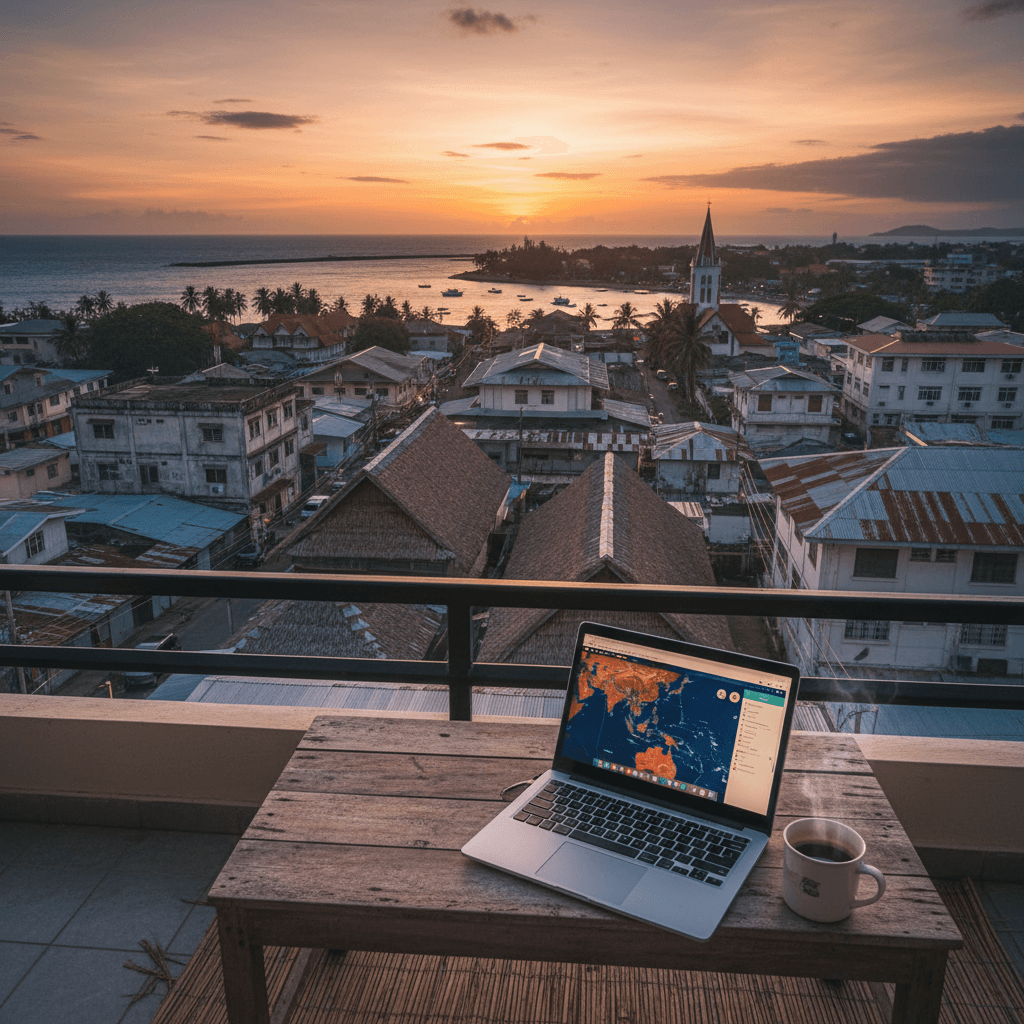
Nuku'alofa
🇹🇴 Tonga
Nuku'alofa feels slow in a way that can be lovely or maddening, depending on what you came here for. The streets are low-key, the pace is relaxed and the whole town has this mix of royal formality, church life and waterfront air that makes it feel distinctly Tongan, not polished for outsiders.
Honestly, that’s the draw. You get markets, palace views and sea air instead of a shiny nomad scene and the tradeoff is real, because the internet can be patchy, coworking barely exists and nightlife is thin unless you’re happy with a bar, a warm beer and a few DJs on a late night.
What it feels like
- Rhythm: Quiet mornings, sleepy afternoons, then a bit of life around the markets and waterfront.
- Sound: Church singing, scooters, loose dogs and the occasional honk drifting through humid air.
- Best fit: Nomads who want authenticity, not convenience.
Costs sit in the middle for the Pacific, though cheap stays can keep you afloat if you’re careful, with a budget month often landing around $500 to $800 and a more comfortable setup pushing past $1,500 once you factor in central rent, taxis and eating out more than once a day. Meals are a mixed bag, a street plate might run about $8, while a decent dinner for two can climb past $60, which, surprisingly, doesn’t buy you much glam.
The neighborhood choice matters. Downtown Nuku'alofa is the most practical for first-timers, Central Peninsula feels calmer and more local and Vuna Road Waterfront gives you the sea breeze and the nicest walk after sunset, if you don’t mind being a bit spread out.
Where people stay
- Downtown Nuku'alofa: Best for markets, walkability and quick access to eateries, but it can feel noisy in the daytime.
- Central Peninsula: Quieter, more residential and usually easier on the wallet.
- Vuna Road Waterfront: Best views, breezier evenings, fewer dining options.
Internet is the annoying part, frankly. Cafes are fine for email and messaging, but speeds can sag hard, so most nomads rely on a local SIM from Digicel or U-Call and treat fast upload speeds like a lucky break, not a promise.
Safety is generally calm, though you shouldn’t wander unlit streets late at night, especially downtown. The vibe here is respectful and family-centered, Sundays are taken seriously and if you like a place that still smells like grilled fish, damp pavement and church incense instead of air-conditioned coworking chatter, Nuku'alofa can get under your skin.
Nuku'alofa isn't cheap in the way people expect a small Pacific capital to be cheap. A solo nomad usually lands around $1,035 a month with rent included and that number jumps fast once you want decent internet, a central apartment or meals that don't come from a takeaway tray wrapped in paper.
Housing drives the bill. A basic one-bedroom can be around $183, while a city-center studio or one-bedroom can climb to $558, which feels steep until you see how limited the stock is and honestly, the nicer places get snapped up quickly. Utilities and internet can run about $240 a month and that stings because the connection is often patchy, slow and weirdly expensive for what you get.
Budget Range
- Monthly spend: $500 to $800
- Rent: Cheap one-bedroom around $183
- Food: Street food and market meals around $8
- Transport: Local buses around $2 per trip
This is the sweet spot if you don't mind keeping life simple and most people here do that anyway. You can eat well at Talamahu Market, catch buses for a couple of pa'anga, then head home before the humid evening settles in and the frogs start up.
Mid-Range
- Monthly spend: $900 to $1,400
- Rent: Central one-bedroom around $558
- Meals: About $30 per person at mid-range spots
- Taxis: Roughly $19 a ride
Mid-range living makes sense if you're staying a while and want a bit less friction. Downtown Nuku'alofa puts you close to markets, cafes and the waterfront, though the daytime noise can be rough, with buses honking, scooters buzzing past and the smell of fried fish drifting out onto the street.
Comfortable
- Monthly spend: $1,500+
- Lodging: Upscale rooms and waterfront stays
- Dining: Around $63 for two at nicer restaurants
- Transport: Car rental if you want flexibility
Comfortable here means paying for convenience, not luxury in the big-city sense and that's a useful distinction. There's no proper coworking scene, cafes are free but slow and mobile data through Digicel or U-Call is often the safer bet if you need to get work done without swearing at the WiFi.
My blunt take, skip expecting Bangkok prices or Bali-level ease. Nuku'alofa can be affordable, but only if you're okay with a slower rhythm, basic infrastructure and the occasional internet dropout right when you need to send a file.
Nuku'alofa isn't a place for people chasing polished city living. It's slower, dustier and a bit rough around the edges, with church bells, scooter noise and the smell of fried fish drifting off the markets in the heat. That said, the right neighborhood makes a huge difference.
Nomads
If you're working remotely, stick to the Central Peninsula. It's quieter than downtown, gets you into a more local rhythm and the budget stays saner than the waterfront, honestly, even if you'll still be paying more than you'd expect for decent housing and patchy internet.
- Rent: One-bedroom places can start around $183, though central apartments usually run closer to $558.
- Best for: Long stays, low-key routines and people who don't need a cafe scene.
- Downside: Fewer shops, fewer buses and internet that can drop whenever the weather turns.
Don't expect coworking spaces. You'll be working from your room, a cafe or a hotel lobby and frankly that's the deal here, so bring patience and a good SIM card from Digicel or U-Call if you need to stay connected.
Expats
Vuna Road Waterfront is the smartest pick if you want sea air, easier access to the Royal Palace area and a slightly more polished feel. The breeze helps, which, surprisingly, makes the humidity feel less sticky, though dining options thin out fast once you move away from the main strip.
- Rent: Higher than inland areas, especially for sea-facing places.
- Best for: Couples, longer-term expats and people who want a calmer setting.
- Downside: It's spread out, so you'll probably need a car or a lot of taxis.
Downtown's markets are close enough for errands, but nights can feel empty and a little too quiet after dark, so I wouldn't treat it like a walking district once the streetlights come on.
Families
The Central Peninsula works best for families because it's residential, fairly safe and less chaotic than the center. Kids get space, the streets are calmer and you're not stuck with market traffic outside your door every morning.
- Rent: Budget-friendly compared with the waterfront, especially for basic houses.
- Best for: Families who want quiet, local life and a slower daily rhythm.
- Downside: Amenities are thin, so you'll be planning trips for groceries and school runs.
You'll hear roosters, church singing and the occasional truck rumbling past and that's part of the charm. It's also part of the inconvenience.
Solo Travelers
Downtown Nuku'alofa is the easiest base if you're solo and only here for a short stay. You can walk to Talamahu Market, basic eateries and the main waterfront sights, then duck back before the evening feels too empty.
- Rent: Mid-range options are common near the center, with simple hotels and guesthouses.
- Best for: First-timers who want everything within reach.
- Downside: Daytime noise, more traffic and a real need to keep your wits about you at night.
Skip wandering far after dark. The center's fine in daylight, but once the shops shut and the road quiets down, it gets lonely fast and that doesn't always feel comforting.
Internet & Coworking
Nuku'alofa is fine for email, shaky for anything heavier. Internet is, honestly, the weakest part of living here, with cafe and hotel WiFi usually sitting around 5 to 15 Mbps and it can drop right when the rain starts hammering the roof or a few extra people log on.
There’s no real coworking scene, which turns out to be a bigger annoyance than it sounds, because you end up working from cafes, hotel lounges or your room, then listening to cutlery clink, church music drift in from the street and scooters cough past outside.
Use these if you need a setup that won't make you miserable:
- Cafes and hotels: Free access is common, but the connection can be slow and patchy, so don't plan video calls around it.
- Dataline Computer Store: One of the few places people mention when they need a more reliable internet spot or printing help.
- Mobile data: Often the smarter move, especially if you're tired of waiting for pages to load.
Buy a local SIM as soon as you land. Digicel and U-Call are the usual picks, and with 5GB bundles around $6-7 for 30 days, mobile data is one of the better deals on the island.
If you need steady connectivity, go mobile first and WiFi second. That’s the game here, not the other way around.
For day-to-day working, the best strategy is simple: stay flexible, keep files synced and choose a place with decent shade and a power socket, because tropical heat, fan noise and the occasional power wobble can make a long session feel longer than it should.
Best Areas for Getting Online
- Downtown Nuku'alofa: Best for convenience, with markets, eateries and most practical services close by, though it can get noisy and you shouldn't linger out late with a laptop.
- Vuna Road Waterfront: Good if you want sea air and a calmer feel, but options are spread out, so you'll trade convenience for space.
- Central Peninsula: Quieter and more residential, better for focused work if you don't mind fewer cafes and less foot traffic.
Most nomads I’d send here would treat Nuku'alofa as a place to slow down, not a place to grind through huge uploads. Frankly, if your job needs stable video meetings all day, this city will test your patience, but if you can work offline, batch your calls and use mobile data as backup, it’s manageable.
Nuku'alofa feels calm on the surface, but don’t mistake that for carefree. Petty theft and break-ins do happen, especially downtown after dark, so keep your phone tucked away, stay on lit streets and don’t wander home alone if the bars spill out late and the road feels empty. The town is generally low-crime, honestly, but it’s the kind of place where a loose bag in a café or an unlocked rental can invite trouble.
Most nomads stick to the central areas and feel fine. Still, the waterfront, markets and main roads are your safest bet at night, while quieter side streets can go dead fast, with dogs barking, scooters buzzing past and the smell of seawater mixed with exhaust hanging in the air.
Where to be careful
- Downtown Nuku'alofa: Fine by day, but use extra caution after dark.
- Quiet residential streets: Safe enough in daylight, not great for solo night walks.
- Unlit waterfront stretches: Pretty, yes, but don’t drift off alone late.
Healthcare is basic, not fancy. Vaiola Hospital on Taufa’ahau Road handles routine care and most urgent issues locals and travelers run into, while pharmacies like Neeru’s on Wellington Road and Seini’s are where you’ll usually sort out day-to-day meds, bandages or something for a nasty stomach bug. Emergency services use 911 and if you need a doctor in a hurry, get moving early instead of waiting around for things to sort themselves out.
Pharmacy stock can be patchy, so bring anything specific you take regularly, plus sunscreen and rehydration salts. That’s the safe call. The humidity clings to your skin, rain drums on tin roofs in the wet season and when you’re sick in that heat, even a simple fever can feel louder than it should.
Health basics
- Main hospital: Vaiola Hospital, Taufa’ahau Road.
- Pharmacies: Neeru’s, Seini’s.
- Emergency number: 911.
For most minor problems, you’ll be okay if you plan ahead. Pack travel insurance, keep copies of prescriptions and save local numbers before you arrive, because internet can be patchy and you don’t want to be hunting for a signal while you’re tired and feeling rough. Frankly, the system works best when you don’t need anything dramatic.
If you’re staying longer, learn the nearest clinic, the closest pharmacy and the safest route back from town. That little bit of prep saves a lot of hassle and in Nuku'alofa, hassle is usually what you’re trying to avoid.
Nuku'alofa’s getting around scene is simple, a little clunky and honestly pretty local in the best and worst ways. There’s no ride-hailing app to bail you out, buses run from two stations and taxis are the backup when the heat, humidity or a rainy squall makes walking feel like a bad idea.
Expect to move slowly. Downtown is walkable, especially around the markets and the central strip, but the sidewalks can be patchy and the traffic gets noisy fast, with horns, engine coughs and the smell of exhaust hanging low near the road. If you’re staying on the Central Peninsula or out by Vuna Road, you’ll probably want a taxi or a car more often than you think.
Public Buses
- Price: About $2 per trip
- Monthly pass: Roughly $42
- Best for: Cheap local travel, market runs, cross-town errands
Buses are the budget winner, though they’re not polished. They’re basic, they’re local and they can be a bit random about timing, so don’t plan anything tight around them, especially if you’ve got a ferry, a flight or a meeting with someone who runs on island time.
Taxis
- Standard ride: About $19 for 8 km
- Airport run: Roughly $26 to $32
- Phone: Wellington Taxis, +676 24744
Taxis are straightforward and frankly they’re the easiest option after dark. Drivers usually know the main hotels, the airport, the waterfront and the hospital, but ask the price before you get in because there’s no app meter to quietly save you from confusion.
Walking, Cars and Airport Transfers
- Walking: Good in the center
- Car rental: Available, but limited
- Bike or scooter: Harder to find than you’d expect
Walking works for short hops in central Nuku'alofa, especially if you’re heading to Talamahu Market, the waterfront or a café, but the midday sun can hit hard and the pavement gets gritty. For Fua’amotu Airport, allow about 30 minutes by road and arrange a shuttle or taxi in advance, because turning up and hoping isn’t a great strategy here.
Most nomads settle into a pattern, walk when the distance is small, take buses when they’re feeling patient and use taxis when the roads are wet or the bags are heavy. That mix keeps costs sane and it saves you from sweating through a shirt before lunch.
Nuku'alofa runs on a slower clock and the language mix reflects that. Tongan is the everyday language, English is widely used in shops, hotels and offices and most nomads get by without much trouble, honestly, unless they wander far from the center or talk to older locals who'd rather stick to Tongan.
Don't expect perfect bilingualism everywhere. A cashier at Talamahu Market might switch between both languages in one breath, then a taxi driver may keep it simple and friendly, with a grin, a few broken English phrases and that easy island rhythm that makes even basic errands feel less rushed than they should.
Good to know: Google Translate usually helps, but it won't save you from every mix-up. Mobile data can be patchy, so save key phrases offline before you head out.
Useful phrases
- Hello: Malō
- Thank you: Mālō 'aupito
- Sorry: Tulou
- Where's the toilet? Fēfē ki fe?
Use those a lot. The polite words matter and locals notice when you try, even if your accent is clumsy and the vowels come out wrong.
How people actually communicate
- In shops: Short, direct exchanges work best.
- In taxis: Say your destination clearly, then confirm the fare before you get in.
- On WhatsApp: Plenty of informal coordination happens there, especially with drivers, landlords and expats.
- At markets: Smile, greet people first, then ask your question.
The social pace is gentle, but communication can still feel a bit old-school, which, surprisingly, is part of the charm. People aren't usually trying to be difficult, they're just not in a hurry and if you're the kind of person who wants instant replies, that can get annoying fast.
Practical tip: Say hello before you ask anything. Skipping the greeting feels rude here and on Sundays especially, modest speech and behavior matter as much as modest dress.
For nomads, the real headache isn't language, it's connection. When WiFi drops in a cafe and the air smells like fried dough, wet pavement and sea salt, being able to ask for help in a few Tongan phrases makes the whole day easier, frankly and it earns you a warmer response too.
Nuku'alofa stays warm all year, with daytime temperatures usually sitting between 23 and 31°C and that humidity can cling to your shirt by noon, then stick around after dark. The dry season, roughly May to October, is the sweet spot, because you get clearer skies, lighter rain and better odds of actually enjoying the waterfront instead of watching it blur through a sheet of drizzle.
May and June are my pick. November can still be decent, honestly, but once you push into the wet season the mood shifts fast, with heavier showers, muggy afternoons and roads that turn slick and noisy under sudden rain.
Best Months
- May to June: Mildest stretch, less rain, easier walking and better conditions for day trips.
- July to October: Still dry, a bit cooler, good for long stays if you don't mind the quieter vibe.
- November: A shoulder month, which, surprisingly, can still feel pleasant before the real rains build.
The wet season runs from November to April and January through March is the rough patch. Cyclones can happen, rain can be heavy for days and the sound of it hammering on tin roofs gets old fast, especially if you're trying to work with shaky internet and a fan buzzing overhead.
Don't plan around perfect weather then. You can still visit, sure, but pack for delays, damp laundry, muddy shoes and a schedule that bends whenever the sky opens up.
What It Feels Like
- Dry season: Warm sun, sea breeze, less stickiness and better conditions for markets and walking downtown.
- Wet season: Heavy showers, hot humidity, occasional flooding and more time spent waiting out the weather.
- Storm risk: Higher from January to March, so keep plans loose and watch forecasts closely.
If you're here for a month or two, aim for May, June or November and you'll dodge most of the annoying weather without paying peak-island-prices, though nothing in Tonga is ever perfectly predictable. For longer stays, the dry months are easier on your clothes, your laptop and your patience, because rain in Nuku'alofa doesn't just fall, it arrives loudly and lingers.
Bring light layers, a proper rain shell and sandals that dry quickly. You'll thank yourself later.
Nuku'alofa moves slowly and that’s half the charm. The humidity clings to your shirt, scooters buzz past the market and church bells or Sunday silence can reset your whole day if you’re used to a faster city.
Money-wise, don’t assume island life is cheap. A basic one-bedroom can start around $183 a month outside the center, while a central studio or one-bedroom can jump to about $558 and once you add food, transport and internet, a solo monthly budget often lands around $1,035 or more if you want comfort.
Daily costs add up fast, honestly, because imported goods aren’t kind to your wallet. Street food can be around $8, a decent sit-down meal for two can reach $62 and internet at home can run about $125 a month, which stings when the connection still drops during a rainy afternoon.
Where to stay
- Central Peninsula: Quieter and more residential, with budget lodging and a local feel, though you won’t have heaps of cafes or transport options nearby.
- Downtown Nuku'alofa: Best if you want to walk to Talamahu Market, shops and eateries, but it gets noisy in the daytime and feels a bit dodgy after dark, so don’t wander off unlit streets alone.
- Vuna Road Waterfront: Good for sea views and a breezier pace, with places like Little Italy nearby, though dining choices are spread out.
Internet is, honestly, the weak spot. Cafes often have free WiFi, but it’s slow and patchy and most nomads end up relying on Digicel or U-Call SIMs from the airport or local shops, where a starter pack with data is usually the safer bet.
Getting around is simple, but not slick. Buses are cheap at around $2 a ride, taxis don’t use apps here and if you’re landing at Fua'amotu Airport, expect to pay for a shuttle or taxi, then again if you want to go anywhere after sunset.
For health and safety, stick to lit main roads and keep an eye on your stuff. Tonga’s pretty low-crime compared with many places, though petty theft and break-ins do happen and Vaiola Hospital plus pharmacies like Neeru’s cover the basics if you need help.
Culture matters here, weirdly more than some visitors expect. Dress modestly, take your shoes off when you go indoors, keep Sundays calm and don’t be flippant around the royal family or church customs, because locals notice that stuff immediately.
For paperwork and payments, bring a backup plan. ATMs exist, Wise and similar fintech cards help a lot and if you’re hunting for a place to stay, hotels and Airbnb-style apartments are easier to book than long-term rentals, especially if you want something sorted before you arrive.
Need visa and immigration info for Tonga?
🇹🇴 View Tonga Country GuideOff the Radar
Pioneer territory