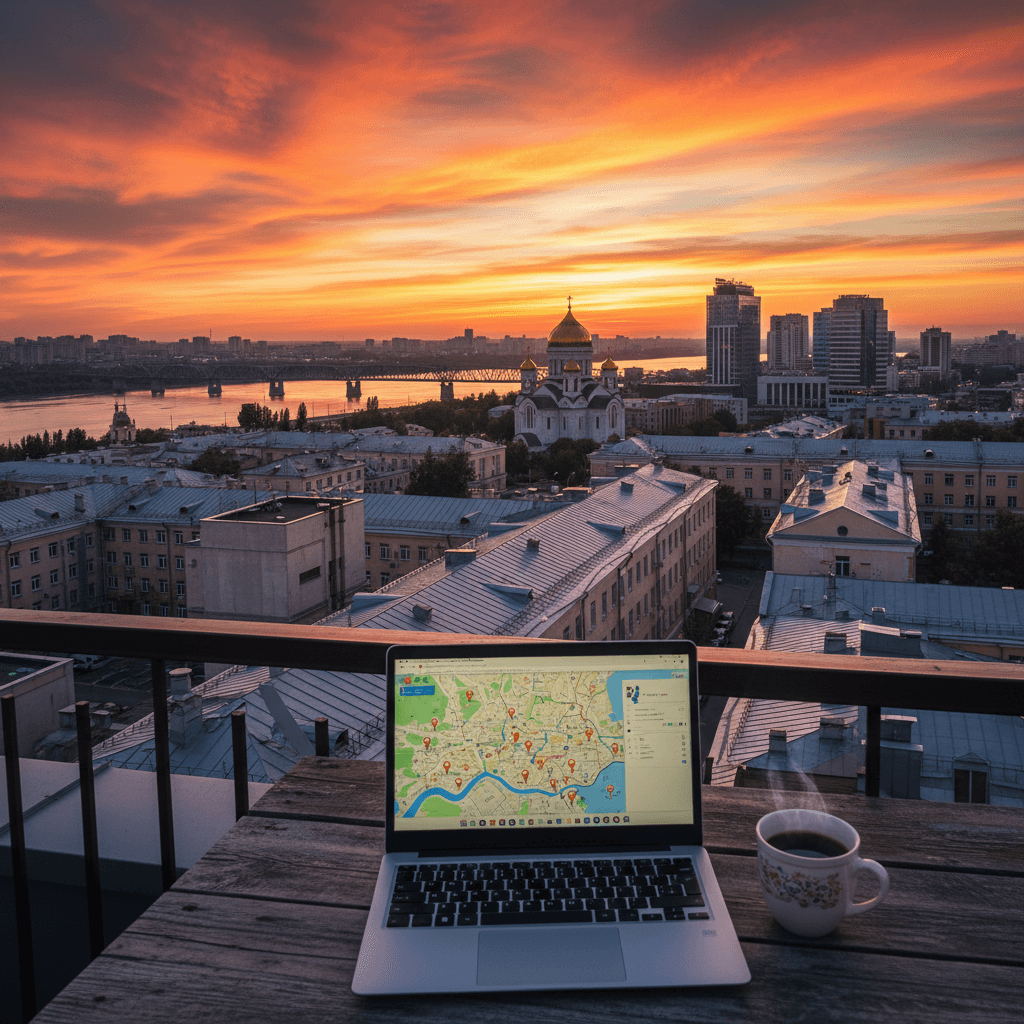
Novosibirsk
🇷🇺 Russia
Novosibirsk is the raw, beating heart of Siberia. Forget the imperial polish of St. Petersburg or the frantic, high-gloss energy of Moscow. This is Russia's third largest city, and it feels like a sprawling, industrial experiment that actually worked. It's often called the Siberian Silicon Valley, mostly because of the brainiacs living in the nearby research hub of Akademgorodok, but the vibe in the city center is pure urban grit. It’s fast-paced, unpretentious, and carries a unique energy that feels much more like a frontier town than a European capital.
The Local Vibe
Living here means embracing the extremes. You'll find yourself walking past massive Soviet-era monuments and gray concrete blocks, only to stumble into a sleek, third-wave coffee shop serving a perfect flat white. The tech scene is legit, fueled by a massive student population and a local IT talent pool that keeps the internet speeds high and the prices low. Nomads who stick around usually fall in love with the lack of pretense. It’s a place where people work hard, drink strong tea, and don't care much for tourist traps. The downside? The winters are legendary. If you aren't prepared for -15°C averages in January, you'll want to aim for a summer visit when the city transforms into a lush, green playground.
The Cost of Living
Your dollar goes significantly further here than in the western part of the country. Most digital nomads can live quite well on $1,500 to $1,800 a month, though you can scrape by on $1,200 if you’re happy with a simpler setup. Rent is your biggest variable, but even a central 1BR in a trendy spot like Oktyabrsky usually sits around $1,000. Food is a bargain; you can grab a solid meal at a mid-range spot like Dobry Kafe for about $10, or hit the street markets for $3 to $5 snacks. Transport is almost an afterthought at $30-35 for a monthly pass, and a Yandex GO ride across town rarely tops $7.
Where to Set Up Camp
Choosing the right neighborhood defines your experience here. Most nomads gravitate toward one of three distinct areas:
- Oktyabrsky: This is the central hub. It’s noisy and crowded, but it’s where the action is. You’re walkable to the best cafes, tech offices, and the metro. Expect to pay $800 to $1,200 for a decent apartment here.
- Akademgorodok: Located about 45 minutes south of the center, this is the "Science Town." It’s surrounded by birch forests and has a distinct university-town feel. It’s quieter, greener, and cheaper, with 1BR apartments around $700. It’s perfect if you want a deep-focus work environment, though the social scene is smaller.
- Zaeltsovsky: A solid middle ground. It’s residential and safe, with plenty of parks. It’s less walkable than the center, but rents are more affordable, usually between $600 and $900.
Work, Tech, and Connectivity
The infrastructure is surprisingly robust for a city in the middle of Siberia. Urban internet is reliable, often hitting 12 Mbps as a baseline and much higher in modern apartment buildings. You’ll definitely need a VPN to access certain international sites, so have that set up before you land. While the cafe culture isn't as nomad-centric as Bali or Lisbon, spots like Coffeeshop have great WiFi and won't mind you staying for a few hours. If you need a dedicated desk, look for local coworking spaces or institutional spots that charge around $300 a month. For mobile data, grab a SIM from MTS or Megafon for about $10; it’ll give you plenty of data for navigating the city.
Practical Realities
English isn't widely spoken. In the tech hubs of Akademgorodok, you'll find people who speak it well, but in your daily life, you'll need a translation app. Moving around is easy thanks to the metro and Yandex GO, which is the local equivalent of Uber. Safety is rarely an issue in the center, though locals suggest avoiding the industrial outskirts like Dzerzhinsky after dark. One thing to remember: Novosibirsk is a city of layers. It looks industrial and cold on the surface, but once you find the right WhatsApp groups or meet a few locals at an IT event, you’ll find a community that is incredibly welcoming and fiercely proud of their Siberian home.
The Siberian Price Advantage
Novosibirsk is where Russia's high-tech ambitions meet a gritty, industrial reality. For digital nomads, this translates to a cost of living that sits comfortably below the price tags of Moscow or St. Petersburg. You can expect to get by on roughly $1,504 per month. This covers your rent, groceries, transport, and a desk at a local workspace, though you won't be living in total luxury at that price point. It's a budget-friendly hub for those who don't mind trading a bit of polish for raw Siberian energy.
Monthly Budget Tiers
Your lifestyle in the "Siberian Silicon Valley" depends heavily on your housing choices and how often you eat out. Most nomads find themselves falling into one of three categories:
- Budget ($1,200 to $1,500): You'll be looking at shared housing or a studio in the suburbs, sticking to street food and home-cooked meals, and using public transit exclusively.
- Mid-range ($1,800 to $2,500): This gets you a private 1BR in a central area like Oktyabrsky, regular dinners at mid-range spots, and frequent Yandex GO rides.
- Comfortable ($3,000+): You'll live in an upscale apartment, dine at the city's best restaurants, and rarely think twice about your daily spending.
Housing and Neighborhoods
Rent is your biggest variable. A central studio or one-bedroom apartment typically averages $1,511, but you can find better deals if you look toward the outskirts. Expats recommend focusing on three main areas depending on your vibe.
Oktyabrsky (The Center)
- Rent: $800 to $1,200 for a 1BR.
- Vibe: Fast-paced and walkable. It's the heart of the city's tech scene and nightlife.
- Trade-off: It's the loudest and most expensive part of town.
Akademgorodok (Science Suburb)
- Rent: $600 to $900 for a 1BR.
- Vibe: Surrounded by forests with a heavy research influence. Travelers often say it feels like a separate, quieter world.
- Trade-off: It's a 45-minute commute to the city center, which can feel isolating in the winter.
Zaeltsovsky (Residential)
- Rent: $600 to $900.
- Vibe: Family-friendly with plenty of parks. It's safe and predictable.
- Trade-off: There are fewer coworking options and the social scene is almost non-existent.
Food, Coffee, and Connectivity
Eating out is affordable. A quick meal from a street vendor costs about $3 to $5, while a sit-down dinner at a place like Dobry Kafe runs around $10 to $15. If you want to go high-end at Kupechesky, expect to pay $30 or more. Most nomads find that Novosibirsk is roughly 25% cheaper for dining than the capital.
Internet in urban centers is reliable, averaging 12 Mbps, but you can find speeds up to 200 Mbps in premium buildings or tech hubs. You'll definitely need a VPN to access certain sites. For mobile data, pick up a SIM from MTS or Megafon at the airport; $10 usually buys you 20GB of data for the month.
Moving Around the City
Public transport is efficient and incredibly cheap. A monthly pass for the metro and buses is only $25. For everything else, Yandex GO is the local equivalent of Uber. A typical trip across town costs between $3 and $7. If you are arriving at Tolmachevo Airport (OVB), a ride to the center will set you back about $20, while the bus is a steal at $2.
Practical Spending Tips
- Banking: Local Mir cards or Tinkoff are the standard. International nomads often use Wise, but you'll need that VPN to manage your accounts.
- Coworking: Dedicated desks average $300 a month. If you prefer cafes, chains like Coffeeshop Company have decent WiFi and don't mind you staying for a few hours.
- Healthcare: Private clinics are the way to go for quality care. Pharmacies like the Apteka chains are everywhere for routine needs.
For the Urban Nomad: Oktyabrsky
If you want to be where the action is, Oktyabrsky is your base. It is the heart of the city, offering a gritty, high energy atmosphere that feels more like a tech hub than a traditional Siberian outpost. You are within walking distance of the best cafes, the metro, and the most reliable internet connections in the city. Most nomads head here because it is the only area where you can truly live without a car and still find a decent flat white.
- Rent: Expect to pay $800 to $1,200 for a central one bedroom apartment.
- Vibe: Fast paced, noisy, and tech focused.
- Best for: Networking, coworking access, and nightlife.
For work, you will likely find yourself at local spots like Coffeeshop Company or looking for desk space at institutional hubs that mirror the Regus model. While the neighborhood is pricier than the outskirts, the convenience of having Yandex GO rides arrive in under three minutes makes up for the cost. Just be prepared for the crowds; this is the densest part of Novosibirsk.
For Tech Workers and Deep Thinkers: Akademgorodok
Located about 20 miles south of the city center, Akademgorodok is the famous "Science City." It feels like a university campus dropped into the middle of a forest. It is a dream for nomads who need to focus or those working in research and development. The air is cleaner, the streets are lined with trees, and the community is arguably the most intellectual in Russia.
- Rent: Significantly cheaper at $600 to $900 per month.
- Vibe: Academic, peaceful, and slightly isolated.
- Best for: Deep work, nature lovers, and those on a budget.
The downside is the commute. If you need to head into the city center, it is a 45 minute trek. However, most residents rarely leave. You have the Ob Sea nearby for summer walks and a tight knit IT community that gathers at local university events. It is the closest thing to a "Silicon Valley" vibe you will find in Siberia, though the social scene is much quieter than Oktyabrsky.
For Families and Long Term Expats: Zaeltsovsky
Zaeltsovsky is the go to for expats moving with a spouse or children. It strikes a balance between urban life and suburban quiet. It is home to the Novosibirsk Zoo and several large parks, making it much more breathable than the industrial center. It is a safe, residential district where you get more square footage for your money.
- Rent: Mid range, usually between $600 and $900 for a quality flat.
- Vibe: Safe, green, and family oriented.
- Best for: Long term stays and those who prioritize quiet nights.
Travelers often find it a bit bland if they are looking for a party, but for daily life, it is highly functional. You will find plenty of Apteka pharmacies and grocery stores on every corner. While coworking spaces are scarce here, the residential internet is generally stable enough for Zoom calls, provided you have a VPN set up.
For Solo Budget Travelers: Dzerzhinsky
If your primary goal is keeping costs at an absolute minimum, Dzerzhinsky is the industrial alternative. It is not pretty, and it lacks the polish of the center, but it is where you will find the lowest prices in the city. It is a raw look at the city's manufacturing roots.
- Rent: Often under $600 for a basic studio.
- Vibe: Industrial, no frills, and utilitarian.
- Best for: Hardcore budget travelers and short term stays.
Be cautious here at night. Local feedback suggests avoiding the deeper industrial pockets after dark. Stick to the main well lit streets and use Yandex GO for door to door transport. It is not the first choice for most, but if you are just passing through and want to save your Rubles for travel further into Siberia, it serves its purpose.
Practical Neighborhood Tips
- Internet: Most central apartments offer 12 Mbps to 100 Mbps. Always ask for a speed test before signing a monthly lease.
- Transport: A monthly transit pass is only about $25, but most expats rely on Yandex GO, which typically costs $3 to $7 per cross town trip.
- Groceries: Stick to local markets for the best prices on Siberian staples like pelmeni and fresh bread.
Novosibirsk doesn't offer the polished, boutique coworking scene you'll find in Moscow, but for the self-reliant nomad, it provides a gritty, high-tech backbone that's surprisingly reliable. As the "Siberian Silicon Valley," the city's infrastructure is built for engineers and researchers, meaning the internet is stable even if the aesthetics are more industrial than Instagrammable.
Connectivity and Data
Expect average urban speeds around 12 Mbps, though premium pockets and modern apartment blocks in Oktyabrsky often reach 200 Mbps. While the speed is decent, Russia's digital landscape requires some prep work. You'll need a solid VPN to access many international services and social media platforms that are otherwise restricted.
For mobile data, skip the international roaming and grab a local SIM immediately. The big three carriers are MTS, Beeline, and Megafon. You can usually snag a 20GB monthly data plan for between $5 and $10 at the airport or various kiosks around the city. It's cheap, fast, and essential for using Yandex GO to get around.
Coworking Spaces
The coworking culture here is functional. You won't find many "lifestyle" hubs, but you will find productive environments filled with local IT talent. Most dedicated spaces align with national averages, charging roughly $300 a month for a fixed desk or $50 for a day pass. While prices are higher than some Southeast Asian hubs, the utility is high.
- Central Hubs: Most nomads gravitate toward Oktyabrsky. It's the most walkable district and houses the majority of the city's institutional desk space.
- Akademgorodok: If you want to be surrounded by the tech elite, head 45 minutes south to the science suburb. The vibe is scholarly and quiet, though you'll feel more isolated from the city's social core.
- Regus-style Offices: Several corporate-style spaces offer reliable desks and meeting rooms, though they lack the community events typical of nomad-focused spots.
The Cafe Scene
If you prefer working from cafes, Novosibirsk has a growing coffee culture, though it's less accustomed to people camping out for eight hours with a laptop. Chain outlets like Coffeeshop are your safest bet for reliable WiFi and a "laptop-friendly" attitude. In the more independent spots, it's polite to keep the orders coming or move on after a couple of hours.
Most expats recommend Dobry Kafe for a casual work session. You can get a solid meal for about $10 and the atmosphere is relaxed enough for a few hours of deep work. In Akademgorodok, the cafes cater heavily to the university crowd, so finding a corner with a power outlet is generally easier there than in the industrial city center.
Practical Fintech for Nomads
Banking can be a hurdle. Most international nomads rely on Tinkoff or Mir cards for local transactions. If you're using international accounts like Wise, you'll definitely need that VPN active to manage your dashboard. Despite the tech-heavy population, cash is still handy for smaller stalls, though almost every established cafe and coworking space prefers digital payments.
Overall, Novosibirsk is a "bring your own infrastructure" kind of place. If you have your own hardware, a reliable VPN, and a local SIM, you'll find the Siberian internet more than capable of handling a full-time remote workload.
Staying Safe in the Siberian Capital
Novosibirsk doesn't have the polished, tourist-ready veneer of Moscow, but it's generally a safe bet for digital nomads who keep their wits about them. The city has a gritty, industrial soul, yet violent crime remains low. Most travelers find that the biggest threat is petty theft in crowded spots like the Ploshchad Lenina metro station or the busy markets. Keep your phone and wallet tucked away in these areas and you'll be fine.
The city's layout plays a big role in your safety profile. While the central Oktyabrsky district feels lively and secure even after dark, some of the industrial outskirts require more caution. Locals generally suggest avoiding the deeper parts of the Dzerzhinsky district late at night. If you're heading home after a few drinks at a bar like Kaktus, don't wander through poorly lit residential blocks. Just use Yandex GO; it's the dominant ride-hailing app here and a ride across town usually costs between $3 and $7. It's safer, warmer, and eliminates the need to negotiate with "gypsy cabs."
One unique safety factor in Siberia is the environment itself. If you're visiting between December and February, the -30°C (-22°F) temperatures are a genuine health hazard. Frostbite is no joke, and the sidewalks become incredibly slick. Expats recommend investing in heavy-duty boots with good grip and learning the "penguin walk" to avoid a trip to the emergency room with a broken wrist.
Healthcare and Medical Services
If you do get sick or injured, the healthcare system in Novosibirsk is surprisingly robust, thanks to its status as a major research hub. For routine issues, you'll see Apteka (pharmacy) signs on almost every corner. Many are open 24/7 and pharmacists can often recommend over-the-counter fixes for minor ailments, though English proficiency is hit-or-miss.
For anything serious, nomads usually steer clear of the aging state facilities and head straight to private clinics. These centers offer a much higher standard of comfort, shorter wait times, and a better chance of finding an English-speaking doctor. Gorodskaya Klinicheskaya Bolnitsa No. 1 is a major landmark for urgent care, but for non-emergencies, private providers are the way to go. Expect to pay out of pocket and claim it back later through your travel insurance, which is a must-have here.
- Emergency Services: Dial 112 for all emergencies.
- Private Clinics: Better for expats; quality is high but English is still limited to about 20% to 30% of staff.
- Pharmacies: Look for the green cross or "Apteka" signs; prices for local meds are very low.
Practical Health Tips
The tap water in Novosibirsk is generally not recommended for drinking. Most nomads stick to bottled water or use a high-quality filter. You can buy large 5-liter jugs at any supermarket for less than $1. Also, if you're planning to explore the forests around Akademgorodok or the Ob Sea during the late spring or summer, be aware of ticks. Tick-borne encephalitis is a known risk in Siberian wooded areas, so wear long sleeves and use repellent if you're hiking.
Overall, the cost of staying healthy is quite low. A standard consultation at a private clinic might set you back $30 to $50, and most common prescriptions are a fraction of the price you'd find in Western Europe or the US. Just make sure you have a VPN active on your phone before you head out; you'll need it to access many international insurance portals or banking apps if you need to move money for a medical bill.
The Transit Vibe
Novosibirsk is a sprawling Siberian giant, but it's surprisingly easy to navigate once you understand the rhythm of the city. While the outskirts feel industrial and spread out, the central core is compact enough for walking during the milder months. Most nomads find that a mix of the metro and ride hailing apps covers 90% of their needs without breaking the bank.
The Metro: Your Winter Lifeline
When the Siberian winter hits -15°C or lower, the metro becomes your best friend. It's clean, efficient, and deep enough to stay warm. There are two main lines that intersect at the city center, making it the fastest way to bypass the notorious surface traffic. A monthly pass costs around $30-35, which is an absolute steal for the reliability it offers. It doesn't cover the whole city, but it connects the major tech hubs and residential pockets in Oktyabrsky and Zaeltsovsky perfectly.
Ride Hailing and Apps
For everything else, Yandex GO is the undisputed king. Forget about traditional taxis or trying to hail a car on the street. The app works exactly like Uber or Bolt; you see the price upfront and can track your driver in real time.
- Standard city trips: Usually run between $3 and $7.
- Airport transfers: A ride from Tolmachevo Airport (OVB) to the city center takes about 45 minutes and costs between $15 and $25.
- Reliability: Even in heavy snow, you can usually find a car within five minutes in central areas.
Micromobility and Summer Transit
During the short but pleasant summer, the city transforms. You'll see Whoosh and Yandex electric scooters parked on almost every corner. They usually cost about $1 to unlock and then $0.15 per minute. It's a fun way to get between cafes in Oktyabrsky, though the pavement quality can be a bit rugged once you leave the main boulevards. Just keep an eye out for pedestrians; the sidewalks get crowded fast.
Getting to Akademgorodok
If you're heading to the "Silicon Forest" of Akademgorodok, you've got a few choices. It's about 20 miles south of the center.
- Yandex GO: The most comfortable way, costing around $12 to $18 depending on demand.
- Marshrutkas: These are private minibuses that run specific routes. They're cheap (less than $1) and fast, but they can be intimidating if your Russian is rusty. Look for the ones headed toward "Akadem."
- Electric Trains: Known locally as the Elektrichka, these depart from the main station. They're immune to traffic jams and very budget friendly, though the schedules are less frequent than buses.
Practical Navigation Tips
Public buses and trolleybuses fill in the gaps where the metro doesn't reach. They're incredibly cheap but can be slow during rush hour. Most expats recommend downloading 2GIS. It's a mapping app born in Novosibirsk that is far more detailed than Google Maps for this specific region. It shows you exactly which bus entrance to use, where the hidden courtyard gates are, and even which floor an office is on. Without it, you'll likely spend a lot of time walking around grey Soviet blocks looking for a specific door.
Walking is great in the center around Lenin Square, but don't underestimate the distances. The city was built with grand, wide avenues that take longer to cross than they look. Stick to the metro for long hauls and save your steps for exploring the hidden coffee shops and bars tucked away in the side streets.
The Russian Reality
In Novosibirsk, language is the biggest hurdle you'll face. While it's the third largest city in Russia and a massive tech hub, English isn't a given. Outside of the university crowds in Akademgorodok or the high end tech offices in Oktyabrsky, English proficiency sits around 20 to 30 percent. You can get by in a trendy coffee shop like Coffeeshop Company or Pitchii Coffee with basic English, but for everything else, you'll need a digital safety net.
Most nomads rely heavily on Yandex Translate or Google Translate. Download the Russian language pack for offline use before you arrive. It's a lifesaver for reading menus, signs, and grocery labels. Local expats recommend using the camera translation feature for official documents or apartment contracts, as the Cyrillic alphabet can be intimidating at first glance.
Essential Apps and Connectivity
Communication here happens almost exclusively through Telegram and WhatsApp. If you're trying to join a local nomad group or talk to a landlord on Avito, you'll need these apps. For getting around, don't even bother trying to explain your destination to a driver. Download Yandex GO. It's the local version of Uber and handles all the communication and payment through the app, so you don't have to speak a word of Russian to get a ride.
To stay connected, grab a local SIM card immediately. MTS, Beeline, and Megafon are the big players. You can pick one up at the airport or any street kiosk for about $5 to $10, which usually gets you around 20GB of data. Just keep in mind that you'll need your passport to register the card. Once you're set up, you'll find urban internet speeds are decent, averaging 50 Mbps, though premium spots can hit 200 Mbps.
Survival Phrases
Locals appreciate the effort if you try a few words. Even a "Privet" (hello) or "Spasibo" (thanks) goes a long way in softening the gritty Siberian exterior. If you're shopping at a local market or taking a bus, "Skolko stoit?" (how much?) is your most important phrase. For more formal situations, use "Zdravstvuyte" for hello. It's a mouthful, but it shows respect.
If you're in a pinch, look for younger people. The university students in Akademgorodok are far more likely to speak conversational English than the older generation in the industrial Dzerzhinsky district. Most tech workers in the "Siberian Silicon Valley" will have at least a working knowledge of English because of the global nature of their industry.
Digital Barriers
Because of local regulations, a high quality VPN is a non negotiable tool for communication. Many international social media platforms and news sites are restricted. Nomads living here long term suggest setting up a couple of different VPN providers before you land, as some services get throttled or blocked periodically. This ensures you can keep using your usual messaging apps and stay in touch with people back home without interruptions.
- Top Translation App: Yandex Translate (better with Russian nuances)
- Primary Messaging: Telegram
- Transport App: Yandex GO
- Average Data Cost: $5 to $10 per month
- English Proficiency: Low (roughly 20% to 30%)
Living the Siberian Extremes
If you are planning a stint in Novosibirsk, you have to embrace the drama of the seasons. This isn't a city of mild transitions; it is a place where the environment dictates your daily routine. Most nomads find that the city transforms from a snowy, industrial fortress into a lush, green tech hub almost overnight. You will want to time your arrival carefully to match your tolerance for the elements.
Summer: The Golden Window
For the best experience, aim for June through August. This is when the "Siberian Silicon Valley" truly shines. Average highs around 22°C (72°F), though heatwaves can push things into the high 20s. The days are incredibly long, giving you plenty of light to explore the cafe scene in Oktyabrsky or take the 45 minute Yandex GO ride out to the Ob Sea beaches.
Expats recommend this window because the city becomes walkable. You can ditch the metro and use the Whoosh or Yandex scooters to zip between coworking spots. It is also the peak season for hanging out in Akademgorodok, where the forest trails and university campus are at their most inviting. Just be prepared for the occasional heavy rain in June, so keep an umbrella handy.
Winter: The Brutal Reality
If you want the authentic, gritty Siberian experience, December through February delivers. It is not for the faint of heart. Average temperatures sit at -15°C (5°F), but it is common for the mercury to plunge to -30°C (-22°F). At these temperatures, even a quick walk to the nearest Coffeeshop feels like an expedition. The days are short and dark, which can be a productivity killer if you aren't disciplined.
Travelers often say that while the cold is intense, the city is well prepared for it. Heating in apartments and coworking spaces is usually aggressive, and the metro remains a reliable, warm way to get around for about $30-35 a month. If you visit now, you'll see the stunning ice sculptures and frozen landscapes that make the region famous, but you will spend 90% of your time indoors.
Shoulder Seasons: The Muddy Middle
Spring and autumn in Novosibirsk are short and unpredictable. May and September can be pleasant, but October, November, and April are often characterized by slush and grey skies. Locals call the spring thaw "gryaz" (the mud season), and it makes walking in central areas like Oktyabrsky a messy affair. If you are looking for budget accommodation, you might find slightly better deals during these transition months, but the aesthetic of the city is at its most industrial and raw.
Seasonal Packing and Prep
- Winter Gear: If you arrive in January, don't skimp. You need high quality thermal layers, a heavy down parka, and insulated boots. Most nomads buy their heavy gear locally at malls like Aura to ensure it is actually rated for Siberian winters.
- Summer Essentials: Pack light clothes but include a light jacket for the evenings. Mosquito repellent is a must if you plan on visiting the forests in Akademgorodok.
- Tech Protection: Extreme cold drains laptop and phone batteries fast. Keep your gear in insulated bags when moving between cafes and your apartment.
The Verdict on Timing
Unless you are specifically looking to test your mettle against the Russian winter, your best bet is to land in late May and stay through early September. You'll get the best of the outdoor social scene, the most reliable internet connectivity without weather related outages, and the chance to see the greener, more vibrant side of Russia's third largest city.
Living in Novosibirsk feels like being at the center of a giant, high tech experiment dropped into the middle of the Siberian wilderness. It’s raw, industrial, and fast; a far cry from the manicured streets of Moscow. If you're coming here, you're likely trading luxury for a front row seat to Russia’s "Silicon Forest." You'll find a city that runs on caffeine and code, but you’ll need to be prepared for some logistical hurdles to make it work.
Budgeting for the Ob River
Your money goes significantly further here than in the capital, but Novosibirsk isn't exactly "cheap" if you want a central lifestyle. A single nomad can expect to spend around $1,504 per month. If you're on a tight budget, you can squeeze by on $1,200 by sticking to street food and shared housing, while $3,000 buys a high end apartment and frequent dinners at places like Kupechesky.
- Studio Apartment: $800 to $1,200 in the center; $600 to $900 in the suburbs.
- Daily Meals: $3 to $5 for street snacks; $10 to $15 for a mid range sit down meal.
- Coworking: $300 for a monthly fixed desk or $50 for a day pass.
- Transport: $25 for a monthly transit pass.
Where to Plant Your Flag
Choosing a neighborhood determines your entire experience. Oktyabrsky is the heartbeat of the city. It’s where most expats and solo travelers land because it’s walkable and packed with cafes. It’s noisy and pricey, with one bedroom units often crossing the $1,000 mark, but the energy is unbeatable.
For a totally different vibe, head to Akademgorodok. Located about 45 minutes from the center, this is the famous "Science Town." It’s surrounded by forests and feels more like a university campus than a city. Rent is lower here, around $700, and the internet is surprisingly solid. Just know that the social scene dies down early, and you'll feel isolated if you don't have a local crew.
Families or those wanting a quieter life usually look at Zaeltsovsky. It’s residential, safe, and close to large parks. If you're on a extreme budget, Dzerzhinsky has the lowest prices, but it’s industrial and locals generally suggest avoiding the darker corners of the district after the sun goes down.
Connectivity and Workspace
Internet in the city center is reliable, averaging 12 Mbps, though premium spots can hit 200 Mbps. You absolutely need a VPN to access many international sites. For work, the cafe culture is growing, though it's not as nomad focused as St. Petersburg. Chains like Coffeeshop are reliable for a few hours of laptop time. For a dedicated desk, check out local spots listed on Coworker.com or institutional spaces that mirror the Regus model.
Pick up a local SIM card immediately. MTS, Beeline, or Megafon are your best bets. Expect to pay $5 to $10 for a 20GB monthly data plan. You can find these kiosks right at Tolmachevo Airport (OVB) or in any mall.
Getting Around
The metro and bus systems are efficient and dirt cheap. However, most nomads live on Yandex GO. It’s the local equivalent of Uber and works flawlessly. A typical cross town trip costs between $3 and $7. If you’re heading to the airport, a Yandex ride will run you $15 to $25. During the brief, beautiful summers, look for Whoosh scooters to zip around Oktyabrsky for about $0.15 per minute.
Survival Tips
English proficiency is low, hovering around 20% to 30% even in tech hubs. You’ll want Yandex Translate downloaded for offline use. Socially, the nomad community is small. Don't expect organized meetups every night. Instead, join local WhatsApp or Telegram groups and hang out at IT events in Akademgorodok to meet people.
Finally, respect the seasons. The best time to visit is June through August. If you arrive in January, you're facing average temperatures of -15°C (5°F), with occasional dips to -30°C. Pack the heavy gear, learn a few Russian phrases like "Spasibo," and always take your shoes off when entering someone’s home.
Need visa and immigration info for Russia?
🇷🇺 View Russia Country GuideOff the Radar
Pioneer territory