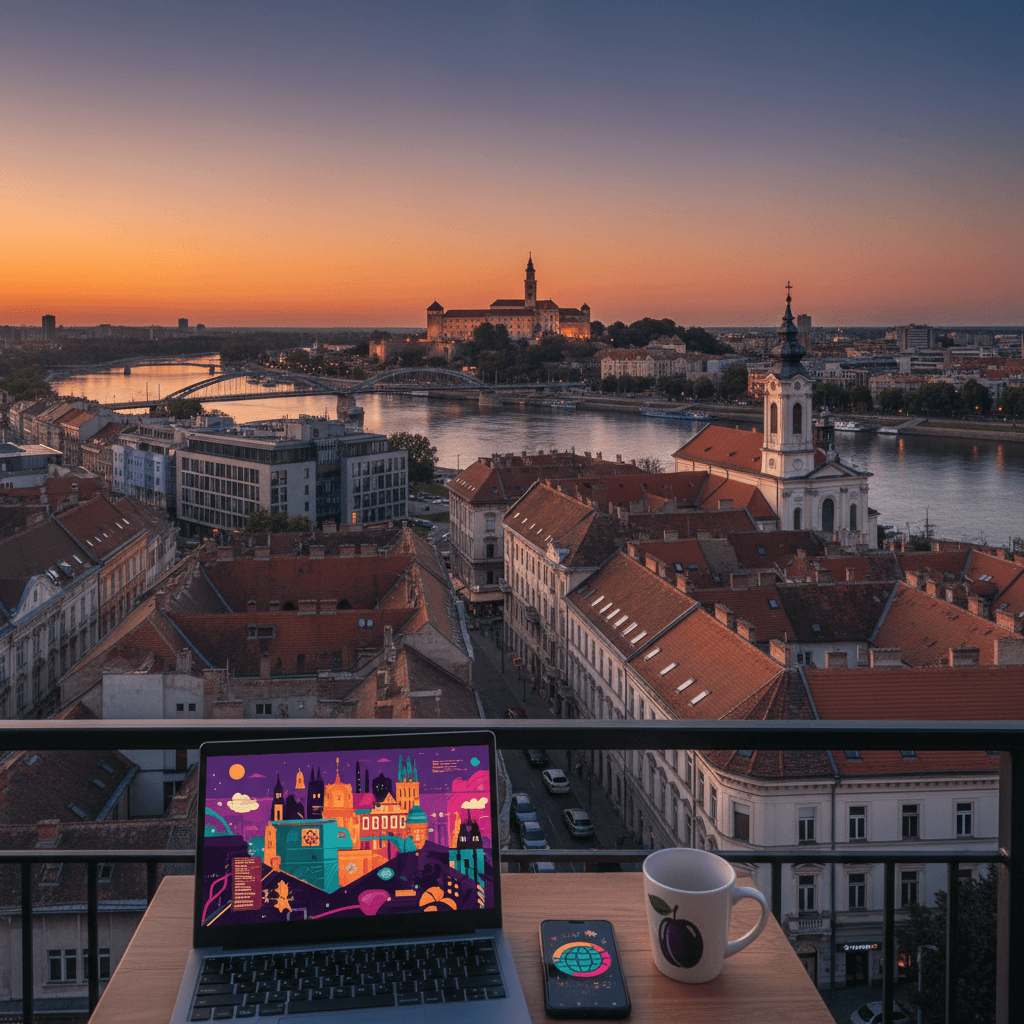
Novi Sad
🇷🇸 Serbia
Novi Sad feels calmer than Belgrade, but it’s not sleepy. The center has Austro-Hungarian facades, café chatter, scooter buzz and that faint smell of espresso drifting out of old buildings, then you hit the Danube and the whole pace drops. Most nomads like it because life is cheaper here, the internet is solid and the city’s small enough that you can cross it on foot without hating your day.
It’s a city that works, honestly, without trying too hard. You’ll find students, artists, freelancers and long-term expats mixing in the same cafés and the social scene feels casual rather than performative, which is a relief if you’ve spent time in places that try too hard to be “international.” The downside is real too, bureaucracy can be maddening and some apartments still have patchy WiFi or tired furniture that looks better in photos than in person.
Budget-wise, Novi Sad stays friendly if you keep your expectations sane. A solo nomad can live decently on €700 to €1,100 a month, depending on rent, how often you eat out and whether you want a newer apartment near the center or something more basic in a quieter district. Not expensive. Not by Balkan standards, anyway.
Best Areas
- Stari Grad: Best for first-timers, walkable, historic, café-heavy, a little touristy, but still the easiest base if you want everything nearby.
- Liman: Good for budget-minded nomads, student energy, parks and cheaper rents, though it feels less polished.
- Petrovaradin: Quieter, more atmospheric, with fortress views and old stone streets, though flats can be smaller and less convenient.
- Grbavica: Residential, green and calm, a solid pick if you want less noise and more routine.
The coworking scene, turns out, is decent even if it’s not huge. Complex Hub, Lynx Coworking, EWA IT Hub, MAXIMUM, Regus and Spaces Works all give you a proper desk, stable WiFi and fewer distractions than a busy café, though many nomads still end up working from places like Coffeedream, Zenit Books, Trčika or Loft Rooftop because the coffee culture is just that good. You can hear cups clinking, chairs scraping and the low hum of people working quietly for hours.
Getting around is easy. The city is flat, bike-friendly and simple to walk, public transport is cheap for non-residents and Crveni Taxi is the name people actually trust when they need a ride. Safety is generally fine, but keep an eye on your stuff at night and don’t expect the bureaucracy to be charming, it isn’t.
Novi Sad is cheap, but not dirt cheap. A solo nomad can live decently here on €700 to €1,100 a month and if you’re happy with a shared flat, market food and a few beers on the river, you can push lower without feeling miserable.
Rent is the big swing factor and honestly, the center still costs less than people expect. One-bedrooms in Stari Grad or around Promenada usually land somewhere in the $245 to $498 range, while outside the center you’ll see more like $176 to $399 and the numbers jump fast if you want a larger place with decent light and a lift.
Typical monthly costs
- Studio, city center: $320 to $335
- 1 bedroom, city center: $245 to $498
- 1 bedroom, outside center: $176 to $399
- Utilities: about $143
- WiFi: about $23
- Gym: $25 to $40
- Cinema ticket: $5 to $7.50
Food is where Novi Sad feels kind to your wallet, weirdly. A casual meal can be $3 to $8, mid-range dinner usually runs $8 to $15 and if you’re cooking most of the time, groceries for two people sit around $300 to $400 a month, though the bakery smell at 8 a.m. will test your discipline every day.
Transport is easy to ignore because the city is flat, walkable and bike-friendly, so many people barely spend anything here. Public buses are free for residents, non-residents pay 100 RSD cash to the driver and the cycle paths make a cheap bike a smarter buy than a taxi for short trips.
Neighborhood feel
- Stari Grad: best for cafés, walkability and first-time arrivals
- Liman: cheaper, student-heavy, good for social types
- Petrovaradin: quieter, artsy and a bit romantic, frankly
- Grbavica: calmer residential choice with a more local feel
- Detelinara: green, practical and usually easier on the budget
Eating out can still get expensive if you do it every day and the café habit here sneaks up on people, espresso after espresso, then a pastry, then another round. If you’re careful, though, Novi Sad stays manageable and that’s the real appeal, decent comfort without the financial hangover you’d get in most European cities.
Novi Sad is easy to split by lifestyle and that matters more than people admit. Some areas are great for laptop life, others get quiet fast after dark and a few just make everyday errands less annoying. Not all good-looking streets are good to live on.
For Nomads
Stari Grad is the safest first choice if you want cafés, fast walks to everything and the best chance of finding a place that still feels alive at 8 p.m. It’s pricier, though and the center can get a little touristy and noisy when the pavement is full of clacking shoes and late-night chatter.
Liman works well if you care more about price than polish, honestly and it’s close to the Danube, parks and a student crowd that keeps the area moving. The tradeoff is that some blocks feel a bit rough around the edges and the whole place leans younger and less curated.
- Stari Grad: Best for cafés, walkability and first-time stays.
- Liman: Best for lower rents and easy park access.
- Around Promenada Mall: Best if you want modern shops, restaurants and a cleaner, more polished feel.
For Expats
Grbavica is where a lot of long-term expats end up because it’s calmer, tree-lined and less chaotic than the center. It’s practical, weirdly enough and you’ll notice more grocery bags, strollers and quiet evenings than bar noise or festival traffic.
Petrovaradin suits people who like old stone streets, fortress views and a slightly more artistic mood, but the flats can be small and daily errands take a bit more planning. The smell of coffee drifts out of the neighborhood cafés, then the streets go still, which some people love and others find a bit too sleepy.
- Grbavica: Quiet, residential and good for longer stays.
- Petrovaradin: Best for character and atmosphere.
- Detelinara: Good if you want a safer, greener area with easier parking.
For Families
Grbavica is probably the easiest family pick because it feels settled, has decent access to schools and services and doesn’t wear you out with constant noise. Detelinara also makes sense if you want more greenery and parking, because weekday life there feels slower and less cramped.
Both areas are less dramatic than the center, which is exactly the point. You’re buying peace, not nightlife.
For Solo Travelers
If you’re in town alone and want to meet people fast, stay in Stari Grad or Liman. Stari Grad gives you the easiest access to bars, bookstores and cafés where someone will almost definitely ask what you do, while Liman feels cheaper and more student-heavy, so the energy is looser and less polished.
Skip anywhere too far from the center unless you already know the city, because late buses are fine but not thrilling and Novi Sad gets very quiet once the evening crowd thins out. That silence can be lovely or it can feel like you’ve missed the last train, depending on your mood.
Novi Sad’s internet is, honestly, one of the city’s best surprises. Fiber is widely available, speeds are usually stable and most nomads report few headaches, though a bad router in an old apartment can still ruin your afternoon with a slow, angry crawl. Not bad at all.
If you need a desk away from your kitchen table, the coworking scene is smaller than Belgrade’s, but it works. The strongest options are Complex Hub in the center, Lynx Coworking, EWA IT Hub, MAXIMUM, plus the pricier but polished Regus and Spaces Works and honestly the difference is mostly in vibe, reception and how many people are chatting over coffee.
- Complex Hub: Central, friendly to freelancers, 24-hour access, solid WiFi.
- Lynx Coworking: 24/7 entry, ergonomic chairs, good if you work odd hours.
- EWA IT Hub: Modern setup, fast internet, decent if you want a cleaner office feel.
- MAXIMUM: Stable connection, attractive workspace, city-center location.
Cafés are a real backup plan here and many of them are laptop-friendly without acting weird about it. People like Coffeedream, Zenit Books, Trčika and Loft Rooftop, then there are plenty of bigger Old Town cafés where you can sit for hours, hear cups clinking, smell espresso and smoke drifting in from the street and still get work done.
Mobile data is cheap enough that you won’t panic if your apartment WiFi has a bad day. The main networks are A1, MTS and Yettel, with prepaid SIMs starting around 300 RSD for 3GB and more generous tourist packs around 1,800 RSD, which, surprisingly, is still decent value for short stays. Buy them at operator stores or corner kiosks, no drama.
Best setup by type
- Light remote worker: A decent café and a prepaid SIM are usually enough.
- Full-time nomad: Pick a coworking space with 24/7 access, then keep a backup SIM.
- Zoom-heavy schedule: Test the apartment WiFi first, because one flaky connection will make you hate your life.
If you’re staying a month or more, ask for a speed test before you sign anything. The good apartments are fine, the bad ones are painfully mediocre and there’s nothing charming about hearing the fan whine while your call freezes.
Novi Sad feels safe in the way a place feels watched by people who actually live there, not just police and cameras. The center, Petrovaradin and the busier streets around Stari Grad are usually fine, though you still shouldn’t leave a phone on a café table and wander off, because petty theft happens, especially in crowded summer evenings when music spills out onto the pavement and everyone’s distracted.
The biggest annoyance is rarely violent crime, it’s the small stuff, late-night taxis that overcharge, dark side streets that feel empty and a little too quiet and the occasional drunk guy outside a bar being louder than he needs to be. Honestly, that’s about the standard urban risk here, not a reason to panic.
Where to go for care
- Clinical Centre of Vojvodina: the main public hospital, handles emergencies and some staff speak English.
- NEW Hospital: modern private-style care with specialist services, cleaner facilities and a calmer feel than the public system.
- 24-hour health centers: useful for urgent, non-life-threatening issues when your doctor’s office is shut.
- Pharmacies: easy to find and staff usually understand enough English to sort out basics.
For anything serious, go straight to the Clinical Centre of Vojvodina and if you want faster service or just less standing around under fluorescent lights that buzz all night, the NEW Hospital is the better bet. Public care is affordable, but wait times can be irritating, paperwork can be clunky and you may end up repeating your symptoms twice because one desk never quite tells the next desk what happened.
Emergency care is handled through 112 and that’s the number you want if things feel urgent. Travelers often find the system workable for basic treatment, though expats usually keep travel insurance anyway, because it makes private visits and follow-ups a lot less painful.
Practical health tips
- Heat: July and August can be brutally hot, so carry water and don’t plan long walks at noon.
- Air quality: winter heating and traffic can leave the air a bit gritty, which, surprisingly, is worse on some calm evenings.
- Medication: bring any prescription drugs in original packaging, with your doctor’s note if possible.
- Emergency prep: save hospital names, your insurance number and 112 in your phone before you need them.
Most nomads handle Novi Sad just fine, honestly, the city is low-drama, walkable and medically manageable. The trick is simple, know where the nearest pharmacy is, don’t ignore a weird fever and avoid the lazy assumption that “small city” means nothing ever goes wrong.
Novi Sad is easy to live in, honestly and that’s half the appeal. The city’s flat, compact and calm compared with Belgrade, so you can walk most places without thinking too hard, then hop on a bike when your legs get tired. Public buses are free for residents, while visitors pay around 70 RSD in cash to the driver, which is cheap enough that nobody complains much.
Walking is the default. Streets in Stari Grad, Liman and around Promenada are pleasant on foot, with wide sidewalks, tree cover in some areas and that steady mix of café noise, scooter hum and church bells drifting across the center. In summer, the heat can stick to your skin by noon and in winter the cold tile feel of station platforms and drafty bus stops gets old fast.
Public transport
- Bus fare: Around 70 RSD for non-residents, cash only from the driver
- Hours: Most lines run about 4:30 AM to midnight
- Apps: Yandex and Moovit are the ones people actually use
The bus network gets you around, but it isn’t glamorous. Schedules can feel a little loose and if you miss the last one, you’re into taxi territory, so check the app before you leave the bar or dinner.
Bikes and taxis
- Bikes: Novi Sad is Serbia’s bike capital, with cycle paths along many main roads
- Bike rental: Around $3 a day for private rentals
- Taxi: Crveni Taxi is the name locals mention most and it takes cards
Biking makes a lot of sense here, especially in spring and early autumn when the air feels clean and the Danube wind cuts through the heat. Turns out, a lot of locals treat the bike lanes like real infrastructure, not decoration and that makes daily life easier than in most Balkan cities.
Getting to and from the airport
- Main airport: Nikola Tesla Airport in Belgrade, about 80 km away
- Transfer options: Bus or taxi, depending on your luggage and patience
That airport transfer is the annoying part, frankly. You’re not flying straight into Novi Sad, so expect an extra leg after landing and plan for it if you’re arriving late or dragging a big suitcase across cobblestones and tramlines, because that trip can feel longer than the distance suggests.
For daily life, most nomads stick to walking, biking and the occasional taxi. It’s simple, it’s cheap and if you’re staying near the center, you probably won’t think about transport much at all.
Novi Sad is easy to live in, mostly because people don’t make a drama out of everyday things. Serbian is the default, English gets you surprisingly far in cafés, coworking spaces and bigger shops, though the minute you’re dealing with paperwork, utility offices or older service workers, the room goes quieter and the hand gestures start. Honestly, that’s normal here.
Most nomads get by with English and a few Serbian basics and locals usually appreciate the effort even if your accent is terrible. Say zdravo for hello, hvala for thanks and molim for please or you’re welcome, then learn račun if you want the bill, because that one saves time at dinner when the waiter’s already drifting away. Weirdly, a couple of words can change the whole tone.
Service is polite but not fussy and nobody’s going to hover over you while you decide on coffee. In smaller shops and government offices, though, things can feel blunt and if you don’t speak Serbian you may end up waiting while someone finds the one person in the building who speaks English. That’s annoying, frankly, but it’s manageable if you stay patient.
What works day to day
- English level: Good in central cafés, coworking spaces and hotels, patchier in local offices and suburban areas.
- Useful apps: Google Translate and Moovit for bus timing when the schedule feels like a suggestion.
- Phones and SIMs: Buy prepaid data at MTS, Yettel or kiosks, it’s cheap and you’ll want it for maps, since public WiFi can be flaky outside the center.
- Body language: People talk with their hands, stand close and interrupt a little, so don’t mistake that for rudeness.
Signage in the city center is usually readable, but you’ll still run into Cyrillic in random places and that can slow you down the first week. If you’re staying longer, learning the alphabet is a smart move, because street names, pharmacy labels and bus stops become much less annoying once your brain stops treating them like code.
Locals tend to be direct, not cold. If someone says they don’t know, they mean it and if they say a taxi will be here in five minutes, keep an eye on the clock because that estimate can wander a bit. The upside is simple, once you’ve got the basics, communication in Novi Sad is pretty relaxed and you won’t spend your life decoding every conversation.
Novi Sad has four real seasons and they don’t behave politely. Summer gets hot and sticky, winter can turn raw and gray and spring and autumn are the sweet spots most nomads circle on the calendar.
May, June and September are usually the best months if you want the city at its easiest. Cafés spill onto sidewalks, the Danube paths are busy but not packed and you can work outside without feeling like your laptop is sitting on a stove.
July and August are another story. They’re hot, often in the mid-30s Celsius and the pavement throws it back at you, so even a short walk from Stari Grad to Liman can leave you sweaty and grumpy, especially in the afternoon when the air feels thick and still. That’s also when EXIT Festival hits, which is fun if you’re here for noise and crowds, less fun if you need sleep.
Best Months
- April to June: Mild weather, long daylight and good café weather, though spring rain can come hard and fast.
- September to mid-October: Probably the nicest stretch, warm days, cool evenings and fewer tourists.
- December to February: Cold, gray and sometimes icy, but cheaper and quieter if you don’t mind the dark.
Winter isn’t brutal by Balkan standards, but it can feel annoying. The cold bites when the wind comes off the river, old buildings get chilly indoors and you’ll notice the clack of boots on frozen sidewalks, the smell of wood smoke and the occasional blast of exhaust at bus stops.
Spring can be gorgeous, though honestly it’s messy too, because rain shows up without much warning and the temperature swings enough to make packing a headache. Bring layers, a compact umbrella and shoes you don’t mind getting splashed on the cheap, slightly cracked pavements around the center.
If you’re planning a longer stay, aim for late spring or early autumn and skip the worst of the heat. For festival people, July works, just book early because accommodation gets snapped up fast and prices climb, which, surprisingly, happens in a city that’s still very affordable most of the year.
Novi Sad is easy to like and a little harder to leave. The city runs on café hours, bike wheels on flat streets and the smell of grilled meat drifting out of tiny restaurants, though the bureaucracy can still chew up your patience if you need paperwork or permits.
Money-wise, it’s friendly. A solo nomad can live decently on €700 to €1,100 a month if you rent a private flat and eat out sometimes and shared housing can push that lower. Basic utilities run around $143, WiFi about $23 and a casual meal is often $3 to $8, which makes long stays feel a lot less painful.
Where to stay
- Stari Grad: Best for first-timers, with walkable streets, old Austro-Hungarian buildings and plenty of cafés, though it gets touristy and quieter late at night.
- Liman: Cheaper, student-heavy and good if you want parks near the Danube, but it feels less polished, honestly, than the center.
- Petrovaradin: Great if you like character and fortress views, though apartments can be smaller and errands take more effort.
- Grbavica: Calm, residential and popular with expats who want trees and sleep, not noise.
- Detelinara: Green, practical and usually easier on the budget, with parking that locals actually appreciate.
Internet is, weirdly, one of the least stressful parts of living here. Fiber is common, speeds are usually solid and coworking spots like Complex Hub, Lynx Coworking, EWA IT Hub, MAXIMUM, Regus and Spaces Works give you backup when your apartment WiFi acts up, which it occasionally does.
If you’d rather work from cafés, Novi Sad handles that well too, especially places like Coffeedream, Zenit Books, Trčika and Loft Rooftop. Bring headphones, because the clatter of cups, low Serbian conversation and the occasional chair scrape can get loud fast and some spots are friendlier to laptops than others.
Getting around
- Walking: The city is flat and compact, so you’ll walk more than you expect.
- Bikes: Novi Sad is Serbia’s bike city, with cycle paths and cheap rentals around $3 a day.
- Buses: Free for residents, 100 RSD for non-residents, cash to the driver.
- Taxis: Crveni Taxi is reliable and takes cards.
Safety is generally fine in the center, though you should still avoid empty streets late at night. Healthcare is decent for the region, with Clinical Centre of Vojvodina for emergencies, NEW Hospital for modern private-style care and pharmacies everywhere, often with English-speaking staff.
SIM cards are cheap. VIP, MTS and Yettel all work and you can grab a prepaid package in a kiosk or phone shop without much drama. The city feels calm in the day, then a bit louder at night, with scooters buzzing, taxis honking and summer heat sticking to your skin long after sunset.
Need visa and immigration info for Serbia?
🇷🇸 View Serbia Country GuideEasy Landing
Settle in, no stress