Nizhny Novgorod
🇷🇺 Russia
The Heart of the Volga
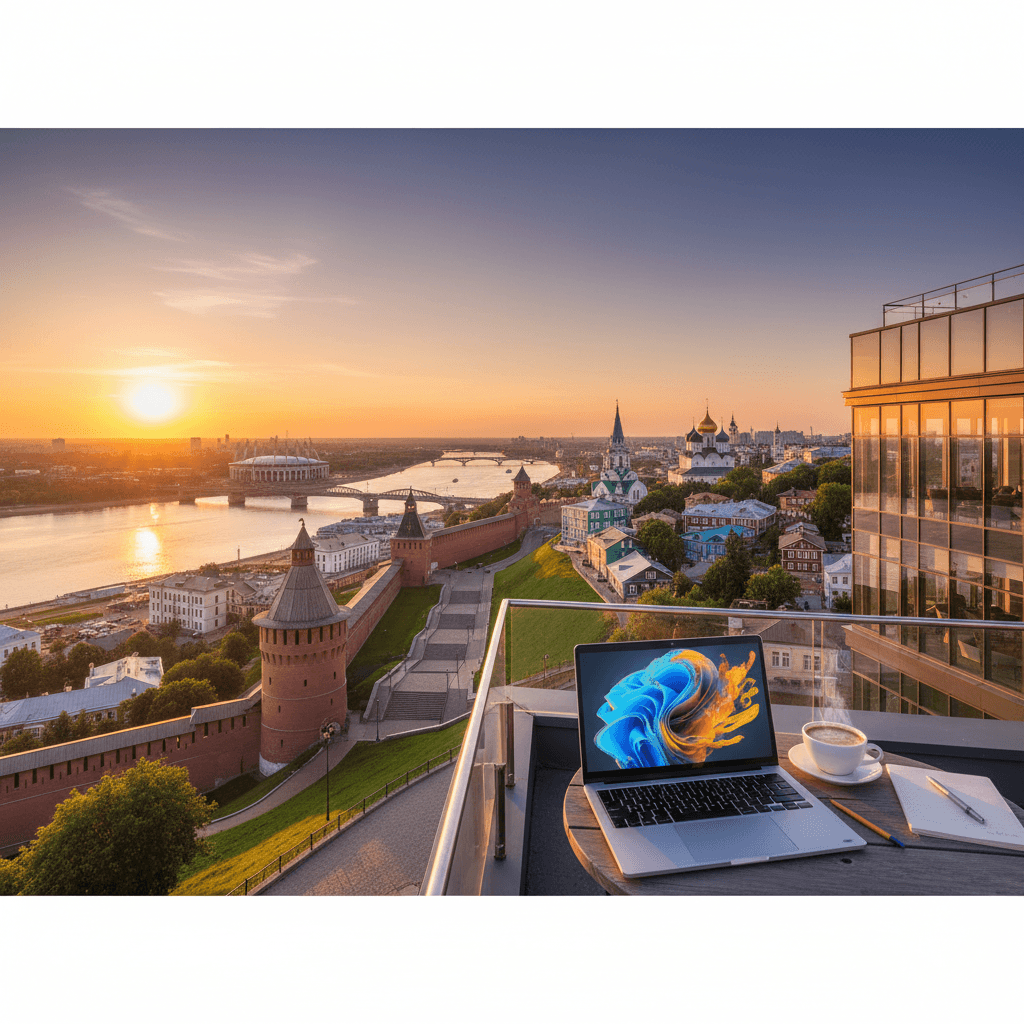
Nizhny Novgorod isn't just another Russian city; it's the country's best kept secret for anyone who finds Moscow too frantic and St. Petersburg too museum-like. Often called the "Capital of Sunsets," this city sits at the dramatic confluence of the Volga and Oka rivers. It feels grounded and authentic, trading the flashy pretension of the capital for a slower, more deliberate pace of life. You'll find a striking balance here between the heavy stone walls of the 16th-century Kremlin and a gritty, creative energy that pulses through its renovated industrial spaces.
The vibe is distinctly "Real Russia." It's a place where you can spend your morning working from a sleek cafe on Rozhdestvenskaya Street and your afternoon wandering through the Nizhny Novgorod Fair (Yarmarka), which feels like stepping back into a 19th-century merchant hub. For nomads, the appeal lies in this duality. It has the infrastructure of a major tech hub, including a metro system and reliable 30 to 70 Mbps internet, but it retains a cost of living that makes a comfortable lifestyle surprisingly accessible.
The Nomad Experience
Living here feels safe and predictable in the best way. The transit system is a lifeline, especially during the biting winters. Most nomads find themselves gravitating toward the Kanavinsky District near the Moskovskaya Metro. It's practical, well-connected, and puts you right near the main train station. If you prefer soul over convenience, the area around the Kremlin offers winding streets and historic charm, though you'll pay a premium for the view.
There are a few quirks to navigate. You won't get far without a VPN, as many Western sites remain blocked, and English isn't widely spoken once you leave the main tourist drag. You'll want Yandex Go downloaded for rideshares and Google Translate ready for everything from grocery shopping to negotiating a lease. Despite the technical hurdles, the warmth of the local community and the sheer lack of tourist crowds make the effort feel rewarded.
Cost of Living Breakdown
Nizhny Novgorod is exceptionally budget-friendly compared to European hubs. You can live well here on roughly RUB 5000 per day, covering your workspace, solid meals, and transit. Here is how the monthly math usually shakes out:
- Budget Tier (RUB 50,000): This covers a shared apartment or a modest studio in further districts (RUB 20,000), plenty of street food from the markets (RUB 15,000), and basic transport.
- Mid-range Tier (RUB 80,000): The sweet spot for most nomads. You can afford a nice 1BR in Kanavinsky (RUB 35,000), regular meals at mid-range cafes on Rozhdestvenskaya (RUB 25,000), and a dedicated coworking desk.
- Comfortable Tier (RUB 120,000+): This gets you a central apartment near the Kremlin (RUB 50,000), upscale dining at places near the Manor of Rukavishnikov, and enough left over for weekend trips.
Neighborhoods for Working and Living
Choosing your base depends on whether you value a quick commute or a historic morning walk. Most expats recommend these three areas:
Kanavinsky District
- Best For: Practical nomads and transit junkies.
- The Vibe: Busy, functional, and very local.
- Pros: Best transit links in the city via Moskovskaya Metro; lower rent prices starting at RUB 25,000; plenty of supermarkets.
- Cons: Lacks the "Old World" aesthetic of the city center.
Kremlin & City Center
- Best For: Solo travelers and history buffs.
- The Vibe: Vibrant, walkable, and prestigious.
- Pros: Steps away from the Sirotkin House and major landmarks; incredibly walkable.
- Cons: Rent jumps to RUB 40,000 to 60,000; can get noisy with weekend crowds.
Rozhdestvenskaya Street
- Best For: Social butterflies and cafe dwellers.
- The Vibe: The heart of the city's nightlife and dining scene.
- Pros: The best concentration of WiFi-enabled cafes and bars; beautiful architecture.
- Cons: Nightly noise from bars can be a dealbreaker if your windows face the street.
Practical Realities
The best time to arrive is between June and September. The weather is mild, the river walks are lively, and the sun stays up late. If you're here in winter, the metro is your best friend; it's clean, warm, and remarkably efficient. For work, coworking spaces in the business centers typically charge RUB 500 to 1000 for a day pass. While cafe hopping is popular, speeds can be hit or miss, so always run a quick speed test before settling in for a long Zoom call. Finally, remember that Western bank cards are currently a no-go. You'll need to rely on cash, local Mir cards, or specific fintech workarounds to keep your ruble supply steady.
The Price of Authenticity
Nizhny Novgorod is where you go when you want the grandeur of Moscow without the eye watering price tag. It is a city that rewards the budget conscious nomad who is willing to trade a bit of convenience for a deeply authentic Russian experience. While the geopolitical situation has made banking a bit of a puzzle, the local cost of living remains remarkably low for a city of this caliber.
Most nomads find they can live comfortably here on about RUB 80,000 per month. If you are sticking to a strict budget, you can scrape by on RUB 50,000 by sharing an apartment and sticking to the legendary street food at the Nizhny Novgorod Fair. On the flip side, RUB 120,000 a month buys you a high end lifestyle with a central apartment near the Kremlin and nightly dinners on Rozhdestvenskaya Street.
Breaking Down the Monthly Budget
To give you a better idea of how your money moves, here is what a typical mid range nomad budget looks like:
- Housing: Expect to pay between RUB 35,000 and 45,000 for a solid one bedroom apartment. Prices drop significantly if you head across the river to the Kanavinsky District.
- Food and Drink: A mix of home cooking and mid range dining usually totals around RUB 25,000. A quick lunch at a local stolovaya might only cost RUB 400, while a nice dinner for two with drinks hits closer to RUB 3,000.
- Connectivity and Work: A day pass at a local coworking space runs between RUB 500 and 1,000. Add in a local SIM card with a heavy data plan for around RUB 800 a month.
- Transportation: Public transit is a steal at RUB 30 per ride. Even daily Yandex Go rides across town rarely exceed RUB 500.
Where to Plant Your Flag
Your neighborhood choice dictates your daily spend and your stress levels. Here are the three main zones nomads gravitate toward:
Kanavinsky District
- Best For: Practical nomads and transit junkies.
- Rent: RUB 25,000 to 40,000 for a studio or one bedroom.
- The Vibe: It is less touristy and more functional. Being near the Moskovskaya Metro station means you can get anywhere in the city fast. It is safe, affordable, and puts you right next to the major markets.
The Kremlin Area
- Best For: History buffs and short term stays.
- Rent: RUB 40,000 to 60,000.
- The Vibe: This is the heart of the action. You are steps away from the Sirotkin House and the best views of the Volga. It is walkable and vibrant, though it gets crowded and noisy on weekends.
Rozhdestvenskaya Street
- Best For: Social butterflies and foodies.
- Rent: RUB 45,000 to 65,000.
- The Vibe: This is the cafe culture hub. If you want to walk out of your door and be in a bar or a high end restaurant, this is it. Just be prepared for the nightlife noise that comes with the territory.
The Digital Infrastructure
Internet speeds in Nizhny are generally impressive, averaging between 30 and 70 Mbps. Most cafes offer free WiFi, though the quality varies wildly. Many travelers recommend testing the connection at a spot before settling in for a four hour deep work session. You will absolutely need a reliable VPN to access Western social media and news sites, as these are blocked locally.
For a dedicated workspace, look for tech hubs in the Kanavinsky District. While the coworking scene is smaller than in St. Petersburg, the spaces that do exist are professional and affordable. If you prefer working from cafes, the areas around the Kremlin offer the most nomad friendly spots with decent table space and power outlets.
Practical Survival Tips
Banking is the biggest hurdle right now. Western cards like Visa and Mastercard won't work at local ATMs or shops. You will need to rely on cash or look into local fintech options like Mir. Most expats suggest carrying plenty of cash for smaller transactions, especially at the authentic local markets where you will find the best produce prices.
Getting around is remarkably easy. The metro system is clean, fast, and warm, which is a lifesaver during the biting winter months when temperatures can hit -10°C. For everything else, download the Yandex Go app; it is the local equivalent of Uber and works flawlessly for both rides and food delivery.
For the Pragmatic Nomad: Kanavinsky District
If your priority is productivity and staying on budget, the Kanavinsky District is the most logical base. It isn't the prettiest part of town, but it's the city's functional heart. You'll be right next to Moskovskaya Metro, the main transit hub that connects the lower city to the historic upper city in minutes. Most nomads find this area the easiest for day to day life because everything is within walking distance, from massive supermarkets to local malls.
- Daily Spend: Around RUB 2,500 for a modest lifestyle.
- Rent: Expect to pay between RUB 25,000 and 40,000 for a decent studio or one bedroom apartment.
- Why it works: You get the fastest access to coworking spaces and the best internet reliability in the modern business centers nearby. It's safe, predictable, and keeps your overhead low while you focus on work.
For Solo Travelers and Culture Seekers: Rozhdestvenskaya Street
For those who want to step out of their front door and immediately feel like they're in a Russian postcard, this is the spot. Rozhdestvenskaya Street is a strip of imperial architecture, boutique cafes, and art galleries. It's the social center of the city, located right between the riverfront and the hill leading up to the Kremlin. You'll spend more here, but the trade off is a high walkability score and a constant stream of things to do.
- Vibe: Historic, social, and slightly bohemian.
- Dining: You're surrounded by mid range eateries where a solid meal costs RUB 800 to 1,500.
- The Trade-off: It can get noisy on Friday and Saturday nights. If you're a light sleeper, look for an apartment in the courtyards rather than one facing the main street.
For Families and Long-Term Expats: The Kremlin Area
The upper city plateau surrounding the Kremlin is where you'll find the most prestigious addresses. It's quiet, green, and feels significantly more "upscale" than the lower districts. Families often choose this area because of the proximity to parks, the Sirotkin House, and the Manor of Rukavishnikov. It feels like a small village within a larger city, far removed from the grit of the industrial zones.
- Rent: Expect to pay a premium, usually RUB 40,000 to 60,000 for a quality apartment.
- Atmosphere: Very safe and walkable, with easy access to the Nizhny Novgorod Fair (Yarmarka) for weekend outings.
- Logistics: While it's beautiful, it can get crowded with tourists during the summer months, especially around the Kremlin walls.
Practical Living Specs
Regardless of where you land, keep a few numbers in mind for your monthly planning. A mid range lifestyle for a solo nomad usually totals about RUB 80,000. This covers a private 1BR apartment for 35k, a healthy food budget of 25k, and 20k for transport and coworking fees. If you're tightening the belt, you can survive on RUB 50,000 by sharing a flat and sticking to street food like the RUB 200 snacks found at the local markets.
Getting around is cheap and efficient. A ride on the metro or a bus is only about RUB 30, and even a cross city trip via Yandex Go usually stays under RUB 500. Just remember that while the city is safe, you'll need a VPN to access most Western social media and work tools. Most cafes offer free WiFi with speeds between 30 and 70 Mbps, but it's always smart to test the connection before you commit to a long afternoon of Zoom calls.
Connectivity and Speed
Nizhny Novgorod delivers surprisingly stable internet for a city of its size, though it requires a bit of prep work before you land. You can expect average speeds between 30 and 70 Mbps in most central apartments and modern cafes. While that's plenty for video calls and heavy uploads, the local network landscape has its quirks. Most nomads find that while the free WiFi in malls, metro stations, and public squares is convenient, it often requires a Russian phone number for SMS authentication.
The biggest hurdle for remote work here isn't the speed, it's the access. You'll need a reliable VPN installed on all your devices before you arrive to access Western social media and many international work tools. Travelers often recommend having at least two different VPN providers as backups. For mobile data, grab a local SIM from MTS or Beeline at the airport or near the Moskovskaya Metro. If you prefer the digital route, Airalo eSIMs work well for immediate data, though a local physical SIM is usually cheaper for long stays.
Coworking Spaces and Work Hubs
The coworking scene is concentrated around the tech hubs and business districts. If you're staying in the Kanavinsky District, you'll find the most practical options near the transport hubs. These spaces are geared toward local professionals and tech startups, offering a more focused atmosphere than the social hubs in Moscow.
- Monthly Memberships: Most spots offer a trial day before you commit to a full month, which usually runs significantly cheaper than daily rates.
- Amenities: Most spaces provide high speed fiber, coffee, and quiet zones, though English speaking staff can be hit or miss.
For those who prefer a more central vibe, there are smaller "office clusters" near the Nizhny Novgorod Kremlin. These aren't always branded as fancy coworking spaces but often function as shared offices where you can rent a desk for a few days. Always test the specific desk's WiFi via Speedtest.net before paying for a weekly or monthly pass, as signal strength can vary wildly between rooms in older imperial buildings.
The Cafe Office Culture
If you like the hum of a coffee shop, Rozhdestvenskaya Street is your best bet. It's lined with cafes that are generally nomad friendly during the morning and early afternoon. However, the "laptop lifestyle" isn't as ubiquitous here as it is in Bali or Lisbon. Some smaller spots might give you a side eye if you take up a four person table for six hours on a single espresso.
Expats recommend sticking to larger chains or modern specialty coffee shops for longer sessions. The WiFi in these spots is usually decent, but it's always smart to have your mobile hotspot ready as a backup. During the winter, these cafes become the de facto living rooms for the city's remote workers, offering a warm place to grind when it's -10°C outside. Just keep in mind that many cafes turn into lively social spots or bars after 6:00 PM, especially on Rozhdestvenskaya, so you'll likely need to migrate to a dedicated workspace or back to your apartment for late night calls.
Practical Checklist for Remote Workers
- Power: Russia uses Type C and F plugs (standard European). Power outages are rare in the city center.
- Apps: Download Yandex Go for rideshares and Google Translate for reading menus or signs.
- Cost: Budget around RUB 5,000 for a mix of coworking passes and cafe spending per month if you aren't working exclusively from home.
- Backup: If your apartment WiFi fails, the Moskovskaya Metro hub is known for having some of the most reliable public signals in the city.
Personal Safety and Street Smarts
Nizhny Novgorod feels remarkably secure, often drawing comparisons to Moscow in terms of its orderly atmosphere and reliable public infrastructure. Most nomads find the city center and the Kanavinsky District perfectly safe for walking, even after the sun goes down. The local metro system is a lifeline here; it is clean, well lit, and stays warm during the biting winter months. While the streets are generally quiet, it is still smart to stick to well lit main drags like Bolshaya Pokrovskaya or Rozhdestvenskaya Street if you are out late.
Taxis and rideshare apps are the preferred way to get around after midnight. Using Yandex Go is the standard move for expats and locals alike, as it removes the guesswork of pricing and provides a digital trail of your journey. You will rarely run into trouble in the main tourist or tech hubs, though like any industrial city, the outskirts can feel a bit desolate. Just keep your wits about you in crowded markets where pickpockets occasionally look for easy targets, and you will likely find the city much calmer than its European counterparts.
Healthcare and Medical Services
If you catch a cold or need basic supplies, pharmacies (Apteka) are on nearly every corner. They are easy to spot by their green crosses. Many common medications are available over the counter, but for anything specific, you will want to have a translation app ready since English proficiency among pharmacists is hit or miss. For emergencies, the universal number is 112.
For more serious medical needs, the city has a range of public and private clinics. Most nomads and expats lean toward private facilities to ensure a faster experience and a higher chance of finding an English speaking doctor. While the city is a major regional hub, the healthcare quality is solid but mid tier compared to Moscow. It is a good idea to chat with local expat groups on Telegram or Facebook for specific clinic recommendations, as the "best" facility can change based on which specialists are currently on staff.
Staying Connected and Digital Security
Safety in Nizhny Novgorod also extends to your digital life. While the 30 to 70 Mbps speeds in most central cafes are great for getting work done, the internet environment has some quirks. A VPN is not just a suggestion; it is a requirement if you want to access Western social media or specific news sites. Most nomads set this up before they even land in Russia to avoid any connectivity headaches.
For mobile data, picking up a local SIM from MTS or Beeline is the most cost effective route, though Airalo works well for those who prefer an eSIM. Just remember that because of international sanctions, your Western credit cards likely won't work at the pharmacy or the doctor's office. You will need to rely on cash or local fintech solutions like a Mir card to pay for your healthcare or everyday needs.
Practical Safety Checklist
- Emergency Number: Dial 112 for all emergency services.
- Ridesharing: Download Yandex Go for safe, tracked transport at night.
- Digital Safety: Install a reliable VPN before arrival to bypass blocked sites.
- Payments: Carry Russian Rubles (RUB) for medical emergencies, as Western cards are blocked.
- Winter Gear: Safety in winter means having high quality boots; the sidewalks can get incredibly icy between December and February.
Public Transit: The City's Lifeline
If you've spent any time in Moscow, the transit system in Nizhny Novgorod will feel familiar. It's fast, clean, and surprisingly reliable, even when the winter temperatures drop to -10°C. The Metro is the star of the show here. While it doesn't cover every inch of the city, the Moskovskaya station serves as the primary hub, connecting the upper and lower parts of the city across the Oka River. Most nomads find the metro the best way to avoid the occasional traffic bottleneck on the bridges.
For everywhere the metro doesn't reach, a network of buses and marshrutkas (fixed-route minibuses) fills the gaps. A single ride on public transport usually costs around RUB 35. It's cheap, efficient, and keeps you out of the snow. If you're staying in the Kanavinsky District, you'll have the best access to these hubs, making it easy to zip over to the historic center for a meeting or a coffee.
Ride-Hailing and Apps
When the buses stop running or you're carrying groceries, Yandex Go is the only app you really need. It's the local equivalent of Uber and works seamlessly. A typical trip across town will set you back between RUB 200 and RUB 500, depending on the time of day and demand. It's generally considered safer and more transparent than flagging down a random car on the street, especially late at night.
One thing to keep in mind: because of current banking restrictions, Western credit cards won't work in the app. You'll need to set your payment method to cash or use a local Mir card if you've managed to set one up. Most drivers are used to cash, just try to have smaller bills ready.
Walking the Historic Core
Nizhny Novgorod is a tale of two elevations. The "Upper City," where you'll find the Kremlin and Rozhdestvenskaya Street, is incredibly walkable. You can spend an entire afternoon wandering between 16th-century fortifications and modern cafes without ever needing a vehicle. The views over the Volga and Oka confluence are best experienced on foot along the embankments.
However, the city is hilly. If you're walking from the riverside up to the Kremlin area, prepare for a bit of a workout. During the summer months of June through September, this is the best way to see the city. In the winter, those same sidewalks can get icy, so nomads usually retreat to the metro or taxis to get around safely.
Arrival and Departure
Getting into the city from the airport is straightforward. You can grab a taxi via the Yandex app for a direct ride to the Kremlin area or take a combination of buses and the subway if you're watching your budget. If you're arriving by train from Moscow, you'll land right at the main station in the Kanavinsky District. From there, the metro is right at your doorstep, and most major hotels like the Courtyard by Marriott or Alexander Garden are just a short ride away.
- Metro/Bus Ride: RUB 35
- Average Rideshare: RUB 200 to 500
- Best for walking: Rozhdestvenskaya Street and the Kremlin
- Primary Transport App: Yandex Go
The Linguistic Landscape
Nizhny Novgorod is a deeply authentic slice of Russia, which means it hasn't been polished for Western tourists in the same way you might find in central Moscow or St. Petersburg. Russian is the absolute king here. While you'll find English speakers among the younger tech crowd in Kanavinsky District or at the university hubs, the average person on the street, shopkeepers, and transit workers likely won't speak much English at all.
Most nomads find that getting by requires a mix of technology and patience. You'll want to have Google Translate or Yandex Translate downloaded for offline use. The camera translation feature is a lifesaver for reading menus at spots along Rozhdestvenskaya Street or deciphering signs at the Nizhny Novgorod Fair. If you make an effort with basic greetings like Privet (hello) or Spasibo (thanks), locals generally become much more helpful.
Digital Connectivity and the VPN Factor
The internet infrastructure in Nizhny is surprisingly robust. You can expect average speeds between 30 and 70 Mbps in most central apartments and cafes. Free WiFi is common in shopping malls, major squares, and even on parts of the metro system, similar to the setup in Moscow. However, the connection in smaller cafes can be hit or miss, so it's smart to run a quick test on Speedtest.net before settling in for a four hour deep work session.
The biggest hurdle for communication isn't the speed, but the access. Because of current restrictions, a VPN is mandatory if you need to access Western social media, news sites, or certain work tools. Expats recommend setting up at least two different VPN providers before you arrive, as some services get throttled or blocked periodically. Without one, your digital life will feel very isolated.
Staying Mobile: SIMs and Apps
Don't rely on international roaming; it’s expensive and often unreliable here. Picking up a local SIM card is the first thing you should do. Providers like MTS, MegaFon, or Beeline have kiosks everywhere, including near the Moskovskaya Metro station. You'll need your passport to register a card. If your phone supports it, an eSIM from a provider like Airalo can get you through the first few days, but a local number is better for using regional apps.
Communication for daily life happens almost entirely through apps. You'll need:
- Yandex Go: This is the local lifeline for rideshares and food delivery. Since Western credit cards are currently blocked, you'll likely be paying in cash or using local fintech workarounds.
- Telegram: This is how everyone communicates. Whether it's a landlord, a new friend, or a local nomad meetup group, it happens on Telegram.
- 2GIS: While Google Maps works, 2GIS is often more accurate for local business hours and finding specific entrances in large Soviet era buildings.
Navigation and Social Etiquette
Public transport is a major highlight. The metro is clean, fast, and warm, costing about RUB 30 per ride. While the announcements are in Russian, the system is intuitive enough that you won't get lost. In the Kremlin area and along the river, the city is highly walkable, though you should keep your translation app ready for street signs which are rarely transliterated into the Latin alphabet.
Socially, the vibe is more reserved than in the West. People might not smile at strangers on the street, but that’s just the local culture, not a sign of unfriendliness. If you're looking to meet people, head to coworking spaces in the business centers or look for expat groups on platforms like InterNations. Most social interaction for nomads happens over coffee in the trendy spots near the Manor of Rukavishnikov, where the atmosphere is a bit more international.
The Sweet Spot: When to Touch Down
Nizhny Novgorod isn't a city you want to visit on a whim in the dead of winter unless you have a high tolerance for the Siberian chill. To get the most out of the Volga River views and the walkable historic center, aim for June, August, or September. These months offer the best balance of mild temperatures and sunny skies, perfect for working from a cafe terrace on Rozhdestvenskaya Street or taking your laptop to the Kremlin walls.
July is technically the warmest month, with temperatures hovering between 20°C and 25°C, but it can get humid and occasionally crowded with domestic tourists. If you prefer a crisp, focused atmosphere, September is a nomad favorite. The autumn colors along the river embankment are stunning, and the summer heat fades into a comfortable cool that makes long walks to the Nizhny Novgorod Fair much more pleasant.
The Four Seasons Breakdown
- Spring (April to May): The thaw can be messy. Locals call it "rasputitsa," where melting snow and rain turn unpaved areas into mud. It's affordable, but the city looks a bit grey until the leaves pop in late May.
- Summer (June to August): This is peak season. You’ll get long daylight hours and a lively social scene. Expect to pay a bit more for short term rentals in the Kremlin area, but the trade off is a city that feels truly alive.
- Autumn (September to October): September is golden. By late October, the wind off the Volga starts to bite, and you'll want to move your workstation away from drafty windows.
- Winter (November to March): It’s a literal freezer. Temperatures often sit around -10°C in January. However, the city is "stranded-proof" thanks to a deep, warm metro system and efficient delivery apps like Yandex Go that keep life moving even in a blizzard.
The Nomad's Survival Guide to the Climate
While the weather is manageable for most of the year, the infrastructure is what really dictates your stay. Most nomads find that the variable cafe WiFi is more of a hurdle than the rain. If you’re visiting during the colder months, prioritize staying in the Kanavinsky District or near Moskovskaya Metro. Being close to the metro means you can zip across the city without ever facing the wind chill.
Regardless of when you arrive, remember that Russia's digital climate requires as much preparation as the physical one. You'll need a reliable VPN to access Western social media and sites that are blocked locally. Many expats recommend setting this up before you land, as some VPN provider sites are also restricted once you're on a local connection.
Budgeting for the Elements
Your daily spend won't fluctuate wildly with the weather, but your lifestyle might. In the summer, you’ll spend RUB 200 to 500 on quick rideshares between the upper and lower parts of the city. In the winter, you might find yourself sticking to the RUB 30 metro rides to avoid traffic and ice. A comfortable monthly budget of RUB 120,000 allows you to retreat into upscale restaurants or cozy coworking spaces when the weather turns sour, ensuring your productivity doesn't dip with the thermometer.
Cost of Living
Nizhny Novgorod is a breath of fresh air for your wallet, especially if you are transitioning from Moscow or St. Petersburg. You can live quite comfortably here on about RUB 80,000 a month, which covers a decent one bedroom apartment and plenty of meals out. If you are on a tighter budget, RUB 50,000 is doable if you stick to shared housing and the local street food scene.
Daily expenses typically break down like this:
- Housing: A studio in the practical Kanavinsky District runs between RUB 25,000 and 40,000. If you want to be in the thick of the historic center, expect to pay RUB 40,000 to 60,000.
- Food: A quick bite at the Nizhny Novgorod Fair (Yarmarka) costs RUB 200 to 400. A mid range dinner on Rozhdestvenskaya Street averages RUB 1,500, while upscale riverfront dining hits RUB 2,000 and up.
- Transport: Public transit is a steal at RUB 30 per ride. Even long rideshares via Yandex Go rarely exceed RUB 500.
Connectivity and Remote Work
The internet is generally reliable, with average speeds between 30 and 70 Mbps. Most cafes and malls offer free WiFi, and the metro system keeps you connected while you move. However, the biggest hurdle for nomads is the digital wall. You absolutely must have a VPN installed before you arrive to access Western social media and many international banking sites.
For a dedicated workspace, head toward the business hubs in the Kanavinsky District. Coworking day passes cost between RUB 500 and 1,000. While cafe culture is growing, speeds can be hit or miss, so it is smart to run a quick test before you settle in for a four hour Zoom marathon. For mobile data, pick up a local SIM from MTS or Beeline, or set up an Airalo eSIM if your phone supports it.
Navigating the Neighborhoods
Choosing where to plant your flag depends on whether you value aesthetics or efficiency.
- Kanavinsky District: This is the functional heart of the city for expats. It is anchored by the Moskovskaya Metro station, making it the ultimate transit hub. It is safe, affordable, and puts you close to local amenities without the tourist markup.
- Kremlin Area: This is the historic soul of the city. It is incredibly walkable and puts you steps away from the Sirotkin House and local markets. It gets crowded on weekends, and you will pay a premium for the view.
- Rozhdestvenskaya Street: Perfect if you want to be surrounded by the city's best cafes and nightlife. Just be aware that the noise levels stay high well into the night.
Practical Logistics
The city's transit system is a point of pride. The metro is clean, warm, and fast, which is a lifesaver during the biting winter months when temperatures can drop to -10°C. For everything else, Yandex Go is the go to app for both taxis and food delivery. Most nomads find the city very safe, though it is always wise to stick to well lit areas and use rideshares late at night.
Banking is currently the most complex part of staying here. Because of international sanctions, Western credit and debit cards generally won't work. You will need to rely on cash or look into local fintech options like Mir. Most travelers recommend bringing enough cash to exchange for your initial weeks while you figure out a local payment setup.
Language and Culture
Do not expect much English once you leave the main tourist hotels. Most locals are friendly but speak only Russian, so having Google Translate downloaded for offline use is a lifesaver. Learning a few basics like Privet (hello) and Spasibo (thanks) goes a long way. When visiting the city's many stunning Orthodox churches, remember to dress modestly, as these are active places of worship rather than just museums.
The best time to visit is during the window of June through September. The weather is mild and sunny, perfect for exploring the Volga riverbanks before the heavy snow arrives in December.
Need visa and immigration info for Russia?
🇷🇺 View Russia Country GuideEasy Landing
Settle in, no stress