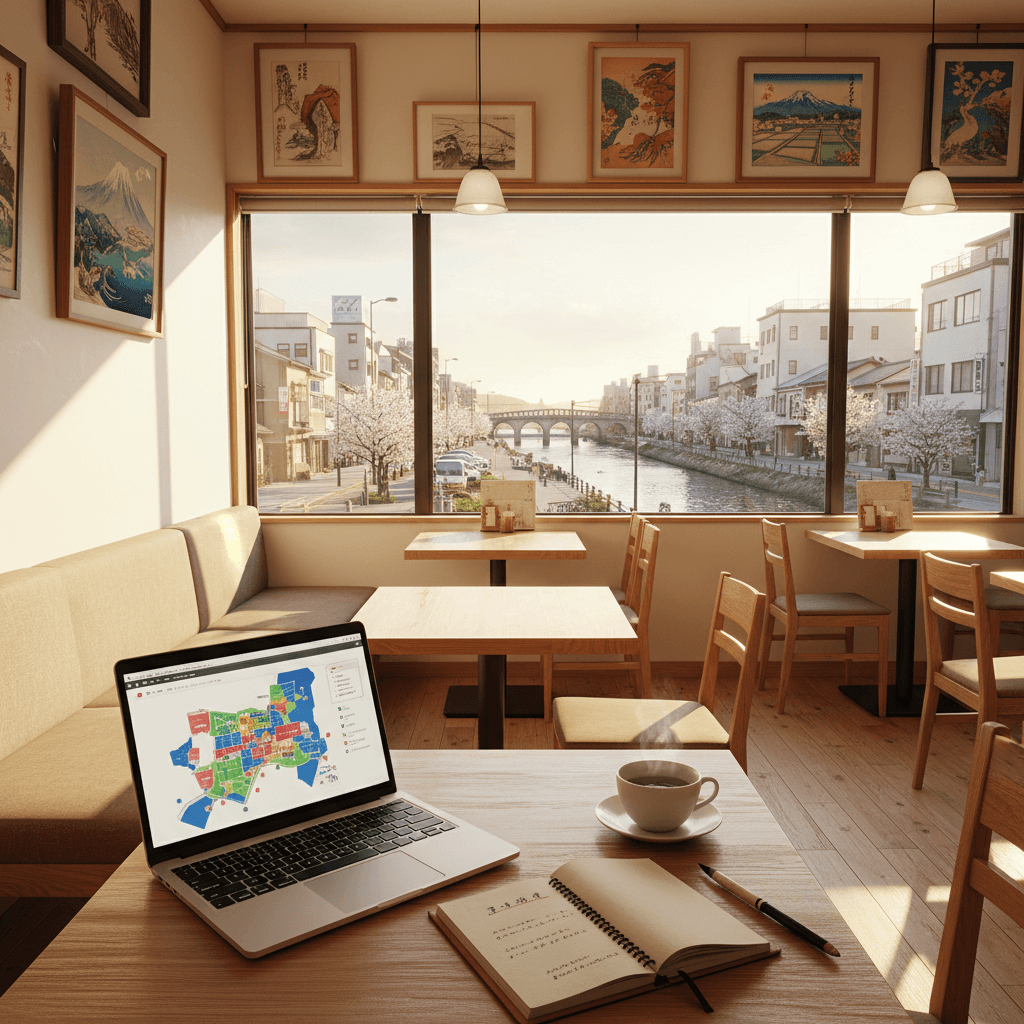
Niigata
🇯🇵 Japan
The Coastal Underdog
If you're tired of the neon sensory overload in Tokyo or the crowded temples of Kyoto, Niigata is where you go to breathe. Located on the western coast along the Sea of Japan, this city feels like a well kept secret among those who value space and authenticity over tourist traps. It is a place of wide rivers, dramatic sunsets over the water, and some of the best agricultural yields in the country. You won't find a massive, pre-packaged nomad scene here, but that is exactly why it works. It is for the person who wants to actually live in Japan, not just visit it.
The vibe is noticeably more relaxed than the Pacific side of the island. People move a bit slower, the air tastes saltier, and there is a quiet pride in the local crafts. It is a city defined by its relationship with water; the Shinano River cuts through the center, lined with paths where you will see locals jogging or cycling at dusk. While it feels like a sleepy port town in some corners, the infrastructure is surprisingly robust. You get the 99% 5G coverage typical of Japanese urban centers, making it a reliable base for remote work while feeling worlds away from the rat race.
The Entrepreneurial Edge
Niigata is making a deliberate play for international talent. While most nomads arrive on the standard six month digital nomad visa, the city is carving out a niche for those who want to stay longer. They have established a Startup Visa framework specifically for foreign entrepreneurs. This program is designed to give you a six month window to get your business operations in order, provided you submit a solid plan to the city government. It is a rare "in" for founders who want to bypass the usual hurdles of setting up shop in Japan.
This initiative tells you a lot about the local mindset. The city is hungry for fresh ideas and is more welcoming to outsiders than many other mid sized Japanese cities. You will find that being a foreign professional here makes you a bit of a local celebrity; people are genuinely curious about why you chose Niigata, and that curiosity often turns into helpfulness and networking opportunities.
A Life of Rice and Sake
You cannot talk about Niigata without talking about the food. This is the heart of Japan's rice country, specifically the famous Koshihikari grain. For a nomad, this translates to an incredible quality of life at a lower price point than the capital. The local seafood, pulled straight from the cold currents of the Sea of Japan, is world class. You will spend your evenings in small izakayas tucked away in the Furumachi district, drinking some of the finest sake in the world for a fraction of what you would pay in a Ginza high rise.
The emotional experience of Niigata is one of discovery. It is the feeling of finding a quiet cafe near the Bandai Bridge where the owner remembers your order by the third day. It is the satisfaction of having a high speed internet connection in a room that overlooks a snowy landscape or a crashing coastline. It is a city for the self reliant nomad who wants to trade the "Top 10" lists for a more grounded, intentional way of living.
- Local Focus: Premium sake, high quality rice, and coastal living.
- Work Environment: Excellent 5G infrastructure with a growing interest in international startups.
- Pace: Calm, steady, and significantly less hectic than the "Golden Route" cities.
- Climate: Expect heavy snow in winter and refreshing sea breezes in the summer.
The Price of the Quiet Life
Niigata is one of those rare Japanese cities where your yen actually feels like it has some muscle. While Tokyo prices can leave you feeling squeezed, Niigata offers a coastal lifestyle that is significantly more approachable for remote workers. You are looking at a cost of living that sits about 20% to 30% lower than the capital, particularly when it comes to the biggest budget killer: rent.
Most digital nomads find that a comfortable monthly budget falls between $1,400 and $1,900. This range allows for a private apartment, plenty of meals out, and weekend trips into the nearby Japanese Alps. If you are frugal, you can definitely survive on less, but part of the draw here is being able to afford the high quality seafood and local sake without constantly checking your bank balance.
Monthly Breakdown
- Housing and Rent: $450 to $850 for a modern studio or one bedroom near the station.
- Utilities (Electric, Water, Gas): $120 to $180 depending on how much you blast the heater in winter.
- High Speed Internet: $40 to $60 for a solid fiber connection.
- Food and Groceries: $400 to $600 if you mix home cooking with frequent izakaya visits.
- Transportation: $50 to $100, though the city is very bikeable in the warmer months.
Neighborhood Price Points
Where you park your laptop changes the math. The area around Niigata Station is the most convenient but also the priciest. If you move toward the Furumachi district, you will find older buildings with character and slightly lower price tags. Here is what to expect in the main hubs.
Chuo-ku (City Center)
- Average Rent: $600
- Vibe: Close to the Bandai City shopping area and the main transit hub.
- Best for: People who want to walk to coworking spaces and cafes.
Nishi-ku (University District)
- Average Rent: $400
- Vibe: More student focused, quieter, and further from the coast.
- Best for: Budget conscious travelers who do not mind a short train commute.
Eating and Drinking
Food is where Niigata really shines for the wallet. Since this is the rice capital of Japan, high quality grains and local produce are cheap. A solid lunch set at a local shokudo will run you about 800 to 1,200 yen ($5 to $8). Dinner at a mid range sushi spot or an izakaya usually lands between 3,000 and 5,000 yen ($20 to $35), including a couple of drinks. If you are buying groceries, stick to local supermarkets like Honcho Market to keep costs down.
The Startup Advantage
It is worth noting that the city is actively trying to court foreign talent. Niigata offers a specific Startup Visa for entrepreneurs. This program gives you a six month window to get your business off the ground before you have to meet the stricter requirements of a standard Business Manager visa. While it is not a traditional nomad visa, it provides a legal gateway for those looking to stay longer and build something permanent in a low cost environment.
Local expats often point out that while the language barrier is higher here than in Osaka or Tokyo, the financial trade off is worth it. You get a much higher standard of living for your money, and the lack of "tourist pricing" means you are paying what the locals pay. Just make sure to budget a bit extra for the winter months; the snow is beautiful, but heating a drafty Japanese apartment can get pricey fast.
For Nomads: Chuo-ku and the Bandai Area
If you're working remotely, you'll want to stay central. The Chuo ward, specifically around the Bandai district, is where the city feels most alive. It's a short walk from Niigata Station, making it the primary hub for anyone relying on public transit. You'll find a mix of modern apartments and business hotels that cater to long-term stays.
Nomads usually gravitate toward the Sea Point Niigata coworking space. It's unique because it sits right on Sekiya Beach, allowing you to take calls with a view of the Sea of Japan. If you prefer a more corporate setting, Hub Station Kento near the station (open weekdays 10-19, check schedule) is reliable and quiet. Rent for a decent one-bedroom apartment in this area typically runs between 60,000 and 85,000 yen per month.
- Rent: 60,000 to 85,000 yen per month
- Vibe: Urban, walkable, and close to the best coffee shops
- Internet: High-speed fiber is standard; 5G coverage is excellent throughout the district
For Expats: Furumachi (The Old Town)
Expats who want a more authentic, historical feel often choose Furumachi. This was once the heart of the city's geisha culture and still retains a lot of that architectural charm. It's quieter than Bandai but has a deep-rooted community of long-term foreign residents who appreciate the local izakayas and smaller grocers.
Living here means you're closer to the Shinano River paths, which are perfect for morning runs. The area is famous for its covered shopping arcades, so you can run errands without worrying about Niigata's notorious winter snow. The houses here are older, so you might pay more for heating in the winter, but the sense of community is much stronger than in the newer high-rises.
- Rent: 50,000 to 75,000 yen for older, spacious units
- Vibe: Traditional, quiet, and culturally rich
- Best for: People who want to integrate into the local Japanese lifestyle
For Families: West Niigata (Nishi-ku)
Families usually head toward Nishi-ku, particularly the areas surrounding Niigata University. It's much more residential and offers the kind of space you won't find downtown. There are plenty of parks, larger supermarkets like Aeon, and better access to international schooling options. It's a bit of a trek to the city center, taking about 20 minutes by train, but the trade-off is a much lower cost of living.
The streets are wider and safer for kids on bikes. You'll also find more standalone houses for rent here rather than just cramped apartments. Most expat families find that owning a car is helpful in this part of town, though the Echigo Line provides a steady connection to the main station.
- Rent: 70,000 to 110,000 yen for a 2 or 3-bedroom house
- Vibe: Suburban, green, and very safe
- Commute: 20 to 30 minutes to the city center by train or car
For Solo Travelers: Near Niigata Station
If you're only in town for a few weeks, stay as close to the South Exit of Niigata Station as possible. This area is packed with ramen shops, late-night bars, and convenience stores. It's the most convenient spot for exploring the wider prefecture, including taking the ferry over to Sado Island or heading south to the Yuzawa ski resorts.
Solo travelers often use the Niigata Startup Visa framework if they're looking to launch a business. The city office provides support for entrepreneurs in this specific zone, and being near the station puts you close to the administrative offices you'll need to visit. For social life, the bars in the Ekinan district are the best place to meet locals and other travelers over a glass of local sake.
- Rent: 5,000 to 8,000 yen per night for short-term stays
- Vibe: High energy, convenient, and great for nightlife
- Top Perk: Direct access to the Shinkansen for quick trips to Tokyo
Connectivity and Speed
You won't have to worry about dropping off a Zoom call while you're based in Niigata. Japan's infrastructure is famously reliable, and this coastal city is no exception. Most modern apartments and hotels come equipped with fiber optic connections, often reaching speeds of 100 Mbps to 500 Mbps. If you're planning to stay in an Airbnb, always ask for a speed test screenshot before booking, as some older buildings in the Chuo-ku district still rely on dated VDSL setups.
For mobile data, 5G coverage is widespread across the city center and around Niigata Station. If you're arriving on the new 6 month digital nomad visa, you'll want a local solution rather than relying on expensive roaming. Most nomads pick up a Mobal or Ubigi eSIM. These provide stable tethering for those days when you want to work from a park bench overlooking the Shinano River. Expect to pay around 3,000 to 4,500 yen per month for a decent data plan.
Coworking Spaces in Niigata
The coworking scene here is more functional than flashy. You won't find the hyper-designed "tech bro" hubs of Tokyo, but you will find quiet, productive environments with excellent ergonomics. Many local entrepreneurs use these spaces, so it's a great way to meet people if you're staying long term on a Startup Visa.
- Sea Point Niigata: This is the crown jewel for nomads. It's located right on Sekiya Beach. You can work with a view of the Sea of Japan and take a walk on the sand during your lunch break. They offer day passes around 1,000-2,000 yen (confirm current rates) and have a solid cafe attached.
- Hub Station Kento: Located near Niigata Station, this is perfect for those days when you have a morning meeting and need to catch a Shinkansen right after. It's modern, quiet, and very professional.
The Cafe Work Culture
Niigata has a deep coffee culture, but the etiquette for working in cafes is stricter than in the West. Chain cafes like Starbucks or Doutor near the station are generally fine for an hour or two of laptop time. However, if you head into the boutique roasteries in the historic Furumachi district, keep the laptop tucked away. These spots are for appreciating the craft, not for grinding through spreadsheets.
If you need a "third space" to work, look for the larger library complexes or the Media Ship building. The Media Ship has public seating areas with incredible views of the city where it's perfectly acceptable to sit with a tablet or notebook for a while. Just remember that public Wi-Fi in Japan often requires a social media login or an email registration, and it can be hit or miss for heavy video calls.
Practical Tips for Remote Workers
Power outlets are the standard North American two prong style, but they rarely have the third grounding hole. If your laptop charger has three prongs, buy an adapter at a Yodobashi Camera or Bic Camera near the station for about 500 yen. Most coworking spaces provide power strips, but cafes are much stingier with outlets. Always leave the house with a full charge or a beefy power bank.
For those looking to stay longer than a few months, the Niigata Startup Visa is a unique pathway. It's designed for people actually building a business rather than just remote employees, but it shows the city is serious about attracting international talent. You'll need to submit a business plan to the city office for confirmation, but the local government is surprisingly supportive of foreign founders compared to other mid sized Japanese cities.
Staying Safe in the Port City
Niigata is one of those places where you can breathe a little easier. Like most of Japan, the crime rate is incredibly low. You will often see locals leaving their umbrellas in open racks outside shops or students leaving their bags unattended while they grab a coffee. While you should always use common sense, the risk of petty theft or physical danger is minimal here compared to major global hubs.
The bigger concern for nomads isn't crime; it is the weather. Niigata is part of Japan's "snow country." During the winter months, heavy snowfall is the norm. The city is well equipped with sprinklers in the roads to melt ice, but sidewalks can get slippery. If you are here between December and March, invest in boots with good grip. Locals also recommend downloading the Yurekuru Call app for earthquake alerts, which is a standard precaution for anyone living in Japan.
For late night walks, the city is well lit and generally peaceful. The area around Niigata Station and the Furumachi district can get a bit rowdy on Friday nights with salarymen enjoying too much sake, but it rarely escalates into anything beyond loud talking. If you ever feel uneasy or lose something, look for a Koban (police box); the officers are helpful, though you will likely need a translation app to communicate effectively.
Navigating Healthcare
You can expect high quality medical care in Niigata, though English proficiency varies. For general needs, the Niigata University Medical and Dental Hospital is the primary facility in the city. It is a large teaching hospital with various specialties. Most expats find that while the doctors might speak some English, the administrative staff often do not. Bringing a Japanese speaking friend or using a real time translation tool on your phone is a smart move.
If you have a minor ailment like a cold or a small scrape, look for a Kusuri (drugstore) like Matsumoto Kiyoshi. You can find basic over the counter meds there. For anything more serious, clinics are usually the first stop before a major hospital. Most clinics operate on a walk in basis, but they often close for a few hours in the afternoon for a "siesta" break, typically between 1:00 PM and 3:00 PM.
- Health Insurance: Since the Digital Nomad Visa allows stays for up to 6 months, you won't be eligible for the National Health Insurance. You must have private travel or international health insurance with coverage of at least 10 million yen to meet visa requirements.
- Pharmacies: Prescription pharmacies are usually located right next to clinics. They will give you a small booklet to track your medications, which is handy if you need to see a different doctor later.
- Emergency Number: Dial 119 for an ambulance. Note that ambulances in Japan are for emergencies only and are free, but you pay for the treatment once you arrive at the hospital.
Pharmacies and Prescriptions
Bringing your own medication into Japan requires a bit of homework. Some common over the counter stimulants or painkillers used in the West are strictly prohibited. If you need to bring more than a month's supply of prescription meds, you will need to apply for a Yunyu Kakunin Sho, which is an import certificate. Do this well before you fly out.
For routine needs, Kokumin Drug inside the station is convenient for nomads. If you need an English speaking pharmacy, some of the larger chains near the city center are more likely to have staff who can assist with basic English queries. Always carry a digital copy of your prescriptions and your insurance card to speed up the process at any medical facility.
Navigating the City and Beyond
Niigata is a city built around water, split by the massive Shinano River and hugging the coastline of the Sea of Japan. Because it is spread out, your choice of transport depends heavily on whether you are sticking to the urban core around Niigata Station or heading out to explore the coastal sake breweries and rice fields that make this region famous.
The Train Network
Niigata Station is the undisputed heart of the city. It serves as the terminus for the Joetsu Shinkansen, which can get you back to Tokyo in about 2 hours. For local travel, the JR lines are reliable but less frequent than what you might be used to in Osaka or Tokyo. The Echigo Line and Shinetsu Main Line connect the suburbs to the center, but trains often run only twice an hour during off peak times. If you are living near the station, you will rarely need a car, but keep a close eye on the schedule via Google Maps or the Jorudan app to avoid a 30 minute wait on the platform.
Mastering the Bus System
Since the subway system doesn't exist here, the Niigata Kotsu bus network handles the heavy lifting. The bright red BRT (Bus Rapid Transit) lines are the most helpful for nomads. They run frequently between Niigata Station and the Furumachi district, which is the city's historic soul.
- Payment: You can use major IC cards like Suica or Pasmo, or the local Ryuto card.
- Flat Fare: Most central loops cost around 210 yen per ride.
- The Loop Bus: Look for the City Loop Bus if you are sightseeing; it hits the major museums and the aquarium for a flat daily rate of 500 yen.
Cycling: The Local Favorite
Niigata is remarkably flat, making it a dream for cyclists. Most expats and long term visitors find that a bicycle is the most efficient way to get between coworking spots and cafes. The city operates a convenient rental scheme called Niigata City Rental Cycle. You can find docking stations scattered around the city center. It costs about 100 yen for the first three hours and 100 yen for each hour after that. For a full day of riding, you are looking at roughly 1,000 yen. Just be aware that Niigata gets some of the heaviest snowfall in Japan; from December through March, cycling becomes nearly impossible and everyone retreats to the buses.
Walking and Taxis
The Bandai Bridge area and the Furumachi shopping arcades are very pedestrian friendly. You can walk from the station to the river in about 15 minutes. If you are out late at a tachinomiya (standing bar) and miss the last bus around 11:00 PM, taxis are easy to flag down near the station. A short 10 minute ride across the bridge usually costs between 1,200 and 1,800 yen. Apps like GO or Uber (which summons local cabs) work well here if your Japanese is a bit rusty.
Connectivity for the Journey
You won't have trouble staying connected while moving around. Japan has pushed for massive 5G expansion, and Niigata enjoys excellent coverage. Most nomads recommend picking up a local eSIM before arriving. If you are working from the road, you can expect 5G speeds that easily handle video calls, even on the Shinkansen. While the city provides some free public Wi-Fi in major hubs, it is often spotty, so having your own data plan is a requirement for professional work.
The Startup Connection
If you are looking to stay longer than a standard tourist entry, Niigata is one of the few cities participating in the Startup Visa program. This is specifically for entrepreneurs who want to launch a business in the city's National Strategic Special Zone. It gives you a 6 month window to get your business plan confirmed and your local office set up. While it is more paperwork than a standard digital nomad visa, it provides a much deeper level of integration into the local business community.
The Language Gap
Expect a bit of a reality check when you land in Niigata. Unlike Tokyo or Osaka, English isn't a given here. While you will see English on major train station signs and at the airport, the local shops around Bandai or the smaller izakayas in Furumachi are almost entirely Japanese speaking. Most nomads find that while locals are incredibly patient and helpful, you won't get far without a translation app or some basic phrases.
The local dialect is called Niigata-ben. It has some unique quirks, but if you have studied standard Japanese, you will still be understood. The biggest hurdle is simply the lack of international tourism compared to the "Golden Route" cities. This makes Niigata feel more authentic, but it also means you will be doing a lot of pointing and gesturing if your language skills are rusty.
Digital Essentials
Since you can't rely on English menus or staff, your phone is your lifeline. Most expats recommend downloading these immediately:
- Google Lens: This is non-negotiable for grocery shopping and reading restaurant menus. Just hover your camera over the kanji to see what you are actually buying.
- DeepL: While Google Translate is okay, DeepL tends to handle Japanese grammar much better and sounds more natural when you are trying to communicate complex needs.
- VoiceTra: This is a speech-to-speech translation app developed in Japan that handles local accents surprisingly well.
Communication for Entrepreneurs
If you are looking into the Niigata Startup Visa, the language requirements get a bit more serious. This program is designed for entrepreneurs who want to set up shop in the city's National Strategic Special Zone. While the application process is meant to be accessible, you will likely need a bilingual fixer or a local consultant to help with the Business Start-up Activity Plan. The city officials are supportive, but the official paperwork and confirmation process are strictly in Japanese.
For those just passing through on the 6-month digital nomad visa, communication is less about legalities and more about social integration. Joining a local "International Exchange" meetup at the Niigata City International Association is a great way to meet locals who want to practice English. They can often help you translate mail or understand your utility bills in exchange for a conversation.
Connectivity and Speed
The good news is that while the people might not speak English, the infrastructure speaks high-speed internet. Japan has 5G coverage reaching nearly 99 percent of the population, and Niigata is no exception. You will find reliable signals even in the coastal areas. Most professional nomads skip the pocket Wi-Fi and go straight for a local eSIM. It is cheaper and more reliable for video calls when you are working out of a cafe in the Chuo-ku district.
Public Wi-Fi exists in major spots like Niigata Station, but it is often throttled or requires a tedious login process. If you are planning to work from anywhere other than your apartment, having a robust data plan is the only way to stay productive without the headache of hunting for a signal.
Social Etiquette
Communication here is as much about what you don't say as what you do. Being quiet on public transport and avoiding loud phone calls in public spaces will get you a lot further than perfect grammar. If you find yourself at a bar in Furumachi, a simple "Osusume wa?" (What do you recommend?) is often the best way to start a conversation with the master behind the counter. Even if you don't understand the full explanation, the effort to speak the language is always respected.
The Four Seasons of the Snow Country
Niigata is a city defined by its relationship with the water and the sky. Because it sits on the coast of the Sea of Japan, the weather here is a world apart from the mild, humid heat of Tokyo or the dry winters of the Pacific side. You are trading the neon glow of the capital for dramatic seasonal shifts that dictate exactly how you will spend your workday and your weekends.
Most nomads find that May, June, and October are the sweet spots for a productive stay. During these months, the air is crisp, the humidity stays low, and the city parks like Hakusan are actually pleasant for a lunchtime walk. If you are planning to utilize the six month digital nomad visa, timing your arrival for the spring ensures you catch the legendary cherry blossoms without the stifling crowds found in Kyoto.
Winter: The Real Niigata Experience
If you choose to visit between December and March, you need to know what you are getting into. This is Yukiguni, or Snow Country. While the city center sees its fair share of slush and gray skies, the nearby mountains in areas like Yuzawa receive some of the heaviest snowfall on the planet. For many remote workers, this is the primary draw.
- The Trade-off: Expect short days, constant cloud cover, and temperatures hovering around 1 to 5 degrees Celsius.
- The Perk: You can finish your morning deep-work session, hop on a train, and be on a world class ski slope in under an hour.
- The Gear: Waterproof boots are not optional here; the city uses sprinklers in the roads to melt snow, creating a watery mess that will ruin standard sneakers in minutes.
Summer Heat and Coastal Humidity
July and August in Niigata can be punishing. Temperatures often climb above 30 degrees Celsius, and the humidity makes the air feel heavy. However, this is also when the city comes alive. The Shinano River becomes the backdrop for massive fireworks festivals, and the nearby beaches like Sekiya provide a much-needed escape from the office chair.
If you are working from a local cafe or a shared space during the summer, make sure they have high quality air conditioning. Many older buildings in the Furumachi district might rely on smaller units that struggle against the August sun. Most expats recommend sticking to modern coworking spaces or the higher floors of business hotels during the peak of summer to ensure your laptop doesn't overheat and your focus stays sharp.
Planning Your Arrival
When looking at the calendar, keep these specific windows in mind for the best balance of lifestyle and cost:
- Mid-April to Early June: Perfect for those who want to bike around the city and explore the Bandai area. The rice fields are being planted, and the scenery is stunning.
- September to November: This is harvest season. The food is at its peak, the sake breweries are active, and the weather is cool enough for long walks.
- January to February: Strictly for the winter sports enthusiasts. If you don't ski or snowboard, the persistent gray skies might take a toll on your productivity.
Regardless of when you arrive, 5G coverage is incredibly reliable across the city. Even during the heaviest snowstorms, you can count on stable speeds for video calls. Just remember that Japan's weather can be unpredictable; always have a local weather app like Tenki.jp or NERV downloaded to track incoming storms or sudden temperature drops.
Getting Settled and Legal Logistics
If you are looking to plant roots in Niigata for more than a brief stint, the city is one of the few places in Japan offering a specific Startup Visa. This program is designed for entrepreneurs who need time to get their business infrastructure in place. You will need to submit a detailed business plan to the Niigata City government for approval before you can head to immigration. It is a bit of a process, but it grants you a foothold in a city that is actively trying to attract international talent.
For most nomads, the standard six month digital nomad visa is the path of least resistance. You will get 5G coverage almost everywhere in the city center, but do not rely on public Wi-Fi for your Zoom calls. Local expats suggest picking up a local eSIM immediately upon arrival. It is more reliable than hotel internet and keeps you connected while you are out exploring the coastal areas.
Navigating the City
Niigata is a sprawling port city, so your experience depends heavily on where you drop your bags. The area around Niigata Station is the most practical for newcomers. You are within walking distance of the main transit hubs and plenty of late night izakayas. If you prefer a bit more history and a slower pace, look toward the Furumachi district. It is the old heart of the city, known for its traditional architecture and proximity to the Shinano River.
Getting around is straightforward. While the city is walkable in the center, you will want a Suica or Pasmo card for the local buses and trains. If you plan on visiting the sake breweries in the outskirts or heading to the coast, renting a bicycle is the preferred local method. Many long term visitors find that a cheap second hand bike is the best investment they make during their stay.
Work Spaces and Connectivity
While Niigata does not have the massive coworking hubs you will find in Tokyo, the scene is growing. Most remote workers gravitate toward Sea Point Niigata. It is a unique spot right on the beach that combines a cafe, coworking space, and BBQ area. It is the best place to meet other professionals and escape the sterile feel of a hotel room. For a more corporate environment, Hub Station Kento near the station offers quiet booths and reliable high speed lines.
- Sea Point Niigata: Great for networking and ocean views.
- Hub Station Kento: Best for deep work and private calls.
- Public Libraries: Free to use, though you will need to keep the noise down.
Budgeting for the Coast
Your money goes much further here than in the capital. Rent for a decent one bedroom apartment in the city center usually hovers around 50,000 to 70,000 yen per month. If you are staying in a guesthouse or a mid range hotel, expect to pay significantly more, but still less than you would in Osaka or Kyoto. Eating out is where you will see the most savings, especially if you stick to the local seafood markets and ramen shops.
- Monthly Rent: 50,000 to 80,000 yen for a central studio.
- Lunch Special: 800 to 1,200 yen at a local diner.
- Coffee: 400 to 600 yen in a specialty cafe.
- Monthly Transit: 8,000 to 12,000 yen depending on your commute.
Health and Safety
Niigata is exceptionally safe, even by Japanese standards. You can walk home at 2:00 AM without a second thought. For healthcare, the Niigata University Medical and Dental Hospital is the primary facility in the area. While some staff speak English, it is always a good idea to have a translation app ready or bring a local friend. Most nomads carry private international insurance, which is usually accepted as long as you can pay upfront and claim the costs back later.
Need visa and immigration info for Japan?
🇯🇵 View Japan Country GuideEasy Landing
Settle in, no stress