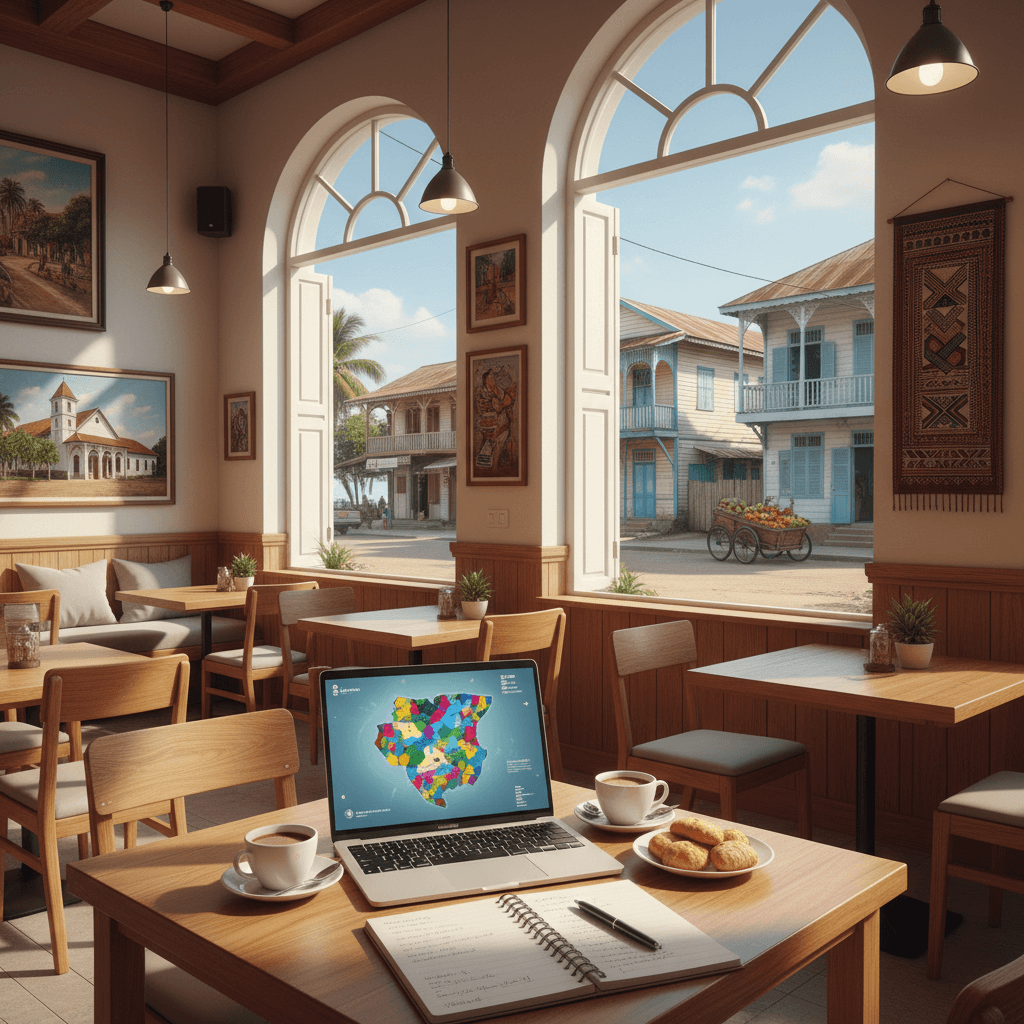
Nieuw Nickerie
🇸🇷 Suriname
The Vibe: Rice Paddies and Low-Tide Living
Nieuw Nickerie isn't your typical digital nomad hub. It's a border town with a rhythmic, agricultural heartbeat that feels worlds away from the frantic energy of Paramaribo. Located five hours west of the capital, it sits where the Nickerie River meets the Atlantic, serving as the final Surinamese outpost before the Guyana ferry. The air is thick with humidity and the smell of salt water, and the skyline is dominated not by glass towers, but by colonial Dutch architecture and the endless horizon of the Zeedijk sea dike.
Life here moves at a crawl. You'll spend your late afternoons on the Zeedijk, joined by locals watching the sun dip into the ocean. It's the town's living room, a place where the breeze actually reaches you. The culture is a fascinating mashup of Hindustani traditions, Dutch colonial remnants, and a gritty border-town pragmatism. Most travelers find that the "hustle" here is purely agricultural; the city is the rice capital of Suriname, and the surrounding scenery is a patchwork of emerald paddies and irrigation canals.
For a nomad, the emotional experience is one of profound isolation and quiet focus. There are no networking events or sleek coworking spaces. Instead, you get a front-row seat to one of the most spectacular bird sanctuaries on the planet, Bigi Pan. It’s a place for the deep-work phase of a project, where the lack of distractions is your biggest asset, provided you can handle the occasional power flicker and the slow pace of "Suriname time."
Cost of Living Breakdown
Your budget will stretch significantly further here than in Paramaribo, though you'll pay a small premium for imported goods that have to make the long trek from the capital. Expect a 10% to 15% buffer for your grocery runs.
- Monthly Budget (Solo Nomad): A comfortable life costs roughly SRD 15,000 to 20,000 (approx. USD $400 to $530). If you're living like a local, you can easily get by on SRD 8,000.
- Housing: A basic studio in the Centrum runs between SRD 1,500 and 3,000. If you want something near the Zeedijk with better views, expect to pay SRD 4,000 to 6,000.
- Food: Street food like roti or bara is incredibly cheap at SRD 20 to 50. A mid-range meal at a local eatery along the canal will cost about SRD 150.
- Transport: Taxis around town are usually SRD 50 to 100. The five-hour bus to Paramaribo costs roughly SRD 300.
The Neighborhood Landscape
Nieuw Nickerie is compact, but where you park your laptop matters for your sanity and your internet connection.
Centrum (Downtown)
- The Draw: This is the most walkable part of town, located near the markets and the central canal. You're close to the few cafes that offer semi-reliable WiFi.
- The Drawback: It can get noisy during market hours, and the infrastructure is aging.
Zeedijk (The Sea Dike)
- The Draw: Popular with expats and those staying long-term. You get the best Atlantic breezes and the most scenic evening walks.
- The Drawback: This area is prone to flooding during the heavy rains of May and December.
Outskirts / Bigi Pan Border
- The Draw: Absolute silence and incredible nature. Ideal for writers or those who want to wake up to the sound of 100+ bird species.
- The Drawback: You're isolated. Transport into town is difficult without your own wheels, and internet is spotty at best.
The Nomad Reality Check
Don't arrive expecting a polished remote work setup. There are zero dedicated coworking spaces. You’ll be tethering from your phone or nursing a coffee at a local cafe for SRD 20 to 50 a day. Most expats recommend grabbing both a Digicel and a Telesur SIM card to swap between whichever has a stronger signal that day. Speeds hover between 5 to 25 Mbps in town, but rural areas lag significantly.
Safety is rarely an issue, as the community is tight-knit and generally welcoming. However, the lack of high-end healthcare is a factor; for anything serious, you’re looking at a 5-hour trek back to Paramaribo. If you can embrace the humidity, the slow internet, and the sheer stillness of the rice fields, Nieuw Nickerie offers a rare kind of peace that the digital world usually drowns out.
The Local Economy
Nieuw Nickerie is where your bank account finally gets a breather. While Paramaribo has seen prices climb, this coastal border town remains significantly more affordable. You aren't paying for urban polish here; you're paying for a slow, rice paddy adjacent lifestyle where the most expensive thing you'll likely do is charter a boat into the Bigi Pan nature reserve. Most expats find that their biggest challenge isn't the price of goods, but the availability of imported comforts, so it's smart to bake a 15% buffer into your budget for those occasional supply runs to the capital.
Monthly Budget Tiers
Living here as a solo nomad is surprisingly cheap if you can handle the humidity and the quiet. You'll be dealing primarily in Surinamese Dollars (SRD), and while the exchange rate can be volatile, your foreign currency goes a long way. Use apps like Wise for transfers to keep your fees low, but always keep a stack of cash for the local markets.
- Budget Nomad: SRD 5,000 to SRD 8,000 per month. This covers a basic studio in the Centrum, plenty of roti from street stalls, and moving around by foot or the occasional local taxi.
- Mid-Range Professional: SRD 10,000 to SRD 15,000 per month. This gets you a nicer apartment near the Zeedijk with better breezes, regular meals at sit down spots along the canal, and enough leftover for weekend birdwatching trips.
- High-End Comfort: SRD 20,000+ per month. You'll be staying in one of the district's better hotels or a larger house, dining out for every meal, and perhaps keeping a private driver on call for trips to the Guyana ferry.
Housing and Neighborhoods
Finding a place usually involves talking to locals or checking boards in the Centrum, as major rental sites don't have much inventory here. Always check the property during a heavy rain before signing anything; drainage is a constant conversation in Nickerie.
Centrum (Downtown)
- Rent: SRD 1,500 to SRD 3,000 per month.
- Vibe: Walkable and convenient. You're near the markets and the ferry terminal. It's noisier, but you won't need a bike to get your morning coffee.
Zeedijk (Sea Dike)
- Rent: SRD 4,000 to SRD 6,000 per month.
- Vibe: This is the premium spot for expats. The Atlantic breeze helps with the heat, and the sunset views are the best in the city. It can be prone to flooding during the peak rainy season in November.
Food and Daily Costs
Eating out is a highlight, especially if you like Surinamese-Javanese or Hindustani flavors. A massive plate of roti or bara at a street stall will only set you back SRD 20 to SRD 50. If you want a proper sit down meal along the canal, expect to pay between SRD 100 and SRD 200. Fresh seafood is a staple here, often caught just hours before it hits your plate.
Groceries are affordable if you stick to local produce like rice, peppers, and tropical fruits. Imported Dutch cheeses or specific Western snacks will cost a premium at the local supermarkets. For connectivity, grab a SIM card from Digicel or Telesur for about SRD 50 to SRD 100. Since there aren't any dedicated coworking spaces, you'll be working from cafes; most nomads budget about SRD 20 to SRD 50 per day for a few coffees and a reliable chair.
Transport and Logistics
The city is compact enough that you can walk most places in the Centrum. For longer hauls, a short taxi ride is usually SRD 50 to SRD 100. If you're heading back to Paramaribo, the five hour bus journey costs between SRD 200 and SRD 400. Many locals recommend renting a scooter for about SRD 50 a day if you want to explore the outskirts or the rice fields without relying on the erratic bus schedule.
The Solo Nomad: Centrum
If you're landing in Nieuw Nickerie to work remotely, you'll want to stay in the Centrum. This is the heart of the town, defined by its Dutch colonial architecture, palm-lined canals, and the daily market. It's the only part of the city where you can realistically live without a car or scooter, as the few reliable cafes with Wi-Fi and the main grocery stores are all concentrated here.
Living in the center means you're close to the Digicel and Telesur shops to top up your data, which you'll need as a backup for the sometimes spotty home internet. Most nomads grab a coffee and settle in at local spots along the canal to work. While there aren't formal coworking spaces, the atmosphere is quiet enough for deep work, provided you don't mind the occasional hum of a passing moped.
- Rent: Expect to pay between SRD 1,500 and 3,000 for a basic studio or one bedroom apartment.
- Vibe: Practical, walkable, and close to the Guyana ferry terminal for quick weekend border hops.
- Pros: Best access to the few amenities available; easy to meet locals at the market.
- Cons: Can get a bit noisy during the day; housing is often older and more basic.
The Long-Term Expat: Zeedijk
Expats who plan on staying for more than a few months usually gravitate toward the Zeedijk area. This neighborhood runs along the sea dike and offers the best views in the city, especially during the legendary Atlantic sunsets. The air is cooler here thanks to the sea breeze, which is a massive relief given the 32°C average highs and heavy humidity.
The housing along the dike is generally more modern and spacious than what you'll find in the Centrum. It's a popular spot for evening walks and socializing, as locals and expats alike gather on the sea wall to catch the breeze. You'll need a bike or a trusted taxi contact to get into the main town for supplies, as it's a bit of a trek on foot.
- Rent: Mid-range houses or apartments typically go for SRD 4,000 to 6,000.
- Vibe: Relaxed, scenic, and slightly more upscale.
- Pros: Incredible sunsets; better airflow; quieter nights.
- Cons: Prone to minor flooding during the peak rainy season in November; requires transport to reach shops.
Nature Lovers and Eco-Nomads: Bigi Pan Outskirts
For those who care more about birdwatching than high-speed pings, the outskirts near the entrance to the Bigi Pan management area are the place to be. This is essentially rural living. You'll be surrounded by rice fields and the sounds of the 135,000-hectare nature reserve, which is home to thousands of flamingos and scarlet ibis. It's the ultimate spot for a digital detox or a creative retreat.
Infrastructure out here is thin. You'll likely be staying in a guesthouse or a converted rural home. Internet will almost certainly rely on your mobile hotspot, so ensure you have a beefy data plan from Telesur before moving in. Most people living here arrange for a weekly grocery run into the Centrum or rely on small local stands for fresh produce and fish.
- Rent: Prices vary wildly, but a comfortable spot in a nature resort or guesthouse can reach SRD 8,000 or more.
- Vibe: Total isolation; birdwatcher's paradise.
- Pros: Direct access to one of South America's best birding spots; extreme peace and quiet.
- Cons: Very limited transport; unreliable power and internet; far from healthcare clinics.
Families: Central Residential Blocks
Families moving to Nieuw Nickerie tend to stick to the residential blocks just a few streets back from the main canal. These areas offer a middle ground between the bustle of the market and the isolation of the coast. The streets are generally safe for kids to play, and you're within a short distance of the local pharmacies and basic healthcare clinics.
Since the nearest high-quality hospital is a five-hour drive away in Paramaribo, families usually prioritize staying close to the town's main transport links. Most expats in this category recommend sorting out your private insurance and identifying a local doctor within your first week. Shopping for imported goods is easier here, though you should still budget a 15% buffer for the higher cost of non-local items.
- Rent: Family-sized homes usually range from SRD 5,000 to 10,000 depending on modern amenities.
- Vibe: Quiet, community-oriented, and safe.
- Pros: Close to schools and clinics; stable neighborhood feel.
- Cons: Houses often lack modern Western appliances; high humidity requires constant AC maintenance.
The Connectivity Reality
Nieuw Nickerie isn't your typical digital nomad hub. If you're coming here expecting high speed fiber and ergonomic chairs, you'll need to adjust your expectations. Most locals and long term visitors rely on Telesur or Digicel for their primary connection. Speeds generally hover between 5 to 25 Mbps in the town center, but the farther you wander toward the rice fields or the Zeedijk, the more the signal tends to drop off.
Power outages aren't a daily occurrence, but they happen often enough that a solid power bank and a local SIM card with a generous data plan are non negotiable. Most expats recommend getting a Telesur SIM for better coverage in the Nickerie district. You can pick one up at local shops in the Centrum for about SRD 60 to 110. It's a smart move to have a backup plan before you settle in for a long Zoom call.
Coworking and "Work-Friendly" Spots
Forget about finding a dedicated coworking space with networking events and free kombucha. Nieuw Nickerie operates at a much slower pace. When you need to get through your inbox, your best bet is to set up in a local cafe or your hotel lobby. The cafe culture here is casual, and while they won't mind you staying for an hour or two, they aren't optimized for remote work. Expect to pay between SRD 20 and 50 for a coffee and a snack while you use their WiFi.
- Centrum Cafes: Most spots along the main canal have basic WiFi. It's best to scout these out in person to check the signal strength before ordering.
- Hotel Lobbies: Larger establishments near the Zeedijk often have the most stable connections. They are generally quieter during the day and more accustomed to guests sitting with laptops.
- Guesthouses: Many nomads find that their own accommodation is the most reliable "office." If you're staying near the Sea Dike, the breeze makes working from a porch much more pleasant than a stuffy indoor cafe.
Data and Local SIMs
Since public WiFi is hit or miss, your mobile hotspot will be your best friend. The two main players are Digicel and Telesur. Both offer prepaid data packages that are easy to top up at almost any small grocery store in town. For a month of decent data usage, plan to spend around SRD 200 to 400 depending on your bandwidth needs.
If you're planning to cross the border into Guyana for a visa run or a weekend trip, remember that your Surinamese SIM will likely stop working or incur heavy roaming charges the moment you board the ferry. It's better to wait until you reach Corriverton to grab a Guyanese SIM if you need to stay online during the transit.
Practical Tips for Remote Workers
Working from Nieuw Nickerie requires a bit of a "DIY" mindset. Most travelers who stay here for more than a few days suggest bringing a universal travel adapter and a small extension cord, as outlets in older Dutch colonial buildings are often in inconvenient places.
- Best Time to Work: Early mornings are best. The temperature is lower, the humidity is manageable, and the internet traffic is lighter before the town fully wakes up.
- Digital Banking: While ATMs are available in the Centrum, they can be finicky with international cards. Expats usually rely on Wise or Revolut for managing their finances, though you'll definitely need cash (SRD) for daily expenses.
- Noise Levels: The town center can get surprisingly noisy with traffic and market activity. If you have important meetings, stick to the residential areas near the Zeedijk where the only background noise is the wind off the Atlantic.
Ultimately, Nieuw Nickerie is a place to go when you want to disconnect from the "hustle" while still keeping a basic tether to your job. It’s perfect for deep work sessions, writing, or projects that don't require massive file uploads. Just make sure your batteries are charged and your data plan is topped up before the rain starts.
Nieuw Nickerie is a far cry from the high energy of Paramaribo. It is a quiet, border town where the pace of life matches the slow flow of the Nickerie River. While it is generally a safe place to base yourself, the challenges here are more about infrastructure and logistics than street crime. You will find a community that is tight knit and welcoming, but you need to be self reliant when it comes to your health and personal security.
General Safety and Street Smarts
The vibe in Nieuw Nickerie is remarkably calm. You won't face the aggressive panhandling or urban grit found in larger South American hubs. Most crime is opportunistic and petty; think twice before leaving your laptop visible on a cafe table or your phone sitting in a bike basket. Most nomads feel perfectly comfortable walking the Centrum or the Zeedijk during the day, but the outskirts get dark quickly after sunset. Stick to well lit main roads if you are out late, as the lack of street lighting in residential patches can be disorienting.
The most "dangerous" part of town is actually the traffic near the Guyana ferry terminal. Driving here can be erratic, and the border area attracts a more transient, high pressure crowd. If you are heading to Corriverton, keep your wits about you and your documents secure. Beyond that, the biggest local hazard is the occasional flooding near the sea dike during heavy rains, which can make walking or cycling a muddy mess.
- Emergency Contacts: Dial 115 for police or ambulance services.
- Walking at Night: Stick to the Centrum; avoid unlit paths near the rice fields or the Bigi Pan entrance after dark.
- Solo Travelers: It is a safe spot for solo nomads, though the lack of a formal expat scene means you will be relying on locals for tips.
Healthcare and Medical Facilities
Healthcare in Nieuw Nickerie is basic. There are local clinics and pharmacies (locally called apotheeks) in the center of town that can handle minor ailments, infections, or prescription refills. If you have a chronic condition, expats recommend sorting your primary care and specialized medications in Paramaribo during your first week in the country. Local pharmacies are well stocked for the basics, but specialized Western brands might be hard to find.
For anything serious, you are looking at a 5 hour drive back to the capital. There is no high level trauma center or specialized surgical unit in town that meets international private hospital standards. Most nomads carry robust travel insurance that includes medical evacuation, just in case. If you have a dental emergency or need a quick checkup, there are local practitioners, but for anything complex, wait until you are back in a major city.
Staying Healthy in the Tropics
The heat and humidity are constant, with temperatures averaging 25 to 32 degrees Celsius. Dehydration is a common pitfall for newcomers. While the local tap water is generally treated, most expats and long term travelers stick to bottled or filtered water to avoid stomach upsets. If you are heading out to Bigi Pan for a few days of birdwatching, bring heavy duty mosquito repellent. The coastal lagoons are beautiful but the insects are relentless, and keeping bug bites from getting infected in the tropical humidity is a full time job.
- Pharmacies: Widely available in the Centrum for bandages, aspirin, and basic antibiotics.
- Major Care: The nearest quality hospitals are in Paramaribo; always have a transport plan.
- Vaccinations: Ensure your routine shots are up to date, and consider Yellow Fever if you plan on crossing the border frequently.
Practical Safety Tips
Since there are no ride hailing apps like Uber or Bolt, you will rely on local taxis. Most nomads find it helpful to get the WhatsApp number of a trusted driver early on. This is especially useful for late night trips back from a restaurant or the sea dike. When it comes to money, keep a mix of Surinamese Dollars (SRD) and some USD or Euros for emergencies. ATMs are available in the center, but they occasionally run out of cash or reject foreign cards, so don't wait until you are down to your last cent to restock.
Getting around Nieuw Nickerie feels like stepping back into a slower era. The town is laid out on a logical grid influenced by Dutch colonial planning, making the central district very easy to navigate on foot. You will spend most of your time between the canal lined with palm trees and the Zeedijk, the sea dike where everyone gathers at sunset. While the pace is relaxed, the infrastructure is basic, so you will need to be proactive about arranging your transport.
Walking and Biking
In the Centrum, walking is your best bet. Most markets, banks, and guesthouses are clustered within a few blocks of each other. If you want to cover more ground or head out to the sea dike for the evening breeze, ask your hotel about informal bike or scooter rentals. There are no formal rental agencies like you would find in Europe, but locals or guesthouse owners will often rent you a bike for around SRD 50 per day. It is the most authentic way to see the rice fields on the outskirts without relying on a driver.
Taxis and Ride-Hailing
Do not bother looking for Uber or any other ride-hailing apps here; they do not exist in Nickerie. Instead, you will rely on traditional taxis. For short hops around town, expect to pay between SRD 50 and 100. It is smart to get the WhatsApp number of a driver you trust on your first day, as finding a cab late at night or during a heavy downpour can be a challenge. Taxis are also the standard way to reach the Nieuw Nickerie Airstrip, which usually costs about SRD 100 from the town center.
Intercity Travel and the Guyana Border
Most nomads arrive via the long road from Paramaribo. It is a 5 hour journey that costs between SRD 1200 and 1500 depending on whether you take a public bus or a slightly more comfortable private van. These usually depart early in the morning, so plan your exit a day in advance.
If you are heading to Guyana, the ferry crossing is the main event. The ferry to Corriverton typically departs once a day, often around midday (check locally), and takes about 30 minutes. Make sure your visa situation is sorted before you head to the terminal, as the border guards are strict and the process can be slow.
Reaching the Wilds
To get to Bigi Pan, you cannot just hop on a bus. You will need to coordinate with a tour operator or a local boatman at the wharf. They will take you through the canals into the lagoons. Since there is no public transport to these remote nature spots, factor the cost of a guided boat trip into your monthly budget if you plan on doing frequent birdwatching or photography sessions in the reserve.
Transport Quick Guide
- Paramaribo Bus: SRD 1200 to 1500 (5 hours)
- Local Taxi: SRD 50 to 100 per trip
- Bike Rental: SRD 50 per day (informal)
- Guyana Ferry: 30 minute crossing, departs daily
- Airport Transfer: SRD 100 via taxi
The heat is the biggest factor in how you move. Between 11:00 AM and 3:00 PM, the humidity makes walking any significant distance a sweaty ordeal. Most expats recommend doing your errands early or waiting until the coastal breeze picks up in the late afternoon. If it starts raining, especially during the peak season in November, the streets can flood quickly, so keep a pair of waterproof shoes handy or be ready to call a taxi for even a two block trip.
The Linguistic Landscape
Nieuw Nickerie is a place where your ears have to do a bit of gymnastics to keep up. Dutch is the official language for government and education, but on the streets, it's a different story. You'll hear a rhythmic blend of Sranan Tongo, the local English based creole, alongside Hindi and Javanese. It reflects the town's history as a melting pot of migrants and laborers who settled in the rice district.
Most nomads find that while Dutch gets you through official paperwork, Sranan Tongo is the heartbeat of local social life. It's expressive, fast, and incredibly useful for building rapport at the markets or with boat captains heading into Bigi Pan. Because of the proximity to the Guyana border, English is surprisingly common here compared to the deep interior of Suriname. You won't struggle to find someone who speaks enough English to help you find a taxi or order a plate of roti.
Staying Connected
Don't expect the blazing fiber speeds of Medellín or Lisbon here. Internet in Nieuw Nickerie is functional but requires a bit of patience. Most digital nomads rely on mobile data hotspots rather than hotel Wi-Fi, which can be spotty during the frequent tropical rainstorms. You'll want to pick up a local SIM card as soon as you arrive. Telesur and Digicel are the two main players, and you can grab a starter kit for about SRD 60 to 110 at small shops in the centrum.
For remote work, there aren't any formal coworking spaces with ergonomic chairs and free flowing espresso. Instead, expats recommend setting up shop in casual cafes along the canal or near the Zeedijk. Expect to pay between SRD 20 and 50 for a day's worth of coffee and bandwidth. It's a "work from anywhere" vibe, provided you have a backup power bank for your laptop, as the local grid can occasionally take a nap during peak heat hours.
Communication Tips and Local Nuance
While Google Translate handles Dutch perfectly, it struggles with the nuances of Sranan Tongo. Learning a few phrases goes a long way in the Nickerie district. Locals appreciate the effort, and it often leads to better prices at the market or an invitation to a backyard cookout. Keep your greetings polite and formal when meeting elders, a simple handshake is the standard protocol here.
- Boni: Good morning (Sranan Tongo)
- Dank je: Thank you (Dutch)
- Mi abi yu?: Can I help you? or Can you help me? (Sranan Tongo)
- Alles goed?: Is everything good? (Dutch)
One thing travelers often notice is "Suriname time." Communication regarding appointments or bus departures is often fluid. If someone says they'll meet you at 2:00 PM, they might mean 2:30 PM. It isn't rudeness; it's just the coastal pace of life. If you're trying to coordinate a border crossing via the Guyana ferry, keep in mind that the ferry usually departs around 1:00 PM, but you should be there much earlier to handle the paperwork in both languages.
Practical Fintech and Logistics
Cash is still king in the northwest. While you'll find ATMs in the centrum that accept international cards, they can sometimes run out of bills or reject specific foreign banks without warning. Expats recommend keeping a stash of USD or Euros as a backup. For moving money around, services like Wise or Revolut are the preferred tools for nomads to manage their finances before withdrawing local SRD at a bank.
If you're planning a longer stay, join local Facebook groups or chat with guesthouse owners. Since there's no dedicated nomad "scene," these informal networks are how you'll find out about the best Wi-Fi spots or which cafes have recently upgraded their routers. It’s a DIY communication environment, but that’s part of the charm for those looking to escape the typical nomad hubs.
The Tropical Rhythm
Nieuw Nickerie sits in a tropical sweet spot where the Atlantic breeze fights a constant battle with the equatorial humidity. You can expect temperatures to hover between 25°C and 32°C throughout the year. It's the kind of heat that dictates your schedule; locals and savvy nomads usually get their deep work or errands done early in the morning before the midday sun makes the canal strolls feel like a marathon.
The humidity is a permanent resident here. While the coastal location on the Zeedijk offers some relief compared to the stifling inland jungles, you'll still want a place with reliable air conditioning if you plan on staying productive. Most expats find that the constant "Suriname time" attitude is partly a physiological response to the heat, so don't expect a fast-paced environment when the sun is at its peak.
Wet and Dry Cycles
Suriname follows a distinct tropical pattern, but the seasons aren't always perfectly predictable. Generally, the year is split into two wet and two dry periods:
- Major Dry Season (August to November): This is the hottest part of the year. While it's great for avoiding muddy roads, the heat can be intense.
- Minor Rainy Season (December to January): Expect frequent, short bursts of heavy rain.
- Minor Dry Season (February to April): Often considered the "Goldilocks" zone for visitors.
- Major Rainy Season (May to July): This is when the heavens truly open. Flood-prone areas near the sea dike can get messy, and travel to the Bigi Pan reserve becomes a much more damp adventure.
When to Plan Your Stay
If you're looking for the absolute best window to visit, aim for February through April. The weather is relatively dry and sunny, making it the prime time for birdwatching in the Bigi Pan reserve. During these months, the 68,000 hectares of lagoons are teeming with life, and the boat tours are much more comfortable without the threat of a tropical downpour every twenty minutes.
Avoid November if you can. It's often cited as the most challenging month due to a combination of high heat and the start of heavy rains. If you're sensitive to humidity, the peak of the rainy season in June can also feel quite oppressive, as the moisture trapped in the air makes the 30°C highs feel significantly hotter.
Practical Considerations for the Seasons
Your experience in Nieuw Nickerie will change based on the rainfall. During the peak dry months, the rice fields that surround the city turn a dusty gold, and the dust from the unpaved outskirts can be a bit much for some. Conversely, during the heavy rains in May and June, the landscape turns an incredible, lush green, but the trade-off is dealing with mosquitoes and potential power fluctuations during storms.
Digital nomads should keep a close eye on the forecast if they have a ferry crossing to Guyana planned. While the 30 minute crossing to Corriverton is short, heavy winds during the rainy season can occasionally disrupt the 1:00 PM return schedule. Always pack a high-quality dry bag for your laptop and gear, even if the sky looks clear when you head out for a coffee along the canal; tropical storms here move fast and don't give much warning.
Survival Basics
Nieuw Nickerie isn't your typical digital nomad hub. It's a slow, humid border town where the rhythm of life is dictated by the rice harvest and the Guyana ferry schedule. You won't find fancy coworking spaces here, but you will find a level of peace that's impossible to get in Paramaribo. Most expats suggest setting up your home base in the Centrum area for proximity to the markets, or near the Zeedijk if you want those Atlantic breezes to cut through the heat.
The infrastructure is basic. Power outages happen, and the internet can be temperamental. If you're planning to work remotely, a backup battery and a local SIM card are mandatory. Grab a Digicel or Telesur card at a shop in the center for about SRD 50 to 100. Speeds usually hover between 20 and 50 Mbps, but it drops off quickly once you head toward the outskirts near Bigi Pan.
Cost of Living
Living here is significantly cheaper than the capital. You'll get more for your money, though you'll pay a premium for any imported Dutch goods at the supermarket. Budget at least a 15% buffer for those comforts.
- Budget Monthly Spend: SRD 5,000 to 8,000 (Approx. USD 1,000 to 1,600)
- Mid-range Monthly Spend: SRD 10,000 to 15,000
- Comfortable/High-end: SRD 20,000+
Housing by Neighborhood
Nieuw Nickerie is small, so your choice of neighborhood depends entirely on how much isolation you can handle. Most nomads prefer the center for the convenience of walking to cafes and shops.
Centrum (Downtown)
- The Vibe: Walkable, close to the canal and the central market.
- Rent: SRD 1,500 to 3,000 for a basic studio.
- Pros: Best access to the few reliable WiFi spots and the ferry terminal.
- Cons: Can get noisy during market hours; buildings are often older.
Zeedijk (Sea Dike)
- The Vibe: Relaxed, scenic, and popular for evening strolls.
- Rent: SRD 4,000 to 6,000 for a nicer house or apartment.
- Pros: Incredible sunsets and better airflow than the city center.
- Cons: Prone to localized flooding during the heavy rains in November.
Getting Around
Forget about Uber or Lyft. You'll be relying on local taxis or your own two feet. A short taxi ride within the city usually costs between SRD 50 and 100. For a bit more freedom, ask around at your guesthouse about informal bike rentals; you can usually snag a cruiser for about SRD 50 a day. If you're heading back to Paramaribo, the five hour bus journey will set you back about SRD 200 to 400.
The ferry to Corriverton, Guyana, is a major local fixture. It usually departs around 1:00 PM, but check the schedule locally as it can change. Make sure your visa situation is sorted before you even head to the dock.
Food and Social Life
The social scene is centered around the dinner table. You won't find many nomad meetups, so your best bet is to chat with locals at the market or grab a beer at the casual bars along the canal. For food, stick to the local staples. You can find excellent roti and bara for SRD 20 to 50. If you want a sit down meal with fresh seafood near the water, expect to pay SRD 100 to 200.
Health and Safety
Nieuw Nickerie is generally safe, though it's wise to avoid unlit areas on the outskirts after dark. The biggest risks are erratic driving and the occasional petty theft near the border crossing. For healthcare, there are basic pharmacies in the Centrum for minor issues. For anything serious, you'll need to head five hours east to the hospitals in Paramaribo. Most expats handle their major medical insurance and checkups there during their first week in the country.
Weather and Timing
It's tropical and humid year round, with temperatures staying between 25 and 32 degrees Celsius. The best time to visit is the dry season from February to April. The humidity is more manageable then, and the sun is consistent. Avoid November if you can, as the heavy rains can turn the dirt roads into mud and cause drainage issues in the lower parts of town.
Need visa and immigration info for Suriname?
🇸🇷 View Suriname Country GuideHidden Gem
Worth the effort