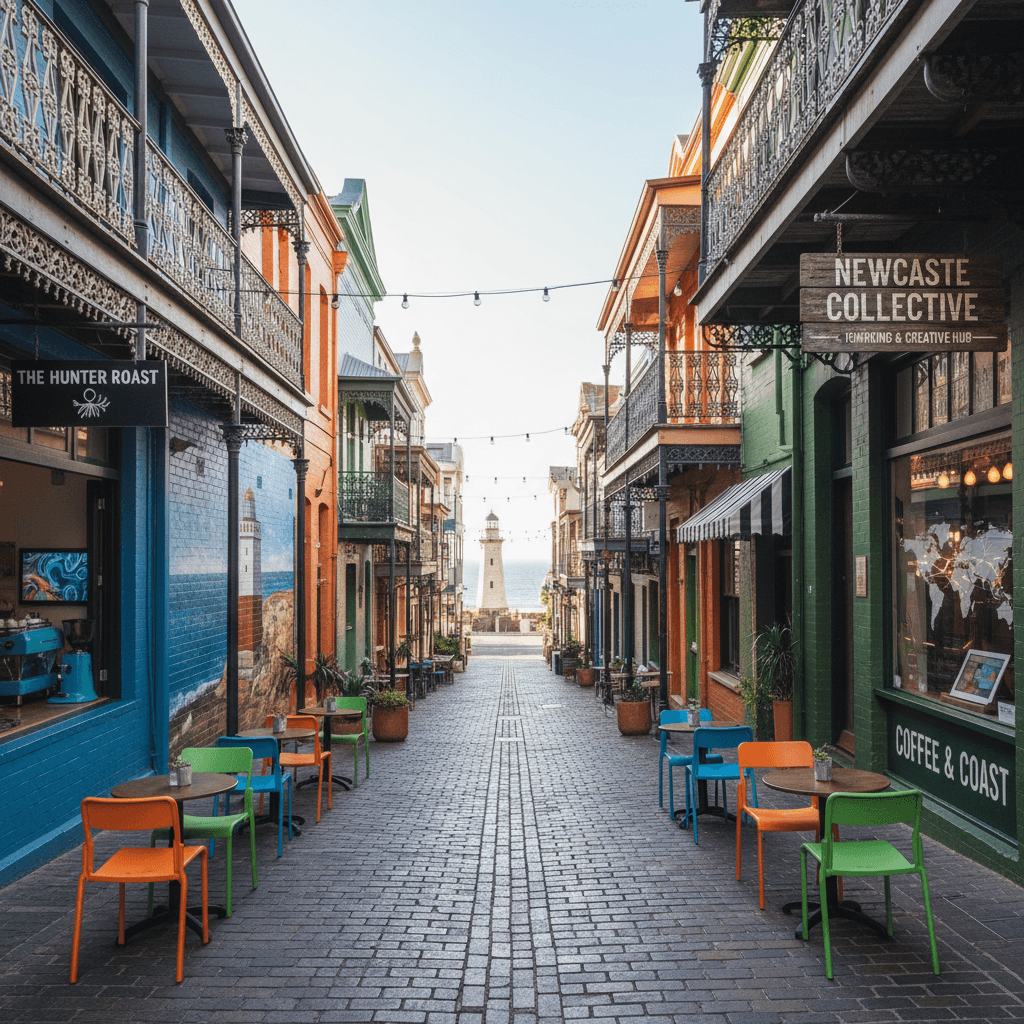
Newcastle
🇦🇺 Australia
The Steel City’s Coastal Pivot
Newcastle used to be defined by its heavy industry and coal loaders, but the current reality is a lot more relaxed. It has successfully shaken off its gritty reputation to become one of the most balanced spots for remote work in Australia. You get the high energy of a coastal city without the crushing cost of living or the frantic pace you find in Sydney, which is just a two hour train ride south.
The vibe here is unpretentious and deeply rooted in the outdoors. It is a place where people actually use their lunch breaks to surf at Merewether or walk the Bathers Way. For a nomad, this means you are entering a community that values life over the grind. You will see plenty of laptops open in cafes near the harbor, but by 4:00 PM, most of those people are heading toward the water.
Life on the Ground
While Sydney and Melbourne often feel like they are trying to prove something, Newcastle is comfortable in its own skin. The city center has seen a massive influx of creative energy, with old warehouses being converted into lofts and studios. It is small enough that you can get around on a bike or the light rail, yet large enough to have a legitimate specialty coffee scene and high speed internet that holds up during video calls.
Nomads often find that the social barrier is lower here than in the bigger capitals. Locals are generally happy to chat, and the "Newy" identity is something people are proud of. It is a city of neighborhoods, each with a distinct flavor, from the upscale coastal feel of The Hill to the more rugged, artsy streets of Islington.
Practicalities for the Long Haul
Australia does not have a specific digital nomad visa, so most travelers arrive on a Visitor Visa (Subclass 600). This allows you to stay for up to 12 months and work for your clients back home, provided you aren't dipping into the local Australian job market. It is a solid workaround for those looking to spend a season or two by the beach.
- Housing: Skip the short term hotel stays. Most long term travelers use platforms like Blueground or local Facebook groups to find 30 day plus rentals, which are significantly cheaper than nightly rates.
- Connectivity: The NBN (National Broadband Network) is reliable here. You will find solid speeds in most apartments, and 5G coverage is excellent across the inner suburbs.
- Coworking: Places like Dashworks or The Production Hub are the go to spots for a professional setup. They offer daily hot desks if you need a break from your kitchen table.
The Financial Reality
Make no mistake, Australia is expensive, but Newcastle offers a slight reprieve from the extreme prices of the major metros. Your dollar goes further here, particularly when it comes to rent and dining out. You are looking at a lifestyle that feels premium without the "Sydney Tax" added to every coffee and beer.
- Monthly Rent (Studio/1BR): Expect to pay between $2,200 and $3,100 AUD depending on how close you are to the beach.
- Daily Expenses: A flat white will run you about $5.00, and a decent pub meal is usually around $25 to $30.
- Transport: The Opal card system works here just like in Sydney. A weekly commute cap helps keep costs down if you are moving around a lot.
The emotional draw of Newcastle is the lack of friction. You can finish a deep work session and be standing on the sand in ten minutes. It is a city that rewards those who want to work hard but refuse to let their surroundings be a concrete jungle. If you want the Australian coastal dream without the tourist traps or the pretension, this is where you land.
The Price of the Coastal Lifestyle
Newcastle has long been the more affordable, laid-back cousin to Sydney, but don't expect bargain-basement prices. While you'll save significantly on rent compared to the harbor city, Australia is generally a high-cost destination. Most nomads find they need a monthly budget of at least $3,200 to $4,500 AUD to live comfortably here without constantly checking their bank balance.
The local currency is the Australian Dollar, and it's a very card-heavy society. You'll rarely need cash, even at the Sunday markets at the Station. Most digital nomads use apps like Wise or Revolut to handle the exchange rates, as local bank fees can be a bit of a sting.
Housing and Neighborhoods
Your biggest expense will be your base. Short-term rentals are in high demand, particularly during the summer months between December and February. If you're staying for a month or more, skip the standard hotel sites and look at platforms like Blueground or local Facebook groups for "sublets" and "house sits" to get a better rate.
- Newcastle East and CBD: This is where the action is, placed right between the harbor and the beach. Expect to pay $750 to $950 AUD per week for a modern one-bedroom apartment.
- Cooks Hill: A favorite for nomads who want a leafy, creative vibe near Darby Street. A studio or small terrace house usually runs about $600 to $800 AUD per week.
- Hamilton: A bit further inland but great for those on a tighter budget. You can often find decent spots for $450 to $600 AUD per week, and you're right on the Beaumont Street food strip.
Eating and Drinking
Dining out is a major part of the Newcastle experience, but it adds up quickly. A flat white at a specialty cafe like Floozy Coffee will set you back about $5.50 AUD. If you're heading out for a causal dinner on Darby Street, budget around $25 to $35 AUD for a main meal and a drink.
Groceries are best handled at Coles or Woolworths for convenience, but locals swear by the Newcastle City Farmers Market at the Showground on Sundays for better prices on fresh produce. A weekly grocery haul for one person usually lands around $120 to $160 AUD.
Coworking and Connectivity
Reliable internet is standard across the city, but if you need a dedicated workspace to get into deep focus, there are several solid options. Most spaces offer a mix of daily drop-ins and monthly memberships.
- The Roost: A creative hub that's great for networking. Day passes are usually around $40 AUD, while full-time monthly desks sit near $400 AUD.
- Public Libraries: The Newcastle Digital Library is free and surprisingly high-tech if you're just looking for a desk for a few hours.
Transport and Utilities
One of the best things about Newcastle is the light rail and the walkable city center. If you stay central, you won't need a car. The Opal card system works here just like in Sydney, and a typical trip within the city costs about $3 to $5 AUD.
If your rental doesn't include utilities, expect to pay about $200 to $250 AUD per month for electricity, water, and high-speed NBN internet. Phone plans are relatively cheap; you can grab a 50GB prepaid SIM from providers like Boost or Telstra for about $35 to $45 AUD per month.
The Visa Factor
Australia doesn't have a specific digital nomad visa yet. Most remote workers enter on a Visitor Visa (Subclass 600), which allows you to stay for up to 12 months. While you can't work for an Australian employer on this visa, you can generally continue your remote work for clients based overseas. Always double-check the latest immigration rules before you book your flight, as requirements for 2025 and 2026 can shift.
For the Beach-Bound Nomad: The East End
If you want to roll out of bed and be on the sand in five minutes, the East End is your spot. It sits right at the tip of the peninsula, bordered by Newcastle Beach and the harbor. Most nomads here gravitate toward the 1920s apartments or modern high-rises that overlook the Pacific. It is the most walkable part of the city, so you can ditch the car entirely.
For deep focus, you will likely find yourself at Darks Coffee Roasters or sitting in the Newcastle Library, which has surprisingly fast Wi-Fi and quiet corners. When the laptop closes, the Bathers Way coastal walk is right there for a sunset stroll. Expect to pay around $750 to $900 AUD per week for a decent one-bedroom apartment in this zone.
- Vibe: Salty, upscale, and active.
- Best for: Surfers, morning runners, and those who do not want a car.
- Top Spot: The Ocean Baths for a free sunrise swim before your first Zoom call.
For the Social Expat: Cooks Hill
Cooks Hill is the soul of Newcastle. It is characterized by leafy streets, Victorian terrace houses, and the iconic Darby Street strip. This is where you will find the highest density of independent boutiques, art galleries, and cafes. Expats often choose this neighborhood because it feels established and neighborly rather than transient.
You are perfectly positioned between the city center and the beach. The Production Hub on Bull Street is a fantastic coworking space here that hosts regular networking events. If you prefer working from a cafe, Goldbergs is a local institution with a moody, laptop-friendly atmosphere. Rent for a terrace house usually sits between $850 and $1,100 AUD per week depending on the renovation level.
- Vibe: Bohemian, artistic, and community-focused.
- Best for: Social butterflies and coffee aficionados.
- Top Spot: Civic Park for a lunchtime picnic or a quick nap under the palms.
For Families: Merewether and The Junction
Families moving to Newcastle generally look toward Merewether or The Junction. These areas offer more space, larger backyard plots, and proximity to excellent primary schools. The Junction serves as a mini-hub with high-end grocery stores, pharmacies, and plenty of "mum and dad" cafes like Talulah.
Merewether Beach is home to the famous Merewether Surfhouse, which is a great spot for a family dinner with a view. While it is one of the more expensive postcodes, the safety and quiet streets are worth the premium for those with kids. A three-bedroom family home here will likely cost $1,200 AUD per week or more. Most families use Domain or Realestate.com.au to secure long-term rentals before they arrive.
- Vibe: Suburban, safe, and coastal.
- Best for: Long-term stays and those needing extra bedrooms.
- Top Spot: Town Beach, which is a bit more sheltered for younger swimmers.
For the Solo Traveler: Wickham and Maryville
If you are on a tighter budget or traveling solo, look just west of the CBD to Wickham and Maryville. These formerly industrial suburbs have undergone a massive transformation. They are now home to micro-breweries and converted warehouse spaces. It is a bit grittier than the East End, but in a way that feels creative and fresh.
Wickham is right next to the Newcastle Interchange, making it the easiest place to live if you plan on taking the train down to Sydney for the weekend. You can find modern studio apartments or rooms in shared houses for $450 to $600 AUD per week. The Throsby Creek walking path is a local favorite for a cheap afternoon bike ride.
- Vibe: Industrial-chic, up-and-coming, and convenient.
- Best for: Budget-conscious travelers and weekend explorers.
- Top Spot: Earp Distilling Co. for a gin flight after a long work week.
Connectivity and Speed
You won't have to worry about the internet quality in Newcastle. Australia's National Broadband Network (NBN) covers the city well, and most short term rentals or apartments in the East End or Cooks Hill pull speeds around 50 to 100 Mbps. If you're staying in the CBD, fiber connections are standard, making it easy to handle video calls without the lag you might find in more remote coastal towns.
Mobile data is your best backup here. Telstra has the strongest coverage if you plan on working from the beach, while Optus and Vodafone offer cheaper plans that work perfectly fine within the city limits. You can pick up a local SIM card at the airport or any grocery store for about $30, which usually includes a generous data allowance of 40GB to 60GB for the month.
Top Coworking Spots
Newcastle has a surprisingly mature coworking scene for a city of its size. It feels less like a corporate grind and more like a community of creative professionals and tech expats. Most spots are concentrated around the harbor and the revitalized West End.
- The Production Hub: Located in a beautiful heritage building on Scott Street, this is the go-to for many long term nomads. It's quiet, professional, and puts you right near the light rail. A day pass usually sits around $40, while a dedicated desk for a month will cost you roughly $450.
- DASH: This spot is great if you want a more modern, high energy vibe. It's located in the West End, which is the city's emerging business district. They offer flexible memberships and have excellent meeting rooms if you need to hop on a private call.
- The Roost: This is a creative cluster rather than a traditional office. It's perfect if you're a designer or writer looking to connect with locals. It's affordable and much more relaxed than the bigger hubs.
Work Friendly Cafes
If you prefer the hum of a coffee machine over a silent office, Newcastle has plenty of spots that won't kick you out for opening a laptop. Just keep in mind that many cafes have a "no laptops on weekends" policy to keep tables free for brunch crowds.
- Bank Corner: Located in a stunning old bank building in Newcastle West, it has high ceilings and plenty of space. The Wi-Fi is reliable and the coffee is some of the best in the city.
- XIX (Nineteen): Situated on Hunter Street, this place has a minimalist vibe and big windows. It's a favorite for digital nomads who want a quick hour of work between meetings.
- Good Brother: This is a local staple in the East End. It gets busy, but if you snag a spot early, it's a great place to power through some emails while enjoying a flat white for about $5.
Practical Tips for Remote Workers
Most nomads find that the city's layout makes it easy to balance work and life. Since the CBD is quite compact, you can spend your morning in a coworking space and be at Nobbys Beach for a swim within ten minutes of closing your laptop. The public Wi-Fi provided by the City of Newcastle is available in many parks and public squares, though it's better for casual browsing than heavy lifting.
Remember that Australian power outlets use Type I plugs, so you'll need an adapter if you're coming from the US or Europe. If you're planning on staying for more than a month, look into "hot desk" bundles. Many spaces offer a 10 day pass for around $300, which gives you more flexibility than a daily rate without the commitment of a full monthly membership. This is often the best way to save money while keeping your schedule open for weekend trips to the Hunter Valley or Port Stephens.
Street Smarts and Local Vibes
Newcastle has shed its old industrial skin to become one of the safest coastal hubs for remote workers in Australia. You'll find the city center and the beachfront areas like Merewether and Bar Beach are generally very secure, even after the sun goes down. Most nomads feel comfortable walking home from a late session at a coworking space or a seaside dinner without looking over their shoulder.
Like any urban center, it is wise to keep your wits about you around the Hamilton train station or parts of Hunter Street late at night. These spots can get a bit rowdy when the pubs clear out, but it is rarely more than loud bravado. If you are staying in Islington, keep your bike locked up inside; opportunistic theft is the most common headache you will face here.
The real safety concerns in Newcastle are actually found at the beach rather than on the streets. The surf at Nobbys or Dixon Park can be deceptively powerful. Always swim between the red and yellow flags where the lifeguards can see you. If you find yourself in a rip, don't fight it; stay calm, float, and raise an arm for help. Locals take beach safety seriously, and you should too.
Healthcare for the Long Haul
Australia has a world class healthcare system, and Newcastle is a major regional medical hub. If you are visiting from a country with a Reciprocal Health Care Agreement, such as the UK, New Zealand, or several EU nations, you might be eligible for Medicare coverage for medically necessary treatment. Most nomads on a standard Visitor Visa will need comprehensive private health insurance to avoid massive out of pocket costs.
For everyday issues like a persistent cough or a script renewal, you will head to a General Practitioner (GP). Be aware that "bulk billing" (where the government covers the full cost) is becoming harder to find for non residents. Expect to pay between $80 and $120 AUD for a standard consultation. Many clinics in the CBD or The Junction offer online booking through apps like HotDoc or HealthEngine, which makes finding a last minute appointment much easier.
- John Hunter Hospital: The main public hospital for emergencies, located in New Lambton Heights.
- Calvary Mater: Another major public facility in Waratah with a 24 hour emergency department.
- After Hours Care: Look for 13SICK, a service that sends a doctor to your accommodation if you fall ill when clinics are closed.
Pharmacies and Essentials
You won't have any trouble finding a chemist in Newcastle. Major chains like Chemist Warehouse or Priceline are scattered throughout the city and suburban malls like Westfield Kotara. These are the best spots for affordable prescriptions, sunblock, and basic first aid supplies. Most are open until 6:00 PM or 9:00 PM, though a few offer extended hours for late night emergencies.
One thing many travelers overlook is the intensity of the Australian sun. The UV index in Newcastle can hit extreme levels even on cloudy days. Skin cancer clinics are common here for a reason. If you are staying for a few months, it is a smart move to book a quick skin check at a local clinic; it is a very "Aussie" health ritual that nomads should adopt.
Emergency Contacts to Save
It is best to have these numbers programmed into your phone before you arrive. Australia uses a single primary emergency number for everything.
- 000: The universal number for Police, Fire, and Ambulance.
- 131 444: The Police Assistance Line for non-emergencies, like reporting a stolen bike or property damage.
- 132 500: The SES (State Emergency Service) for help during severe storms or flooding.
Overall, Newcastle provides a very soft landing. The combination of a relaxed coastal pace and high quality medical infrastructure means you can focus on your deadlines without worrying about the basics of your well being.
Getting Around the Steel City
Newcastle is a refreshingly manageable city compared to the sprawling chaos of Sydney. The city center is compact and largely flat, which makes it a dream for anyone who prefers to get their steps in between deep work sessions. Most nomads find that if they stay in Newcastle East or The Hill, they can reach the beach, their favorite cafe, and a coworking desk within a 10 to 15 minute walk.
The crown jewel of the local transport system is the Newcastle Light Rail. It runs along Hunter Street, connecting the Newcastle Interchange in Wickham all the way to Pacific Park near the beach. It is frequent, clean, and incredibly easy to use. You do not need a special transit card anymore; just tap on and off with your phone or a contactless credit card. A single trip usually costs around $2.25 to $3.00 depending on the time of day.
Public Transport and the Opal System
To use the buses, ferries, and trains, you will be using the Opal system, which is the same one used across New South Wales. While you can tap your credit card, getting a physical Opal card from a newsagent is handy if you want to track your spending via the app. The system has a daily cap, meaning once you spend about $18.70 (or $9.35 on weekends), the rest of your travel that day is free.
- The Ferry: This is the most scenic commute you will ever take. It runs between Queens Wharf and Stockton every 15 to 20 minutes. It takes about 5 minutes to cross the Hunter River and costs roughly $3.00.
- Buses: The network is extensive but can be a bit sluggish during school run times. Use the TripView or AnyTrip apps to see real time GPS locations of your bus so you are not standing in the sun longer than necessary.
- Trains: The Newcastle Interchange is your gateway to the rest of the state. You can catch an express train to Sydney which takes about 2.5 hours and costs less than $10.00 outside of peak hours.
Biking and Scooters
If you are staying for a month or two, look into getting a second hand bike. The Fernleigh Track is a local favorite, a 15 kilometer former railway line converted into a paved cycle path through the bush. It is a great way to clear your head after a long day of Zoom calls. For shorter hops, keep an eye out for the orange Neuron electric scooters parked around the city. They are priced around $1.00 to unlock plus a per minute fee, usually landing around $5.00 to $8.00 for a quick dash across town.
Car Rentals and Parking
You really do not need a car if you are living and working in the CBD. In fact, parking in the city center can be a nightmare and quite expensive, with some lots charging $5.00 to $7.00 per hour. However, if you want to explore the Hunter Valley wine region or the surf breaks at Port Stephens, a car is a must. Most expats recommend using Uber for short trips or GoGet, a car sharing service with pods located near the Newcastle Interchange and Honeysuckle.
- Uber/Ola: A ride from the city to Hamilton or Merewether usually costs between $12.00 and $20.00.
- Car Hire: Budget or Avis outlets near the city charge around $70.00 to $100.00 per day for a basic sedan.
- Airport Access: Newcastle Airport (NTL) is about 25 minutes north of the city. A rideshare will cost you about $45.00 to $60.00, while the 130 or 131 bus is a much cheaper $5.00 alternative.
Walking remains the best way to soak in the atmosphere. The Bathers Way coastal walk connects all the city beaches and offers some of the best whale watching spots in the country during migration season. It is free, healthy, and significantly more enjoyable than sitting in traffic on Stewart Avenue.
The Local Lingo
English is the primary language in Newcastle, but the local dialect has its own distinct flavor. You will find that Novocastrians, as the locals are called, love to shorten words. It is common to hear "Arvo" for afternoon or "Brekkie" for breakfast. While you won't need a translator, understanding the cadence of the city helps you blend in at the surf clubs or cafes along Darby Street.
Most nomads find the communication style here to be direct but incredibly friendly. If you are working from a spot like The Roost Creative or Dixon Park Surf Life Saving Club, do not be surprised if a stranger strikes up a conversation about the swell or your laptop setup. It is a social city where small talk is the standard way to break the ice.
Staying Connected
Reliable internet is the backbone of any remote stint, and Newcastle is well served by the National Broadband Network (NBN). Most short term rentals in suburbs like The Hill or Merewether offer high speed Wi-Fi, but always confirm the speeds before booking. You can generally expect download speeds between 50Mbps and 100Mbps on standard residential plans.
For mobile connectivity, the big three providers are Telstra, Optus, and Vodafone. Telstra generally offers the best coverage if you plan on heading out to the Hunter Valley or Port Stephens on weekends. If you are staying within the city limits, a prepaid SIM from Boost Mobile or Belong is often the most cost effective choice for nomads. You can pick these up at any Woolworths or Coles supermarket for around $30 to $50 per month with generous data allowances.
Coworking and Tech Culture
The tech scene in Newcastle is smaller than Sydney but much more tight knit. Communication often happens in dedicated Slack groups or through local meetup events. If you need a professional environment to take calls, there are several reliable options across the CBD and surrounding suburbs:
- The Roost Creative: A community focused space popular with writers, designers, and developers.
- Dashworks: Located in nearby Charlestown, this is a go to for high speed infrastructure and networking events.
Digital Tools and Apps
To navigate the city and stay informed, there are a few apps that locals consider standard. Since the city is quite spread out, having these on your phone makes life easier.
- Opal Travel: This is the official app for managing your fares on the light rail, buses, and the Stockton ferry. You can also just tap on with a contactless credit card.
- NeW Space: If you are using university facilities or libraries, this helps with campus navigation.
- Beachsafe: Essential for checking conditions at Nobby's Beach or Bar Beach before you head out for a midday swim.
Communication regarding housing and local goods often moves to Facebook Groups. Travelers often recommend joining "Newcastle Community Group" or "Newcastle Inner City Living" to find sub-leases or second hand gear like surfboards and bikes. These groups are often more active and responsive than traditional marketplace apps.
Time Zones and Remote Work
One of the biggest hurdles for nomads in Newcastle is the Australian Eastern Daylight Time (AEDT). If your clients are in Europe or North America, you will likely be working late nights or very early mornings. Newcastle's cafe culture is great for this, as many spots open as early as 6:00 AM, allowing you to catch the end of the US workday with a flat white in hand.
The Sweet Spot: When to Land
Newcastle hits its stride when the sun is out and the Pacific is approachable. For most nomads, the window between September and November is the gold standard. You'll avoid the humid intensity of mid-summer while enjoying temperatures that hover around 22°C to 25°C. It is the perfect climate for taking a laptop to a picnic table at Pacific Park or hitting the Bathers Way walk before your first Zoom call.
If you are a fan of the heat, December through February brings the classic Australian summer. Expect highs of 28°C, though it can spike much higher during heatwaves. This is peak season for the city; the beaches like Merewether and Dixon Park are packed, and the atmosphere is high energy. Just keep in mind that coastal humidity can make working without air conditioning a struggle during these months.
The Off-Season Advantage
Don't dismiss the cooler months from June to August. While Sydney gets most of the winter attention, Newcastle stays relatively mild with daytime temperatures around 17°C. It rarely gets bone-chillingly cold, but you will want a solid jacket for those evening walks along the Foreshore. The upside to a winter stay is the whale watching season; you can often spot humpbacks from the Bar Beach lookout during your lunch break.
Autumn, specifically March to May, is another local favorite. The ocean stays warm enough for a swim well into April, and the wind tends to die down. It is a quiet, productive time to be in town. You will find it much easier to snag a long-term desk at coworking spots like DASH or The Roost without the summer crowds competing for space.
Planning Around the Calendar
When you are booking your stay, keep an eye on a few key periods that can affect prices and availability. Newcastle is a major hub for regional events, and the city fills up fast during these windows:
- Surfest (February/March): Australia's largest surfing festival. It brings a massive crowd to Merewether Beach, making short-term rentals scarce and expensive.
- Easter Break: Like the rest of the coast, Newcastle becomes a magnet for families. Expect 20% to 40% price hikes on platforms like Blueground or local real estate rentals.
- The Newcastle 500: If this Supercars event is on the calendar, the East End becomes a noisy construction zone for weeks. Unless you love motor racing, avoid staying near the CBD during this time.
What to Pack for Your Stint
The vibe here is casual, even by Australian standards. You can get away with a t-shirt and shorts in almost any cafe or workspace. However, the coastal breeze is no joke. Even in the height of summer, a light windbreaker is a smart addition to your kit for those late afternoon shifts by the water. If you are arriving in the shoulder seasons, bring layers; the temperature drops quickly once the sun dips behind the hill.
Most travelers find that a Visitor Visa (Subclass 600) is the standard way to enter for stays up to 12 months. While it doesn't allow you to work for Australian companies, it is the go-to for remote workers keeping their overseas clients. Just ensure your tech setup is ready for the Australian sun; high-nit screens are a lifesaver if you plan on working from the outdoor tables at Ground Up Espresso or Estabar.
Visas and Staying Legal
Australia doesn't have a specific digital nomad visa, so you'll likely be entering on a Subclass 600 Visitor Visa. This allows you to stay for up to 12 months and work remotely for clients based outside of Australia. If you're under 35 and from an eligible country, the Working Holiday Visa (Subclass 417 or 462) is a better bet because it gives you the right to pick up local gigs if your freelance income dips.
Most nomads find that customs is strict about bringing in food or organic materials. Don't risk a fine; declare everything. Once you land, grab a local SIM card from Telstra or Optus at the airport. While Vodafone is cheaper, Telstra has the best coverage if you plan on heading out to the Hunter Valley or Port Stephens on weekends.
Finding Your Base
Newcastle is far more affordable than Sydney, but the rental market is tight. Skip Airbnb for long stays; the service fees will eat your budget. Expats recommend using Blueground for furnished 30 plus day stays or checking Flatmates.com.au if you're looking to share a house in trendy spots like The Hill or Cooks Hill.
- The East End: Best for being near the beach and the light rail. Expect to pay $600 to $800 AUD per week for a decent apartment.
- Hamilton: A bit more inland but great for nightlife and cafes. It's more budget friendly, with rooms in shared houses around $300 AUD per week.
- Maryville: A quieter, gentrifying area near the water that's popular with remote workers who want more space.
Workspace and Connectivity
The city has reliable high speed internet, so you won't struggle with video calls. If your home setup feels cramped, Newcastle has a solid coworking scene. The Roost is a popular creative hub in the city center, while DASH offers a more corporate, polished environment. Most spaces offer day passes for around $35 to $50 AUD.
If you prefer a cafe vibe, the baristas at Good Brother or Dark Horse are usually cool with you hanging out for an hour or two. Just make sure to keep the coffee orders coming. Most public libraries in the city offer free, reliable Wi-Fi if you're looking to save some cash.
Getting Around
You don't necessarily need a car if you stay central. The Newcastle Light Rail runs frequently through the CBD, and the ferry to Stockton is a great way to see the harbor for the price of a bus ticket. You'll need an Opal card to use any public transport, which you can tap on and off with your phone or credit card.
For longer trips, Uber and Ola are both active here. If you want to explore the coast, look into GoGet, a car sharing service that lets you book vehicles by the hour. It's much cheaper than traditional rentals for quick grocery runs or afternoon surf trips.
Daily Costs
Budgeting for Newcastle requires a bit of strategy. Eating out is expensive, but the quality of local produce is high. Travelers often say that hitting the Newcastle City Farmers Market on Sundays is the best way to stock up on cheap, fresh groceries.
- Coffee: $5.00 AUD
- Mid range dinner: $35.00 to $50.00 AUD per person
- Monthly gym membership: $70.00 to $90.00 AUD
- Pint of local craft beer: $12.00 to $15.00 AUD
Keep an eye on the time zone. Newcastle is on AEST (UTC+10) or AEDT (UTC+11) during the summer. If you have clients in New York or London, your "workday" will likely start late in the evening or very early in the morning. Use those sunny afternoons to hit Merewether Beach before the sun goes down.
Need visa and immigration info for Australia?
🇦🇺 View Australia Country GuideEasy Landing
Settle in, no stress