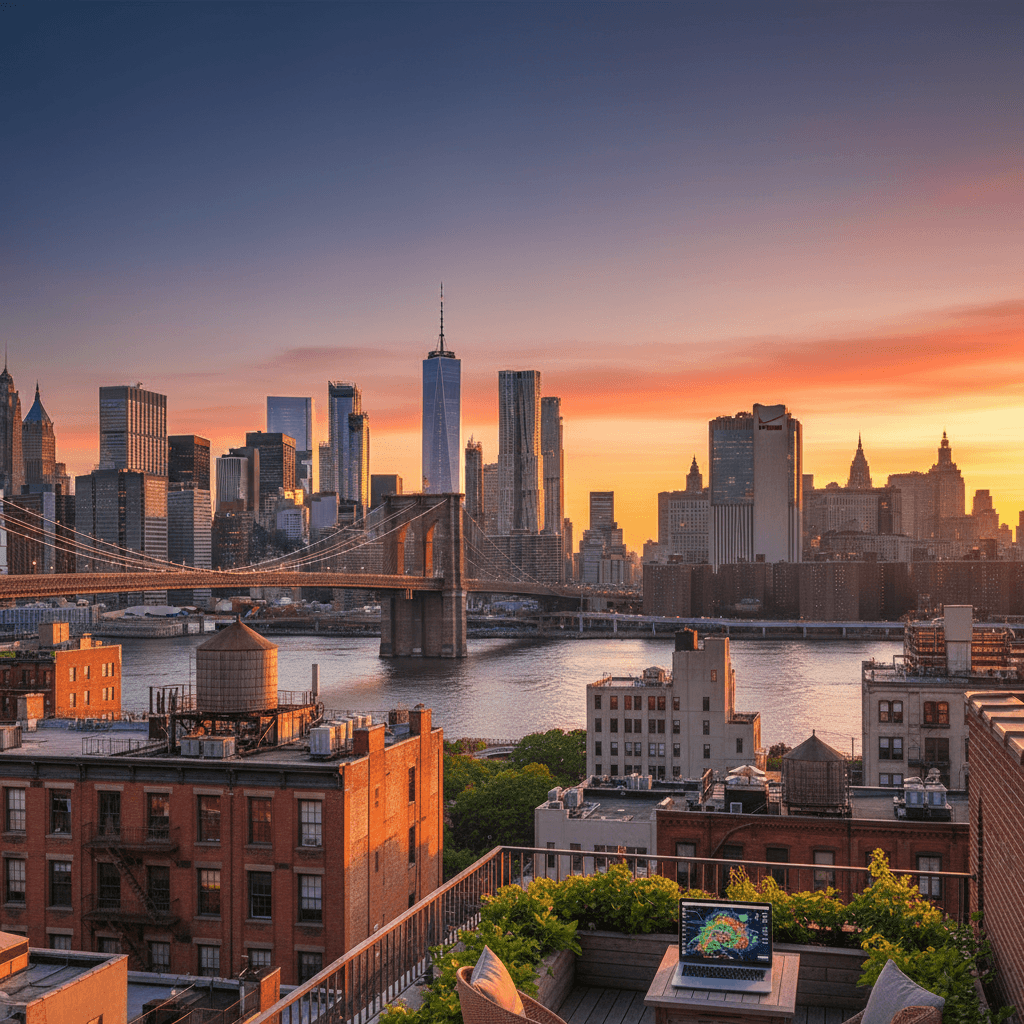
New York City
🇺🇸 United States
The Main Character Energy
New York City doesn't just host you; it recruits you. For digital nomads and expats heading here in 2025 and 2026, the city offers a specific kind of "main character energy" that's impossible to find in quieter hubs like Lisbon or Medellin. It is chaotic, ambitious, and unapologetically loud. You'll likely find yourself working from a laptop in a crowded West Village cafe one hour and walking the Brooklyn Bridge the next, fueled by a pace that demands you keep up or get out of the way.
The magic for remote workers lies in the infrastructure. You'll find usable Wi-Fi almost everywhere, from the deep tunnels of the subway to the middle of Bryant Park. Most nomads find that while the city is exhausting, the networking density is unmatched. You aren't just working; you're positioned in the global center of finance, fashion, and tech. It's a place where a casual coffee can easily turn into a career-shifting connection.
However, the transition can be jarring. The noise is constant, the smells are unpredictable, and the cost of entry is steep. Travelers often recommend staying for at least a full month to move past the tourist fatigue and start living like a local. To survive the sensory overload, seasoned nomads swear by high quality noise canceling earbuds and a "don't block the sidewalk" mentality.
What It Costs to Live Here
Let's be real about the numbers. NYC is one of the most expensive nomad destinations on the planet. A middle of the road lifestyle usually requires a budget between $4,000 and $4,975 per month. If you're trying to scrape by on $3,500, you'll be looking at shared housing and a steady diet of $5 to $10 halal cart meals.
- Housing: Expect to pay $2,500 to $3,500 for a decent studio or a room in a trendy Brooklyn sublet. Manhattan prices for similar setups easily clear $4,000.
- Food: A mid range dinner with a drink will run you $35 to $50 after tax and tip. You can save by sticking to the city's legendary street food or grab and go spots.
- Transport: The MTA is your best friend. A single ride is $3.00 as of January 2026. The unlimited monthly MetroCard has been phased out and replaced with OMNY's 7-day fare cap: after 12 rides in a week, additional rides are free (capped at $35/week).
- Coworking: Daily drop in rates at spots like Ensemble or The Farm range from $25 to $50.
Choosing Your Base
Your neighborhood defines your entire experience. In NYC, your "vibe" is often just your zip code. Most nomads gravitate toward Brooklyn or Western Queens to escape the corporate feel of Midtown while staying close to the action.
Williamsburg and Bushwick (Brooklyn)
- The Vibe: The epicenter of creative nomad life. Think skate parks, street art, and warehouse raves.
- Rent: $3,000+ for modern sublets.
- Pros: Incredible cafe culture, high networking potential, and the best nightlife in the city.
- Cons: Can feel overly gentrified and loud on weekends.
Bed-Stuy (Brooklyn)
- The Vibe: A more soulful, community oriented neighborhood with historic brownstones and a diverse food scene.
- Rent: $2,500+, making it one of the more "affordable" creative hubs.
- Pros: Authentic local feel and great bars that aren't overrun by tourists.
- Cons: Some pockets are still transitioning and can feel a bit edgy at night.
Upper West Side (Manhattan)
- The Vibe: Sophisticated, quiet, and close to nature. Best for those who want to work near Central Park.
- Rent: $4,000+ for a private apartment.
- Pros: Access to the NY Public Library for free quiet work and the HI New York City hostel for community events.
- Cons: Very expensive and lacks the "cool" factor of Brooklyn.
The Remote Work Reality
The city is your office. If you're on a budget, the New York Public Library system offers stunning, silent spaces for deep work, though you can't take calls there. For a more social environment, the Croissant app is a favorite among nomads, allowing you to bounce between dozens of different coworking spaces with one membership. When you need to get through a few hours of emails, local cafes or any Starbucks provide reliable speeds and a place to sit without being hassled.
The emotional payoff of New York is the feeling that you're exactly where things are happening. It’s a city that rewards the curious and the bold, even if it sends you home with a significantly lighter wallet.
The Reality of the New York Price Tag
Living in New York City is an exercise in financial gymnastics. Most nomads find themselves spending between $4,000 and $4,975 per month to maintain a decent lifestyle. While that number might cause some initial sticker shock, it is the price of admission for "main character energy" and a networking density you won't find anywhere else on the planet.
Expats typically break their spending into three tiers. A budget of $3,500 requires shared housing and a heavy reliance on the city's legendary street food. The mid range sweet spot is around $5,000, which buys you a private studio sublet and the ability to work from cafes daily. If you want a prime one bedroom in a trendy area and regular upscale dining, you'll need to budget $7,000 or more.
Housing and Neighborhood Stakes
Rent is your biggest hurdle. To keep things flexible, look for monthly sublets rather than traditional leases. Prices vary wildly depending on which side of the East River you plant your laptop.
Bed-Stuy, Brooklyn
- Rent: $2,500 to $3,200 for a studio or one bedroom.
- The Vibe: A favorite for its creative energy and diverse food scene. It is more affordable than its neighbors but still has that classic brownstone aesthetic.
Bushwick and Williamsburg, Brooklyn
- Rent: $3,000 to $3,800.
- The Vibe: This is the nomad heartland. You are paying for proximity to street art, late night raves, and a high concentration of other remote workers.
Manhattan (Midtown and Upper West Side)
- Rent: $4,000+.
- The Vibe: You're in the thick of it. It's loud and touristy, but the proximity to the New York Public Library and Central Park is a major draw for those who need reliable, quiet workspace.
Feeding the Machine
Food costs are as flexible as you are. You can grab a chicken over rice platter from a halal cart for $5 to $10, which is a staple for local freelancers on the move. A standard lunch at a cafe like Fika usually runs between $15 and $25 once you add a coffee and tip.
If you're dining out at mid range sit down restaurants, expect to pay $30 to $50 per person. Groceries aren't exactly cheap either, so many nomads find that eating out at smaller, ethnic holes in the wall is often more efficient than cooking in a tiny apartment kitchen.
Getting Around and Staying Connected
The good news is you can completely delete the cost of a car from your budget. The MTA is your lifeline. A single subway or bus ride is $3.00 as of January 2026. The unlimited monthly MetroCard has been phased out. Instead, OMNY's 7-day fare cap applies: after 12 rides in a week, additional rides are free (capped at $35/week). For shorter bursts or exercise, a 30 minute Citi Bike rental costs $4.99.
Coworking is another line item to consider. While the New York Public Library offers stunning, free quiet zones, you can't take calls there. Professional spaces like Ensemble or the Croissant app, which gives you access to various locations across the city, typically charge $25 to $50 for a day pass or $300+ for monthly access. For mobile data, a prepaid unlimited SIM from T-Mobile or Verizon usually costs around $40 a month.
The "Hidden" Costs
Don't forget the small things that add up. New York is a tipping culture; 20 percent is the standard at bars and restaurants. Laundry is another factor, as many older buildings don't have in unit machines. A wash and fold service will usually cost you about $1.50 to $2.00 per pound. It sounds like a lot, but for most nomads, the time saved is worth the extra few dollars in the weekly budget.
For Digital Nomads: Williamsburg and Bushwick
If you want to be in the center of the creative storm, Western Brooklyn is the place to be. Williamsburg and Bushwick are the primary hubs for remote workers who prioritize a high density of cafes and a social scene that doesn't stop. You'll find most nomads congregating in places like Fika for a mid morning espresso or using the Croissant app to bounce between local coworking spots.
- Rent: Expect to pay $3,500 to $4,500+ for a decent studio or 1-bedroom sublet in Williamsburg/Bushwick.
- Vibe: Think industrial warehouses turned into galleries, skate parks, and an endless supply of street art.
- Pros: Incredible networking opportunities and the city's best nightlife, including legendary raves in Bushwick.
- Cons: It gets loud on weekends, and the gentrification is palpable.
For Expats and Long Term Professionals: Midtown and Upper West Side
Expats often prefer the reliability of Manhattan, specifically the Upper West Side or Midtown. These areas offer a more polished version of the city with immediate access to Central Park and the New York Public Library system, which provides excellent free quiet zones for deep work. It feels more established here, and you're never more than a few blocks from a major subway line or a high end grocery store.
- Rent: Usually starts at $4,000 for a one bedroom apartment.
- Vibe: Classic New York architecture, professional crowds, and proximity to major museums.
- Pros: Safe, incredibly well connected, and home to reliable hubs like HI New York City for those who need a dedicated workspace.
- Cons: It's very expensive and can feel overrun by tourists, especially near the transit hubs.
For Solo Travelers on a Budget: Bed-Stuy
Bedford Stuyvesant, or Bed-Stuy, has become a favorite for solo travelers looking for a more authentic neighborhood feel without the Williamsburg price tag. It's a diverse area where you'll find a mix of long time residents and a growing community of artists and students. Travelers frequently recommend this area for its community parties and global food scene that won't drain your bank account.
- Rent: Sublets are more reasonable here, often ranging from $2,500 to $3,000.
- Vibe: Tree lined streets with historic brownstones and a soulful, community focused energy.
- Pros: More affordable dining options and a genuine sense of neighborhood identity.
- Cons: Some pockets are still transitioning and can feel a bit edgier at night compared to Manhattan.
For Families and Quiet Seekers: Bay Ridge
If the 24/7 chaos of the city feels like too much, Bay Ridge in South Brooklyn is a solid alternative. It’s significantly quieter than the northern neighborhoods but still maintains a strong transit connection to the rest of the city. Families and slow travelers appreciate the waterfront parks and the slower pace of life here.
- Rent: Generally more competitive than the nomad hotspots, though inventory for short term stays can be tighter.
- Vibe: Residential, calm, and community oriented.
- Pros: Lower noise levels and plenty of green space for kids or morning runs.
- Cons: There are fewer dedicated coworking spaces or "trendy" nomad cafes, so you'll likely be working from home.
Regardless of where you land, the key is proximity to the MTA subway. Most seasoned residents suggest staying within a ten minute walk of a station. A monthly unlimited MetroCard costs $132 and is your ticket to exploring every one of these neighborhoods without worrying about the $2.90 per ride fare adding up.
Connectivity on the Go
New York City is a beast when it comes to infrastructure. You'll find ultra fast speeds across the five boroughs, typically averaging between 44 and 252 Mbps. Mobile coverage is nearly flawless, even underground. Most subway stations now offer free Wi-Fi, which is a lifesaver when you're trying to check Slack between stops. If you're staying for a month or more, skip the roaming fees and grab a prepaid SIM from a T-Mobile or Verizon store for around $40. It usually comes with unlimited data, allowing you to hotspot from a park bench if the sun is actually shining.
The Coworking Scene
While your tiny studio apartment might be "cozy," it probably isn't where you want to spend eight hours a day. NYC has one of the densest coworking networks in the world. Expect to pay between $25 and $50 for a day pass, while monthly memberships generally start around $300.
- Ensemble: Located in Midtown Manhattan, this spot is a favorite for nomads who need a professional, stylish environment and solid networking opportunities. Day passes: $35; Monthly membership: $600.
- Croissant: Instead of committing to one building, many nomads use the Croissant app. It lets you book seats at dozens of different coworking spaces across the city on the fly.
- HI New York City: If you're staying on the Upper West Side, this hostel has dedicated work zones like the World Room and the New York Room that are surprisingly quiet and reliable.
Free Workspaces and Libraries
You don't always have to pay for a desk. The New York Public Library system is a gold mine for remote workers. The flagship Stephen A. Schwarzman Building in Midtown is iconic, but remember that these are quiet zones. You can't take Zoom calls here, but for deep work, the silence is unmatched. For a more relaxed vibe, many public parks now have reliable Wi-Fi zones, though the glare on your screen and the lack of power outlets make these better for short bursts than full workdays.
Cafe Culture and Laptop Etiquette
Coffee shops are the lifeblood of the city's freelance community, but space is at a premium. Don't be the person taking up a four top table for three hours with a single small espresso. Most nomads head to spots like Fika in Manhattan, which is known for being laptop friendly and having reliable internet. Starbucks is the old reliable backup, especially if you need to work late, as many locations stay open well past the 6:00 PM closing time of smaller boutique cafes.
Practical Tips for Remote Success
The city is loud. Whether it's a siren outside your window or a barista grinding beans three feet away, high quality noise canceling earbuds are non negotiable here. If you're working from cafes, always check the "no laptop" hours. Many popular spots in Williamsburg and Bushwick ban screens on weekends to keep the "vibe" social. If you need to take frequent calls, stick to dedicated coworking spaces or your rental; New Yorkers are generally tolerant of noise, but trying to lead a board meeting from a crowded bagel shop is a recipe for frustration.
Street Smarts and Urban Awareness
New York has a reputation that precedes it, but for most nomads and expats, the reality is far more manageable than the movies suggest. If you're sticking to the primary nomad hubs like Williamsburg, Bushwick, or the Upper West Side, you'll find the streets are active and generally safe at all hours. The city operates on a "safety in numbers" principle; as long as there are people around, you're usually fine.
The biggest adjustment for newcomers isn't crime, but the social etiquette of the sidewalk. Locals have a low tolerance for people blocking the flow of traffic. If you need to check Google Maps or take a photo of the skyline, pull over to the side near a building. Walking and texting is fine, but stopping dead in the middle of a Manhattan sidewalk is a quick way to get a verbal reprimand from a passing commuter.
Public transit is the lifeblood of the city and is safe for 24/7 use. However, late at night, it's smarter to wait for the subway in the yellow marked "off peak" areas of the platform where there's better lighting and often a station agent nearby. If a subway car is completely empty in a crowded train, there's usually a reason for it, like a broken AC or a bad smell. Trust the locals and move to the next car.
Healthcare Logistics for Nomads
The healthcare system in the U.S. is world class but punishingly expensive if you aren't prepared. You should never land at JFK or LGA without a solid travel insurance policy or a global health plan that covers private American hospitals. Without insurance, a simple ER visit for a fractured ankle or a bad case of food poisoning can easily run you $3,000 or more.
For minor issues like a cold, sinus infection, or a small cut, stay away from the emergency rooms. Instead, look for "Urgent Care" clinics. Chains like CityMD are on almost every major corner in neighborhoods like Bed-Stuy and Midtown. They take walk-ins, and you'll usually be in and out in under an hour. Expect to pay between $150 and $300 for a consultation if you're paying out of pocket.
Pharmacies are incredibly accessible. CVS, Walgreens, and Duane Reade are ubiquitous, and many in high traffic areas stay open 24/7. You can find basic medications, toiletries, and even light groceries here. If you need a prescription filled, these pharmacies can usually handle it within a few hours once they receive the order from a doctor.
Top Medical Facilities
- Mount Sinai: A massive network with locations across the city, known for having some of the best specialists in the country.
- NYU Langone: Frequently ranked as one of the top hospitals in the U.S., particularly for surgery and complex diagnostics.
- NewYork-Presbyterian: Located further uptown, this is a primary choice for emergency care and long term expat health needs.
Emergency Contacts
- 911: The only number you need for immediate emergencies involving police, fire, or ambulance services.
- 311: The city's non-emergency line. Use this for noise complaints, reporting a broken streetlight, or asking about local government services.
- Poison Control: Reachable at 1-800-222-1222 for accidental ingestions or chemical exposures.
Most nomads find that after a week of getting their "city legs," the environment feels predictable. Keep your bag zipped, stay aware of your surroundings when using noise canceling headphones, and don't engage with the aggressive street performers in Times Square. If you follow those basic rules, you'll find NYC is a welcoming, if slightly chaotic, home base.
Mastering the Transit Maze
In New York City, your feet are your primary vehicle. This is a city built on a grid, and it's designed to be navigated at street level. Most nomads find that walking isn't just a way to get from point A to point B; it's how you actually experience the neighborhoods. Just remember the golden rule of the sidewalk: keep moving or pull to the side. New Yorkers are always in a rush, and blocking the flow is the fastest way to mark yourself as a tourist.
For everything else, you don't need a car. In fact, having one is a logistical nightmare and an unnecessary expense. The MTA subway and bus system is the city's circulatory system, running 24/7. While it has its quirks, it's the most efficient way to hop between a morning coworking session in Manhattan and an evening rave in Bushwick.
The Subway and Buses
The days of fumbling with plastic MetroCards are mostly over. The OMNY system allows you to tap your phone or contactless credit card at any turnstile. It's seamless and keeps your wallet light.
- Single Ride: $3.00 (as of January 2026).
- Weekly Fare Cap: If you use the same device or card, your rides are free after you hit 12 trips in a week, capped at $35/week. The unlimited monthly MetroCard has been phased out in favor of the weekly fare cap system.
- Real-Time Updates: Download the MTA app or Citymapper. Google Maps is decent, but Citymapper is often more accurate with "train traffic" delays and which subway exit puts you closest to your destination.
Cycling and Micro-mobility
When the weather is nice, Citi Bike is a fantastic alternative to the underground heat of the subway. The city has aggressively expanded its bike lanes, especially in Manhattan and Western Brooklyn. It's a great way to cross the bridges without dealing with traffic.
- Single Ride: $4.99 for 30 minutes.
- Annual Membership: $239/year (effective Jan 28, 2026).
- E-bike fees: $0.27 per minute for members.
- Pro Tip: Stick to the green painted lanes. Drivers in NYC can be aggressive, so stay alert and never assume a car sees you.
Ride-Hailing and Taxis
Uber and Lyft are everywhere, but they're expensive. Expect to pay $30 to $60 for a cross-town trip during peak hours. If you're in Manhattan, sometimes flagging a classic yellow cab is actually cheaper than a surge-priced Uber. If the light on top of the cab is on, it's available. Just stick your arm out and hope for the best.
Airport Transfers
Getting from the airport to your sublet is your first big test. You have three main options depending on your budget and patience.
- JFK to Manhattan/Brooklyn: Take the AirTrain to the subway (A or E lines). It costs about $11 total and takes 60 to 90 minutes. It's the most reliable way to avoid the infamous Van Wyck Expressway traffic.
- LGA to Manhattan: There's no direct train, so you'll take the M60-SBS or Q70-SBS bus to a subway connection. It's free if you're transferring to the subway within two hours.
- Ride-Hailing: An Uber or Lyft from JFK or LGA will usually run you $70 to $100 after tips and tolls. If you have three suitcases and it's raining, it's worth the splurge.
Expats recommend getting a local SIM card immediately if you don't have an international plan. Having a reliable data connection is vital for checking train schedules on the fly. You can grab a prepaid T-Mobile or Verizon SIM for around $40 per month with unlimited data, ensuring you never get lost in the concrete jungle.
The Linguistic Melting Pot
English is the undisputed king of New York, but you'll hear hundreds of languages before you even finish your first morning latte. In neighborhoods like Bushwick or Bed Stuy, Spanish is just as common as English. You don't need to be a polyglot to get by, but a basic understanding of the local "no nonsense" communication style will save you a lot of grief.
New Yorkers are famous for being direct, which travelers often mistake for rudeness. It isn't. It's efficiency. When you're ordering at a halal cart or a cafe like Fika, have your order and payment ready. If you hesitate at the counter, you're holding up a line of people who are likely on a tight deadline. Keep your interactions brief, clear, and polite, and you'll fit right in.
The Digital Nomad Toolkit
Staying connected is rarely an issue here. Most nomads find that a local SIM card is the first thing they need to grab. You can pick up a prepaid plan from a T-Mobile or Verizon store for around $50-70 per month with unlimited data. This is vital because you'll be relying on apps for almost everything.
- MTA App / Google Maps: Essential for tracking the $2.90 subway rides and checking for the inevitable weekend delays.
- Croissant: A favorite for nomads who want to hop between different coworking spaces across Manhattan and Brooklyn without committing to one desk.
- 311 App: The city's official channel for non emergency info, from noise complaints to trash pickup schedules.
- Uber/Lyft/Revel: For those late nights when you're leaving a warehouse party in Bushwick and the L train is being temperamental.
Street Smart Communication
There's an unspoken language to the NYC sidewalk. Expats recommend keeping a steady pace and never, ever stopping in the middle of the pavement to check your phone. If you need to look at a map, pull over to the side near a building. Blocking the flow is the quickest way to get a verbal "correction" from a local.
In social settings, the vibe is surprisingly open. Whether you're at a networking event in Midtown or a dive bar in Williamsburg, people are generally happy to talk shop. The "Main Character Energy" of the city means everyone is here to do something big, so "What do you do?" is the standard icebreaker. It's a city built on networking, so don't be shy about sharing your projects.
Connectivity on the Go
One of the best perks for remote workers is the city's commitment to public tech. LinkNYC kiosks are scattered across all five boroughs, providing free high speed Wi-Fi and USB charging ports. While they're great for a quick Slack check, they aren't ideal for deep work. For that, head to the New York Public Library. It's free, silent, and offers some of the most beautiful "office" views in the world, though you'll have to take your Zoom calls outside.
Most cafes expect you to buy something every 90 minutes if you're camping out with a laptop. In higher end spots, it's common to see "no laptop" policies during weekend brunch hours, so always check for a sign before you unpack your gear. If you're looking for a guaranteed workspace, drop in rates at coworking hubs typically run between $35 and $50 per day, with membership options starting around $49/month.
The Sweet Spots: Spring and Fall
If you're planning a stint in New York, aim for the shoulder seasons. Most nomads agree that May to June and September to October are the goldilocks zones. The weather is crisp enough for long walks between coffee shops but warm enough to work from a park bench in Bryant Park or the Brooklyn Heights Promenade. During these months, temperatures usually hover between 60°F and 75°F (15°C to 24°C).
Fall is particularly iconic. You'll get that classic cinematic vibe in Central Park, and the humidity of summer has finally burned off. It's the best time to utilize the city's outdoor infrastructure, like the free WiFi in public squares, without freezing or melting. Expats often recommend these windows because the city's energy feels high but manageable before the holiday madness or the summer slump hits.
Survival Mode: Summer and Winter
Summer in the city, specifically July and August, can be brutal. Temperatures often climb above 90°F (32°C) with high humidity that makes the subway platforms feel like saunas. You'll find yourself ducking into air conditioned cafes like Starbucks or the New York Public Library just to catch your breath. On the plus side, the city clears out a bit on weekends as locals head to the Hamptons, and you can catch free outdoor movies and concerts.
Winter, from January through March, is the real test of your nomad spirit. It's gray, windy, and slushy. Temperatures frequently drop below freezing, and the wind tunnels between skyscrapers in Midtown are no joke. However, if you're on a budget, this is when you'll find the best deals on monthly sublets in neighborhoods like Bushwick or Bed Stuy. Rent prices can dip slightly, and the tourist crowds at major landmarks thin out significantly.
The Holiday Peak
December is a category of its own. It's magical but chaotic. Travelers often say the "main character energy" is at an all time high with the lights and markets, but expect to pay a premium for everything. Short term rentals are hardest to find, and your $4,000 monthly budget might feel a lot tighter. If you want the festive experience without the 24/7 crowd, look for housing in quieter areas like Bay Ridge and commute in for the festivities.
Quick Seasonal Breakdown
- Spring (April to June): Mild weather, blooming parks, and perfect for walking. Expect some rain in April.
- Summer (July to August): Hot and humid. Best for rooftop bars and outdoor events, but you'll need a place with strong AC.
- Fall (September to November): The most comfortable weather. Ideal for exploring different boroughs and networking.
- Winter (December to March): Cold and snowy. December is festive and expensive; January and February are quiet and bleak but cheaper.
Pro Nomad Tip: The "Radiator" Factor
When booking a sublet for the winter, always ask about the heating situation. Many older NYC apartments use steam heat radiators that you can't control. They're often either "off" or "surface of the sun" hot. Experienced nomads suggest keeping a window cracked even in 20°F weather if the radiator is pumping, and definitely invest in a good pair of noise canceling headphones to drown out the clanking pipes while you're on Zoom calls.
Survival of the Budget
Living in New York requires a shift in mindset. You aren't just paying for a room; you're paying for access to the most intense networking hub on the planet. Most nomads find they need between $4,000 and $4,975 per month to stay comfortable. If you're on a strict budget of $3,500, you'll likely be looking at shared housing in Brooklyn and a steady diet of $5 to $10 halal cart meals.
Rent is your biggest hurdle. A studio in Manhattan Midtown will easily clear $4,000, which is why expats often recommend looking toward Bushwick or Bed-Stuy. In these creative pockets, you can find monthly sublets ranging from $2,500 to $3,500. Use subletting apps and local groups to find flexibility, as standard leases are notoriously difficult to secure without a local credit history.
- Subway/Bus: $3.00 per ride (as of January 2026). The unlimited monthly MetroCard has been phased out; instead use OMNY's 7-day fare cap ($35/week for unlimited rides).
- Citi Bike: $4.99 for a 30 minute ride, or $239/year for annual membership (as of January 2026). E-bike fees have increased to $0.27/minute.
- Mid-range Meal: Expect to pay $15 to $25 at spots like Fika or local cafes.
- Coworking: Daily drop-ins run $25 to $50, while monthly desks start around $300.
Connectivity and Coworking
The city is effectively one giant office. You'll find reliable WiFi in subways, public parks, and almost every coffee shop. For a professional setup, Ensemble in Manhattan is a favorite for its stylish atmosphere. If you're moving around various boroughs, the Croissant app is a lifesaver, giving you on-demand access to dozens of coworking spaces through a single subscription.
When you need total silence without the price tag, the New York Public Library is unbeatable. The Rose Main Reading Room is iconic, though remember that phone calls are strictly forbidden. For a more relaxed "work from cafe" vibe, Starbucks remains a reliable fallback for late hours, while smaller local chains like Fika offer better coffee and a more European pace for afternoon sessions.
Getting Around Like a Local
Don't even think about renting a car. The traffic is a nightmare and parking is an expensive sport. The MTA is your lifeline. It runs 24/7, though service can get spotty late at night or on weekends due to construction. Download a real-time transit app to track train arrivals and avoid standing on a sweltering platform for twenty minutes.
Walking is the primary mode of transport for most New Yorkers. It's the best way to see the city, but there's one golden rule: don't block the sidewalk. If you need to check your map or take a photo, step to the side. Travelers who ignore this will quickly feel the collective frustration of eight million people trying to get to work.
Staying Safe and Healthy
New York is generally safe, especially in nomad-heavy areas like Williamsburg, Long Island City, or the Upper West Side. Use common sense in transitioning areas like parts of Bed-Stuy. If you're ever in doubt, stick to well-lit streets with active foot traffic. For any minor health issues, you'll find a CVS or Walgreens on almost every corner, many of which are open 24 hours.
If you need serious medical attention, you're in good hands. Facilities like Mount Sinai and NYU Langone are world-class. For emergencies, dial 911. For non-emergency issues, like reporting a noise complaint or asking about local services, 311 is the city's dedicated information line. It's an incredibly useful tool that most visitors overlook.
The Social Scene
Making friends in NYC is easy if you have a niche. Whether it's a Bushwick warehouse rave, a tech meetup in Chelsea, or a running club in Central Park, there's a community for everything. Most nomads suggest staying for at least a month. The first week is usually spent recovering from the sensory overload; the subsequent weeks are when you actually start to feel the "main character energy" that makes the high costs feel worth it.
Need visa and immigration info for United States?
🇺🇸 View United States Country GuideNomad Haven
Your home away from home
Monthly Budget Estimates
More cities in United States
Miami
🇺🇸 United States
Las Vegas
🇺🇸 United States
Phoenix
🇺🇸 United States