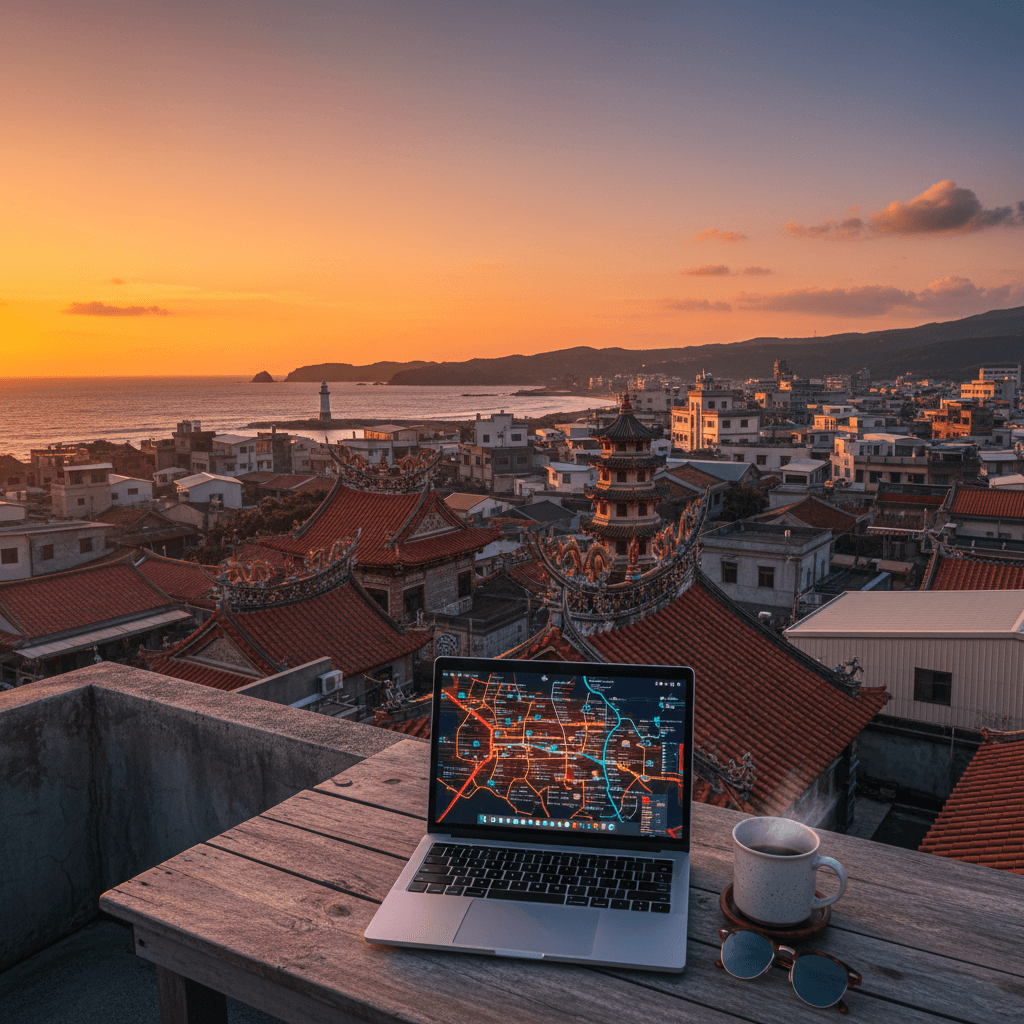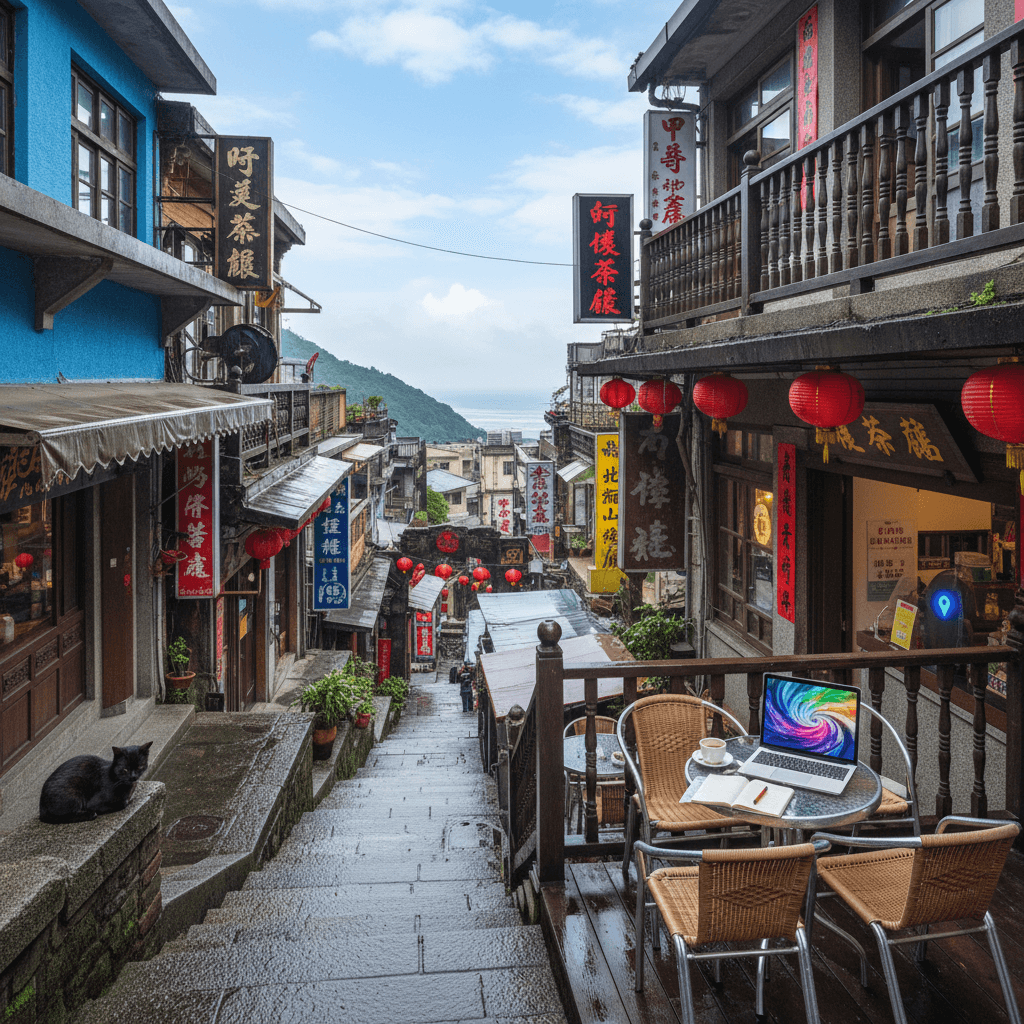
New Taipei City
🇹🇼 Taiwan
The Suburban Soul of the North
New Taipei City is the ultimate "life hack" for anyone looking to tap into Taiwan's high tech infrastructure without the premium price tag of the capital. While Taipei City gets the glory, New Taipei is the massive, horseshoe shaped region that wraps around it. It is often described as the quieter, more affordable sibling, but that does not mean it lacks personality. Here, the vibe shifts from the sleek skyscrapers of Banqiao to the misty, riverside trails of Xindian in a single MRT ride.
Most nomads find that New Taipei offers a better quality of life because you get more space for your money. You are trading the frantic energy of the Xinyi district for wide river parks, organized bike paths, and a local community that actually recognizes you after your third visit to the neighborhood breakfast shop. It feels like a collection of distinct towns rather than one giant monolith, each with its own rhythm and local night market.
The Nomad Experience
Living here feels remarkably frictionless. You can leave your laptop on a table at a Starbucks in Banqiao to go grab a refill without a second thought; the level of safety is genuinely staggering. The internet is some of the fastest in Asia, and the 5G coverage is so consistent you can take a Zoom call from the back of a bus or a mountain trailhead.
Expats often say the best part of New Taipei is the "15 minute life." Within a short walk of almost any MRT station, you will find a 7-Eleven or FamilyMart for your banking and shipping needs, a YouBike station for quick trips, and a Cosmed for health supplies. It is a city designed for efficiency, leaving you more time to explore the mountains or hunt for the best beef noodle soup in the alleyways.
What You Will Pay
One of the biggest draws is the cost of living, which typically runs 20% to 30% lower than central Taipei. You can live quite well on a mid range budget of $1,500 to $2,500 USD per month. Here is how the typical monthly costs break down for a solo nomad:
- Budget ($1,000 to $1,500): You can snag a studio for around $300 to $470 in areas like Yonghe. You will be eating mostly at night markets or local stalls for $2 to $4 per meal and using the MRT and YouBikes for almost everything.
- Mid Range ($1,500 to $2,500): This gets you a modern one bedroom apartment for $470 to $780. You will have plenty of room for coworking memberships, occasional Ubers, and dining at mid range restaurants where a meal costs about $10.
- Comfortable ($2,500+): At this level, you are looking at upscale high rises with gyms and pools for $800 or more. You can enjoy high end dining and weekend trips across the island without checking your bank balance.
The Neighborhood Breakdown
Choosing your base depends on whether you want urban convenience or a bit of nature. Most nomads gravitate toward these four districts because of their MRT access:
- Banqiao: The commercial heart of New Taipei. It is packed with malls and coworking spots. It is only 10 minutes from Taipei Main Station, making it the most convenient hub for those who want to be near the action.
- Yonghe: Known for being one of the most densely populated places on earth, but it feels surprisingly cozy. It is great for families and solo travelers who want a residential feel with plenty of parks.
- Xindian: This is the gateway to the mountains. If you like hiking or river views, this is your spot. It is at the end of the Green Line, offering a much slower, greener pace of life.
- Zhonghe: A solid middle ground with lower rents and a younger, student heavy vibe. It is perfect if you want to be slightly off the beaten path but still connected to the city.
Logistics and Getting Grounded
Taiwan launched a Digital Nomad Visa in January 2025, allowing up to 6 months initial stay, extendable in-country for a total of up to 2 years. This has made New Taipei an even more attractive long term base. When you land, grab an EasyCard at the airport for $100 TWD; this card is your lifeline for the MRT, buses, and even payments at convenience stores.
While English is common in tourist areas, it drops off quickly in the residential parts of New Taipei. Most nomads manage just fine by using Google Translate and the Airalo app for immediate data. The locals are famously patient and will usually go out of their way to help you, even if there is a language gap. It is this combination of high tech convenience and old school hospitality that makes New Taipei feel like home faster than almost anywhere else in Asia.
The Affordability Advantage
Living in New Taipei City is the ultimate "life hack" for nomads who want the infrastructure of a world class capital without the steep price tag. While it sits right on the border of Taipei, your monthly expenses will generally drop by 20% to 30% the moment you cross the bridge. It is the sweet spot where you get fiber optic internet and safe streets for a fraction of what you would pay in Tokyo or Singapore.
Most digital nomads find they can live comfortably here on $1,500 to $2,500 USD per month. If you are sticking to a tight budget, it is entirely possible to get by on $1,000 to $1,500 USD by leaning heavily on the incredible street food scene and finding a studio in areas like Banqiao or Yonghe.
Monthly Budget Tiers
The Budget Nomad ($1,000 to $1,500 USD)
- Housing: A modest studio in Banqiao or Zhonghe for NT$10,000 to NT$15,000 ($300 to $470).
- Food: Sticking to night markets and local "box meals" (biandang) for NT$50 to NT$150 per meal.
- Transport: Using the TPASS monthly transit card and YouBike for under $20 total.
The Mid-Range Professional ($1,500 to $2,500 USD)
- Housing: A modern 1-bedroom apartment in Xindian for NT$15,000 to NT$25,000 ($470 to $780).
- Food: A mix of local spots and air-conditioned cafes, averaging NT$200 to NT$400 per meal.
- Work: A hot desk at WeWork (nearby Taipei) or local hubs for NT$3,000 to NT$8,000 ($90-$250).
The High-End Resident ($2,500+ USD)
- Housing: Upscale high-rise living with a gym and doorman for NT$25,000+ ($780+).
- Dining: Frequent international dining and craft cocktail bars where meals exceed NT$1,000.
- Convenience: Regular use of Uber and premium coworking memberships.
Rent and Neighborhoods
Rent is your biggest saving. In central Taipei, a tiny "shoebox" apartment can eat up half your budget, but New Taipei offers actual breathing room. Expats often recommend Banqiao because it is a massive transit hub; you can be at Taipei Main Station in 10 minutes, yet studios here start around NT$12,000.
If you prefer nature, Xindian is the go-to. It is slightly pricier but puts you right next to the river and mountains. For the absolute lowest prices, Sanxia offers beautiful old-world charm and studios for NT$10,000, though you will trade away the convenience of the MRT and rely on buses instead.
Daily Expenses and Lifestyle
Daily life is remarkably cheap if you live like a local. A SIM card with unlimited 5G data from Chunghwa Telecom costs about NT$300 to NT$500 per month, which is a steal for the speeds you get. For coffee, a latte at a trendy nomad-friendly cafe in Banqiao runs about NT$120, but you can grab a decent Americano at 7-Eleven or FamilyMart for NT$45.
Getting around won't break the bank either. The EasyCard is your best friend here. Most MRT trips across the city cost less than $1.50, and the first 30 minutes of a YouBike rental is often free or just a few cents. Even Uber is affordable; a 20-minute cross-district ride usually stays under $10. Travelers often say the lack of tipping culture is one of the best "hidden" ways to save money, as the price you see on the menu is almost always what you pay.
Practical Money Tips
- Banking: Use Wise for transfers to avoid high bank fees. Most ATMs charge a flat NT$100 fee for foreign cards, so withdraw larger amounts at once.
- Groceries: Shop at PX Mart or local wet markets for the best prices. Carrefour is great for Western imports but will inflate your bill.
- Utilities: Budget about NT$2,000 for electricity in the summer. The humidity is no joke, and running the AC 24/7 is the one thing that will spike your costs.
For Digital Nomads: Banqiao and Zhonghe
If you want to be where the action is without paying Taipei City prices, Banqiao is the undisputed heavyweight champion. It is the administrative heart of New Taipei City, but more importantly, it is a massive transit hub. You can hop on the MRT and be in Ximen or Taipei Main Station in about 10 to 15 minutes. Nomads flock here because you get the high rise lifestyle and modern malls like Mega City for a fraction of the cost across the river.
- The Vibe: High energy, neon lights, and a dense concentration of laptop friendly cafes.
- Living Costs: Expect to pay around NT$12,000 to NT$15,000 for a decent studio.
- Workspace: While many head into Taipei for WeWork, the local Starbucks and independent cafes in Banqiao are famous for their "stay as long as you want" culture.
Zhonghe is the scrappy, high value alternative. It has a younger, student heavy atmosphere and feels a bit more "local" than the polished streets of Banqiao. It is perfect if you want to save even more on rent while staying close to the river parks for sunset bike rides on a YouBike.
For Expats: Xindian
Expats who plan on staying for a year or more often gravitate toward Xindian. It feels less like a concrete jungle and more like a gateway to the mountains. The air is slightly fresher here, and the Green Line MRT gives you a direct shot into the expat heavy districts of Taipei like Guting and Gongguan. It is the kind of place where people actually recognize their neighbors.
- The Vibe: Relaxed, green, and outdoorsy. You have the Bitan Scenic Area right there for weekend paddle boating or riverside dining.
- Living Costs: Mid range 1BR apartments typically run between NT$15,000 and NT$25,000.
- Practicality: It is home to several international schools and high quality clinics, making the transition much easier if you aren't fluent in Mandarin yet.
For Families: Yonghe
Yonghe is often cited as one of the most densely populated areas in the world, but don't let that scare you off. For families, it offers a level of convenience that is hard to beat. Everything is walkable. You'll find a 7-Eleven, a pharmacy, and a park on almost every corner. It is quiet, safe, and feels very residential once you step off the main boulevards.
- The Vibe: Community focused and incredibly safe. You will see kids walking themselves to school and seniors practicing Tai Chi in the parks at dawn.
- Living Costs: Large family sized apartments are much more affordable here than in Taipei, often starting around NT$25,000 for a three bedroom unit.
- Perks: The night markets here, like Lehua, are world class but feel less "touristy" and more like a local kitchen for the neighborhood.
For Solo Travelers and Culture Seekers: Sanxia
If you don't mind a commute and want a "real" Taiwan experience, Sanxia is a fascinating choice. It is famous for its Old Street and the stunning Zushi Temple. Since it isn't directly on an MRT line yet, you have to rely on buses to get to the train, which keeps the prices low and the soul of the neighborhood intact. It is the best spot for those who want to spend their mornings hiking and their afternoons writing in a quiet, traditional setting.
- The Vibe: Artistic, historic, and slow paced. It feels like a small town that happens to be attached to a metropolis.
- Living Costs: You can find simple studios for as low as NT$10,000, which is a steal for this level of safety and infrastructure.
- Note: You will definitely want to have Google Translate downloaded for offline use here, as English signage is much rarer than in Banqiao or Xindian.
Digital Speed and Connectivity
New Taipei City is a powerhouse for connectivity. You'll find some of the fastest fiber optic internet in Asia here, with home speeds easily hitting 1Gbps. Most apartments in districts like Banqiao or Yonghe come pre-wired with stable, high-speed lines that make video calls and heavy uploads seamless. Mobile data is just as impressive; 5G coverage is ubiquitous across the city, even when you're deep in the MRT tunnels or hiking the trails in Xindian.
For your phone setup, travelers usually recommend two routes. If you want to hit the ground running, grab an eSIM through the Airalo app before you land. It's cheap and saves you the hassle of finding a shop immediately. However, for the best value, head to a Chunghwa Telecom or FarEasTone kiosk at the airport or a local 7-Eleven. A local SIM with unlimited data typically costs between NT$300 and NT$500 per month. Just remember you'll need your passport for registration.
Coworking Spaces and Communities
While the massive, flashy flagship coworking spaces are often clustered across the river in Taipei City, New Taipei offers more localized, affordable alternatives. Many nomads find it's worth the 10 to 15 minute MRT commute to access the high-end hubs in the capital, but New Taipei's own scene is growing rapidly.
- WeWork in nearby Taipei (e.g., Xinyi): a short MRT ride away, hot desk around NT$8,000 per month. It's the go-to for networking and high-end amenities.
- Local New Taipei Hubs: Smaller, independent spaces in Banqiao and Zhonghe offer monthly passes starting around NT$3,000. These are quieter and great for deep work sessions without the "tech bro" energy.
- Public Libraries: New Taipei has an excellent network of modern libraries. They're free, air-conditioned, and usually have dedicated laptop areas, though you'll need to arrive early to snag a spot.
The Laptop-Friendly Cafe Culture
If you prefer a change of scenery, New Taipei's cafe culture is a nomad's dream. Unlike many European cities where "laptop squatting" is frowned upon, Taiwanese cafes are incredibly welcoming to remote workers. It's common to see people working for hours over a single latte. Safety is a huge perk here; you'll often see locals leave their MacBook and iPhone on the table while they head to the restroom without a second thought.
Banqiao is the undisputed champion for work-friendly cafes. Look for spots near the Fuzhong or Banqiao MRT stations. Chain shops like Starbucks and Louisa Coffee are reliable fallbacks with free WiFi and plenty of power outlets. Louisa Coffee, in particular, is a local favorite because it's cheaper than Starbucks, with coffee around NT$50 to NT$80, and often has dedicated "quiet zones" for workers.
For a more boutique vibe, explore the back alleys of Yonghe. You'll find smaller, independent roasteries where the WiFi is fast and the atmosphere is geared toward productivity. Most of these spots don't mind you staying as long as you buy a drink every few hours. Just keep an eye out for "no laptop" signs on weekends, as some popular spots prioritize brunch crowds during peak hours.
Practical Connectivity Tips
- Power Outlets: Taiwan uses the same Type A and B plugs as the US and Canada. Most modern cafes have outlets built into the tables or floor.
- Public WiFi: The iTaiwan and TPE-Free networks cover most public areas and MRT stations. They're fine for a quick message, but you'll want your own data for secure work.
- Convenience Stores: 7-Eleven and FamilyMart are everywhere. They offer free WiFi, printing services via the ibon machine, and even seating areas if you're in a pinch between meetings.
A Culture of Absolute Safety
If you are coming from North America or Europe, the safety levels in New Taipei City will probably shock you. It is the kind of place where you can leave your MacBook on a cafe table at a Starbucks in Banqiao to go use the restroom without a second thought. Theft and pickpocketing are incredibly rare, and violent crime against foreigners is almost unheard of. Most nomads feel comfortable walking through any neighborhood, like Yonghe or Zhonghe, at 3:00 AM without glancing over their shoulder.
The biggest "danger" you will likely face is the traffic. While the sidewalks are generally decent, scooters often zip through narrow alleys or park on walkways. Pedestrians don't always have the right of way in practice, so keep your eyes open when crossing streets. Taxis and Ubers are exceptionally honest; drivers use the meter by default and won't try to scam you on the fare from the airport or between districts.
Healthcare: World-Class and Accessible
Taiwan’s healthcare system is legendary among expats for its efficiency and low cost. While most digital nomads on the 2025 Digital Nomad Visa initially pay out of pocket, the prices are so low it rarely hurts the budget. A visit to a specialist often costs between $20 and $40 USD, including basic medication. If you stay long-term and transition to a residency status, you will likely qualify for the National Health Insurance (NHI), which makes costs almost negligible.
For serious issues, you are never far from top-tier facilities. NTU Hospital and Taipei Veterans General are just a short 15-minute MRT ride away in Taipei City, but New Taipei has its own heavy hitters like Far Eastern Memorial Hospital in Banqiao. Most doctors at these major hubs speak excellent English, having often trained abroad. For minor ailments, look for the Cosmed or Watson’s chains; they are on nearly every corner and stock everything from basic antibiotics to skincare.
Emergency Essentials
In the event of an emergency, the numbers are easy to remember. Dial 119 for an ambulance or fire, and 110 for the police. There are dedicated English-speaking lines available, though the dispatchers at the main emergency numbers usually have someone on hand who can communicate in English. If you have a minor medical question, the 24-hour community pharmacies are your best bet. Look for the green cross signs.
- Emergency Services: Dial 119 (Ambulance/Fire) or 110 (Police).
- English Support: Major hospitals in Banqiao and Xindian have international medical centers to help with paperwork and translation.
- Pharmacies: Chains like Cosmed are open late and carry most over the counter essentials.
- Water Safety: Do not drink the tap water directly. Most apartments have filtration systems, or you can buy 5-liter jugs at any 7-Eleven for about $2 USD.
Solo Travel and Night Safety
Solo female nomads frequently rank Taiwan as one of the safest places in Asia. You won't deal with the catcalling or aggressive street vending common in other hubs. The city is well-lit, and the MRT stations are staffed until the last train runs around midnight. If you are out later, the Uber app is the most reliable way to get home, as every ride is GPS-tracked and the drivers are vetted. Most expats recommend downloading the Police 110 app, which allows you to report issues or share your location silently if you ever feel uneasy.
The Logistics of Daily Life
Moving through New Taipei City is a masterclass in efficiency. While it's technically its own massive municipality, the integration with Taipei's transit system is so seamless that you'll rarely feel the border. Most nomads choose their base specifically for its proximity to an MRT station, as the "Blue Line" (Bannan) and "Green Line" (Xindian) act as the city's primary arteries. EasyCards cost NT$300 (includes NT$100 non-refundable deposit + stored value), which you'll then tap for everything from trains to convenience store snacks.
The Metro (MRT) and Trains
The MRT is the backbone of your commute. It's clean, punctual, and strictly prohibits eating or drinking, which keeps the stations pristine. If you're living in Banqiao, you're looking at a 10 to 15 minute ride into the heart of Taipei. Fares are incredibly cheap, usually ranging from NT$20 to NT$65 per trip. For those living further out in Sanxia, you'll rely more on the bus network to reach the nearest train station, but the system is reliable enough that it rarely feels like a chore.
- Go! Taipei Metro App: This is your best friend for checking arrival times and route maps.
- Airport Access: The Taoyuan Airport MRT gets you from the terminal to Taipei Main Station for NT$150 (about $4.50). From there, it's a quick transfer to the New Taipei lines.
YouBike and the Last Mile
One of the best perks of living in New Taipei is the YouBike system. You'll see the bright yellow bikes parked outside every MRT exit and major park. If you have a local SIM card, you can register your EasyCard and get the first 30 minutes for free or a very nominal fee. The riverside paths in districts like Yonghe and Xindian are perfect for cycling, offering a break from the urban density without needing a car.
Ride-Hailing and Taxis
When the rain hits, which happens often during the humid summers, Uber is the go-to. It's plentiful and transparently priced. Local yellow taxis are also honest and everywhere; drivers use meters religiously, so you don't have to worry about the "tourist tax" common in other parts of Southeast Asia. A typical 15 minute ride across districts will usually set you back around NT$200 to NT$300.
Walking and Local Navigation
New Taipei is highly walkable, though the sidewalks can sometimes be a bit of an obstacle course with parked scooters and shop displays. Google Maps is exceptionally accurate here for both walking directions and bus schedules. Most expats find that between the MRT and their own two feet, they never need to bother with the complexity of buying a scooter or car. If you're heading to the hills of Wulai or the old streets of Jiufen for a weekend trip, the local bus system is the most cost effective way to go, even if the winding mountain roads require a strong stomach.
Transport Costs at a Glance
- Monthly Transport Budget: Budget around NT$1,200 to NT$1,500 if you're commuting daily.
- EasyCard Cost: NT$300 (includes NT$100 non-refundable deposit + stored value).
- MRT Fares: Starting at NT$20.
- Airport Express: NT$150.
The Language Landscape
Expect a bit of a linguistic adventure when you cross the bridge from Taipei City into New Taipei. While the capital is quite used to English speakers, New Taipei feels more authentic and local. Mandarin Chinese is the primary language for everything from government forms to cafe menus. You'll also frequently hear Taiwanese Hokkien, especially among the older generation in traditional markets or neighborhood temples in districts like Sanxia.
In nomad hubs like Banqiao or Yonghe, younger baristas and staff at chain stores usually speak enough English to help you get a latte or process a package. However, once you wander into a local hole in the wall eatery or a hilltop tea house in Xindian, communication often shifts to smiles and gestures. Most nomads find that locals are incredibly patient and will go out of their way to help you even if there's a total language gap.
Survival Tech and Apps
You don't need to be fluent to live comfortably here, but you do need the right tools on your phone. Digital nomads in Taiwan swear by Google Translate. The camera feature is a lifesaver for translating printed menus or instructions on your washing machine. Since most signage in the MRT and major streets is bilingual, you won't get lost, but the "fine print" of daily life is where the app earns its keep.
- Google Translate: Download the Chinese (Traditional) pack for offline use.
- Waygo: Excellent for translating food menus without needing a data connection.
- Line: This is the "everything app" in Taiwan. If you meet a local friend or need to message a landlord, they'll ask for your Line ID, not your phone number.
Key Phrases for Your First Week
Learning a few basics goes a long way in building rapport with the "A-mats" (grandmothers) at the fruit stalls. Traditional Chinese characters are used here, which look different from the simplified characters used in Mainland China.
- Nǐ hǎo (Nee-how): Hello. Use this for everyone from the 7-Eleven clerk to your neighbor.
- Xièxie (Shyeh-shyeh): Thank you. You'll say this constantly; the Taiwanese are famously polite.
- Bù yòng (Boo-yong): "I don't need it." Useful when you're offered a plastic bag or a receipt you don't want.
- Duōshǎo qián? (Dwō-shǎo chyen): How much does it cost?
- Tíng bù dǒng (Ting-boo-dong): I don't understand. A polite way to signal you need the translation app.
Practical Communication Tips
If you're planning to stay for the duration allowed by the digital nomad visa (up to 2 years with extensions), consider enrolling in a part-time Mandarin course. While many expats manage for years with just "survival Chinese," even a basic grasp of the tones helps with food orders. Most restaurants in New Taipei use a "check-off" menu system where you mark what you want on a paper slip. If there's no English menu, nomads often look at what other people are eating and use the "point and nod" method.
One quirk of local communication is the use of "Mmm" or "A-ha" during conversations. It doesn't always mean "yes," but rather "I'm listening." Also, don't be surprised if people are shy about speaking English at first. It's usually not because they can't speak it, but because they're afraid of making a mistake. A friendly "Ni hao" usually breaks the ice and makes them feel more comfortable trying out their English with you.
For official business, like setting up a bank account or signing a lease in Banqiao, try to bring a local friend or use a real estate agent who speaks English. While the 119 emergency lines have English speakers available, most day to day bureaucracy in New Taipei is still a Mandarin-first environment.
The Seasonal Breakdown
New Taipei City sits in a subtropical zone, which means you're mostly dealing with two extremes: incredibly humid, sticky summers and mild, drizzly winters. If you're planning your stay around deep work and outdoor exploration, timing is everything.
October to December is widely considered the sweet spot for nomads. The oppressive heat of the summer finally breaks, leaving you with temperatures hovering around 19°C to 25°C. It's the perfect window for taking your laptop to a riverside cafe in Xindian or hiking the trails around Sanxia without melting. The air is crisp, the rain is manageable, and the city feels energized.
January to March stays relatively comfortable, though it can get surprisingly chilly. While it rarely drops below 12°C, the high humidity makes the cold seep into your bones, especially since many older apartments in districts like Yonghe lack central heating. You'll want a solid jacket and perhaps a portable space heater from a local Poya or Carrefour. This period is also the driest, making it a great time for long bike rides on the riverside paths.
April to June marks the beginning of the "Plum Rain" season. Expect frequent afternoon downpours and rising humidity. While the temperatures are still moderate, around 23°C to 28°C, you'll find yourself relying more on indoor coworking spaces and the underground mall networks to stay dry.
July to September is the "hard mode" of New Taipei living. Temperatures frequently hit 32°C or higher, but the humidity makes it feel like 40°C. This is also typhoon season. While Taiwan's infrastructure is built to handle these storms, a direct hit can shut down the MRT and local businesses for a day or two. Most expats spend these months hopping between air-conditioned cafes in Banqiao or retreating to the cooler mountain elevations.
Best Time for Digital Nomads
- Peak Productivity: October to December. The weather is stable, the cafe hopping is at its best, and you won't be constantly distracted by the need for a shower every time you walk to the MRT.
- Budget Travelers: May and June. You might find slightly better deals on short term rentals during the rainy season, though the price difference in New Taipei is usually less dramatic than in more tourist heavy cities.
- Outdoor Enthusiasts: November to March. This is the prime window for exploring the Northern Coast or the hiking trails in the southern districts without the risk of heatstroke.
Practical Weather Survival Tips
The humidity is a constant factor here, regardless of the temperature. Long term residents recommend buying a dehumidifier for your apartment immediately; it's the only way to keep your clothes and electronics from getting damp. Most mid range rentals include one, but it's worth checking before you sign a lease.
Keep a close eye on the Central Weather Administration (CWA) app. It provides real time alerts for typhoons and heavy rain, which is vital if you're planning to work from one of the more remote mountainous areas like Wulai. For daily commutes, an EasyCard and a sturdy umbrella are your two most important accessories. You can pick up a high quality "typhoon proof" umbrella at any 7-Eleven for about NT$300.
If you're sensitive to air quality, winter can occasionally bring smog from the mainland. Most nomads use the AirVisual app to check AQI levels before heading out for a run or a long walk. On high pollution days, you'll see locals wearing masks, a practice that's culturally standard and helps keep your lungs clear while navigating the busier intersections of Banqiao.
Getting Connected
Staying online is remarkably easy in New Taipei. Most nomads head straight to a Chunghwa Telecom or FarEasTone booth at the airport to grab an unlimited data SIM. It usually costs between NT$300 and NT$500 for a month. If you prefer things digital, the Airalo app works perfectly here for 5G coverage, though local SIMs are better if you need a phone number for apps like YouBike.
The home internet speeds are some of the fastest in Asia, often hitting 1Gbps. While you might find spotty WiFi in older "hole in the wall" eateries, the cafe culture in districts like Banqiao is elite. You can park yourself in a Starbucks or a local boutique cafe for hours with a single coffee. It is incredibly safe; locals often leave their laptops on the table while they go to the restroom without a second thought.
Money and Costs
New Taipei is the budget friendly sibling to Taipei City. You will generally spend 20% to 30% less on rent here while staying on the same MRT lines. Most digital nomads find that a monthly budget of $1,500 to $2,000 USD allows for a very comfortable lifestyle.
- Budget Living ($1,000 to $1,500 USD): Stick to studio apartments in Yonghe for around NT$12,000, eat at night markets for NT$100 a meal, and use the MRT.
- Mid-Range ($1,500 to $2,500 USD): Rent a nicer 1BR in Xindian for NT$20,000, eat at mid range restaurants, and use Uber occasionally.
- Coworking: A hot desk at nearby Taipei WeWork or local New Taipei spaces runs about NT$3,000 to NT$8,000 per month.
For banking, Wise is the gold standard for transfers. ATMs are everywhere, usually charging a flat NT$100 fee for international cards. Cash is still king at smaller stalls, but the EasyCard handles almost all your transport and convenience store purchases.
Visas and Staying Long Term
Taiwan recently launched a Digital Nomad Visa that is perfect for those looking to stay longer than a standard tourist entry. It allows for a 6 month stay and is renewable for up to 2 years, provided you can prove you earn remote income. If you are just passing through, many nationalities get 90 days visa free, which is plenty of time to soak up the mountain views in Sanxia or the river trails in Zhonghe.
Navigating the City
The EasyCard is your best friend. You can buy one at any 7-Eleven for a NT$100 deposit. It works on the MRT, buses, and the YouBike system. If you register your card with a local phone number, the first 30 minutes of a bike rental are often free or heavily discounted.
For longer trips, Uber is reliable and honest. You don't have to worry about "tourist prices" here. If you are coming from the airport, the Taoyuan Airport MRT gets you into the city for NT$150 in under an hour. Download the Go! Taipei Metro app to track train times in real time.
Health and Safety
This is one of the safest urban areas in the world. Solo travelers and women working late in cafes report feeling completely secure. If you do get sick, the healthcare system is top tier. NTU Hospital is easily accessible via the MRT, and pharmacies like Cosmed are on almost every corner for minor issues. In an emergency, dial 119 for an ambulance; they usually have English speakers available to help.
Weather and Timing
The climate is subtropical, which means it gets incredibly sticky. October to December is the sweet spot with temperatures around 22°C and less rain. Avoid July through September if you can, as that is typhoon season and the humidity can be draining. If you are here in the summer, do what the locals do: move between air conditioned malls and cafes during the day and hit the night markets after the sun goes down.
Need visa and immigration info for Taiwan?
🇹🇼 View Taiwan Country GuideEasy Landing
Settle in, no stress
Monthly Budget Estimates
More cities in Taiwan
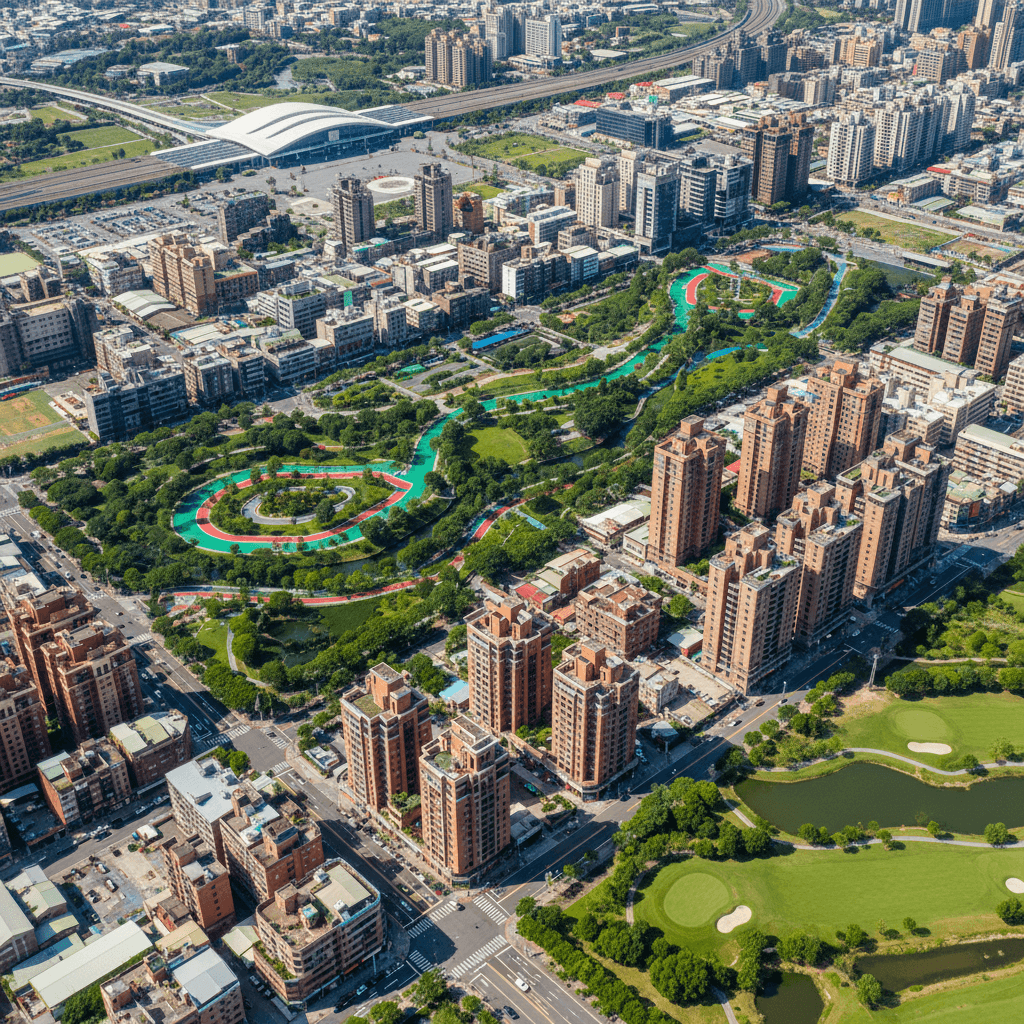
Zhubei
🇹🇼 Taiwan
Hualien City
🇹🇼 Taiwan
Yilan City
🇹🇼 Taiwan