New Amsterdam
🇬🇾 Guyana
The Pioneer’s Retreat
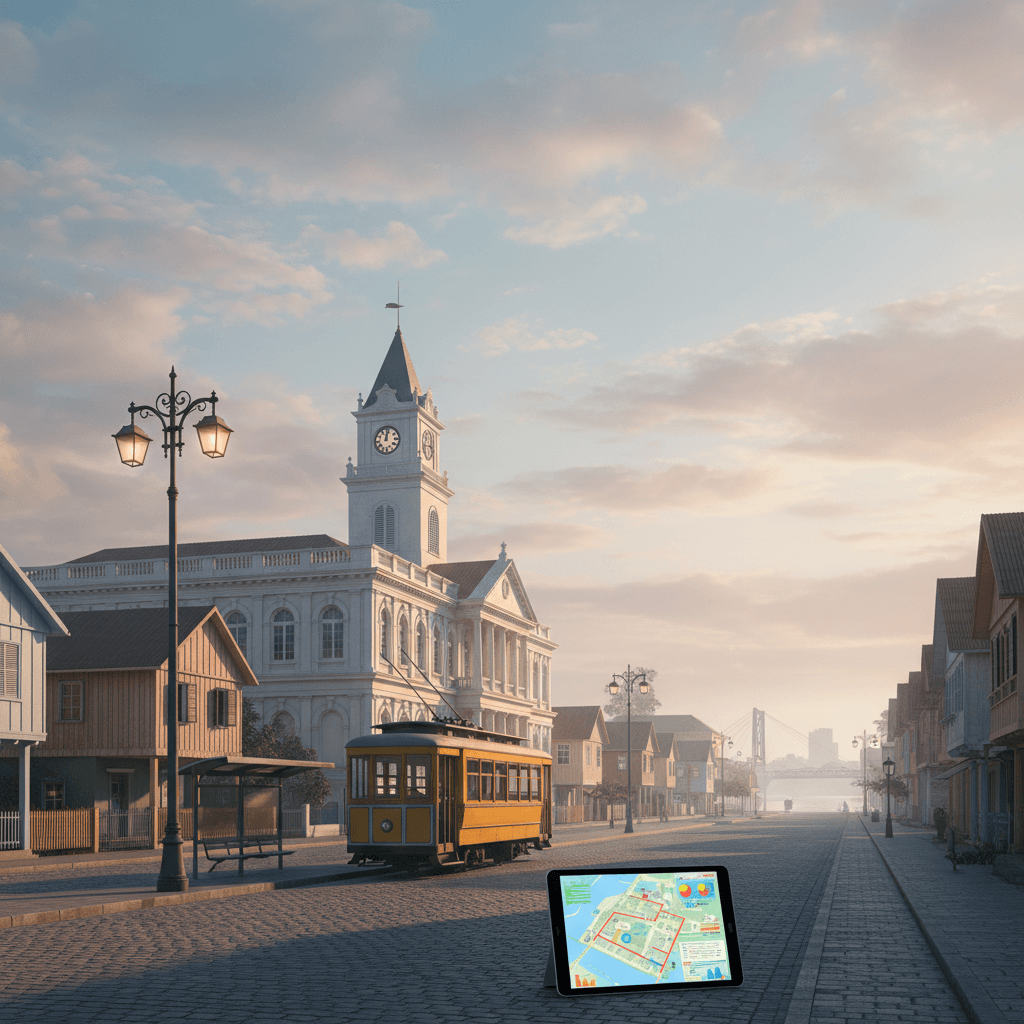
New Amsterdam isn't the kind of place you visit to check off a bucket list of monuments. It's where you go when you want the world to slow down. As Guyana's second largest city, it maintains a sleepy, historic Berbice river town energy that feels worlds away from the frantic pace of Georgetown. You'll find a landscape of colonial architecture, green riverside views, and a melting pot of cultures that feels deeply authentic because it hasn’t been curated for tourists.
For the digital nomad, New Amsterdam is a "deep work" destination. It’s ideal for the self-reliant professional who needs to buckle down on a project while stretching their budget further than almost anywhere else in South America. The vibe is quiet and pioneer-like; you won't find a line of laptops at a trendy cafe or a weekly expat mixer. Instead, you'll find a community that moves to a Caribbean rhythm, where the locals are genuinely curious about your story and the cost of living is remarkably low.
The emotional experience here is one of solitude and simplicity. Most nomads find the lack of a social scene a bit lonely if they stay too long, but for a month or two, the peace is transformative. It’s a place for long walks along the Berbice River, afternoon rains that cool the tropical heat, and the satisfaction of discovering a corner of the world that remains largely undocumented by the typical travel influencer circuit.
The Cost of Freedom
Living here is incredibly affordable, with monthly totals often landing between $800 and $1,200 for those on a budget, and rarely exceeding $1,500 for a more comfortable lifestyle. This is a fraction of the cost you'd find in the capital. Your money goes toward a quiet life rather than luxury amenities.
- Budget ($800 to $1,200): Covers a local guesthouse, plenty of street food like doubles or pholourie for $3 to $5, and using the local minibus system.
- Mid-range ($1,200 to $1,500): Includes a private one-bedroom apartment, a mix of home cooking and mid-range dining at riverside spots for $10 to $15, and a steady supply of cafe coffee.
- Comfortable ($2,000+): This tier allows for the best available housing with a private veranda, frequent upscale meals, and private taxi transport.
Where to Plant Your Flag
The city is compact and easy to navigate, but your choice of neighborhood dictates your daily workflow and access to amenities.
- Central New Amsterdam: This is the hub for most solo travelers. It’s walkable to the few local cafes and historic sites. While it lacks a nightlife scene, it puts you close to local cafes like C&M Bakery and Snackette.
- Riverside & Berbice Bridge: If you value a view over proximity to shops, the areas near the Berbice River Bridge are scenic and quiet. It's a favorite for those who want nature access, though the internet can be a bit more temperamental here, often ranging from 10 to 30 Mbps.
- Nearby Villages (Canje, Rotterdam): These spots are for the true budget seekers. You'll find a strong community feel and recreation parks, but you'll need to be comfortable with very basic amenities and no expat infrastructure.
The Digital Setup
Don't expect dedicated coworking spaces with ergonomic chairs and networking events. Most nomads set up shop on their private verandas or head to local cafes. While national broadband averages around 73 Mbps, local speeds can fluctuate. Expats recommend grabbing a local SIM card from Digicel as a backup; $10 to $20 usually gets you enough data to tether through a power outage or a localized WiFi dip.
The work culture here is relaxed. You can sit in a cafe for hours for the price of a few coffees, and nobody will rush you. However, the lack of a nomad community means you’ll have to be your own motivation. If you thrive on the energy of other entrepreneurs, New Amsterdam might feel a bit isolating. If you thrive on silence and the occasional "good day" from a passing neighbor, it’s a paradise.
Practical Realities
Getting here usually involves a 1.5 to 2 hour journey from the Eugene F. Correia International Airport near Georgetown, costing between $20 and $50 by taxi or bus. Once you're in the city, you can get almost anywhere via minibus for a couple of dollars. English is the official language, which makes navigating daily life and banking seamless, though you'll quickly fall in love with the lilt of Guyanese Creole.
Safety is generally not a major concern if you stick to the central and riverside areas and exercise standard traveler caution. The pace of life is so slow that crime is infrequent, but being self-sufficient is key. There aren't many safety nets or high-end concierge services here. You are a pioneer in a town that is just beginning to see the potential of the 2025 digital nomad visa, which requires a $24,000 annual income to qualify.
The Budget Stretch
New Amsterdam is a rare find for nomads who want their money to go further without the chaotic energy of Georgetown. While the capital can easily drain a bank account, this historic riverside town allows you to live comfortably on roughly $1,500 a month. If you're willing to embrace a more local lifestyle, sticking to guesthouses and street food, you can even scrape by on $800 to $1,200. It’s a pioneer destination; you’re trading a high-end social scene for the ability to bank most of your income while living in a quiet, colonial era setting.
Monthly Budget Tiers
- The Budget Hustler ($800 to $1,200): This covers a basic guesthouse room, plenty of street food like pholourie or chicken curry for $3 to $5 a pop, and getting around via local minibuses.
- The Mid-Range Professional ($1,200 to $1,500): You'll snag a private one bedroom apartment, mix in some riverside dining for $15 a meal, and have enough left over for a solid data plan and frequent cafe visits.
- The Comfortable Nomad ($2,000+): At this level, you’re looking at the best private rentals available, likely with a veranda for breezy afternoons, upscale meals at the few nicer spots in town, and a private taxi budget for convenience.
Housing and Neighborhoods
The rental market here is informal. You won't find much on the big booking platforms, so most nomads rely on local Facebook groups or simply asking around at guesthouses once they arrive. Most people choose to stay in Central New Amsterdam. It’s the most walkable part of town and keeps you close to the colonial architecture and the few reliable spots for WiFi. Expect to pay between $300 and $500 for a decent studio or small apartment in the center.
If you prefer a slower pace, the Riverside areas near the Berbice River Bridge offer great views and a bit of nature. It’s a favorite for those who value peace over proximity. Nearby villages like Canje and Rotterdam are even cheaper, though you'll be more isolated and will need to be entirely self-reliant for your work setup. These spots are better for long-term stays where you really want to embed yourself in a Guyanese community.
Internet and the Workday
Don't expect dedicated coworking spaces with ergonomic chairs and free-flowing kombucha. New Amsterdam is a "work from a cafe" kind of town. Tech Hub Cafe is the go-to spot for most travelers. It’s casual and welcoming for those with laptops. While broadband speeds can hit 70 Mbps, they often fluctuate between 10 and 30 Mbps. Power outages happen, so a local SIM card from Digicel or Claro is a must. A monthly unlimited data backup will run you about $10 to $20 and can save your workday when the local grid blips.
Getting Around and Daily Life
The city center is compact enough to navigate on foot, which is the best way to soak in the local rhythm. For longer trips or when the midday heat hits, minibuses and taxis are everywhere. A quick ride across town usually costs between $1 and $5. If you’re coming from the airport near Georgetown, expect a 2 to 3 hour journey that costs around $20 to $50 depending on whether you take a shared bus or a private car.
Food is one of the biggest savings here. While a mid-range dinner might hit $15, the local markets and street stalls are where you'll find the best value. It’s a self-starter’s city; there isn't a pre-packaged expat community waiting to greet you. You'll meet people in the parks or at the riverside, but for the most part, New Amsterdam is a place for deep work and quiet exploration rather than networking and nightlife.
Central New Amsterdam: The Nomad Base
If you're coming to New Amsterdam to get work done, stay in the historic center. This is the most walkable part of town, putting you within striking distance of the few spots that offer reliable connectivity. Most nomads gravitate here because you can actually walk to a cafe without needing a taxi every ten minutes. It’s an authentic, slightly gritty colonial area that feels like a throwback to a slower era.
The work setup here is DIY. There aren't any dedicated coworking spaces with ergonomic chairs and free kombucha. Instead, you'll likely end up at Tech Hub Cafe. It’s the unofficial headquarters for anyone with a laptop, offering a decent atmosphere and the best chance of meeting a local tech enthusiast. Expect to pay about $5 for a solid coffee and a few hours of table time.
- Average Rent: $300 to $500 for a modest studio or 1BR apartment.
- Connectivity: Broadband hits around 70 Mbps, but it fluctuates. Keep a Digicel or Claro SIM with a $20 unlimited data plan as a hotspot backup.
- The Vibe: Low-key and productive. It’s perfect for a deep-work sprint, but the lack of a social scene means you'll need to be comfortable with your own company.
Riverside & Berbice: For Adventure Seekers
The areas hugging the Berbice River, particularly near the Berbice River Bridge, attract travelers who care more about the view than the ping rate. It’s significantly quieter than the center and feels more like a tropical retreat. You’ll find more green space and parks here, though you'll be more isolated from shops and services.
Living out here requires a bit more grit. Internet speeds often dip to 10 to 30 Mbps, which is fine for emails but frustrating for heavy video calls. You’ll want to negotiate a guesthouse rate or find a private veranda to take advantage of the river breeze. It’s the kind of place where you trade high-speed fiber for the chance to watch the river traffic at sunset.
- Monthly Budget: $1,200 to $1,500 for a mid-range lifestyle with a private rental.
- Transport: You’ll rely on local taxis or minibuses, which cost between $1 and $5 per trip into the city center.
- Pros: Scenic, quiet, and incredibly affordable compared to Georgetown.
Canje & Rotterdam: Budget Solo Travelers
For those looking to stretch a $800 to $1,200 monthly budget to the absolute limit, the nearby villages like Canje and Rotterdam are the move. These are traditional Guyanese communities where you’ll be the only foreigner in sight. It’s a true "pioneer" experience. You won't find expat meetups here, but you will find a strong sense of local community and very cheap street food, often $3 to $5 for a hearty meal.
Solo travelers often use these spots as a base to explore the Berbice region. Rotterdam has a decent recreation park that serves as a local hangout. Don't expect any "nomad infrastructure" here; you're paying for the immersion and the low overhead. It’s a great way to see the real Guyana while keeping your costs at a bare minimum.
- Rent: You can often find local rooms or small houses for under $300 if you hunt through local Facebook groups.
- Social: Non-existent in the traditional sense. Your social life will consist of chatting with neighbors and fruit vendors.
- Safety: Generally very safe and quiet, provided you follow standard precautions and respect local customs.
A Note for Families
New Amsterdam isn't a typical family expat destination. There aren't international schools or gated communities with playgrounds. However, for a family on a sabbatical looking for a slow-paced, English-speaking environment, it’s manageable. Stick to the more established residential pockets in the central area or near the riverside parks. You’ll get a lot of house for $2,000 a month, often with a large yard, but you'll need to be self-sufficient regarding entertainment and specialized healthcare.
The Connectivity Reality
Working from New Amsterdam requires a pioneer mindset. You won't find sleek glass offices or ergonomic chairs here. Instead, you'll be relying on a mix of guesthouse WiFi and local SIM cards to keep your projects moving. The national average broadband speed sits around 73 Mbps, which is plenty for Zoom calls and standard uploads, but the local infrastructure in Berbice can be temperamental. In the riverside areas, speeds often dip to the 10 to 30 Mbps range.
The golden rule for working here is redundancy. Power outages and signal drops happen, so most nomads pick up a local SIM from Digicel immediately. Unlimited data plans generally run between $10 and $20 per month. Having a hotspot ready to go will save your skin when the afternoon rains interfere with the local lines.
Where to Set Up Shop
Since dedicated coworking spaces don't exist in New Amsterdam yet, your "office" will likely be a cafe or your own veranda. The New Amsterdam Public Library or local cafes are the primary options for remote workers in the city. These spots offer a casual, welcoming vibe where you can settle in for a few hours. Expect to spend about $5 on drinks and snacks for a half day of work if you choose a local eatery.
Beyond these spots, many nomads prefer the "slow work" approach from their accommodations. If you're staying in Central New Amsterdam, look for guesthouses with shaded outdoor spaces. The heat is real, and a breezy balcony often beats a stuffy indoor room without AC. If you're out toward Canje or Rotterdam, the connection is usually stable enough for emails and light tasks, but you'll want to head back to the city center for heavy lifting or large file transfers.
Digital Nomad Logistics
Guyana is stepping up its game for remote workers, and the entry process is straightforward for many nationalities. For daily expenses, keep Wise or Revolut on your phone to manage transfers, but always carry local cash for your cafe tabs and transit.
- Average Broadband Speed: 71 to 73 Mbps
- Mobile Backup Cost: $10 to $20 per month
- Daily Cafe Spend: Approximately $5
- Best Work Spot: New Amsterdam Public Library or local cafes
The Social Trade-off
If you're looking for networking events or Slack communities for local expats, you're going to be disappointed. The nomad scene here is almost non-existent. You're more likely to meet locals at the Rotterdam Recreation Park than fellow software engineers at a meetup. It’s a lonely spot for social butterflies, but for deep work and total immersion, the lack of distractions is actually a major plus. Most travelers find their community through the staff at their guesthouses or by chatting with regulars at the riverside spots.
Plan your schedule around the weather. The heavy rains from May to August can occasionally mess with satellite signals and local hardware. If your work depends on 100% uptime, aim to visit during the dry window from December to April. During these months, the tech reliability is at its peak and you won't be fighting humidity-induced hardware issues quite as often.
Staying Safe in Berbice
New Amsterdam is a far cry from the frantic energy of Georgetown. Most visitors find the pace here incredibly slow, which naturally lends itself to a lower-stress environment. While it does not have a reputation for high-level crime, the city requires the same common sense you would use in any pioneer-style destination. It is a quiet, river-town atmosphere where people generally know their neighbors, making it feel more like a large village than an urban center.
Stick to the central historic zones and the riverside areas, especially after dark. Street lighting can be inconsistent, so if you are heading out for dinner or visiting a local bar, it is smarter to call a taxi than to walk long distances on unlit roads. Locals are friendly but usually mind their own business; however, being a solo traveler or nomad makes you stand out. Keep your electronics and expensive gear tucked away when you are moving between cafes or guesthouses.
The biggest "danger" here is often the lack of infrastructure rather than personal safety. Since there are no dedicated expat hubs or ride-hailing apps like Uber, you have to be self-reliant. Most nomads recommend building a relationship with a specific taxi driver early on. Having a trusted contact you can call for a $3 to $5 ride home at night is the best way to ensure you never feel stranded in an unfamiliar neighborhood.
Healthcare Infrastructure
Medical facilities in New Amsterdam are functional but basic. The city has its own public hospital and several local clinics that can handle routine issues, minor injuries, or common tropical ailments. However, for anything serious or specialized, you will likely need to make the two to three-hour trek back toward Georgetown, where the private hospitals offer a higher standard of care and more modern equipment.
- Pharmacies: You will find several well-stocked pharmacies in the central district. They carry standard over-the-counter meds and basic prescriptions, but if you rely on specific brand-name maintenance drugs, bring a three-month supply with you.
- Emergency Services: Dial 911 for emergencies, though response times can be slow. Local guesthouse owners are often your best resource for getting to a clinic quickly if an issue arises.
- Health Precautions: Being a riverside town in a tropical climate, mosquitoes are a constant. Stock up on repellent and consider a net if your accommodation is open-air. Staying hydrated is also vital, as the humidity can be draining when you are out exploring.
Staying Connected and Prepared
Since the nomad scene is almost non-existent, you won't find specialized travel insurance clinics or expat-focused medical centers. Most travelers carry international health insurance that includes medical evacuation coverage just in case. It is a small price to pay for peace of mind when you are working from a location this far off the beaten path.
For daily health and safety, the water is generally not recommended for drinking. Stick to bottled water, which is cheap and available at every corner shop. If you are heading out to nearby villages like Canje or Rotterdam for the day, pack a small first-aid kit and a backup power bank. Since New Amsterdam is prone to the occasional power cut, having your phone charged and a local SIM card with a data plan from Digicel or Claro is your most important safety tool. It ensures you can always use a map or call for a ride if you find yourself in a spot where the WiFi has cut out.
The Pace of Life
New Amsterdam doesn't do "rush hour" in the traditional sense. Life here follows the slow, rhythmic pulse of the Berbice River, and your transportation options reflect that. It is a compact town where the central historic district is almost entirely walkable, provided you can handle the tropical humidity. Most nomads find that a mix of walking for short errands and using the local minibus system for longer hauls works best.
Minibuses and Taxis
The backbone of local transit is the minibus. These are privately owned vans that run set routes and are incredibly cheap, usually costing between $1 and $5 per ride depending on the distance. They are loud, often crowded, and a great way to soak up the local atmosphere. If you prefer a bit more personal space, unmetered taxis are everywhere. Since there are no ride-hailing apps like Uber or Lyft operating in New Amsterdam yet, you'll need to hail them the old-fashioned way or keep a few drivers' numbers in your phone for scheduled pickups.
- Minibus fares: $1 to $2 for short hops within town limits.
- Private Taxis: $3 to $10 for most trips around the city or to nearby villages.
- Airport Transfers: A taxi from Eugene F. Correia International Airport near Georgetown will take about 2 to 3 hours and cost between $20 and $50.
Exploring Beyond the Center
If you are heading out to the surrounding villages like Canje or Rotterdam, the Berbice River Bridge is your primary gateway. While there aren't formal bike or scooter rental shops, the flat terrain and riverside paths make it a great place for cycling if you can arrange a long-term loan or purchase a cheap bike locally. The roads are generally straightforward, but they can get muddy during the peak rainy season in June and July, so plan your footwear accordingly.
Practical Transit Tips
Most expats recommend carrying small denominations of Guyanese dollars, as drivers rarely have change for large bills. Since the city is small, you'll quickly recognize the main "ranks" where buses and taxis congregate. If you are planning a day trip to the Rotterdam recreation park or the Powership sites, it's often worth negotiating a "special" rate with a taxi driver to wait for you or come back at a specific time, as finding a return ride in more remote spots can be a gamble.
Connectivity on the Move
Because you won't have an app to track your ride, a local SIM card is your best friend for staying mobile. Pick up a Digicel or Claro card for about $10 to $20 a month. This gives you enough data to use Google Maps or call a driver if you get turned around in the residential backstreets. The city layout is a grid, so it is hard to get truly lost, but having a backup signal is helpful when you're exploring the outskirts near Heathburn or Lonsdale.
The Linguistic Landscape
You'll find that communication in New Amsterdam is refreshingly straightforward compared to other South American hubs. English is the official language, which is a massive plus if you're looking to get deep work done without the constant friction of a language barrier. Whether you're negotiating rent for a riverside apartment or asking for directions to the Berbice River Bridge, you'll be understood perfectly.
While English is the standard for business and government, the soul of the city speaks Guyanese Creole. It's a rhythmic, colorful dialect that blends English roots with African, Indian, and Dutch influences. You don't need to master it to get by, but picking up the cadence helps you blend into the local rhythm. Most nomads find that locals appreciate it when you drop the formal "Hello" for a friendly "Good day" or a quick "How things?"
Navigating Guyanese Creole
The local dialect can sound like a different language entirely when spoken at full speed in a crowded minibus. It's phonetic and fast. If you're struggling to keep up, just ask the person to slow down; people here are generally patient and happy to help a visitor. You'll hear "Tank yu" instead of thank you, and "Whappen?" as a standard greeting.
Because the foundation is English, you won't need to rely heavily on translation apps. Google Translate is fine for the occasional complex document, but for daily life, your ears are your best tool. Expats recommend simply listening to the flow of conversation at local cafes to get a feel for the local slang.
Digital Communication and Connectivity
Since you won't be relying on a translator app, your data needs will mostly center on staying connected for work. Reliable internet is the lifeline for any nomad in a town this quiet. While guesthouse WiFi can be hit or miss, the national broadband average around 70-100 Mbps, which is plenty for Zoom calls and uploading files.
Smart travelers always keep a local backup. You can pick up a SIM card from Digicel or Claro for about $10 to $20 a month. This gives you an unlimited data cushion for those moments when the Berbice rains interfere with the local lines. It's a small price to pay for the peace of mind that you won't drop out of a meeting while working from a veranda in the central district.
Social Etiquette and Networking
Communication here is more than just words; it's about the pace. New Amsterdam operates on a slow, respectful frequency. People value a polite greeting before jumping into business. If you're looking for a networking event or a nomad meetup, you're going to be disappointed. The social scene is almost non-existent for expats, so your "communication" will mostly be with the locals in your neighborhood or fellow travelers you happen to run into at the guesthouse.
To make connections, you'll need to be the initiator. Strike up a conversation at the Rotterdam recreational park or chat with the staff at local cafes. Since there aren't dedicated nomad hubs, your social life depends on your ability to be a "self-starter" in every sense of the word.
Key Communication Costs
- Local SIM Card: $10 to $20 per month for data-heavy plans.
- Cafe WiFi: Usually free with the price of a coffee, roughly $3 to $5 per visit.
- Home Internet: Included in most $300 to $500 rental agreements, but verify speeds before signing.
- Language Apps: $0; English proficiency is high enough that paid translation services are unnecessary.
Communication in New Amsterdam is less about overcoming a gap and more about settling into a new speed. It's an ideal spot for those who want the ease of an English-speaking environment without the frantic energy of a major capital city.
The Tropical Rhythm
New Amsterdam operates on a steady tropical heartbeat. You can expect temperatures to hover between 25°C and 32°C (77°F to 90°F) throughout the year. It's the kind of heat that demands a slow pace and a shaded veranda, perfectly matching the town's laid back Berbice energy. Humidity is a constant companion here, so light linen or cotton clothing will be your best friend while walking the historic central streets.
The rain in this part of Guyana doesn't mess around. The primary wet season hits from May through August, with June and July typically seeing the heaviest downpours. During these months, the Berbice River region experiences intense afternoon deluges that can turn unpaved paths into muddy tracks and occasionally disrupt local WiFi signals. If you're planning on deep work sessions at the Tech Hub Cafe, have a local Digicel SIM ready as a hotspot backup for when the clouds get heavy.
When to Touch Down
For the best balance of sunshine and manageable humidity, aim for the dry window between December and April. This is the sweet spot for nomads. The air feels slightly fresher, and the lack of daily rain makes it much easier to explore the surrounding villages like Canje or Rotterdam without getting soaked. It's also the ideal time to take advantage of the riverside parks and the scenic views near the Berbice River Bridge.
A secondary dry season usually occurs from September to November. While still warm, it's a reliable time for those who want to avoid the peak tourist crowds found in other Caribbean destinations, though New Amsterdam rarely feels crowded regardless of the month. You'll find the town's authentic, quiet atmosphere stays consistent year round, but the dry months simply make the logistics of daily life and local transport much smoother.
Seasonal Planning for Nomads
If you're eyeing the 2025 digital nomad visa, which requires an annual income of $24,000, timing your arrival can impact your initial setup. Most travelers recommend landing in the dry season to handle apartment hunting and local networking. Walking between guesthouses in Central New Amsterdam to negotiate long term rates is a lot more pleasant when you aren't dodging puddles.
- High Season (December to April): Best for outdoor exploring, riverside walks, and reliable travel to nearby Heathburn. Expect clear skies and the most stable internet conditions.
- Shoulder Season (September to November): A good secondary option with lower rain risk. Ideal for those looking for the ultimate quiet, pioneer experience.
- Rainy Season (May to August): Expect heavy daily rain. It's a great time for hunkering down for "monk mode" work, provided you have power backups and a solid data plan for outages.
While there isn't a massive festival circuit that dictates travel dates, the local rhythm is dictated by the river and the sun. Most expats find that the predictable weather patterns allow for a very consistent routine. Just remember that in a town this green and natural, the rain is what keeps the scenery lush, so even a June visit has its own misty, tropical charm if you don't mind the occasional damp trek to the cafe.
Cost of Living
New Amsterdam is significantly more affordable than Georgetown, making it a prime spot for nomads who want their budget to stretch. You can live comfortably here for around $1,500 a month, though many solo travelers manage on $800 to $1,200 by sticking to guesthouses and local markets.
- Budget Tier ($800 to $1,200): Covers a simple guesthouse, plenty of street food, and using local minibuses to get around.
- Mid-range Tier ($1,200 to $1,500): Includes a private one bedroom apartment, frequent dining at local cafes, and a consistent data plan for work.
- Comfortable Tier ($2,000+): Provides a higher end private space with a veranda, upscale riverside meals, and enough overhead for private taxis and tech backups.
For daily expenses, expect to pay $3 to $5 for street food and $10 to $15 for a solid mid-range meal. Transport is cheap, with most local rides costing between $1 and $5.
Neighborhoods for Nomads
The city is compact and easy to figure out. Most nomads gravitate toward Central New Amsterdam. It is the most walkable part of town and keeps you close to the colonial architecture and the few cafes available for work. It is authentic and quiet, but don't expect a nightlife scene here.
If you prefer a view, the Riverside areas near the Berbice River Bridge offer a more scenic, nature focused experience. It is great for deep work and peace, though the internet can be slightly patchier the further you get from the center. For those on a very tight budget, nearby villages like Canje or Rotterdam provide a community feel and recreation parks, though you will be sacrificing proximity to amenities.
Internet and Workspace
While Guyana's national broadband average sits around 73 Mbps, speeds in New Amsterdam can fluctuate between 10 and 71 Mbps. There are no dedicated coworking spaces in the city yet. Most nomads set up shop at the Tech Hub Cafe, which is the go-to spot for a work friendly atmosphere and reliable WiFi.
Power outages can happen, so a local SIM card is a requirement. Pick up a Digicel or Claro card for about $10 to $20 a month to use as a hotspot backup. Most guesthouses have decent WiFi, but it is always smart to test the signal before committing to a long term stay.
Getting Around
Central New Amsterdam is highly walkable. For longer trips or when the heat gets intense, look for the yellow minibuses or local taxis. There are no ride hailing apps like Uber here, so you will need to rely on waving down a driver or keeping a few dispatch numbers in your phone. If you are coming from the airport near Georgetown, expect a 2 to 3 hour journey by bus or taxi, costing between $20 and $50.
Practical Realities
English is the official language, so communication is effortless. You will hear plenty of Guyanese Creole, and a friendly "Good day" goes a long way with the locals. For banking, stick to major ATMs in the center and use Wise or Revolut to keep your international fees down.
The social scene is the biggest hurdle. There are no organized nomad meetups or expat hubs. You will meet people at guesthouses or by hanging out at the Rotterdam recreation park. It is a "pioneer" destination, perfect for those who enjoy their own company and want to experience Guyana without the filter of a tourist industry. If you are looking to stay long term, the digital nomad visa launching in 2025 requires an annual income of $24,000.
Pack for tropical weather. It stays between 25°C and 32°C year round. Aim to visit between December and April to avoid the heavy Berbice rains that peak in June and July.
Need visa and immigration info for Guyana?
🇬🇾 View Guyana Country GuideHidden Gem
Worth the effort