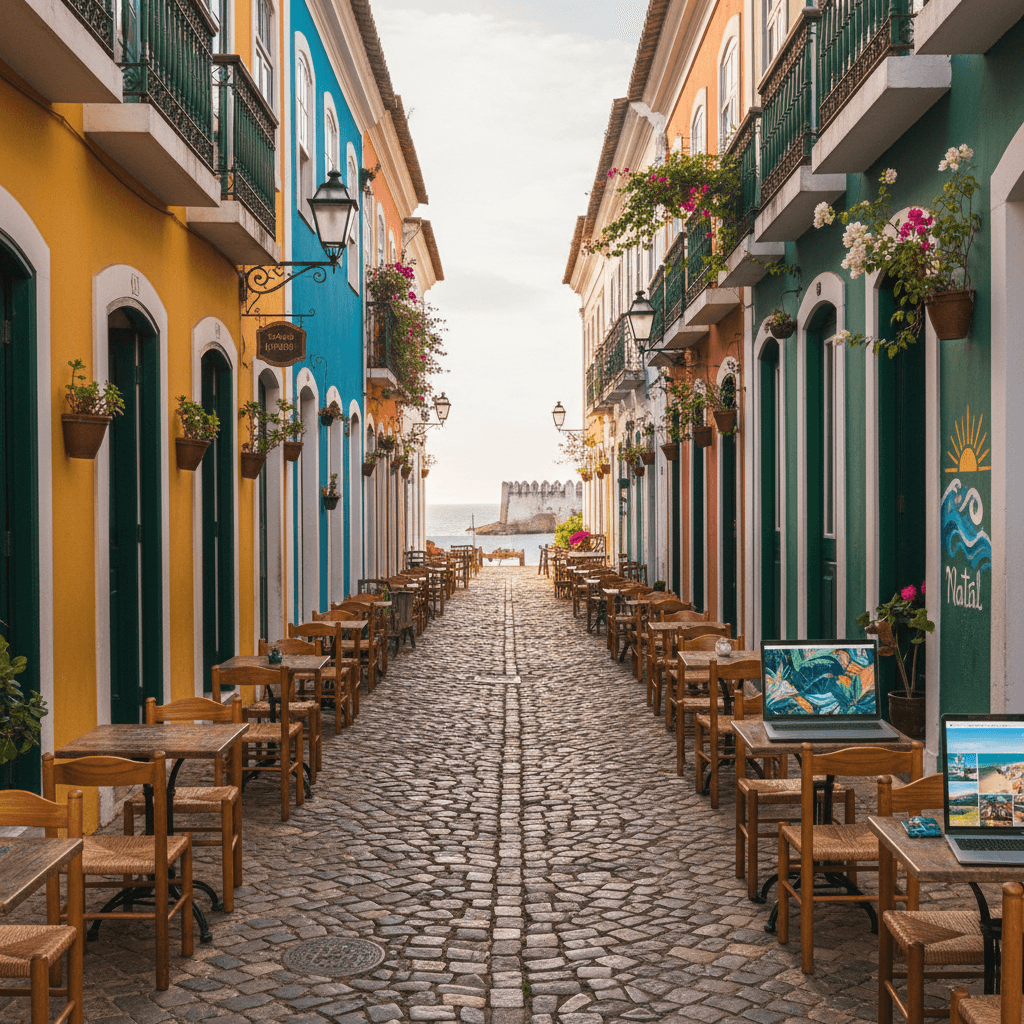
Natal
🇧🇷 Brazil
The Sun City Experience
Natal doesn't try to compete with the frantic energy of São Paulo or the glamour of Rio. Instead, it leans into its nickname, the Sun City, with a pace that feels like a permanent Sunday afternoon. It is a place where you can spend your morning on a Zoom call with 95 Mbps fiber and your afternoon sandboarding down massive dunes at Genipabu. For nomads who find the Southern hubs too chaotic, Natal is the tropical middle ground, offering a high quality of life for about $1,300 a month.
The vibe is undeniably coastal. You'll see locals jogging along the boardwalk in Ponta Negra at sunrise, and by sunset, the same crowd is sipping cold Brahma at beachside kiosks. It's a city that prioritizes the outdoors; the air is some of the cleanest in the Americas, and the Atlantic breeze keeps the 30°C (86°F) heat from feeling oppressive. While it feels like a vacation town, the growing startup scene and LGBTQ+ friendly atmosphere give it a modern, inclusive edge that surprises many first timers.
Living the Beach Life
Most nomads gravitate toward Ponta Negra. It's the heartbeat of the international community, where you can walk to your favorite cafe, hit the gym, and stare at the iconic Morro do Careca dune all in one loop. It’s walkable, which is a rarity in many Brazilian cities, though you'll still want to use Uber or 99 for longer hauls or late night trips, as they're cheap and reliable at roughly $5 per ride.
The emotional payoff of living here is the lack of "hustle culture." In Natal, people work to live. You'll find yourself adopting the local rhythm: early starts, a long lunch featuring fresly caught shrimp or carne de sol, and evenings spent at a beach bar. It is a place that rewards those who are willing to learn a few Portuguese phrases, as English isn't widely spoken once you step away from the main tourist counters. Carrying a translation app is a must, but the locals are famously patient and will likely help you practice your "obrigado" over a plate of bolinho de bacalhau.
What to Expect on the Ground
- Connectivity: Internet is surprisingly robust for a mid-sized coastal city. Most modern apartments in the southern zone come with high speed fiber optics, and dedicated coworking spaces are popping up for around $100 to $200 a month.
- Social Scene: While there aren't massive nomad meetups every night, the community is tight knit. Expats and remote workers usually connect through Facebook groups or at the surf schools along the coast.
- Cost of Entry: Brazil’s Digital Nomad Visa (VITEM XIV) requires proof of at least $1,500 USD monthly income from outside the country. If you're just testing the waters, a standard tourist entry works fine for shorter stays.
- Safety: Like any Brazilian capital, it requires street smarts. Stick to the well lit areas of Ponta Negra and the southern districts at night. Travelers generally feel safe during the day, especially in areas frequented by joggers and surfers.
The Neighborhood Breakdown
Choosing your base depends on how much you value the sand versus the city center.
- Ponta Negra: The primary nomad hub.
- Rent: $500 to $700 for a nice 1BR.
- Vibe: Touristy but convenient, very walkable, and full of cafes.
- Lagoa Nova / Central: The professional heart of the city.
- Rent: $300 to $500 for a studio.
- Vibe: More "local" and residential, better for long term stays, but you'll need to commute to the beach.
- Coastal Outskirts: For the nature purists.
- Rent: Under $400.
- Vibe: Quiet, surrounded by dunes, but requires a car and has fewer amenities.
Ultimately, Natal is for the nomad who wants to trade the concrete jungle for a pair of flip flops without losing their high speed connection. It's affordable, sun drenched, and just fast enough to keep you productive while reminding you why you started traveling in the first place.
Natal is one of those rare spots where you can actually live a high quality life on the coast without the frantic price hikes of Rio or the concrete intensity of São Paulo. It sits in a sweet spot for nomads, offering a monthly burn rate that usually hovers around $1,300 for a single person. You're getting incredible value here, especially when you consider that your "office view" is often a massive sand dune or a turquoise bay.
Monthly Budget Tiers
- The Budget Nomad ($1,000 to $1,300): This covers a modest studio on the outskirts or a few blocks back from the beach. You'll be eating plenty of street food like R$10 to R$25 pastéis or tapioca, using the local bus system, and keeping your social life centered around beach beers and free sunset views.
- The Mid-Range Lifestyle ($1,500 to $2,000): This is the sweet spot. You can snag a nice one bedroom apartment in Ponta Negra for $500 to $700, work from dedicated coworking spaces, and eat out at decent sit down restaurants a few times a week. You'll likely rely on Uber or the 99 app for getting around, which is very affordable.
- The Comfortable Expat ($2,500+): At this level, you're looking at upscale high rise living with ocean views for $800 or more. You won't think twice about ordering from iFood daily or spending $30 on a high end dinner with wine.
Housing and Neighborhood Costs
Rent is your biggest variable, and in Natal, proximity to the sand is the primary price driver. Most nomads head straight for Ponta Negra. It's the hub for remote work, full of cafes and the most walkable infrastructure in the city. Expect to pay a premium here, but it's worth it for the community and safety. If you want to stretch your dollar, the Central district offers more "local" prices, though you'll sacrifice that vacation vibe and easy beach access.
- Ponta Negra 1BR: $500 to $700 per month
- Outlying Studio: $300 to $400 per month
- Utilities (Electricity/Water): $60 to $100 (Be careful with A/C usage, as Brazilian electricity rates can spike quickly)
- High Speed Internet: $24 to $35 for speeds up to 95 Mbps
Food and Daily Expenses
Grocery shopping is a win for the budget here. Local markets are packed with fresh tropical fruits and seafood that cost a fraction of what you'd pay in Europe or North America. A weekly grocery run for two people usually lands around $60. If you're eating out, look for "Prato Feito" (PF) or "Kilo" restaurants during lunch. These are staples of Brazilian life where you can get a massive, healthy meal for $5 to $8.
- Street Food (Empadas, Coxinha): $2 to $4
- Mid-range Dinner for Two: $25 to $40
- Local Beer (600ml bottle): $2 to $3
- Cappuccino in a Nomad Cafe: $2.50
Transport and Connectivity
Public buses are the cheapest way to move, with tickets costing about $1.10, but they can be slow and sweaty. Most expats stick to Uber. A typical 15 minute trip across town rarely exceeds $5. For digital needs, grab a SIM card from Claro or Vivo as soon as you arrive. You can get a solid data plan for $15 to $20 a month, which is great for tethering if your Airbnb WiFi ever flickers during a storm.
One thing to keep in mind is the CPF (Brazilian tax ID). While you can survive without it, having one makes everything from buying a SIM card to signing up for local delivery apps much cheaper and easier. Most long term nomads recommend getting this sorted early to unlock the "local" price tier for services.
Best for Nomads and Remote Workers: Ponta Negra
If you're moving to Natal to work, you'll likely end up in Ponta Negra. It's the heartbeat of the city's nomad scene, centered around the iconic Morro do Careca dune. The vibe here is beachy but functional, with the highest concentration of fast 95 Mbps fiber optic connections in the city.
- The Vibe: High energy, walkable, and very social. You'll find other remote workers in seaside cafes during the day and at craft beer bars by night.
- Rent: Expect to pay around $600 to $700 for a modern one bedroom apartment with a sea view.
- Coworking: This is where you'll find the most reliable desk space. Rates usually hover around $100 to $200 per month.
- Pros: You don't need a car, the internet is stable, and it's the safest area for foreigners.
- Cons: It's the most touristy part of town, so prices for groceries and dining are higher than elsewhere.
Best for Families: Central Natal and Tirol
Expats moving with children often head inland to neighborhoods like Tirol or Petrópolis. These are more "traditional" urban residential areas. They trade the immediate beach access for better infrastructure, quieter streets, and proximity to the best private schools and clinics.
- The Vibe: Upscale, leafy, and professional. It feels more like a standard Brazilian city and less like a vacation resort.
- Rent: Larger family apartments or houses range from $800 to $1,200 depending on the level of luxury.
- Amenities: You're close to the major shopping malls and the best healthcare facilities in the state.
- Pros: More space for your money and a quieter environment for kids.
- Cons: You'll definitely want a car or a heavy reliance on Uber, as these areas aren't as walkable as the coast.
Best for Budget Solo Travelers: The Outskirts and Northern Dunes
For those who want to stretch a $1,000 monthly budget as far as possible, looking slightly outside the main tourist hub is the way to go. These areas are rugged and beautiful, perfect for someone who wants to spend their mornings kitesurfing or hiking the dunes rather than sitting in a coffee shop.
- The Vibe: Quiet, rustic, and deeply local. It's for the traveler who prefers nature over nightlife.
- Rent: Simple studios or small houses can be found for $300 to $400.
- Transport: Local buses are cheap at about $1.10 per ride, but they can be slow and crowded. Most solo travelers here eventually rent a scooter.
- Pros: Incredible access to nature and very low cost of living.
- Cons: Safety can be more of a concern at night, and English is almost non existent here. You'll need to brush up on your Portuguese.
Best for Long Term Expats: Capim Macio
Located just behind Ponta Negra, Capim Macio is the middle ground. It's where people move when they realize they want to stay in Natal for a year or more. It's close enough to the beach to feel the breeze but far enough away to avoid the tourist markups at the pharmacy or grocery store.
- The Vibe: A mix of students from the nearby university and established professionals. It feels lived in and authentic.
- Rent: A comfortable mid range apartment usually costs around $500.
- Dining: This area is famous for local restaurants serving barbecue and farofa at prices meant for locals, not travelers.
- Pros: Great balance of safety, price, and proximity to the action.
- Cons: It lacks the "vacation" aesthetic of the beachfront.
Connectivity That Keeps Pace
Natal might have a reputation for being a sleepy beach town, but its digital infrastructure tells a different story. You'll find ultra-fast internet that consistently averages around 95 Mbps, often hitting even higher speeds in modern apartment complexes in Ponta Negra. This makes it one of the more reliable spots in Northeast Brazil for video calls and heavy uploads.
Most nomads find that residential fiber connections are standard in mid-range rentals. If you're booking an Airbnb, always ask for a screenshot of a speed test, but generally, the city's backbone is solid. You won't be struggling with the lag often found in more remote coastal villages.
Coworking Spaces and Where to Work
The coworking scene in Natal is concentrated where the action is, primarily around the Ponta Negra district. While it doesn't have the massive variety of São Paulo, the spaces here are professional and much more affordable. Expect to pay between $100 and $200 USD (R$500 to R$1,000) for a monthly hot desk.
- Ponta Negra Area: This is the hub for remote workers. You'll find several boutique coworking spots within walking distance of the beach, allowing for a surf session between meetings.
- Central Natal: These spaces cater more to local startups and professionals. They're often cheaper but lack the "nomad vibe" and proximity to the ocean.
- Cafe Culture: If you prefer working from cafes, look for spots with "Ar Condicionado" (air conditioning). The heat is no joke, and while many beachside kiosks have Wi-Fi, your laptop might overheat before you finish your first email.
Mobile Data and SIM Cards
Don't rely solely on cafe Wi-Fi. Local SIM cards are cheap and the 4G/5G coverage is excellent throughout the urban areas. Vivo and Claro are the top picks for reliability and coverage. You can pick up a starter card for about $10 USD, and data packages are incredibly affordable compared to North American or European prices.
- Buying a SIM: Head to a branded store in a mall like Midway Mall or Natal Shopping. Bringing your passport is mandatory for registration.
- The CPF Hurdle: Some automated systems require a CPF (Brazilian tax ID). If the store clerk can't bypass this for a tourist, ask about "pre-pago" plans specifically designed for visitors.
- eSIMs: Apps like Airalo work well here for immediate data upon landing, but you'll pay a premium. Switching to a local physical SIM will save you significant money if you're staying longer than a week.
The Nomad Workflow
Travelers often say the best part about working from Natal is the balance. Most people start their day early to beat the afternoon heat, hitting the dunes or the water by 4:00 PM. The local community is growing, and while it's not a massive "nomad hub" yet, you'll find plenty of like-minded people in Facebook groups or at the larger coworking hubs during the week. Reliability is the keyword here; as long as you're in a developed neighborhood like Ponta Negra, you'll have the bandwidth to run a business without the typical "island internet" headaches.
Street Smarts and Urban Safety
Natal is generally more laid back than the sprawling metropolises of the south, but it still requires the standard Brazil toolkit for staying safe. Most nomads congregate in Ponta Negra, which is well patrolled and feels relatively secure during the day. However, it's a city of contrasts. You'll find that while the main tourist drag is lively, wandering just a few blocks into poorly lit residential side streets after dark isn't recommended. Expats usually suggest sticking to Ubers for door to door transport once the sun goes down, even for short distances.
The golden rule here is "não dar mole," which roughly translates to not giving away an opportunity. Keep your iPhone tucked away while walking, and leave the expensive watch in your laptop bag. If you're working from a cafe in the Petrópolis or Tirol neighborhoods, try to sit away from the street entrance. Most travelers find that as long as they stay aware of their surroundings and avoid the isolated outskirts or "periferias," they don't run into trouble.
- Emergency Numbers: Dial 190 for the Military Police and 192 for an ambulance (SAMU).
- Ride-Hailing: Use Uber or 99 rather than hailing cabs on the street. It provides a GPS trail and a set price, which adds a layer of security.
- Beach Safety: Don't leave your tech or wallet unattended on the sand while you go for a swim. Most locals go in pairs or ask a trusted vendor to watch their chair.
Navigating the Healthcare System
Brazil has a dual healthcare system that's actually quite impressive once you understand how to use it. The public system, known as SUS, is free and available to everyone, including foreigners. While it's a lifesaver for emergencies or basic vaccinations, the wait times for non-urgent issues can be grueling. For anything beyond a quick checkup, most digital nomads and expats opt for private care.
Natal has several high quality private facilities, such as Hospital Rio Grande and Hospital Unimed. These clinics feel more like what you'd find in Europe or North America, with modern equipment and specialized staff. You'll likely need to pay out of pocket if you don't have a local plan, but prices are reasonable compared to US standards. A private consultation typically runs between $60 and $100 USD. Most doctors in these top tier facilities speak some English, though having a translation app ready is a smart move for the administrative staff.
Pharmacies and Practicalities
You'll find a "farmácia" on almost every corner in Natal, with major chains like Drogasil and Pague Menos staying open late. They're incredibly convenient and often stock everything from high end skincare to basic electronics. Many medications that require a strict prescription elsewhere can sometimes be bought over the counter here, though it's always better to have your paperwork ready.
If you're staying long term on a Digital Nomad Visa (VITEM XIV), you'll need to register with the Federal Police within 90 days of arrival. This process gives you your CRNM (National Migration Registration Card), which makes everything from opening a bank account to accessing long term health insurance much smoother. Expats recommend keeping a digital copy of your passport and visa on your phone at all times, but leave the physical documents in a safe at your accommodation.
- Water Safety: Don't drink the tap water. Stick to 20-liter mineral water jugs (galões) which cost about $2 to $4 USD and can be delivered to your door.
- Health Insurance: Ensure your policy covers "repatriation" and private hospital stays in Brazil. Local plans like Unimed or Amil are great if you're staying for a year or more.
- Sun Protection: The sun in Natal is intense. Use high SPF and stay hydrated; heat exhaustion is a more common complaint among nomads than tropical diseases.
The Daily Commute
Natal is a city where the pace of life slows down as you get closer to the water. Most nomads settle in Ponta Negra, and if you're one of them, you'll rarely need a car for your day to day. It's a highly walkable pocket where your gym, grocery store, and favorite beach bar are usually within a ten minute stroll. However, if you're heading inland for a meeting or exploring the northern dunes, you'll need to understand the local transit hierarchy.
Ride-Hailing and Taxis
Uber is the undisputed king here. It's reliable, incredibly cheap compared to US or European standards, and saves you the headache of haggling in broken Portuguese. Most short trips around the city cost roughly $3 to $5. If Uber is surging or slow, download 99 (99Pop). It's a local favorite that often has more drivers available during peak hours or heavy rain.
- Uber/99: Expect to pay about $10 to $20 for the 40 minute trek from Natal International Airport (NAT) to the main tourist zones.
- Taxis: You'll find them at dedicated stands. They're more expensive than apps, but they're useful if your phone battery dies or you're in a rush at the airport.
Public Buses
The bus system is extensive and will get you almost anywhere for about $1.10 per ticket. It's the most authentic way to see the city, but it comes with a learning curve. Buses can get packed during the morning and evening rushes, and they don't always stick strictly to the timetable. Expats usually recommend using the Moovit app to track routes and arrivals in real time, as Google Maps isn't always perfectly synced with local changes.
On Two Wheels
You'll see plenty of bicycles and the occasional electric scooter along the Ponta Negra boardwalk. It's a great way to soak up the coastal breeze, but be cautious once you leave the designated beach paths. Traffic in the city center can be aggressive, and bike lanes are sparse once you move away from the tourist infrastructure. If you're staying long term, buying a cheap used bike via local Facebook groups is a popular move for quick errands.
Renting a Car
If you want to explore the legendary dunes of Genipabu or head south to the surf breaks of Praia do Pipa on your own schedule, renting a car is your best bet. Local agencies like Localiza or Movida are easy to find. Just keep in mind that driving in Natal requires a bit of grit; local drivers are assertive, and speed bumps (called lombadas) are everywhere and often poorly marked. Always stick to the main highways after dark and keep your doors locked while driving through unfamiliar neighborhoods.
Walkability and Safety
Walking is a joy in the beach neighborhoods during the day. However, travelers often suggest a "common sense" approach to safety. Once the sun goes down, even short distances are better covered in an Uber, especially if you're moving between the beach and the upper residential streets. Stick to well lit areas with plenty of foot traffic, and you'll find Natal is a breeze to navigate.
The Portuguese Priority
In Natal, Portuguese isn't just the official language; it's the only one you'll hear in most daily interactions. While major hubs like São Paulo or Rio have pockets of English speakers, Natal remains deeply local. You'll find that English proficiency is quite low once you step away from the front desks of high end hotels in Ponta Negra. Most nomads find that while they can get by with smiles and gestures for a weekend, staying long term requires a basic grasp of the local tongue.
The local accent, known as Potiguar, is musical and generally clearer than the thick accents found in Rio, but it comes with its own slang. You'll hear people use the word "galado" constantly; it can mean anything from a crazy person to a close friend depending on the tone. Getting used to these quirks is part of the charm, but don't expect the person at the neighborhood padaria to understand your coffee order in English.
Survival Tools for the Transition
Technology will be your best friend during your first few months. Expats recommend downloading the Google Translate offline Portuguese pack immediately. The camera feature is a lifesaver for translating menus at beachside shacks or reading utility bills. Since WhatsApp is the primary way Brazilians communicate for everything from booking a haircut to ordering water delivery, the app's built in translation features are invaluable.
- DeepL: Often provides more natural Portuguese translations than Google for longer emails or texts.
- Duolingo or Babbel: Good for the basics, but they usually teach European Portuguese or a generic version that might sound a bit formal for the streets of Natal.
- Pimsleur: Highly recommended by travelers for nailing the nasal vowels that make Portuguese tricky for English speakers.
Key Phrases to Know
Even a tiny bit of effort goes a long way with the locals, who are generally patient and thrilled when foreigners try to speak their language. Start with these basics:
- Tudo bem? (How are you? / Everything good?): The universal greeting. You'll hear it and say it dozens of times a day.
- Obrigado (m) / Obrigada (f): Thank you. Remember to match the ending to your own gender, not the person you're speaking to.
- Quanto custa?: How much does it cost? Essential for the street markets and dune tours.
- A conta, por favor: The bill, please. In Brazil, servers rarely bring the check unless you ask for it.
- Desculpe: Sorry. Useful when you're bumping through a crowded bus or market.
Social Nuances and Communication Style
Communication in Natal is warm and indirect. People rarely say a flat "no" if they can avoid it. If someone says "com certeza" (for sure) or "vamos marcar" (let's set something up), it often means they like the idea in principle, but it might not actually happen. It's a relaxed, "island time" mentality applied to a coastal city.
If you're planning to stay for more than a month, most nomads suggest hiring a local tutor for $10 to $15 per hour. It's a small investment that radically changes your experience from being a perpetual tourist to feeling like part of the community. You'll find that once you can hold a basic conversation, doors open to local "secret" spots and better deals on long term rentals that aren't listed on Airbnb.
The Sunshine State of Mind
Natal isn't called the City of the Sun for nothing. Sitting just a few degrees south of the equator, this corner of Brazil enjoys over 300 days of sunshine every year. For nomads who need Vitamin D to stay productive, it's a dream setup. You'll find consistent temperatures hovering between 25°C and 32°C (77°F to 90°F), meaning your wardrobe will mostly consist of linen shirts, shorts, and Havaianas.
The air quality here is some of the best in the Americas. Constant Atlantic breezes keep the humidity from feeling oppressive and sweep away the city haze. While the thermometer stays steady, the rainfall patterns are what really define the seasons here.
When to Plan Your Stay
If you're looking for that postcard-perfect dune weather, aim for the window between August and November. This is the sweet spot. The winds are strong enough to keep you cool, the skies are a deep blue, and the rain is almost non-existent. It's the peak time for buggy rides in Genipabu and sunset sessions at Ponta Negra.
The transition months of May, June, and July bring more frequent showers. It rarely rains all day, but you'll see heavy, tropical downpours that can disrupt outdoor plans for an hour or two. On the plus side, the landscape turns incredibly lush, and accommodation prices often dip during this period.
The Summer Peak and Rainy Season
The busiest time in Natal runs from December through March. This is the Brazilian summer, and the city fills up with domestic tourists. While the energy is high and the nightlife in areas like Ponta Negra is at its peak, it's also the start of the wetter season. January and February can be particularly humid. If you're sensitive to crowds or prefer a quieter workspace, you might find the summer rush a bit much.
- Best for Work-Life Balance: September to November. Dry weather and fewer tourists mean better deals on beachside rentals.
- Best for Socializing: December and January. The city is alive with festivals and Carnival energy, though you'll pay a premium for Airbnbs.
- The "Avoid" Window: Late March to early May. This is typically the peak of the rainy season, which can make the unpaved roads near the dunes a muddy mess.
What to Pack for the Elements
Because the sun is exceptionally strong this close to the equator, locals and long-term expats swear by high-SPF sunscreen and polarized sunglasses. Don't bother with heavy sweaters or jackets. Even at night, the temperature rarely drops below 22°C (72°F). A light windbreaker is all you'll need for those breezy evening walks along the shore or for the aggressive air conditioning found in some coworking spaces.
Most nomads find that a sturdy umbrella is more useful than a raincoat. When it rains, it's usually warm, and a raincoat will just make you sweat. If you're planning to work from the beach, keep in mind that the salt air is real. Expats recommend keeping your laptop in a sleeve when not in use to protect the ports from the coastal breeze.
Connectivity and Tech Setup
Natal is a pleasant surprise for remote workers who need high speed stability. You can expect fiber optic connections averaging 95 Mbps, which is more than enough for video calls and heavy uploads. Most nomads pick up a SIM card from Claro or Vivo immediately upon arrival. You can usually grab one at the airport or a local shopping mall for about $10 to $20, giving you plenty of data to use as a hotspot while you're out at the beach.
For a more professional environment, head to the Ponta Negra area. While dedicated coworking spaces fluctuate, you will find plenty of laptop-friendly cafes that welcome remote workers. Monthly memberships at local hubs typically run between $100 and $200. If you are staying for the long haul, look into getting a CPF (the Brazilian tax ID). You will need this number for everything from opening a local bank account with Nubank to signing up for a long term internet contract.
Safety and Health Essentials
Living here requires the same common sense you would use in Rio or Salvador. Stick to the well lit, tourist friendly corridors of Ponta Negra or the central districts, especially after the sun goes down. Most expats advise against wandering into the city's outskirts or quiet peripheral neighborhoods at night. Keep your high end tech tucked away in your bag when you are walking between cafes; don't be the person scrolling on a brand new iPhone while standing on a street corner.
The healthcare system is reliable in the urban center. Pharmacies are everywhere and carry most standard medications. If you have an emergency, dial 190 for police or 192 for an ambulance. If you are planning to stay on the Digital Nomad Visa (VITEM XIV), remember that you need to register with the Federal Police within 90 days of your arrival to keep your paperwork in order.
Getting Around the City
Public buses are the cheapest way to get around, with tickets costing roughly $1.10. They get the job done but can feel cramped and hot during peak hours. Most nomads rely on Uber or the local competitor 99. A typical cross town trip usually costs around $5, making it an affordable luxury that saves you from the midday heat.
If you choose to live in Ponta Negra, you will find it's very walkable. You can reach the beach, your favorite gym, and the grocery store on foot. For weekend trips to the dunes of Genipabu, it's best to hire a buggy driver or rent a car for the day, as public transport to the more remote nature spots is inconsistent.
Cost of Living Breakdown
Natal is significantly more affordable than São Paulo or Rio de Janeiro. A solo nomad can live comfortably on a budget of $1,300 to $1,800 per month, depending on how much they splurge on beachfront dining.
Monthly Budget Estimates
- Housing: A modern one bedroom apartment in a prime area like Ponta Negra will cost between $500 and $700. If you look toward the city center, you can find studios for as low as $350.
- Food and Drink: A casual meal at a local "por quilo" restaurant costs about $5 to $8. A nice dinner for two with drinks in a mid range spot will run you around $30.
- Utilities and Internet: Expect to pay around $24 for high speed home WiFi. Electricity can vary depending on how much you blast the air conditioning, but $60 to $100 is a safe estimate for a small apartment.
Language and Local Customs
English proficiency is quite low here, even compared to other major Brazilian cities. You will want to have Google Translate downloaded for offline use. Learning basic Portuguese phrases like "Quanto custa?" (How much?) and "Obrigado" (Thank you) will go a long way in building rapport with locals. The vibe is incredibly laid back, so don't be surprised if meetings start ten minutes late or if the "fast" lunch takes an hour. Embrace the slower pace; it's part of the charm of the Northeast.
Need visa and immigration info for Brazil?
🇧🇷 View Brazil Country GuideHidden Gem
Worth the effort