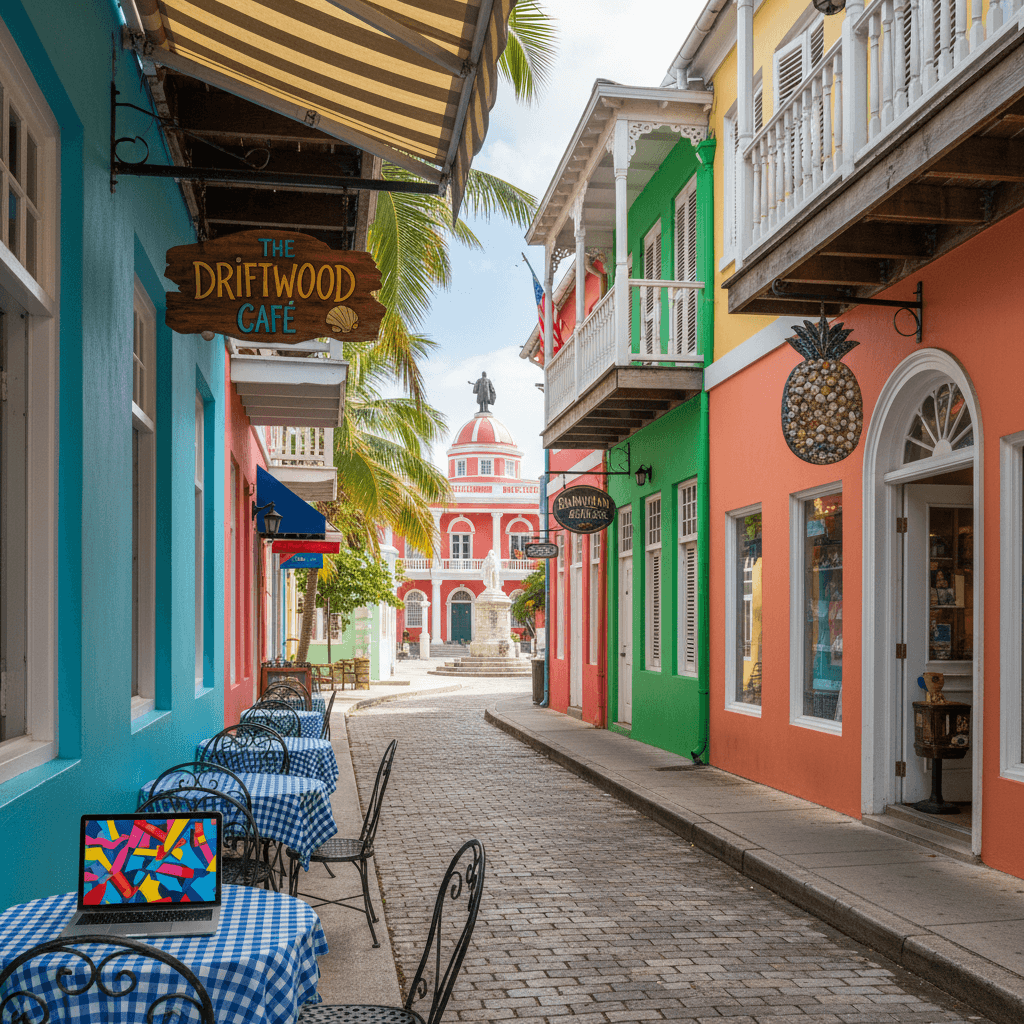
Nassau
🇧🇸 Bahamas
The Pulse of the Bahamas
Nassau is where the Caribbean's pirate past meets a high-octane modern financial hub. It doesn't feel like a sleeper island outpost; it feels like a city that just happens to be surrounded by some of the most electric blue water on the planet. You'll find yourself walking past pastel pink colonial buildings and high-end jewelry shops one minute, and dodging colorful jitneys (local minibuses) the next. It’s a place of contrasts, where the air smells like salt spray and fried conch, and the pace of life shifts gears depending on whether you're in a boardroom or on a beach chair.
For nomads, the appeal lies in that specific "work-hard, play-harder" energy. Unlike the quieter "Out Islands," Nassau has the infrastructure to support a remote career while still offering world-class snorkeling at nearby reefs or Blue Lagoon Island. It isn't the cheapest destination in the region, but the trade-off is a level of connectivity and social variety you won't find elsewhere in the archipelago.
The Digital Nomad Experience
The Bahamas has made a serious play for the remote work crowd with the BEATS (Bahamas Extended Access Travel Stay) visa. This permit allows you to settle in for up to one year, with the option to renew for a total of three years. The application process is surprisingly streamlined, usually taking about 5 business days for approval once you pay the $25 application fee and $1,000 permit fee.
While the official data often cites slow speeds, most nomads find that the reality is much better if you're intentional about where you stay. Modern hotels and dedicated rentals in areas like Cable Beach often provide reliable fiber connections reaching 20 to 80 Mbps. You'll likely spend your mornings working from a beachfront cafe with a BTC or Aliv SIM card as a backup, then spend your afternoons networking with other expats at the Pirates of Nassau museum or over drinks downtown.
Living Costs & Neighborhoods
Budgeting for Nassau requires a bit of strategy. It’s a premium destination, and your monthly burn rate will likely hover around $1,820 for a modest setup, though many mid-range travelers spend closer to $3,000 to $4,000 to live comfortably near the water. Here is how the neighborhoods generally break down:
- Downtown & Cable Beach: This is the nomad heartland. It's walkable, filled with nightlife, and close to the major coworking-friendly cafes. It can be touristy and loud, but you're never more than a few minutes from a reliable Wi-Fi signal or a grocery store.
- Adelaide & Fox Hill: These outskirts are better suited for families or those looking for a "local" feel. Rents are lower here, but you'll almost certainly need to rent a car or rely on taxis, as the $2 jitney routes are less frequent.
- Over the Hill: This area south of Shirley Street is rich in history but generally avoided by nomads for housing due to higher petty crime rates and limited infrastructure.
The Social Landscape
Socializing in Nassau usually revolves around the water or the dinner table. You'll find a lively expat community that gathers for "Fish Fry" at Arawak Cay, where you can grab fresh seafood for about 15 BSD. For a more upscale evening, mid-range restaurants will run you 30 to 50 BSD per person. The nightlife is concentrated in the major resorts and downtown clubs, where weekend covers can reach 50 BSD, though savvy locals often snag discounted passes through hotel connections.
The best time to be here is between December and April. The weather is a perfect 24 to 29°C and the humidity is manageable. If you stay through the summer, be prepared for the rainy season from June to November, when the heat spikes and hurricane tracking becomes a local pastime. Regardless of the season, the vibe remains unapologetically Bahamian: polite, proud, and always ready for a celebration.
Let's be honest: Nassau isn't a budget destination. If you are looking for Southeast Asian prices, you are in the wrong hemisphere. However, for digital nomads who want a Caribbean base with reliable infrastructure and a straightforward residency path through the BEATS visa, the price tag often feels like a fair trade for the lifestyle. You should expect to spend about $3,000 to $4,000 per month for a mid-range lifestyle that includes a decent apartment and regular nights out.
Housing and Neighborhoods
Rent will be your biggest hurdle. In popular areas like Cable Beach or Downtown Nassau, you are paying for proximity to the water and the few reliable coworking spots. A studio or one bedroom apartment in these hubs usually starts around $1,500, though prices can climb quickly if you want a view of the turquoise water.
- Cable Beach: The expat favorite. It is walkable, safe, and packed with amenities, but you will pay a premium for the convenience.
- Downtown: Great for being in the thick of the history and the cruise port energy, though it gets noisy and touristy during the day.
- Adelaide or Fox Hill: These outskirts offer a more local feel and lower rents, but you will likely need to budget for a car or spend a lot of time on jitneys to get to the action.
Dining and Groceries
Food costs in the Bahamas are high because almost everything is imported. If you eat like a local, you can keep your budget in check. Hit the roadside stands or the "Fish Fry" at Arawak Cay for conch salad or snapper; a solid meal there will run you 10 to 15 BSD.
For a sit down dinner at a mid-range restaurant, expect to pay 30 to 50 BSD per person before drinks. If you are heading to the upscale steakhouses or fine dining spots in the major resorts, 75 BSD is just the starting point. Most long term residents recommend shopping at local markets and using international credit cards for points, as the Bahamian Dollar is pegged 1:1 with the US Dollar, making the math easy but the totals high.
Transport and Connectivity
Getting around is surprisingly affordable if you use the jitneys. These minibuses cost about 2 BSD per ride and cover most of the island. Taxis are unregulated and can get expensive; a ride from Lynden Pindling International Airport to downtown usually costs between 25 and 35 BSD. Since there is no Uber or Lyft, many nomads eventually rent a scooter or car for better flexibility.
Internet is a mixed bag. While some older nomad data suggests speeds as low as 4 Mbps, most modern rentals and hotel lounges now offer 20 to 80 Mbps. To stay connected on the move, grab a SIM card from BTC or Aliv at the airport. A starter data pack usually costs between 20 and 50 BSD.
The BEATS Visa Factor
The Bahamas Extended Access Travel Stay (BEATS) visa is a major draw. The application fee is $25, and the permit itself costs $1,000 for the first year. It is renewable for up to three years. While the upfront cost is higher than some other Caribbean nomad visas, the five day approval turnaround is one of the fastest in the region. Most nomads find the 15% tip standard in restaurants and the general "island tax" on goods a small price to pay for working from a beach chair while the rest of the world is in winter.
For Digital Nomads: Cable Beach
If you're in Nassau to work, Cable Beach is your primary hub. It's the most developed stretch of the island, offering a solid mix of high speed internet and beachfront views. Most nomads find this area the easiest place to set up a remote office because many of the larger resorts and cafes here provide reliable Wi-Fi, often reaching speeds up to 80 Mbps despite the lower island averages.
Living here means you're close to the action without the intense congestion of the cruise ship crowds. You'll find plenty of other remote workers at local spots, and the area is well connected by the number 10 jitney, which costs about 2 BSD per ride. It's the best spot to network if you're on the BEATS visa, as many of the community events and meetups naturally gravitate toward this strip.
- Rent: Expect to pay $2,500 to $3,500 for a modern 1BR near the water.
- Atmosphere: Modern, convenient, and social.
- Top Spot: Grab a coffee and a desk at one of the beachfront hotel lounges to catch the breeze while you grind.
For Solo Travelers: Downtown Nassau
Solo travelers usually prefer being right in the heart of the city's history. Downtown is walkable, loud, and full of life. You're steps away from the Pirates of Nassau museum and the main straw markets. While it gets quiet after the cruise ships leave in the evening, the proximity to the ferry terminals makes it the perfect base for island hopping to Exuma or Blue Lagoon Island.
Safety is a common conversation topic here. While the main tourist drags are fine during the day, expats recommend staying north of Shirley Street after dark. Avoid the "Over the Hill" districts at night to stay on the safe side. For food, you can find street stalls serving conch salad for 10 to 15 BSD, making it easier to manage a tighter budget.
- Rent: Studios can be found for $1,500 to $2,000, though quality varies wildly.
- Atmosphere: Energetic, historic, and very tourist-centric.
- Top Spot: The mid-range eateries near the port are great for meeting fellow travelers over a 30 BSD seafood dinner.
For Families: Adelaide and Fox Hill
If you're bringing the kids and staying for the full one-year permit, look toward the outskirts like Adelaide or Fox Hill. These neighborhoods feel much more like a traditional community and less like a vacation resort. The pace is significantly slower, and you'll get a lot more square footage for your money. Adelaide, in particular, has a quiet, coastal village feel that's a world away from the downtown hustle.
The trade-off is that these areas are not very walkable. You'll almost certainly need to rent a car or rely on taxis, which can cost 25 to 35 BSD for a 20-minute trip. However, for families who want a yard and a quiet night's sleep, the extra logistics are usually worth it. You're also closer to more secluded beaches where the water is just as blue but the crowds are non-existent.
- Rent: Larger family homes range from $3,000 to $5,000 depending on proximity to the beach.
- Atmosphere: Quiet, residential, and authentic.
- Top Spot: Adelaide Beach is a local favorite for weekend picnics without the tourist prices.
For Expats: Paradise Island
For those with a higher budget who want a "plug and play" lifestyle, Paradise Island is the go-to. Linked to Nassau by two bridges, it's technically a separate island but functions as Nassau's luxury suburb. It's where you'll find the most consistent infrastructure, private security, and upscale dining options where dinner usually starts at 75 BSD per person.
Expats often choose this area because it feels the most "manicured." You have easy access to private clinics like Doctors Hospital and high-end grocery stores. While the monthly cost of living here can easily soar past $5,000, the ease of life and the high concentration of other international residents make it the most comfortable transition for those new to the Bahamas.
- Rent: Luxury condos often start at $4,500 and go up significantly from there.
- Atmosphere: High-end, secure, and resort-style.
- Top Spot: The local marinas are the best place to find yachting communities and expat networking groups.
Connectivity Realities
Nassau presents a bit of a paradox when it comes to staying connected. While official nomad databases often flag the island with speeds as low as 4 Mbps, your actual experience will likely be much better if you choose your base wisely. Most modern hotels and dedicated workspaces in the Cable Beach area clock in between 20 and 80 Mbps. It is reliable enough for Zoom calls, though you might face the occasional hiccup during a tropical storm.
For a stable backup, don't rely solely on hotel Wi-Fi. Pick up a local SIM card immediately upon arrival at Lynden Pindling International Airport. The two main providers are BTC and Aliv. Most nomads lean toward Aliv for more consistent data speeds. Expect to pay between $20 and $50 for a starter prepaid plan with a decent data bucket. Having a hotspot is a lifesaver when you want to work from a beach chair at Nirvana or Cabbage Beach.
Coworking Spaces and Laptop-Friendly Hangouts
The coworking scene in Nassau is evolving, largely driven by the BEATS visa program. While you won't find a WeWork on every corner, there are professional hubs that cater specifically to the remote crowd. Incudesk is the primary player here, offering a polished environment with high speed internet and meeting rooms. It is a solid choice if you need a quiet office vibe away from the cruise ship crowds downtown.
If you prefer a more casual atmosphere, the cafe culture is welcoming to laptop users, provided you are buying more than just a single espresso. Louis & Steen’s New Orleans Coffeehouse is a favorite for its stunning ocean views and Cajun flavors. For a high end "lobby nomad" experience, the lounges at the Baha Mar resort offer great connectivity and a sophisticated atmosphere, though the coffee prices reflect the luxury surroundings.
The BEATS Visa Advantage
The Bahamas has made a serious play for the remote work market with the Bahamas Extended Access Travel Stay (BEATS) permit. This is a game changer if you want to stay longer than a standard tourist entry. The permit allows you to live and work remotely for up to one year, and you can renew it twice for a total of three years. It is one of the more straightforward digital nomad visas in the Caribbean.
- Application Fee: $25
- Permit Fee: $1,000 for the main applicant (plus $500 per dependent)
- Approval Time: Usually around 5 business days
- Requirement: Proof of employment and sufficient income to support yourself without seeking local Bahamian jobs
Practical Work-Life Tips
Power outages can happen, especially during the hurricane season from June to November. If you have a deadline-heavy job, it is smart to stay in a building with a back-up generator, which is common in higher end rentals in Cable Beach or Old Fort Bay. Many nomads also find that the heat can be a deterrent for outdoor working. Even if a beachfront cafe looks idyllic, the humidity and glare on your screen might drive you back to the air conditioning by midday.
Networking is surprisingly easy here. Because the community is relatively small, you will likely run into the same group of expats and remote workers at weekend events or snorkeling spots. The BEATS program occasionally organizes meetups, but you will have better luck joining local Facebook groups or attending events at the Pirates of Nassau museum to meet people in a more relaxed setting.
Staying Safe in the Capital
Nassau has a mixed reputation when it comes to safety, but for most nomads, it boils down to basic situational awareness. The city is generally safe during the day, especially in high traffic areas like Cable Beach or the downtown shopping district. However, you should be mindful of petty crime like pickpocketing or bag snatching in crowded tourist spots near the cruise port.
Local expats and long term travelers generally follow one golden rule: avoid the "Over the Hill" neighborhood after dark. This area, located south of Shirley Street, sees higher rates of localized crime. If you are staying downtown or in the tourist hubs, stick to well lit main roads and use taxis for door to door transport once the sun goes down. Most nomads rate the safety here as moderate, meaning you can relax, but you shouldn't leave your laptop unattended at a beach cafe while you go for a swim.
Emergency Contacts and Assistance
If you find yourself in a pinch, the emergency system is straightforward. You can reach police, fire, or ambulance services by dialing 911 or 919. It is a good idea to keep the contact info for your specific embassy or consulate saved in your phone as well. For non emergencies, the Tourism Police are often visible in the downtown area and are very helpful with directions or reporting minor incidents.
Healthcare Infrastructure
The healthcare system in Nassau is the best in the Bahamas, but it is divided between public and private sectors. For major emergencies or specialized care, the quality is high, though the wait times and facilities vary significantly between the two.
- Princess Margaret Hospital: This is the main public facility. It handles a high volume of patients and can be quite slow for non urgent issues. It is located downtown and is the primary trauma center.
- Doctors Hospital: Most digital nomads and expats prefer this private facility. It is accredited and offers a standard of care comparable to what you would find in the US or UK. They expect payment upfront or proof of high quality international insurance.
- Walk-in Clinics: For minor ailments like a sinus infection or a coral scrape, skip the hospital and head to a private clinic. Facilities like the Family Medicine Center are much faster for routine prescriptions or checkups.
Pharmacies and Medication
You won't have any trouble finding a pharmacy in Nassau. Establishments like Lowe’s Pharmacy are well stocked with over the counter meds and international brands. If you take specific prescription medication, bring a copy of your script and a decent supply from home. While most things are available, prices can be significantly higher than in North America due to import costs.
Health Tips for Island Life
The biggest health risks you will face are typically environmental. The Bahamian sun is intense, especially between 10:00 AM and 4:00 PM. Dehydration and heat exhaustion can sneak up on you while you are focused on your laptop at a beachfront bar. Drink more water than you think you need, and don't rely solely on the local tap water; while it is technically potable in many areas, most residents and nomads prefer bottled or filtered water for the taste and to avoid any stomach upsets.
Mosquitoes can be a nuisance, particularly during the rainy season from June to November. While large scale outbreaks of tropical diseases are rare, it is smart to use repellent if you are dining outdoors in the evening. If you are planning on diving or snorkeling at local sites like Love Beach, ensure your travel insurance specifically covers adventurous activities and medical evacuation, as some specialized treatments might require a flight to Florida.
The Jitney Experience
If you want to move like a local and keep your budget intact, the jitneys are your best friend. these colorful minibuses are the backbone of New Providence transport, running from early morning until about 6:30 PM. For just $2 BSD, you can hop on a bus like the Number 10, which winds along the coast between downtown Nassau and Cable Beach. It is an informal system; there are not many official stops, so you just wave one down when you see it and shout "bus stop" when you are ready to hop off.
While jitneys are charming and cheap, they do not run late at night and they do not service the airport. For those evening runs to the clubs or late night grocery hauls, you will need a different plan. Most nomads find that while the buses work for daytime errands, they are not a total replacement for a car if you live outside the main tourist strips.
Taxis and Ride-Hailing
Nassau does not have Uber or Lyft. Instead, you will be relying on traditional taxis. You can find them lined up at the airport, outside major resorts like Baha Mar, or by the cruise port. A ride from Lynden Pindling International Airport (NAS) to downtown usually runs $36 BSD, and the trip takes about 20 to 30 minutes depending on the notorious Nassau traffic.
Taxis are generally safe but unregulated in terms of meters. Always agree on the fare before you put your bags in the trunk. If you find a driver you like, ask for their WhatsApp number. Many expats keep a "personal" driver on speed dial for reliable airport runs or late night pickups when jitneys have stopped running.
Walking and Micromobility
Nassau is a tale of two cities when it comes to walkability. If you are based in the Downtown core or the Cable Beach area, you can get by on foot for your daily coffee runs and beach sessions. These areas have decent sidewalks and plenty of activity. However, the tropical heat is a real factor; a ten minute walk at noon can feel like a marathon in the humidity.
For a bit more freedom without the cost of a car, you can find bike and scooter rentals near the popular beach zones. These are great for exploring the coastline, but be careful on the main roads. Bahamian traffic can be aggressive, and people drive on the left side of the road, a legacy of British colonial rule that catches many North Americans off guard.
Inter-Island Travel
Since Nassau is the central hub of the Bahamas, getting to the "Family Islands" is relatively straightforward. If you have a weekend free, the Bahamas Ferry system runs from Potter’s Cay (under the Paradise Island bridge) to places like Eleuthera or Spanish Wells. It is a slower, more scenic way to travel that many nomads prefer over flying.
For faster trips to Exuma or Grand Bahama, local carriers like Bahamasair operate daily flights. Nassau serves as the primary gateway, so you can usually find a flight to almost any major cay within an hour. It makes "island hopping" a legitimate weekend hobby rather than a logistical nightmare.
Practical Transport Tips
- Currency: The Bahamian Dollar is pegged 1:1 with the US Dollar, and they are used interchangeably. Keep small bills for jitney fares, as drivers rarely have change for a $20.
- Traffic: Avoid the roads during "school run" hours (8:00 AM and 3:30 PM). The island only has a few main arteries, and they clog up quickly.
- Safety: When walking downtown at night, stick to well lit areas. Expats generally recommend avoiding the "Over the Hill" neighborhoods south of Shirley Street after dark if you are on foot.
- Car Rentals: If you are staying longer than a month and living in a quieter area like Adelaide, expect to pay around $50 to $70 BSD per day for a basic rental car.
The Bahamian Rhythm
You won't have any trouble getting your point across in Nassau. English is the official language and it's spoken with a melodic, rhythmic lilt that reflects the island's British colonial past and West African roots. While the Queen's English is the standard for business, government, and the BEATS visa application process, the soul of the city lives in Bahamian Creole.
Most nomads find the local dialect easy enough to follow after a few days. It's English based, but it moves fast and drops certain consonants. You'll hear locals "cutting" words or using unique slang that gives the city its character. Don't feel pressured to mimic the accent; Bahamians are famously friendly and appreciate clear, polite communication in your natural voice.
Social Etiquette and Greetings
Nassau runs on manners. It's a small island community at heart, and a little politeness goes a long way when you're negotiating a taxi fare or ordering a conch salad at the Fish Fry. Always lead with a "good morning" or "good afternoon" before jumping into a request. It's a simple sign of respect that sets the tone for your entire interaction.
- The "Switch": Most locals will automatically switch from thick Creole to standard English the moment they realize you're a visitor.
- Volume: Bahamians are expressive and often loud. Don't mistake a boisterous conversation on a jitney for an argument; it's usually just a passionate retelling of a story.
- Formality: While the beaches are casual, the city can be surprisingly formal. Use "Mr." or "Ms." when addressing elders or professionals until you're invited to be on a first name basis.
Digital Communication and Slang
While you won't need a translation app like Google Translate for basic survival, it can be fun to look up common Bahamian "isms" to better understand the local humor. If someone says they're "reach," they've arrived at their destination. If you're told you look "sweet," take it as a compliment on your outfit. You'll likely pick up these nuances quickly during networking events or while working from cafes in Cable Beach.
For staying connected, WhatsApp is the undisputed king of communication here. Whether you're booking a tour, talking to a landlord about an apartment in Fox Hill, or joining a nomad meetup group, you'll need the app installed. Most businesses prefer a quick WhatsApp message over a formal email or a phone call.
Practical Connectivity
To keep the conversation going, you'll want a local SIM card immediately. You can pick one up at the airport or at various storefronts downtown. Expect to pay between $20 and $50 BSD for a starter pack with a decent data allowance.
- BTC (Bahamas Telecommunications Company): The legacy provider with the widest coverage across the family islands.
- Aliv: The newer competitor often praised by nomads for faster LTE speeds and better customer service in urban Nassau.
- Data Costs: Prepaid plans are flexible, which is perfect if you're testing the waters before committing to a full year on the BEATS permit.
Expats recommend keeping your phone topped up via the provider's app, as finding physical top up cards can be a hassle when you're settled into a deep work session at a beachfront lounge. Most cafes and coworking spots have reliable enough Wi-Fi for VoIP calls, though having a local number is a huge plus for coordinating jitney rides or making dinner reservations.
The Sweet Spot: December to April
If you're looking for that postcard-perfect Bahamian experience, aim for the window between December and April. This is the dry season, where the humidity drops and the mercury hovers comfortably between 24°C and 29°C. It's the peak of the nomad social calendar, mostly because you can work from a beachfront cafe at Cable Beach without breaking a sweat or worrying about a sudden downpour soaking your laptop.
The trade-off for this perfect weather is the price tag. Since this coincides with the North American winter, Nassau gets crowded. You'll see accommodation prices spike, and popular spots like the Pirates of Nassau museum or the downtown waterfront will be teeming with cruise ship passengers. If you’re planning to stay on the BEATS visa during these months, book your initial Airbnb or short-term rental at least two months in advance to avoid the "tourist tax" on last-minute listings.
The Summer Sizzle and Hurricane Season
From June through November, the islands enter the Atlantic hurricane season. The air gets thick, and temperatures regularly climb toward 33°C. You can expect a heavy tropical thunderstorm almost every afternoon. They usually pass quickly, but they’re intense enough to make you appreciate a reliable indoor coworking setup with backup power.
August, September, and October are the months most nomads avoid if they aren't fans of high heat and storm risks. This is the quietest time in Nassau. While the risk of a major hurricane hitting is statistically low in any given week, the humidity alone can be a productivity killer. On the plus side, high-end rentals that usually go for $4,000 a month might see significant price cuts, and you'll have the dive sites on nearby reefs or local spots like Love Beach almost entirely to yourself.
What to Pack for the Long Haul
Nassau’s weather dictates a specific kind of wardrobe, especially if you're balancing professional calls with island life. Most expats recommend a "smart-casual tropical" approach. Even when it’s 30°C outside, the air conditioning in banks, government offices, and private clinics like Doctors Hospital is often set to freezing.
- Lightweight Linens: Stick to breathable fabrics for the daytime heat.
- A Solid Rain Shell: A high-quality waterproof jacket is non-negotiable if you’re commuting via jitney during the shoulder months.
- One Formal Outfit: Bahamians tend to dress up for dinner and church; if you're hitting an upscale steakhouse downtown, leave the flip-flops at the beach.
- Polarized Sunglasses: The glare off the turquoise water is no joke, especially if you're working near the shore.
Seasonal Costs and Availability
Your budget will fluctuate based on when you land. Nassau is already one of the pricier Caribbean hubs, with average monthly nomad spends around $1,820, but timing changes the math.
- High Season (Dec-Apr): Expect to pay $2,500+ for a decent 1BR in Cable Beach or Downtown.
- Shoulder Season (May-July): A great middle ground where prices dip to $1,800-$2,000 but the weather is still manageable.
- Low Season (Aug-Oct): You can find deals under $1,500, but you’ll be spending a lot more on your electricity bill to keep the AC running 24/7.
Most long-term travelers find that November is the "sweet spot" month. The hurricane risk fades, the humidity snaps, and the winter crowds haven't quite descended, making it the best time to settle in, set up your local BTC or Aliv SIM card, and find your rhythm before the holiday rush.
Connectivity and the Digital Grind
Nassau is a paradox for remote workers. While some data suggests speeds as low as 4 Mbps, reality on the ground is often much better. Most nomads find that major hotels and beachfront cafes in Cable Beach offer reliable connections reaching 20 to 80 Mbps. If you are planning a long term stay, skip the hotel Wi-Fi and head to a local BTC or Aliv store immediately. A starter SIM card will cost you between $20 and $50, and having a local hotspot is the only way to ensure you stay online during the occasional tropical storm.
The Bahamas Extended Access Travel Stay (BEATS) visa is the gold standard for staying legal. It allows you to live and work here for up to one year, with the option to renew for up to three years total. The application process is surprisingly efficient; you apply online, pay a $25 application fee, and once approved, pay $1,000 for the permit. Most travelers see an approval in about five business days. You will get a QR code to show at customs, making the entry process seamless.
Budgeting for Paradise
Living in the capital isn't cheap. You should budget roughly $1,820 per month as a baseline, but that number climbs quickly if you enjoy the nightlife. A mid-range dinner will run you $30 to $50, and a weekend club cover charge can hit $50. To keep costs down, eat like a local at the fish fry or grab street food for $10 to $15. Tipping is standard here; expect to add 15% to your bill at restaurants and for taxi services.
Getting Around
The jitneys (local minibuses) are the most authentic and affordable way to see the island. For about $2, you can get almost anywhere in Nassau. They don't have a strict schedule, so just wave one down when you see it. For airport transfers, expect to pay $25 to $35 for a taxi to the downtown core. While the downtown area and Cable Beach are walkable, you will want a car or a scooter rental if you plan to explore the quieter outskirts like Adelaide.
Safety and Health
Nassau is generally safe, but you need to keep your wits about you. Petty crime like pickpocketing happens in high traffic tourist zones. Expats generally recommend avoiding the "Over the Hill" neighborhood south of Shirley Street after dark. For medical needs, the Princess Margaret Hospital handles basics, but most nomads prefer Doctors Hospital, a private facility, for more specialized care. Keep 911 or 919 programmed into your phone for emergencies.
The Social Scene
Networking happens naturally at the beach or during BEATS-sponsored events. If you are looking to meet people, Downtown Nassau is the hub for solo travelers and expats. The vibe is a mix of British colonial formality and relaxed Caribbean energy. A polite "good morning" or "good afternoon" goes a long way with the locals. When you need a break from the screen, the ferry to Blue Lagoon Island or snorkeling trips to nearby reefs or Blue Lagoon Island are the go-to weekend escapes.
Best Times to Visit
- December to April: This is the sweet spot. The weather is dry, temperatures hover between 24°C and 29°C, and the humidity is manageable.
- June to November: This is hurricane season. It is cheaper, but you will deal with higher humidity and frequent rain.
- August to October: These are the wettest months. Many nomads find the heat and storm risk a bit too intense during this window.
Need visa and immigration info for Bahamas?
🇧🇸 View Bahamas Country GuideHidden Gem
Worth the effort