Nara
🇯🇵 Japan
Most travelers treat Nara as a checklist item. They hop on a train from Kyoto, bow to a few deer, take a photo of the Great Buddha, and head back before sunset. But for the nomad who decides to stay, the city reveals a much deeper, quieter rhythm. It is the antidote to the sensory overload of Tokyo and the tourist crush of Kyoto. Here, the air feels older and the pace slows down to a crawl that actually lets you get some work done.
The Living History Vibe
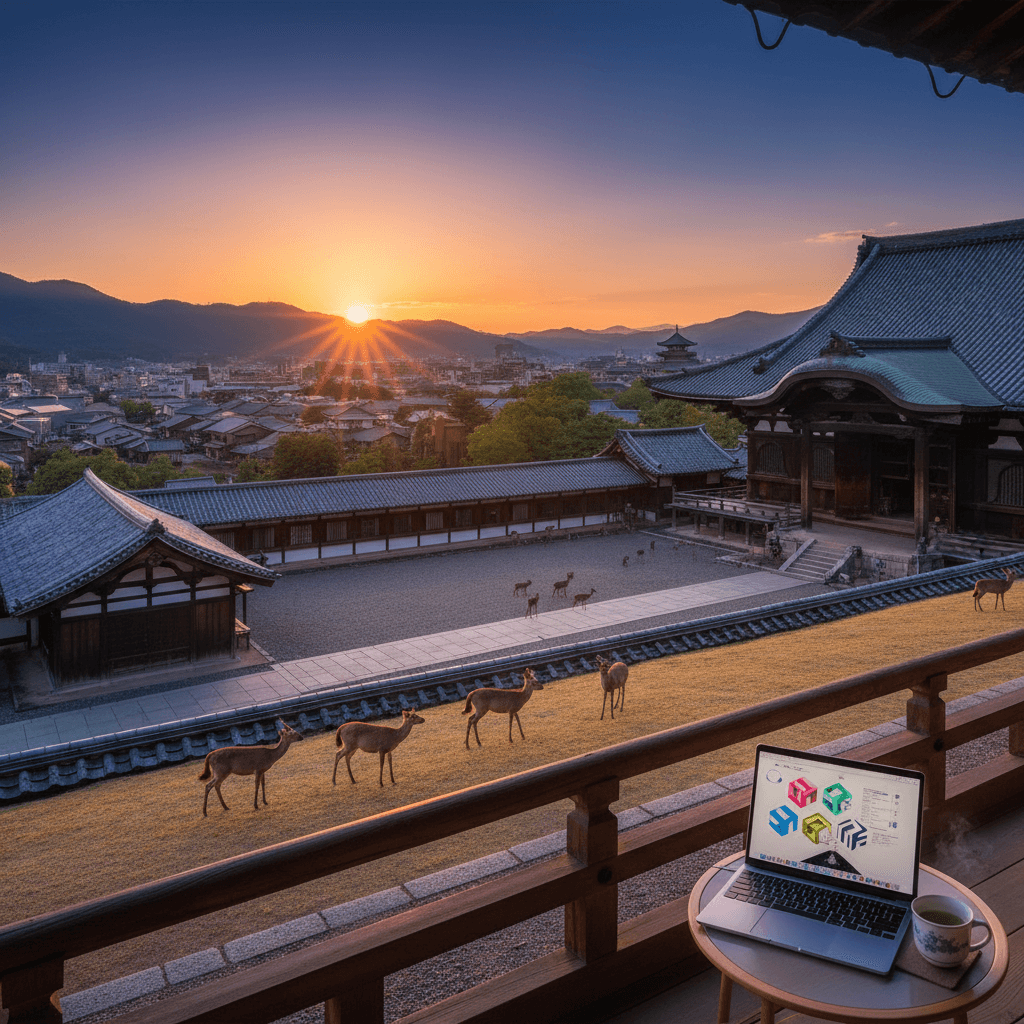
Living in Nara feels like inhabiting an open air museum that hasn't forgotten it's a functioning town. You’ll find yourself walking past 1,300 year old temples on your way to grab a latte. The presence of the deer isn't just a gimmick; they are woven into the city's daily life. You'll see them waiting at traffic lights or peering into shop windows. It creates a surreal, whimsical atmosphere that keeps you grounded in the present moment.
The city doesn't have the neon grit of Osaka. Instead, it offers low rise skylines, traditional machiya houses, and a surprising amount of green space. It is a place for the "slowmad" who prefers a morning hike in the Kasugayama Primeval Forest over a late night club crawl. The social scene is intimate rather than explosive, revolving around small craft beer bars and quiet sake breweries in the Naramachi district.
The Practical Landscape
Nara is incredibly compact. Most nomads find that they can navigate the core of the city entirely on foot or by bicycle. While it lacks the endless coworking chains of larger hubs, the infrastructure is rock solid. You are tapping into Japan’s world class connectivity, with 5G coverage reaching almost every corner of the city. If you need a change of pace, the Kintetsu and JR lines put you in the heart of Osaka or Kyoto in about 35 to 45 minutes for roughly ¥600 to ¥900.
The cost of living here is a significant draw compared to Japan’s major metros. You get more space for your yen, and the local grocery stores and shotengai (shopping arcades) offer high quality produce without the "big city" markup. It is the kind of place where the shopkeeper remembers your face by the third visit.
What Sets Nara Apart
- The Silence: After 8:00 PM, the city falls into a deep, peaceful quiet that is rare in urban Japan. It is perfect for deep work or those who struggle with the noise of metropolitan life.
- The Kansai Pivot: You are perfectly positioned in the center of the Kansai region. You can work from Nara all week and spend your weekends exploring Kobe, Uji, or the mountain retreats of Yoshino.
- Access to Nature: Unlike Tokyo, where you have to travel an hour to find a trail, Nara Park and the surrounding hills are your backyard.
The Emotional Experience
There is a specific type of calm that comes with living here. It stems from the realization that you aren't fighting for space. While Kyoto can feel like a struggle against the crowds, Nara feels like a secret you've been allowed to keep. Most expats say the city has a "healing" quality. You'll find yourself trading late night screen time for sunset walks through the grounds of Todai-ji. It is a destination for the nomad who is tired of the hustle and wants to reconnect with a sense of permanence and tradition.
You won't find a massive, English speaking tech community here, but you will find a dedicated group of artists, writers, and long term residents who value privacy and craft. It’s a place to be productive, to breathe, and to experience a version of Japan that feels authentic and unhurried.
The Kansai Discount
Living in Nara feels like a financial exhale after spending time in Tokyo or even neighboring Kyoto. While it sits right in the middle of the Kansai power triangle, Nara maintains a significantly lower price point for housing and daily expenses. Most nomads find they can live a high quality life here for about $1,500 to $2,200 per month, depending on how often they head into Osaka for big nights out.
The local economy benefits from being a major tourist draw during the day but a quiet residential hub at night. This means you get the infrastructure of a world class destination without the permanent "tourist tax" on your monthly rent. You'll find your yen stretches much further here than in the capital, especially when it comes to fresh produce and dining at local izakayas.
Monthly Budget Breakdown
- Studio Apartment (Monthly Rental): $650 to $950
- Co-living or Guesthouse: $400 to $600
- Coworking Membership: $100 to $180
- Local Meals: $7 to $15 per person
- Monthly Transit Pass: $60 to $90
Housing and Neighborhoods
Rent is your biggest saving in Nara. If you look toward the Naramachi area, you can find renovated traditional houses that cost a fraction of what a cramped apartment goes for in Tokyo. For those who want modern conveniences and proximity to the express trains, the area around Yamato-Saidaiji Station is a favorite for expats. It acts as a major transit hub, making it easy to commute if you have meetings in other cities.
Short term stays are best handled through local guesthouses or platforms like KabuK Style (HafH), which has a footprint in Japan. Expect to pay around ¥100,000 to ¥140,000 for a well furnished, mid range apartment with utilities included. If you're staying longer than six months and have the right visa, traditional rentals drop even lower, though you'll need to account for "key money" and furniture costs.
Food and Lifestyle
Groceries in Nara are surprisingly affordable, especially if you shop at local chains like Okwa or Kohyo. A week of high quality groceries for one person usually hits around $50 to $70. If you prefer eating out, a standard lunch set (teishoku) at a neighborhood spot will run you about ¥1,000 to ¥1,500. Even a nice dinner with a couple of drinks rarely exceeds $30 unless you're specifically seeking out high end wagyu near the park.
Coffee culture is growing here too. A flat white at a specialty cafe like Any Coffee Brew and Bake costs about $4.50. While that's comparable to global prices, the lack of a tipping culture in Japan means your "sticker price" is exactly what you pay, which helps keep the daily budget predictable.
Digital Nomad Specifics
To qualify for the official Japanese Digital Nomad Visa, you need to prove a yearly income of at least ¥10 million (roughly $65,000 to $70,000 depending on exchange rates). However, many nomads visit on a standard 90 day visa waiver. For work spaces, Bonchi is a popular coworking hub in the city center where a drop in day pass is about ¥2,000. It's a solid investment for the high speed fiber internet, which is standard across the city.
Transport is another area where you'll save. Nara is extremely walkable and bike friendly. Most residents use a bicycle for 90 percent of their errands. If you do need the train, a quick trip to Osaka or Kyoto on the Kintetsu Line costs less than $10, making Nara an incredibly strategic and affordable base for exploring the region.
The Culture Seekers and Solo Nomads: Naramachi
If you want the quintessential Nara experience, Naramachi is where you should drop your bags. It is the old merchant district, characterized by narrow lanes and traditional Machiya houses. For a solo nomad, it provides a quiet, focused atmosphere that is hard to find in larger hubs like Osaka. You are within walking distance of Nara Park, where you can clear your head among the 1,200 resident deer after a long deep work session.
Most nomads here opt for renovated guesthouses or small apartments. While it lacks high rise modern amenities, the charm of working from a 100 year old wooden building is the big draw. BONCHI is the go to spot for productivity in this area. It is a sleek coworking space and cafe that serves as a community hub for local entrepreneurs and remote workers. Daily drop in rates usually hover around ¥500 per 2 hours or ¥2,200 full day, and the Wi-Fi is consistently fast enough for video calls.
- Average Monthly Rent: 65,000 to 90,000 yen
- Vibe: Historical, quiet, and walkable
- Best for: Deep work and cultural immersion
The Long Term Expats: Shin-Omiya
Expats who plan to stay for several months often migrate one stop west of the main tourist center to Shin-Omiya. This neighborhood feels more like a lived in community than a postcard. It is home to the Nara City Hall and several business offices, meaning the infrastructure for daily life is superior. You will find larger grocery stores like Ito-Yokado and a wider variety of local izakayas that do not have tourist pricing.
The social scene for expats is centered around the small bars and eateries near the station. It is less about sightseeing and more about routine. You are still only a 15 minute bike ride from the temples, but you have the luxury of wider streets and modern apartment complexes. This area is also a strategic choice for those who need to commute to Osaka or Kyoto occasionally, as the Kintetsu line gets you to either city in about 35 to 45 minutes.
- Average Monthly Rent: 55,000 to 80,000 yen
- Vibe: Residential, practical, and social
- Best for: Socializing and long term stays
Families and Slow Travelers: Ikoma
While technically a separate city, Ikoma sits on the border of Nara and is the preferred choice for families or those seeking a slower pace. It is perched on a hillside, offering cooler temperatures and much more space for your money. Families appreciate the abundance of parks and the famous Ikoma Sanjo Amusement Park, which is free to enter and perfect for kids.
The commute into central Nara is a quick 15 minute train ride, but the environment feels worlds apart. You will find more standalone houses here rather than cramped studios. For groceries and essentials, the Kintetsu Department Store at the station covers everything you need. It is the best spot for those who want a yard or a view of the mountains rather than a view of a neighbor's balcony.
- Average Monthly Rent: 75,000 to 110,000 yen (for 2-3 bedrooms)
- Vibe: Suburban, green, and family friendly
- Best for: Families and nature lovers
Budget Conscious Travelers: Around JR Nara Station
If your priority is keeping costs low while maintaining maximum mobility, look for spots near the JR Nara Station. This area is distinct from the Kintetsu Nara area, which is closer to the park. The JR side is more functional and features several budget friendly business hotels and modern studio apartments. It is the most convenient spot if you are using a JR Pass to explore the rest of the Kansai region.
Dining around here is affordable, with plenty of chain restaurants like Yoshinoya and Sukiya offering meals for under 800 yen. For a caffeine fix and a few hours of laptop time, Starbucks at the station is a reliable fallback, though local cafes offer a more unique atmosphere. You sacrifice some of the ancient Nara "soul" for convenience, but your wallet will thank you.
- Average Monthly Rent: 45,000 to 65,000 yen
- Vibe: Functional, modern, and accessible
- Best for: Budget travelers and regional explorers
Connectivity and Speed
Nara might feel like a step back in time with its ancient temples and roaming deer, but the digital infrastructure is firmly in the present. You can expect lightning fast fiber optic connections in almost every guesthouse and hotel in the city center. Japan has pushed 5G coverage to nearly 99% of the population, and Nara is no exception. Even when you are walking through the outskirts of Nara Park, you will likely still have a full signal on your phone.
Most nomads find that a local SIM or eSIM is the best way to stay connected while moving between cafes. Providers like Ubigi or Airalo are popular for short stays, while those on the 6 month Digital Nomad Visa often opt for longer term data plans from Mobal or Sakura Mobile. Expect to pay around ¥3,500 to ¥5,000 per month for a decent data bucket. Free public WiFi exists near the Kintetsu-Nara and JR Nara stations, but it can be spotty when the tourist crowds peak in the afternoon.
Coworking Spaces in Nara
Nara does not have the massive coworking hubs you will find in Tokyo or Osaka, but the options available are high quality and much quieter. Most of the action is concentrated within a ten minute walk of the main train stations.
- Bonchi: Located right in the Higashimuki Shopping Arcade, this is the primary hub for local entrepreneurs and remote workers. It has a sleek, modern design and offers drop-in rates starting around ¥550 per hour or ¥2,200 for a full day. The WiFi is incredibly reliable, and there are private booths if you need to hop on a Zoom call.
The Cafe Culture
If you prefer the hum of a coffee shop, Nara has plenty of spots that are laptop friendly as long as you are respectful during lunch rushes. Avoid the tiny, traditional tea houses in Naramachi if you plan to work for hours; those are better for a quick break.
Starbucks near the Kintetsu-Nara station is a reliable fallback with plenty of power outlets, but it gets crowded with students. For a more local vibe, try Any B&B + Coffee. The staff is used to people staying for a bit, and the coffee is some of the best in the city. Just remember the local etiquette: if the shop starts to fill up with people waiting for tables, it is time to pack up your gear.
Remote Work Logistics
Because Nara is only one hour from Kyoto and about 45 minutes from Osaka, many nomads use it as a quiet base while occasionally commuting to the larger cities for networking events or bigger coworking communities. Living in Nara gives you the benefit of lower rent and a calmer environment without sacrificing the ability to join a tech meetup in Osaka on a Wednesday night.
For those applying for the national Digital Nomad Visa, remember that you will need to prove an annual income of at least ¥10 million. While Nara is cheaper than Tokyo, having that steady stream of income allows you to live very comfortably here. You will find that your yen goes much further in Nara's local grocery stores and neighborhood izakayas than it does in the bigger hubs.
Nara is arguably one of the safest places you can park your laptop in Japan. It lacks the frantic energy of Osaka and the heavy tourist density of Kyoto, resulting in a city that feels more like a quiet suburb where people actually look out for one another. You can comfortably walk through the Naramachi district at 2:00 AM without a second thought, and the biggest physical threat you are likely to face is a particularly assertive deer in Nara Park trying to snag a snack from your pocket.
General Safety and Local Vibes
The crime rate here is incredibly low, even by Japanese standards. Most nomads find that they can leave their laptop on a table at a cafe like Any Coffee Coffee Roasters while they use the restroom without worrying about it disappearing. That said, it is always better to be smart about your gear. While theft is rare, it is not non-existent.
One thing to keep in mind is the wildlife. The deer in Nara Park are wild animals. They are generally friendly, but they can get pushy if they think you have food. If you are carrying shika senbei (deer crackers), expect to be swarmed. If you run out, show them your empty hands to let them know the kitchen is closed. They usually understand the gesture and will move on to the next target.
Emergency Services
If you do run into trouble, the emergency numbers are the same across Japan. Dial 110 for the police and 119 for fire or an ambulance. If you are in a pinch and need help but there is no immediate danger, look for a Koban. These are small police boxes scattered throughout the city, including a prominent one near Kintetsu-Nara Station. The officers there are usually very helpful, even if their English is limited, and they can help with everything from lost wallets to directions.
- Police Emergency: 110
- Ambulance/Fire: 119
- Japan Helpline (24/7 English): 0570, 000, 911
Healthcare and Clinics
The healthcare system in Nara is excellent, though navigating it as a foreigner requires a little bit of prep. Most clinics do not take appointments; you just show up, take a number, and wait. For general issues, Nara City Hospital is a reliable choice. It is a larger facility and more likely to have staff who can speak some English or use translation tools to help you out.
For more specialized care or if you want a guaranteed English speaking experience, many expats take the 35 minute train ride into Osaka. However, for day to day needs, the local pharmacies (called kusuri-ya) are well stocked. You will find plenty of them near the main shopping arcades like Higashimuki. Look for the Sugi Pharmacy or Kokumin signs.
Health Insurance Requirements
If you are in town on the new Digital Nomad Visa, you are required to have private health insurance that covers at least ¥10 million. The Japanese authorities are strict about this, so make sure your policy is active before you arrive. If you are here on a standard 90 day tourist waiver, your regular travel insurance will work fine. Most local clinics expect payment in full at the time of service, usually in cash, though larger hospitals now accept credit cards. You then file a claim with your provider later.
- Nara City Hospital: Located in Higashikijo-cho, good for general emergencies.
- Medical Fees: A standard clinic visit usually costs between ¥5,000 and ¥10,000 without insurance.
- Pharmacies: Most are open from 9:00 AM to 9:00 PM.
Natural Disasters
Like the rest of Japan, Nara is in an earthquake zone. The city is inland, so tsunamis are not a concern, but you should still be prepared. Download the Safety Tips app, which is managed by the Japan Tourism Agency. It provides real time earthquake alerts and weather warnings in English. Most modern buildings in Nara are built to withstand significant tremors, so if the ground starts shaking, stay inside and take cover under a sturdy table until it stops.
Foot Power and the Deer Park
Nara is one of those rare cities where your own two feet are your best asset. The city center is remarkably compact, and if you're staying near Nara-koen or the Naramachi district, you'll find that most of your daily life happens within a twenty minute walk. It's a flat, easy city to navigate, though you'll need to keep your wits about you when walking through the park; the local deer have right of way and they know it.
For those days when you're heading further out to the temples in Nishinokyo or the outskirts, the bus system is your next best bet. The Nara City Loop Bus (the number 1 and number 2 lines) is a lifesaver for newcomers. It runs in a circle around the main sights and transit hubs, costing a flat fare of 220 yen per ride. If you plan on hitting more than three spots in a single day, grab a one day pass for 600 yen at the visitor center outside the station. It pays for itself by lunchtime.
Mastering the Rail Lines
Nara is split between two main train stations, and knowing the difference will save you a lot of backtracking. Kintetsu Nara Station is the one you want for daily life. It's located right in the heart of the action, steps away from the covered shopping arcades and the park. JR Nara Station is about a fifteen minute walk to the west. While it's great if you're using a Japan Rail Pass to visit from Osaka or Kyoto, it's a bit of a trek from the main nomad hubs.
- Kintetsu Line: Best for quick trips to Osaka-Namba (about 40 minutes) or Kyoto (about 35 minutes on the Express).
- JR Yamatoji Line: Ideal for getting to Tennoji in Osaka or connecting to the Shinkansen at Shin-Osaka.
- IC Cards: Don't bother with paper tickets. Pick up an ICOCA card at any station machine. You can tap it for buses, trains, and even at 7-Eleven. You can load it with cash or link it to your phone if you have a compatible device.
Two Wheels and Steep Hills
Biking is a popular choice for expats who live slightly north or south of the city center. You can rent a standard city bike (affectionately called a mamachari) for about 700 to 1,000 yen a day. If you're planning to head toward the hills of Mount Wakakusa or the temples in the southwest, do yourself a favor and pay the extra 500 yen for an electric power-assisted bike. Your quads will thank you when you hit the inclines near Kasuga Taisha.
Parking your bike is the only real headache. Japan is strict about illegal parking, and your bike will be towed if you leave it on a random sidewalk. Look for the designated underground or fenced lots near the stations. They usually cost around 150 yen for the day, which is a small price to pay to avoid a trip to the impound lot on the edge of town.
Taxis and Late Nights
Taxis are plentiful but pricey. A short jump across town will usually run you between 700 and 1,200 yen. Since Nara isn't a late night party town, the trains and buses stop running around midnight. If you're out late in Osaka and miss the last Kintetsu train back, a taxi will cost you upwards of 15,000 yen, so most nomads keep a close eye on the clock or just book a cheap capsule hotel in the city for the night.
Most local drivers don't speak much English, so having your destination written in Japanese or marked on a map is helpful. Apps like GO or Uber (which mostly just hails local cabs here) work well if you don't want to wave one down on the street.
The Language Gap in Nara
Nara is a bit of a paradox when it comes to communication. While it attracts millions of visitors to see the deer and the Great Buddha at Todaiji, it remains a traditional Japanese city at its core. You'll find that English proficiency is significantly lower here than in Tokyo or even nearby Osaka. Most restaurant staff and shopkeepers in the Naramachi district know enough to get you through a transaction, but deeper conversations usually require a translation app or a few Japanese phrases.
Expats living in the city often find that the local community is incredibly patient. If you're staying for a few months, learning basic greetings and "kore o onegaishimasu" (this one, please) goes a long way. The locals appreciate the effort, and you'll find that a polite bow and a smile solve most minor misunderstandings.
Essential Tools for Nomads
Since you can't rely on English signage once you step away from the main tourist trail near Kintetsu-Nara Station, you need a solid digital toolkit. Japan's infrastructure is world class, and you can expect 5G coverage across almost the entire city. This makes real time translation much easier than in other parts of Asia.
- Google Lens: This is your best friend for grocery shopping. Use the camera feature to translate ingredients and cooking instructions on the fly at local supermarkets like MaxValu.
- DeepL: While Google Translate is okay for quick words, DeepL handles Japanese grammar much better. Use this for drafting emails to landlords or messaging local hosts.
- VoiceTra: This is a speech to speech translation app developed by a Japanese research institute. It's often more accurate for local dialects and polite speech than other mainstream apps.
Connectivity and SIM Options
You won't get far without a reliable data connection, especially when you're trying to find a specific cafe tucked away in the narrow alleys of Gangoji. Most nomads avoid the expensive roaming charges from home and opt for local solutions. You can pick these up at Kansai International Airport (KIX) before taking the bus or train into Nara.
- Ubigi or Airalo (eSIM): These are the most convenient options for digital nomads. You can set them up before you land. Expect to pay around $15 to $20 for a 10GB data plan that lasts 30 days.
- Sakura Mobile: If you're staying for several months on the new up to 6 month Digital Nomad Visa, Sakura Mobile is a favorite because they accept foreign credit cards and provide full English support.
- Pocket WiFi: If you're a heavy data user or need to connect multiple devices for work, renting a Ninja WiFi unit is a solid choice, though it's one more thing to carry and charge.
Social Nuances and Etiquette
Communication in Nara is as much about what you do as what you say. The "vibe" here is much slower and more formal than in the neighboring cities. Speaking loudly on your phone while on the Yamatoji Line or in a quiet cafe like Any Coffee Coffee Roaster is considered quite rude. Most nomads find that keeping their phone on silent and using headphones is the best way to blend in.
When you're out at a local izakaya in Sanjo-dori, don't be surprised if locals are shy at first. They often worry their English isn't good enough to talk to you. If you initiate with a simple "Sumimasen" (excuse me) and a friendly demeanor, they usually open up. It's a city where being soft spoken and observant will get you much further than being assertive.
The Digital Nomad Visa Factor
If you're planning to stay long term, keep in mind the requirements for the specialized visa. You'll need to prove an annual income of at least ¥10 million (roughly $65,000 to $70,000 depending on exchange rates). While the application process is becoming more streamlined, almost all official documentation from the local government office will be in Japanese. This is one instance where hiring a local administrative scrivener or using a high quality translation service is worth the investment to ensure your paperwork is flawless.
The Seasonal Sweet Spots
Nara sits in a basin, which means the weather tends to get a bit more dramatic than its neighbors in Osaka or Kyoto. Most nomads aim for the shoulder seasons of late March to May and October to November. These windows provide the mildest temperatures, usually hovering between 15°C and 22°C (59°F to 72°F), making it comfortable to work from a park bench or walk between temples without breaking a sweat.
Spring brings the famous cherry blossoms, usually peaking around early April. While it is breathtaking, expect the crowds in Nara Park to triple. If you are looking for a quieter vibe, the autumn colors in November are arguably better. The deep reds of the maple trees around Isuien Garden provide a perfect backdrop for a focused afternoon of deep work, and the air is crisp enough that you won't need to blast the AC in your rental.
Survival Guide for Summer and Winter
Summer in Nara, specifically July and August, is a test of endurance. Temperatures often climb above 32°C (90°F) with humidity levels that make you feel like you are walking through soup. If you are here during this time, you will want to scout out indoor spaces with strong climate control like the Nara City Library. Most locals stay indoors during the heat of the day and only venture out for the Tokae Lantern Festival in early August, when thousands of candles light up the Nara Park area at night.
Winter is relatively short but surprisingly biting. From late December through February, temperatures often dip near 0°C (32°F). You won't see massive snowdrifts often, but a light dusting on the Todai-ji Temple roof is a common sight in January. It is the cheapest time to find a monthly apartment, though you will want to ensure your accommodation has a traditional "kotatsu" or a modern heat pump, as older Japanese houses have notoriously thin insulation.
Timing Your Stay
When planning your arrival, keep the Japanese holiday calendar in mind to avoid inflated prices and booked-out transport. Most expats suggest avoiding Golden Week in early May and the Obon period in mid-August. During these times, Nara transforms from a sleepy historical town into a tourist magnet, and finding a quiet corner to take a Zoom call becomes a genuine challenge.
- Best for scenery: April for sakura or November for autumn foliage.
- Best for budget: January and February, when accommodation rates drop by 20% to 30%.
- Best for festivals: August for lantern displays and March 1st to 14th for the Omizutori fire ceremony.
What to Pack
Since Nara is a walking city, your footwear is more important than your wardrobe. You will be slipping your shoes off constantly at temples and certain traditional workspaces, so wear something easy to remove. In the summer, a portable "handy fan" and cooling wipes from a 7-Eleven or Lawson are non-negotiable for staying professional during meetings. For winter, Uniqlo’s Heattech layers are the standard uniform for nomads trying to keep their heating bills down while working from home.
Getting Around and Staying Connected
Nara is incredibly walkable, especially if you stick to the Naramachi and Nara Park areas. Most nomads find that a sturdy pair of walking shoes is their primary mode of transport. For longer distances, the local bus system is reliable and accepts major IC cards like Suica or Pasmo. If you are coming from Kyoto or Osaka, the JR Nara Line and the Kintetsu Line are your lifelines, both taking about 45 to 60 minutes for a one way trip.
Internet infrastructure is top tier. You can expect speeds that handle video calls without a hiccup. Most guesthouses and rentals provide high speed fiber. For mobile data, expats recommend picking up a Ubigi or Airalo eSIM before you land. If you prefer a physical SIM, Sakura Mobile is a popular choice for foreigners because they offer English support and flexible contracts.
The Digital Nomad Visa
Japan recently introduced a specific visa for remote workers. To qualify, you need to prove an annual income of at least 10 million yen. This visa allows you to stay for up to six months, which is a significant jump from the standard 90 day tourist waiver. It is a great option if you want to use Nara as a quiet base to explore the wider Kansai region without worrying about a border run.
Cost of Living Breakdown
Nara is generally more affordable than Tokyo or even neighboring Kyoto. Your yen goes further here, especially when it comes to dining out and local groceries. Here is a rough look at what to budget monthly:
- Monthly Rent (Studio/One-Bedroom): 55,000 to 85,000 yen
- Coworking Membership: 15,000 to 20,000 yen
- Daily Food Budget: 3,000 to 5,000 yen
- Coffee: 500 to 700 yen
Productivity Hubs
While Nara is sleepier than Osaka, the remote work scene is growing. Bonchi is the go to spot for most nomads. It is a stylish coworking space located right near the shopping arcades. They offer day passes for around 2,000 yen and have a solid community vibe. If you prefer a cafe environment, Any Coffee Coffee Roaster has great beans and a laptop friendly atmosphere, though you should always be mindful of peak lunch hours.
Healthcare and Safety
Safety is a non issue. You can walk home at 2:00 AM without a second thought. For medical needs, the Nara City Hospital is reliable. While many doctors speak some English, it is smart to have a translation app ready. Most travelers suggest VoiceTra for medical appointments because it handles technical terms better than some consumer apps. Always keep your National Health Insurance card or your private travel insurance details handy, as most clinics expect payment upfront if you aren't in the Japanese system.
When to Visit
Spring and autumn are the obvious winners. Late March to early April brings the cherry blossoms, while November offers some of the best fall colors in Japan. Summers are notoriously humid and intense, often hitting 35 degrees Celsius with high moisture. If you visit in winter, expect crisp, dry air and fewer crowds, though temperatures often dip near freezing at night. Most local apartments use heat pumps, so make sure your host explains how to use the remote before they leave you to it.
Need visa and immigration info for Japan?
🇯🇵 View Japan Country GuideEasy Landing
Settle in, no stress