Napier
🇳🇿 New Zealand
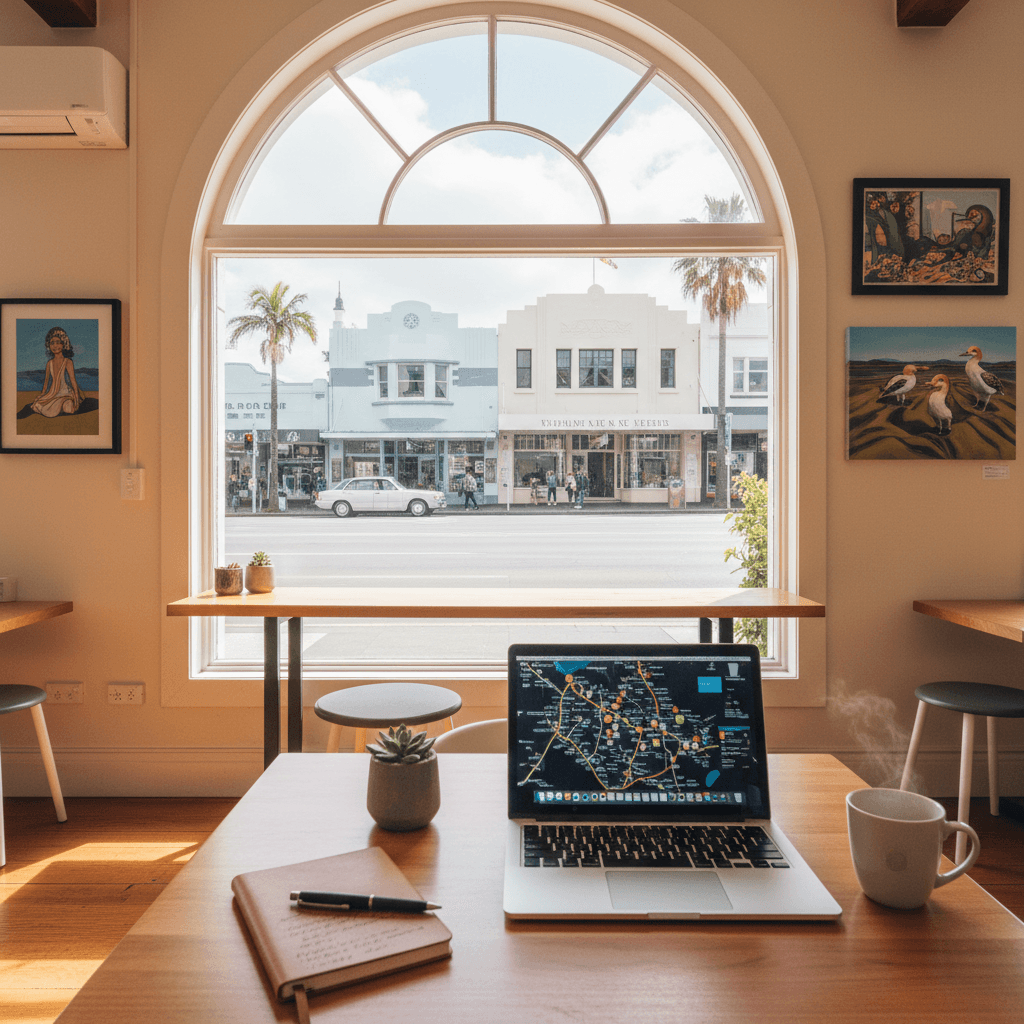
Napier feels like a town that got remade with confidence and then decided not to shout about it. The 1930s Art Deco facades, the salt off Marine Parade and the easy pace give it a very specific mood, calm on the surface, a little sleepy after dark and still charming enough that people stick around longer than planned.
It’s not a high-powered nomad base. The job market is small, travel out is a pain and Wellington sits more than 300 km away, so if you’re the type who wants constant city noise and endless networking, you’ll get restless fast. Still, the beach, wineries, cycling paths and weekend events make workdays feel lighter and honestly, that matters when you’re staring at a laptop for six hours.
Most expats and remote workers settle into a kind of “big town, small city” rhythm here, where you’ll hear gulls over traffic, smell coffee drifting from the CBD and end up seeing the same faces at markets, galleries or the Art Deco Festival. That community feel is the draw, but it also means everyone knows everyone, which, surprisingly, can be both comforting and slightly nosy.
What the vibe actually feels like
- Art Deco core: Clean lines, pastel buildings and a polished seaside look that makes the CBD feel distinct rather than generic.
- Outdoor pace: People cycle, walk Marine Parade, hit the beach or head out to vineyards instead of chasing big-night energy.
- Social but small: Community events and local meetups are easy to fall into, though the scene is limited if you want constant variety.
Cost-wise, Napier isn’t dirt cheap anymore. A solo monthly budget sits around NZ$2,200-NZ$2,800 depending on location and city-center one-bedrooms often run NZ$800 to NZ$1,300, so the “small city” label doesn’t automatically mean bargain prices.
Napier South suits people who want beach access and walkability, while the city center works best if you want the Deco buildings, cafes and easy errands right outside your door. Havelock North, just nearby, has more of a polished village feel, with nicer streets and a quieter, slightly smug energy and that’s where some nomads and expats end up when they want charm without the CBD noise.
- Napier South: Good for families, schools and walking to the beach, but prices creep up.
- City center: Best for short stays and nomad life, though it’s busier and more expensive.
- Havelock North: Pretty, artsy and calmer, but less urban.
The downside is clear. Napier can feel isolated, especially on a grey winter afternoon when the wind cuts across the waterfront and the town gets very quiet, very quickly. If you want easy hop-on-hop-off travel, this isn’t your place, but if you want sun, sea air and a slower grind, it’s a solid fit.
Napier isn’t cheap, but it’s still more manageable than Auckland if you’re not chasing a flashy lifestyle. A single person usually lands around NZ$2,500+ a month with central rent and that number climbs fast if you want regular café runs and a car parked outside. Honestly, the coast, the sunshine and the slower pace are what you’re paying for, not big-city convenience.
Rent does the heavy lifting here. A studio or 1BR in the city centre usually sits around NZ$800 to NZ$1,300, while places outside the middle, especially around Tamatea or Onekawa, are cheaper and a bit less polished. Napier South feels practical and walkable, though prices keep creeping up and the CBD costs more because you’re paying for the Art Deco streets, Marine Parade access and the short stroll to everything.
- Budget monthly total: About NZ$1,580 for one person, with outside-the-centre rent and home cooking.
- Mid-range: Around NZ$2,070, with a city 1BR, some meals out and maybe a gym.
- Comfortable: NZ$2,500 plus, if you want nicer rent, Uber rides and frequent dinners out.
Food is decent value if you don’t eat out every night. Street food and quick lunches run NZ$9 to NZ$15, a mid-range dinner is usually NZ$20 to NZ$35 a person and a coffee is about NZ$3 to NZ$6, which, weirdly, adds up faster than a proper meal if you’re working from cafés all day. A nice dinner for two can hit NZ$76, so the wine, views and sea air aren’t exactly free.
Transport is simple, though limited. Buses are cheap, with one-way fares around NZ$2 and monthly transport spend often landing between NZ$50 and NZ$100, but if you’re used to city frequency, the timetable can feel thin. Airport transfers are easy enough and bikes make more sense here than in many places, because the flat waterfront and trails invite you out, even when the wind smells like salt and exhaust.
What Expats and Nomads Usually Spend On
- Utilities and internet: NZ$180 to NZ$220 combined.
- Coworking: About NZ$460 a month for a basic desk, more for dedicated space.
- Coffee and lunches: Easy to blow past NZ$100 a week if you’re not careful.
If you want a cleaner benchmark, Here Collective and Bad Company are the coworking names people mention most and Bad Company’s dedicated desks get pricey fast. Napier works best for people who can live simply, cook at home and accept that isolation has a price, because the city’s calm comes with fewer shortcuts and fewer cheap thrills.
For nomads
Stay in the city center if you want the easiest life, because Here Collective on Hastings Street and Bad Company both put you near cafés, the Art Deco blocks and that breezy Marine Parade walk after work. Internet is solid and the vibe is calm, though the isolation does bite after a while, especially when you want a quick hop to Wellington or Auckland.
Best pick: City center. Skip: anywhere too far from town unless you’ve got a car.
For expats
Napier South works well if you’re settling in for a while, since you get schools, beaches and a neighborly feel without being stuck in the middle of tourist foot traffic. Rent is still cheaper outside the CBD, but it’s creeping up and honestly, the market can feel tight if you’re hunting for a decent family place.
Havelock North, just over the hill, is the polished option, with tree-lined streets, cafés, galleries and a more private, slightly posher feel, though you’ll trade city convenience for a quieter suburban rhythm. Weirdly, that’s what a lot of long-stayers like.
- Napier South: Good schools, beach access, walkable.
- Havelock North: Artsy, tidy, private, pricier.
- City center: Handy for errands, but noisier.
For families
Napier South is the safest bet for day-to-day life, with schools nearby, Marine Parade close enough for after-dinner walks and enough local community to make it feel settled rather than anonymous. The streets are usually quiet, though you’ll still hear weekend traffic, gulls and the occasional siren drifting across town.
Don’t chase the cheapest outer suburbs just to save a few dollars, because some areas feel rougher and the trade-off isn’t worth it if you’ve got kids and want peace of mind. Frankly, paying a bit more for a better street makes life easier here.
For solo travelers
The city center is the clear winner if you’re here for a short stay, since you can walk to Art Deco sights, bars, beaches and dinner without worrying about transport. Nights are low-key rather than wild, so if you want loud clubs and late chaos, Napier’ll feel sleepy fast.
If you want more breathing room, Havelock North is a better base, especially if you’re into wineries, cycling and slower mornings with coffee and birdsong, but you’ll miss the easy buzz of downtown. Not fancy. Just practical.
- City center: Best for short stays and walkability.
- Havelock North: Best for cafés, wine and quieter evenings.
- Napier South: Better if you want beach access and local life.
Napier’s internet is decent and that matters because this town can feel a bit far from everything else. Fibre is common in the CBD and most built-up suburbs, so if you’re in Napier South or around the city centre, getting 50Mbps or better usually isn’t a headache. Outside the core, speeds can dip and honestly, that’s where the coastal calm starts to feel a little less charming when you’re on a deadline.
The coworking scene is small but usable, which, surprisingly, suits Napier’s pace. Here Collective on Hastings Street is the cleanest bet for most nomads, with hot desks and permanent desks in the CBD. For those willing to look slightly further afield, Bad Company in Hastings is a short drive from Napier and offers dedicated desks for approximately NZ$770 a month including GST.
- Here Collective: Hastings Street, central, easy for coffee runs and lunch breaks.
- Bad Company: Located in Hastings, dedicated desks are approximately NZ$770 per month including GST.
- Hot desks: Available at both, though availability can be patchy on busy days.
Pricing in Napier isn’t wild, but it isn’t cheap either. A typical coworking budget starts around NZ$460 a month for a permanent desk and if you’re renting privately, internet often sits around NZ$40 to NZ$60 a month for fibre. The real catch is that accommodation and workspace together can start to sting, especially if you’re staying solo and trying to keep costs tight.
Cafes do the job if you’re picky about your schedule and don’t need a headset marinated in office noise all day. You’ll find plenty of spots around the CBD and Marine Parade where people work on laptops over flat whites and the atmosphere is usually mellow, with espresso machines hissing and the sea wind pushing through the doors when they open. Just don’t expect every cafe to welcome an all-day workstation habit, some will tolerate it, some won’t and that’s that.
- Internet setup: Fibre, VDSL and home WiFi are common.
- Mobile data: Spark and Vodafone are the safest bets, with Airalo eSIMs handy for short stays.
- Average internet cost: Around NZ$40 to NZ$60 monthly for home fibre.
If you’re here for a few weeks, I’d skip overplanning and just book a central stay near the CBD or Napier South, then test the WiFi on day one. It’s a small city, so the good spaces are close together, but the whole setup works best if you’re flexible, patient and fine with a slower rhythm than Wellington or Auckland.
Napier feels calm on the surface and most of the time it's. The CBD, Marine Parade and the main residential streets are generally fine for walking around in daylight, but the petty stuff, honestly, is what people notice here, shoplifting, car break-ins, the odd sketchy corner and a few rough patches on the city fringe. Don’t drift into isolated alleys in Maraenui after dark.
For most nomads and expats, the day-to-day risk is low, but not zero. That’s the real picture. You can hear gulls over the bay, then a scooter buzzing past, then the wind off the water and it all feels relaxed, still you should keep the same habits you’d use anywhere else, lock your rental, avoid leaving gear in plain sight and don’t assume a quiet street means a safe one.
Where to be a bit more careful
- Maraenui: Older reports flag some safety concerns, especially on quieter streets and around isolated spots.
- Outer suburban edges: Less foot traffic, fewer eyes on the street and that can feel off at night.
- Car parks and beachside pull-offs: Keep valuables out of sight, because smashed windows are a nuisance here too.
Healthcare is straightforward for a small city. Hawke’s Bay Hospital handles public care and private GPs usually charge around NZ$80-NZ$120 for adults, which is manageable compared with many places in New Zealand. Pharmacies are easy to find, common medications run about NZ$5 to NZ$15 and if you’ve got a minor issue, most people just pop in, ask the pharmacist and move on with the day.
Emergency response is 111. Use it. For anything non-urgent, private clinics are the faster option and that matters if you’re here for a short stay or you’ve got travel plans breathing down your neck. Air quality is excellent, so if you’re sensitive to city smog, Napier usually feels like a relief, with clean sea air and that dry Hawke’s Bay sun on your skin.
Practical healthcare notes
- Emergency: Call 111 for police, fire or ambulance.
- Private doctor visit: Around NZ$80-NZ$120 for adults.
- Pharmacy meds: Often NZ$5 to NZ$15.
- Hospital care: Hawke’s Bay Hospital for public treatment.
If you’re staying longer, book a GP early and keep your insurance details handy, because waiting until you’re sick is a terrible plan. Napier isn’t dangerous, but it’s also not the kind of place where you can leave your bag on a café chair and wander off without thinking twice.
Napier is easy to get around, but don’t expect big-city convenience. The CBD, Marine Parade and the waterfront are walkable and most of the time that’s enough, especially if you’re staying central and want to hear gulls, feel the salt air and not bother with a car. Still, the city spreads out fast once you leave the core and then you’re into bus timetables, taxis or your own wheels.
Walk when you can. It’s flat, pleasant and the Art Deco streets are compact, though the sun can be brutal at midday, so a hat and water bottle save you from that dry, prickly heat. Buses are cheap and decent for day-to-day errands, with one-way fares around NZ$2.50-NZ$3.50, which honestly makes them a no-drama option if you’re not in a rush.
Best ways to move around
- Walking: Best for the CBD, Marine Parade and beach access, no parking stress, no hassle.
- Bus: Reliable for local trips, one-way fares are about NZ$2.50-NZ$3.50 and that’s usually enough for town runs.
- Bike: Great for the trails and coastal stretch, bike rentals are common and the ride feels breezy, not punishing.
- Uber and taxis: Uber works, but pickups can be slow; taxis are often the safer bet when you’re heading somewhere at a fixed time.
If you’re flying in or out, Napier Airport is only about 4 km from town, so transfers are painless, which, surprisingly, is one of the city’s nicest little perks. Bus or taxi will get you there fast enough and airport taxis usually run about NZ$15 to NZ$25, depending on traffic and the time of day.
Useful local options
- Airport transfer: InterCity services can run from about NZ$14 to NZ$45, with airport trips taking roughly 17 minutes.
- Taxis: Baywide is a common local choice, especially when you don’t want to wait around outside in the wind.
- Bikes: Handy for Hawke’s Bay trails and way more enjoyable than sitting in traffic that doesn’t really exist.
Most nomads find they don’t need a car every day, but if you’re living outside the center or planning winery runs, a car makes life easier. Parking is generally less painful than in Auckland, though not free everywhere and once you get beyond Napier, the distances start to bite, because the region feels open and quiet, then suddenly you’re 300 km from Wellington and wishing you’d planned better.
Napiers English is easy, plain and unbothered. You’ll hear Kia ora as a greeting and “cheers” does a lot of work here, for thanks, for agreement, for ending a message, sometimes for all three at once.
That said, a little Māori goes a long way and people appreciate the effort, honestly more than perfect pronunciation. Most signs and public services are in English, so language barriers for English speakers are basically a non-issue, which is a relief when you’ve just landed and your brain is still half on airport coffee.
What you’ll actually hear
- English: The default in shops, cafes, coworking spaces and day-to-day admin.
- Māori: Common in greetings, place names and public life, especially around schools and community events.
- Local shorthand: “Cheers” often replaces thanks, goodbye and “sorted.”
For nomads, expats and travelers, the practical reality is simple, nobody’s going to make a fuss if your English is basic and you won’t need a translator for rent, buses or booking a table. Turns out, the only time language really matters is when you want to sound less like a visitor and more like you belong.
Useful phrases
- Kia ora: Hello, thanks and a warm all-purpose opener.
- Cheers: Thanks, see you or good one.
- No worries: The local answer to half of life’s minor inconveniences.
Google Translate is handy for the odd menu item or formal email, though you probably won’t need it often unless you’re dealing with something niche, like a rural service or an old paper form that feels designed in 1998. Frankly, the bigger communication challenge in Napier isn’t language, it’s the town’s slower rhythm, where people answer when they’re ready and nobody rushes to fill the silence.
That pace can be lovely. It can also be maddening.
If you’re working remotely, keep things direct and friendly, say what you need, include dates and numbers and you’ll get better results than sending a long polished paragraph that sounds impressive but says very little. Locals are polite, not theatrical and if you sound clear, warm and low-drama, communication in Napier is smooth as long as you don’t expect instant, big-city efficiency.
Weather & Best Time to Visit
Napier is one of New Zealand’s sunnier cities and that changes the whole feel of the place. Summers are warm, dry and beach-friendly, while winters stay fairly mild, just a bit windier and greyer, with that damp coastal chill that gets into your clothes after sunset.
Best time: December to February, hands down. That’s when you get the warmest days, around 24°C and the city feels built for it, with people on Marine Parade, bikes rolling past the sea wall and cafes full of sunscreen, sea salt and iced coffee.
Spring and autumn are easier on the wallet and easier on your skin, honestly, because you’ll still get plenty of sun without the full summer heat. Rain comes in light drizzles more than heavy downpours, so it won’t usually ruin a week, though June through November is wetter and the wind can be annoying enough to rattle windows.
Winter isn’t a dealbreaker. Temperatures sit around 14°C by day and 6°C at night, so you’re not dealing with anything dramatic, but evenings can feel cold indoors if your rental’s insulation is poor, which, surprisingly, still happens in some places.
What Each Season Feels Like
- Summer: Warm, beachy, busy and the best for wine touring, outdoor dining and the Art Deco Festival crowd.
- Autumn: Mild, calmer and a nice time for cycling, vineyard visits and fewer tourist headaches.
- Winter: Cool, breezy and better for slower living, golf or cheap monthly rentals if you don’t mind gray mornings.
- Spring: Fresh and sunny, with more weather swings, so pack layers and don’t trust the morning forecast too much.
If you’re working remotely, the sweet spot is usually shoulder season, because cafes are less packed, accommodation is a bit softer on price and the city still has that bright coastal light that makes even a boring workday feel less grim. Bring a jacket anyway, the sea breeze can turn sharp fast, especially near the waterfront.
Skip the idea that Napier is hot all year, it isn’t. Pack for sun, pack for wind and if you’re here in winter, pack socks that actually keep your feet warm on cold tile floors.
Napier is easy to live in if you like sunny mornings, sea air and a town that moves at a slower clip. It’s also a place that can feel a bit boxed in, frankly, if you’re used to hopping to bigger cities on a whim. Wellington’s a long way off and that distance gets old.
SIMs and internet are straightforward. Grab Vodafone or Spark at the airport if you want a physical SIM or preload an Airalo eSIM before you fly in, because fumbling with setup after a long flight is a pain. Fibre is common in town, cafés usually cope fine for a few hours of work and places like Here Collective on Hastings Street or Bad Company are where remote workers actually sit down and get things done.
- Banking: Wise works well for day-to-day spending and transfers.
- Cash: ATMs are easy to find, though small shops still like cards.
- Accommodation: Sharedspace.co.nz and Trade Me are the first places most people check.
- Rent: Expect more in the city centre, less in areas like Tamatea or Onekawa.
Food shopping is simple enough, but eating out adds up faster than you’d think. A coffee might run NZ$3 to NZ$6 and a casual meal is usually NZ$20 to NZ$35, so if you’re here for a month, home cooking saves real money, honestly.
Get around on foot when you can, because the CBD and Marine Parade are compact and the sea breeze makes walking pleasant, even if the gulls won’t shut up. Buses are cheap, Uber exists but isn’t always instant and a taxi from the airport can cost around NZ$40 to NZ$55, which feels steep for a 4km hop.
Day-to-day habits
- Shoes: Take them off indoors, especially in private homes.
- Waste: People are fairly eco-aware, so bring a reusable bottle and skip single-use plastic.
- Day trips: Te Mata Peak and nearby wineries are the easy wins.
- Local rhythm: Festivals and community events matter here, so check what’s on before you plan a quiet weekend.
If you’re staying a while, pick housing with decent insulation, because winter tile floors get cold and the sea wind can cut through lighter rooms. Napier’s easygoing, but it’s still a small market with limited work, rising costs and a travel scene that’s a bit inconvenient, so go in with clear expectations.
Need visa and immigration info for New Zealand?
🇳🇿 View New Zealand Country GuideEasy Landing
Settle in, no stress