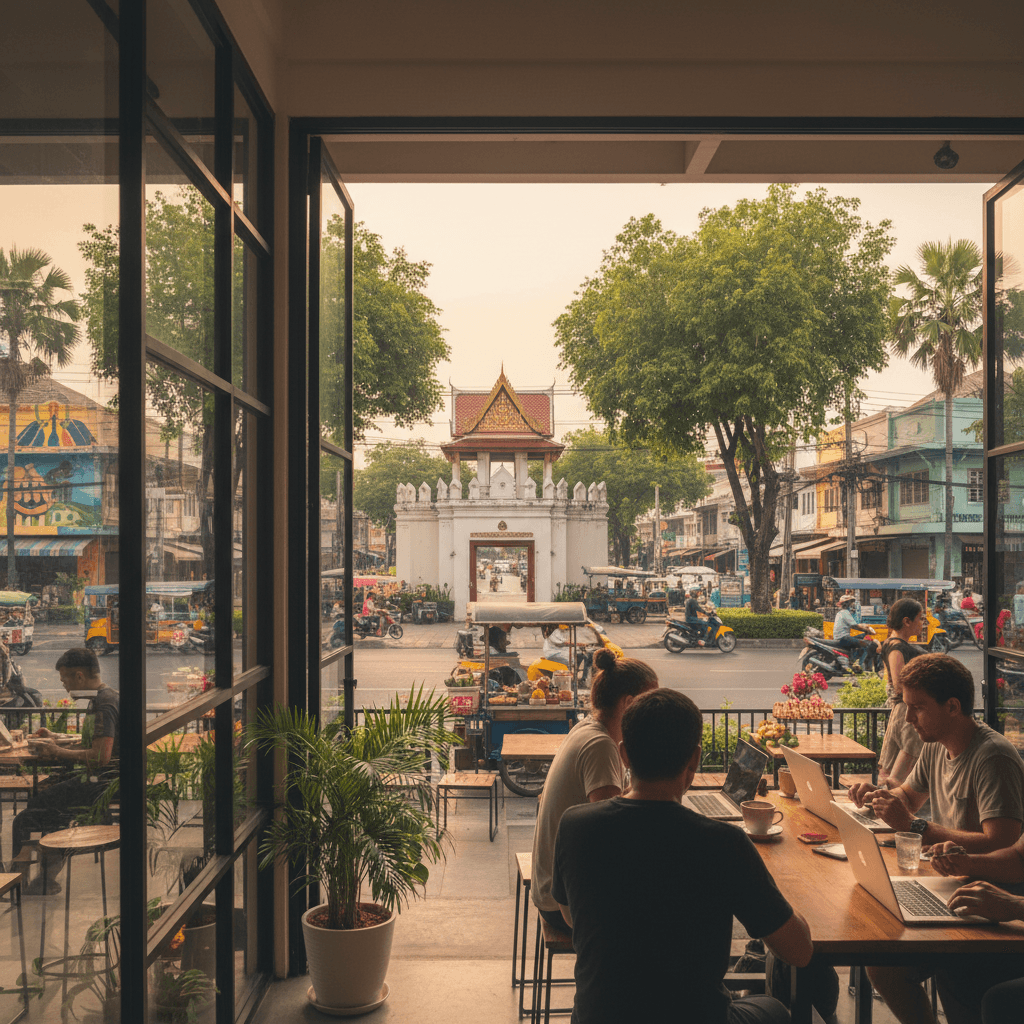
Nakhon Ratchasima
🇹🇭 Thailand
The Gateway to Isaan: A Slower Pace of Life
Nakhon Ratchasima, known affectionately by locals and expats as Korat, offers a refreshing change of pace for those looking to escape the relentless energy of Bangkok or the tourist-heavy streets of Chiang Mai. It’s a place where the air feels a bit stiller and the smiles feel a bit more genuine. As Thailand’s third-largest city, it provides a unique blend of urban convenience and rural charm that makes it an increasingly popular base for digital nomads seeking an authentic Thai experience.
Living here feels like being part of a well-kept secret. You’ll find all the modern amenities you need, massive malls, reliable 4G, and great coffee, without the "backpacker trail" atmosphere. The vibe is decidedly low-key and relaxed, making it ideal for deep work or those who prefer a quiet evening at a local market over a neon-lit nightclub. Many nomads find that the lack of a massive expat bubble forces them to integrate more deeply with the local community, which is both rewarding and humbling.
The Cost of Living: Your Baht Goes Further
One of the biggest draws to Korat is the sheer affordability. It’s a city where you can live a high-quality life on a modest budget. While a budget of $600, $800 is doable if you stick to local eats and shared housing, most nomads find the $900, $1,200 range to be the "sweet spot" for a comfortable, mid-range lifestyle. If you’re looking to splurge, $1,500+ grants you access to luxury condos and upscale dining that would cost triple in Western cities.
- Rent: You can snag a modern studio in the City Center for around $162, $220 (฿5,500, ฿8,000). If you look toward the outskirts or serviced apartments near Bung Ta Lua Park, prices range from $220, $420 (฿8,000, ฿15,000) for more space and amenities like pools.
- Food & Drink: Street food and local curry stalls are incredibly cheap, often costing between $1, $3 (฿40, ฿100). A mid-range dinner out is usually around $4, while a coffee or a beer will set you back about $1 and $2 respectively.
- Transportation: A typical trip using Grab or Bolt costs about $4 (฿140), and scooter rentals average $6, $9 (฿200, ฿300) per day.
Connectivity and the Work Scene
While Korat doesn't have a surplus of dedicated coworking spaces like Bali, it’s a city that’s very friendly to the "laptop lifestyle." WiFi speeds are surprisingly fast, averaging 104 Mbps, and the connection is generally stable in hotels and modern cafes. Most nomads choose to work from their apartments or set up shop in the air-conditioned comfort of the city's major malls. For mobile data, picking up an AIS or TrueMove SIM is easy and cheap, with 10GB costing around $5.
Experienced expats recommend joining the "Expats in Korat / Nakhon Ratchasima" Facebook group to find local meetups. Since the nomad community is still small, you won't find many organized networking events, but you'll find plenty of friendly retirees and teachers at spots like Monkey Bar or Must So Kiss for craft beer. It’s a social scene that requires a bit more effort to break into, but it’s far more personal than the revolving door of travelers in more famous hubs.
Safety, Health, and Logistics
Safety is one of Korat's strongest selling points. Travelers often note that the city feels exceptionally safe, with very low crime or scam rates compared to the capital. It’s a welcoming environment for women and LGBTQ+ travelers, though everyone should be cautious on the roads, as traffic can be heavy and walkability is low outside the immediate center. For healthcare, private hospitals are the way to go to avoid the day-long waits at public facilities.
The biggest hurdle for most newcomers is the language barrier. English proficiency is lower here than in Thailand’s tourist zones. Locals are incredibly friendly but can be shy if they don't speak English well. You’ll definitely want Google Translate pinned to your home screen, and learning basic Thai phrases like Sawatdee (hello) and Khop khun (thanks) will go a long way in building rapport. It’s all part of the charm, living in Korat isn't just a change of scenery; it's a genuine immersion into the heart of Isaan.
The Cost of Living in Korat
Nakhon Ratchasima, or Korat as the locals call it, is widely considered one of the most affordable urban hubs in Thailand. While it offers the conveniences of a major city, your Baht goes significantly further here than in Bangkok or Phuket. Most digital nomads find they can live comfortably on a monthly budget of $1,028, though your spending will vary based on how much you lean into the local lifestyle.
For those on a strict budget, it's possible to get by on $600 to $800 per month by sticking to local markets and shared housing. A mid-range lifestyle, including a private studio and frequent dining out, typically lands between $900 and $1,200. If you're looking for a high-end experience with a luxury condo and upscale meals, you should budget $1,500 or more.
Finding Your Home
Rental prices are a major draw for long-term travelers. In the City Center, particularly around Suranaree Road and Mittraphap Road, you'll pay a premium for convenience. Expect to spend around $162 to $171 (roughly ฿5,500) for a basic studio, though modern units in central malls can reach ฿10,000.
Many experienced expats recommend looking toward the outskirts, specifically near Bung Ta Lua Park. This area offers a quieter pace and better value for your money. You can find spacious serviced apartments with pool access for ฿8,000 to ฿15,000 ($220 to $420) per month. If you prefer a mountain breeze, Pak Chong near Khao Yai National Park has scenic condos for about ฿25,000, though you'll be further from the city's main amenities.
Food, Drink, and Socializing
Eating in Korat is incredibly cheap if you enjoy Thai cuisine. Street food stalls and curry shops like Vegetarian Food For Health offer filling meals for as little as ฿40 to ฿100 ($1 to $3). A mid-range dinner at a sit-down restaurant usually costs around $4, while a coffee at a local cafe is about $1 and a beer is $2.
The social scene is low-key compared to Thailand’s tourist hubs. Travelers often gather at Monkey Bar or grab craft beers at Must So Kiss. For networking, most nomads skip formal events and join the "Expats in Korat / Nakhon Ratchasima" Facebook group to find local meetups and advice.
Connectivity and Getting Around
While there aren't many dedicated coworking spaces, the city is filled with work-friendly cafes and malls with reliable WiFi. Expect average speeds of 104 Mbps. For mobile data, a 10GB SIM card from AIS or TrueMove costs about $5, while nomads preferring eSIMs often use Ubigi or Holafly for unlimited data at $20 for two weeks.
Transportation is another area where you'll save. Grab is the most reliable app for getting around, with most trips costing between ฿50 and ฿120 ($1.50 to $4). If you're comfortable on two wheels, scooter rentals run ฿200 to ฿300 per day. Just keep in mind that the city isn't very walkable outside the immediate center, so you'll likely need a ride-hailing app or a rental to get the most out of the area.
Health and Practicalities
Safety is a highlight here, as the city has very low crime and scam rates. However, healthcare requires some strategy. Local expats suggest using private hospitals for minor issues to avoid the day-long waits at public facilities. Always be cautious with local delicacies; travelers are currently advised to avoid raw pork dishes due to health risks like Streptococcus suis.
- Mobile Data: $5 for 10GB.
- Coworking: Roughly $143 per month for a hot desk if available.
- Daily Scooter Rental: $6 to $9.
- ATM Withdrawals: Most machines suggest a ฿10,000 limit; use Wise to keep exchange fees low.
For Digital Nomads and Solo Travelers: The City Center
If you want to be in the middle of the city, look for housing around Suranaree Road and Mittraphap Road. This central hub is the most walkable part of Korat, keeping you close to major shopping malls, 24-hour 7-Elevens, and an endless supply of cheap street food stalls. Many nomads prefer this area because it eliminates the need for a daily scooter rental, as most essentials are just a short walk away.
While there aren't many dedicated coworking spaces yet, the city center is packed with modern cafes and malls where the 104 Mbps average WiFi is reliable for a day's work. Expect to pay around ฿10,000 ($280) for a modern studio apartment here. Travelers often note that while the convenience is unbeatable, the traffic noise can be a bit much, so it's worth asking for a room at the back of the building.
For Expats and Long-Term Residents: Near Bung Ta Lua Park
Experienced expats often recommend moving slightly away from the concrete center toward the green spaces surrounding Bung Ta Lua Park. This neighborhood offers a much calmer lifestyle and is home to several spacious serviced apartments. You can find high-quality units with pool access and gym facilities for between ฿8,000 and ฿15,000 ($220, $420) per month.
The trade-off for the peace and quiet is a lack of walkability. You'll definitely want to download the Grab or Bolt apps to get around, as a typical trip into the center costs about ฿50 to ฿120. Many long-stayers eventually rent a scooter for ฿200, ฿300 per day to get around more freely. It's a great spot if you value a morning jog around the lake over being next door to a nightclub.
For Families and Nature Lovers: Pak Chong
If you prefer mountain air to urban heat, Pak Chong is the place to be. Located about 90 minutes from the city core, this area serves as the gateway to Khao Yai National Park. It's a favorite for families who want easy access to jungle trekking and waterfalls while still having modern amenities nearby. The vibe here is significantly more scenic, though it does feel more "touristy" than the rest of the province.
Housing in Pak Chong tends to be pricier, with high-end condos and vacation rentals averaging around ฿25,000 ($700) per month. It's a fantastic base for weekend adventures, but keep in mind that English proficiency is lower here than in Bangkok. You'll find yourself relying heavily on Google Translate and the Expats in Korat Facebook group to navigate local services and community events.
Budget Tips for Every Neighborhood
No matter which neighborhood you choose, your cost of living will stay remarkably low. A budget of $1,028 per month covers a very comfortable lifestyle for most nomads. You can grab a rice buffet at Vegetarian Food For Health for just ฿40 ($1.10) or a mid-range dinner for about $4.
For your phone, pick up an AIS or TrueMove tourist SIM for around $5 to get 10GB of data, or use an eSIM like Ubigi if you want to be connected the moment you arrive. Just remember to stick to bottled water and avoid raw pork dishes to stay healthy while exploring the local food scene.
Getting Connected
Staying online in Korat is generally straightforward, though the infrastructure feels more like a functional provincial hub than a tech-focused nomad hotspot. You can expect average WiFi speeds of around 104 Mbps in modern areas. While connections are reliable in major shopping malls and mid-to-upscale hotels, travelers often note that smaller guesthouses can be hit-or-miss.
For mobile data, you'll want to pick up a local SIM card immediately. AIS and TrueMove offer the most consistent coverage across the city, with 10GB tourist plans starting around $5 (฿175). If you prefer to skip the physical SIM card, many nomads recommend using an eSIM like Ubigi or Holafly, which offer unlimited data packages for roughly $20 for 15 days.
If you're planning a long-term stay in a serviced apartment, experienced expats recommend checking the router placement before signing a lease. In the City Center near Mittraphap Road, signal strength is excellent, but in the quieter residential areas near Bung Ta Lua Park, you might find yourself relying more on your mobile hotspot.
Coworking Spaces and Work-Friendly Cafes
Nakhon Ratchasima doesn't currently have a large scene of dedicated coworking offices like you'd find in Chiang Mai. Most digital nomads here treat the city's modern shopping malls and specialty coffee shops as their unofficial offices. If you do find a dedicated desk space, expect to pay between $143 and $152 (฿5,000) per month.
- Central Korat and Terminal 21: These massive malls are the go-to for many remote workers. They offer strong, free WiFi, plenty of air-conditioned seating, and easy access to power outlets in the food courts and peripheral cafes.
- Class Cafe: This local favorite is a staple for the student and nomad community. It has a minimalist, work-friendly atmosphere with reliable internet and plenty of table space for laptops.
- Yellow Pumpkin: Located in the older part of town, this spot is popular for those who prefer a more aesthetic, quiet environment for deep work sessions.
Practical Work Tips
Because the nomad community is smaller here, you won't find many organized networking events. Most remote workers meet other people through the Expats in Korat / Nakhon Ratchasima Facebook group, which is a great resource for asking about the latest cafe openings or internet outages.
If you have frequent video calls, it's worth investing in a superior room at a hotel or a higher-end serviced apartment in the ฿11,000+ range. These typically offer dedicated routers rather than shared building WiFi. Travelers often suggest carrying a universal power strip, as older buildings in the city center may only have one or two accessible outlets.
Keep in mind that while the internet is fast, English proficiency among cafe staff is often low. Using Google Translate to ask for the WiFi password ("ขอรหัสไวไฟ" - Kaw rahat wifi) will save you a lot of time. Most cafes are happy to let you work for a few hours if you're buying coffee, which usually costs around $1 (฿35).
Safety & Peace of Mind
Nakhon Ratchasima, or Korat as you'll likely call it once you arrive, is widely considered one of the safest major cities in Thailand for digital nomads. While Bangkok and Chiang Mai have their fair share of tourist-targeted scams, Korat remains refreshingly honest. You aren't likely to be overcharged by vendors or harassed in the streets, making it an excellent choice for solo travelers and women.
The city doesn't really have "no-go" zones or dangerous neighborhoods to avoid. Whether you're staying in the City Center near the Suranaree monument or in the quieter residential areas near Bung Ta Lua Park, the vibe remains relaxed and respectful. Travelers often note that the locals are incredibly friendly, though they can be shy due to low English proficiency.
The primary safety concern here isn't crime, it's the road conditions. Like much of Thailand, the streets aren't particularly pedestrian-friendly outside the immediate core. Expats recommend being extremely cautious if you're renting a scooter, as traffic on Mittraphap Road can be heavy and fast. If you're walking, stick to well-lit areas and keep a sharp eye on motorbike traffic when crossing the street.
Healthcare & Medical Services
If you need medical attention, you'll find that the quality of care is high, but the experience varies wildly depending on where you go. Public hospitals in Korat are affordable but notoriously crowded. Many nomads find that a simple visit can take an entire day due to long wait times and bureaucratic hurdles.
For anything beyond a minor check-up, most experienced expats recommend heading to a private hospital. You'll pay more, but the service is significantly faster, and you're much more likely to find English-speaking doctors and staff. Even at private facilities, costs remain very manageable for those earning in foreign currencies compared to Western prices.
Dental care in the city is a standout feature. You'll find several high-quality clinics that offer everything from cleanings to major work at a fraction of the cost you'd pay back home. Pharmacies are also everywhere, look for the green cross signs, and many pharmacists speak enough English to help with basic ailments or provide over-the-counter medications.
Health Tips & Regional Warnings
There is one specific health caution unique to the region that you need to take seriously: Streptococcus suis. This is a bacterial infection linked to the consumption of raw or undercooked pork, which is sometimes found in traditional Isaan dishes. To stay safe, ensure your meat is thoroughly cooked and avoid "raw blood" soups or salads, even if locals are indulging.
The weather can also be a health factor. With "feels-like" temperatures often hitting 43°C (109°F) during the hot season, heat exhaustion is a real risk. Stay hydrated and try to plan your outdoor activities for the early morning or after sunset. The air quality is generally moderate (AQI 60-110), which is often better than the "smoky season" levels found in Northern Thailand, but it's worth monitoring if you have respiratory sensitivities.
Emergency Contacts
It's a good idea to have these numbers saved in your phone before you arrive, just in case. While you'll hopefully never need them, knowing who to call can save a lot of stress in a crisis:
- General Police: Dial 191
- Medical Emergencies/Ambulance: Dial 1669
- Tourist Police: Dial 1155 (These operators usually speak English and can help bridge the language gap)
To help you communicate with medical staff, make sure you have Google Translate downloaded for offline use. It is very helpful for communicating symptoms to nurses or pharmacists who might not be fluent in English.
Getting Around Korat
Navigating Nakhon Ratchasima is a bit different than the effortless transit systems of Bangkok. While it's the third-largest city in Thailand, it retains a spread-out, provincial layout that makes planning how you'll get around important for a smooth stay.
Ride-Hailing and Apps
For most nomads, ride-hailing apps are the primary way to get from A to B. Grab is the most reliable and widely used service in the city, offering both cars and motorbikes. Travelers often note that GrabBike is the fastest way to weave through peak-hour traffic, typically costing between ฿50 and ฿120 ($1.50, $3.50) per trip.
Bolt is also available and sometimes offers lower fares, though the vehicle availability can be spotty compared to Grab. If you're heading out for a night at Must So Kiss or meeting expats at Monkey Bar, these apps are your safest bet for a guaranteed ride home.
Public Transport and Terminals
The city serves as a massive regional hub, which means it has two distinct bus terminals. The Old Bus Station (Terminal 1) is located on Burin Road and mostly handles local routes within the province. The New Bus Station (Terminal 2), located north of the center, is where you'll find long-distance coaches to Bangkok or other Isaan hubs.
For local travel, you'll see colorful Songthaews (converted pickup trucks with benches) roaming the main arteries. They are incredibly cheap, usually costing around ฿10, ฿20, but they can be confusing for newcomers as routes aren't always clearly marked in English. Experienced expats recommend using Google Maps to track your location in real-time while riding one so you know when to ring the bell.
Renting Your Own Wheels
If you're staying near the Bung Ta Lua Park area or in the quieter residential outskirts, you'll likely find the city's low walkability a challenge. Many long-term nomads choose to rent a scooter to gain independence. Expect to pay between ฿200 and ฿300 per day for a reliable bike.
If you prefer four wheels, car rentals usually start around ฿1,000 to ฿1,500 per day. Always ensure you have an International Driving Permit (IDP) and valid insurance. Travelers often warn that while the city feels relaxed, the roads can be dangerous for those unaccustomed to Thai driving patterns, especially during the rainy season from May to October.
Walking and Walkability
The City Center, particularly around Suranaree Road and Mittraphap Road, is the only area where walking is actually practical. Here, you can easily reach 7-Elevens, local markets, and malls on foot. However, outside of this core, sidewalks are often uneven or non-existent.
Nomads frequently mention that the heat is the biggest barrier to walking. With "feels-like" temperatures often hitting 43°C (109°F), even a ten-minute walk to a cafe can be draining. It's usually better to spend the $2-$4 on a Grab than to brave the midday sun.
Arriving and Departing
Most travelers arrive via Bangkok, which is about a 3 to 4-hour drive away. While there is a local airport, its commercial flight schedule is notoriously limited and unreliable. Most nomads recommend taking the train from Bangkok, which takes 4-6 hours and offers a scenic, budget-friendly entry into the heart of the city.
- Grab/Bolt: Best for daily convenience and safety.
- Scooter Rental: ฿200, ฿300/day; best for those living in residential outskirts.
- Songthaews: The cheapest local option at ฿10, ฿20 per ride.
- Trains: The most popular way to connect to Bangkok for under $10.
- Walking: Only recommended within the immediate City Center.
The Language Barrier in Korat
In Nakhon Ratchasima, the language landscape is noticeably different from the tourist hubs of Bangkok or Phuket. Travelers often note that English proficiency is low among the general population. While staff at major malls like Central Korat or high-end hotels might speak basic English, you'll find that many locals are shy about speaking it, even if they understand a few words.
The primary language spoken is Central Thai, but you'll frequently hear the Isaan dialect (closely related to Lao) in markets and residential neighborhoods. Experienced expats recommend approaching language with patience and a smile, as the locals are generally friendly and helpful despite the communication gap.
Essential Tools and Apps
Since you won't be able to rely on English for daily tasks, having the right tech is a necessity. Many nomads find that Google Translate is their most used app, particularly the camera feature for translating menus at local spots like Vegetarian Food For Health or street stalls.
For getting around, the Grab app is a lifesaver. It eliminates the need to negotiate prices or explain complicated directions to drivers who may not speak English. You can simply pin your destination and pay via the app, which typically costs between ฿50 and ฿120 ($1.50, $3.50) for trips around the city center.
Key Phrases to Know
Learning a few basic Thai phrases goes a long way in Korat. Even a clumsy attempt at the local tongue is seen as a sign of respect and often results in better service and warmer interactions. These are the most useful phrases for daily life:
- Sawatdee (khrap/ka): Hello
- Khop khun (khrap/ka): Thank you
- Sabai dee mai?: How are you?
- Mai khao jai: I don't understand
- Hong nam yuu thi nai?: Where is the toilet?
- Tao rai?: How much?
Remember to add "khrap" (if you identify as male) or "ka" (if you identify as female) to the end of your sentences to keep things polite. It's a small detail that makes a big difference in how you're perceived.
Social Connections and Community
Because the nomad community is relatively small here, finding English-speaking social circles requires a bit of effort. Travelers often head to the "Expats in Korat / Nakhon Ratchasima" group on Facebook to find local events or ask for advice on specific services.
If you're looking for a physical spot to meet people, Monkey Bar is a well-known expat hangout, though it leans toward a more established retiree crowd. For a younger or more diverse vibe, check out Must So Kiss for craft beer. You’ll find that while the nightlife scene is low-key, the people you do meet are usually eager to share tips about getting around town.
Communication Etiquette
Body language is just as important as spoken words in Thailand. The Wai greeting (pressing your palms together near your chest) is the standard way to show respect. It's also vital to maintain a calm demeanor; "losing face" by getting angry or raising your voice is highly discouraged and will usually make communication more difficult.
When dining out or shopping in local markets, pointing and smiling works wonders. Most street food vendors are used to non-Thai speakers and will appreciate it if you have your Google Translate or Thai Baht ready to go. Just be sure to double-check your orders, as "mai phet" (not spicy) is a phrase you'll want to master if you aren't ready for the famous Isaan heat.
The Best Time to Visit
Nakhon Ratchasima, or Korat as you'll likely hear it called, is consistently hot year-round. Most travelers agree that the sweet spot for a visit falls between December and February. During these months, the weather is relatively dry and the humidity is at its most manageable levels.
Experienced expats recommend this window because the "feels-like" temperatures haven't yet reached the brutal peaks of the Thai summer. You can expect daily highs around 27-30°C (81-86°F), which makes exploring the city center or taking a day trip to Khao Yai National Park much more comfortable.
Many nomads find that this period is also the best time for outdoor work. If you're planning to set up your laptop at a cafe with outdoor seating, the low rainfall (0-45mm) and moderate air quality (usually AQI 60-110) make it the most pleasant season for a long-stay stint.
The Hot Season (March to April)
If you don't handle heat well, you might want to avoid the peak of the dry season. By March and April, temperatures frequently climb to 34°C (93°F), but the high humidity can make it feel closer to 43°C (109°F). Travelers often note that even a short walk from a condo in the city center to a 7-Eleven can feel exhausting during midday.
During these months, you'll want to prioritize accommodation with strong air conditioning. If you're staying in the outer residential areas near Bung Ta Lua Park, having access to a pool is almost a necessity. It’s also the time when locals retreat to the air-conditioned comfort of malls like Central Korat or Terminal 21.
The Rainy Season (May to October)
The rainy season brings a different set of challenges, with September typically being the wettest month, seeing roughly 239mm of rain across 19 days. While the rain often comes in short, heavy bursts rather than a constant drizzle, it can make getting around the city difficult.
Since Korat isn't particularly walkable, nomad life during the monsoon relies heavily on ride-hailing apps like Grab or Bolt. Motorbike taxis become less practical when the streets are slick, so expect to pay a bit more for car-based Grabs, which usually cost between ฿50 and ฿120 ($1.50 - $4) per trip. On the plus side, the surrounding countryside and the jungles of Khao Yai become incredibly lush and green during this time.
What to Pack and Prepare For
- Lightweight fabrics: Stick to linen or moisture-wicking materials. The 70-90% humidity during the rainy season means clothes take a long time to dry.
- Sun protection: Even on overcast days, the UV index is high. A good hat and sunscreen are essential if you're visiting ruins or parks.
- Modest attire: If you're visiting local temples like the Thao Suranari Monument, remember to bring a light shawl or trousers that cover your knees, regardless of the heat.
- Health precautions: Travelers should be cautious with local delicacies during the hotter months. Specifically, avoid raw pork dishes to stay safe from Streptococcus suis, which has seen local outbreaks.
Ultimately, Korat offers a slower, more authentic Isaan experience than the major tourist hubs. While the weather can be intense, timing your visit for the cool, dry months ensures you can enjoy the city’s low costs and friendly atmosphere without the overbearing heat.
Getting Around Korat
Nakhon Ratchasima is a sprawling city where your transport choices depend on your tolerance for heat. While the city center is somewhat walkable, most nomads rely on ride-hailing apps like Grab and Bolt to get around comfortably. A typical trip across town usually costs between ฿50 and ฿120 ($1.50, $3.50).
If you're staying long-term, renting a scooter for ฿200, ฿300 per day is common, though expats warn that local traffic can be unpredictable. For regional travel, the city has two bus terminals; the New Bus Terminal north of the center handles most long-distance routes, while the Old Bus Terminal on Burin Road is better for local connections.
Cost of Living & Neighborhoods
Your budget goes a long way here compared to Thailand's tourist hubs. A comfortable monthly budget for a nomad sits around $1,028. You can find modern studio apartments in the City Center near Mittraphap Road for about ฿10,000, ฿11,000 ($280, $310), putting you within walking distance of malls and street food.
For a quieter pace, many expats prefer the outer residential areas near Bung Ta Lua Park. You'll find spacious serviced apartments here with pool access for ฿8,000 to ฿15,000 ($220, $420). If you want a nature-focused retreat, Pak Chong near Khao Yai National Park offers scenic condos, though you'll be about 90 minutes from the city core.
Staying Connected
While dedicated coworking spaces are rare, the city's cafe scene is excellent for remote work. Most nomads set up shop in local cafes or mall food courts where the WiFi averages 104 Mbps. For reliable mobile data, pick up a TrueMove or AIS tourist SIM for about $5 for 10GB, or use an eSIM like Ubigi if you need to hit the ground running.
Safety & Health
Korat is exceptionally safe with very low rates of crime or scams. However, travelers should be cautious of the roads, which aren't always pedestrian-friendly. For medical needs, avoid the long waits at public hospitals and head to a private facility for faster service.
A specific health tip from locals: be wary of raw pork dishes, which can carry Streptococcus suis. Stick to cooked meals to stay safe. In case of emergencies, dial 191 for police or 1669 for medical assistance.
Food & Social Life
The social scene is low-key and revolves around a few key expat hangouts. Monkey Bar and Must So Kiss are popular spots to meet others, though the nomad community is smaller than in Chiang Mai. To find events, join the Expats in Korat Facebook group.
- Street Food: Expect to pay ฿40, ฿100 ($1, $3) for a solid meal. Vegetarian Food For Health offers a great rice buffet for just ฿40.
- Coffee & Beer: A standard latte is around $1, while a beer at a local bar will cost about $2.
- Tipping: While not mandatory, a 5% tip at restaurants is appreciated.
Weather & Language
The best time to visit is December through February, when the weather is dry and temperatures are manageable. Avoid September if you don't like heavy rain. Because English proficiency is quite low, keep Google Translate handy. Learning a few phrases like Sawatdee (hello) and Khop khun (thank you) goes a long way with the friendly locals.
Need visa and immigration info for Thailand?
🇹🇭 View Thailand Country GuideEasy Landing
Settle in, no stress