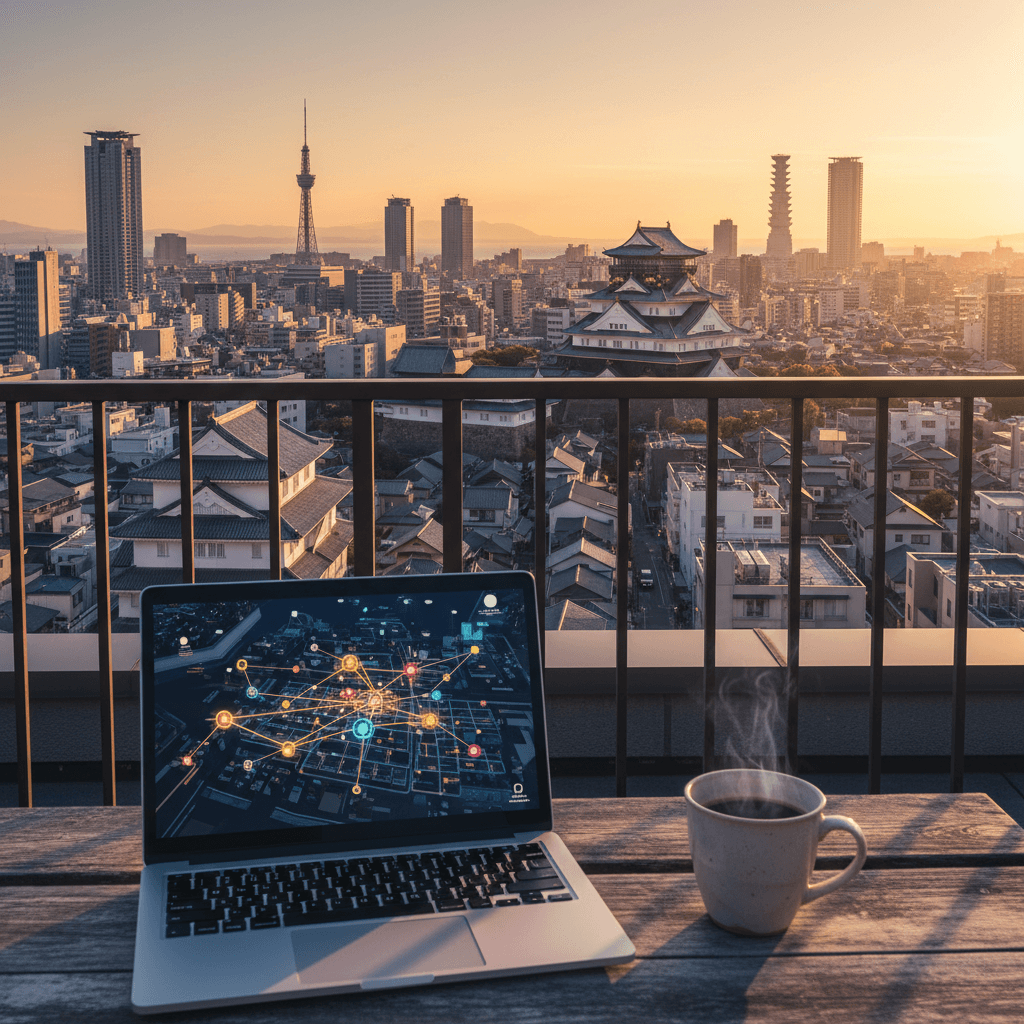
Nagoya
🇯🇵 Japan
The Industry Powerhouse with a Soul
If Tokyo is the hyperactive older sibling and Osaka is the loud, fun-loving cousin, Nagoya is the grounded, high-achieving middle child. It’s the engine room of Japan, home to Toyota and a massive industrial legacy, but don’t let the "business first" reputation fool you. For nomads, Nagoya offers a rare middle ground: a functional, high-tech metropolis that feels significantly more spacious and relaxed than the capital. You get the neon lights and the 24-hour convenience without the crushing crowds of Shibuya.
The vibe here is unpretentious and surprisingly affordable. Most nomads find their yen goes about 30% to 40% further here than in Tokyo, allowing for a lifestyle that feels "premium" rather than just "getting by." You’ll spend your mornings in sleek cafes in Sakae and your weekends exploring nearby mountain trails or the beaches of the Chita Peninsula. It’s the kind of place where you can actually hear yourself think while still having a world-class subway system at your fingertips.
What You’ll Spend
Living in Nagoya is a lesson in value. You’re getting a top-tier Japanese urban experience at a fraction of the cost of other major hubs. Most mid-range nomads find that a monthly budget between ¥250,000 and ¥350,000 covers a comfortable life in a central district, regular dining out, and a dedicated desk at a coworking space.
- Budget Tier (¥150,000 to ¥200,000): This covers a room in a shared house, plenty of convenience store meals or ¥500 ramen bowls, and a reliance on public transport.
- Mid-Range Tier (¥250,000 to ¥350,000): This is the sweet spot. You can snag a private 1BR apartment in a cool area like Sakae for ¥80,000 to ¥100,000, eat out at mid-range spots, and keep a membership at a space like WeWork.
- Comfortable Tier (¥400,000+): For those who want high-rise living near Nagoya Station, daily taxis, and high-end dining like hitsumabushi (grilled eel) at Atsuta Horaiken, which can run ¥3,000 or more per person.
The Neighborhood Breakdown
Nagoya is surprisingly easy to navigate, with distinct pockets that cater to different work-life styles. Most remote workers gravitate toward the central axis for the best internet and social opportunities.
Sakae
- The Vibe: The city’s beating heart. It’s packed with department stores, parks, and the best nightlife in the region.
- Rent: Expect ¥80,000+ for a modern studio.
- Pros: You’re steps away from the best coworking spaces and the Osu Kannon street food market.
Nagoya Station (Meieki)
- The Vibe: Corporate, fast-paced, and ultra-convenient. It’s a forest of skyscrapers and underground malls.
- Rent: High, often ¥90,000 to ¥120,000 for proximity to the Shinkansen.
- Pros: Perfect for those who travel often to Tokyo or Osaka; the airport link is right here.
Imaike and Chikusa
- The Vibe: More residential and laid back, popular with long-term expats and families.
- Rent: Great value, with 1BR options starting around ¥50,000.
- Pros: Quiet streets and local izakayas, but only 15 minutes by subway from the center.
The Work-From-Anywhere Scene
The internet infrastructure is exactly what you’d expect from the home of Japan’s tech giants. Fiber speeds typically range from 200 to 500 Mbps, and even the "regular" WiFi in local cafes is usually fast enough for video calls. For a professional setup, WeWork Nagoya Sakae is the gold standard for networking, costing around ¥25,000 for a hotdesk. If you prefer a more local community feel, Impact HUB Nagoya is a favorite for around ¥20,000 a month.
If you’re a cafe hopper, chains like Starbucks or Doutor are reliable, but local nomads often recommend the independent spots in Fushimi. Just remember that while safety is world-class and people often leave laptops unattended to grab a refill, it’s always better to stay aware in the busier stations. For data, most nomads skip the tourist SIMs and grab a Rakuten Mobile or IIJmio plan for about ¥2,000 to ¥4,000 a month, giving you plenty of data to navigate using Google Translate, which you’ll need since English proficiency is lower here than in Tokyo.
Weathering the Seasons
Timing your stay is everything. The "sweet spots" are Spring (March to May) for the cherry blossoms and mild 20°C days, or Autumn (October to November) for crisp air and stunning fall colors. Most nomads try to avoid July and August if possible. The humidity can hit 80%, and temperatures frequently climb above 32°C, making the short walk to the subway feel like a marathon. If you’re here in the winter, it’s chilly but rarely extreme, with highs around 9°C in January, perfect for tucking into a steaming bowl of miso nikomi udon.
The Sweet Spot of Japanese Affordability
If you've spent any time researching Tokyo or Osaka, the prices in Nagoya will come as a massive relief. It's roughly 30% to 40% cheaper than the capital, yet it doesn't feel like you're sacrificing the urban perks. You get the high speed fiber internet, the massive department stores, and the world class transit system without the "living in a shoebox" tax. Most nomads find they can maintain a significantly higher quality of life here on a mid range budget than they ever could in Tokyo.
The city operates on a practical, industrial wealth. Because it isn't overrun by tourists, the prices for everything from a bowl of ramen to a monthly subway pass remain grounded in reality. You aren't paying "tourist premiums" at restaurants, and the local housing market is surprisingly accessible for those staying a few months.
Monthly Budget Tiers
Your lifestyle in Nagoya largely depends on how much you want to lean into the local scene versus sticking to expat comforts. Here is how the monthly spending typically breaks down:
- The Budget Nomad (¥150,000 to ¥200,000): This covers a room in a shared house or a suburban studio, cooking at home with occasional street food runs to Osu Kannon, and relying on a bicycle or the subway.
- The Mid-Range Professional (¥250,000 to ¥350,000): This is the sweet spot. You can afford a private 1BR in a central area like Sakae, eat out daily at mid range spots, and maintain a dedicated desk at a coworking space.
- The High-End Resident (¥400,000+): This buys you a luxury high rise apartment near Nagoya Station, frequent dinners featuring high end hitsumabushi, and the freedom to use taxis or the Shinkansen for weekend trips without checking your bank balance.
Housing and Neighborhoods
Rent is your biggest saving. In central hubs, you'll find plenty of modern options, while moving just two or three subway stops out drops the price significantly.
Sakae (The Heart of the Action)
- Monthly Rent: ¥80,000 to ¥110,000 for a modern 1BR.
- Vibe: This is where the nightlife, shopping, and coworking hubs live. It's loud and busy, but you're steps away from everything.
Imaike and Chikusa (The Residential Balance)
- Monthly Rent: ¥50,000 to ¥75,000 for a 1BR.
- Vibe: Only 15 minutes from the center, these areas are quieter and favored by long term expats. You get more square footage for your yen and a better selection of local grocery stores.
Daily Expenses and Lifestyle
Eating out is a highlight of Nagoya life. You can grab a quick bowl of ramen or a plate of miso katsu for ¥800 to ¥1,200. If you're heading out for a nice dinner with drinks, expect to spend around ¥3,000 to ¥5,000. Coffee at a work friendly cafe usually sits around ¥500, though many nomads prefer the "morning service" at local spots like Komeda's Coffee, where you get free toast and eggs with your morning brew.
For your workspace, a hot desk at Impact HUB Nagoya or WeWork Sakae will run you between ¥20,000 and ¥30,000 per month. Connectivity is rarely an issue; fiber speeds of 200 to 500 Mbps are the standard in most apartments and dedicated workspaces. For mobile data, picking up a SIM from Rakuten Mobile or IIJmio usually costs between ¥2,000 and ¥4,000 depending on your data needs.
Transportation is straightforward. A monthly subway pass is roughly ¥10,000, but the city is remarkably flat and bike friendly. Many locals and nomads choose to rent a Docomo Bike for ¥150 per 30 minutes or simply buy a used bicycle for around ¥10,000 to get around for free.
The Nomad Hub: Sakae
If you want to be in the middle of the action without the crushing density of Tokyo, Sakae is where you'll land. It is the city's primary business and entertainment district, packed with department stores, late night izakayas, and the highest concentration of laptop friendly spaces. Most nomads flock here because it feels like a complete ecosystem; you can walk from your apartment to a high end coworking space and then grab tebasaki wings at Sekai no Yamachan for dinner.
- Rent: ¥80,000 to ¥100,000+ for a modern 1BR.
- Vibe: High energy, neon lights, and very walkable.
- Best for: Networking and nightlife. Impact HUB Nagoya and WeWork Nagoya Sakae (around ¥25,000 for a hotdesk) are both right here.
The Solo Traveler’s Base: Nagoya Station (Meieki)
The area surrounding Nagoya Station, known locally as Meieki, is perfect for those who prioritize convenience over neighborhood charm. It is a massive transport nexus, making it easy to hop on a Shinkansen to Kyoto in 35 minutes or catch the Meitetsu train to the airport. While the atmosphere is a bit more corporate and transient, the sheer volume of amenities, from basement food courts to high rise gyms, makes life incredibly easy for a short term stay.
- Rent: ¥70,000 to ¥95,000 for serviced apartments or business hotels.
- Vibe: Fast paced, professional, and ultra convenient.
- Best for: Short stays and frequent regional travel. You'll find plenty of quiet corners in the massive Takashimaya Gate Tower for quick emails.
The Expat & Family Retreat: Chikusa and Imaike
For those staying longer or moving with a partner, the eastern wards like Chikusa offer a breath of fresh air. It is significantly quieter and more residential, with wider sidewalks and better access to green spaces. This area feels more like a community than a tourist zone. You'll find international schools here and a more relaxed pace of life, though you're still only a 15 minute subway ride from the city center.
- Rent: ¥40,000 to ¥70,000, offering some of the best value in the city.
- Vibe: Local, leafy, and authentic.
- Best for: Long term stays and those who need a quiet environment to focus.
The Balanced Professional: Fushimi
Located right between the chaos of Nagoya Station and the party pulse of Sakae, Fushimi is the "just right" neighborhood for many remote workers. It is a historic district that has evolved into a sleek business area with a growing craft beer scene and several artisanal coffee shops. It feels sophisticated but stays much quieter at night than Sakae. Travelers often choose Fushimi when they want to be close to the action but still value a good night's sleep.
- Rent: ¥65,000 to ¥85,000 for a standard apartment.
- Vibe: Professional but cultured, with a mix of old temples and glass office towers.
- Best for: A middle ground between social life and deep work.
The Cultural Enthusiast: Osu
Technically part of the Naka ward near Sakae, Osu is a world of its own centered around the Osu Kannon temple and its massive covered shopping arcades. It is the quirky, bohemian heart of Nagoya. If you enjoy vintage clothes, electronics, and cheap street food like ¥500 snacks from the market stalls, this is your spot. It is less "polished" than the station area, which is exactly why many creative nomads prefer it.
- Rent: ¥60,000 to ¥80,000, though older buildings can be even cheaper.
- Vibe: Eclectic, busy, and full of character.
- Best for: Creative types and foodies who want to be surrounded by local history.
Connectivity and Speeds
Nagoya might not have the frantic energy of Tokyo, but its digital infrastructure is just as sharp. You can expect fiber optic speeds ranging between 200 and 500 Mbps in most central apartments and workspaces. It is the kind of reliability that makes video calls and heavy uploads a non-issue.
For mobile data, most nomads skip the tourist SIMs and go straight for Rakuten Mobile or IIJmio. These typically run between ¥2,000 and ¥4,000 per month for a solid 20GB plan. If you need total peace of mind, NTT Docomo offers the most robust coverage, though it comes at a premium. Public WiFi is available in major stations and malls, but for a secure work session, you will want to stick to your own hotspot or a dedicated workspace.
Top Coworking Spaces
The coworking scene here is concentrated around the Sakae and Nagoya Station hubs. It is professional and functional, catering to a mix of local entrepreneurs and remote workers.
- WeWork Nagoya Sakae: This is the gold standard for many expats. It is centrally located with all the usual perks like free-flow coffee and sleek lounge areas. Expect to pay around ¥40,000+ for a monthly hot desk or access plan or up to ¥50,000 if you want a dedicated spot.
- Regus Nagoya Station: Best for those who need to be near the Shinkansen for frequent travel. It is a more corporate environment, with monthly memberships starting around ¥50,000.
The Cafe Office Culture
Nagoya is famous for its "Morning Service" culture, where buying a coffee gets you free toast and eggs. This makes cafes a popular morning workspace. Unlike Tokyo, where spaces are cramped, Nagoya cafes often feel a bit more spacious.
Starbucks and Doutor are the reliable fallbacks for a few hours of work. They generally have stable WiFi and plenty of outlets, though they can get loud during lunch hours. For a quieter atmosphere, look for local chains like Komeda's Coffee. It originated in Nagoya and offers large booths and a more relaxed pace, though you should check for outlets before sitting down as older branches might be lacking.
Practical Tips for Working Remotely
Japan is incredibly safe. It is common to see people leave a laptop on a table while they grab a refill or use the restroom, though common sense should still apply. If you are working from a cafe, it is polite to buy a fresh drink every two hours or so to keep your spot.
For those living in residential areas like Chikusa or Imaike, local libraries are an underrated option for focused work. They are free, silent, and often have dedicated desk sections. Just keep in mind that Nagoya is a cash-heavy city. While your coworking space will take a card, that small neighborhood cafe where you want to spend the afternoon might only take ¥1,000 bills.
A Culture of Safety
Nagoya is arguably one of the safest major cities you will ever work from. While Tokyo and Osaka get most of the spotlight, Nagoya maintains a grounded, secure atmosphere that makes it a favorite for solo digital nomads. It is the kind of place where you can comfortably leave your laptop on a table at Starbucks in Sakae while you head to the counter for a refill. Petty theft is remarkably rare, and violent crime is almost non-existent.
There are no "no-go" zones here. Even late at night, the streets around Nagoya Station and the entertainment districts are well lit and populated. While you should always keep an eye on your bags in crowded transit hubs, the general consensus among the nomad community is one of total peace of mind. Female travelers frequently report feeling safe walking home alone after a late dinner at an izakaya.
World-Class Healthcare
If you get sick, you are in good hands. Nagoya is a medical hub with facilities that rival any global capital. Nagoya University Hospital is the gold standard for complex issues, and they offer solid English support for international patients. For day to day concerns, you will find clinics scattered throughout Fushimi and Chikusa.
- Emergency Services: Dial 119 for an ambulance or fire; dial 110 for the police.
- Pharmacies: Look for Matsumoto Kiyoshi or Sugi Drug. They are everywhere and carry everything from basic cold meds to high end skincare.
- Cost: A standard consultation usually runs between ¥1,000 and ¥3,000 if you have insurance.
Insurance and Logistics
Most nomads here use international providers like SafetyWing or Genki, as you will need proof of coverage for the Japanese Digital Nomad Visa. If you are staying long term on a different visa, you might be required to join the National Health Insurance (NHI) scheme. It is a bit of paperwork, but it covers 70% of your medical costs upfront.
For quick help with prescriptions or finding a specialist, the Aichi Medical Information Center provides a phone service that helps foreigners find doctors who speak their language. It is a lifesaver when you are trying to explain a specific allergy or looking for a particular brand of medication.
Practical Wellness Tips
The biggest health "risk" in Nagoya isn't crime or disease; it is the summer heat. During July and August, humidity levels often hit 80%. Dehydration and heat exhaustion are real concerns for those not used to the climate. Locals stay hydrated with bottled tea from the ubiquitous vending machines and spend the hottest hours working in air conditioned coworking spaces like WeWork Nagoya Sakae.
Tap water is perfectly safe to drink here, so keep a reusable bottle in your bag. If you need a mental health break, the city is designed with plenty of green pockets. Expats often head to Meijo Park for a run or a quiet afternoon away from the screens to recharge. It is this balance of high tech medical care and a low stress environment that makes Nagoya such a sustainable base for long term remote work.
The Pulse of the City: Subway and Rail
Nagoya is built on a grid that makes sense, a refreshing change if you are coming from the labyrinth of Tokyo. The subway system is your lifeline here. Most nomads stick to the Higashiyama (yellow) and Meijo (purple) lines, which loop through the major hubs of Sakae and Nagoya Station. A single ride usually costs between ¥200 and ¥500, but if you are staying for a month or more, grab a commuter pass for around ¥10,000. It pays for itself quickly if you are bouncing between your apartment in Chikusa and a coworking space in Fushimi.
For airport runs, the Meitetsu trains are the gold standard. You can get from Chubu Centrair International (NGO) to the city center in about 30 minutes for ¥1,200. It is efficient, reliable, and has plenty of luggage space. If you have heavy bags and don't want to deal with station stairs, the Limousine Bus is a solid alternative for about ¥1,500, dropping you off directly at major hotels.
Two Wheels and the GO App
Because Nagoya was designed with the automotive industry in mind, its streets are wider and flatter than most Japanese cities. This makes it a fantastic place for cycling. Many long termers skip the subway entirely and rent through Docomo Bike. It costs about ¥150 for 30 minutes, or you can find monthly rentals for roughly ¥3,000. Just keep an eye on designated parking zones; the city is strict about impounding bikes left on sidewalks.
When the humidity hits in August or you are heading home late from an izakaya in Sakae, ride hailing is the way to go. Uber exists here, but the GO app (formerly JapanTaxi) is much more effective. Expect to pay between ¥1,000 and ¥2,000 for short cross town hops. Most drivers don't speak much English, so having your destination pinned in the app saves a lot of miming.
Walkability and Daily Rhythms
If you choose your base wisely, you can do most of your daily life on foot. Sakae and Fushimi are highly walkable, with underground malls that let you dodge the rain or the summer heat. Travelers often mention that the pace here feels more human than the frantic scramble of Shinjuku. You can actually walk down the street without being swept away by a tide of suits.
- Subway Pass: ¥10,000 per month for unlimited central travel.
- Bicycle Rental: ¥3,000 monthly for local commutes.
- Taxis: Start around ¥500 to ¥600 for the first 1.2 kilometers.
- Airport Express: ¥1,200 from NGO to Nagoya Station.
Regional Escapes
Nagoya is the ultimate jump off point for exploring Central Japan. The Shinkansen puts you in Kyoto in 35 minutes for about ¥5,700, making it a very doable day trip. If you need a break from the screen, the mountains of Nagano or the historic streets of Inuyama are just a short train ride away. Nomads frequently use the Meitetsu or JR lines for weekend trips to the coast or the mountains, which stay significantly cooler during the peak of summer.
The Language Gap
Nagoya is a powerhouse of industry and history, but it hasn't quite caught up to Tokyo or Osaka when it comes to English fluency. Outside of major transit hubs like Nagoya Station, English proficiency sits around 20% to 30%. You'll find that while hotel staff and younger residents in Sakae might speak some English, the local izakaya owners and grocery clerks likely won't.
Most nomads find this lack of English is actually part of the city's charm. It forces a deeper level of immersion that you just don't get in the more tourist heavy hubs. You'll want to have a few survival phrases ready. Arigatou (thank you) and Sumimasen (excuse me) go a long way. If you're stuck, asking Eigo hanasemasu ka? (Do you speak English?) is the polite way to check before diving into a request.
Tech to the Rescue
Since the local language barrier is real, your phone is your best friend here. Expats recommend two specific apps to get by daily:
- Google Translate: The camera mode is a lifesaver for reading menus and labels at the supermarket.
- DeepL: This is generally more accurate for nuanced Japanese grammar if you need to send a message to a landlord or coworker.
- Voice-to-Text: Don't be shy about using live translation in shops; locals are used to it and generally very patient.
Social Dynamics and Etiquette
Communication in Nagoya is as much about what you do as what you say. The city follows standard Japanese etiquette, which means keeping your voice down on the subway and avoiding phone calls in public transport. A small bow when greeting someone or saying thank you is the standard social currency here.
Nomads often say that while people in Nagoya might seem reserved at first, they are incredibly helpful once the ice is broken. Joining local Facebook groups for expats in Nagoya or attending meetups at Impact HUB Nagoya can help you bridge the gap. These spaces are where you'll find the bilingual community and other remote workers who have already figured out the local quirks.
Learning the Basics
If you're staying for more than a month, travelers often suggest taking a few classes. Even a week of basic Japanese lessons can transform your experience from feeling like a tourist to feeling like a resident. Being able to order your hitsumabushi or miso katsu in the local tongue opens doors to better service and genuine smiles. It's the difference between just living in Nagoya and actually belonging there.
Practical Connectivity
To keep your translation apps running, you'll need a solid data plan. Most nomads skip the pricey roaming fees and opt for local solutions:
- Rakuten Mobile or IIJmio: These are popular for their affordability, usually costing between ¥2,000 and ¥4,000 per month for 5GB to 20GB of data.
- NTT Docomo: The go to choice if you need unlimited data and the widest coverage for day trips into the mountains.
- eSIMs: If your phone supports it, apps like Airalo or Ubigi are the easiest way to get connected the moment you land at Chubu Centrair.
The Sweet Spot for Your Stay
Nagoya hits a climate sweet spot if you time your arrival correctly. Unlike the more temperate coastal cities, Nagoya sits in a bit of a geographical bowl, which means the seasons here are distinct and felt deeply. Most nomads agree that March through May and October through November are the prime windows for setting up shop. During these months, you can comfortably work from a sidewalk cafe in Sakae without sweating through your shirt or needing a heavy parka.
Spring and Autumn: The Nomad Goldilocks Zone
Spring brings the famous cherry blossoms, usually peaking in late March or early April. The weather is mild, with highs around 20°C (68°F), making it perfect for those long walks between coworking spaces. It’s a popular time, but because Nagoya isn't as saturated with tourists as Kyoto, you can actually find a seat at a park bench to answer emails.
Autumn is arguably even better. From October to November, the humidity drops and the city turns shades of deep orange and red. Temperatures hover between 17°C and 23°C. Travelers often say this is the best time for weekend trips to nearby Inuyama Castle or the mountains, as the air is crisp and the visibility is crystal clear.
The Summer Humidity Hurdle
If there’s one thing locals and expats will warn you about, it’s July and August. Nagoya is famous for its "mushi-atsui" (steamy heat). Temperatures frequently hit 32°C (90°F), but the 80% humidity makes it feel significantly hotter. During these months, you'll want to stay close to the air conditioning of WeWork Nagoya Sakae or the underground malls at Nagoya Station.
- June and July: This is the "Tsuyu" or rainy season. Expect gray skies and frequent drizzles. It’s a great time to hunker down and get deep work done, but keep a sturdy umbrella and the GO app handy.
- August: The peak of summer heat. If you’re here, do as the locals do and eat hitsumabushi (grilled eel) for a traditional energy boost to combat the lethargy.
Winter: Cold but Manageable
Winter in Nagoya is dry and sunny but chilly. January and February are the coldest months, with lows around 2°C (36°F). You might see a light dusting of snow once or twice a year, but it rarely sticks. The upside? This is the cheapest time for monthly rentals. You can often snag a studio in Chikusa for as low as ¥60,000 to ¥80,000 during the off-season.
Best Times for Your Budget and Vibe
- For the best weather: April and October. Expect to pay standard mid-range prices for accommodation, around ¥80,000 to ¥100,000 in central areas.
- For the lowest crowds: Late January and February. It’s cold, but the city is quiet and the cafes are empty.
- For cultural immersion: Mid-August. Despite the heat, the Osu Summer Festival brings the city to life with street performers and traditional dances.
Most long term nomads find that arriving in September is the smartest move. You catch the tail end of the heat, settle in just as the perfect autumn weather hits, and have plenty of time to build a routine before the winter chill sets in. No matter when you come, just remember that Nagoya's infrastructure is built for the weather; the subways and underground walkways mean you can traverse half the city without ever stepping into the rain or the sun.
The Nomad Life in Nagoya
Nagoya isn't your typical neon drenched Japanese metropolis. It sits comfortably between the frantic energy of Tokyo and the historical weight of Kyoto, offering a pace that most nomads find far more sustainable for long term stays. You get the world class infrastructure of a major Japanese city but at a price tag that's roughly 30% to 40% cheaper than the capital. Expect a city that values its automotive heritage and legendary food scene just as much as its quiet, walkable streets.
Cost of Living Breakdown
Your yen goes significantly further here. A solo nomad can live quite comfortably on ¥250,000 to ¥350,000 per month, though budget conscious travelers can make it work for under ¥200,000 by sticking to shared housing and local ramen shops.
- Housing: A modern studio in central Sakae usually runs between ¥60,000 and ¥100,000. If you head slightly further out to Chikusa, those prices can drop to around ¥40,000.
- Food: You can grab a quick bowl of miso katsu or ramen for ¥500 to ¥800. A mid range dinner with drinks typically costs between ¥1,500 and ¥3,000.
- Transport: Most people rely on a monthly subway pass for about ¥10,000, though the city is flat enough that a ¥3,000 monthly bike rental is a popular alternative.
Where to Set Up Base
Choosing a neighborhood depends on how much "city" you want outside your front door. Expats and digital nomads usually gravitate toward one of these four hubs:
- Sakae: This is the heart of the action. It's packed with coworking spaces, nightlife, and department stores. It's the best spot if you want everything within walking distance, though it can get noisy on weekends.
- Nagoya Station: Perfect for those who travel frequently for meetings or weekend trips. It's a massive transport hub with endless dining options, though it feels more corporate than residential.
- Imaike and Chikusa: These areas offer a more authentic, local feel. They are quieter and more affordable, yet only a 15 minute subway ride from the center.
- Fushimi: A great middle ground. It's the business district but features beautiful temples and a slightly more relaxed atmosphere than Sakae.
Connectivity and Coworking
Internet speeds in Nagoya are lightning fast, with fiber connections regularly hitting 200 to 500 Mbps. You won't struggle to find a stable connection for video calls. While cafe culture is strong, many nomads prefer the dedicated setups at local hubs.
Impact HUB Nagoya is a favorite for those looking for a community vibe, with monthly memberships around ¥20,000. If you need something more corporate, WeWork Nagoya Sakae offers hot desks for ¥25,000. For quick sessions, Starbucks and Doutor are reliable, but always check for power outlets before you settle in.
Getting Around and Staying Connected
The subway system is intuitive and clean. For airport runs, the Meitetsu train gets you to Chubu Centrair Airport in 30 minutes for ¥1,200. If you're staying longer than a week, download the Japan Taxi or GO app for those late nights when the trains stop running around midnight.
For data, skip the tourist SIMs at the airport if you can. Nomads recommend Rakuten Mobile or IIJmio for better monthly rates, usually between ¥2,000 and ¥4,000. Having Google Translate with the camera feature is a lifesaver here, as English proficiency is lower than in Tokyo.
Weather and Timing
Nagoya's summers are notoriously humid. July and August see temperatures climb to 32°C with 80% humidity, which can be draining. Most travelers recommend visiting between March and May for the cherry blossoms or October and November when the autumn colors hit and the air turns crisp and dry.
Daily Logistics
Japan is incredibly safe. It's common to see people leave their laptops on a table while they go to the counter to order another coffee. However, the society still runs heavily on cash, especially at smaller izakayas and shrines, so keep a stash of yen on you. For banking, Wise and Revolut work seamlessly at Japan Post ATMs, which generally don't charge withdrawal fees.
Need visa and immigration info for Japan?
🇯🇵 View Japan Country GuideEasy Landing
Settle in, no stress