Nagasaki
🇯🇵 Japan
The Nagasaki Vibe
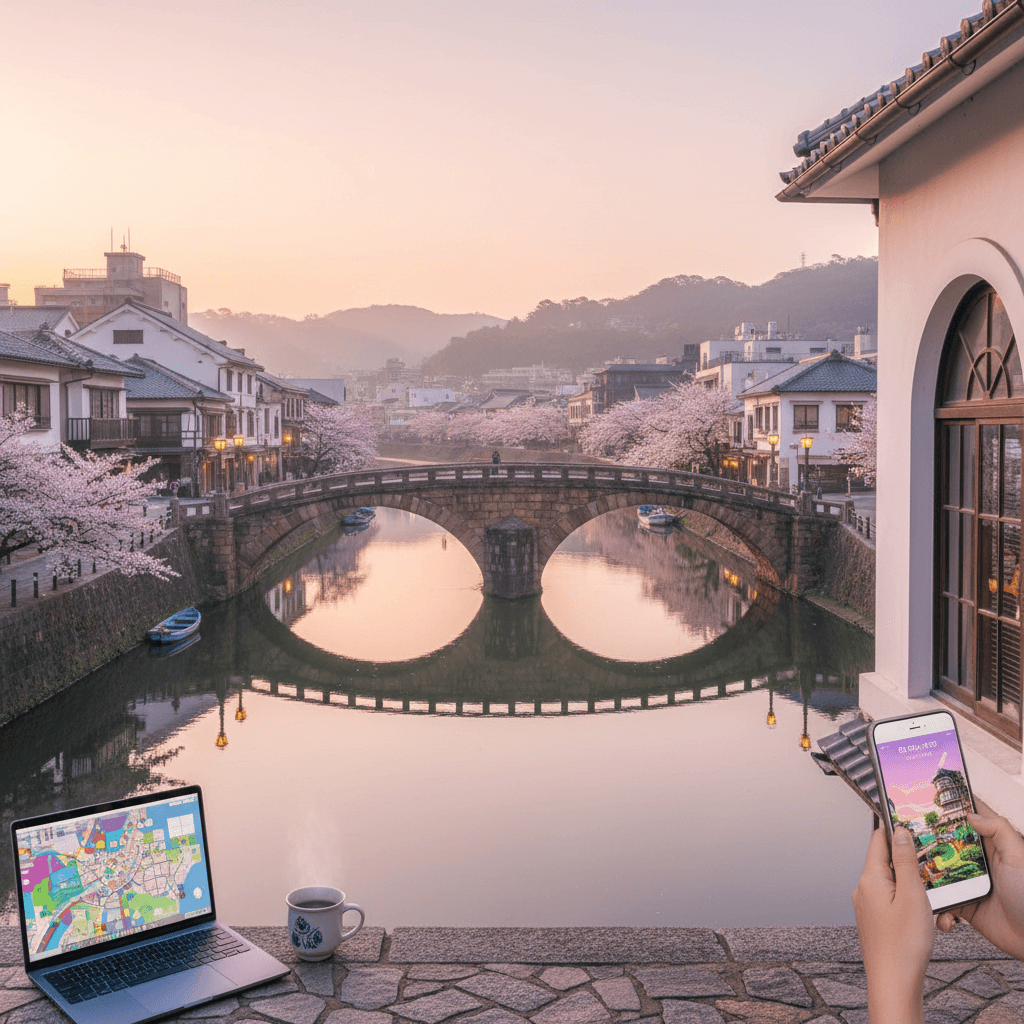
Nagasaki isn't your typical neon drenched Japanese metropolis. It feels like a deep breath in a country that’s usually running at a sprint. While Tokyo is about the future and Kyoto is about the past, Nagasaki is about the connection between the two. It’s a hilly, port side city where the salt air mixes with the scent of roasted coffee and incense. Because it was Japan’s only window to the outside world for centuries, there’s an baked in openness here that you won't always find in more insular Japanese cities.
The pace is decidedly relaxed. You’ll see locals taking their time on the vintage trams that rattle through the streets, and the "peace" theme isn't just a tourist slogan; it’s a tangible part of the local psyche. Nomads often find themselves settling into a rhythm of focused work in the mornings followed by sunset hikes or seaside walks in the afternoons. It’s a place for deep work and genuine reflection rather than chasing the next big party.
Living Costs & Practicalities
One of the biggest draws for the 2025-2026 season is the affordability. You can live a high quality life here for around $905 a month, which is a steal compared to the skyrocketing costs in Fukuoka or Osaka. Your money stretches further here, especially when it comes to the food scene.
- Budget Lifestyle ($700 to $900): Best for those staying in suburbs like Mogi. You'll spend about $400 to $600 on rent and rely on $50 monthly bus passes and $15 daily street food budgets.
- Mid-range Lifestyle ($900 to $1,200): This gets you a central apartment for $600 to $800 and allows for $25 to $40 daily spending on izakayas and mid-range cafes.
- Comfortable Lifestyle ($1,200+): You can snag ocean view spots like Nagasaki House Burabura for $800+ and enjoy $5,000 yen omakase dinners without breaking the bank.
The Digital Setup
Don't let the historic buildings fool you. The infrastructure is top tier. You’re looking at average internet speeds of 150 to 200 Mbps citywide. 5G coverage is nearly universal, and even the more remote seaside spots are increasingly serviced by Starlink. For coworking, the community often gravitates toward Nagasaki House Burabura for its ocean views and tatami modern work zones, or the various "workation" hubs popping up around Dejima.
The cafe culture is legendary. Nagasaki was where coffee was first introduced to Japan through Dutch traders at Dejima, but Japan's first coffee shop opened in Tokyo in 1888. The city's coffee culture is historically significant but not the birthplace of Japan's coffee shop culture. Most cafes are nomad friendly, though it's always polite to buy a fresh cup every couple of hours if you're taking up a table with your laptop.
Where to Plant Your Flag
Choosing a neighborhood defines your experience here. The city is compact, but each pocket has a distinct personality.
Central Nagasaki
- Best For: First timers and social butterflies.
- The Draw: You’re walking distance to the Peace Park, Dejima, and the best ramen shops.
- The Trade off: Higher rents and more tourists in the peak season.
Mogi
- Best For: Freelancers who need silence and nature.
- The Draw: A sleepy fishing village vibe with incredible water views and a tight knit community.
- The Trade off: It’s a bit of a trek to the city center for nightlife.
What Makes it Different?
The emotional weight of Nagasaki is what stays with you. Visiting the atomic bomb sites and the Peace Park isn't just a checklist item; it’s a perspective shift. Travelers like Lars, a Norwegian freelancer, often point out that the city’s history makes the community more welcoming. There is a "Nagasaki Dialect" that can be tricky for even fluent Japanese speakers to navigate, but the locals are famously patient. They’re used to being Japan’s gateway to the world, and they’ll likely treat you more like a neighbor than a visitor.
If you’re looking for the "urban buzz" of a mega city, you might find it too quiet. But if you want fast internet, $400 rent, and a community that actually remembers your name at the local coffee shop, Nagasaki is currently sitting at a 100/100 nomad score for a reason.
The Price of Peace and Productivity
Nagasaki holds a unique spot in the Japanese landscape, offering a significantly lower cost of entry than the high-octane hubs of Tokyo or Osaka. For many nomads, the main draw is the ability to maintain a high quality of life on a monthly budget of roughly $905. It is a city where your yen stretches further, especially if you are willing to trade the neon lights of central districts for the coastal serenity of the suburbs.
Monthly Budget Tiers
- The Budget Traveler ($700 to $900): You can live comfortably by opting for a studio in quieter areas like Mogi. This tier covers basic rent, plenty of ¥500 to ¥800 street food meals like Champon noodles, and a monthly bus pass for about $50.
- The Mid-Range Nomad ($900 to $1,200): This allows for a central apartment near Dejima or the Peace Park, regular visits to coworking spaces, and dining out at izakayas where dinner runs between ¥1,500 and ¥3,000.
- The Comfortable Expat ($1,200+): At this level, you are looking at premium ocean-view stays at places like Nagasaki House Burabura, private desks at local hubs, and frequent omakase dinners featuring the city's famous fresh sashimi for ¥5,000 or more.
Housing and Neighborhood Costs
Rent is the biggest variable here. In the heart of the city, a modern studio usually sits between ¥60,000 and ¥100,000 ($400 to $670). If you want more space or a view of the water, moving out to Mogi or Nomozaki can drop those prices to ¥50,000 to ¥90,000 ($335 to $600). Expats often use Novad.app to find verified listings that are nomad-friendly, as traditional Japanese rentals sometimes require long-term contracts and "key money" that can catch newcomers off guard.
Dining and Daily Expenses
Food is where Nagasaki really shines for the wallet. You can grab a filling bowl of ramen or a plate of Turkish Rice for under $10. If you prefer cooking at home, local markets are stocked with incredibly fresh seafood that is often cheaper than what you would find in landlocked prefectures. For coffee, expect to pay around ¥500 for a quality brew in the city that first introduced the drink to Japan. Most nomads find that a daily food budget of $25 to $40 allows for a mix of quick lunches and social dinners.
Staying Connected and Moving Around
While the city is compact and highly walkable, you will likely spend about $80 a month on transport if you use the tram and bus systems regularly. A daily pass is a steal at ¥700 ($5). For work, coworking memberships typically range from ¥10,000 to ¥30,000 ($67 to $200) per month depending on whether you need a hot desk or a dedicated space. If you are staying at a workation-specific spot like Nagasaki House Burabura, your workspace is often bundled into the stay, which can shave a significant amount off your overhead.
The Connectivity Factor
Internet isn't just fast; it is reliable. With average speeds hitting 150 to 200 Mbps, you won't need to pay for expensive premium tiers to get your work done. For mobile data, locals recommend grabbing an eSIM via apps like Jasumo or renting a Pocket Wi-Fi for about ¥5,000 to ¥7,000 a week if you are constantly on the move between islands. Overall, Nagasaki offers a rare balance: it feels like a secret, but it doesn't charge you a premium for the privilege of staying there.
For Nomads and Solo Travelers: Central Nagasaki
If you want to be in the thick of things, the central district near Dejima and Peace Park is your best bet. This area is incredibly walkable and serves as the city's heartbeat, blending 17th century trading history with a modern food scene. You'll find the highest concentration of coworking spaces and cafes with reliable 150 to 200 Mbps speeds here.
Living in the center means you're steps away from the tram lines and the best izakayas in the Dejima alleys. While it's the most convenient spot, it does draw the most tourists, and rent is slightly higher than the outskirts. Expect to pay between $600 and $800 for a mid range studio or one bedroom apartment.
- The Vibe: Social, convenient, and historically dense.
- Best for: Networking, short stays, and those who don't want to rely on buses.
- Local Tip: Head to the waterfront at night for bar hopping; the mixed culture vibe is unique to this port city.
For Peace Seekers and Long Stayers: Mogi
Many nomads, like freelancer Lars, swear by Mogi. It's a small fishing village just a short bus ride from the city center that feels worlds away. It's the kind of place where you can watch the sunrise over the water before starting your deep work session. The community here is tight knit and very welcoming to remote workers.
The cost of living drops significantly in Mogi. You can often find traditional houses or modern apartments for $400 to $600 per month. The main draw is Nagasaki House Burabura, a waterfront guesthouse and work base that offers tatami rooms and a dedicated community of digital nomads. Just keep in mind that shopping options are limited, so you'll need to head into the city for major supplies.
- The Vibe: Serene, coastal, and authentic.
- Best for: Focused work, hiking, and ocean views.
- The Drawback: You'll need to navigate the local bus system or rent a bike to get into the city center.
For Families and Nature Lovers: Nomozaki
Located at the tip of the peninsula, Nomozaki is the go to for those traveling with family or anyone who needs wide open spaces. It's famous for its views of Gunkanjima (Battleship Island) and its refreshing sea breezes. The lifestyle here is slow, revolving around outdoor activities and community gatherings.
Rentals here are often larger, making them suitable for families, with prices ranging from $335 to $600. While it's the most remote of the popular neighborhoods, the internet remains surprisingly fast. You'll likely want to rent a car if you stay out here, as public transport is less frequent than in the urban core.
- The Vibe: Relaxed, family friendly, and ruggedly beautiful.
- Best for: Long term stays, surfing, and escaping the digital grind.
- Practicality: Check for listings on Novad.app to find vetted family stays in this area.
For Expats and Community Seekers: The Waterfront
The area immediately surrounding the harbor and Nagasaki House is a magnet for expats who want a balance of nature and social life. It's a sweet spot where you can find modern amenities tucked into a traditional landscape. Expats often recommend this area because it's easier to find English speaking neighbors and community events like BBQs or Colive retreats.
Comfortable living here usually starts at $800 per month for premium views. The area is great for those who want to be part of the growing Digital Nomad Nagasaki group. People here often gather for fresh sashimi parties or weekend hiking trips, making it easy to build a social circle despite the local dialect challenges.
- The Vibe: Active, social, and scenic.
- Best for: Those looking for a "workation" atmosphere and easy social entry.
- Transport: Highly walkable with easy access to the $5 daily tram pass for exploring further afield.
Connectivity and Speed
Nagasaki might feel like a quiet seaside escape, but its digital infrastructure is anything but slow. You can expect average speeds between 150 and 200 Mbps across the city, which is more than enough for heavy video calls or large file uploads. 5G coverage is nearly universal at 99 percent, so you aren't tethered to your apartment if you want to work from a park bench or a pier.
For those heading out to more remote spots like the islands or deep into the Mogi hills, Starlink has become a reliable backup. Most nomads find that a local eSIM is the smartest way to stay connected. Apps like Jasumo are popular for vetting services before you land. If you need a heavy-duty setup, pocket Wi-Fi rentals run about ¥5,000 to ¥7,000 per week for unlimited data, which is a solid insurance policy if your guesthouse Wi-Fi is spotty.
Coworking Spaces and Community Hubs
The coworking scene in Nagasaki is less about corporate glass towers and more about community and character. Prices for a dedicated desk generally range from ¥10,000 to ¥30,000 per month, which is roughly $67 to $200. Many nomads gravitate toward the following spots:
- Nagasaki House Burabura: Located in the peaceful fishing village of Mogi, this is a favorite for those who want ocean views while they code. It offers a mix of tatami-style and modern work setups and often hosts "colive" events that bring the community together.
- Central Coworking Spaces: Near Dejima and Peace Park, you'll find more traditional desks and meeting rooms. These are perfect if you need a professional environment or want to be within walking distance of the city's best izakayas after work.
- Public Spaces: The city has a growing number of free public work areas, often integrated with its historic coffee culture. Since Nagasaki was the birthplace of coffee imports in Japan, the locals take their brew and their seating seriously.
The Cafe Culture Workaround
If you prefer the hum of a coffee shop over a quiet office, you're in luck. Nagasaki’s history as a port city means it has a deep-rooted cafe culture. Many smaller, independent shops are welcoming to laptop users, provided you aren't camping out for six hours on a single espresso. Most nomads recommend looking for shops in the Dejima area, where the blend of East and West creates a relaxed atmosphere for focused deep work.
Expats often mention that while the local dialect can be a bit of a head-scratcher, the hospitality in these workspaces is top-tier. Even if the staff doesn't speak perfect English, they're tech-savvy and used to digital nomads passing through. Just remember to download the offline Japanese pack on Google Translate to help with the more complex Wi-Fi login screens or menu items.
Practical Tips for Remote Workers
- Data Latency: Local eSIMs consistently outperform international roaming for latency. If you’re doing live streaming or gaming, go local.
- Power Outlets: Japan uses Type A and B plugs. While many modern cafes have USB ports, older spots in Mogi might not, so keep a power bank in your bag.
- Colive Retreats: Keep an eye out for organized nomad retreats. A recent model in late 2023 included tours of Gunkanjima and communal BBQs, making it easy to network without the awkwardness of traditional meetups.
A Culture of Trust
Nagasaki holds a reputation for being remarkably safe, even by Japanese standards. Most nomads find they can leave a laptop on a cafe table while grabbing a second coffee without a second thought. The city feels more like a collection of interconnected villages than a frantic metropolis, which naturally keeps crime rates low. You won't find specific "no go" zones here, though it's always smart to keep your wits about you in the narrow nightlife alleys of Dejima or Shianbashi after a few rounds of shochu.
Solo travelers, particularly women, often remark on how comfortable they feel walking home late at night. The streets are well lit and the local community is famously welcoming to outsiders. If you ever run into trouble, look for a Koban (police box). These mini stations are dotted around the city, and the officers are generally helpful, even if they have to rely on translation apps to communicate.
Navigating the Healthcare System
If you get sick, you're in good hands. Nagasaki has a high density of quality clinics and large hospitals like Nagasaki University Hospital. The facilities are modern and the medical staff is highly trained, though English proficiency varies wildly. If your Japanese is limited to "hello" and "thank you," you'll want to have a translation app ready or head to a larger facility where they might have staff accustomed to international patients.
For minor issues like a cold or allergies, pharmacies (yakkyoku) are everywhere. Look for chains like Matsumoto Kiyoshi or Kokumin. Most pharmacists can help you find over the counter relief if you show them your symptoms on a translation app. For anything more serious, remember these emergency numbers:
- 119 for an ambulance or fire emergency.
- 110 to reach the police.
- #7119 for a non emergency medical consultation line (availability of English varies by time of day).
Insurance and Costs
Healthcare isn't free, but it's generally affordable compared to the US. If you're on the new 6 month digital nomad visa or a standard 90 day tourist entry, you won't be eligible for the National Health Insurance (NHI). This means you absolutely need private travel or nomad insurance. Without it, a simple clinic visit might set you back $100 to $200, while a hospital stay could get very expensive very quickly.
Expats who stay long term usually transition onto the NHI, which covers 70% of medical costs. For those just passing through, keep digital copies of your insurance policy and passport on your phone. Most clinics expect payment in cash (Yen), though larger hospitals increasingly accept credit cards.
Natural Precautions
Safety in Nagasaki isn't just about crime; it's about the environment. Like the rest of Japan, the region is prone to earthquakes. Most are minor tremors you'll barely feel, but it's worth downloading the Safety Tips app, which provides English alerts for seismic activity and weather warnings. During the summer months, typhoons can occasionally disrupt transport. If a warning is issued, locals recommend staying indoors and following the lead of your guesthouse or apartment manager. The city is built on steep hills, so heavy rain can sometimes lead to localized landslide warnings in more rural spots like Mogi.
Health and Wellness Resources
Staying healthy while working remotely is easy here. The air quality is excellent, and the hilly terrain means you'll get a workout just by walking to your favorite coworking spot. For those who prefer a traditional gym, Konami Sports Club near the harbor is a popular choice for expats, with day passes sometimes available. Alternatively, many nomads find that the hiking trails around Mount Inasa provide all the cardio they need for free.
- Emergency Ambulance: Dial 119
- Police: Dial 110
- English Medical Support: Use the Japan Visitor Hotline at 050-3816-2787
- Pharmacy Hours: Most major chains open 9:00 AM to 9:00 PM
The Tram and Bus System
Nagasaki isn't a sprawling metropolis like Tokyo, and its transportation reflects that. The city's charm lies in its vintage streetcars, known as trams, which have been rattling through the streets since 1915. They're the most reliable way to get around the central core. A single ride costs a flat rate of about ¥150, but most nomads grab the ¥700 daily pass if they're hopping between a morning coworking session and an afternoon at the Peace Park.
For neighborhoods tucked into the hills or coastal spots like Mogi, you'll need the bus network. It's efficient, though the winding mountain roads can be a bit of a stomach-test if you aren't used to them. Expect to pay around $50 for a monthly bus pass if you're staying in the suburbs. Digital entry via phone apps has become the norm lately, cutting down the fumbling for exact change by about 40%.
Going Car-Free or Two-Wheeled
The city center is remarkably walkable. If you're staying near Dejima or the Nagasaki Station area, you can reach most cafes and grocery stores on foot. However, the "City of Slopes" nickname isn't just for show. Walking uphill in the humid summer months is a workout you might not want before a Zoom call.
Bicycles and scooters are popular alternatives, especially in flatter pockets like Mogi. You can find rentals for roughly ¥1,000 per day. Just keep in mind that while the seaside rides are scenic, the central hills are often too steep for a standard bike, so look for an electric assist model if you plan on exploring the heights.
Taxis and Ride-Hailing
Don't look for Uber or Lyft here; they barely exist in the way you're used to. Instead, stick to local taxi apps like JapanTaxi or Go. Taxis are plentiful near the station and major hotels. They're clean, safe, and the drivers are professional, though English is hit-or-miss. A short trip across town usually runs between $10 and $20, making it a solid mid-range option when the trams stop running late at night.
Regional Connections
When you need to leave the Nagasaki bubble, the Nishi Kyushu Shinkansen connects Nagasaki to Takeo-Onsen Station, where you transfer to a limited express train (Relay Kamome) to reach Fukuoka's Hakata Station. Total journey time is approximately 1 hour 20 minutes. From there, you can hop on lines toward Osaka or Tokyo. For international arrivals or quick domestic hops, Nagasaki Airport (NGK) is about 30 to 60 minutes away from the city center. A bus or taxi to the terminal will cost you between ¥1,500 and ¥3,000 depending on your starting point.
Pro Tips for Newcomers
- Get an IC Card: Grab a rechargeable Suica or Pasmo card immediately. It works on almost all transport and saves you from carrying pockets full of 1-yen coins.
- Download Google Maps: It's surprisingly accurate for tram and bus schedules in Nagasaki, even identifying which specific exit of a station you should use.
- Watch the Last Tram: Service usually winds down around 11:00 PM. If you're out late in the Dejima alleys, factor a taxi fare into your budget.
The Local Dialect and the Language Gap
Nagasaki presents a unique linguistic puzzle. While the city has a long history as Japan's gateway to the world, modern English proficiency remains relatively low outside of major hotels and tourist hubs like the Atomic Bomb Museum. You'll find that hospitality is high, but deep conversations in English are rare.
The real curveball for nomads is Nagasaki-ben, the local dialect. It is notoriously thick, characterized by different verb endings and a distinct rhythm. Even Japanese people from Tokyo or Osaka sometimes struggle to understand a fast-talking Nagasaki local. Expats often mention that while the dialect is a hurdle, the locals are incredibly patient. They are used to visitors and will often use "standard" Japanese or pantomime to help you out.
Essential Tools for Communication
You cannot rely on signs or menus being translated once you step away from the Dejima area. Most successful nomads in Nagasaki use a specific tech stack to get by:
- Google Translate: Download the offline Japanese language pack immediately. The camera feature is a lifesaver for reading labels at the supermarket or kanji-heavy menus in Mogi.
- Voice-to-Voice Apps: Using a translation app for quick questions like "Is this seat taken?" or "Does this have meat?" works well in casual izakayas.
- DeepL: For writing emails to landlords or messaging coworking space managers, DeepL generally provides more natural Japanese than other translators.
Navigating Social and Professional Life
If you're working from spots like Nagasaki House Burabura or attending Colive Nagasaki events, you'll find a bubble of English speakers. However, to truly integrate, learning a few basic phrases is non-negotiable. Most nomads find that starting a conversation with "Sumimasen" (Excuse me) followed by "Eigo ga hanasemasu ka?" (Do you speak English?) opens more doors than just leading in English.
In the coworking scene, communication is often a mix of broken English and translation apps. Don't let the barrier stop you from networking. The local startup community is eager to connect with international talent, and they are usually the most proficient English speakers in the city.
Practical Phrases for Nomads
Memorizing these will make your daily life significantly smoother:
- O-kaikei o onegaishimasu: Check, please. (Perfect for finishing up at a cafe).
- Wi-Fi wa arimasu ka?: Do you have Wi-Fi?
- Kore o onegaishimasu: This one, please. (Point at the menu).
- Toire wa doko desu ka?: Where is the restroom?
- Arigatou gozaimasu: Thank you very much. (Use this constantly; it goes a long way).
Travelers often say that the "peace" theme of the city extends to how people communicate. There is a gentleness to the interactions here. Even if you don't speak a word of the dialect, a smile and a respectful bow will solve 90% of your problems in Nagasaki.
A Mediterranean Vibe in Kyushu
Nagasaki holds the title for the fifth lowest temperature variation in Japan, making it one of the most stable climates for year round living. Because it is tucked onto the western coast of Kyushu, it catches warm currents that keep winters milder than Tokyo or Osaka. You can expect a humid subtropical climate where the seasons are distinct but rarely punishing.
Most nomads find the sweet spot for visiting falls between late March and May, or October through November. During these windows, the humidity drops, the skies clear up, and the hiking trails around Mogi or Mount Inasa are at their best. If you are planning a workation, these months let you take your laptop to seaside cafes without needing to blast the air conditioning.
Spring (March to May)
Spring is arguably the most beautiful time to be in the city. Temperatures hover between 15°C and 22°C (59°F to 72°F). While the cherry blossoms in late March draw crowds to Peace Park, the city feels less overwhelmed than Kyoto. It is the perfect time for long walks through the Dejima district or taking the ferry out to the 600 plus border islands. Just pack a light jacket for the evenings, as the sea breeze can get chilly once the sun goes down.
Summer (June to August)
Summer in Nagasaki is intense. June brings the rainy season, which can be persistent and humid. By July and August, temperatures frequently hit 30°C to 33°C (86°F to 91°F) with high humidity. Expats recommend staying near the water during this time; places like Nagasaki House Burabura in Mogi offer a much needed ocean breeze. If you don't mind the heat, August 9th is a significant time to be in the city for the Peace Memorial ceremonies, though you should book your accommodation months in advance.
Autumn (September to November)
Autumn is the goldilocks zone for digital nomads. The humidity breaks in late September, and by October, the air is crisp and dry. Temperatures sit comfortably around 18°C to 25°C (64°F to 77°F). This is also when the city comes alive with the Nagasaki Kunchi festival in October, a massive celebration of the city's multicultural history. It is a fantastic time for networking at local coworking spaces as the community events calendar usually ramps up during the cooler months.
Winter (December to February)
While northern Japan is buried in snow, Nagasaki remains relatively temperate. Daytime highs usually stay around 10°C (50°F), and while it occasionally dips toward freezing at night, heavy snow is rare. The highlight of the winter season is the Lantern Festival in 2026 runs from February 6-23 (aligned with the Lunar New Year). Over 15,000 lanterns light up the city for approximately two weeks (February 6-23, 2026), turning the central districts into a spectacular workspace backdrop. It is the cheapest time for rent, with some suburban studios in Mogi or Nomozaki dropping toward the $335 to $400 range.
Best Times for Specific Profiles
- For the best work environment: October and November. The weather is predictable, internet speeds are stable, and the outdoor cafes are actually usable.
- For cultural immersion: February (Lantern Festival) or October (Kunchi Festival). You will deal with more tourists, but the energy in the city is unmatched.
- For budget travelers: January and June. These are the "off peak" months where you can find better deals on long term stays via platforms like Novad.app or local guesthouses.
- For nature lovers: May. The azaleas are in bloom, the hiking trails are dry, and the boat trips to Gunkanjima (Battleship Island) are less likely to be cancelled due to rough summer seas.
Connectivity and Workspace
Nagasaki punches well above its weight for internet infrastructure. You can expect reliable speeds between 150 and 200 Mbps across the city, and 5G coverage is nearly universal. If you are heading out to the more remote islands or deep into the hills, Starlink is becoming a common fallback for local guesthouses.
The city has a deep rooted coffee culture, as it was the historic gateway where coffee was first introduced to Japan. Working from cafes is socially acceptable and easy. For a dedicated desk, many nomads head to Nagasaki House Burabura. It is an oceanfront spot that blends traditional tatami aesthetics with modern desk setups. Monthly coworking memberships generally run between $67 and $200 depending on whether you need a private desk or just a communal table.
Budgeting for 2026
Living here is significantly more affordable than in Tokyo or Osaka. A solo nomad can live comfortably on about $905 per month, though your lifestyle tier will shift that number. Here is how the monthly costs typically break down:
Budget Tier
- Total: $700 to $900
- Rent: $400 to $600 (Look at suburbs like Mogi)
- Daily Food: $15 to $25 (Stick to ¥500 street food like Champon)
- Transport: $50 for a monthly bus pass
Mid-Range Tier
- Total: $900 to $1,200
- Rent: $600 to $800 (Central areas near Dejima)
- Daily Food: $25 to $40 (Casual izakayas and cafes)
- Transport: $80 (Mix of trams and occasional taxis)
Getting Around
The city center is compact and very walkable. For longer distances, the tram system is your best friend. A daily pass costs about ¥700 ($5) and covers most major sights. If you are coming from the airport, the bus or taxi takes about 30 to 60 minutes and costs between $10 and $20.
Download the JapanTaxi app before you arrive, as street hailing can be hit or miss in residential neighborhoods. Many expats also rent bicycles or scooters for around $7 a day to navigate the flatter coastal roads in Mogi.
Language and Local Life
English proficiency is relatively low once you step away from the Peace Park or major hotels. The local Nagasaki dialect is famously thick, even other Japanese people sometimes struggle to parse it. Most locals are incredibly patient with foreigners, but having Google Translate with the offline Japanese pack is a requirement for daily life.
For healthcare, the facilities are top tier. If you have an emergency, dial 119 for an ambulance or 110 for police. Most major hospitals have access to translation services, but it is always easier to bring a local friend or use a translation app for pharmacy runs.
Social Scenes and Community
The nomad community here is growing, often centering around Colive Nagasaki retreats and local meetups. Dejima is the go to spot for evening drinks and bar hopping. If you want to meet people, look for events at Nagasaki House or join the Digital Nomad Nagasaki Facebook groups. The vibe is much more "community dinner and hiking" than "clubbing until 4 AM," which fits the city's relaxed pace.
Need visa and immigration info for Japan?
🇯🇵 View Japan Country GuideEasy Landing
Settle in, no stress