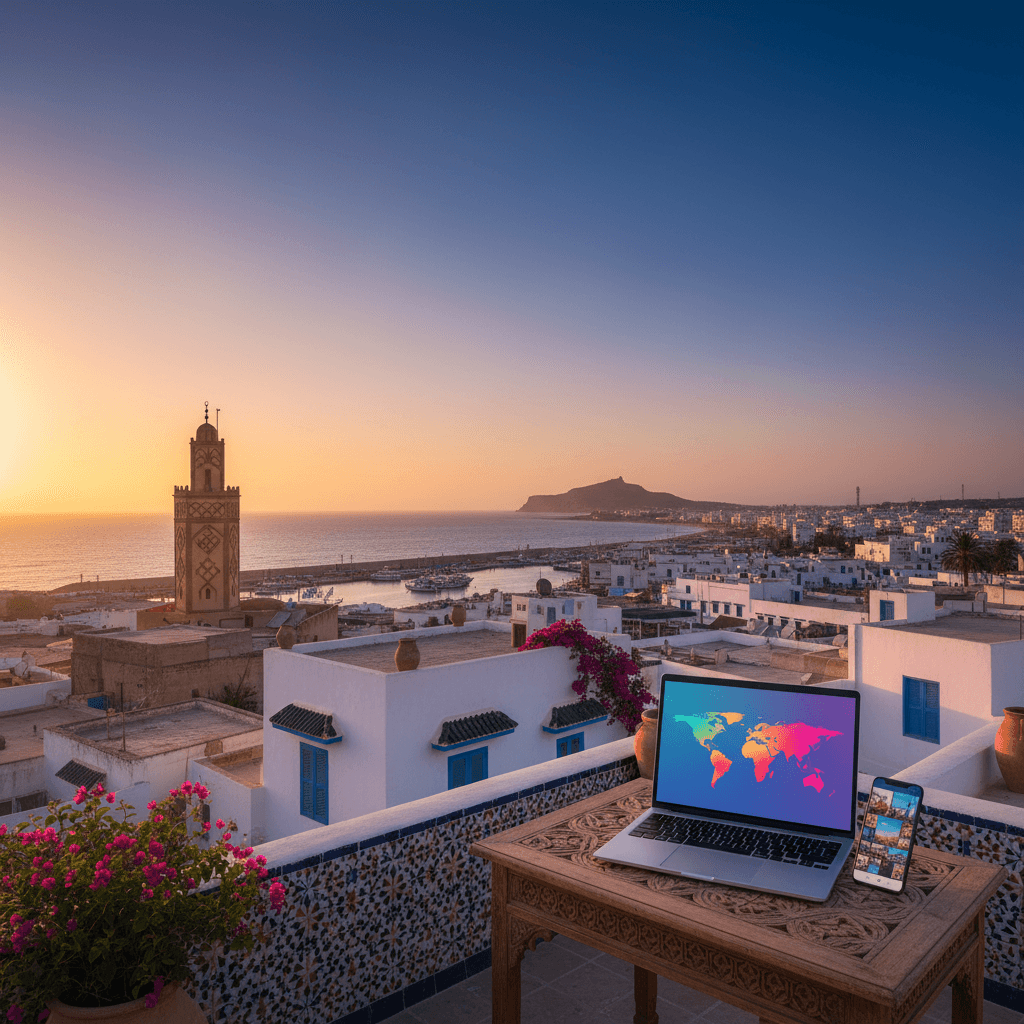
Nabeul
🇹🇳 Tunisia
Nabeul feels mellow in a very specific way, sun-bleached streets, pottery dust, diesel fumes and salt air all mixing together while shopkeepers call out in Arabic and French. It’s a coastal town first, a nomad base second and that’s why people either settle in fast or get annoyed by how seasonal and local it's. Not flashy. Honestly, that’s the point.
The city is known for pottery, beaches and a slower pace than nearby Hammamet, so days tend to revolve around the market, a café table or a walk near the water. Summers get crowded and a bit loud, with tourist traffic, blaring scooters and packed seafood spots, then the place thins out again and feels almost sleepy. Bureaucracy can be maddening and if you don’t speak at least some French or Arabic, daily errands get clunky fast.
Most nomads stick to the North Beach area for sea access and easier tourist services, while the city center works better if you want markets, restaurants and walkability. Dar Chaabane is quieter and more local, which, surprisingly, suits people who want calm over convenience. Pick your tradeoff.
What daily life feels like
- Rent: A 1-bedroom in the center runs about $180 to $300, outside center it can drop to $94 to $160.
- Budget: A single person usually lands around $487 to $851 with rent and you can keep it lean if you cook and skip taxis.
- Food: Coffee is about $2, a cheap meal around $9 and grocery staples like bread, eggs and rice stay friendly on the wallet.
- Internet: Speeds average around 109 Mbps in Tunisia, so dedicated coworking is safer than hoping a café WiFi password will save your afternoon.
The coworking scene, turns out, is better than you might expect for a city this size. Coworky, WeCowork Nabeul and Talent Hub all give you a more reliable workday than most cafés, where the espresso is fine but the connection can be flaky. The air-con, when it works, feels glorious.
Safety is fairly decent, but petty theft shows up in crowded areas and women often mention keeping bags zipped and close. Healthcare is one of Tunisia’s stronger points, with private clinics in Nabeul and nearby Hammamet offering modern care, though public facilities can be slow and overloaded. The city isn’t a drama-free postcard, just a practical place with good beaches, low costs and a lived-in feel that most people either love or outgrow.
Nabeul is cheap, but not in a fake, backpacker-brochure way. A single person can usually live here on about $487 to $851 a month with rent and if you keep things local, use shared taxis and skip imported groceries, you can stay near the lower end without feeling deprived.
Housing is the big swing factor, though honestly the prices are still low by Mediterranean standards. A one-bedroom in the city center usually runs $180 to $300, while the same place outside the center can drop to $94 to $160 and a larger three-bedroom apartment comes in around $233 monthly, which is why couples and small families often find the city weirdly manageable.
Typical monthly costs
- Food: Street food or a cheap meal is around $9, a mid-range dinner about $13 and a cappuccino usually lands near $2.
- Groceries: Bread is about $1, a dozen eggs $2, rice $2 per kilo and chicken roughly $6 per kilo.
- Transport: Around $16.50 a month if you’re mostly using buses and louages.
- Utilities: Usually $20 to $64, depending on AC use, which, surprisingly, can make a real difference in summer.
- Mobile plan: About $11 a month and the local SIM shop process is straightforward once you’ve got your passport out.
- Gym: Roughly $18 monthly.
For budget planning, most nomads should think in tiers. A bare-bones month can sit around $459 to $640 including rent, a more comfortable setup lands around $750 to $850 and if you want private space, regular café stops and a few nicer dinners, $1,000+ is realistic, not extravagant.
Food is one of the nicest parts of living here. Markets smell like tomatoes, herbs and dust warmed by sun, while the bakery run is usually quick, noisy and cheap, though imported snacks and alcohol can bump your bill faster than you’d expect.
Where your money goes further
- City center: Best for walkability, cafés, markets and daily errands, but prices creep up and summer crowds can get annoying.
- North Beach area: Popular with expats and retirees, close to the sea and better if you want a more relaxed pace.
- Dar Chaabane: Quieter, calmer and a decent choice if you’d rather hear birds and scooters than beach traffic and late-night chatter.
Compared with bigger Tunisian cities, Nabeul feels mercifully light on the wallet. That said, the cheap rent can lull people into spending more on taxis, AC and nicer restaurants, so if you’re careless, the monthly total climbs fast enough to notice.
Nabeul works best when you pick the right pocket, not just the right city. The center is practical, the beach strip is breezy and Dar Chaabane feels calmer, honestly, when you want to get work done without scooter noise and shop chatter under your window.
Nomads
Best pick: city center or near Rue Mimosas. You’ll get faster access to cafés, taxis, markets and coworking spots like WeCowork and Coworky, which matters when you’re bouncing between calls and errands and the walkability saves you money on ride-hailing because taxis are still the default here.
- Why it works: easy access to WiFi, lunch spots and daily services
- Tradeoff: more noise, more foot traffic, more seasonal crowds
- Good for: people who work odd hours and want everything close by
Skip the polished resort feel if you hate tourist pricing and head a little inland instead, where cafés smell like strong coffee and cigarette smoke, not sunscreen and day-trippers. The internet is decent, turns out, but for anything serious, a coworking desk beats trying your luck in a random café with patchy WiFi.
Expats
Best pick: North Beach area or Dar Chaabane. North Beach gives you sea air, more space and a slower rhythm, while Dar Chaabane feels local and quiet, with less noise at night and fewer people dragging suitcases past your gate.
- North Beach: best for beach access and a more relaxed daily routine
- Dar Chaabane: best for calm, lower-key living and coworking access
- City center: best if you want markets, pharmacies and restaurants on foot
Expats usually prefer these areas because the rent is still manageable, one-bedroom apartments outside the center can run around $94 to $160 a month and the daily rhythm is easier to settle into when you’re not fighting the tourist rush. That said, French or Arabic helps a lot and the bureaucracy can be maddening.
Families
Best pick: quieter residential streets in Dar Chaabane or just outside the center. You’ll get less honking, less late-night noise and more space for normal life, though you’ll probably need a car or taxis for school runs and bigger grocery shops.
- Pros: calmer streets, lower rents, more local neighbors
- Cons: fewer restaurants, fewer kid-friendly hangouts, less nightlife
- Watch for: seasonal crowding near the beach and in the center
Families tend to like the cheaper housing, but the tradeoff is real, because you’re giving up convenience for quiet and you’ll feel that on hot afternoons when the pavement throws heat back at you and the nearest pharmacy isn’t around the corner.
Solo Travelers
Best pick: city center if you want movement, North Beach if you want a softer pace. The center feels safest and easiest when you’re arriving alone, though pickpocketing does happen in crowded spots, so keep your bag zipped and don’t drift off with your phone out near busy markets.
- City center: best for first-time visitors and short stays
- North Beach: best for slower mornings and long walks
- Avoid: isolated streets late at night, especially if they’re empty and dark
Solo travelers who like a social scene should look at the center first, then take taxis to Hammamet when they want a livelier night out, because Nabeul itself is more low-key, with bar noise, sea wind and the occasional call to prayer cutting through the evening air.
Nabeul’s internet is decent, not glamorous. Average speeds across Tunisia sit around 38 Mbps and in town you’ll usually get enough for email, calls, docs and light uploads, though a bad day on café WiFi can still feel like dragging your feet through warm sand.
The coworking scene, turns out, is one of the city’s better surprises, because Nabeul has a few real spaces instead of the usual “laptop and a cappuccino” setup that falls apart by noon. If you need stable WiFi, a chair that doesn’t wreck your back and power that doesn’t flicker every time the espresso machine kicks on, these are the places to know.
Best Coworking Spaces
- Coworky: The first coworking space in Nabeul and the Cap Bon region, with furniture, cleaning, printers, shredders, shared kitchens, bathrooms and 24/7 access for members.
- WeCowork Nabeul: On Rue Mimosas in the city center, bright and practical, with shared office space for resident members and round-the-clock access.
Cafés can work for a few hours, honestly, but they’re better for casual laptop time than a full workday. You’ll hear spoons clinking on glass cups, traffic outside, maybe a phone call from the next table and that’s fine until you need to take meetings or upload big files.
Mobile plans: about $11 a month, which is cheap enough that most nomads keep a local SIM as backup even if they trust the WiFi. Tunisie Telecom, Ooredoo and Orange Tunisie all sell SIMs through phone shops around the city, so you won’t have to hunt hard.
How People Actually Work Here
- Best for reliability: Coworking spaces, especially if you’ve got calls or deadlines.
- Best for flexibility: A local SIM plus café hopping.
If you’re staying near the North Beach area or the city center, you can usually find a workable setup without much drama. Still, if your job depends on rock-solid internet, don’t gamble on cafés alone, because Nabeul’s café culture is growing, but it’s not built for back-to-back Zoom calls yet.
My take, frankly, is simple, book coworking for the days that matter and use cafés for everything else. That mix gives you the best shot at staying productive without getting stuck in a room that smells like burnt coffee, hot dust and someone else’s cigarette smoke from the terrace next door.
Nabeul feels fairly relaxed on the surface, but don’t get sloppy. The center is busy, scooters buzz past, shopkeepers call out prices and tourist pockets near the beach can get pickpockety when the summer crowd rolls in. Most expats say the city feels safe if you stay alert, keep your phone tucked away and don’t leave a handbag dangling from your shoulder.
Night walking is usually fine in well lit areas, though quiet streets get eerie fast, especially when the sea wind kicks up and the cafés empty out. Female travelers should be a bit stricter with taxi choices and street attention, because unsolicited hassle does happen, honestly more than locals like to admit. It’s manageable, just annoying.
Healthcare
Tunisia’s private healthcare is solid for the region and Nabeul has access to modern clinics plus the larger Hammamet Polyclinic nearby. Private doctors are affordable by European standards, with a general consultation around 30 to 35 TND and a specialist visit around 50 to 70 TND, though the public system can mean long waits, crowded rooms and that slightly stale disinfectant smell that hangs around old hospitals.
Pharmacies are everywhere, which helps a lot when you need something fast and many stay open late with an on call rotation at night. Meds tend to cost about half of what you’d pay in much of Europe and the pharmacists are usually practical, blunt and helpful, so bring the generic name if you can’t pronounce the brand.
- General practitioner: 30 to 35 TND
- Specialist: 50 to 70 TND
- MRI: 800 to 1,500 TND
- Medical emergency: 190
- Police: 197
- Fire: 198
Practical advice
Get international health insurance before you arrive if you plan to use private care, because the bills are still low enough to pay out of pocket for routine stuff, but an MRI or a serious emergency can sting. Cigna Global, Allianz, AXA, April and GeoBlue are common options, and, weirdly, the paperwork tends to move faster when you already have everything printed.
For daily safety, keep cash split up, use registered taxis at night and skip the temptation to flash your phone in crowded market streets near the medina. If you need urgent help, the number sequence is simple, but the response can depend on where you are and how clear your French or Arabic is, so have your location ready and speak plainly.
Nabeul is easy to get around if you keep your expectations practical. The center is walkable, taxis are cheap and louages connect you to Hammamet, Tunis and the rest of Cap Bon, though the system can feel a little chaotic when everybody’s trying to leave at once.
Walkability is best in the city center, near the market and the main cafés, where you can handle daily errands on foot. Beach trips are another story, because the heat, traffic and lack of clear pedestrian priority make a short ride worth it, honestly, especially in summer when the pavement feels like it’s radiating back the sun.
- Taxis: The default option for most locals and expats, cheap for short hops, but agree on the fare or insist on the meter before you get in.
- Louages: Shared vans for intercity travel, fast and inexpensive, though they’re packed, loud and leave when full, not when you’re ready.
- Local buses: Useful for city links and beach runs, but schedules can be loose, so don’t plan anything tight around them.
- Ride-hailing: Limited compared with Tunis, so you can’t count on app-based rides the way you might in bigger cities.
If you’re staying a while, most nomads end up using a mix of taxis and walking. Coworking spots like Coworky, WeCowork Nabeul and Talent Hub are spread out enough that your neighborhood matters and picking a place near the center saves you a lot of back-and-forth in the heat, which, surprisingly, gets old fast.
Getting to and from Nabeul
- Enfidha-Hammamet Airport: The nearest airport, roughly 50 to 63 km away, so plan on a transfer instead of assuming a quick hop.
- Airport transfers: Hotels usually arrange them, private taxis are common and prices can jump if you land late.
- Intercity travel: Louages to Tunis and Hammamet are the easiest option, though space for luggage can be awkward.
Bikes and scooters do exist through some hotels and tourist operators, but they’re not a citywide habit. That means you’ll get more freedom with a taxi budget than by hoping for a slick rental setup and frankly, that’s just how Nabeul works right now.
Evenings are easier if you keep things simple, because traffic noise, honking and the scent of grilled meat from roadside stalls can make a late ride oddly pleasant, then suddenly annoying when you’re tired and the driver takes the long way. Keep cash handy, don’t assume every driver has change and you’ll be fine.
Nabeul runs on Arabic, French and a fair bit of hand-waving and if you only speak English, daily life gets annoying fast. In the center, you can usually manage a café order or a taxi ride, but paperwork, leases and doctor visits are a different story, honestly. People switch languages mid-sentence, shopkeepers answer in French and the calls to prayer drift over the traffic noise in the afternoon heat.
Arabic is the default for everyday life, French is what helps with admin, healthcare and most written notices and English is patchy outside tourist-facing spots. Most nomads pick up survival phrases quickly, then rely on French for anything that smells like bureaucracy, because the bureaucracy here can be maddening. If you’re dealing with landlords or utility staff, bring a local friend or a translation app, since that’ll save you time and a few raised eyebrows.
Useful stuff to know:
- Best language for errands: French, then Arabic
- Best language for casual tourism: Basic English works in some places
- Best backup: A translation app and offline French phrases
- Reality check: Written signs and forms are often in Arabic or French only
For remote work, the communication side is smoother in places like Coworky, WeCowork Nabeul and Talent Hub, where staff are used to freelancers and startup people asking practical questions about WiFi, printing and memberships. Internet is decent for Tunisia, around 109 Mbps on average, though speeds can dip when a café fills up and the AC starts rattling. Weirdly, the best workaround is often boring: use a proper coworking space, keep a local SIM from Tunisie Telecom, Ooredoo or Orange Tunisie and don’t rely on café WiFi when you’ve got a deadline.
Socially, a few Arabic greetings go a long way and French opens more doors than English does. Say hello, thank people and don’t rush conversations, because locals often chat a little before getting to the point, which, surprisingly, makes admin feel less hostile. If you’re stuck, people are usually patient, but they’ll expect you to try and that’s fair enough.
Practical phrases to keep on your phone:
- Hello: Bonjour or Aslema
- Thank you: Merci or Chokran
- How much? Beshkadeh?
- I don’t understand: Ma fhemtch
One last thing, phone calls are still a big deal here, so don’t expect every reservation or delivery to happen through an app. People will call, then call again, then maybe text you a location pin. That’s Nabeul and frankly, once you stop fighting it, life gets easier.
Nabeul sits on the coast, so the weather has a big say in how the city feels. Spring and early autumn are the sweet spot, with warm days, lighter humidity and beaches that still make sense without the summer crush. Summer gets hot, crowded and a bit sticky, with traffic, noise and that salt-and-exhaust smell hanging in the air.
If you want the easiest version of Nabeul, come between April and June or in September and October. Days are usually sunny, evenings cool off enough for a walk and cafés stay lively without feeling packed. Honestly, this is when most nomads and expats seem happiest, because you can work, swim and actually sleep at night.
Winter: Mild by northern standards, though it can feel damp and gray. Rain comes and goes and the wind off the water can cut through a light jacket, so pack layers.
Summer: Brutal on some days. July and August bring the strongest heat, more local holiday traffic and a beach scene that gets loud, busy and very seasonal.
Best Time by Travel Style
- For beach time: May to October, with the nicest balance in June and September.
- For remote work: March to May and late September to November, when cafés and coworking spaces feel calmer.
- For lower prices: November to February, though some tourist services scale back.
- For nightlife and social energy: Summer, but expect crowds and higher accommodation prices.
Weather-wise, Nabeul doesn’t really surprise you, it’s a Mediterranean coast city, so you’ll get bright sun, sea breeze and occasional winter rain, with humidity that clings to your shirt after a short walk. The real issue is timing your trip around the tourist cycle, because prices, noise and availability all swing harder than the climate itself, which, surprisingly, is the easy part.
If you’re planning a longer stay, book early for summer or skip it entirely unless beach season is your main goal. For day-to-day life, shoulder season is the winner, the city feels more local, taxis are easier and you won’t be sweating through lunch while the muezzin calls drift over the rooftops.
Nabeul is easy on the wallet, but it isn't always easy on your nerves. Rent is low, food is cheap and the sea air helps, though the bureaucracy can be maddening and French or Arabic will save you a lot of awkward pointing.
Money: A solo nomad can usually get by on about $487 to $851 a month with rent and a plain one-bedroom in town often lands around $180 to $300. Go outside the center and prices drop, weirdly fast, but you'll trade convenience for taxis, quieter streets and fewer late-night snack options.
- Meal out: $9 for cheap eats, about $13 at a mid-range restaurant
- Cappuccino: Around $2
- Transport: Roughly $16.50 a month if you're using buses and shared taxis
- Mobile plan: About $11 and SIMs are easy to buy
For neighborhoods, the North Beach area is the pick if you want sand, tourist services and easy beach access, though summer crowds can turn it noisy and sticky. City center works well if you like walking to markets and cafés, just expect honking, delivery scooters and the odd blast of heat off the pavement. Dar Chaabane is calmer and honestly, that's where a lot of people go when they want fewer interruptions.
Internet and work setups
Average speeds in Tunisia sit around 38 Mbps, which is decent on paper, then your café WiFi randomly sulks for ten minutes. If you need dependable work time, use a coworking space instead of gambling on coffee shop internet, because one dropped call during a client meeting gets old fast.
- Coworky: Good for 24/7 access, shared kitchens, printers and a more structured setup
- WeCowork Nabeul: Central, bright and geared toward resident members
- Talent Hub: Quieter, cheaper-feeling and a solid choice in Dar Chaabane
Getting around is simple enough. Taxis are the main tool, louages connect you to nearby towns and the center is walkable if you don't mind heat, potholes and the smell of grilled food drifting out of side streets. Ride-hailing is limited, so don't assume you'll summon a car as easily as in Tunis.
Safety is fairly good in the daytime, but pickpocketing does happen in crowded areas, especially near tourist spots. Keep your bag zipped, don't wave your phone around on busy streets and if you're a woman traveling alone, be a bit firmer than you think you need to be. For healthcare, private clinics are the move, with general visits around 30 to 35 TND and pharmacies are everywhere, often open late and glowing green in the evening heat.
Frequently asked questions
How much does it cost to live in Nabeul as a digital nomad?
What is the average rent in Nabeul?
Is the internet good enough for remote work in Nabeul?
Which coworking spaces are available in Nabeul?
Which neighborhood is best for digital nomads in Nabeul?
Is Nabeul safe for solo travelers and women?
How is healthcare in Nabeul for expats?
Need visa and immigration info for Tunisia?
🇹🇳 View Tunisia Country GuideHidden Gem
Worth the effort