Mysuru
🇮🇳 India
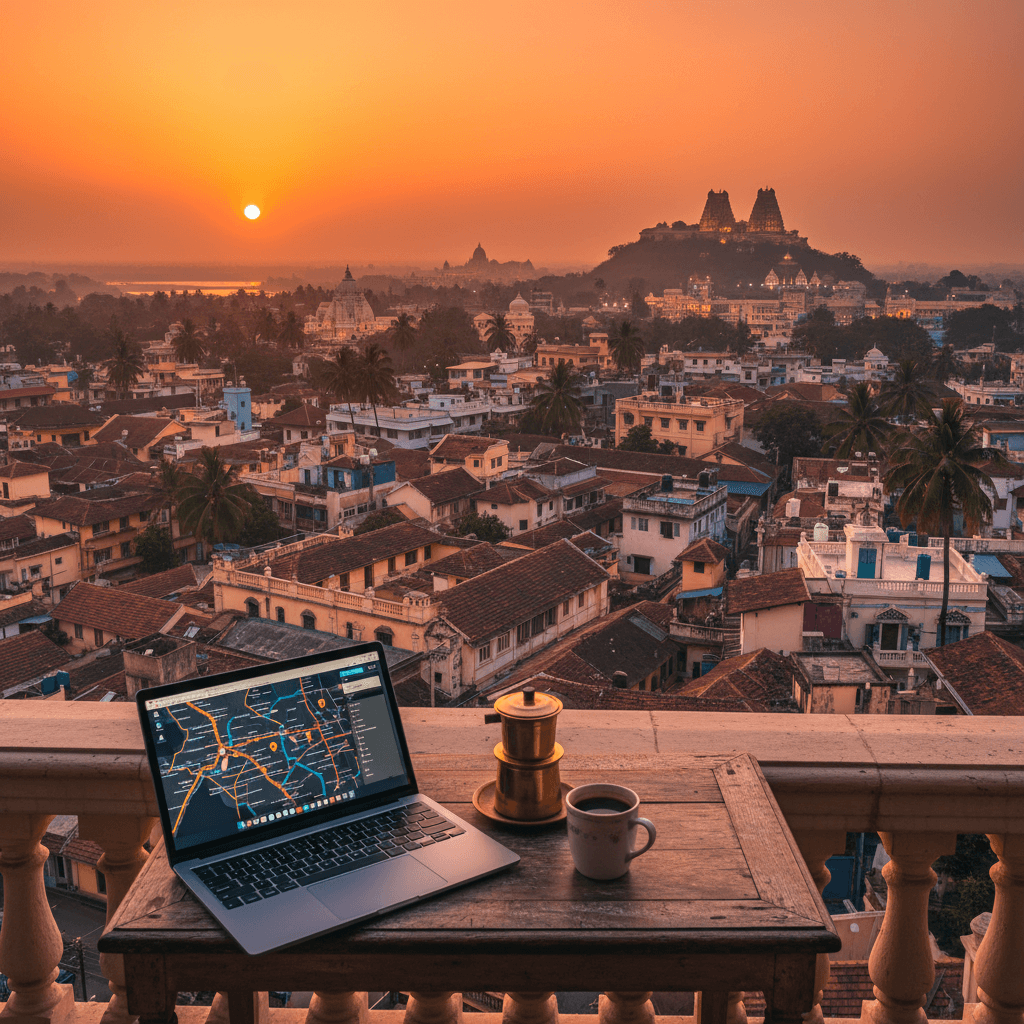
If Bangalore is India's high-octane tech engine, Mysuru is its soulful, deep-breathing counterpart. Located just a few hours away, this city swaps glass skyscrapers for heritage arches and frantic commutes for a pace of life that actually lets you taste your morning coffee. It’s a place where the scent of jasmine and sandalwood follows you down wide, tree-lined boulevards, and the shadow of the Mysore Palace defines the skyline rather than neon billboards.
The Nomad Experience
Living here feels like stepping into a more intentional version of India. You aren't just "passing through"; you're likely here to study yoga in Gokulam or soak up the royal history of the central district. The vibe is decidedly relaxed, making it a favorite for those who find the chaos of Mumbai or Delhi draining. However, there's a trade-off for this tranquility. The internet infrastructure isn't world-class yet. Fixed broadband averages ~10 Mbps; 5G mobile hotspots 200+ Mbps. Most nomads rely on Jio or Airtel mobile hotspots as a safety net for Zoom calls.
You’ll find a community that skews toward wellness and slow travel. While you won't find a massive "tech bro" scene, the cafes are filled with people writing, practicing Kannada, or discussing philosophy. It’s affordable, safe, and surprisingly walkable in the main hubs, which is a rarity for Indian urban centers.
Cost of Living Breakdown
Your money goes incredibly far here. A comfortable lifestyle typically costs around $933 per month, though budget travelers can easily scrape by on $500 to $700 if they stick to local guesthouses and street food.
- Housing: A 1BR near the city center runs $95 to $180 (₹8,000 to 15,000). In the popular expat enclave of Gokulam, expect to pay $120 to $240 (₹10,000 to 20,000) for better amenities.
- Food: A plate of Masala Dosa or a box of Mysore Pak at a street stall costs less than $0.60 (₹20 to 50). A mid-range dinner out is usually under $4 (₹300).
- Transport: Using Uber or Ola for quick trips across town usually costs between $1.20 and $3.60.
- Connectivity: A monthly 2GB/day data plan from Jio is a steal at roughly $3.60 (₹300).
Where to Plant Your Roots
Most digital nomads gravitate toward Gokulam. It’s the yoga heart of the city, filled with organic cafes, quiet lanes, and a high concentration of fellow foreigners. It’s peaceful and walkable, though it sits a bit further from the historic center. If you want to be in the middle of the action, staying near Mysore Palace puts you within walking distance of the Devaraja Market and the best South Indian eateries, though the noise levels are significantly higher.
For those looking for a long-term residential feel, Vontikoppal and Jayanagar are leafy, safe, and popular with expat families. They offer a more authentic local experience but lack the specific "nomad" infrastructure like laptop-friendly cafes.
Practicalities: Work and Play
Dedicated coworking spaces are still a bit thin on the ground, often costing $60 to $120 a month. Most people work from home or camp out in cafes. When you aren't working, the city serves as a perfect base for weekend trips. You can hop on a bus to the coffee plantations of Coorg or head toward the hills of Ooty and Wayanad.
The weather is one of Mysuru's biggest draws. It avoids the sweltering heat of the coast and the bone-chilling winters of the north. October to March is the sweet spot, with temperatures staying between 20°C and 30°C. Even during the monsoon months from June to September, the rains bring a lush, green beauty to the city that makes the occasional power flicker worth it. Just remember to pack a decent power bank and a local SIM card, and you'll find Mysuru to be one of the most restorative stops on your journey through India.
The Price of Peace in the Heritage Heart
Living in Mysuru feels like a breath of fresh air after the relentless pace of Bangalore. It is remarkably affordable, even by Indian standards, and offers a high quality of life for those who don't mind a trade off in internet speed for a boost in serenity. Most nomads find they can live comfortably here on about $933 a month, though your mileage will vary depending on how much you lean into the local lifestyle.
Monthly Budgeting Tiers
- The Budget Nomad ($500 to $700): You can make this work by sharing a flat in a residential area like Vontikoppal, eating primarily at local dosa stalls, and using the extensive bus network. Budget around ₹10,000 for your share of the rent.
- The Mid-Range Resident ($800 to $1,000): This is the sweet spot. You'll get a private one bedroom apartment for roughly ₹15,000, eat out at decent cafes, and use ride hailing apps like Uber without thinking twice.
- The Comfortable Expat ($1,200+): This covers a premium private apartment in Gokulam for ₹20,000 or more, daily coworking passes, and frequent dinners at upscale spots or boutique hotel restaurants.
Housing and Neighborhoods
Where you live in Mysuru defines your experience. Gokulam is the undisputed hub for nomads and yoga enthusiasts. It is quiet, walkable, and filled with expats. Expect to pay between $120 and $240 for a decent studio or small apartment here. It is further from the city center, but the community vibe makes it the top choice for remote workers.
If you want to be in the thick of the action, look near the Mysore Palace. It's noisier and rent is slightly higher due to the central location, with studios ranging from $95 to $180. For a more traditional, family oriented atmosphere, Jayanagar is a solid residential alternative, though you will find fewer Western style cafes there.
Food and Dining
Eating is a highlight of the Mysuru experience and won't break the bank. You can grab a world class masala dosa or a piece of Mysore pak for ₹20 to ₹50 at a street stall. A meal at a mid range cafe will typically cost between ₹150 and ₹300. Even when you decide to splurge at an upscale restaurant, you'll rarely spend more than ₹500 for a full meal.
Connectivity and Coworking
This is the one area where Mysuru lags. Average WiFi speeds hover around 12 Mbps. While steady enough for emails and basic browsing, it can be frustrating for heavy video calls or large file transfers. Most nomads recommend getting a local SIM from Jio or Airtel. For about ₹300 a month, you get 2GB of data per day, which serves as a vital backup hotspot.
Dedicated coworking spaces are still emerging, with monthly memberships costing between ₹5,000 and ₹10,000. Many people prefer working from cafes in Gokulam that offer free WiFi. If you need a serious office setup, some travelers take the three hour train to Bangalore for a few days of deep work before returning to the slower pace of Mysuru.
Getting Around
The city is quite walkable, especially within Gokulam or the central palace district. For longer trips, Uber and Ola are reliable and cheap, with most cross city rides costing between ₹100 and ₹300. If you want more independence, you can rent a scooter via apps like Bounce for ₹300 to ₹500 per day. Local buses are even cheaper, usually under ₹50 per trip, though they can be crowded during peak hours.
Practical Services
- Healthcare: Quality care is available at JSS Hospital or Apollo. Expats generally report that services are efficient and significantly cheaper than in the West.
- Banking: Use Wise for international transfers and set up PhonePe or Google Pay once you have a local number. UPI is the standard for payment everywhere from high end shops to tiny vegetable stalls.
- Groceries: Local markets are best for produce, while supermarkets like More or Reliance Fresh stock familiar household items.
The Yoga Hub: Gokulam
If you are coming to Mysuru to work remotely, you will likely end up in Gokulam. It is the undisputed center for the city’s international community, largely thanks to its world famous yoga shalas. The vibe here is noticeably quieter and more suburban than the city center, with leafy streets that are actually walkable.
Most nomads choose this area because it feels like a bubble of like minded people. You will find plenty of cafes like Depth N Green or Loyal World Market where you can grab a coffee and hop on the WiFi. While the internet speeds across the city hover around 12 Mbps, Gokulam’s cafes are your best bet for a stable connection outside of your apartment. It is a bit further from the historic sights, but the trade off is a peaceful environment and a community of expats and practitioners.
- Rent: Expect to pay between ₹10,000 and ₹20,000 ($120 to $240) for a decent one bedroom apartment.
- Vibe: Health conscious, quiet, and very international.
- Best for: Digital nomads, yoga enthusiasts, and those who need a Western style cafe scene.
The Cultural Heart: Near Mysore Palace
Solo travelers who want to be in the thick of the action should look for stays near the Palace or the Devaraja Market. Living here means you are steps away from the city's royal history and the best street food in Karnataka. You can walk out your door and find Mysore Pak at Guru Sweet Mart or a legendary masala dosa at Mylari for under $1.
The downside is the noise. This is the core of the city, so expect constant rickshaw horns and busy sidewalks. While rents can be slightly higher for modern builds right in the center, you save significantly on transport because everything is nearby. It is the most vibrant part of town, but it might be too overstimulating for a long term work stay.
- Rent: Central studios run from ₹8,000 to ₹15,000 ($95 to $180).
- Vibe: High energy, historic, and loud.
- Best for: Solo travelers and short term visitors who want easy access to sights.
The Residential Retreat: Vontikoppal and Jayanagar
For expats or families planning to stay for six months or more, Vontikoppal and Jayanagar offer a more authentic, local lifestyle. These are established residential neighborhoods with better access to schools and private hospitals like Apollo or JSS Hospital. They lack the "nomad vibe" of Gokulam, but they make up for it with safety and a sense of permanence.
You won't find many coworking spaces here, so you will need to set up a solid home office. Most residents use Jio or Airtel 4G hotspots as a backup for the local broadband. It’s a bit of a commute to the city center, but Uber and Ola rides are cheap, usually costing between ₹100 and ₹300 ($1.20 to $3.60) to get across town.
- Rent: Larger family homes or private apartments typically cost ₹20,000+ ($240+).
- Vibe: Family oriented, green, and very safe.
- Best for: Expats, families, and long term residents seeking a local experience.
Practical Logistics for All Areas
Regardless of where you land, getting around is straightforward. Most nomads use the Bounce app to rent scooters for ₹300 to ₹500 ($3.60 to $6) a day, which is the easiest way to navigate the gap between Gokulam and the city center. If you are arriving from Bangalore, the 3 to 4 hour train or bus ride is the standard route, costing between ₹300 and ₹800.
For your daily budget, a comfortable lifestyle in any of these neighborhoods usually totals around $933 a month. This covers a private apartment, eating out frequently at mid range spots for $2 to $4 a meal, and keeping a ₹300 ($3.60) monthly data plan active on your phone. It is one of the most affordable cities in Southern India, especially compared to the skyrocketing prices in nearby Bangalore.
The Reality of Remote Work in the Royal City
If you are coming from Bangalore, the first thing you will notice in Mysuru is that the frantic energy of the tech capital has been swapped for a gentle, meditative pace. For digital nomads, this is both the draw and the challenge. While the atmosphere is perfect for deep work and yoga, the infrastructure is still catching up to the needs of heavy bandwidth users. You are trading fiber optic speeds for a higher quality of life and significantly lower costs.
Average fixed WiFi speeds around 10 Mbps, but Jio/Airtel 5G hotspots exceed 200 Mbps, which is plenty for emails, Slack, and basic browsing, but might leave you sweating during a high stakes video presentation. Most long term residents recommend a belt and braces approach. Don't rely solely on your guesthouse or cafe WiFi; instead, set up a local hotspot immediately. The connection is generally steady enough for day to day tasks, but it lacks the "always on" reliability of India's larger metros.
Coworking Spaces and Cafes
Dedicated coworking spaces are still a relatively new concept here. You won't find the massive, sleek WeWork style hubs of Bangalore, but there are emerging local options that offer a professional environment for ₹200 to ₹500 per day. Monthly memberships typically range from ₹5,000 to ₹10,000 ($60 to $120), making it an affordable base if you need a ergonomic chair and a quiet room.
Most nomads prefer the cafe culture, particularly in Gokulam. This neighborhood is the heart of the expat and yoga community, and the local cafes are used to people staying for a few hours with a laptop. You can grab a coffee or a fresh juice and settle in, though it is good form to keep ordering if you plan to stay past your second hour. In the central area near Mysore Palace, traditional dosa spots sometimes offer free WiFi, but these are often too loud and busy for focused work sessions.
Connectivity Strategy: SIM Cards and Data
Because the local WiFi can be hit or miss, a local SIM card is your most important tool. Jio and Airtel are the two main players with the best coverage across the city. You can pick up a SIM at the airport or at various small shops in town, provided you have your passport and a couple of photos handy. Data is incredibly cheap; you can get ₹400-500/month for 2GB/day.
For those living in Gokulam or Vontikoppal, check with your landlord about the specific ISP they use. If you are planning a longer stay, it is often worth paying for a private connection upgrade. Many nomads find that combining a decent home router with a Jio backup keeps them online through the occasional power dip or service outage.
Digital Nomad Tech Checklist
- Primary ISP: Local home fiber or cafe WiFi (expect 10 to 15 Mbps).
- Backup: Jio or Airtel 4G/5G hotspot (essential for Zoom calls).
- Power: A small power bank is useful, though major outages are less common now than in previous years.
- Apps: Download Paytm or Google Pay for UPI payments, as most coworking spaces and cafes prefer digital transfers over cash.
- Hardware: Bring a universal adapter; while many modern cafes have international plugs, older guesthouses still use the three round pin Indian standard.
Ultimately, Mysuru suits the "slowmad" who values a 6:00 AM yoga session and a ₹20 masala dosa over lightning fast upload speeds. If your work requires moving massive video files or constant synchronous meetings, you might find the city frustrating. But for writers, developers, and those with a flexible schedule, the trade off for a $933 monthly budget and a view of the Chamundi Hills is usually worth it.
A Slower Pace with Peace of Mind
Mysuru feels like a breath of fresh air compared to the high octane energy of Bangalore. Most nomads find the city exceptionally safe, often rating it as one of the more secure urban environments in Southern India. Violent crime is rare; the city maintains a relaxed, respectful atmosphere that aligns with its reputation as a yoga and heritage hub. While you'll still want to keep your wits about you in crowded markets, the general vibe is one of calm and hospitality.
Expats and long term travelers generally feel comfortable walking around neighborhoods like Gokulam or Vontikoppal during the day. However, it's common sense to avoid isolated or poorly lit areas late at night. If you're heading home after dark, skip the solo walk and use a ride hailing app like Uber or Ola. These services provide tracked rides and are very affordable, typically costing between ₹100 and ₹300 ($1.20 to $3.60) for most cross city trips.
Healthcare Standards and Facilities
If you fall ill, you're in good hands. Mysuru is home to several high quality private hospitals that meet international standards. Expats frequently recommend Apollo BGS Hospitals and JSS Hospital for their modern equipment and English speaking staff. For minor ailments or routine checkups, these facilities offer efficient service without the massive price tags you'd find in the West.
Pharmacies are ubiquitous across the city. You'll find a chemist on almost every major corner in central areas, and most are open until late. For immediate medical needs, keep these numbers handy:
- 108 for an ambulance
- 100 for the police
- 112 for general emergencies
Environmental Wellness
The air quality in Mysuru is generally better than in India's mega cities, usually hovering at a moderate AQI of 50 to 100. It's a great city for those who enjoy being outdoors, though the sun can be intense between April and May when temperatures hit 35°C (95°F). Staying hydrated is key; always stick to bottled or filtered water, which is readily available at any local shop.
For those focused on holistic health, the city is a global destination for wellness. The Gokulam district is packed with yoga shalas and organic cafes catering to a health conscious crowd. It's easy to maintain a clean diet here with fresh local produce and a culture that celebrates vegetarianism. Just be sure to wash any fruit or vegetables bought from street vendors with filtered water before consuming them.
Practical Safety Tips
While the city is welcoming, it helps to follow local customs to avoid unwanted attention. Modest dress is expected when visiting the Mysore Palace or local temples. Most nomads find that blending in a little goes a long way in ensuring a hassle free experience. If you're staying for a while, it’s worth joining local Facebook or InterNations groups; the expat community is tight knit and always willing to share advice on the best doctors or safest areas to live. Overall, Mysuru offers a level of tranquility that's hard to find elsewhere in the country, making it a reliable base for those who prioritize a low stress lifestyle.
Getting Around Mysuru
Mysuru is a breath of fresh air if you are coming from the relentless gridlock of Bangalore. It is one of the few cities in India where you can actually enjoy a walk without constantly dodging traffic. The streets are wider, the pace is slower, and the layout is much more intuitive than most Southern Indian hubs.
The Ride-Hailing Essentials
Most nomads rely on Uber and Ola to get across town. They are reliable, transparent with pricing, and save you the headache of haggling with auto-rickshaw drivers. A typical cross-town trip usually costs between ₹100 and ₹300 ($1.20 to $3.60).
- Uber: Best for cars and consistent pricing.
- Ola: Often has better availability for auto-rickshaws (autos).
- Rapido: A popular bike-taxi app if you are traveling solo and want to zip through traffic even faster.
Self-Driving and Rentals
If you are staying in Gokulam or near the Palace for more than a few weeks, renting your own set of wheels is the move. It gives you the freedom to explore the outskirts or head to Chamundi Hill whenever you want. You can find scooter and bike rentals through apps like Bounce or local shops for about ₹300 to ₹500 ($3.60 to $6) per day. Long term rentals are much cheaper if you negotiate in person; most expats aim for a monthly rate that brings the daily cost down significantly.
Public Transit and Trains
The local bus network is incredibly cheap, with fares often under ₹50 ($0.60), but it can be a bit of a puzzle for newcomers since signs aren't always in English. Mysore Junction is the heart of the city's rail connection. It's the primary gateway for those arriving from Bangalore. The Shatabdi Express takes about 2 hours and costs between ₹300 and ₹800 ($3.60 to $9.60) depending on the class.
Walkability and Layout
You will find that Mysuru is surprisingly walkable, especially in the Gokulam neighborhood, which is the hub for the yoga and nomad community. The area around the Mysore Palace is also pedestrian-friendly, though it gets crowded on weekends. Most nomads find they can handle their daily errands on foot if they choose their base wisely. The city is laid out in a way that feels more like a collection of villages than a sprawling metropolis, which makes it much less intimidating to navigate.
Arrival from the Airport
Since Mysuru's own airport has limited connectivity, most international travelers fly into Kempegowda International Airport (BLR) in Bangalore. From there, you have two main options:
- Flybus: A luxury AC bus service that runs directly from the Bangalore airport to the Mysuru bus stand. It takes about 4 hours and is very comfortable for ₹800 ($9.60).
- Private Cab: Expect to pay around ₹3,000 to ₹4,500 ($36 to $54) for a direct drop-off at your accommodation. It is faster but significantly more expensive.
Regional Escapes
One of the best parts about being based here is the proximity to nature. Coorg is only 106km away, making it a perfect weekend trip for coffee plantation tours. You can also catch buses or hire drivers for trips to Ooty or Wayanad. For these longer journeys, most travelers recommend booking a private car for the day or using the state-run KSRTC "Airavat" buses for a balance of comfort and cost.
The Local Linguistic Landscape
In Mysuru, your ears will mostly pick up the rhythmic, melodic sounds of Kannada, the state language of Karnataka. While it might sound intimidating at first, the city is remarkably easy to navigate for English speakers. Because of the city's status as a global yoga hub and its history as a royal capital, English proficiency is quite high among younger locals, shopkeepers, and professionals. You'll find that most people in the service industry or at the Mysore Palace speak enough English to help you out without a hitch.
Hindi is also widely understood, though it's not the primary language. In nomad heavy areas like Gokulam, English is practically the lingua franca. You can walk into a cafe or a yoga shala and conduct your entire day in English. That said, making an effort with the local tongue goes a long way with the residents, who are famously proud of their heritage.
Essential Phrases for Your Toolkit
While you don't need to be fluent, dropping a few Kannada words into your daily interactions will instantly warm up the locals. It shows you're not just passing through but actually respecting the culture. Here are the basics you'll use most often:
- Namaskara: Hello / Greetings. Use this everywhere, from the rickshaw driver to the vegetable vendor.
- Dhanyavaada: Thank you. It's polite and always appreciated.
- Yaanu hegiddini?: How much? This is your go to phrase when browsing the markets for Mysore Pak or silk.
- Haudu / Illa: Yes / No. Simple, but effective for quick interactions.
- Oota ayitha?: Have you eaten? This is a common way to say "how are you" in South India.
Digital Communication and Translation
Even with high English levels, a little tech help doesn't hurt. Most nomads keep Google Translate handy with the Kannada offline pack downloaded. This is particularly useful when you're reading signs in residential areas like Jayanagar or trying to decipher a local menu that isn't translated. The camera feature on the app is a lifesaver for reading handwritten signs or local notices.
For daily logistics, most communication happens over WhatsApp. Whether you're coordinating with a landlord for an apartment in Vontikoppal or booking a scooter rental, expect to use it constantly. Local businesses and even street vendors are increasingly using UPI apps like PhonePe or Google Pay, which often display prompts in English, making transactions seamless even if there's a slight language barrier.
Communication Etiquette
The "Indian Head Shake" is something you'll encounter daily in Mysuru. It's a gentle side to side tilt that can mean "yes," "I understand," or "okay." It takes a few days to calibrate, but don't mistake it for a "no." In terms of social cues, Mysuru is more conservative and polite than the high energy environment of Bangalore. Soft tones and a patient approach will get you much further than being loud or demanding.
When you're out and about, especially in holy sites or traditional neighborhoods, remember that non verbal communication is just as important. Dress modestly and always use your right hand for giving or receiving money and food. Most travelers find that if they lead with a smile and a "Namaskara," the locals are more than happy to help bridge any linguistic gaps.
The Seasonal Sweet Spot
Unlike the sweltering humidity of coastal India or the bone-chilling winters of the north, Mysuru maintains a relatively mild, plateau climate that nomads find manageable year-round. Most locals and long-term expats agree that the window from October to March is the gold standard for visiting. During these months, daytime temperatures hover comfortably between 20°C and 30°C (68-86°F), making it easy to walk between cafes in Gokulam or explore the palace grounds without breaking a sweat.
The city truly peaks in October during the Dasara festival. While the energy is electric and the palace illumination is world-class, be prepared for crowds and a spike in short-term rental prices. If you prefer a quieter pace for your deep-work sessions, aim for November or January, when the air is crisp, the skies are clear, and the tourist rush has thinned out.
Beating the Heat and the Rain
As the calendar turns toward April and May, the heat starts to climb. You can expect highs reaching 35°C (95°F). While this is cooler than the scorching 40°C+ temps in Delhi or Mumbai, it can feel draining if your accommodation doesn't have air conditioning. This is the "shoulder season" where you might find better deals on monthly apartment rentals, but you'll likely want to stay indoors during the peak afternoon sun.
The monsoon arrives in June and lingers through September. Mysuru doesn't usually get the catastrophic flooding seen in other regions, but the rains are frequent and heavy. Temperatures drop back down to a pleasant 22-28°C (72-82°F), turning the surrounding hills of Coorg and Wayanad into lush, emerald landscapes. If you don't mind the occasional power flicker or damp walk to your favorite dosa spot, the monsoon offers a moody, poetic side of the city that many writers and artists love.
What to Pack and When to Plan
Because the climate is generally temperate, your packing list doesn't need to be too complex. However, the varying seasons require a few specific items to stay comfortable:
- October to February: Bring a light jacket or hoodie. Evenings can get surprisingly chilly, dropping toward 15°C (59°F), especially if you're riding a scooter.
- June to September: A sturdy umbrella and waterproof footwear are non-negotiable. The sidewalks in central Mysuru can get slippery and puddle-prone during a downpour.
- April to May: Stick to breathable cotton or linen fabrics. The sun is intense, so high-SPF sunscreen and a hat are vital for midday outings.
Monthly Climate Breakdown
- January to March: Very dry, clear blue skies, and the most pleasant working conditions. Rainfall is almost non-existent.
- April to May: The hottest months. Great for escaping to the nearby hill stations on weekends, but stay hydrated in the city.
- June to August: Peak monsoon. Expect high rainfall and grey skies. It's the best time for those who enjoy a cozy, indoor atmosphere.
- September to December: The transition back to cool, dry weather. December is particularly lovely with average highs of 29°C and cool, breezy nights.
Most digital nomads find that arriving in late September is the best strategy. You'll beat the Dasara price hikes, secure a good long-term rental in a neighborhood like Vontikoppal or Gokulam, and be perfectly positioned to enjoy the best six months of weather the region has to offer.
The Logistics of Living
Living in Mysuru is remarkably easy on the wallet, especially if you are coming from Bangalore or Mumbai. Most nomads find that a monthly budget of $933 allows for a very comfortable lifestyle. If you are on a tighter budget, you can get by on $500 to $700 by sticking to local buses and eating at street stalls where a Masala Dosa or a plate of Mysore Pak costs between ₹20 and ₹50.
For housing, your choice of neighborhood defines your experience. Gokulam is the go-to spot for the yoga crowd and long-term expats. It is quiet and walkable, though it lacks much in the way of nightlife. Expect to pay between ₹10,000 and ₹20,000 for a decent place here. If you want to be in the thick of the action, look near the Mysore Palace. It is noisier and more expensive, with rents hitting ₹15,000 for a studio, but you will have the city's best food and sights at your doorstep.
- Budget Tier: $500 to $700 per month. Covers a shared room and local transport.
- Mid-range Tier: $800 to $1,000 per month. Covers a private 1BR and frequent dining out.
- Comfortable Tier: $1,200+ per month. Covers a premium apartment and dedicated coworking desk.
Connectivity and Workspace
Internet is the main hurdle here. Average speeds hover around 12 Mbps, which is fine for emails but can be frustrating for heavy video calls. Most remote workers rely on a mobile hotspot as a backup. Grab a local SIM from Jio or Airtel at the airport or a local shop using your passport; you can get 2GB of daily data for about ₹300 a month.
Dedicated coworking spaces are still catching up. While you will find emerging spots for ₹200 to ₹500 a day, many nomads prefer working from cafes in Gokulam or the city center. These spots usually offer free WiFi, though the "work from cafe" culture is more relaxed here than in major tech hubs. If you need serious bandwidth, a day trip to Bangalore's tech parks is always an option via the Mysore Junction train station.
Getting Around
The city is surprisingly walkable, particularly in the central districts and Gokulam. For longer distances, Uber and Ola are the standard apps for cars and auto-rickshaws. Most trips across town will cost you between ₹100 and ₹300. If you want more freedom, use the Bounce app to rent a scooter for ₹300 to ₹500 a day.
When arriving, most travelers fly into Bangalore and take a bus or train to Mysuru. The journey takes about 3 to 4 hours and costs between ₹300 and ₹800. It is a scenic route that transitions from the glass skyscrapers of the capital to the leafy, low-rise charm of the palace city.
Health, Safety, and Language
Mysuru is widely regarded as safer than India's larger metros. Common sense applies, and it is best to avoid poorly lit areas late at night, but violent crime is very low. For healthcare, expats recommend Apollo or JSS Hospital for high-quality care. In an emergency, dial 108 for an ambulance or 100 for police.
While Kannada is the local tongue, English is widely spoken in shops, cafes, and tourist areas. You will find that younger residents and those in the service industry are quite fluent. Learning a few phrases like Namaskara (hello) or Dhanyavaada (thank you) goes a long way with the locals. For payments, download PhonePe or Google Pay, as UPI is the standard everywhere from high-end boutiques to fruit stalls.
Climate and Timing
The weather is mild for most of the year. The absolute best time to visit is from October to March when temperatures stay between 20°C and 30°C. Avoid the monsoon season from June to August if you don't like heavy rain, though the city turns a beautiful, lush green during this time. To blend in, remember local customs: always remove your shoes before entering a home or temple, and use your right hand when eating or shaking hands.
Need visa and immigration info for India?
🇮🇳 View India Country GuideHidden Gem
Worth the effort