Muscat
🇴🇲 Oman
The Slow Pace of the Sultanate
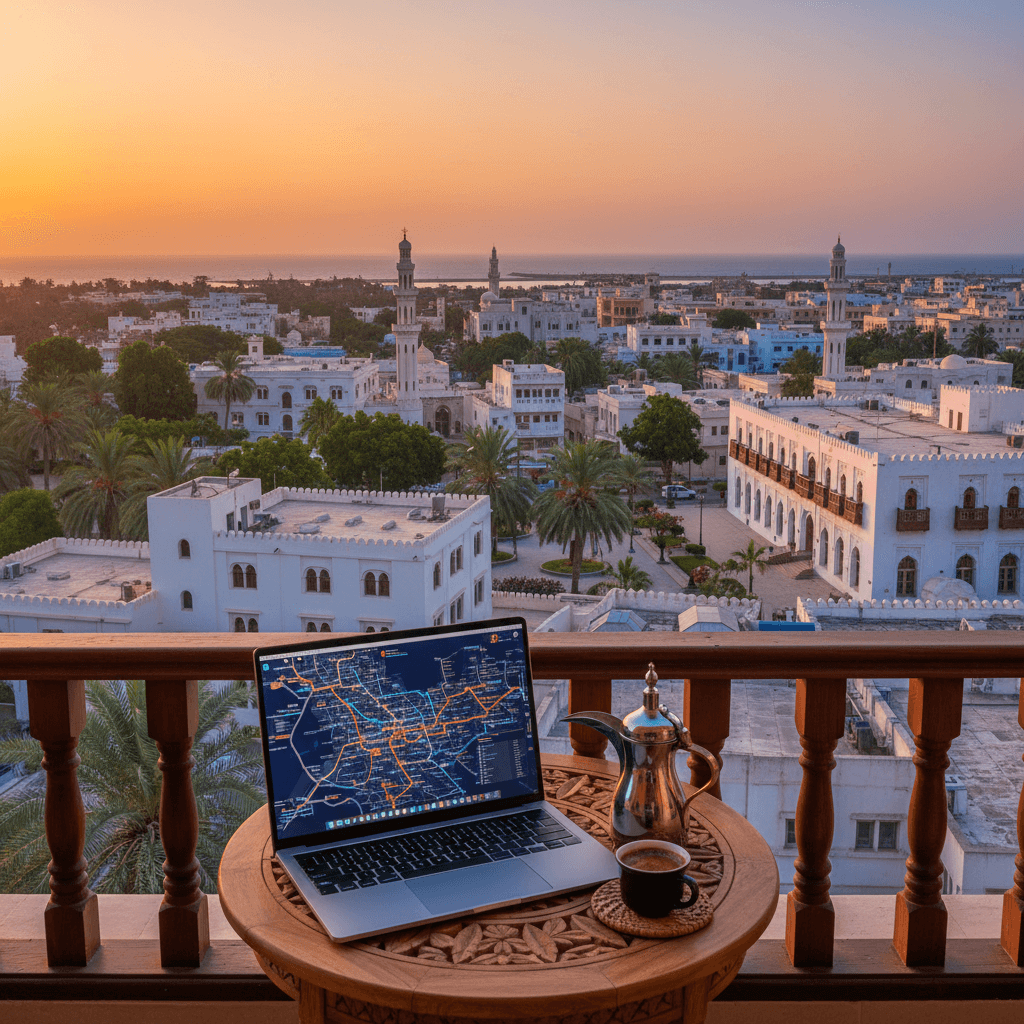
If Dubai is a high-speed chase, Muscat is a long, sunset walk on the beach. It is one of the few capitals in the Gulf where you won't find a single skyscraper. Instead, the skyline is a low-rise collection of white-washed buildings, ornate domes, and jagged brown mountains that drop straight into the Arabian Sea. The vibe here is deeply grounded, quiet, and unapologetically Omani.
For nomads, the draw isn't a massive party scene or a saturated tech hub. It is the chance to live in a place that feels authentic and safe. You'll find yourself trading late-night clubbing for weekend trips to Wadi Shab or the "Grand Canyon" of Arabia (Jebel Shams). It is a city that rewards those who want to work hard during the day and truly disconnect in the evening. Most travelers find the local community incredibly welcoming, though you should expect a smaller, more tight-knit nomad circle than you'd find in Southeast Asia or even neighboring UAE.
What It Costs to Live Here
Muscat isn't exactly a budget destination, but it is significantly more affordable than its neighbors to the north. Your monthly burn will largely depend on how much you prioritize "western" amenities versus local living.
- Budget Tier: Expect to spend around $1,100 to $1,500 (OMR 425 to 580) per month. This covers a modest apartment in Al Khuwair and eating at local Omani or Indian spots.
- Mid-Range: Most nomads land between $1,500 and $2,100 (OMR 580 to 810). This allows for a nicer 1BR in a place like Qurum and regular dinners out.
- Comfortable: If you want the Al Mouj lifestyle, plan for $2,100+ (OMR 810+). This covers luxury compounds, beach club access, and frequent ride-hailing.
Keep an eye on your electricity bill during the summer months. From May to September, the heat is intense, and running the AC 24/7 can add an extra OMR 20 ($52) or more to your monthly overhead.
Where to Set Up Base
Location is everything in Muscat because the city is spread out along the coast and isn't particularly walkable. Most expats and nomads gravitate toward a few specific pockets.
Al Mouj (The Wave)
- Best For: Nomads who want a "plug and play" lifestyle.
- The Vibe: A modern, walkable marina community with retail, dining, and beach access. It feels very international.
- Rent: High. Expect OMR 400+ ($1,040+) for a 1BR.
Qurum & Shatti Al Qurum
- Best For: Solo travelers and café lovers.
- The Vibe: This is the heart of the city's social life. It has the best beach for walking, plenty of high-end coffee shops for working, and a high concentration of expats.
- Pros: Great energy and well-lit streets for evening strolls.
Al Khuwair / Bausher
- Best For: Budget-conscious nomads.
- The Vibe: Central, busy, and functional. It lacks the coastal charm of Qurum but makes up for it with proximity to malls and cheaper housing.
- Rent: You can find solid apartments for around OMR 250 ($650).
Connectivity and Work Culture
Internet in Muscat is reliable, especially if you stick to fiber-optic connections in residential areas. Speeds generally range from 100 to 300 Mbps for standard nomad use, with fiber common in newer builds. While dedicated coworking spaces are still a growing concept, you'll find places in Al Mouj or Madinat Sultan Qaboos (MSQ) for around OMR 50 to 100 ($130 to 260) a month.
Most nomads end up working from home or finding a "third place" in the many cafés of Qurum. For mobile data, pick up a SIM from Omantel or Zain at the airport. You can get 10GB to 50GB of data for roughly OMR 5 to 10 ($13 to 26). Just remember that the GMT+4 timezone is a sweet spot for those working with teams in both Europe and Asia.
Navigating the City
You'll need an app to get around. Public buses exist but aren't the go-to for most professionals. Careem is the dominant ride-hailing app, and a typical trip across town will cost you between OMR 2 and 5 ($5 to 13). If you plan on exploring the mountains or deserts on weekends, renting a car is a must. Expect to pay about OMR 20 ($52) per day for a rental. The roads are excellent, and petrol is very cheap compared to Western standards.
Safety is almost a non-issue here. Muscat consistently ranks as one of the safest cities in the world. Solo female nomads report feeling very comfortable, provided they respect local customs by dressing modestly in public areas. It's a city where you can leave your laptop on a café table to use the restroom without a second thought, a rarity in many nomad hotspots.
The Price of Peace
Muscat doesn't demand the high-octane budget of its neighbors in the UAE, but it isn't a backpacker haven either. It occupies a comfortable middle ground where your money buys a high quality of life, reliable infrastructure, and a front-row seat to some of the most stunning coastlines in the Middle East. Most digital nomads find they can live well here on a budget between $1,500 and $2,100 per month, though you can certainly squeeze that down to $1,100 if you're savvy with local housing and eat like a local.
The Omani Rial (OMR) is pegged to the US Dollar, so exchange rates stay steady. While the price tags might look low, remember that one Rial is worth about $2.60, so those small numbers at the grocery store add up faster than you'd expect. One hidden cost to keep in mind is the summer heat; between June and August, your electricity bill will likely jump by about OMR 20 a month just to keep the AC humming.
Housing and Neighborhoods
Where you park your laptop matters. Muscat is sprawling, and because it's not a very walkable city, your neighborhood defines your daily expenses and social life. Expats and nomads usually gravitate toward a few key hubs.
Al Mouj (The Wave)
- Best for: Community vibes and walkability.
- Monthly Rent: OMR 400 to OMR 500+ for a 1BR.
- Vibe: This is a gated, mixed-use marina community. It's the most expensive area but offers the easiest lifestyle with retail, dining, and beaches all within a short stroll.
Qurum and Shatti Al Qurum
- Best for: Socializing and beach access.
- Monthly Rent: OMR 300 to OMR 450.
- Vibe: This is the heart of the expat scene. You'll find plenty of cafes and well-lit streets for evening walks. It's a bit pricier for dining, but the proximity to the water is a major perk.
Al Khuwair and Ghubrah
- Best for: Budget-conscious nomads.
- Monthly Rent: OMR 250 to OMR 300.
- Vibe: Central and practical. It lacks the luxury polish of Al Mouj but puts you close to everything for a fraction of the cost.
Daily Expenses
Eating out is where you can really control your burn rate. If you stick to the local shawarma spots and Indian canteens in areas like Al Khuwair, a solid meal costs OMR 1 to OMR 2. Moving up to a mid-range sit-down restaurant in Qurum will run you OMR 5 to OMR 10, while a high-end seafood dinner in Shatti Al Qurum starts at OMR 15 per person.
Transport is a mandatory expense because the public bus system isn't reliable for daily commuting. Most nomads rely on ride-hailing apps like Otaxi or Careem, with average trips costing between OMR 2 and OMR 5. If you plan on exploring the mountains or deserts on weekends, renting a car is a better move at roughly OMR 20 per day.
Staying Connected
Working from home is the norm, as dedicated coworking spaces are still a growing concept. You can find desks in Al Mouj or Madinat Sultan Qaboos for OMR 50 to OMR 100 a month. Most nomads opt for a "cafe office" setup in Qurum or just upgrade their home fiber-optic line. Mobile data is straightforward; grab a SIM from Omantel or Zain at the airport. A plan with 10GB to 50GB of data typically costs between OMR 5 and OMR 10.
While Muscat doesn't have a specific digital nomad visa yet, many nationalities receive a visa on arrival or eVisa for up to 30 days; check based on passport. For those looking at the long term, the Golden Residency program is an option, though it requires a significant investment of OMR 200,000. For most, the simpler path is enjoying the city's slow pace and safety for a month or two before moving on.
The Nomad Hotspot: Al Mouj
If you want a lifestyle that feels like a resort but functions like a high end office, Al Mouj is the spot. Most nomads gravitate here because it is the only neighborhood where you can actually walk to get a coffee or head to the grocery store without needing a car. It is a modern, mixed use development with its own marina and beach access.
The community is tight knit and very welcoming. You will find people working on laptops at Costa Coffee or Shakespeare and Co. throughout the day. While it is the most expensive area in the city, the convenience of having gyms, retail, and dining at your doorstep saves you a lot of time and transport hassle.
- Rent: Expect to pay OMR 400 or more for a sleek one bedroom apartment.
- Work Setup: High speed fiber is standard here, and the cafes are very laptop friendly.
- Vibe: Secure, upscale, and social.
The Solo Traveler Hub: Qurum and Shatti Al Qurum
For those traveling solo who want to be near the action, Qurum is the place to be. It is the heart of Muscat's social life, home to the city's most popular public beach and a dense concentration of cafes and mid range restaurants. It feels a bit more "real" than the manicured streets of Al Mouj.
Solo travelers often prefer this area because it is easier to meet people. You can spend your afternoons at the Qurum City Centre mall or walking the promenade at sunset. The streets are well lit and very safe for nighttime strolls, though traffic can get a bit heavy during the evening rush.
- Rent: Prices are slightly lower than Al Mouj, usually between OMR 300 and OMR 450.
- Social Scene: Best for beach walks and meeting other expats at local cafes.
- Practicality: Very central, making it a OMR 2 to 5 ride to almost anywhere else in the city using the Careem app.
The Expat and Family Choice: Madinat Sultan Qaboos (MSQ)
Madinat Sultan Qaboos, or MSQ as everyone calls it, is the traditional expat stronghold. It is an older, established neighborhood with a lot of character. Families love it because it is close to international schools and has plenty of parks and quiet residential streets.
The neighborhood center has a great mix of shops and small restaurants, though you will definitely need a car to get around here. It is not particularly walkable, but it feels very safe and homey. It is a great middle ground if you want a quiet life but still need to be close to the British or American embassies and cultural centers.
- Rent: Varies wildly, but decent family flats start around OMR 350.
- Atmosphere: Quiet, leafy, and very family oriented.
- Healthcare: Close to top tier facilities like Muscat Private Hospital.
The Budget Conscious Base: Al Khuwair and Azaiba
If you are watching your budget or just want a central base to explore the rest of Oman, look at Al Khuwair, Ghubrah, or Azaiba. These areas are the commercial backbone of Muscat. They might lack the "vacation vibe" of the coast, but they are incredibly practical. This is where you will find the best OMR 1 shawarma and affordable Indian eateries.
Nomads on a budget often choose Al Khuwair because it is packed with amenities and has the most affordable short term rentals. You are right in the middle of everything, situated between the airport and the older parts of the city. It is a bit more chaotic and less "pretty" than the coastal spots, but it is functional and authentic.
- Rent: You can find solid studios or one bedroom apartments for around OMR 250.
- Food: Incredible street food and budget dining options for OMR 2 to 5 per meal.
- Internet: Reliable, though you should always double check if fiber is installed before signing a lease.
Muscat isn't the place you go for a massive tech hub energy. Instead, it’s a city where the internet is reliable enough to get the job done while you enjoy a significantly slower, more intentional pace of life. Most digital nomads find the infrastructure steady for deep work, though you'll want to be strategic about where you set up your laptop.
Connectivity and Speeds
The home internet situation is generally solid, with fiber-optic connections becoming the standard in expat-heavy areas like Al Mouj and Qurum. You can expect download speeds of 100-300 Mbps on average with fiber, higher in premium areas. It’s plenty for Zoom calls and standard workflows, even if you’re uploading large video files. Always ask your landlord for a speed test before signing a lease, as older buildings in Al Khuwair can sometimes lag behind.
For mobile data, grab a SIM card immediately upon landing at Muscat International Airport. The two main players are Omantel and Zain. You can pick up a prepaid plan with 10GB to 50GB of data for anywhere between OMR 5 and OMR 10 ($13 to $26). Coverage is excellent throughout the city, though it can dip if you head out for a weekend trip into the desert or the Hajar Mountains.
Coworking Spaces
The dedicated coworking scene is still finding its feet, so don't expect the endless options you'd see in Dubai or Bali. However, the spaces that do exist are professional and well-equipped. Most nomads budget between OMR 50 and OMR 100 ($130 to $260) per month for a hot desk. Popular spots are often located near Madinat Sultan Qaboos (MSQ) or the Al Mouj marina area. These hubs are great for meeting the local expat community, though the vibe is usually more "business professional" than "digital nomad backpacker."
The Café Culture
Since formal coworking spaces are sparse, many remote workers treat the city's thriving café scene as their office. Shatti Al Qurum is the go-to neighborhood for this. You’ll find plenty of nomads tucked into corners of cafés near the beach or inside the malls. The staff are generally relaxed about you staying for a few hours as long as you're ordering coffee. If you need a change of scenery, the malls in Qurum offer air-conditioned refuge with reliable Wi-Fi, which becomes a necessity during the sweltering summer months from May to September.
Remote Work Logistics
- Power: Outlets follow the British three-pin style (Type G). Power outages are rare in the city.
- Security: Public Wi-Fi is available in major malls, but it often requires a local phone number to receive an SMS authentication code.
- VPNs: Many nomads use a VPN to access specific VoIP services or streaming content, as certain apps can be temperamental on local networks.
- Summer Costs: If you're working from home during the summer, factor in an extra OMR 20 per month for your electricity bill to keep the AC running 24/7.
Ultimately, Muscat rewards the nomad who doesn't need a "scene" to be productive. It’s a quiet environment where you can hunker down and focus during the day, then head to the beach or a mountain trail the second you log off.
Staying Safe in the Sultanate
Muscat is consistently ranked as one of the safest cities in the world for expats and digital nomads. You'll notice a distinct lack of the "hustle" found in other regional hubs. Street crime is incredibly rare; it's the kind of place where people leave their cars running while they pop into a shop for a karak tea. While you should still use common sense with your belongings, the general atmosphere is one of profound security and mutual respect.
Solo female travelers generally find Muscat welcoming and comfortable. While the city is modern, Omani culture is traditional, so wearing modest clothing that covers shoulders and knees helps you blend in and shows respect for local customs. In neighborhoods like Al Mouj and Shatti Al Qurum, you'll see a more international mix, but even here, a conservative approach to dress is the norm. If you're out late, the streets are well lit and the vibe remains peaceful.
There aren't really any "no go" zones in the city center. Most nomads stick to the western side of the city in areas like Muscat Hills or Madinat Sultan Qaboos (MSQ), where gated communities and secure apartment blocks are standard. If you run into any trouble, the emergency number for police or an ambulance is 999. Response times in the main districts are quick, and most officers speak enough English to assist you.
Healthcare Standards and Facilities
If you get sick, you're in good hands. The private healthcare system in Muscat is top tier, with modern facilities and Western-trained doctors. Most expats avoid public hospitals, which are reserved primarily for Omani citizens, and head straight to private clinics where English is the primary language of communication.
- Muscat Private Hospital: Located in Bausher, this is often the first choice for expats. It’s a full service facility with an emergency room and various specialists.
- KimsHealth Hospital: A reliable mid range option in Darsait that offers excellent outpatient services.
- Burjeel Hospital: Known for high end care and specialized treatments in Al Khuwair.
Pharmacies are everywhere, often tucked into malls or next to large supermarkets like Lulu or Carrefour. You can get most over the counter basics easily, but for specific maintenance medications, bring your prescription from home. Some medicines that are common in the West can be restricted in Oman, so check the official Ministry of Health guidelines if you carry specialized prescriptions.
Insurance and Costs
Since there is no free healthcare for temporary residents, having a solid international health insurance policy is mandatory. Most nomads use providers like SafetyWing or Genki, which cover the private clinics mentioned above. If you're paying out of pocket for a minor visit, a consultation with a GP usually costs between OMR 15 and OMR 30 (roughly $39 to $78).
One thing to keep in mind is the climate's impact on your health. During the summer months from May to September, temperatures regularly soar above 40°C (104°F). Heatstroke and dehydration are real risks if you're out exploring during the day. Most locals stay indoors until the sun goes down, and you'll find the city comes alive much later in the evening when it's safer to be outside.
Practical Safety Tips
- Road Safety: This is arguably the biggest risk in Muscat. Speeding is common on the Sultan Qaboos Street highway. If you're driving, stay alert, especially at night.
- Water: While tap water is generally safe for brushing your teeth, most nomads stick to bottled or filtered water for drinking. A large 5 gallon jug for your apartment costs about OMR 1.
- Apps: Download the Oman Taxi or Otaxi app. They are safer and more regulated than flagging down random white and orange cabs on the street.
The Transport Reality
Muscat is a city that stretches horizontally for miles along the coast. While it looks manageable on a map, the urban sprawl and desert heat make it a place where your feet won't get you very far. Outside of the planned walkways in Al Mouj, walkability is low. You'll find that most nomads quickly abandon the idea of trekking between neighborhoods and settle into a routine of ride-hailing or short-term rentals.
Ride-Hailing and Taxis
For daily commutes to a cafe or a grocery run, apps are your best friend. Otaxi and Tasleem are the local go-tos, and they generally offer better rates and reliability than flagging down a white-and-orange street taxi. Careem also operates here and is a favorite for its predictable pricing.
- Short trips: Expect to pay between OMR 2 and OMR 5 for a ride within the central hubs like Qurum or Al Khuwair.
- Airport Transfers: A ride from Muscat International (MCT) to the main expat areas usually costs between OMR 5 and OMR 10.
- Availability: Drivers are plentiful during the day, but it's smart to book a few minutes early if you're heading out during the humid evening rush.
The Public Transit Gap
The Mwasalat bus system exists, but most long-term residents and nomads find it impractical for a professional schedule. The routes are somewhat limited and the wait times in the sun can be brutal. While it's the most budget-friendly option, it's rarely recommended for anyone who needs to be somewhere at a specific time. If you're looking to save money, stick to the shared micro-buses (Baisa buses) that ply the main Sultan Qaboos Street, though these require a bit of local knowledge to master.
Car Rentals: The Nomad's Secret Weapon
If you plan on staying for more than a couple of weeks, renting a car is the move that changes your experience. It opens up the ability to explore the Grand Canyon of Oman or Nizwa on the weekends without paying for expensive private tours. Many nomads find that the cost of a monthly rental is comparable to taking multiple ride-hail trips every day.
- Daily Rates: A standard sedan will run you about OMR 20 per day.
- Monthly Rates: You can often negotiate better long-term deals with local agencies in Azaiba or Ghubrah.
- Driving Conditions: Infrastructure is excellent with high-quality highways. Just keep an eye on the speed cameras; they are everywhere and the fines are steep.
Alternative Ways to Move
Micromobility hasn't quite taken over Muscat yet. You might see a few scooters in the gated community of Al Mouj, but they aren't a viable way to get across the city. For those looking for a bit of adventure, hitchhiking is surprisingly common and culturally accepted for day trips outside the city limits. Omani hospitality is legendary, and travelers often report that locals are happy to give a lift to someone headed toward the mountains or the coast.
Navigation Tips
Google Maps is reliable for the most part, but the city's rapid development means new flyovers and exits appear frequently. Always give yourself an extra 10 minutes for traffic if you're moving between Shatti Al Qurum and Bausher during the afternoon school run or the 5:00 PM office exodus. The GMT+4 timezone makes it easy to coordinate with teams in Europe or Asia, but your biggest logistical hurdle will always be the physical distance between the city's distinct pockets.
The Linguistic Landscape
You'll find that getting by in Muscat is remarkably straightforward. While Arabic is the official language of the Sultanate, English is the de facto language of business, tourism, and the city's large expat community. If you're sticking to hubs like Al Mouj, Qurum, or Madinat Sultan Qaboos, you can easily go weeks without needing to speak a word of Arabic.
Most nomads find that shopkeepers, taxi drivers using apps like Careem, and staff at coworking spaces speak English fluently. Menus in mid range restaurants and signage on the Sultan Qaboos Highway are almost always bilingual. That said, the local dialect is Omani Arabic, which is known for being softer and more melodic than some other Gulf dialects.
Making Local Connections
Omanis are famously hospitable, and making an effort with the local language goes a long way in building genuine rapport. Even in a professional setting, starting a conversation with a traditional greeting is respected. It signals that you aren't just passing through but are actually interested in the local heritage.
If you're heading out of the city for a weekend trip to the Grand Canyon or the Nizwa souq, English proficiency might dip slightly, but it's rarely a barrier to getting what you need. Most travelers find that a combination of basic phrases and a polite smile works wonders.
Key Phrases to Know
- Marhaba: Hello. This is the standard, friendly greeting you'll use everywhere from the airport to the coffee shop.
- Shukran: Thank you. You'll use this constantly. It's the most important word in your Omani vocabulary.
- Kam?: How much? Use this when browsing the Mutrah Souq, though most modern shops have fixed prices.
- Inshallah: God willing. You'll hear this dozens of times a day. It's used to discuss any future plan, from a meeting time to a food delivery arrival.
- Afwan: You're welcome or excuse me.
Digital Tools and Communication
For those moments when you step off the beaten path or need to translate a specific document, Google Translate is your best friend. The camera feature is particularly handy for reading local notices or grocery labels that might not have English translations. Most nomads recommend downloading the Arabic language pack for offline use before heading into the desert or mountains where signal can be spotty.
When it comes to staying connected, the infrastructure is solid. You can grab a SIM card from Omantel or Zain right at the airport or in any major mall like Muscat Grand Mall. Expect OMR 5-15 for 1-10GB; larger packs like 50GB around OMR 40. WhatsApp is the primary way everyone communicates here, from booking a desert tour to chatting with your landlord.
Cultural Nuances in Speech
Communication in Muscat is generally polite and indirect. People value "saving face" and maintaining a peaceful atmosphere. You'll notice that locals often use many pleasantries before getting to the point of a conversation. It's a slower, more intentional way of speaking that matches the city's overall vibe. Expats often suggest mirroring this patience; rushing through a transaction or being overly blunt can sometimes be perceived as rude.
While you don't need to be fluent to live a comfortable life here, learning the script or taking a few basic lessons can open doors to a deeper social life. There are several language centers in the Al Khuwair area that offer introductory courses for expats who want to move beyond the basics.
If you are planning your stint in Muscat, timing is everything. Unlike the year round hustle of some neighboring hubs, Muscat follows the rhythm of the sun. The city operates on two distinct gears: a pleasant, outdoor centric winter and a sweltering, indoor focused summer. Most nomads find that their experience of the city is almost entirely dictated by which of these two seasons they choose for their stay.
The Sweet Spot: November to March
This is when Muscat truly shines. During these months, the daytime temperatures hover between 24°C and 27°C (75°F to 81°F). It is the perfect window for working from a cafe terrace in Shatti Al Qurum or taking a laptop to the beach. The air is crisp, the humidity is low, and the evenings are cool enough to require a light sweater.
Expats and long term travelers recommend this window for several reasons:
- Outdoor Living: You can actually walk around neighborhoods like Al Mouj without breaking a sweat.
- Weekend Adventures: This is the prime time for day trips to the Grand Canyon (Jebel Shams) or exploring the Nizwa souq without the oppressive heat.
- Community Events: The city comes alive with outdoor markets and social meetups during the cooler months.
The Shoulder Seasons: April and October
These are the transition months where things start to heat up or cool down. You can expect temperatures to sit in the mid 30s°C (around 90°F to 95°F). It is still manageable for those who don't mind a bit of heat, but you will find yourself moving from air conditioned car to air conditioned office much faster. Prices for short term rentals sometimes dip slightly during these weeks before the winter rush or after the peak heat.
The Hard Pass: June to August
Unless you are a fan of extreme heat, you will want to avoid Muscat during the peak summer. Temperatures regularly spike between 31°C and 41°C (88°F to 106°F), and the humidity along the coast can make it feel significantly hotter. Nomads who stay through the summer often report a sense of "cabin fever" because life becomes entirely subterranean.
If you do find yourself here in July, keep these practicalities in mind:
- AC Costs: Expect your monthly utility bill to jump by about OMR 20 ($52) just to keep the apartment livable.
- Air Quality: Summer often brings spikes in the AQI, which can be tough if you have respiratory sensitivities.
- The Khareef Escape: Many locals and expats head south to Salalah during this time, where the monsoon season (Khareef) keeps things green and cool while the rest of the country bakes.
A Note on the Lunar Calendar
While not weather related, the timing of Ramadan is a major factor for your visit. During this holy month, the pace of the city slows down significantly. Most cafes and restaurants remain closed during daylight hours, and eating or drinking in public is prohibited. If you are looking for a quiet time for deep work and don't mind the restricted dining options, it can be a peaceful experience, but most nomads prefer the social buzz of the post Ramadan period.
For the best balance of productivity and lifestyle, aim to arrive in late October. You will get settled just as the weather turns perfect, giving you a solid five months of the best climate the Arabian Peninsula has to offer.
Muscat isn't the place for nomads chasing a high-octane neon skyline. It's a city of low-rise white buildings, jagged mountains, and a rhythm that feels remarkably human. If you're coming from Dubai or Doha, the first thing you'll notice is the quiet. It's a lifestyle built on weekend wadi trips and slow sunset coffees rather than networking mixers and clubbing.
The Monthly Budget
Living here is more affordable than the neighboring UAE, but it isn't "Southeast Asia cheap." Most nomads find that a monthly budget of $1,500 to $2,100 USD (OMR 580 to 810) allows for a comfortable mid-range lifestyle. If you're strictly budgeting, you can get by on $1,100 USD, but you'll be living further from the coast and eating mostly at local Omani or Indian spots.
- Rent: A studio or one-bedroom in a modern area like Al Mouj or Qurum typically runs OMR 300 to 500 ($780 to $1,300 USD). For better value, look in Al Khuwair where prices drop to around OMR 250.
- Food: You can grab a shawarma or street food for OMR 1 to 2. A nice dinner at a mid-range restaurant usually lands between OMR 5 and 10.
- Utilities: Keep an eye on your electricity bill. During the peak summer heat, running the AC can add an extra OMR 20 to your monthly expenses.
Choosing Your Base
Muscat is spread out, so where you park your laptop matters. Expats and nomads generally gravitate toward a few specific pockets.
Al Mouj: This is the most walkable part of the city. It's a posh, mixed-use development with its own beach, retail shops, and a strong sense of community. It's the easiest place to settle if you don't want to think too hard about logistics, though you'll pay a premium for the convenience.
Qurum and Shatti Al Qurum: This is the heart of the social scene. You'll find the best concentration of cafes, beaches, and well-lit streets for evening walks. It's popular with solo travelers and younger expats, though the traffic can get heavy during rush hour.
Al Khuwair and Ghubrah: These areas are central and much kinder to your wallet. While they lack the "resort" feel of Al Mouj, they're packed with affordable housing and local amenities. It's a great choice for budget-conscious nomads who still want to be in the middle of the action.
Connectivity and Work
Average speeds are 100-300 Mbps with fiber in modern areas. Most nomads rely on home setups or local cafes in the Qurum malls.
Dedicated coworking spaces are still a growing concept here. You'll find a few options in Al Mouj and Madinat Sultan Qaboos (MSQ) for OMR 50 to 100 per month. For mobile data, pick up a SIM from Omantel or Zain at the airport or a local mall. OMR 5 to 10 will usually get you a solid data package of 10GB to 50GB.
Getting Around
Public transport is the biggest hurdle. The bus system isn't reliable for daily commuting, and the city isn't walkable outside of specific developments. You'll likely rely on Careem or Otaxi for getting around. A typical ride costs between OMR 2 and 5. If you plan to stay for more than a few weeks, renting a car for about OMR 20 per day is the best way to explore the mountains and coastline on your own terms.
Safety and Local Customs
Muscat is incredibly safe. Crime is rare, and women living solo generally report feeling very secure even at night. The city operates on a foundation of mutual respect. You don't need to be fully covered, but modest dress is the standard. Keeping your shoulders and knees covered in public areas is appreciated. Remember to use your right hand for greetings and removing your shoes when entering someone's home is a must.
The Best Time to Visit
Timing is everything in Oman. The winter months from November to March are spectacular, with temperatures ranging from 24°C to 27°C (75°F to 81°F). This is when the city comes alive and outdoor dining is at its peak. Avoid the summer months of June through August if possible. The heat often exceeds 40°C (104°F) with high humidity, making it difficult to do much of anything outside of air-conditioned rooms.
Need visa and immigration info for Oman?
🇴🇲 View Oman Country GuideHidden Gem
Worth the effort