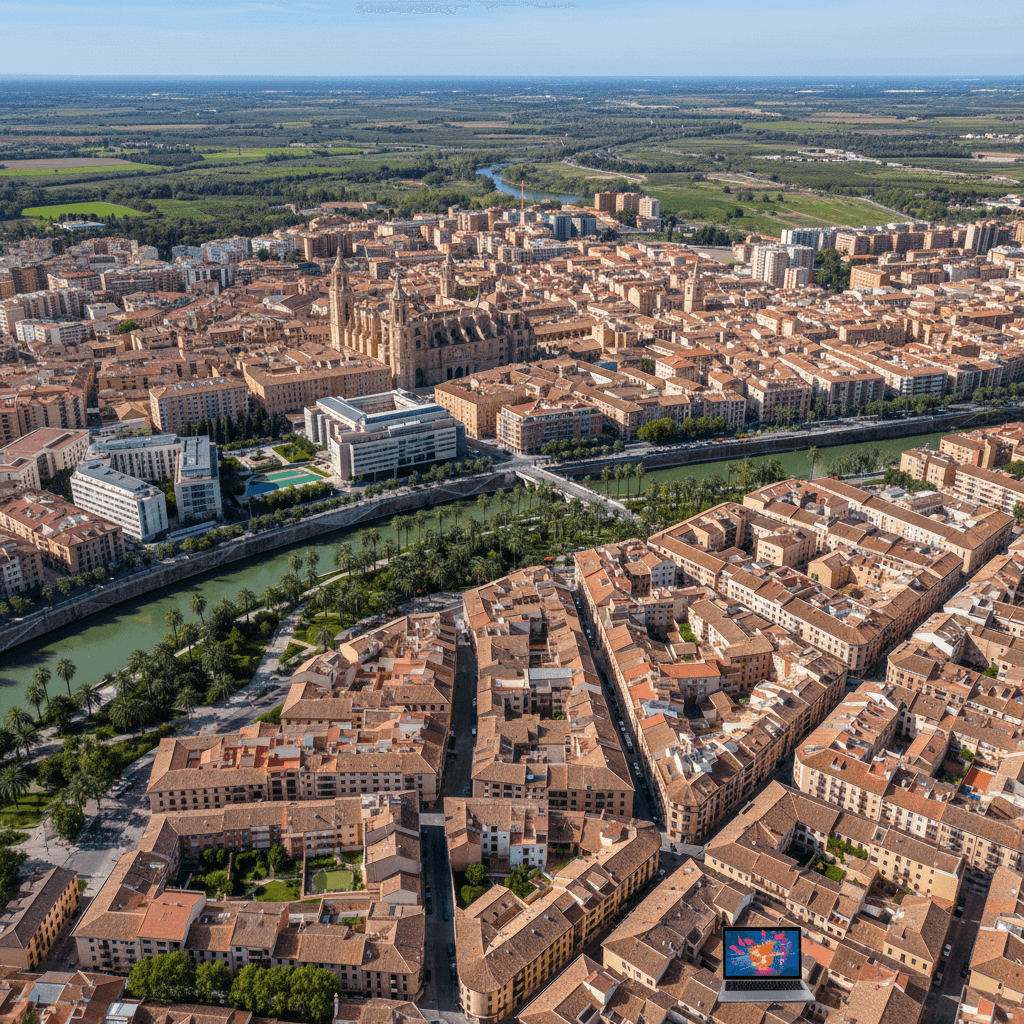
Murcia
🇪🇸 Spain
The Spanish Secret You Haven't Heard Of
While the nomad crowds fight for table space in Malaga or pay premium prices in Valencia, Murcia sits quietly in the southeast, offering a slice of authentic Spain that feels like a well-kept secret. It is the country's seventh largest city, yet it retains a provincial, intimate charm where the pace of life slows down to a crawl. You won't find the frantic energy of Madrid here. Instead, you'll find a city that prioritizes the paseo, the afternoon vermouth, and long, sun-drenched lunches.
The vibe is undeniably Mediterranean but without the coastal tourist traps. Because it is slightly inland, Murcia feels more like a lived-in community than a seasonal resort. Nomads who land here usually do so because they want a lower cost of living and a higher quality of life. The city is famous for its huerta, the surrounding fertile lands that produce some of Europe's best fruits and vegetables, meaning the food quality is exceptional and incredibly cheap.
The Emotional Landscape
Living in Murcia feels like being invited into a private club. At first, the city might seem sleepy, but once you find your rhythm, you'll realize the social life revolves around the squares. Plaza de las Flores is the emotional heart of the city. On a Tuesday afternoon, you'll see remote workers closing their laptops to join locals for a marinera, a local snack of Russian salad on a breadstick topped with an anchovy, and a small beer. It is a place where people actually look you in the eye and say hello.
There is a certain pride in Murcia. Locals know they aren't the first choice for most expats, and they treat those who do choose their city with genuine warmth. It is less about "networking" and more about "convivencia," the art of living together. You'll find yourself trading the high-pressure hustle for a lifestyle where a €2 coffee and a €12 menu del dia are the standard, not the exception.
A Practical Snapshot
Murcia is remarkably walkable. Most nomads stick to the historic center or the trendy northern districts. The infrastructure is modern, featuring a clean tram system and plenty of bike lanes, making a car unnecessary unless you want to hit the beaches of the Costa Cálida, which are only 45 minutes away.
- The Climate: It is one of the sunniest cities in Europe with over 300 days of sunshine a year. Summers are intensely hot, often hitting 40°C, but the rest of the year is mild and perfect for outdoor working.
- The Digital Infrastructure: Fiber optic internet is standard in most apartments. A variety of coworking spaces have popped up to serve the growing remote community, with monthly hot desks usually ranging from €120 to €160.
- Language: While younger people speak some English, Murcia is a place where you'll actually need to use your Spanish. It is an ideal environment for immersion if you're serious about learning the language.
Why It Stands Out
What makes Murcia different from the rest of Spain is the lack of pretension. It hasn't been "Instagrammed" to death. You can still find traditional tascas that haven't changed in thirty years alongside modern cafes like Café Lab. It offers a balance that is increasingly hard to find: a mid-sized city with all the amenities you need, prices that allow you to save money, and a culture that hasn't been diluted by mass tourism.
Expats often mention that Murcia feels like the "real Spain" they were looking for. It is a city that doesn't try too hard to impress you, and that is exactly why you end up staying longer than planned. You come for the low rent, but you stay for the tardeo, the local tradition of afternoon socializing that turns a simple workday into something much more memorable.
The Sweet Spot of Spanish Affordability
Murcia often flies under the radar compared to the heavy hitters like Valencia or Malaga, and that is exactly why your bank account will love it here. You are looking at a cost of living that is roughly 20% to 30% lower than Madrid or Barcelona. It is one of those rare places where you can maintain a high quality of life without needing a corporate executive salary.
Most nomads find they can live comfortably on a budget of €1,400 to €1,800 per month. This covers a nice apartment in the center, eating out frequently, and keeping the AC running during those famously hot July afternoons. If you are frugal, you could easily dip below €1,200, especially if you opt for a room in a shared flat rather than a solo studio.
Housing and Neighborhoods
Rent is your biggest win in Murcia. While prices have ticked up slightly as more remote workers discover the region, it remains a bargain. You can still find a modern one bedroom apartment in a good area for €550 to €750. If you look toward the outskirts or older buildings, prices can drop even further.
San Bartolome and Santa Eulalia
- Vibe: The heart of the city, historic, and walkable.
- Monthly Rent: €650 to €850 for a one bedroom.
- Best for: Being steps away from the best tapas bars and the Cathedral.
Vistalegre and La Flota
- Vibe: Modern, residential, and very popular with young professionals.
- Monthly Rent: €600 to €750.
- Best for: Newer buildings, quieter nights, and proximity to green spaces.
Coworking and Connectivity
Since you are likely working on the Digital Nomad Visa, you will need a solid setup. Murcia has a growing scene of flexible workspaces. A hot desk usually runs between €120 and €160 per month, while a dedicated desk might hit €200. Many nomads prefer working from cafes, and Murcia is very accommodating to the laptop crowd as long as you avoid the peak lunch rush.
- La Diligente wine bar, perfect for afternoon sessions.
- Fiber Internet: Expect to pay about €30 to €40 per month for a 600Mbps home connection.
Food, Drink, and Social Life
This is where Murcia truly shines. As the Orchard of Europe, the local produce is incredibly fresh and cheap. A weekly haul from the Mercado de Veronicas for one person will rarely exceed €35. Eating out is equally accessible. A Menú del Día, which includes three courses, a drink, and coffee, typically costs between €12 and €15.
A caña (small beer) usually costs about €1.50 to €2.20, and it often comes with a small tapa like a Marinera. If you are heading out for a nice dinner with wine, you will struggle to spend more than €30 per person unless you are going for top tier fine dining. For grocery shopping, apps like Glovo and Uber Eats are active, though most locals prefer the walk to Mercadona or Consum.
Transport and Utilities
Murcia is a very compact city, so you will likely spend very little on transport. Most nomads walk everywhere. If you need to head to the coast or the nearby mountains, the bus system is affordable and reliable. Basic utilities for an 85 square meter apartment, including electricity, water, and heating, usually average around €110 to €150 per month, though this can spike in the summer due to air conditioning usage.
- Monthly Transit Pass: Approximately €22 to €30.
- Single Bus Trip: €1.50.
- Gym Membership: €30 to €50 per month depending on the facilities.
The Social Butterfly's Base: Santa Eulalia
If you want to be where the action is, Santa Eulalia is the pulse of the city. It's the oldest quarter, but it feels the youngest because of the constant energy from the nearby university. You'll find narrow streets packed with tapas bars and small plazas where people linger over 2 Euro cañas until late at night.
Nomads usually flock here because everything is walkable. You can grab a desk at Coolwork, a popular coworking spot nearby, for about 150 Euros a month. For a quick lunch, locals head to El Pasaje de Zabalburu for classic Murcian meat pies called pastel de carne, which usually cost around 3.50 Euros.
- Average Studio Rent: 600 to 750 Euros
- Vibe: Historic, social, and loud
- Top Spot: Plaza de Santa Eulalia for afternoon coffee
The Expat Choice: Juan Carlos I and Juan de Borbon
Expats who plan on staying for more than a few months often move north toward the newer developments along the wide avenues of Juan Carlos I. It's a massive contrast to the cramped city center. You get modern apartments, air conditioning that actually works, and easy access to the tram line that connects you to the big shopping malls and the northern campuses.
This area feels more organized and quiet. It's perfect if you need a dedicated home office and want to be near large green spaces like Parque de Fofó. You'll find plenty of gyms and supermarkets like Mercadona right at your doorstep, making daily errands much faster than they are in the old town.
- Average 2-Bedroom Rent: 850 to 1,100 Euros
- Vibe: Modern, spacious, and residential
- Commute: 10 minutes to center via tram
Family Friendly Living: La Flota
La Flota is the go-to neighborhood for families who want a balance of city life and safety. It's almost entirely residential but designed with wide pedestrian walkways and plenty of playgrounds. The schools here are highly rated, and the neighborhood has its own sports complex, Centro Deportivo La Flota, which is a hub for local weekend activity.
The dining scene here is more relaxed. Instead of crowded standing-room bars, you'll find restaurants with large terraces like Restaurante El Cherro. It's a place where you can sit down for a full Sunday lunch while the kids play in the square nearby. It's safe, clean, and has a very strong sense of community.
- Average 3-Bedroom Rent: 950 to 1,300 Euros
- Vibe: Suburban, safe, and active
- Key Feature: Abundant parks and sports facilities
The Solo Traveler's Sweet Spot: San Antolin
For solo travelers looking for a more authentic, gritty feel without the high prices of the cathedral district, San Antolin is a great shout. It's located just west of the center and maintains a very traditional Murcian atmosphere. You'll see neighbors chatting across balconies and local markets that haven't changed in decades.
It's close to the Malecón, a long riverside park that's perfect for a morning run or a sunset walk. Solo travelers often appreciate being within a 10 minute walk of the bus station, making weekend trips to the beaches of Cartagena or Águilas incredibly easy. A shared flat here can go for as little as 300 Euros a room.
- Room in Shared Flat: 300 to 450 Euros
- Vibe: Local, unpretentious, and central
- Must Visit: Mercado de Verónicas for fresh local produce
Connectivity and Speed
Murcia doesn't have the same frantic energy as Madrid, but its digital infrastructure is surprisingly robust. You can expect fiber optic internet to be the standard in almost every apartment rental and cafe in the city center. Average download speeds usually hover around 300 Mbps to 600 Mbps, which is more than enough for heavy video calls or uploading large files.
For mobile data, picking up a local SIM is your best bet for consistent 5G coverage. Movistar and Orange have the most reliable signals throughout the Murcia region, while Digi is a favorite among budget conscious nomads for its high data caps. You can grab a prepaid plan with 100GB of data for roughly 15 EUR to 20 EUR at any phone shop along the Gran Vía Escultor Francisco Salzillo.
Top Coworking Spaces
The coworking scene here is intimate and community focused. You won't find massive global chains, but the local spots offer a much more authentic way to meet Spanish professionals and fellow remote workers.
- Ceeim: Situated slightly outside the immediate center near the university campus, this is an innovation hub. It's better suited for those planning a long term stay or looking to network with local startups.
Laptop Friendly Cafes
Murcian cafe culture is more about socializing than working, but several spots are welcoming to those with a laptop. Just remember to avoid the lunch rush between 2:00 PM and 4:00 PM when tables are strictly for dining.
Café Lab is a standout for nomads. It's an old converted pharmacy with plenty of outlets, reliable Wi-Fi, and some of the best specialty coffee in the city. The atmosphere is quiet enough for focused work, and the staff doesn't mind if you stay for a few hours. Another solid choice is Drexco on Calle Trapería. It’s spacious, has a classic European vibe, and offers a great tostada con tomate for a mid morning break. If you prefer a more modern, minimalist setting, check out Socolá for great pastries and a reliable connection.
Practical Tips for Remote Work
The most important thing to understand about working in Murcia is the rhythm of the day. The city effectively shuts down between 2:30 PM and 5:30 PM for the siesta. While coworking spaces stay open, many smaller cafes and shops will close their doors. This is actually a great time to get your head down and work without distractions, as the streets go quiet.
Public libraries are another excellent, free resource. The Biblioteca Regional de Murcia is a massive, modern facility with dedicated study zones and free Wi-Fi. You'll need to show your passport to get a temporary card, but it's a fantastic backup if your home internet flickers or you just need a change of scenery without paying for a coworking day pass.
Most nomads find that staying in the Santa Eulalia or San Bartolomé neighborhoods puts them within walking distance of all these spots. You'll rarely need a car or public transport to get to your "office" for the day, which is one of the biggest perks of the city's compact layout.
Safety in the City of Gardens
Murcia is often overlooked in favor of its coastal neighbors, but that's exactly why it feels so safe. It maintains a traditional, community focused atmosphere where locals look out for one another. You won't find the aggressive tourist scams or high frequency of pickpocketing that plague Barcelona or Madrid. Most nomads feel perfectly comfortable walking through the Plaza de las Flores or the Santa Eulalia district late at night.
The city center is largely pedestrianized, which makes it incredibly walkable and cuts down on traffic related accidents. If you're staying in popular neighborhoods like Vistalegre or La Flota, the vibe is overwhelmingly residential and calm. Petty crime is rare, though it is always smart to keep an eye on your bag when you're working from a terrace on Calle Trapería or sitting in the Glorieta de España.
Expats frequently mention that the police presence is visible but non intrusive. If you ever need help, the local police (Policía Local) are generally helpful, though their English might be limited. For any serious emergency, the standard 112 number is your best bet and they have operators who speak multiple languages.
Healthcare Infrastructure
Spain's healthcare system is world class, and Murcia is no exception. The city is home to several major hospitals, with Hospital Clínico Universitario Virgen de la Arrixaca being the largest and most well known in the region. For those living in the city center, Hospital Reina Sofía is centrally located and highly efficient.
If you're in Murcia on a Digital Nomad Visa, you'll likely be paying into the Spanish social security system, which grants you access to public healthcare. However, most remote workers still opt for private insurance to skip the wait times for specialists. Private policies usually cost between €50 and €100 per month depending on your age and coverage level. Private clinics like Quirónsalud Murcia are popular with the international community because they often have more English speaking staff.
Pharmacies are everywhere in Murcia, marked by the iconic flashing green crosses. They operate on a rotating "farmacia de guardia" system, meaning there is always at least one pharmacy open 24 hours a day in every district. You can find the schedule posted on the door of any pharmacy or via a quick search on the local Colegio de Farmacéuticos website.
Quick Facts for Peace of Mind
- Emergency Number: 112 (General Emergency)
- Private Insurance Cost: €50 to €100 per month
- Tap Water Quality: Safe to drink, though many locals prefer the taste of bottled or filtered water due to the high mineral content.
- Primary Private Hospital: Quirónsalud Murcia
- Safety Rating: Very High, especially compared to larger European hubs.
One thing to keep in mind is the summer heat. While not a "safety" issue in the traditional sense, temperatures in July and August regularly climb above 40°C (104°F). Heat exhaustion is a real risk for newcomers. Locals handle this by staying indoors during the "siesta" hours and only heading out after 8:00 PM when the air finally cools down. Follow their lead, stay hydrated, and you'll find Murcia to be one of the most stress free cities in Spain.
The Layout and Walkability
Murcia is one of those rare Spanish cities where you can actually get by without a car if you play your cards right. The city center is impressively compact and mostly flat, making it a dream for anyone who prefers to get their steps in between deep work sessions. Most of the nomad community tends to stick to the areas around Plaza de las Flores and the University of Murcia, where everything you need is within a ten minute stroll.
The city has invested heavily in pedestrianizing the historic core. You'll find that walking isn't just a way to get from point A to point B; it's the local way of life. If you're staying in neighborhoods like Vistabella or Santa Eulalia, you'll rarely find a reason to call a cab. Just keep in mind that the summer heat here is no joke, often hitting 40 degrees Celsius in July and August, so you'll want to plan your walks for the early morning or late evening.
Public Transit: Buses and Trams
When your legs need a break, the Tranvía de Murcia is your best friend. It's a single line tram system that is clean, reliable, and incredibly easy to use. It connects the city center with the northern suburbs, the Universidad de Murcia (UMU) campus at Espinardo, and the major shopping malls like Nueva Condomina. A single ticket costs 1.45 EUR, but if you're staying for a month or more, expats recommend getting the Bono Murcia card. It brings the price per trip down to about 0.70 EUR.
The bus system, known as TMP Murcia (Transporte de Murcia y Pedanías), covers the areas the tram doesn't reach. The bright red buses handle the urban routes, while the yellow ones head out to the surrounding villages and "pedanías." While the buses are affordable, they can be a bit harder to predict than the tram. Download the Moovit app or Google Maps to track arrivals in real time, as the physical timetables at the stops are sometimes more of a suggestion than a rule.
Cycling and Scooters
Murcia is becoming increasingly bike-friendly, thanks to a growing network of cycle lanes that follow the Segura River. The MuyBici public bike-sharing system is the go-to for locals. You'll see the blue stations scattered all over the city. It's a subscription-based model where you can pay for a daily, weekly, or annual pass. A weekly pass is usually around 10 EUR, which is a steal for quick cross-town trips.
Electric scooters have also taken over the streets. Companies like Tier or Voi often have fleets available. Just be careful with the local regulations; the police are strict about keeping scooters off the sidewalks. You need to stay in the bike lanes or on the road, and wearing a helmet is highly encouraged even if it's not always strictly enforced for rentals.
Getting Out of Town
For weekend trips, the Murcia del Carmen train station is your gateway to the rest of Spain. The high-speed AVE train now connects Murcia to Madrid in about 2 hours and 45 minutes, with tickets starting around 30 EUR if you book in advance. If you're looking for a beach day, the Interbus service runs frequently from the main bus station to Cabo de Palos and La Manga for about 7 EUR each way.
If you're flying in, you have two main options. Región de Murcia International Airport (RMU) is about 25 minutes away by taxi, costing roughly 30 EUR. However, many nomads prefer flying into Alicante (ALC) because it has more international connections. There is a direct shuttle bus from Alicante Airport to Murcia city center that runs every hour or two and costs approximately 11 EUR.
Transport Costs at a Glance
- Tram Single Ticket: 1.45 EUR
- Bono Murcia (10 trips): 7.00 EUR
- Taxi across town: 8.00 to 12.00 EUR
- Monthly Transit Pass: 22.00 to 30.00 EUR
- Airport Shuttle (Alicante): 11.00 EUR
The Local Linguistic Landscape
In Murcia, you're stepping into a corner of Spain where English hasn't quite taken over the streets like it has in Barcelona or Madrid. While the younger crowd and staff at digital nomad hubs like La Diligente (wine bar) speak decent English, you'll find that daily life moves in Spanish. Most nomads find that while they can get by with smiles and gestures at the Mercado de Verónicas, having a few phrases in your back pocket changes the experience from being a tourist to feeling like a local.
The local dialect, known as Panocho, is famous across Spain for its unique character. Murcianos tend to drop the "s" at the end of words and soften their consonants. If you hear someone say "gracia" instead of "gracias," they aren't being rude; they're just speaking Murciano. It takes a week or two to tune your ears to the rhythm, but don't let it intimidate you. People here are incredibly patient and usually thrilled when an expat tries to use the local lingo.
Practical Communication Tips
Digital nomads in the city center, particularly around Santa Eulalia and Vistabella, recommend downloading DeepL or Google Translate for menus that haven't been translated. For more formal needs, like setting up a rental agreement or talking to a technician, having a translation app is a lifesaver. If you're looking to level up your skills, Spanish Institute Murcia near the University is a popular spot for intensive courses that won't break your budget.
- Essential Phrase: Learn "Póngame una Estrella, por favor." It's how you order the local favorite Estrella de Levante beer at any plaza.
- Digital Tools: Use WhatsApp for everything. From booking a hair appointment to messaging your landlord, it's the primary way the city communicates.
Staying Connected
Connectivity is rarely an issue in Murcia. The city is well-wired with fiber optic internet, and most apartments in the center offer speeds between 300Mbps and 600Mbps. If you're working from a cafe like Café de Ficciones, you can expect reliable Wi-Fi, though it's always polite to ask for the password when you order your first coffee.
For mobile data, travelers often recommend picking up a local SIM card rather than relying on roaming. It's cheaper and ensures you have a local number for delivery apps like Glovo. You'll find several provider shops along Gran Vía Escultor Francisco Salzillo.
- SIM Cards: Expect to pay around 15 to 20 EUR per month for a prepaid plan with 50GB to 100GB of data.
- Top Providers: Orange, Movistar, and Vodafone have the best coverage, but Digi is a favorite among expats for its low prices and no-nonsense contracts.
- Public Wi-Fi: The city provides Murcia Wi-Fi in major plazas like Plaza de las Flores, though it's better for a quick map check than a Zoom call.
The Social Nuance
Communication in Murcia is as much about body language and timing as it is about words. Life happens late here. If you try to call a local business during the siesta hours of 2:00 PM to 5:00 PM, you likely won't get an answer. Most nomads find that adapting their communication schedule to the local clock makes everything run smoother. Emails are often ignored in favor of a quick WhatsApp voice note or a face to face chat. It's a high touch social culture, so don't be surprised if your barista remembers your name and your usual order by the third day.
The Sweet Spot: Spring and Autumn
If you're looking for that perfect balance of sunny terrace weather and comfortable walking temperatures, aim for April through June or September through October. During these windows, the city really breathes. You'll find the plazas filled with locals enjoying tapas under the sun without the oppressive heat that defines the Murcian summer. Daytime highs usually hover between 22°C and 28°C, which is ideal if you like to work from a cafe balcony before heading out for a hike in the nearby Sierra Espuña.
Spring is particularly special because of the Bando de la Huerta. It's a massive celebration held the week after Easter where the whole city dresses in traditional peasant gear and feasts in the streets. If you're trying to get deep work done during this week, you might struggle, as the smell of grilled meat and the sound of folk music take over every square. Most nomads find this the best time to socialize and integrate with the local community.
Surviving the Murcian Oven
Let's be real about the summer. Murcia is often the hottest city in Spain, frequently hitting 40°C or higher in July and August. The heat here is dry and intense. During these months, the city adopts a ghost town vibe between 2:00 PM and 8:00 PM. Everyone retreats indoors to the air conditioning or heads to the coast. If you're staying in the city center, make sure your apartment has a high quality AC unit, or you'll be miserable.
The upside to summer is the proximity to the Mar Menor and the Mediterranean coast. It's only a 45-minute bus ride to beaches like San Pedro del Pinatar or Cabo de Palos. Many expats recommend shifting your schedule to a "split shift" during summer: work early in the morning, siesta or beach in the afternoon, and head back out for dinner at 10:00 PM when the air finally starts to cool down.
Mild Winters and Digital Nomad Perks
Winter in Murcia is a dream for anyone fleeing the gray skies of Northern Europe. From December to February, you'll still see plenty of bright blue skies and sunshine. While mornings can be crisp, around 5°C to 8°C, the afternoons usually warm up to a pleasant 17°C. You won't see snow here, and rain is a rare event that locals almost celebrate because the region is so arid.
One thing to watch out for is that many older Spanish apartments aren't well insulated for the cold. Even though it's warm outside, the tiled floors can make the indoors feel chilly. Bringing a pair of heavy slippers and checking that your rental has a heat pump or electric radiators is a smart move for the winter months.
Seasonal Cost and Crowd Fluctuations
- Peak Season (July-August): City center prices for short-term rentals stay stable, but coastal prices triple. Expect fewer networking events as people vacation.
- Shoulder Season (April-June, Sept-Oct): The best time for outdoor activities. Prices for mid-term stays are standard, around €800 to €1,200 for a nice one-bedroom in the center.
- Off-Peak (November-March): Great for budget travelers. You can often find better deals on monthly stays via local Facebook groups or platforms like Idealista.
Overall, Murcia offers one of the longest "outdoor" seasons in Spain. While the summer heat requires a specific strategy to handle, the other nine months of the year provide a predictable, sunny backdrop that makes it easy to maintain a healthy work-life balance. Most travelers agree that the autumn light in Murcia is some of the most beautiful in the country, making it the top choice for photographers and digital creators.
Getting Around the City
Murcia is incredibly walkable, especially if you stick to the historic center. Most nomads find they rarely need a car unless they are planning weekend trips to the beaches of Costa Calida. For daily commutes, the Tranvia de Murcia is your best friend. It is a single tram line that connects the city center to the northern shopping areas and the universities. A single ticket costs 1.45 EUR, but you should grab a Bono Murcia card at any kiosk to drop that price significantly.
If you prefer two wheels, the city is relatively flat and bike friendly. The MuyBici public bike share system has stations scattered throughout neighborhoods like Vistabella and Juan Carlos I. It costs about 40 EUR for an annual subscription, making it the cheapest way to navigate the sunny streets. For quick trips, ride hailing apps like Uber and Cabify operate here, though local Radio Taxi is often faster during peak hours.
Budgeting for the Region
Compared to Madrid or Barcelona, Murcia is a steal. You can live a high quality life here for much less than you would in the bigger hubs. Expats often remark that their money goes about 30 percent further here than in Valencia. Here is a breakdown of what to expect for monthly expenses:
- One Bedroom Apartment: 600 EUR to 850 EUR
- Coworking Desk: 130 EUR to 180 EUR
- Daily Menu del Dia: 12 EUR to 15 EUR
- Monthly Grocery Bill: 250 EUR to 300 EUR
- Local Beer (Cana): 2 EUR to 2.50 EUR
Connectivity and Workspace
Fiber optic internet is standard across the city, so you won't struggle with speeds in most Airbnbs. However, the social scene happens in the coworking spaces. There are several professional hubs located near the Cathedral and throughout the city center that offer reliable connections for remote workers.
For a more casual afternoon, the cafes around Plaza de las Flores are great for light admin work. Just keep in mind that many smaller spots still observe the siesta. Between 2:00 PM and 5:00 PM, many local businesses close their doors, though dedicated coworking spaces and larger chains stay open. Plan your deep focus blocks accordingly.
Safety and Local Etiquette
Murcia is generally very safe, and violent crime is rare. Like any city, pickpockets can be an issue in crowded spots like Calle Traperia, but even then, it is less common than in the tourist traps of the coast. Most travelers feel perfectly comfortable walking home alone at 2:00 AM after a late dinner.
The local dialect, Murciano, can be a bit of a shock even if you speak decent Spanish. They tend to drop the "s" at the end of words and speak quite fast. Don't be afraid to ask people to slow down. Also, remember that Murcia runs on a late schedule. Dinner before 9:00 PM is rare, and if you show up to a bar at 8:00 PM, you might be the only person there.
Health and Essentials
For healthcare, the Hospital Morales Meseguer is centrally located and has an excellent reputation. If you are on the Digital Nomad Visa, you will likely have private insurance, but it is good to know that pharmacies (Farmacias) are everywhere. Look for the glowing green crosses. For groceries, Mercadona is the go to for basics, but for the best fresh produce and local goat cheese, the Mercado de Veronicas is unbeatable. It is open Monday through Saturday until 3:00 PM.
Need visa and immigration info for Spain?
🇪🇸 View Spain Country GuideNomad Haven
Your home away from home