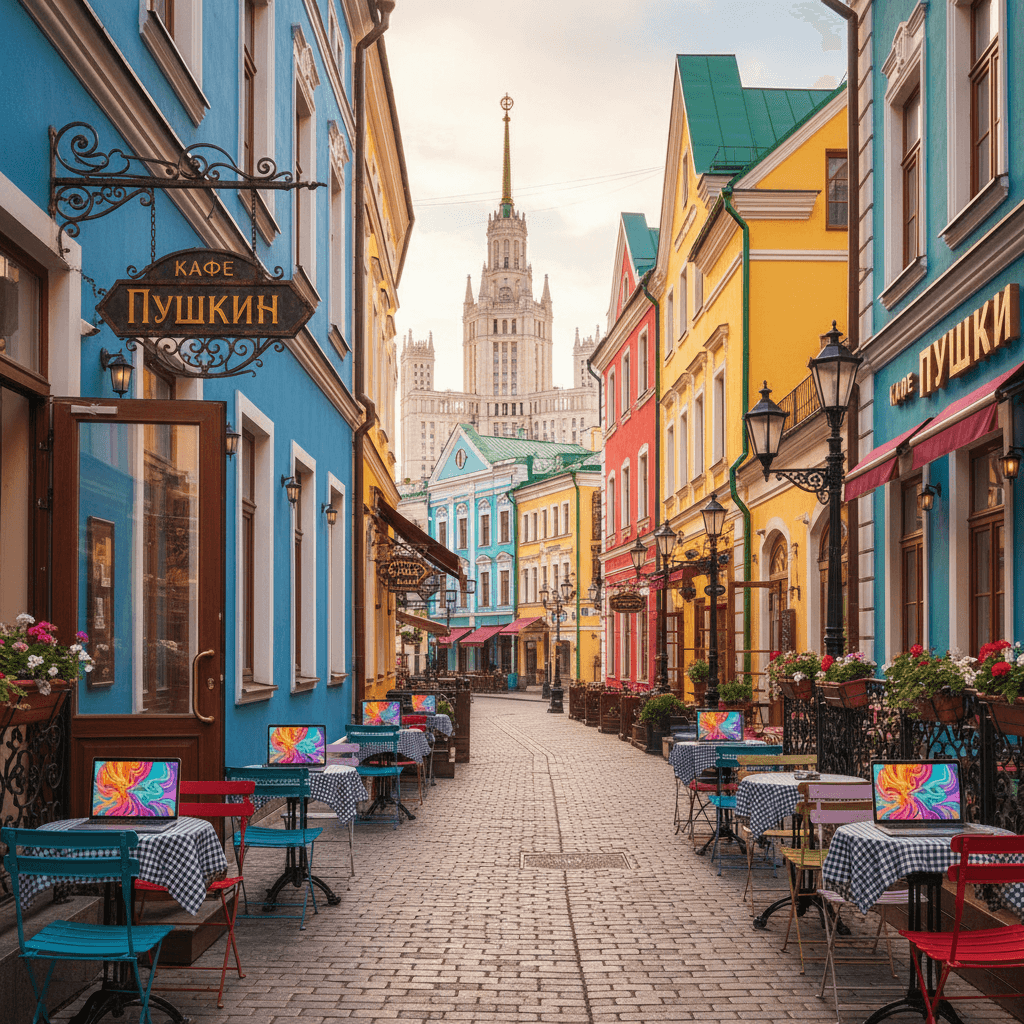
Moscow
🇷🇺 Russia
The Vibe: Soviet Grandeur Meets 24/7 Digital Hustle
Moscow is a city of massive scales that hits you the moment you step out of the metro. It feels like a mix of an imperial capital and a futuristic tech hub. You have these towering Stalinist skyscrapers and the red stars of the Kremlin on one side, and the gleaming glass towers of Moscow City on the other. It is fast, loud, and unapologetically intense. If you like cities that never sleep and offer every convenience at 3:00 AM, you will feel right at home here.
The emotional transition for nomads is usually the same. At first, the locals might seem cold or unbothered because the "customer service smile" isn't a thing here. But once you break the ice in a Tverskaya coffee shop or a coworking space, you find a community that is incredibly loyal and tech savvy. There is a sense of being in a place where things are constantly happening, fueled by a 24/7 infrastructure that makes Western Europe feel slow by comparison.
The Reality of Life in the Capital
Living here as a nomad in 2026 requires some preparation. The biggest hurdle is the financial "fortress" aspect. Because of sanctions, your Western Visa or Mastercard won't work at the local grocery store or ATM. Most expats rely on local accounts or crypto to manage their funds. You also need a solid VPN. Without one, your favorite social media sites and Western news outlets simply won't load. It is a bit of a digital hurdle, but once you have your tech stack sorted, the actual internet speeds are blistering, often hitting 200 Mbps in central hubs.
Safety is a major plus that surprises people. Central Moscow is exceptionally well lit and heavily policed. Most nomads feel safer walking home at night here than they do in London or Paris. Just stay away from illegal substances; the local laws are zero tolerance and strictly enforced.
Where to Plant Your Laptop
If you want to be in the thick of it, Tverskaya and Arbat are the primary nomad hubs. This is where you find the highest concentration of English speakers and walkable access to the Red Square. If you prefer something a bit more residential but still connected, Tagansky offers a quieter pace with plenty of laptop friendly cafes.
- Tverskaya & Arbat: The heart of the city. Expect to pay $1,200 to $2,000 for a one bedroom apartment. It is crowded and expensive, but the networking is unbeatable.
- Tagansky: A more local feel with reliable metro connections. Rents are slightly softer here, and the cafe culture is excellent for deep work.
- Budget Living: If you head to the outer districts and use Facebook groups like "Rooms For Rent In Moscow," you can find shared housing for around $800.
The Digital Nomad Toolkit
To survive and thrive, you need the right apps. Forget Uber; Yandex Go is the king of ride hailing and food delivery here. For communication, Google Translate is your best friend because English proficiency drops off quickly once you leave the tech circles. Learning to say "Gde WiFi?" (Where is the WiFi?) and "Spasibo" (Thank you) will go a long way with the locals.
For dedicated work, Atmosphere Network in the Izvestia building is a massive 17,000 square meter space that is great for meeting startup founders. Red Factory is another top pick for nomads who need high end stability, with monthly desks ranging from $200 to $400. If you prefer the cafe route, the city is packed with independent spots where you can sit for hours with a $4 latte and a laptop.
Cost of Living Breakdown
- Monthly Budget (Mid-range): Approximately $2,200. This covers a decent apartment outside the immediate center and eating out at mid-range spots.
- Dining: Street food like blini or shawarma costs $3 to $5, while a nice dinner in a trendy spot will run you $15 to $30.
- Transport: The metro is world class and costs about $0.50 per ride. A monthly pass is a steal at around $30.
The best time to visit is during the spring from March to May when the city thaws and the parks come alive. Winters are brutal, often dipping below -10°C, which is great for the "Russian winter" aesthetic but tough for daily commuting. If you can handle the cold and the administrative quirks, Moscow offers an urban energy that is hard to find anywhere else in the world.
The Reality of the Moscow Price Tag
Living in Moscow feels like a tale of two cities. On one hand, you have the ultra-polished central districts where prices easily rival London or Paris. On the other, the city provides incredibly cheap public infrastructure and a local food scene that won't break the bank if you know where to look. Most single nomads find they need between $1,200 and $1,800 per month to live comfortably, while families should budget closer to $3,750.
The financial elephant in the room is the current banking situation. Since Western cards generally don't work due to sanctions, you'll need to get creative with cash, crypto, or local fintech solutions once you land. It is a bit of a hurdle, but once you've sorted your local funds, the day to day costs are manageable.
Breaking Down the Monthly Budget
Your biggest variable is always going to be the rent. If you want to be in the heart of the action, expect to pay a premium. If you're willing to commute via the legendary metro system, your rubles will go much further.
- Budget Tier ($1,500/month): This usually involves a shared room or a modest studio in an outer district. You'll be eating mostly street food like $3 to $5 blinis or shawarma and sticking strictly to the metro.
- Mid-range Tier ($2,200/month): This is the sweet spot for many. You can snag a decent 1BR outside the immediate center, eat at mid-range spots for $10 to $15, and afford a dedicated desk at a coworking space.
- Comfortable Tier ($3,000+/month): This gets you a 1BR in prime spots like Tverskaya, frequent upscale dining at $30+ per meal, and plenty of ride-hailing via Yandex Go.
Housing by Neighborhood
Finding a place often happens through Facebook groups like "Rooms For Rent In Moscow" or "Moscow property to rent" rather than traditional Western apps. Most expats recommend these areas:
Tverskaya & Arbat
- The Vibe: The ultimate nomad hub. You are steps away from the Kremlin and surrounded by 24/7 convenience.
- Studio Rent: $800 to $1,500
- 1BR Rent: $1,200 to $2,000
- Pros: Fast internet, walkable, and the best networking opportunities.
Tagansky
- The Vibe: A bit more understated and residential but still very cool.
- Rent: Generally 15% to 20% lower than the Tverskaya area.
- Pros: Excellent quiet cafes for working and great metro connections.
Productivity and Connection
Moscow is a 24-hour city with some of the fastest internet in Eastern Europe, often hitting 200 Mbps in professional spaces. You'll find free WiFi almost everywhere, from the metro carriages to the smallest coffee shops. However, a VPN is a non-negotiable tool here if you want to access Western social media or news sites.
For a dedicated workspace, Red Factory is a favorite for its high speeds and private office options, usually costing between $200 and $400 a month. If you're looking for scale and networking, Atmosphere Network in the Izvestia building offers a massive 17,000 square meter space that attracts the local startup crowd. If you prefer the cafe route, the city is packed with independent spots where nobody will blink if you sit with a laptop for four hours over a single coffee.
Getting Around for Less
The Moscow Metro is arguably the best in the world. It’s reliable, beautiful, and costs about $0.50 per ride. A monthly pass is roughly $30 and covers almost the entire city. For everything else, download Yandex Go. It's the local equivalent of Uber and is incredibly cheap for cross-town trips. If you're arriving at Sheremetyevo or Domodedovo, the Aeroexpress train is the smartest move at about $10, getting you downtown in under 45 minutes without worrying about Moscow's notorious traffic jams.
The Nomad Hub: Tverskaya and Arbat
If you want to be in the thick of the action, Tverskaya and the surrounding Arbat district are where most remote workers land. This is the heart of the city, putting you within walking distance of the Kremlin and Red Square. It feels like a high octane version of Western Europe, with world class amenities and the fastest internet in the country.
Living here means you are steps away from the Atmosphere Network coworking space in the historic Izvestia building. It is a massive 17,000 square meter tech playground that is perfect for networking with the local startup scene. You will also find plenty of independent cafes with reliable WiFi and plenty of power outlets for all day sessions.
- Rent: Expect to pay a premium for the location. Studios range from $800 to $1,500, while one bedroom apartments go for $1,200 to $2,000.
- Vibe: Fast paced, international, and very walkable.
- Downside: It gets crowded with tourists and the high rents can rival prices in London or Paris.
The Expat Choice: Tagansky
Expats who want a more grounded, local feel often head to Tagansky. It is slightly removed from the tourist frenzy of the center but stays incredibly well connected via the metro. The neighborhood is famous for its quiet side streets and cozy cafes that are much more conducive to deep work than the flashy spots on Tverskaya.
Infrastructure here is rock solid. You get the same high speed fiber connections but with a bit more breathing room. Many long term residents recommend looking for apartments through Facebook groups like "Rooms For Rent In Moscow" to find better deals than you will see on international booking sites.
- Rent: More manageable than the absolute center, typically 20% to 30% cheaper.
- Vibe: Authentic, residential, and relaxed.
- Top Tip: Use Yandex Go for easy transport around the neighborhood when you aren't using the metro.
For Families: Central Administrative Okrugs
Families usually stick to the more polished pockets of the central okrugs. These areas are exceptionally safe and well lit, often feeling more secure than major hubs like Berlin or London. You are close to the city's best parks and museums, including the Kremlin and St. Basil’s, which makes weekend outings easy.
While the cost of living for a family in these areas can hit $3,747 per month or more, the convenience is hard to beat. You will have easy access to high quality hospitals and pharmacies that are concentrated in the city center. Just keep in mind that English proficiency is lower here than in the tech hubs, so keeping a translation app handy is a must for daily errands.
- Cost: High, with three bedroom apartments often exceeding $2,500.
- Safety: Very high; central Moscow is heavily patrolled and polished.
- Transport: The Aeroexpress train makes getting the whole family to Sheremetyevo or Domodedovo airports simple for about $10.
Solo Travelers and Budget Seekers
If you are flying solo and trying to keep your monthly spend around $1,500, look toward the outer rings or consider room sharing. Couchsurfing and Internations are very active here and are the best ways to break through the initial "unfriendly" shell of the local mentality. Once you make a few friends, the city opens up in a completely different way.
Solo travelers often gravitate toward coworking spots like Red Factory. For about $200 to $400 a month, you get 200 Mb/s WiFi and a built in social circle. Since Western credit cards are currently blocked due to sanctions, having a local community to help you navigate the cash and crypto landscape is a lifesaver.
- Food: Stick to street food for $3 to $5 or mid range spots for $15 to keep your budget intact.
- Essentials: You must have a VPN. Without one, you won't be able to access most Western social media or work tools.
- Social: Join "Moscow property to rent" on Facebook to find shared flats with other travelers.
The Digital Infrastructure
Moscow is a city that never powers down. Whether you are in a high tech skyscraper in Moscow City or a basement cafe in Tagansky, you will find some of the most reliable internet in Eastern Europe. Speeds generally hover between 100-200+ Mbps, but if you hook up at a dedicated workspace, hitting 200 Mbps is common. The city is blanketed in free WiFi, even deep underground on the Metro, which makes staying connected effortless while moving between meetings.
There is one non negotiable reality here: you need a high quality VPN. Many Western social media platforms and news sites are blocked locally. Most nomads set this up before they even land to ensure they don't lose access to their Slack channels or Instagram feeds. For mobile data, skip the international roaming and grab a local SIM card immediately. Providers offer heavy data packages for cheap, which is helpful since you will be leaning on translation apps to get around.
Coworking Heavyweights
The coworking scene is sophisticated and caters to a mix of tech startups and independent creatives. Prices for a hot desk typically range from $150 to $300 per month, though premium spots can go higher.
- Red Factory: This is a favorite for those who need raw speed. It offers 200 Mb/s WiFi and a mix of open plan desks and private offices. Expect to pay between $200 and $400 depending on your setup. It is known for having great perks like on site parking, which is a rarity in the center.
- Atmosphere Network: Located in the historic Izvestia building, this massive 17,000 square meter space is a networking goldmine. It is designed for the startup crowd, so if you are looking to meet local founders or developers, this is the place to be.
- WeWork: You will find several locations across the city. They offer the familiar global standard of coffee, booths, and reliable infrastructure that many nomads find comforting when they first arrive.
Cafe Culture and Remote Work
If you prefer the hum of a coffee shop over a structured office, Moscow will not disappoint. The city is packed with independent cafes that are surprisingly welcoming to laptop users. Unlike some European capitals where you might get a side eye for staying too long, many Moscow spots are designed for all day lingering. Most have plenty of power plugs and stable WiFi as a standard feature.
Tverskaya and Arbat are the primary hubs for this. You can easily find a spot, order a mid range meal for about $10 to $15, and work for four hours without being nudged. The local mentality can seem a bit shift at first, but once you are a regular at a neighborhood cafe, you will find the staff and the local nomad community are quite helpful.
Logistics and Connectivity
Getting to your workspace is arguably the best part of the Moscow experience. The Metro is world class, costing only about $0.50 per ride. It is fast, frequent, and serves as a reliable backup for your internet needs since the carriages have their own WiFi networks. For late nights or when you are carrying gear, use the Yandex Go app. It is the local equivalent of Uber and is incredibly efficient for getting across the central administrative okrugs.
Keep in mind that while the tech is modern, the financial side is currently tricky. Because of sanctions, Western bank cards usually won't work. Most expats recommend using local accounts or crypto to manage their daily spending. It is a hurdle, but once you have your cash flow sorted, the 24/7 convenience of the city makes it one of the most productive environments for a remote worker.
Moscow is surprisingly polished and often feels safer than other major hubs like London or Paris. The city center is exceptionally well lit, and you will see a heavy security presence in the metro and near government buildings. While the atmosphere might feel a bit stiff at first, most nomads find that as long as they stick to the central districts and keep their paperwork in order, they rarely run into trouble.
General Safety and Street Smarts
The biggest rule in Moscow is a simple one: zero tolerance for illegal drugs. Russia has some of the strictest narcotics laws in the world, and even small amounts can lead to severe legal consequences. Don't risk it. On the street, you might notice locals don't smile at strangers. This isn't necessarily unfriendliness; it is just the local mentality. Once you break the ice in a coworking space or at a bar, that cold exterior usually disappears.
When it comes to physical safety, stick to the well trodden areas like Tverskaya, Arbat, and the Central Administrative Okrug. These neighborhoods are heavily monitored and very safe for walking at night. If you need a ride home, avoid "gypsy cabs" or flagging down random cars. Use Yandex Go, the local equivalent of Uber. It is cheap, tracked via GPS, and prevents any awkward haggling over prices.
Healthcare and Medical Services
If you get sick, you will find world class medical facilities in the city center, though English proficiency among staff can be hit or miss. Expats generally recommend private clinics for faster service and more English speaking doctors. Pharmacies are everywhere, often marked with a green neon cross, and many stay open 24/7. You can find most over the counter basics there, but bring a translation app to help describe your symptoms.
- Emergency Number: Dial 112 for all emergency services. This works from any mobile phone, even without a local SIM.
- Pharmacies: Look for "Apteka" signs. Major chains are reliable and stocked with European and local brands.
- Insurance: Make sure your provider specifically covers Russia, as many Western policies have changed their terms recently.
Digital Safety and Connectivity
This is where things get tricky for the modern nomad. Because of various sanctions and local restrictions, your digital life will need an upgrade before you arrive. Many Western websites and social media platforms are blocked. You will need a reliable VPN installed on all your devices before you land, as some VPN provider sites are also restricted within the country.
Banking is the other major hurdle. Western credit and debit cards generally do not work at Russian ATMs or terminals. Most nomads handle this by carrying cash to exchange upon arrival or using crypto to move funds into local accounts. You will want to set up a local bank account or use a Russian fintech app if you plan on staying long term, as the city is almost entirely cashless and relies on QR codes or local cards for everything from metro rides to $0.50 coffees.
Practical Emergency Info
While the city is safe, it is wise to keep a digital copy of your passport and visa on your phone at all times. Police do occasional spot checks, especially in the metro. If you are stopped, stay polite and show your documents. Most travelers find these interactions brief and professional. For any major issues, your best bet is to contact your embassy or reach out to the active expat communities on Internations or Facebook groups like "Moscow property to rent" where members often share advice on local legalities.
Navigating the Metropolis
Moscow is a massive, sprawling beast, but its transit system is arguably the most efficient in the world. You can cross the entire city for about $0.75, and you will rarely wait more than ninety seconds for a train. While the city is car-heavy, nomads who stick to the center find it surprisingly walkable, especially around the historic core.
The Metro: A Subterranean Palace
The Moscow Metro is more than just a way to get from A to B; it is a legitimate tourist attraction with marble walls and bronze statues. It is also the lifeline for every remote worker in the city. Most stations and trains offer free WiFi, though you will need a local SIM card to authenticate your connection the first time.
- Cost: A single ride is roughly $0.75, but most expats grab a Troika card for better rates.
- Monthly Pass: Unlimited travel for 30 days costs around $32, covering all metro, bus, and tram lines.
- Navigation: Download the Yandex Metro app. It works offline and provides much more accurate transfer times than Google Maps.
Ride-Hailing and Apps
Forget Uber or Lyft here. In Moscow, Yandex Go is the undisputed king. The app allows you to summon a car, order groceries, or even get a courier to deliver a forgotten charger. Prices are incredibly low compared to Western Europe, though traffic in the city center can be brutal during rush hour.
- Economy Class: Short hops across the center usually run $4 to $7.
- Business Class: For a more polished experience, a black BMW or Mercedes usually costs between $12 and $20.
- Payment Note: Because of current sanctions, Western credit cards won't work in the app. You will need to pay the driver in cash or use a local Russian bank card if you have managed to open one.
Getting From the Airport
Moscow has several major airports, with Sheremetyevo and Domodedovo being the most common for international arrivals. While a taxi is an option, the Aeroexpress train is the gold standard for avoiding the city's infamous traffic jams.
The Aeroexpress costs about $10 and takes 35 to 45 minutes to reach central hubs like Belorussky or Paveletsky stations. From there, you can hop right onto the metro. If you choose a taxi, expect to pay around $25 to $40 and potentially sit in traffic for two hours if you arrive during peak times.
Micromobility and Walking
During the warmer months from March to October, the city center is flooded with electric scooters and bikes. You will see brands like Urent and Yandex scattered across the sidewalks. The Tverskaya and Arbat neighborhoods are particularly friendly for this, with wide pavements and plenty of pedestrianized zones.
Walking is the best way to soak in the scale of the city. The core area around Red Square and the Kremlin is highly polished and safe to explore on foot, even late at night. Just keep your translation app handy; while the metro has English signage, street signs in residential areas are almost exclusively in Cyrillic.
The Language Barrier
Moscow is a city where Russian isn't just the primary language; it's often the only one you'll hear. If you're coming from a place where English is the default, the transition can feel abrupt. Proficiency levels are generally low once you step away from high-end hotel lobbies or tech-heavy coworking spaces like Atmosphere Network. Most nomads find that while the younger generation in the Tverskaya district might speak a bit of English, the grandmother running the local bakery or the metro attendant definitely won't.
Don't mistake the lack of smiles for rudeness. It's a cultural quirk that locals don't smile at strangers, and they aren't being unfriendly; they're just being direct. To get by, you'll need a solid translation app. Google Translate is the standard, but many expats recommend downloading the offline Russian dictionary so you aren't stuck if your connection drops. Using the camera feature to translate menus and grocery labels will save you from some confusing dinner orders.
Digital Communication and Connectivity
While the spoken language is a hurdle, the digital infrastructure is world-class. Moscow's internet speeds are impressive, often averaging 100+ Mbps, and hitting 200 Mbps in specialized workspaces. You can find free WiFi almost everywhere, from the metro cars to the smallest coffee shops in Tagansky. However, there is a catch that every nomad needs to prepare for before landing.
The digital landscape is heavily restricted. Because of current sanctions and local regulations, many Western websites and social media platforms are blocked. A reliable VPN is the most important tool in your digital kit. Without one, you'll lose access to the sites you likely use for work and staying in touch with home. Most travelers suggest setting up at least two different VPN providers before you arrive, as some services get throttled or blocked periodically.
Essential Local Apps
To communicate and navigate like a local, you need the right software. Since Western ride-hailing and map apps don't always play nice here, you should download the local equivalents immediately. These apps often have English interfaces and are much more accurate for the region.
- Yandex Go: This is the local version of Uber. It's cheap, fast, and lets you communicate with drivers via a built-in translator in the chat.
- Telegram: This is the heartbeat of Moscow's social and professional life. Almost every nomad meetup, apartment listing group, and networking event happens in Telegram channels.
- Yandex Maps: Much more detailed than other map services for finding specific building entrances in massive apartment complexes.
Key Phrases to Know
Learning the Cyrillic alphabet takes about an afternoon and makes navigating the Metro significantly easier. Even if your pronunciation is shaky, locals appreciate the effort. Here are a few basics to get you started:
- Zdravstvuyte: Hello (formal).
- Spasibo: Thank you.
- Gde WiFi?: Where is the WiFi?
- Ya ne govoryu po-russki: I don't speak Russian.
- Chet: The bill (for restaurants).
Staying Connected
Don't rely on international roaming, which is prohibitively expensive and often spotty. Pick up a local SIM card at the airport or any mobile shop in the city center. You'll need your passport to register the card. These plans are incredibly cheap compared to Western standards, often providing massive amounts of data for under $15 a month. Having a local number also makes it easier to sign up for city services and delivery apps that require a Russian phone digits for verification.
When to Go
Moscow is a city of extremes. You can go from shivering in a thermal layer to sweating in a sundress within a few months. Most nomads agree that Spring (March to May) is the sweet spot. The city sheds its icy coat, the sun finally makes an appearance, and temperatures climb comfortably into the 10°C to 20°C (50°F to 68°F) range. It is the perfect window for walking the Tverskaya district without getting frostbite or heatstroke.
Summer brings a different vibe. From June to August, the weather is mild, usually hovering between 20°C and 25°C (68°F to 77°F). It is the rainy season, so you will want a solid umbrella for those sudden afternoon showers. Despite the rain, the city stays lively with outdoor festivals and 24/7 energy. If you prefer things a bit quieter, autumn is a pleasant, albeit brief, transition period before the deep freeze sets in.
Winter is a serious commitment. From December to February, temperatures frequently drop to -10°C (14°F) or much lower. The city looks like a snowy postcard, but the logistics of getting to a coworking space like Red Factory become a lot more grueling. Unless you love heavy coats and short days, save your visit for the warmer months.
Budgeting for the Big City
Moscow is not the budget destination it once was. Living here feels more like living in London or Paris when it comes to your wallet. A single nomad should plan for monthly expenses between $1,796 and $1,966. If you are bringing a family, that number jumps closer to $3,747. Central areas like Arbat command a massive premium, so your lifestyle will dictate which tier you fall into.
- The Budget Tier ($1,500/month): You will likely be looking for a shared room via Facebook groups like "Rooms For Rent In Moscow," sticking to street food that costs $3 to $5, and relying entirely on the metro.
- The Mid-Range Tier ($2,200/month): This covers a 1BR apartment in the outer rings, regular meals at mid-range spots for $10 to $15, and a dedicated desk at a space like Atmosphere Network.
- The Comfortable Tier ($3,000+/month): This gets you a polished 1BR in the Central Administrative Okrug, upscale dining at $30+ per plate, and plenty of ride-hailing via Yandex Go.
Housing Breakdown
Rent is your biggest hurdle. Prices vary wildly depending on how many metro stops you are from Red Square.
Tverskaya & Arbat
- Studio Rent: $800 to $1,500
- 1BR Apartment: $1,200 to $2,000
- Vibe: This is the heart of the nomad scene. You are paying for fast internet, networking opportunities, and the ability to walk to the Kremlin.
Tagansky & Outer Districts
- Studio Rent: $500 to $800
- 1BR Apartment: $800 to $1,100
- Vibe: Tagansky is quieter and more residential. You will find plenty of work friendly cafes with reliable WiFi but less of the central glamour.
Daily Essentials
Once you have a roof over your head, the daily costs are manageable. The metro is a steal at $0.75 per ride, and a monthly pass is only $32. If you are working remotely, a hot desk at a coworking space will run you $150 to $300 per month. Just remember that Western bank cards are currently blocked due to sanctions. Most expats suggest using local fintech options or crypto to manage your funds, as traditional Western banking won't work at the ATM or the grocery store.
Money, Tech, and the Local Vibe
Moscow is a city of extremes where Soviet history meets a 24/7 digital lifestyle. While the local mentality might seem cold at first because people don't smile at strangers, you'll find the expat and tech community is actually quite tight knit. The biggest hurdle right now is the financial system. Since Western credit cards are blocked by sanctions, you cannot rely on your usual bank. Most nomads use crypto or local fintech solutions to manage their funds. You'll also need a high quality VPN installed before you land to access Western social media and news sites.
Pick up a local SIM card immediately upon arrival at the airport to stay connected. English isn't widely spoken outside of the tech hubs and central tourist spots, so download a translation app for daily interactions. If you're looking for the best weather, aim for March through May. Spring is pleasant with temperatures between 10°C and 20°C. Avoid the dead of winter unless you're prepared for -10°C days and very little sunlight.
Cost of Living Breakdown
Expect to spend between $1,800 and $2,000 a month as a solo nomad. If you're living a more upscale lifestyle in the city center, that budget can easily climb past $3,000. Here is how the tiers typically break down:
- Budget ($1,500/month): You'll likely be in a shared room or a studio in the outer districts, eating street food like $3 shawarma and using the metro exclusively.
- Mid-range ($2,200/month): This covers a private one bedroom apartment outside the center, regular coworking desk fees, and dining at mid-range spots where meals cost $10 to $15.
- Comfortable ($3,000+/month): Living in prime areas like Tverskaya, eating at trendy restaurants, and using ride hailing apps daily.
Where to Set Up Your Base
Tverskaya & Arbat
- Best for: Networking and being in the heart of the action.
- Rent: Studios run $800 to $1,500; one bedrooms go for $1,200 to $2,000.
- The Draw: It is the main nomad hub with fast internet and easy walks to the Kremlin. It is crowded and expensive, but you're never far from a 24 hour cafe.
Tagansky
- Best for: A quieter, more authentic neighborhood feel.
- The Draw: It lacks the flash of the center but offers reliable infrastructure and plenty of quiet cafes with strong WiFi. It's much easier on the wallet while staying well connected by the metro.
Internet and Productive Spaces
Internet speeds are excellent, usually ranging from 50 to 200 Mbps. Most nomads skip the home office and head to dedicated spaces or laptop friendly cafes. Red Factory is a top choice for serious work, offering high speed WiFi and private offices for roughly $200 to $400 a month. Atmosphere Network, located in the historic Izvestia building, is massive and serves as a major hub for the startup scene.
If you prefer the cafe route, Moscow’s coffee culture is huge. You can find independent spots with plenty of plugs and reliable WiFi on almost every corner. For housing, skip the traditional booking sites and check Facebook groups like Rooms For Rent In Moscow or look for listings on Internations.
Getting Around the City
The Moscow Metro is legendary for a reason. It is incredibly reliable, costs about $0.50 per ride, and even has free WiFi on the trains. For late nights or when you're tired of walking, use the Yandex Go app. It is the local equivalent of Uber and is very affordable. If you're arriving at Sheremetyevo or Domodedovo airports, take the Aeroexpress train. It costs around $10 and gets you to the city center in about 40 minutes, which is much faster than sitting in Moscow’s notorious traffic.
Need visa and immigration info for Russia?
🇷🇺 View Russia Country GuideNomad Haven
Your home away from home