Montreal
🇨🇦 Canada
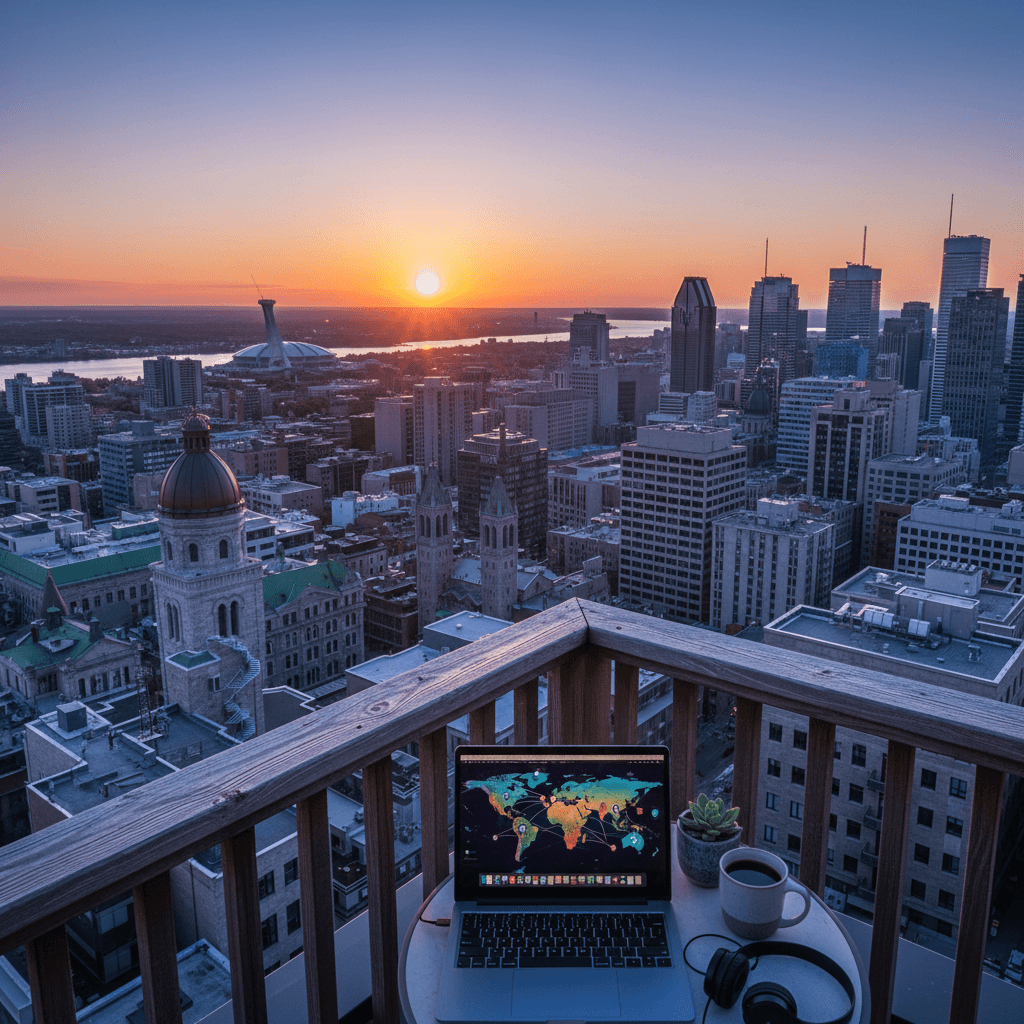
Montreal feels a little like Europe got dropped into North America, then decided to keep the good coffee, the festivals and the second language. The French gets you first, the art school energy sticks with you and the city has a creative pulse that shows up in murals, basement bars and patios packed with people arguing about food. Honestly, it’s one of the few places where a nomad can work all week, then end up at Jazz Fest or in a Plateau café that smells like espresso and wet pavement.
It’s also easier on the wallet than Toronto or Vancouver. Not cheap. A studio or one-bedroom usually lands around CAD 1,100 to 1,600 in places like Verdun or Rosemont, while Downtown can push CAD 1,600 to 2,200 and if you want a comfortable month with some dining out, you’re usually looking at CAD 3,500 or more. Shared housing and home cooking can keep you near CAD 2,000 to 2,500, which is why a lot of remote workers stay longer than planned.
Best areas
- Le Plateau-Mont-Royal: Best for solo nomads and couples, with street art, cafés, bars and that slightly scruffy, lived-in feel. It gets noisy on weekends and the hills are real.
- Downtown Montréal: Best if you want transit, coworking and the Underground City in winter. It’s practical, though frankly it can feel a bit sterile.
- Mile End: Great for food people and quieter workdays, with St-Viateur bagels, indie shops and a more residential rhythm.
The internet is solid, which, surprisingly, matters more here than the charm factor. Average speeds sit around 190 to 200 Mbps, Bell fiber is fast in neighborhoods like Mile End and the Plateau and coworking options like 2727 Coworking, WeWork Place Ville Marie, Crew Collective and Maison Notman keep the laptop crowd happy, though the café scene still expects you to buy something every hour or two.
Winter is the catch. Brutal. January lows hit around -13°C, the sidewalks turn gritty and loud under boots and the cold hangs in your throat when you step outside, while French still matters outside the tourist core, so life can feel a bit sharper if you arrive unprepared. Still, the city’s bilingual ease, decent transit and strong expat scene make it easier to settle than people expect and that mix of warmth and winter bite is exactly what makes Montreal feel like Montreal.
Montreal feels cheaper than Toronto or Vancouver, but it still bites if you want a central apartment, regular restaurant meals and a decent desk setup. A solo nomad can live lean or spend like a local with habits and the gap between those two lifestyles is pretty wide, honestly.
Budget: CAD 2,000 to 2,500 a month. That usually means shared housing, cooking at home and keeping nights out modest, because poutine and beer add up fast when the bill lands on a sticky bar table.
Mid-range: CAD 2,800 to 3,500. Comfortable: CAD 3,500-plus. If you’re eating out two or three times a week, taking the STM often and booking a coworking desk, that number climbs quickly, though it still doesn’t feel as punishing as downtown Toronto.
Rent
- Rosemont or Verdun studio/1BR: CAD 1,100 to 1,600
- Downtown studio/1BR: CAD 1,600 to 2,200
- Le Plateau-Mont-Royal: often mid-range, with higher demand and noisy weekends
- Old Montréal: pricier and frankly more touristy than practical
Plateau and Mile End are the usual sweet spots, with cafes, bagel shops, street art and the low thrum of scooters and bike bells outside. Downtown is convenient in winter, especially when the wind is cutting across the sidewalks, but it can feel a bit corporate and less charming after a week.
Everyday Costs
- Street food or poutine: CAD 15 to 25
- Mid-range meal for two: CAD 75 to 150
- STM monthly pass: CAD 98
- Coworking: CAD 275 to 405 a month
La Banquise-style comfort food is easy to justify after a cold walk home, but repeated dinners out will chew through your budget faster than you expect, weirdly. A lot of nomads split time between home cooking and cafes, then book coworking only when they need real focus, because paying for a hot desk every day gets old.
Best-value neighborhoods: Verdun, Rosemont, Villeray and parts of the Plateau. Mile End runs a little pricier near the best bagels and indie shops, but you get a calmer residential feel, good coffee and easier access to people who actually live here instead of just visiting for the weekend.
Internet is strong, usually 190 to 200 Mbps, so working from home doesn’t feel like a compromise and Bell fiber in places like Mile End or the Plateau can be excellent. The real budget trap isn’t WiFi, it’s winter, transit and social spending, because once the snow starts squeaking underfoot and your cheeks are stinging, warm meals and rides home suddenly seem very reasonable.
Montreal works best when you pick your base by how you actually live, not by postcard fantasy. The city feels French, practical and a little stubborn, with café chatter on sidewalks, bike bells in your ear and winter wind that can sting your face raw, so location matters more here than in a milder place.
Nomads
- Le Plateau-Mont-Royal: The default pick for remote workers, with street art, cafés and easy walks to bars and bakeries, though weekends can get noisy and the hills get annoying fast.
- Mile End: Quieter and more residential, weirdly good for focus, with St-Viateur bagels, indie shops and strong fiber in some pockets, but you’ll be a bit farther from downtown action.
- Downtown Montréal: Best if you want coworking, transit and winter convenience, especially the Underground City, though it feels more functional than charming.
Most nomads end up in Plateau or Mile End because the WiFi is, honestly, excellent, often around 190 to 200 Mbps and the café culture makes long workdays feel less grim. A hot desk at 2727 Coworking runs about CAD 275 to 300 a month, while WeWork at Place Ville Marie can work for occasional drop-ins, though neither is cheap.
Expats
- Downtown Montréal: Easiest for first months, since you’re close to offices, clinics, metro lines and supermarkets and English is widely spoken here.
- Le Plateau-Mont-Royal: Better if you want a social life, bike lanes and a neighborhood feel, with enough cafés to become a regular somewhere within a week.
Expats usually want predictability and Downtown gives you that, plus fast access to the metro when slush hits and your boots get soaked. Studio and one-bedroom rents here usually land around CAD 1,600 to 2,200, which hurts a bit, but it’s still cheaper than Toronto or Vancouver.
Language can be the friction point. French is the daily default outside tourist zones and while people are generally helpful, your life gets easier if you can manage simple phrases like "Bonjour" and "Parlez-vous anglais?"
Families
- Villeray: Best for parks, calmer streets and a more residential pace, with Jarry Park nearby and fewer late-night headaches.
- Verdun: Often the smarter budget choice, with decent rents, river access and a local feel that doesn’t try too hard.
Families usually care about space, transit and not hearing bass through the wall at 1 a.m., so Villeray and Verdun make sense. Rent can fall around CAD 1,100 to 1,600 in these outer pockets, which is still painful, but less punishing than central neighborhoods.
Solo Travelers
- Old Montréal: Best for a short stay if you want cobblestones, galleries and late dinners, though it gets crowded and expensive fast.
- Le Plateau-Mont-Royal: Best long-stay base for solo travelers who want easy socializing, poutine at odd hours and enough foot traffic to feel alive without being swallowed by downtown.
If you’re alone, I’d skip Old Montréal for anything longer than a few nights, because the charm gets touristy and the prices jump. Plateau gives you the better balance, with bars, bookstores and patios that smell like coffee, rain and grilled food in summer, plus enough movement that you won’t feel stranded in winter.
Montreal’s internet is, honestly, one of the city’s best perks for nomads. Average speeds sit around 190 to 200 Mbps and in neighborhoods like Mile End and Le Plateau you can find gigabit fiber through Bell, which makes video calls, cloud work and giant uploads pretty painless, even when the weather is trying to ruin your mood.
The coworking scene has real range, from polished downtown desks to artsier rooms with creaky floors and better coffee than you’d expect. It’s not cheap, though. A decent monthly budget usually lands between CAD 275 and 405 and if you want day passes, expect places like WeWork at Place Ville Marie to run about CAD 30 to 40 a day, which adds up fast if you’re living in there.
Best Coworking Spots
- 2727 Coworking: Around CAD 275 to 300 for a hot desk, strong reviews, good for steady heads-down work.
- WeWork Place Ville Marie: Central, polished, expensive for occasional use, convenient if you’re bouncing between meetings.
- Crew Collective: Gorgeous old bank interior, quieter vibe, day passes available, check site for current rates.
- Maison Notman: Fast fiber, startup energy, a little more practical than pretty.
Cafes work too, but you’ll need to buy something every hour or two and that’s the unwritten deal. The smell of espresso, buttered pastries and raincoats drying by the door is part of the whole setup, though crowded lunch hours can get noisy enough that your laptop fan and the clatter of cups start to feel like competition.
If you need SIM service, Rogers, Bell and Telus all sell prepaid plans in the CAD 25 to 50 range for 1 to 10 GB and eSIMs like Airalo or BitJoy are handy if you’re landing at YUL and want data right away. Frankly, that first hour without maps or messages can be annoying, so sort it before you leave the airport.
Where Nomads Usually Land
- Le Plateau-Mont-Royal: Best mix of cafes, people and walkability, though weekends can get loud.
- Mile End: Great for quieter work days, bagels, indie shops and better fiber options.
- Downtown Montréal: Practical for transit and winter, less charming, still the easiest place for office-style routines.
Most nomads end up splitting time between a coworking desk and a neighborhood cafe, then walking home through slushy streets or under maple leaves that smell faintly like wet pavement. If you want the smoothest setup, stay in Plateau, Mile End or Downtown, skip the extra commute and don’t expect the cheapest desk to be the best one.
Montreal feels safe enough for most nomads, especially in the central neighborhoods where you’re more likely to deal with bike theft, drunk late-night noise or a pickpocketing scare than anything serious. Downtown, the Plateau, Mile End and Old Montréal are generally fine if you stay aware, though empty side streets after bar close can get weirdly quiet and that’s when bad decisions happen.
Be more cautious in Hochelaga-Maisonneuve, Saint-Michel and Parc-Extension at night, where travelers mention more theft, open drug use and the kind of street tension that makes you cross the road without thinking. Honestly, Montreal isn’t a city where you need to feel jumpy all day, but if you leave a phone on a cafe table or wander home half asleep at 2 a.m., you’re asking for trouble.
Where Nomads Usually Stay
- Le Plateau-Mont-Royal: Lively and walkable, though weekend noise and crowded sidewalks can get old fast.
- Downtown Montréal: Best for transit and winter convenience, but it’s busier and less charming.
- Mile End: Calm, food-heavy and popular with creatives, with fewer late-night headaches.
Healthcare is good here and the public system gives Montreal a lot of credibility, but the wait times can be maddening. ERs do get packed, sometimes brutally so and one bad flu wave can leave you sitting under fluorescent lights for hours, hearing carts squeak past and babies cry down the hall.
If you qualify for RAMQ, local care is straightforward, though many nomads still buy supplemental insurance in the CAD 150 to 250 range because they don’t want to gamble on coverage gaps. Hospitals like Royal Victoria and Montreal General are the names people know, but for everyday stuff, pharmacies like Jean Coutu are everywhere and usually the fastest fix for minor issues.
Healthcare Basics
- Emergency: Call 911 for urgent help.
- Hospitals: Royal Victoria, Montreal General, Jewish General.
- Pharmacies: Jean Coutu, easy to find in most neighborhoods.
The city runs on normal urban common sense, lock your bike, don’t flash cash and avoid dark shortcuts if you’re alone, especially in winter when the cold hits your face like a slap and the streets empty out fast. If something does go wrong, Montreal’s medical care is solid, the system just isn’t built for speed, so plan ahead instead of assuming you’ll get instant help.
Getting around Montreal is easy, mostly because the city built a system that actually works. The STM metro and bus network runs from about 5:30 a.m. to 1 a.m., with night buses after that and a monthly pass is CAD 102, which beats paying per ride if you're here for more than a week.
Trains are clean, platforms are warm in winter and the stations have that old concrete-and-bright-tile feel. Still, transfers can be a little annoying and rush hour gets packed fast, with backpacks, wet boots and everyone pretending they aren't taking up too much space.
Best ways to move around
- Metro and bus: Best for Downtown, Plateau-Mont-Royal and Mile End, with a single ride at CAD 4.00.
- Bixi bikes: Great in warmer months and the electric bikes are a lifesaver on Montreal's hills.
- Uber: Handy late at night or when it's pouring, though prices jump when the weather turns ugly.
- Walking: Very doable in Plateau, Mile End, Old Montréal and parts of Downtown, just wear decent shoes.
For summer errands, Bixi is honestly one of the nicest ways to get around, because you get the breeze, the scent of hot pavement and a faster trip than the bus if traffic's snarled. In winter, though, biking can feel stupidly harsh, with slush, black ice and wind that cuts through your gloves in seconds.
From YUL airport, the 747 bus is the budget move at CAD 12 and it connects you to central Montreal without dealing with taxi fares. A taxi to downtown usually lands around CAD 50-55, which, frankly, isn't bad if you've got luggage and don't want to wrestle with snow, stairs and a dead phone.
Neighborhood feel
- Le Plateau-Mont-Royal: Best on foot and by bike, with steep little climbs that you'll feel in your calves.
- Downtown Montréal: Most connected, especially if you're using the metro a lot.
- Mile End: Walkable, calm and easy to mix cafes, shops and coworking stops.
Most nomads stick to the metro, walking and Bixi, because driving in the city can be a headache you really don't need. Parking is tight, winter streets get messy and the honking around downtown can wear you down by 6 p.m.
If you're here for a month or more, get the STM pass and a Bixi membership, then use Uber only when the weather, the distance or your patience says so. That's the real sweet spot.
Montreal runs on French first, but it’s not a language trap if you stick to the center, Downtown, Plateau-Mont-Royal and Mile End feel comfortably bilingual and staff in cafés, coworking spaces and hotels usually switch to English fast. Outside those zones, though, French matters more and honestly, trying a few phrases smooths everything out.
French: the default. English: widely understood in core areas. You’ll hear restaurant chatter, bike bells, bus brakes and a lot of fast Québécois French on the street, then step into a laptop-friendly café and suddenly everyone’s back to English. That mix is part of the city’s charm, but it can be tiring if you’re lazy about language and expect everyone to accommodate you.
Useful basics go a long way and no, you don’t need to be fluent. Start with “Bonjour,” “Merci,” and “Parlez-vous anglais?”, then keep Google Translate or DeepL handy for menus, lease paperwork and bureaucratic emails, which, surprisingly, can save you from a lot of awkward back-and-forth.
- Best for easy English: Downtown Montréal, Old Montréal, parts of Plateau-Mont-Royal
- Expect more French: Villeray, Saint-Michel, Hochelaga-Maisonneuve
- Tip: Open with “Bonjour” first, even if you’ll switch to English right after
For day-to-day life, the city’s communication style is polite but direct. People say “pardon” in crowds, they tip 15 to 20 percent and they’ll usually help if you ask clearly, though no one enjoys a traveler barking English at them like it should be enough.
The practical side is simple. Most nomads find the language barrier manageable in central neighborhoods, but rental searches, building notices and some healthcare admin can get clunky fast if you’re not reading French, so build in extra time for forms and landlord messages.
Apps: Google Translate, DeepL. Carry: a little patience. If you’re staying a while, a basic French class pays off quickly, because the city feels friendlier when you can handle a grocery run without gesturing at cheese and hoping for the best.
Montreal has real seasons, not the polite kind. January can dip to -13°C and the cold gets under your coat, into your gloves and straight through the soles of your boots. Summer flips hard the other way, with humid July days near 27°C, sweaty metro platforms and that warm smell of asphalt after a thunderstorm.
The sweet spot is May through September, when the city feels alive without turning miserable. Terraces fill up, jazz spills out of doorways and you can actually walk around the Plateau or Old Montreal without cursing the weather every ten minutes, though June and August can get sticky and stormy, so pack a light rain shell.
Best time to visit: late spring and early fall. Honestly, that’s when Montreal feels most balanced, with decent temperatures, long daylight and enough street life to keep things interesting without the winter grind.
Spring
- Weather: Chilly in April, pleasant by May
- Why go: Lower crowds, patios reopening, cherry blossoms in the parks
- Watch for: Slushy sidewalks early on and weirdly stubborn cold snaps
Summer
- Weather: Warm to hot, 20 to 27°C
- Why go: Jazz Fest, outdoor dining, festivals everywhere
- Watch for: Humidity, loud nightlife, pricier stays
Fall
- Weather: Crisp, dry and comfortable
- Why go: Fewer tourists, great walking weather, good café season
- Watch for: The slide into cold comes fast, so don’t get cocky
Winter
- Weather: Long, cold and punishing
- Why go: Cheaper rates, indoor city life, Underground City convenience downtown
- Watch for: Snowbanks, icy sidewalks and the kind of wind that makes your face hurt
If you’re working remotely, spring and fall are easiest for getting around, sitting in cafés and bouncing between coworking spots like 2727 Coworking, Crew Collective or WeWork Place Ville Marie without arriving frozen or drenched in sweat. Winter works if you like indoor routines and short commutes, but don’t romanticize it, it gets isolating fast, especially in the Plateau when the streets are quiet and the sidewalks are packed with dirty snow.
Rain falls year-round, about 1,050 mm annually, so don’t expect a dry season. Bring layers, a real coat and shoes that can handle slush, because Montreal weather doesn’t really ask for permission.
Montreal feels easy on the wallet compared with Toronto or Vancouver, but don’t confuse that with cheap. A studio or one-bedroom in Rosemont or Verdun usually runs CAD 1,100 to 1,600, while Downtown climbs to about CAD 1,600 to 2,200 and that gap matters when you’re staring at a lease in February with cold tile under your feet.
Budgeting here is pretty straightforward, honestly. Shared housing and home cooking can keep you around CAD 2,000 to 2,500 a month, mid-range nomads usually land near CAD 2,800 to 3,500 and once you’re dining out a few times a week, the total jumps fast, especially if you keep ordering poutine after 11 p.m.
Where to Stay
- Le Plateau-Mont-Royal: Best for solo nomads and couples, with cafes, street art and lively evenings, though weekends can get noisy and the hills are annoying after a snowstorm.
- Downtown Montréal: Good for first-timers and business travelers, with metro access, coworking and the Underground City for winter, but it feels busier and less charming.
- Mile End: Great for foodies and creative types, with St-Viateur bagels and indie shops, though you’ll be a bit farther from the main sights.
The internet’s solid, usually 190 to 200 Mbps on average and Bell fiber in Plateau or Mile End can be fast enough to forget you’re renting a desk by the day. The coworking scene, turns out, is pretty strong too, with 2727 Coworking around CAD 275 to 300 a month, WeWork Place Ville Marie at about CAD 30 to 40 a day and Crew Collective if you want a prettier room and don’t mind paying for it.
SIM cards are easy to sort out at Rogers, Bell or Telus and Airalo eSIMs work well if you want to land already connected. Banking-wise, expats often go with Wise or Revolut first, then open RBC or TD once they’ve settled in, because Canadian paperwork can drag on and the branch appointments are weirdly old-school.
Street Smarts
- Transport: The STM metro and buses are reliable, with a CAD 98 monthly pass and night service on some routes.
- Safety: Central neighborhoods are fine, but be more careful in Hochelaga-Maisonneuve, Saint-Michel and Parc-Extension after dark.
- Manners: Tip 15 to 20 percent, take your shoes off indoors and say “pardon” in crowds, it goes a long way.
Food smells everywhere, butter from bagel shops, hot oil from fryers, espresso on cold mornings and the city’s social life is easy if you show up. Festivals, bars on Crescent Street and meetup nights at places like Maison Notman help, though winter can feel isolating once the sidewalks turn icy and the wind starts cutting across your face.
For day trips, Quebec City and Montmorency Falls are the easy picks. Winter is brutal. If you’re arriving in January, pack real boots, not stylish ones, because Montreal will absolutely test you.
Need visa and immigration info for Canada?
🇨🇦 View Canada Country GuideNomad Haven
Your home away from home
Monthly Budget Estimates
More cities in Canada
Vancouver
🇨🇦 Canada
Kitchener-Waterloo
🇨🇦 Canada
Toronto
🇨🇦 Canada