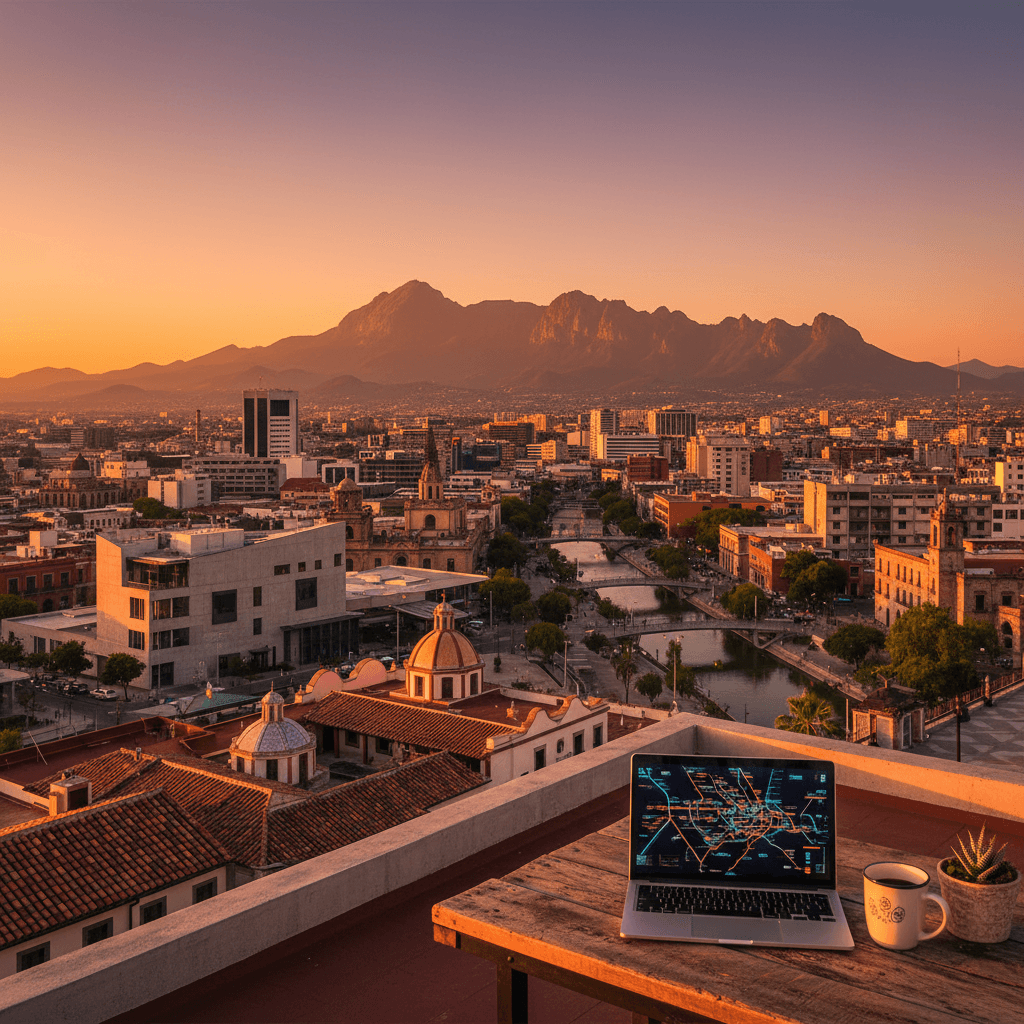
Monterrey
🇲🇽 Mexico
The Industrial Heart with a Mountain View
Monterrey isn't your typical Mexican postcard. If you are looking for colonial plazas and slow-paced afternoons under a bougainvillea, you might want to head south to Oaxaca or Merida. This is the industrial powerhouse of Mexico, a city defined by its jagged mountain skyline and a relentless, entrepreneurial energy. It feels more like a mix between Austin and a bustling Latin American metropolis than a traditional tourist hub. It is ambitious, hot, and unapologetically modern.
The vibe here is driven by the "Regios," the local residents known for their work ethic and their love of a good carne asada. While other nomad hubs lean into the spiritual or the bohemian, Monterrey leans into the professional. You will find yourself surrounded by high-rise glass towers, expansive shopping malls, and some of the best infrastructure in the country. It is a place where things actually work, and that makes it an underrated choice for remote workers who need a functional base rather than a vacation spot.
The Nomad Reality
Living here comes with a higher price tag than many nomad favorites. You should budget roughly $2,213 USD per month to live comfortably. This reflects the city's status as a corporate capital; you are paying for reliability and a high standard of living. The internet is generally solid, with average speeds around 100 Mbps, though you will find much faster fiber connections in modern apartment buildings in areas like San Pedro Garza Garcia.
The emotional experience of Monterrey is dominated by the mountains. No matter where you are, the Cerro de la Silla looms over the horizon. It gives the city a sense of scale that is both humbling and inspiring. When the workday ends, the city shifts from corporate to social. The food scene is world-class, focusing heavily on high-quality beef and northern specialties that differ significantly from the corn-based staples of the south.
Why Nomads Choose Monterrey
While some travelers might find the city a bit too "Americanized" or corporate, many digital nomads appreciate the lack of "backpacker fatigue." You aren't just another tourist here; you are part of a city that is moving forward. It’s a great fit if you value:
- Professional Networking: The city is full of startups, tech companies, and international business hubs.
- Outdoor Access: You have world-class hiking and rock climbing at Parque Huasteca and Chipinque just minutes from the city center.
- Modern Comforts: From high-end gyms to specialty coffee shops and luxury cinemas, the amenities are top-tier.
- Proximity to the US: If you need to hop back across the border, the Texas line is only a few hours away by car.
The Residency Factor
Mexico remains one of the most accessible countries for long-term stays. While there isn't a specific digital nomad visa, most remote workers opt for the Temporary Resident status. This requires you to prove a certain level of monthly income or savings, but once you have it, you can stay for up to four years. If you aren't ready for the paperwork, the standard 180-day tourist permit is still the go-to for many, though immigration officers have become more selective about the length of stay they grant upon arrival.
Monterrey might not be a "hidden gem" in the traditional sense, but it is a strategic one. It offers a level of grit and sophistication that is hard to find elsewhere. You come here to get your best work done during the day and spend your weekends scaling limestone cliffs or eating the best arrachera of your life.
The Bottom Line
Monterrey is the industrial powerhouse of Mexico, and your budget will reflect that. It is generally more expensive than southern hubs like Oaxaca or Merida, but cheaper than the high end pockets of Mexico City. Most digital nomads find they need around $2,200 USD per month to live comfortably here without pinching pennies. This covers a modern apartment in a safe area, plenty of eating out, and a dedicated desk in a workspace.
While the city is spread out, your spending will likely concentrate in two main areas: San Pedro Garza Garcia and San Jeronimo. San Pedro is technically its own municipality and stands as the wealthiest district in Latin America. If you choose to base yourself there, expect your costs to climb closer to $3,000 USD. If you stick to more traditional Monterrey neighborhoods like Barrio Antiguo or Tec, you can get by on significantly less.
Housing and Neighborhoods
Rent is your biggest variable. Long term leases are affordable, but as a nomad on a monthly or quarterly rotation, you will likely use Airbnb or local Facebook groups like "Apartamentos en Renta Monterrey."
- San Pedro Garza Garcia: This is the luxury bubble. A high end one bedroom apartment here typically runs between $1,200 and $1,800 USD. You are paying for safety, walkable shopping centers like Fashion Drive, and proximity to the best gyms.
- San Jeronimo / Colinas: A middle ground favored by many expats. It is hilly and requires an Uber to get anywhere, but you can find modern lofts for $800 to $1,100 USD.
- Barrio Antiguo / Centro: This is the historic heart. It is louder and grittier, but charming. You can find older apartments or renovated studios for $600 to $900 USD.
Food and Dining
Monterrey is a meat eater's paradise. The local obsession is cabrito (roast goat) and high quality arrachera steaks. If you eat like a local at small taquerias, a meal will cost you about $8 to $12 USD. If you frequent the trendy spots in Arboleda or Centrito Valle, expect to pay $30 to $50 USD for dinner with drinks.
- Street Tacos: $1 to $2 USD per taco.
- Mid range dinner for two: $45 USD.
- Craft Beer: $5 to $7 USD at local taprooms like Almacen 42.
- Daily Coffee: $4 USD for a flat white at specialty shops like Black Coffee or Nodriza.
Connectivity and Workspace
The internet infrastructure in Monterrey is solid compared to coastal Mexico. Most apartments come with fiber optic connections, though the citywide average often sits around 12 Mbps. If you need more speed for video calls, you should head to a coworking space. Prices are competitive with other major Mexican cities.
- Coworking Hot Desk: $150 to $200 USD per month. Popular spots include WeWork and local favorites like IOS Offices.
- Day Pass: $15 to $25 USD.
- Mobile Data: $15-20 USD for a Telcel plan with 10GB, which is usually plenty given the abundance of Wi-Fi.
Transportation and Utilities
You cannot really walk in Monterrey. The city is divided by mountains and massive highways. You will rely heavily on Uber or Didi. Uber is very affordable compared to US or European prices, with a 20 minute cross town trip usually costing under $10 USD. Public transport exists but is often crowded and confusing for newcomers.
Utilities are usually included in short term rentals. If they aren't, be careful with the air conditioning. Monterrey gets incredibly hot, and running the AC 24/7 in the summer can result in an electricity bill of $150 USD or more per month. Water and gas are relatively cheap, usually under $30 USD combined.
The Upscale Nomad: San Pedro Garza García
If you have the budget for it, San Pedro is where you want to be. It is technically a separate municipality, but it functions as the city's high end hub. It is often cited as the wealthiest district in Latin America, which means the infrastructure is top tier. You will find reliable fiber optic internet and a level of safety that rivals major US cities. The vibe here is polished, modern, and very corporate. It is not the place for gritty "authentic" experiences, but it is perfect if you need a seamless transition into Mexican life.
- Estimated Monthly Rent: $1,200 to $2,000 USD for a modern studio or one bedroom.
- Atmosphere: High end shopping malls, manicured parks, and glass skyscrapers.
- Top Coworking: WeWork at Paseo Villalta or IOS Offices.
The Urban Expat: Barrio Antiguo and Centro
For those who want character and walkability, Barrio Antiguo is the historic heart of the city. It is full of cobblestone streets, colorful colonial facades, and a nightlife scene that stays active late into the night. Living here puts you within walking distance of the Macroplaza and the Santa Lucia riverwalk. While it can get noisy on weekends, expats love the proximity to local coffee shops and art galleries. It feels much more like the Mexico you see in postcards compared to the industrial suburbs.
- Estimated Monthly Rent: $700 to $1,100 USD depending on the building's age.
- Atmosphere: Historic, bohemian, and lively with a heavy emphasis on nightlife and street art.
- Local Favorites: Coffee at Tierra Libre or craft beers at Almacen 42.
The Long Term Family: Cumbres
Families moving to Monterrey usually head west to Cumbres. It is a massive residential area divided into several sectors, known for gated communities and proximity to international schools. It sits at the base of the mountains, so the views of Cerro de las Mitras are incredible. You will definitely need a car here, as public transit is sparse and the neighborhood is designed for driving. It is quiet, safe, and offers a lot more square footage for your dollar than the trendy central zones.
- Estimated Monthly Rent: $900 to $1,500 USD for a three bedroom house.
- Atmosphere: Suburban, quiet, and family oriented with plenty of private parks.
- Convenience: Proximity to HEB grocery stores and Costco.
The Solo Traveler and Student: Tecnológico (Tec)
The area surrounding the Monterrey Institute of Technology is a magnet for younger solo travelers and digital nomads on a mid range budget. Because of the massive student population, the neighborhood is packed with affordable eateries, gyms, and shared housing options. It has a high energy feel and is one of the few areas where you can find a decent amount of English speakers. The Distrito Tec project has recently made the area much more pedestrian friendly with improved lighting and wider sidewalks.
- Estimated Monthly Rent: $500 to $900 USD for a private apartment or high end room.
- Atmosphere: Academic, energetic, and budget friendly.
- Why it works: Great density of cheap "fondas" for lunch and plenty of cafes with 15 to 20 Mbps speeds.
Getting Online in the Industrial Heart
Monterrey is Mexico's corporate powerhouse, so you can expect the infrastructure to reflect that. While some nomad hubs in the south struggle with frequent brownouts or spotty fiber, Monterrey generally offers a stable backbone for remote work. Average speeds clock in around 100 Mbps, but that is a bit of a conservative estimate for the modern apartments you will likely be renting in areas like San Pedro Garza García or Santa María. If you are staying in a newer high rise, it is common to see speeds closer to 50 or 100 Mbps.
Most nomads find that their monthly burn rate here sits around $2,213 USD. This covers a comfortable lifestyle, including a dedicated workspace or a membership at one of the city's many professional hubs. It is not the cheapest city in Mexico, but you are paying for reliability and a level of efficiency that is hard to find in beach towns like Playa del Carmen.
Top Coworking Spaces
Because Monterrey is such a business centric city, the coworking scene is more "corporate professional" than "boho traveler." You will find plenty of glass, steel, and ergonomic chairs. Here are a few spots where the Wi-Fi is guaranteed to hold up during a Zoom marathon:
- WeWork: They have a massive presence here with locations in San Pedro and Constitución. It is the safest bet for high speed fiber and private phone booths. A hot desk usually starts around $170 to $250 USD per month.
- IOS Offices: This is a local favorite for those who want a more upscale, executive feel. They have multiple branches across the city, including Arboleda and Campestre. Expect premium coffee and very reliable networking.
- Neuromarketing and Cowork: Located near the Tec de Monterrey area, this spot draws a younger, more entrepreneurial crowd. It is a bit more relaxed than the big corporate chains and great for meeting local founders.
Connectivity and Backup Plans
While home internet is generally solid, it is smart to have a local SIM card as a failover. Telcel is the undisputed king of coverage in the north. You can grab a SIM at any OXXO convenience store for about $5 USD and load it with a "Sin Límite" data package. For about $15 USD, you will get enough data to tether for a few days if your Airbnb router decides to take a nap.
Coffee shop culture is huge here, but not every cafe is friendly to the "laptop for four hours" crowd. If you need to work out of a cafe, look for Starbucks in the San Jerónimo neighborhood or local chains like The Coffee Bean & Tea Leaf. They are accustomed to students and professionals camping out with their chargers.
Legal Logistics for Remote Workers
Mexico does not have a specific "digital nomad visa" per se, but the Temporary Resident status is what most long termers aim for. If you can prove a monthly income of roughly $3,000 to $4,500 USD or show a healthy balance in your savings account over the last year, you can secure a residency that lasts up to four years. For shorter stays, most nationalities still get 180 days on a standard tourist permit upon arrival, though immigration officers have become more selective lately. Always check your passport stamp to see exactly how many days you were granted before you leave the airport.
Overall, Monterrey is a "get things done" kind of city. It might lack the jungle vibes of the south, but for a nomad with a heavy workload and a need for consistent 100 Mbps speeds, it provides a functional and high energy home base.
Staying Safe in Mexico's Industrial Capital
Monterrey is a different beast compared to the beach towns of the Riviera Maya. It is a massive, wealthy, industrial powerhouse. While it doesn't have the same reputation for petty crime as parts of Mexico City, you still need to keep your wits about you. Most nomads find that staying in the right neighborhoods is the best way to ensure a stress-free experience.
San Pedro Garza Garcia is widely considered the safest municipality in Latin America. It is where you will find the high rises, luxury malls, and a heavy police presence. If you are staying here, you can generally walk around at night without much worry. Outside of San Pedro, neighborhoods like Barrio Antiguo and parts of Colinas de San Jeronimo are popular, but you should stick to well lit streets and use Uber after dark. Avoid the periphery of the city and certain areas in the north, as these are more prone to the security issues that occasionally make headlines.
Common sense goes a long way here. Don't flash expensive tech in public plazas and keep your phone tucked away when walking. If you are driving, stick to the toll roads (cuotas) when leaving the city for weekend trips to places like Potrero Chico. Local expats recommend using the 911 emergency line if anything goes wrong, as the operators in the Monterrey metro area are generally efficient.
- Emergency Number: 911
- Transport Safety: Stick to Uber or DiDi rather than hailing street taxis.
- Walking: Safe in San Pedro and during the day in Barrio Antiguo.
Healthcare and Medical Services
The medical care in Monterrey is some of the best in the country. In fact, it is a major hub for medical tourism because the facilities are top tier and many doctors are trained in the United States. You won't have trouble finding an English speaking specialist here, especially at the major private hospitals.
If you have an emergency or need a consultation, Hospital Zambrano Hellion and Hospital San Jose are the gold standards. They look more like luxury hotels than clinics and offer cutting edge technology. For minor issues like a cold or a stomach bug, you can visit a Consultorio attached to a pharmacy like Farmacias del Ahorro. These walk in clinics usually cost around $5 USD to $10 USD for a quick checkup.
Private healthcare is affordable compared to US prices, but it is not cheap. A specialist visit might set you back $50 USD to $100 USD. Most nomads carry international insurance like SafetyWing or World Nomads to cover major incidents. Make sure your policy covers private hospitals, as you likely won't want to use the public IMSS system which is often overcrowded and slower.
Practical Health Tips
The biggest health hurdle for newcomers isn't usually a tropical disease; it's the air quality. Monterrey sits in a valley, and the industrial activity combined with the geography can lead to high pollution levels. On bad air days, you might feel a scratchy throat or stinging eyes. Check the AirVisual app before planning a long hike in Chipinque.
Regarding the water, don't drink from the tap. Even if locals say it is fine in certain buildings, your stomach might not be adjusted to the mineral content. Stick to the 20 liter garrafones (water jugs) that you can have delivered to your apartment or buy at any OXXO for about $2 USD.
- Top Hospital: Hospital Zambrano Hellion (San Pedro)
- Pharmacy: Farmacias Benavides or Farmacias del Ahorro
- Water: Bottled only, roughly $40 MXN per large jug
- Air Quality: Use the PurpleAir or AirVisual apps to monitor smog.
The Layout of the Land
Monterrey is a massive, sprawling industrial powerhouse tucked against the jagged peaks of the Sierra Madre. Unlike the walkable, colonial centers of Mexico City or Oaxaca, this is a car centric city. It is built for business, and the infrastructure reflects that. You will find yourself moving between three main hubs: the historic center, the trendy neighborhood of Barrio Antiguo, and the upscale, ultra modern district of San Pedro Garza Garcia.
Most nomads choose to base themselves in San Pedro or the nearby Santa Maria area. These spots are safe and polished, but they are spread out. You won't be doing much wandering on foot between neighborhoods here. The heat, which often climbs above 100 degrees Fahrenheit in the summer, makes walking long distances a sweaty chore anyway. Plan on using wheels to get anywhere meaningful.
Ridesharing is Your Best Friend
For most remote workers, Uber and Didi are the primary modes of transport. They are reliable, affordable, and significantly safer than flagging down a random green and white taxi on the street. A 15 to 20 minute ride between Barrio Antiguo and San Pedro usually costs between $5 and $8 USD, depending on the time of day and traffic.
Traffic in Monterrey is legendary, and not in a good way. The city has some of the worst congestion in Mexico. If you have a meeting or a coworking desk to get to, always check the map first. The "rush hour" here starts early and ends late, often turning a quick 10 minute zip into a 45 minute crawl. If you can, try to schedule your movements between 10:00 AM and 1:00 PM to avoid the worst of the gridlock.
The MetroRey System
Monterrey has a light rail system known as Metrorrey. It is clean, efficient, and incredibly cheap, with fares costing less than $1 USD. However, it is fairly limited in its reach. It works well if you are staying near the center and need to get to places like Fundidora Park or the University area. It does not currently serve the wealthier areas like San Pedro where many expats spend their time.
- Line 1 (Yellow): Runs east to west through the city center.
- Line 2 (Green): Runs north to south, connecting the main plazas to the northern suburbs.
- Line 3 (Orange): Serves the northeastern part of the metro area.
Renting a Car
If you plan on staying for more than a month or want to explore the mountains, renting a car is a solid move. Having your own vehicle opens up day trips to places like La Estanzuela or the climbing mecca of Potrero Chico. Most major international agencies operate out of the Monterrey International Airport (MTY).
Expect to pay around $30 to $50 USD per day for a basic sedan including insurance. Be aware that driving in Monterrey is aggressive. Local drivers treat speed limits as suggestions and lane markings as optional. If you aren't comfortable with high speed, multi lane roundabouts and heavy industrial trucking, stick to the back seat of an Uber.
Walking and Biking
While the city as a whole isn't pedestrian friendly, certain pockets are great for a stroll. Barrio Antiguo is full of narrow, cobblestone streets that are perfect for exploring on foot. San Pedro has invested heavily in "parques lineales" or linear parks, which offer paved paths for runners and cyclists. Outside of these specific zones, sidewalks can be uneven or disappear entirely. Biking on the main roads is generally not recommended for anyone who isn't a seasoned urban cyclist, as bike lanes are still a work in progress in most of the city.
Public Buses
The local bus system, or "camiones," is extensive but can be confusing for newcomers. The routes aren't always clearly marked on digital maps, and the buses themselves vary wildly in quality. Some are modern and air conditioned, while others are older and quite bumpy. Most nomads skip the bus in favor of rideshare apps unless they are on a very tight budget or have a local friend to show them the ropes of the specific routes.
The Language Balance
Monterrey isn't like Playa del Carmen or Mexico City where you can easily drift through your day using only English. It is a business powerhouse first and a tourist destination second. While the corporate offices in San Pedro Garza García are full of bilingual professionals, you'll find that the local markets, taxi drivers, and waitstaff in Barrio Antiguo usually stick to Spanish.
Most nomads find that they can get by with the basics, but your experience improves drastically once you learn some "Regio" slang. People here are friendly but direct. If you are staying in the Valle Oriente area, you'll hear a lot of Spanglish because of the close proximity and constant business travel to Texas. Still, don't expect menus or government signs to be translated for you.
Communication Tools and Apps
To survive the daily grind, you need a few specific tools on your phone. WhatsApp is the lifeblood of Monterrey. You won't just use it to talk to friends; you'll use it to book a haircut, order water jugs, and talk to your landlord. If a business has a phone number listed, try messaging them on WhatsApp before calling.
- Google Translate: Use the camera feature for reading menus at local spots like Tacos El Primo.
- DiDi and Uber: These apps save you from having to explain complicated directions in Spanish to a driver.
- SpanishDict: This is much better than Google for regional Mexican slang and specific grammar.
Key Local Phrases
The locals, known as Regiomontanos or "Regios," have a distinct way of speaking. It is often faster and more rhythmic than the Spanish you hear in central Mexico. Learning a few local quirks will earn you immediate respect at the coworking spaces or the local gym.
- ¿Qué onda?: The standard "What's up?" used in almost every social situation.
- Chilo / Con ganas: Used to describe something cool or great. If you like your coffee at Black Coffee Gallery, it's "con ganas."
- Bato: Slang for "guy" or "dude." You'll hear this constantly in casual settings.
- Ferrocarril: While it means railroad, locals often use "ferre" when talking about hardware or specific industrial areas.
Connectivity and Data
Staying connected is rarely an issue in the major hubs. Most modern apartments in Santa María or Sur de Monterrey come with fiber optic internet. You can expect average speeds around 100 Mbps, with many dedicated remote work rentals offering 200 Mbps or higher if you ask.
For mobile data, Telcel is the undisputed king of coverage. You can pick up a SIM card at any OXXO (the ubiquitous convenience stores) for about $2 USD. A prepaid "Amigo" plan with several gigabytes of data usually costs around $10 to $15 USD per month. AT&T Mexico is a decent alternative, especially if you have a US plan that includes Mexico roaming, but their signal can be spotty once you head toward the Huasteca Canyon for a weekend hike.
Social Etiquette
Regios are proud of their city and their work ethic. When communicating, it is polite to start with a greeting like "Buenos días" or "Buenas tardes" before diving into a request. It is considered slightly rude to start a conversation by just asking a question in English. Even a botched attempt at Spanish shows you aren't just another tourist passing through. If you are invited to a carne asada, which is the local equivalent of a backyard BBQ, it is the ultimate sign of social acceptance. Just say "gracias" and bring some cold beers.
The Climate Reality
Monterrey is a city of extremes. Tucked into the foothills of the Sierra Madre Oriental, it deals with a microclimate that can swing wildly within a single afternoon. Locals often joke that you can experience all four seasons in twenty four hours, and they aren't exaggerating. If you're planning a stint here, you need to be prepared for the desert heat and the occasional cold snap that rolls down from the mountains.
The summer months from June through August are intense. Temperatures regularly climb past 95°F (35°C), and it’s common to see the mercury hit 105°F (40°C) during July. During this time, the city slows down in the afternoons. You'll find most nomads sticking to air conditioned coworking spaces like IOS Offices or Workland until the sun starts to dip. If you aren't a fan of dry, oppressive heat, avoid arriving mid summer.
Winter is short but surprisingly sharp. From December to February, temperatures usually hover around 50°F to 70°F (10°C to 21°C), but "Nortes" (cold fronts) can drop the temperature toward freezing overnight. Most apartments in neighborhoods like San Pedro or Barrio Antiguo aren't built with heavy insulation, so you'll want to ensure your Airbnb host provides a space heater or a "minisplit" with a heating function.
When to Book Your Stay
The sweet spots for living in Monterrey are the shoulder seasons. March to May and September to November offer the most comfortable balance for exploring the outdoors. These months see average highs in the 75°F to 85°F (24°C to 29°C) range, which is perfect for hiking the famous Chipinque trails or grabbing a coffee on a patio in San Jerónimo.
- Peak Season (March to May): This is when the city is at its liveliest. The weather is warm but not punishing. Expect higher demand for short term rentals and slightly higher prices in popular nomad hubs.
- Rainy Season (August to September): Monterrey doesn't get a lot of rain, but when it does, it’s usually in late summer. These storms are often brief, heavy tropical downpours that can cause localized flooding, so keep an eye on the weather apps if you're planning a drive.
- Festival Season (Late March/April): If you’re a fan of live music, timing your arrival with the Tecate Pa'l Norte festival is a smart move. It’s one of the biggest events in Mexico and turns the city into a massive party for a weekend.
Strategic Planning for Remote Workers
If you're trying to keep your overhead around the $2,200 USD monthly mark, your timing matters. Electricity bills in Monterrey can skyrocket in the summer due to constant air conditioning use. Many long term expats prefer arriving in October. The weather is cooling down, the mountain views are clear, and you can enjoy the outdoor lifestyle without the massive utility costs associated with the July heat.
For those who enjoy hiking and rock climbing, November through March is the prime window. While it’s cooler, the conditions at Potrero Chico, just outside the city, are world class during this period. You'll find a sub-community of adventurous remote workers who base themselves in the city during the week and head to the mountains every Friday afternoon.
Ultimately, if you can handle a bit of heat, aim for late spring. You'll get the best of the city's social energy before the mid summer exodus when many locals head to the coast to escape the peak temperatures.
Money and Costs
Monterrey is the industrial powerhouse of Mexico, which means it carries a higher price tag than the surf towns of Oaxaca or the jungles of Chiapas. You should budget around $2,213 USD per month to live comfortably here. This covers a decent apartment in a safe area, regular meals out, and your workspace fees.
While Mexico uses the Peso, many high end rentals in areas like San Pedro Garza Garcia might quote prices in Dollars. Still, you will want to keep Pesos on you for street tacos or smaller shops. Most nomads find that using a card is fine in bigger establishments, but the local markets and smaller cafes remain cash heavy.
- Monthly Rent (One Bedroom): $900 to $1,400 USD
- Local Beer: $3 to $5 USD
- Quick Lunch: $8 to $12 USD
- Coworking Desk: $150 to $250 USD per month
Connectivity and Remote Work
Internet reliability is generally solid across the city. You will find average speeds around 12 Mbps, though fiber optic connections in modern apartment buildings or dedicated workspaces often hit much higher benchmarks. It is plenty for video calls and standard uploads, but it helps to have a backup plan.
Most expats recommend picking up a local SIM card immediately. Telcel has the widest coverage, and you can top up your data at any OXXO convenience store. If you prefer to skip the physical card, an eSIM is a quick way to stay connected the moment you land at Monterrey International Airport.
Visas and Staying Legal
Mexico is famous for its generous 180 day tourist stay, but do not take that for granted. Immigration officers at the airport decide your length of stay on the spot. If you plan to make Monterrey a long term base, you should look into the Temporary Resident status. This requires you to prove a certain level of monthly income or savings, but it gives you peace of mind and makes things like opening a bank account much easier.
There is no specific digital nomad visa here yet. Most remote workers enter as tourists or apply for residency through the consulate in their home country before arriving. Always check your passport stamp as soon as you clear customs to see exactly how many days you were granted.
Getting Around
Monterrey is a carcentric city. It is spread out and the heat can make walking long distances pretty brutal during the summer months. Uber and DiDi are the most reliable ways to get around safely and affordably. They are widely available and usually arrive within minutes in the main neighborhoods.
The city does have a light rail system called the Metrorrey, but it is mostly used by locals for commuting and might not cover the specific areas where nomads tend to hang out. If you stay in a walkable pocket like Barrio Antiguo, you can manage on foot for daily errands, but you will still need a ride for grocery runs or heading to the malls in San Pedro.
Safety and Health
Safety in Monterrey is a common concern for newcomers. The city is generally safe for foreigners if you stick to well known neighborhoods and avoid wandering into unfamiliar outskirts at night. Stick to areas like San Jeronimo, Valle Oriente, or the historic center during the day. Locals are helpful, but it is always smart to keep a low profile and avoid flashy displays of wealth.
Healthcare in Monterrey is some of the best in Latin America. Many Americans and Canadians actually travel here specifically for medical procedures. Private hospitals like Christus Muguerza or Hospital San Jose offer high quality care with many English speaking staff members. Just make sure you have a solid international health insurance policy that covers private facilities.
Need visa and immigration info for Mexico?
🇲🇽 View Mexico Country GuideHidden Gem
Worth the effort