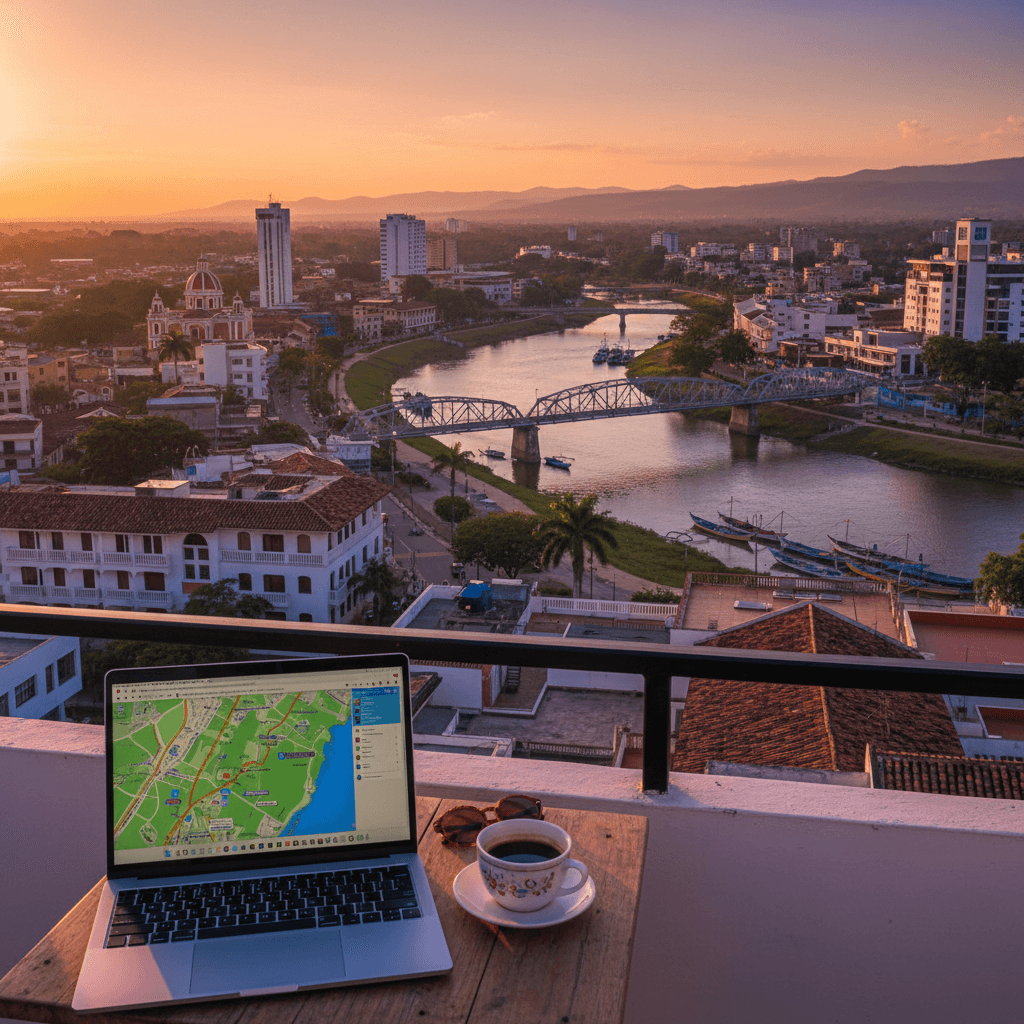
Montería
🇨🇴 Colombia
The Cowboy Capital of the Caribbean
If Medellín is the sleek, tech-obsessed older brother and Cartagena is the glamorous, overpriced cousin, Montería is the authentic uncle who owns a cattle ranch and knows the best spot for grilled river fish. Known as the "City of Swallows," this isn't a place where you'll find a Selina on every corner or a line out the door for avocado toast. Instead, it's a city defined by the Sinú River and a deep-seated cowboy culture that feels remarkably untouched by the global nomad circuit.
The vibe here is "Caribbean-ranchero." It's hot, humid, and moves at a pace that forces you to slow down. You'll see locals in sombreros vueltiaos (the iconic striped hats) walking along the Ronda del Sinú, a massive linear park that hugs the riverbank. It’s one of the few places in Colombia where you can watch monkeys and iguanas from your park bench while checking your Slack notifications. It feels grounded and unpretentious, making it perfect for the nomad who’s burnt out on the "gringo trail" and wants to actually hear Spanish spoken all day.
What Nomads Love (and Hate)
Most travelers who land here are looking for affordable authenticity. You can live a high-end lifestyle for about $1,800 to $2,500 USD a month, which would barely cover a studio in more famous hubs. The proximity to the coast is a major draw; you’re only a 90-minute drive from the beaches of San Antero or Coveñas. It’s a base that allows for weekend salt-water escapes without the Cartagena price tag.
The trade-off is the infrastructure. While fiber optic internet is increasingly common in neighborhoods like El Recreo, you won't find dedicated coworking spaces with community managers and networking events. You'll be working from cafes like Juan Valdez or Oma in the malls, or from your own balcony. The heat is also no joke. With temperatures regularly hitting 34°C (93°F), your life will revolve around air conditioning and the "siesta" hours when the city goes quiet to escape the midday sun.
The Neighborhood Breakdown
- El Recreo: This is the go-to for anyone staying longer than a week. It's the most modern part of town, home to the Viva Montería mall and high-rise apartments. It’s safe, quiet, and has the most reliable power grid. Expect to pay $350 to $500 USD for a nice one-bedroom.
- Centro & Barrio La Granja: Best for short stays if you want to be in the thick of things. It’s walkable and puts you right next to the river markets and cheap street food. It can get noisy and chaotic, but it's the heart of the city's energy.
- Laureles: Similar to its namesake in Medellín but much smaller. It offers a balanced, residential feel with local parks and a few decent restaurants. It’s a bit more affordable than El Recreo, with rents often dipping below $300 USD for those who know how to hunt on Facebook Marketplace.
The Social Pulse
Socializing in Montería happens over food and festivals. If you're here in late December, the Corralejas (bullfighting festivals) transform the city into a massive party, though the animal welfare aspect isn't for everyone. On a normal Tuesday, the social scene revolves around the riverfront restaurants like Casa El Henequén or grabbing a $3 USD plate of sancocho at one of the traditional eateries near the river docks.
Don't expect a bustling expat community. You’ll likely be the only foreigner in the room, which means you’ll need at least basic Spanish to get by. People are incredibly friendly and curious about visitors, but the "nomad meetup" culture hasn't arrived yet. You'll make friends at the gym or the local salsa bars in Centro rather than through an app. It’s a city that rewards the extroverted traveler who isn't afraid to strike up a conversation in broken Spanish over a cold Club Colombia beer.
The Bottom Line
Montería is one of the most affordable provincial capitals in Colombia, offering a significant discount compared to the price tags in Medellín or Cartagena. Most solo nomads living a comfortable, mid-range lifestyle find that $1,800 USD per month covers a modern apartment in a safe area, frequent dining out, and weekend trips to the coast. If you are sticking to a strict budget, you can get by on $1,000 USD by opting for a shared living situation and mastering the art of the $3 USD corrientazo (executive lunch).
The local economy revolves around cattle and commerce, meaning prices for high quality beef and fresh produce are remarkably low. While you won't find the endless hipster cafes of El Poblado, your dollar stretches much further here, especially when it comes to services and transport.
Monthly Budget Tiers
- The Budget Traveler ($1,000 USD): This tier assumes you are renting a room in a local house or a basic studio in Barrio La Granja. You'll mostly eat street food like arepas and lechona, use the public bus system, and keep your AC usage to a minimum.
- The Mid-Range Nomad ($1,800 USD): This is the sweet spot. You can afford a private one bedroom apartment in El Recreo, eat at mid-range spots like Puerto Antioqueño several times a week, and rely on Uber or InDriver for most trips.
- The High-End Expat ($2,500+ USD): At this level, you are living in a luxury high rise with a pool, dining at upscale riverfront restaurants like Casa El Henequén, and likely hiring a part time cleaner or cook.
Housing and Neighborhoods
Rent will be your biggest variable. Unlike the saturated markets of the Caribbean coast, Montería still offers "local" pricing to foreigners, though you'll need to navigate Facebook Marketplace or sites like Metrocuadrado to find the best deals.
El Recreo (Nomad Favorite)
- Rent: $250 to $400 USD for a modern apartment.
- Vibe: This is the upscale, leafy part of town near the Viva Montería mall. It is quieter, safer, and has the most reliable infrastructure.
- Best for: People who need quiet for deep work and proximity to modern supermarkets.
Centro / Barrio La Granja
- Rent: $300 to $500 USD for short term Airbnb stays.
- Vibe: High energy and walkable. You are right by the Sinú River and the local markets.
- Best for: Short stays where you want to be in the middle of the action, though it gets noisy at night.
Daily Expenses
Eating out is a highlight here. A quick street snack like an empanada or a bowl of mondongo soup will cost you between $1 and $3 USD. If you head to a mid-range restaurant in the northern part of the city, expect to pay $5 to $10 USD for a full meal with a drink. Upscale dining with wine will rarely exceed $25 USD per person.
Getting around is cheap and efficient. A standard taxi or Uber ride across town usually lands between $2 and $5 USD. The public buses are even cheaper at under $1 USD, but they can be confusing for newcomers. Most expats recommend using InDriver, as it allows you to negotiate the fare upfront, which is common practice in the city.
For your digital setup, a local SIM card from Claro or Tigo is a must. You can get a 50GB data package for around $20 USD. Since dedicated coworking spaces are almost non existent, you'll likely spend $2 to $5 USD a day on coffee and snacks at Juan Valdez or Oma to use their tables and WiFi.
Visa Requirements
If you plan to stay longer than a standard 90 day tourist entry, Colombia's Digital Nomad Visa (Type V) is the way to go. You'll need to prove a monthly income of roughly $900 USD (three times the Colombian minimum wage). The application is done online through the Cancilleria website, and once approved, you must register with Migración Colombia to get your local ID card, known as a cédula.
For Modern Nomads: El Recreo
If you're coming from a hub like Medellín and want to maintain a similar standard of living, El Recreo is the neighborhood you'll likely call home. It's the most modern pocket of the city, characterized by leafy streets, high-rise apartment blocks, and proximity to the Viva Montería mall. It feels less like a traditional ranching town and more like a polished suburb.
- Rent: Expect to pay between $250 and $400 USD for a decent one-bedroom apartment or studio.
- Connectivity: This is where you'll find the most reliable fiber optic internet, with speeds often hitting 100 Mbps.
- Daily Life: You're within walking distance of several Juan Valdez and Oma cafes, which serve as the city's unofficial coworking spaces. It's quieter than the city center, though you'll definitely want to use Uber or InDriver to get around since it's not the most walkable area.
For Long-Term Expats: Laureles and Las Margaritas
Expats looking for a balance between local authenticity and comfort usually gravitate toward the northern residential zones like Laureles or Las Margaritas. These areas are inspired by the layout of Medellín's famous Laureles neighborhood, featuring plenty of trees and a more relaxed, community-oriented pace. It's arguably the best place to integrate into the local culture without feeling like a total outsider.
- Rent: Prices are slightly lower than El Recreo, ranging from $200 to $350 USD for long-term rentals found via Facebook Marketplace or local sites like Metrocuadrado.
- Atmosphere: You'll find more local grocery stores and family-run diners here. It's less "shiny" than El Recreo but feels much more like a home.
- Vibe: It's a great spot if you're planning to stay for the Corralejas festivals in late December, as it's safe and well-connected to the main transit routes.
For Solo Travelers and Short Stays: Centro and Barrio La Granja
If you're only in town for a week or two to see the Sinú River, staying in the Centro or nearby Barrio La Granja makes the most sense. This is the heart of the action where the "cowboy culture" is most visible. You're steps away from the Ronda del Sinú, a massive riverside park where you can spot iguanas and red howler monkeys right in the middle of the city.
- Rent: Short-term Airbnbs or hotels cost roughly $300 to $500 USD per month, though daily rates are very affordable.
- Pros: You're close to the best street food, like mondongo soup for $2 USD or grilled meats for $3 USD. The river ferries (planchones) are right there to take you across for less than a dollar.
- Cons: It can get noisy at night, and travelers often warn about petty theft after dark. It's best to keep your phone tucked away while walking these streets.
For Families: Alto de San Jerónimo
Families moving to Montería generally prefer Alto de San Jerónimo. It's a strictly residential area that offers more space and a sense of security that's hard to find in the bustling center. It's far enough from the nightlife to be quiet but close enough to private clinics like Clínica Montería for peace of mind.
- Amenities: This area is close to some of the better private schools and green spaces, making it the top choice for those with kids.
- Logistics: You will absolutely need a car or a reliable taxi contact here. While public buses run nearby for about $0.50 USD, they aren't the most convenient for family grocery runs.
- Dining: You're a short drive from upscale riverfront spots like Casa El Henequén, where a high-end dinner will run you about $20 USD per person.
Connectivity and Speed
Montería isn't Medellín, and that's the first thing you'll notice when you open your laptop. While the city is catching up, the infrastructure is more "reliable enough" than "blazing fast." Most modern apartments in El Recreo or Laureles come equipped with connections from providers like Claro or Tigo. However, while higher speeds are often advertised, you should realistically expect speeds between 20 Mbps and 30 Mbps, which is sufficient for standard video calls and daily tasks.
Mobile data is your best friend here. Travelers usually grab a physical SIM or an eSIM from Airalo before landing, but local prepaid plans are much cheaper. A 50GB data package from a Claro or Movistar store will run you about $20 USD. It's a smart backup because occasional power flickers during the rainy season can knock out your home router for a few minutes.
The Coworking Scene
If you're looking for a massive WeWork or a Selina social hub, you're going to be disappointed. Montería doesn't have dedicated international coworking brands yet. Instead, the local remote work scene happens in "unofficial" spaces and business centers. Most nomads who spend time here end up working from their rentals or high-end hotel lobbies to ensure they have a quiet environment and a dedicated desk.
- Hotel GHL Montería: Many expats use the lobby or the business center here. It's air-conditioned, which is a non-negotiable in the 34°C (93°F) heat, and the WiFi is stable.
- Alamedas Centro Comercial: There are several quiet corners and business-friendly spots within the mall complex that offer decent connectivity for a few hours of work.
- Local Libraries: The Banco de la República library is a quiet, air-conditioned sanctuary if you just need to focus and don't have back-to-back meetings.
Digital Nomad Cafes
The cafe culture is growing, though it's more about socializing than "deep work." If you do choose a cafe, aim for the morning hours before the afternoon rush and the loud music start. Expect to spend $2 to $5 USD on coffee and a snack to keep your seat. Some reliable spots include:
- Juan Valdez (Alamedas or Viva Mall): The gold standard for Colombian remote work. They have reliable outlets, decent WiFi, and they won't kick you out for lingering.
- Oma: Similar to Juan Valdez, these are consistent and usually have enough table space for a laptop.
- La 51: A popular local spot where you can grab a table. It's better for casual admin tasks than intense deep work due to the ambient noise.
Practical Workflow Tips
Because the nomad community is small, you won't find many organized meetups. Most people connect through the Expats in Montería Facebook group or by spotting fellow travelers in northern neighborhoods. If you're planning a long-term stay, it's worth investing in a high-quality power bank and a local Nequi or Daviplata account. These apps are the lifeblood of local commerce and make paying for small services or topping up your data plan much easier.
For those on the Digital Nomad Visa (Type V), keep your documentation handy. While Montería is off the main tourist trail, local banks and authorities are becoming more familiar with the $900 USD monthly income requirement and the 90-day-plus residency status. Just remember that while the internet is decent, the pace of life is slow. Don't expect things to happen at "Silicon Valley speed" when you're dealing with local service providers.
Safety in the Pearl of the Sinú
Montería feels significantly different from the high energy, sometimes edgy atmosphere of Bogotá or Medellín. It has a slower, more provincial pace that generally works in your favor regarding safety. Most nomads find the city relatively calm, especially in the northern residential sectors, but you still need to keep your wits about you as you would in any mid sized Latin American city.
The golden rule here is to stay vigilant against petty theft, often referred to locally as no dar papaya (don't give anyone an easy opportunity). This means keeping your iPhone 15 out of sight while walking near the river and avoiding flashy jewelry. While the Centro and Barrio La Granja are perfectly fine for a daytime stroll or a market run, they can get desolate and unpredictable after dark. Expats generally recommend sticking to well lit areas like El Recreo or the malls if you are out late.
- Ride Hailing: Use InDriver or Uber rather than hailing yellow taxis on the street at night. It provides a digital trail and a set price, usually between $2 and $5 USD for most cross city trips.
- Walking: The Ronda del Sinú (the linear park along the river) is great during the day and early evening when families are out, but don't wander into the southern outskirts or unlit park sections alone late at night.
- Emergency Contacts: Dial 123 for general emergencies. The National Police are visible in the center, and there is a specific Tourist Police presence near the major landmarks.
Healthcare Facilities and Services
If you get sick in Montería, you aren't stuck with basic clinics. The city is a regional hub for cattle ranching wealth, which has funded some surprisingly high quality private medical facilities. Clínica Montería and Clínica IMAT are the top choices for specialized care and emergencies. They are modern, clean, and equipped with the latest tech, though you should expect a language barrier. Very few doctors here speak fluent English, so keep Google Translate handy or bring a Spanish speaking friend.
For minor issues like a stomach bug or a skin rash, pharmacies (droguerías) are your best friend. You'll see Farmatodo and Droguería Alemana everywhere. They are often open 24/7 and can provide over the counter fixes for most common traveler ailments. Many pharmacists can even administer injections or basic first aid on site.
- Private Consultation: A visit to a specialist without insurance usually costs between $40 and $70 USD.
- Insurance: Most nomads use Genki or SafetyWing. Ensure your policy covers medical evacuation if you plan on exploring more remote parts of Córdoba or the Sucre coast.
- Water Safety: Do not drink the tap water. Stick to bottled water, which is cheap and available at every Tiendas ARA or Oxxo for about $0.80 USD for a large bottle.
Health Requirements and Environment
The biggest health challenge in Montería isn't a virus, it's the heat. With temperatures frequently hitting 34°C (93°F) and high humidity, heat exhaustion is a real risk for newcomers. Stay hydrated and try to schedule your outdoor activities for the early morning or after 4:00 PM when the sun loses its bite.
Since the city sits on the Sinú River, mosquitoes are part of the deal. While malaria isn't a major concern in the urban center, Dengue and Zika do pop up occasionally, especially during the rainy season from September to November. Use a repellent with DEET if you are hanging out by the river at sunset. If you plan on heading south into the deeper jungle or rural Córdoba, a Yellow Fever vaccination is highly recommended and sometimes required for park entries.
The River and the Road
Montería is a compact city where the Sinú River dictates the flow of daily life. Unlike the mountain climbs of Medellín or the gridlock of Bogotá, getting around here is relatively straightforward, provided you can handle the humidity. Most of your movement will happen between the modern northern suburbs and the traditional center, connected by long avenues that parallel the water.
Public Transit: Buses and Microbuses
The local bus system is the backbone of the city for residents. These microbuses are cheap, usually costing around $0.50 USD (approx. 2,100 COP) per ride. They aren't air-conditioned, which can be a dealbreaker during the midday heat, but they cover almost every corner of the city including the residential stretches of Barrio La Granja and the shopping hubs in El Recreo.
If you're new to town, the routes can feel a bit informal. Most nomads skip the bus in favor of more comfortable, private options, especially when carrying a laptop. If you do use them, keep small change handy as drivers rarely have change for large bills.
Ride-Hailing and Taxis
For most expats and digital nomads, ride-hailing apps are the default choice. They offer a layer of security and fixed pricing that takes the guesswork out of the trip. Expect to pay between $2 and $6 USD for most hops across the city.
- InDriver: This is the dominant app in Montería. It works on a bidding system where you suggest a price and drivers accept or counter. It's often the fastest way to get a car.
- Uber: While available, it has a smaller fleet here than in larger Colombian cities. You might wait a few minutes longer for a pickup.
- Yellow Taxis: You can hail these on the street easily. Always confirm the price before you get in, as they don't always use meters for short local trips. A ride from the city center to the northern malls usually lands around 10,000 to 12,000 COP.
The Iconic River Crossings
You can't talk about transport in Montería without mentioning the Planchones. These are roofed, hand-pulled wooden ferries that shuttle people across the Sinú River. They are a staple of the city's identity and a practical way to cross between the eastern and western banks without heading to the main bridges.
It costs less than $0.30 USD to cross. While it’s partly a tourist novelty, it’s also a legitimate shortcut if you’re staying near the Ronda del Sinú park and need to reach the other side quickly. It’s one of the most relaxing commutes you’ll ever have.
Cycling and Walkability
The city has made strides in bike infrastructure, particularly along the river. The Ronda del Sinú is a massive linear park that is highly walkable and bike-friendly. Outside of this green belt, walkability drops off significantly due to the intense sun and uneven sidewalks.
If you want to cycle, look for Bisinu, the city's public bike-sharing program. It’s great for short bursts, but most nomads find that the 34°C (93°F) heat makes arrive-at-work cycling a sweaty endeavor. Stick to walking in the early mornings or late evenings when the breeze off the river picks up.
Arrival and Departure
Los Garzones Airport (MTR) is about 15 minutes north of the city center. It’s a small, efficient terminal. When you land, you’ll find a line of authorized taxis waiting outside. The flat rate into the city is generally around $10 USD (40,000 to 45,000 COP). There are no reliable train services, so if you're heading to the coast or nearby towns like San Antero, you'll likely use the central bus terminal or hire a private driver for the 1 to 2 hour journey.
The Language Barrier
Expect a bit of a steep learning curve if your Spanish is rusty. Unlike the tourist corridors of Cartagena or the tech hubs in Medellín, Montería is deeply local. English proficiency is low here, hovering around 20% to 30%, and is mostly limited to staff at high end hotels or younger professionals in the El Recreo district. You won't find many English menus or bilingual signage once you step away from the riverfront.
The local dialect is a distinct flavor of Costeño Spanish. It's fast, rhythmic, and often drops the "s" at the end of words. Locals are incredibly friendly and patient with learners, but they'll appreciate it if you lead with the basics. Don't expect to get by on English alone for daily tasks like ordering a sancocho at Puerto Antioqueño or negotiating a taxi fare.
Communication Essentials
Most nomads find that a combination of Google Translate and a few key phrases is enough to survive the first week. However, if you plan to stay for more than a month, a few private Spanish lessons will change your experience entirely. It's the difference between being a spectator and actually joining the community.
- ¿Cuánto cuesta?: How much does it cost? (Vital for market stalls in Centro).
- ¿Tiene WiFi?: Do you have WiFi? (Always ask before sitting down at a cafe).
- ¿Me regala...?: Can I have...? (The standard, polite way to order anything).
- La cuenta, por favor: The check, please.
Staying Connected
Digital infrastructure is surprisingly solid for a city that isn't on the main nomad trail. Most modern apartments in neighborhoods like El Recreo or Laureles come with fiber optic connections ranging from 50 to 100+ Mbps. If you're working from a cafe like Juan Valdez or Oma, you'll generally find stable enough speeds for video calls, though the background noise can be a challenge.
For mobile data, Claro is the undisputed king of coverage in the Córdoba department. You can pick up a SIM card at the airport or any major mall like Viva Montería for about $10 USD. A 50GB data package usually runs around $20 USD. If you prefer the convenience of an eSIM, Airalo works well here, but it's significantly more expensive than just grabbing a local chip.
Local Tech & Apps
Communication isn't just about speaking; it's about the tools you use. In Montería, WhatsApp is the lifeblood of the city. You'll use it to book hair appointments, order water delivery, and chat with your Airbnb host. If a business has a phone number, they have WhatsApp.
- WhatsApp: The primary tool for all business and social interactions.
- InDriver or Uber: Essential for getting around without needing to explain complicated directions in Spanish.
- Nequi or Daviplata: Local fintech apps that many street vendors and small shops prefer over cash or credit cards.
- Google Translate: Download the Spanish pack for offline use, as cell signals can dip when you're inside older concrete buildings in the city center.
While the language gap can feel intimidating at first, the warmth of the "Monterianos" makes up for it. They're proud of their city and usually thrilled to help a visitor navigate their cowboy culture. Just keep your translation app handy and don't be afraid to use hand gestures when the Costeño accent gets too fast.
The Tropical Reality
If you're coming to Montería, pack for heat. There's no way around it. The city sits in the Sinú River valley, and the climate is unapologetically tropical. You'll deal with average daily highs between 28°C and 34°C (82-93°F) throughout the year. Humidity is a constant companion here, so air conditioning isn't just a luxury for your Airbnb; it's a non-negotiable requirement for getting any deep work done during the day.
The city operates on a tropical schedule to cope with the sun. Things move fast in the early morning, slow to a crawl during the midday heat, and come alive again after 5:00 PM when the breeze picks up along the Ronda del Sinú. Most nomads find they're most productive if they frontload their tasks before 10:00 AM or wait until the sun begins to dip.
Dry Season: The Best Time to Visit
The sweet spot for a stay in Montería is between December and April. This is the dry season, characterized by clear blue skies and slightly more manageable humidity. It's when the city truly shines, especially during the year-end festivities. If you're here in late December or January, you'll catch the Corralejas, the traditional cowboy festivals that define the region's ranching identity. While the heat is still intense, the lack of rain makes it the perfect time for river boat tours or weekend trips to the beaches of San Antero, which are only about 90 minutes away.
The Rainy Season: What to Expect
The rains typically start picking up in May, but the real downpours hit between September and November. October is historically the wettest month. Unlike the steady drizzle you might find in Bogotá, Montería experiences heavy, dramatic tropical storms that can lead to localized flooding in lower-lying neighborhoods like Centro or parts of Barrio La Granja.
During these months, the landscape turns an incredible, deep green, but the trade-off is a surge in mosquitoes and occasional power flickers during big storms. If you're planning a visit during this window, make sure your accommodation has a solid backup plan for WiFi, as heavy rain can sometimes interfere with local signals. Most expats recommend staying in more modern areas like El Recreo during the rainy season, as the infrastructure tends to handle the runoff much better than the older parts of town.
Strategic Timing for Nomads
If you want to balance good weather with local culture, aim for these windows:
- January to March: Best for outdoor activities and consistent sunshine. This is peak season for regional travel, so book your "Ronda del Sinú" river-view apartments early.
- June: This is when the Feria de la Ganadería (the Cattle Fair) happens. It's the biggest event of the year, bringing parades, music, and a lot of energy to the city. Prices for short-term rentals will spike, but the cultural immersion is unbeatable.
- August: A decent shoulder month. You'll get some rain, but it's usually in the late afternoon, leaving the mornings clear for exploring or working from a cafe like Juan Valdez in the Viva Montería mall.
Avoid October if you can. The combination of peak humidity and frequent afternoon deluges can make the city feel a bit claustrophobic, especially since the outdoor riverfront parks are the main draw here. If you do end up here in the wet season, use it as an excuse to hunker down in a cafe with a cold corozo juice and get through your backlog of work.
Connectivity and Tech Setup
Internet in Montería is generally stable but lacks the blazing speeds you'll find in Medellín. Most modern apartments in El Recreo or Laureles offer fiber optic connections through Claro or Tigo, typically ranging from 50 to 100 Mbps. If you're planning to work from your rental, always ask for a speed test screenshot before booking; older buildings in the city center can be hit or miss.
For mobile data, grab a Claro SIM card as soon as you arrive. You can find them at the Alamedas del Sinú mall or tiny street kiosks. A 50GB plan costs roughly $20 USD and provides a reliable backup when the power flickers during a heavy October rainstorm. While dedicated coworking spaces haven't quite hit Montería yet, nomads tend to congregate at Juan Valdez or Oma in the northern malls. They've got reliable AC, plenty of outlets, and won't kick you out for lingering over a $3 USD latte.
Money and Budgeting
Cash is still king for street food and taxis, but the city is rapidly digitizing. Locals use Nequi or Daviplata for everything from empanadas to rent. As a nomad, keeping a Wise or Revolut card handy is smart for ATM withdrawals at Bancolombia, which usually has the best exchange rates. Expect a comfortable monthly spend of around $1,800 USD if you're eating out frequently and living in a nicer neighborhood.
- Local Beer (Club Colombia): $1.50 USD
- Daily Menu (Almuerzo Corriente): $4 to $7 USD
- Short Taxi Ride: $2 to $4 USD
- Monthly Gym Membership: $25 to $40 USD
Navigation and Safety
The city is laid out in a grid, making it easy to navigate, but the heat means you won't want to walk more than a few blocks between 11:00 AM and 4:00 PM. Use InDriver or Uber rather than hailing cabs on the street, especially at night. It's safer, and you won't have to haggle over the fare. Most expats stick to the Ronda del Sinú park for evening strolls; it's well policed and offers a great breeze off the river.
Safety is mostly about common sense. Don't "no dar papaya," which is the local way of saying don't flash your iPhone 15 or expensive camera in the Centro or southern barrios. If you need a doctor, Clínica Montería is the go to for private care, though you should have a translation app ready as English proficiency among staff is often low.
Visas and Paperwork
If you're staying longer than the standard 90 day tourist entry, Colombia's Digital Nomad Visa (Type V) is a straightforward path. You'll need to prove a monthly income of roughly $1,400 USD (three times the Colombian minimum wage for 2026) and provide bank statements from the last three months. The application is done online through the Ministry of Foreign Affairs portal. Once approved, you'll need to head to Migración Colombia to register your Cédula de Extranjería, which makes life much easier for opening local accounts or signing gym contracts.
Cultural Nuances
The "Costeño" culture here is warm but loud. People will strike up conversations in line at the supermarket, and "tomorrow" often means "sometime this week." If you're invited to a Corraleja festival in late December, be aware these are traditional bullfights and can be quite intense. Tipping isn't mandatory but a 10% "propina" is usually added to the bill at mid range restaurants; it's technically optional, but most people pay it to support the staff.
Need visa and immigration info for Colombia?
🇨🇴 View Colombia Country GuideHidden Gem
Worth the effort