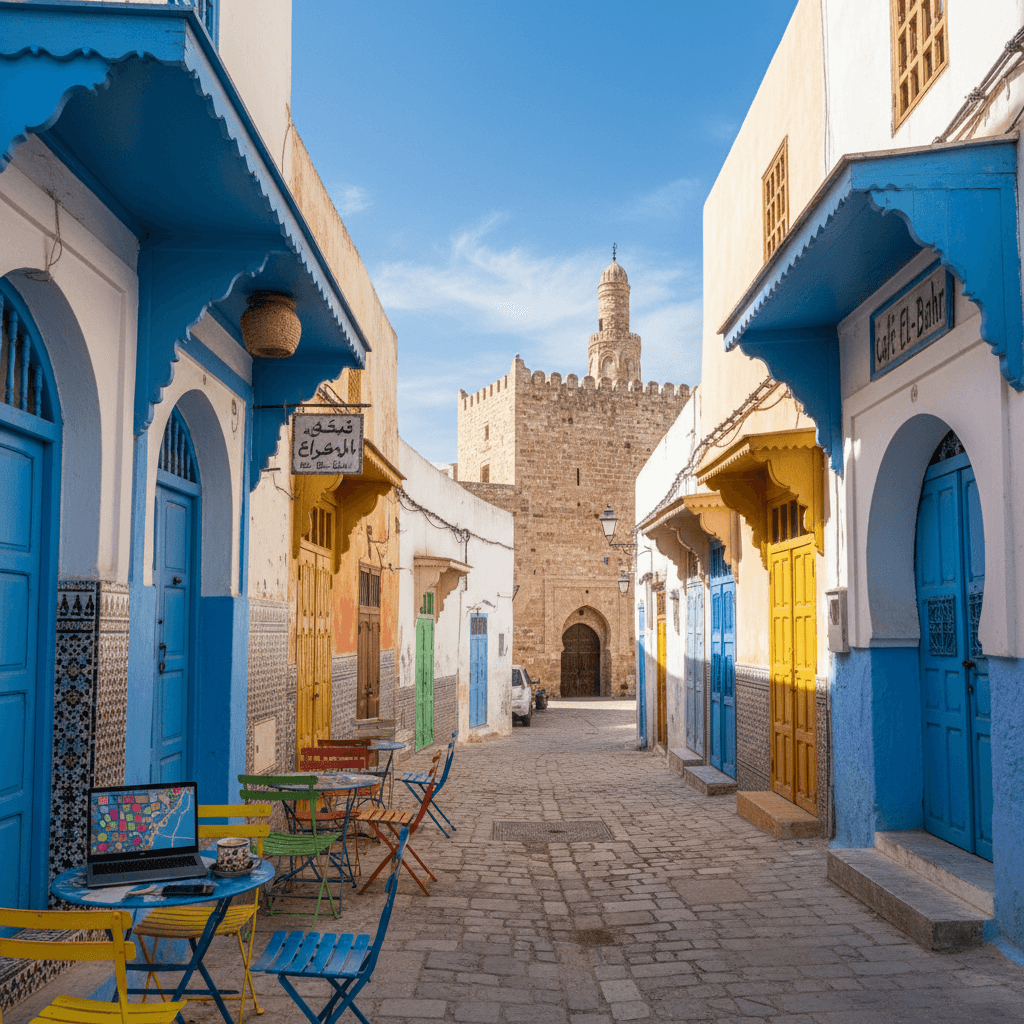
Monastir
🇹🇳 Tunisia
Monastir moves at a slower, sunnier pace than Tunis or Sousse and that’s the appeal. You get the Ribat, the marina, long beach walks and a city that feels lived-in rather than staged for visitors, with ferry horns, call to prayer and grill smoke drifting through the air. It’s calm. Sometimes a little too calm.
Most digital nomads come here for affordability, sea air and the fact that a one-bedroom can still be found around 350 to 900 TND in the center or 350 to 600 TND in Skanes if you don’t mind being farther out. Monthly life usually lands around $1,393, though you can do it cheaper if you eat local and keep nightlife expectations low, which, surprisingly, helps more than any budgeting app.
Where people actually stay
- City Center and Medina: Best for walkability, the Ribat, souks and cheap local rents, though the streets can be noisy and the buildings feel a bit worn.
- Marina: Best if you want cafes, sea views and easy access to the water, but prices jump and the summer crowds can get irritating fast.
- Skanes: Quieter, beachy and better for longer stays, with lower rents and resort-style housing, though you’ll need transport for most things.
- Outskirts: Cheapest option, honestly, but you’ll spend more time in taxis or louages and less time walking anywhere useful.
Internet is decent enough for work, not glamorous. Mobile speeds average around 60 Mbps, fixed broadband around 17 Mbps, Orange can be better and coworking starts near 350 TND a month, with hot desks and dedicated desks going up from there, so many people just post up in cafes with strong coffee and a charger.
Food and getting around both stay fairly painless and that matters here. Street food runs about 5 to 10 TND, a proper lunch is often 20 to 40 TND and a taxi or louage ride usually won’t sting, with the Metro du Sahel and ride-hailing apps like Yassir making day-to-day movement easy.
The downside is social life. Monastir doesn’t have much nightlife, the nomad crowd is small and if you want constant events you’ll get bored, frankly, so most long-stayers build their routine around cafes, beach time and day trips to Sousse or Mahdia. It feels safe enough in the center, but after dark keep to busy streets, because the quiet can turn awkward quickly.
Cost of Living in Monastir
Monastir’s cheap, but it isn’t dirt cheap. A solo nomad can scrape by on $800 to $1,200 a month if rent stays low and you’re happy eating street food, riding louages and keeping nightlife pretty tame.
Most people I’d call comfortable land closer to $1,200 to $1,800 and if you want a nicer apartment, more cafe time and the occasional beach club tab, $2,000+ starts making sense. The sea breeze helps, honestly, but the summer humidity can still cling to your clothes and make every walk feel longer than it's.
Housing
- City center and Medina: 500 to 900 TND for a 1BR, walkable and close to the Ribat, souks and older apartment stock.
- Marina: Usually pricier, with waterfront views, cafes and tourist-season markups.
- Skanes: 350 to 600 TND for a 1BR, quieter and cheaper, though you’ll rely more on transport.
- Outskirts: Cheapest option, but the tradeoff is simple, you’ll spend more time in taxis or on foot in places with very little shade.
Rents move around a lot depending on season and how local the landlord is, which, surprisingly, can matter more than the neighborhood name on paper. A furnished flat near the marina can look affordable until you add seasonal pricing, then it suddenly feels like a tourist trap with better wallpaper.
Daily Spending
- Street food: 5 to 10 TND, brik, sandwiches and quick bites.
- Mid-range meal: 20 to 40 TND, especially in cafes and seafood spots.
- Upscale dinner: 50+ TND, more if you’re ordering wine or dining by the water.
- Local transport: 2 to 5 TND per ride on louages or Metro du Sahel, cheap enough that most people don’t think twice.
The food scene is straightforward and that’s a good thing. You’ll smell grilled fish, cumin and fryer oil near the harbor, hear scooters buzzing past and call to prayer drifting over the rooftops, then pay a fraction of what you’d spend in Tunis or a European coastal town.
Internet and Working Costs
Internet isn’t dazzling here. Mobile and home speeds average around 11 Mbps, Orange can do better and coworking starts around 350 TND a month, so if you need video calls all day, test a SIM before you commit to an apartment.
Cafes work for light laptop days, but don’t expect a huge nomad crowd or endless networking events, because Monastir’s community is small and a bit scattered. Turn out the real setup is simple, a decent flat, a reliable SIM and a cafe with strong coffee and a plug that actually works.
Best Value Areas
- Best overall: City Center or Medina for walkability and value.
- Best for beach life: Skanes, if you don’t mind being farther from the center.
- Best for a nicer vibe: Marina, though the prices bite harder.
If you’re trying to keep costs down, skip the glossy waterfront spots and live a little inland, where the rent’s saner and the noise fades after dark. Monastir rewards people who keep things simple, it punishes the ones chasing resort comfort on a budget.
Monastir moves at a softer pace than Tunis or Sousse and that’s part of the appeal. You get sea air, the call to prayer drifting over the roofs, diesel from taxis at the rank and a town that doesn’t make you fight for every errand. Not flashy. Still, it works.
Solo Travelers
- Best area: City Center and Medina
- Why: You can walk to the Ribat, the souks, cheap cafes and the waterfront without much planning, which, surprisingly, saves a lot of hassle.
- Trade-off: It’s busy, a little noisy and apartments here are usually older, so don’t expect shiny lobbies or perfect soundproofing.
If you want to stay plugged into the old town, this is the spot. Rents run roughly 500 to 900 TND for a 1BR and that’s decent for the center, but you’ll hear scooters, vendors and late-night chatter through thin windows. Honestly, I’d pick this area if you want atmosphere more than comfort.
Nomads
- Best area: Marina
- Why: It’s the easiest place for cafes, sea views and quick access to the beach and you’ll be around other expats more often than anywhere else in town.
- Trade-off: Prices jump in tourist season and some spots feel half-empty once the summer crowd leaves.
The Marina is where most nomads end up, because it’s the closest thing Monastir has to a proper working base. You’ll find stronger wifi in some cafes, coworking options starting around 350 TND a month and enough coffee culture to get through a workday, though the internet can be, frankly, patchy outside the better buildings. Pack patience.
Families
- Best area: Skanes
- Why: Quiet beach zone, lower rents at about 350 to 600 TND for a 1BR and easier parking than the center.
- Trade-off: You’ll need transport for most things and nightlife is basically hotels and the occasional summer beach bar.
Skanes feels calmer, with wider roads, resort traffic and fewer people pressing past you in the street. Kids get space, adults get less noise and the trade-off is obvious, because you’re farther from the Medina and the Metro du Sahel. For longer stays, that compromise makes sense.
Budget Expat or Long-Term Stayer
- Best area: Outskirts
- Why: It’s the cheapest housing and you can sometimes find more space for the money than in the center.
- Trade-off: You’ll need taxis or a car and walkability drops off fast.
The outskirts suit people who don’t mind a little friction. You’ll save cash, sure, but you’ll also deal with fewer amenities, more planning and long stretches where the streets feel empty after dark. That’s the deal.
Monastir’s internet is decent enough for remote work, but it isn’t the place for spoiled bandwidth addicts. Expect average mobile speeds around 60 Mbps, fixed broadband around 17 Mbps, which is fine for calls, docs and light uploads, then suddenly annoying when you try to send a chunky design file. Honestly, that’s the rhythm here.
The coworking scene is small, though there are a few workable options and the rates are friendlier than in Tunis. Spaces start around 350 TND a month, while hot desks and dedicated desks usually run 420 to 750 TND with WiFi and meeting rooms included, so if you’re staying a month or two, the math can make sense fast, especially compared with café-hopping all day.
Where people actually work
- City Center and Medina: Best if you want to work near the Ribat, souks and cheap lunches, but the noise can be relentless, with scooters buzzing, shopkeepers calling out and the occasional prayer echo drifting through open windows.
- Marina: Good for cafés, sea views and a slightly more polished setup, though you’ll pay tourist prices and, weirdly, the waterfront can feel sleepy outside peak season.
- Skanes: Quiet, beachy and cheaper for longer stays, but you’ll need transport if you plan to meet people or do anything after dark.
Cafés do a lot of the heavy lifting here and many nomads just post up with a strong coffee and a charger. There’s usually enough of a coffee culture that nobody glares if you stay a while, as long as you’re buying something and not camping on one tiny table for six hours.
Connectivity is easier if you buy a local SIM right away, because airport kiosks and city shops sell plans from Ooredoo, Orange and Tunisie Telecom, usually with passport registration. For short stays, 1 to 50 GB plans are priced roughly between $6 and $32 and frankly, that’s the simplest backup when a café WiFi router starts acting up at the worst possible moment.
If you need a steady place to work, Monastir can do it, but it’s more “functional and affordable” than “slick and social.” The small nomad crowd means meetups are rare, so most people either work quietly, hunt for a good café or head to Sousse when they want a bigger scene and faster-moving chatter.
Monastir feels calm compared with Tunis or Sousse, but don’t mistake that for zero risk. Stay smart at night, skip empty stretches near the beach after dark and avoid political chatter if a crowd starts forming, because the city’s relaxed pace can flip fast when a demonstration kicks off.
Street smarts: The center, the marina and busy café streets are fine for normal daytime life, honestly, but remote areas and the western border zones are where you want to be extra careful. Monastir doesn’t have a famous no-go pocket, still the usual rules apply, keep your bag zipped, don’t flash your phone and take a taxi home if the sidewalks feel dead.
Nightlife is modest, so evenings often mean hotel bars, beach clubs or a quiet dinner while the muezzin call drifts over the rooftops and motorbikes buzz past. That sounds mellow and it mostly is, though the lack of foot traffic can make some streets feel oddly empty.
Healthcare
- Main public hospital: Hôpital Fattouma Bourguiba, decent for basic care, but English is limited and waits can be slow.
- Private clinics: Better if you want faster service and less paperwork, which, surprisingly, makes a big difference here.
- Pharmacies: Easy to find across town, useful for cold meds, bandages and simple prescriptions.
- Emergency: Call 190 for an ambulance.
For anything routine, pharmacies and private doctors are usually the smoothest route and frankly that’s what most expats do. If you need serious treatment, get someone local to help translate, because the system can feel clunky and the front desk won’t always slow down for English.
Practical safety moves
- At night: Use a taxi or Yassir, don’t wander the quiet edges of town.
- Cash and valuables: Keep them out of sight, especially around markets and transport hubs.
- Beach areas: Fine by day, but some stretches get lonely after sunset.
- Transport: Louages and metered taxis are normal, just agree on the fare or watch the meter.
The honest take, Monastir is safer than it first looks, but it isn’t sleepy enough to go on autopilot. The humidity can cling to your clothes, scooters hiss past and a missed turn into a dead side street can feel much less charming than the postcard version of town.
Monastir is easy to get around and honestly, that’s half the appeal. The center, Medina and Marina are all walkable, so if you’re based near the sea you can hear scooter engines, prayer calls and the occasional taxi horn without needing a car at all.
The main workhorse is the Metro du Sahel, which connects Monastir with Sousse and Mahdia, usually every 30 to 60 minutes and a ride only costs a few dinars. It’s cheap, a bit old-school and sometimes slow, but for day trips it beats sitting in traffic with the AC blasting and a driver smoking the whole way.
Best Options
- Metro du Sahel: Best for Sousse and Mahdia, low cost, decent for commuters, not glamorous.
- Louages: Shared taxis that leave when full, fast enough, but cramped and louder than they look.
- Yellow or white taxis: Good for short hops and the airport run to the center is around 12 minutes, roughly 20 TND if you’re not being hustled.
- Yassir: Handy for late nights or when you don’t want to negotiate in French or Arabic with a driver who’s already in a mood.
Walking works well in the core neighborhoods, but once you drift into the outskirts or Skanes, you’ll want wheels. Bike and scooter rentals show up around hotels and beach areas, which is fine on flat streets, though the heat in summer can hit like a wall and make a five-minute ride feel stupidly long.
For airport transfers, the taxi rank is the simplest option and pre-booking through a service like Welcome Pickups or GetTransfer can save you the arrival headache. Frankly, Monastir isn’t the kind of place where you need a complicated transport strategy, just some patience, small bills and a willingness to ask twice if a driver is quoting the real price.
Area by Area
- City Center and Medina: Walkable, noisy, best if you want to do errands on foot.
- Marina: Easy for cafes, beaches and taxis, but touristy and pricier.
- Skanes: Quieter and more spread out, so transport matters more.
- Outskirts: Cheaper, weirdly, but you’ll be dependent on taxis or louages.
Most nomads end up mixing it up, walk when the weather behaves, take a taxi when it doesn’t, then use the train for anything beyond town. That rhythm works here, because Monastir moves at a slower, slightly dusty pace and nobody’s pretending otherwise.
Arabic is the default here and not the polished classroom version, it's the Tunisian dialect you’ll hear in shops, taxis and on the street when someone calls after a cousin or haggles over tomatoes. French gets you pretty far in day-to-day life, especially with older shopkeepers, landlords and anyone in hospitality, while English is patchy outside hotels and tourist-facing cafes, which, surprisingly, can make simple errands feel weirdly tedious.
In the center, near the Medina and the marina, you’ll hear more mixed-language conversation, plus the clatter of cups, scooter engines and the morning prayer echoing off the walls. Outside those pockets, assume you’ll need a little patience, a phone translator and a sense of humor, because people are usually friendly, but they won’t always switch into English just to make things easy for you.
Useful phrases
- As-salaam alaikum: hello
- Shukran: thanks
- Kam?: how much?
- Tawa: now
- Barsha: a lot
Learn those five and you’ll get fewer confused looks and honestly, fewer tourist prices too. Say Kam? before you hand over cash in a souk, because bargaining is normal here and it’s a lot smoother when you’ve got even a tiny bit of Arabic in your pocket.
Google Translate helps, but don’t expect miracles when the seller is talking fast, the wind’s coming off the sea and the fish market smells like salt, diesel and ice melting on the pavement. If you’re living here longer than a week, use it for apartment chats, pharmacy questions and taxi misunderstandings, because those are the moments where English starts to fall apart.
French is the quiet lifesaver. A basic French text, a short voice note or even a few written words on your phone will get you through rent, utilities and most practical stuff much faster than trying to explain everything in English and the effort usually earns you better treatment.
Weather & Best Time to Visit
Monastir has that classic Mediterranean rhythm, hot sun, salt air and a sea breeze that feels lovely in the evening but barely helps at midday. July and August get brutally sticky, with highs pushing 35°C and the humidity can cling to you like a damp shirt, honestly, so plan on slow afternoons, iced drinks and more shade than sightseeing.
Spring is the sweet spot. April through June and then again in September and October, usually sits in the 20°C to 28°C range, which is warm enough for beach days but still sane for walking around the Ribat, the marina or the old center without arriving sweaty and cranky. The sea is decent too, often around 18°C to 25°C, so swimming doesn’t feel like a dare.
Winter is mild, but it’s not exactly postcard weather. December through February tends to hover around 10°C to 18°C and the mornings can feel cold enough for tile floors to bite your feet, especially in older apartments that never really warm up. Rain hits more often in late autumn and winter and October can be weirdly wet, so pack a light jacket and shoes that won’t soak through after one downpour.
Best Time to Base Yourself Here
- For beaches: Late May to early July, before the worst heat kicks in.
- For city exploring: April, May, September or early October, when walking actually feels pleasant.
- For cheaper stays: Winter, though the sea air gets brisk and some beach spots feel sleepy.
If you’re working remotely, spring and fall are the easiest months to handle. You can hop between a café near the marina, a beach walk and a quick train ride to Sousse without melting and the city still has enough life to feel useful, not just pretty. August, frankly, is for people who don’t mind sweating through lunch, then sitting under a fan while the call to prayer drifts over traffic and scooter noise.
My take: skip the peak-summer crush unless you’re here for a resort stay and don’t mind the heat. The shoulder seasons are cleaner, calmer and cheaper to live with, which is the real win in Monastir, not some fantasy about perfect weather every day.
Monastir’s practical rhythm is slow, a little stubborn and honestly pretty easy to live with once you stop expecting Tunis-style buzz. The city feels coastal and low-key, with the Ribat, the marina and the beaches doing most of the heavy lifting, while the call to prayer, scooter engines and frying oil from street stalls fill the background. Don’t come here for nightlife. Come for lower costs, a calmer pace and fewer headaches.
Where to stay
- City Center and Medina: Best if you want walkability, souks and easy access to the Ribat, with 1BR rents often around 500 to 900 TND.
- Marina: Good for cafes, sea views and expat-friendly convenience, though prices jump and summer crowds can be annoying.
- Skanes: Quieter beach-zone living, lower rents around 350 to 600 TND and more space, but you’ll need transport more often.
- Outskirts: Cheapest option, frankly, but only works if you don’t mind long walks, taxis or a bit of chaos getting anywhere.
For a monthly budget, most digital nomads land around $1,393, though you can do it cheaper if you eat local and keep your housing simple. Street food usually runs 5 to 10 TND, mid-range meals sit around 20 to 40 TND and taxis or louages are cheap enough that you won’t think twice about short hops, which, surprisingly, helps a lot in a city this spread out.
Internet, money and housing
- SIM cards: Grab one at the airport or a city shop from Ooredoo, Orange or Tunisie Telecom, passport in hand.
- Internet: Speeds average around 60 Mbps mobile, 17 Mbps fixed, though Orange tends to do a bit better.
- Coworking: Dedicated desks and hot desks start around 350 TND monthly and a few cafes work fine if you’re not fussed about fancy setups.
- Housing: Facebook groups, local agents like Prime Relocation and Airbnb are the main routes and the paperwork can be clunky.
Cash still matters, especially in markets and smaller shops, so keep some dinars on you and use Wise or Revolut when you can. ATMs are easy to find. The bureaucracy can be maddening, but that’s Tunisia, not Monastir alone.
Getting around and daily life
- Metro du Sahel: Cheap and useful for Sousse or Mahdia, with trains every 30 to 60 minutes.
- Louages: Fast shared taxis, a little chaotic and very local.
- Yassir: Handy for app-based rides, especially late or when you don’t want to haggle.
- Day trips: Sousse is the easy one, then Mahdia and Kairouan if you’ve got more time.
Dress modestly in town, tip around 10% and bargain in the souks without being rude about it. The weather gets sticky in summer, with humidity that clings to your shirt and makes stone floors feel cold indoors, so plan your errands early. Monastir isn’t flashy and that’s the point.
Frequently asked questions
How much does it cost to live in Monastir as a digital nomad?
How much is rent in Monastir for a one-bedroom apartment?
Is the internet good enough for remote work in Monastir?
How much does coworking cost in Monastir?
What is the best neighborhood in Monastir for digital nomads?
Is Monastir safe for digital nomads at night?
Need visa and immigration info for Tunisia?
🇹🇳 View Tunisia Country GuideOff the Radar
Pioneer territory