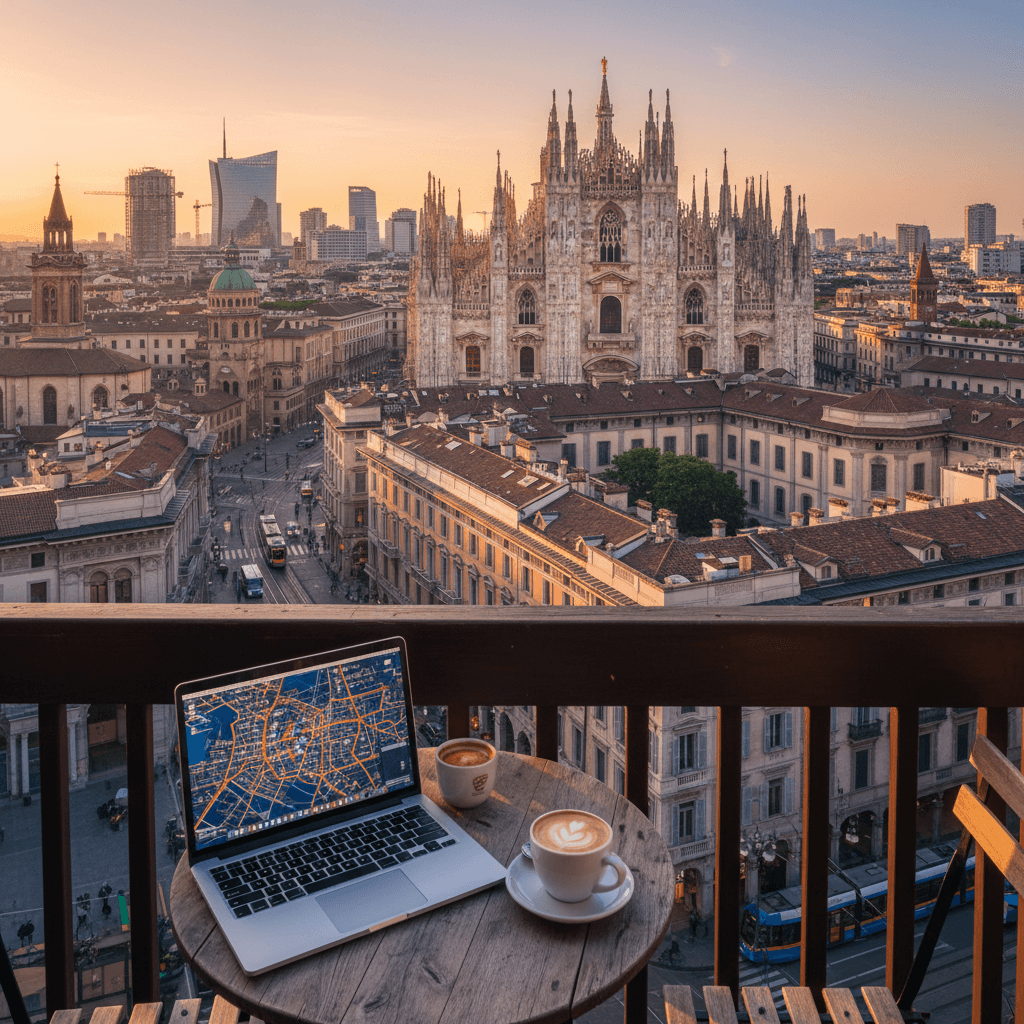
Milan
🇮🇹 Italy
Milan feels sharp, polished and a little impatient. It’s Italy’s business engine, not a sleepy postcard city, so you get fashion week energy, finance money and museum-level beauty in the same block, then a scooter blaring past a 17th-century façade.
That mix is the point and also the headache. The center looks stunning, the tram bells clatter through the streets, espresso shots vanish in two sips and then you remember that rent here can make your eyes water, because Milan is pricey in a way that catches a lot of nomads off guard.
Typical monthly budget: €1,500 to €2,500 for one person, with housing eating the biggest chunk. Shared flats can keep you near the lower end, but a decent one-bedroom in central areas climbs fast, honestly and you’ll feel that in places like Brera, Centro Storico or Porta Nuova.
- Budget: €1,500 to €2,000, usually shared housing, quick lunches and a fair bit of supermarket pasta.
- Mid-range: €2,000 to €2,500, often a one-bedroom farther out, better dinners and a coworking pass.
- Comfortable: €2,500+, central apartment, more aperitivo tabs and less price anxiety.
Food and transit are manageable if you’re careful. A street food meal might run about €12 with a drink, a simple trattoria lunch is closer to €12 to €18 and a monthly transport pass is €39, which, surprisingly, still feels like a bargain compared with riding everywhere by taxi.
Where nomads actually settle
- Porta Venezia: Best all-rounder for expats, solo travelers and anyone who wants cafes, culture and a big international crowd.
- Navigli: Social, creative, canal-side, but weekends get noisy and touristy fast.
- CityLife and Porta Nuova: Clean, modern, safe and kind of corporate, which some people love and others find soulless.
- Isola and Lambrate: Better if you want a slightly rougher, more local feel without paying Brera prices.
The work side is strong. Internet is reliable citywide, coworking options like Talent Garden, Copernico, WeWork and Regus are easy to find and the cafe scene around the center works well for laptop days, though nobody’s pretending Milan is cheap or laid-back.
Safety is decent, with petty theft being the main nuisance, especially around Duomo, Centrale and packed tram lines. Nighttime can feel tense in quieter outer areas, the air gets humid in summer and by August the heat sticks to your skin, but in May or September the city feels at its best, crisp enough to walk for hours.
What makes Milan different is the pace. People move fast, dress well and keep an eye on the clock, so if you like a city that feels useful, stylish and slightly unforgiving, Milan makes sense, if you want lazy charm and cheap living, it really doesn’t.
Milan isn’t cheap. A single nomad usually spends €1,500 to €2,500 a month and rent eats the biggest chunk, which, honestly, is where the city starts to sting. The upside is that you’re paying for a proper European business hub, with fast internet, solid transit and a lot of neighborhoods where you can get by without a car.
Shared flats keep things sane. A studio or one bedroom in Centro Storico can run €1,500 to €2,200, Brera often lands at €1,800 to €2,500 and Moscova or Porta Nuova sits around €1,600 to €2,300, so central living gets expensive fast and the walls are usually older, louder and thinner than you’d expect.
Typical monthly budget
- Budget tier: €1,500 to €2,000, usually shared housing, cheap eats and a lot of supermarket dinners.
- Mid-range: €2,000 to €2,500, with a one bedroom farther out and more mid-range restaurants.
- Comfortable: €2,500+, enough for central rent, regular aperitivo and the occasional nicer dinner.
Food is manageable if you don’t eat every meal in the center. A street food or McDonald’s combo is about €12, lunch at a trattoria usually sits around €12 to €18 and an aperitivo buffet can be €8 to €12, with bread, olives and the smell of fried stuff drifting out into the street. Dinner for two at a mid-range place is about €85 and that jumps quickly once you start ordering wine.
Everyday costs
- Transport: €39 for a monthly pass, which is a decent deal if you’re using the metro and trams a lot.
- Coworking: €150 to €350 for a hot desk, with Talent Garden, Copernico and WeWork all in the mix.
- SIMs: €12 to €18 for 10 to 20GB, often from Vodafone or WindTre.
Co-working here, weirdly, feels less painful than café-hopping, because a lot of central cafés get noisy fast, with espresso machines hissing and scooters buzzing outside. The internet is usually reliable, around 150-200 Mbps citywide, so you won’t spend your day fighting a bad connection, though you may spend it fighting for a quiet chair.
If you want to keep costs down, look at Isola or Lambrate, skip nightly taxis and avoid the Brera habit of saying yes to every polished little wine bar. Milan can be comfortable, but it doesn’t pretend to be budget-friendly and that’s the real trade-off.
Source 1 | Source 2
Milan is pricey, plain and simple. The best neighborhood depends on how much noise you can tolerate, how central you want to be and whether you care more about late aperitivo crowds or a calmer street at night.
Nomads
- Navigli: Best if you want coworking, nightlife and easy meetups. Talent Garden sits nearby, the canals smell like damp stone and fried food at night and the area stays lively, though weekends can get stupidly noisy.
- Isola: Good for a creative scene and a slightly lower bill, with newer cafes, decent transit and a more local feel, though it still feels a bit unfinished in spots.
- Lambrate: Cheaper than the center and, frankly, easier on the wallet, with a scrappier student energy and less polished streets, so you’ll trade convenience for price.
If you’re working remotely and don’t need Duomo at your doorstep, start with Isola or Lambrate. Navigli is fun, but it can turn into a tourist funnel by Friday night and the noise from bars carries into apartments way too easily.
Expats
- Porta Venezia: Best for a multicultural scene, LGBTQ+ friendly bars and walkability, with a mix of old buildings and everyday Milan life, though rents stay high.
- City Life: Clean, modern and safe, with parks and big apartments, but it feels corporate and honestly, a little sterile after a while.
- Porta Nuova: Great for professionals who want glass towers, polished gyms and business lunches, though the whole area can feel like a very expensive office park.
Porta Venezia is the move if you want neighbors, not just offices and polished lobbies. You’ll hear tram bells, scooters and people chatting outside bars and you’re still close enough to the center that getting around feels easy.
Families
- City Life: Best for space, parks and a calmer street grid, with newer apartments and better access to green areas than most central districts.
- Porta Nuova: Works for families who want security and modern buildings, though the rents are punishing and the vibe can feel too slick.
Families usually do better here than in the historic core, because Centro Storico gets crowded fast and apartment layouts can be awkward, with narrow stairwells, tiny elevators and old windows that don’t block street noise well.
Solo Travelers
- Centro Storico/Brera: Best for a short stay if you want to walk everywhere and don’t mind paying a lot for the privilege, which, surprisingly, many people do.
- Porta Venezia: Safer-feeling, livelier and less exhausting than the center, with plenty of cafes for people-watching.
If you’re here alone, skip the most tourist-heavy blocks unless you love crowds and overpriced espresso. Brera is beautiful, sure, but your wallet will feel it and the better long-stay balance is usually Porta Venezia or Navigli, depending on how much nightlife you want in your ears.
Internet & Coworking
Milan’s internet is usually solid, with speeds around 150-200 Mbps and enough stability that you can jump on calls without sweating every five minutes. Not cheap, though. A decent coworking desk runs €150 to €350 a month and that price is very Milan, especially once you’re near Porta Nuova or the Centro Storico.
The coworking scene, honestly, is one of the city’s better features, because you’ve got real options instead of the usual sad café-with-two-sockets setup. Talent Garden in Calabiana [2] gets the most nomad love, Copernico feels more corporate but works well and WeWork on Via Meravigli or Via Mazzini is convenient if you want a central address and don’t mind paying for it.
- Talent Garden: Best for nomads, creative people and networking, especially if you want after-work drinks.
- Copernico: Good for a quieter, more businesslike day, with fewer distractions and fewer “startup bros” hovering around.
- WeWork: Central, polished, expensive and very easy to book if you’re only in town for a short stretch.
- Regus: Practical if you need multiple locations, but frankly it feels more office park than Milan.
Cafés near the Duomo and around Brera can work for a few hours, though some are noisy with espresso machines hissing, chairs scraping tile and tourists talking over each other in four languages. Turn up early if you want a seat, because once lunch starts the good tables vanish fast and many places get twitchy if you linger too long over one cappuccino.
For mobile data, Vodafone and WindTre usually sell SIMs for about €12 to €18 with 10 to 20GB and airport kiosks are fine if you need something immediately. eSIMs from services like Airalo or GigSky are handy too, especially if you land late and don’t want to hunt for a shop while dragging a suitcase over wet tram tracks.
- Best areas for working: Porta Nuova, Navigli, Porta Venezia and parts of Brera if you can handle the noise.
- Best for budget nomads: Use cafés for calls, then buy a hot desk only on days when you need focus.
- Best for team days: Regus or WeWork, because the meeting rooms are easier than improvising in a café.
If you’re here for more than a week, get a local SIM and a coworking pass, then stop worrying about connection issues. Milan’s Wi-Fi usually behaves, but the city moves fast, the pavements are loud and trying to work through a tram bell chorus outside your window gets old pretty quickly.
Milan feels safe in the center, but petty theft is real and it happens fast, especially around Duomo, Centrale and on packed trams. Keep your phone zipped away, don’t drape a bag over a chair at aperitivo and ignore the guys hovering near station exits, honestly they’re usually after an easy grab, not a confrontation.
Italy’s northern money city gets a lot of foot traffic, so the usual urban rules apply, though Milan is still widely seen as one of Italy’s safest major cities. Late at night, some peripheral streets feel thin and cold, with shutters down, a few scooters buzzing past and that weird echo you only get in half-empty blocks, so most nomads stick to Porta Venezia, CityLife, Porta Nuova or central areas after dark.
If something does go wrong, call 112. That’s the emergency number. Pharmacies are everywhere, the green cross signs are hard to miss and many pharmacists can handle basic advice, bandages and minor meds without making a fuss.
Healthcare
- Clinics: Private clinics and larger hospitals generally have English-speaking staff, especially in central neighborhoods.
- Coverage: Register with the national system if you’re staying long term or get private insurance like Cigna if you want faster, cleaner paperwork.
- Pharmacies: Easy to find, open late in some areas and good for simple problems before you waste a hospital visit.
- Good move: Keep your insurance card, passport copy and local address info saved on your phone, because reception desks can be slow and, frankly, paperwork is still Italy.
For day to day life, Milan’s healthcare setup is solid, but don’t expect hand-holding. Book appointments early, bring ID and be ready for waiting rooms with hard plastic chairs, fluorescent lights and the smell of disinfectant mixed with strong coffee from the vending machine.
Most nomads find the real risk isn’t violent crime, it’s getting careless in crowded places. Keep backpacks in front of you on trams, don’t leave laptops visible in cafés near the Duomo and stay alert around Centrale, where the rush can be noisy, pushy and a bit grim after dark.
Getting around Milan is easy enough, but it isn't cheap and the metro crowd at 8:30 a.m. will remind you fast that everyone else had the same idea. The ATM network covers metro, trams and buses, so most nomads just tap in, tap out and keep moving.
A single ride costs €2.00 and the monthly pass is €32.50, which is decent value if you're commuting to coworking spaces or crossing town a few times a week. Honestly, that's the price of avoiding taxi drama, because Milan traffic can crawl, horns start bleating and the streets around Centrale and Duomo get irritatingly packed.
Best ways to move
- Metro, tram, bus: Best all-around choice, reliable, frequent and cheap for a big European city.
- BikeMi: Handy for short hops, though bike lanes can feel patchy and scooters appear out of nowhere, which, surprisingly, keeps you alert.
- Walking: Great in the center and around Brera, Porta Venezia and Navigli, where cafés, canals and shops are close together.
- Uber and Bolt: Useful late at night or when rain turns the pavements slick and grimy.
If you're heading in from the airports, Malpensa is the annoying one, but the Malpensa Express gets you to the center in about 50 minutes for €15. Linate is much easier, the M4 metro gets you into town in roughly 15 minutes and that makes a real difference when you've got luggage, a laptop bag and no patience left.
For day-to-day life, most nomads stick to neighborhoods that make walking realistic, especially Porta Venezia, Navigli and Brera. Porta Nuova and CityLife are cleaner and more modern, but they can feel a bit corporate, frankly, like you're spending your afternoons inside a glossy office brochure.
Practical tips
- Download: The ATM app before you arrive, it makes ticketing and route checking much less painful.
- Plan for heat: Summer rides can be sweaty and airless, with tram brakes squealing and bodies packed shoulder to shoulder.
- Expect delays: Trams run often, but road traffic and rain can slow them down.
- Use the center: Milan's core is compact, so walking between meetings, cafés and aperitivo spots usually beats waiting for a cab.
Night travel feels fine in the center, though you'll still want to watch your bag around Duomo, Centrale and busy tram stops. Petty theft is the main hassle, not some dramatic citywide danger, so keep your phone zipped away and don't get distracted by the espresso smell drifting out of a bar while you're standing under the neon.
Milan’s language rhythm is part of the job here. Italian is the default, English works in business hotels, coworking spaces and around Duomo or Porta Nuova, but step a few blocks out and you’ll hear more Italian, more dialect and a lot less patience for slow communication, honestly.
Say Buongiorno when you walk in, Grazie when you leave and don’t be surprised if the reply is quick and clipped, because people move fast here and they expect you to keep up. The city feels smoother once you do and weirdly, even a rough accent helps more than perfect grammar.
What to Expect
- Center: English is decent in Brera, Centro Storico, Porta Nuova and the main coworking spots.
- Outside the center: English drops off fast, especially in smaller shops, older apartment buildings and neighborhood bars.
- Daily life: You’ll need basic Italian for landlords, building staff, deliveries and bureaucratic bits.
The biggest pain point is simple: translations break down at the exact moment you need them, like when a courier can’t find your buzzer or a property manager wants paperwork explained on the spot. Google Translate helps, sure, but it’s clunky in a real conversation and the person across from you may already be annoyed by the delay.
Useful Phrases
- Buongiorno: Hello, good morning.
- Grazie: Thanks.
- Per favore: Please.
- Parla inglese?: Do you speak English?
- Non capisco: I don’t understand.
For long-term stays, a few weeks of daily practice pays off. Language apps help, but the real progress comes from ordering coffee, asking for directions and handling small mistakes without freezing up, which, surprisingly, Italians usually respond to better than polished app Italian.
My take, skip the fantasy of getting by on English alone, because Milan will punish that laziness with missed details and awkward silence. Learn the basics, keep a translation app open and if you’re house hunting in Isola, Lambrate or any building with an old elevator that squeaks like it’s tired of life, expect more Italian than you planned for.
Milan doesn’t play nice with your wallet. Summer gets sticky and loud, winter can feel damp and grey and the city’s best months are the ones when you can still sit outside with an espresso without sweating through your shirt or shivering on a tram platform.
May and September are the sweet spot, honestly, with mild temperatures, decent daylight and fewer miserable moments on the Metro when the air turns stale. You still get the usual city noise, scooters whining past, delivery bikes dodging traffic, café cups clinking, but it feels manageable and your jacket actually has a purpose.
July and August are rough. Not impossible, just rough. The heat sits on you, humidity clings to your skin and the pavements around Duomo and Porta Nuova can feel like they’re reflecting the sun straight back into your face, so if you hate sweaty commutes, skip that period.
Best Months
- May: Warm, greener streets and good for long walks in Porta Venezia or around the canals.
- September: Still pleasant, with a slightly sharper evening chill and a nicer pace after summer crowds thin out.
- October: Cooler and often rainy, but good if you don’t mind umbrellas and wet tram stops.
What to Expect by Season
- Winter, November to February: Cold, damp and grey, with lows around 4°C, plus that weirdly bone-deep chill you feel on tiled floors indoors.
- Spring: One of the best bets, though May can still bring a lot of rain, so don’t trust a sunny morning too much.
- Summer: Hot, humid and crowded with tourists, which, surprisingly, makes simple errands feel more exhausting than they should.
If you’re working remotely, plan around the weather the same way locals do, lighter clothes in summer, a proper coat in winter and waterproof shoes if you’re here in autumn. November through February is the least charming stretch, but rent doesn’t suddenly get nicer and the drizzle around Centrale or the smell of wet asphalt after rain can make the city feel heavier than it looks on paper.
Best advice? Come in spring or early autumn, stay flexible and don’t book Milan for a heatwave unless you enjoy sweating through aperitivo at 7pm, because the city can be elegant and annoying in the same hour.
Milan isn’t cheap and pretending otherwise is pointless. A solo nomad usually spends about €1,500 to €2,500 a month, with rent eating the biggest chunk, then food, transit and the occasional overpriced espresso that somehow still tastes better than the one at home.
If you want to keep costs sane, live a little outside the center and shop your apartment hunt hard. Studios and 1BRs in Centro Storico often start around €1,500, Brera gets silly fast and Porta Nuova or Moscova can climb too, while shared flats in Isola or Lambrate make way more sense for most people, honestly.
What Budget Feels Real
- Low: €1,500 to €2,000, shared housing, street food, more cooking at home.
- Mid: €2,000 to €2,500, a decent one-bedroom on the edge of the center, plus regular meals out.
- Comfortable: €2,500+, central rent, coworking, aperitivo without checking your bank app after.
Food adds up faster than you think. A street pizza or kebab runs about €5 to €8, a trattoria lunch is often €12 to €18 and aperitivo, which, surprisingly, can cover dinner if you time it right, usually lands around €8 to €12.
For daily life, get familiar with the ATM app, because the metro, trams and buses are easy once you stop overthinking them. A single ticket costs €2.20, a monthly pass is €39 and BikeMi bikes are handy when the streets are warm and the air smells like exhaust, coffee and rain on hot pavement.
Neighborhoods That Make Sense
- Porta Venezia: Great for expats and solo nomads, walkable, social, busy.
- Navigli: Best for nightlife and coworking, noisy on weekends, still fun.
- City Life, Porta Nuova: Clean, safe, corporate, pricey, kind of soulless.
- Isola, Lambrate: Better value, more local, less central.
Internet is solid citywide, usually 150-200 Mbps, so working from home won’t make you cry. Vodafone and WindTre SIMs are easy to buy in stores or at the airport, with packages around €12 to €18 for 10 to 20GB and if you want a desk, Talent Garden, Copernico and WeWork are the names people actually use.
Watch your stuff around Duomo and Centrale, because pickpockets love distracted tourists and crowded trams. Milan is generally safe, weirdly calm in the center at night, but late peripheral areas can feel empty and a bit sketchy, so keep your phone tucked away and take a cab if the street feels off.
Daily habits matter here. People eat lunch late, aperitivo starts around 6pm, cappuccino after 11am gets side-eye and dressing smart-casual helps more than you’d expect, especially if you’re apartment hunting or meeting anyone from the local startup crowd.
Need visa and immigration info for Italy?
🇮🇹 View Italy Country GuideEasy Landing
Settle in, no stress
Monthly Budget Estimates
More cities in Italy
Salerno
🇮🇹 Italy
Padua
🇮🇹 Italy
Lecce
🇮🇹 Italy