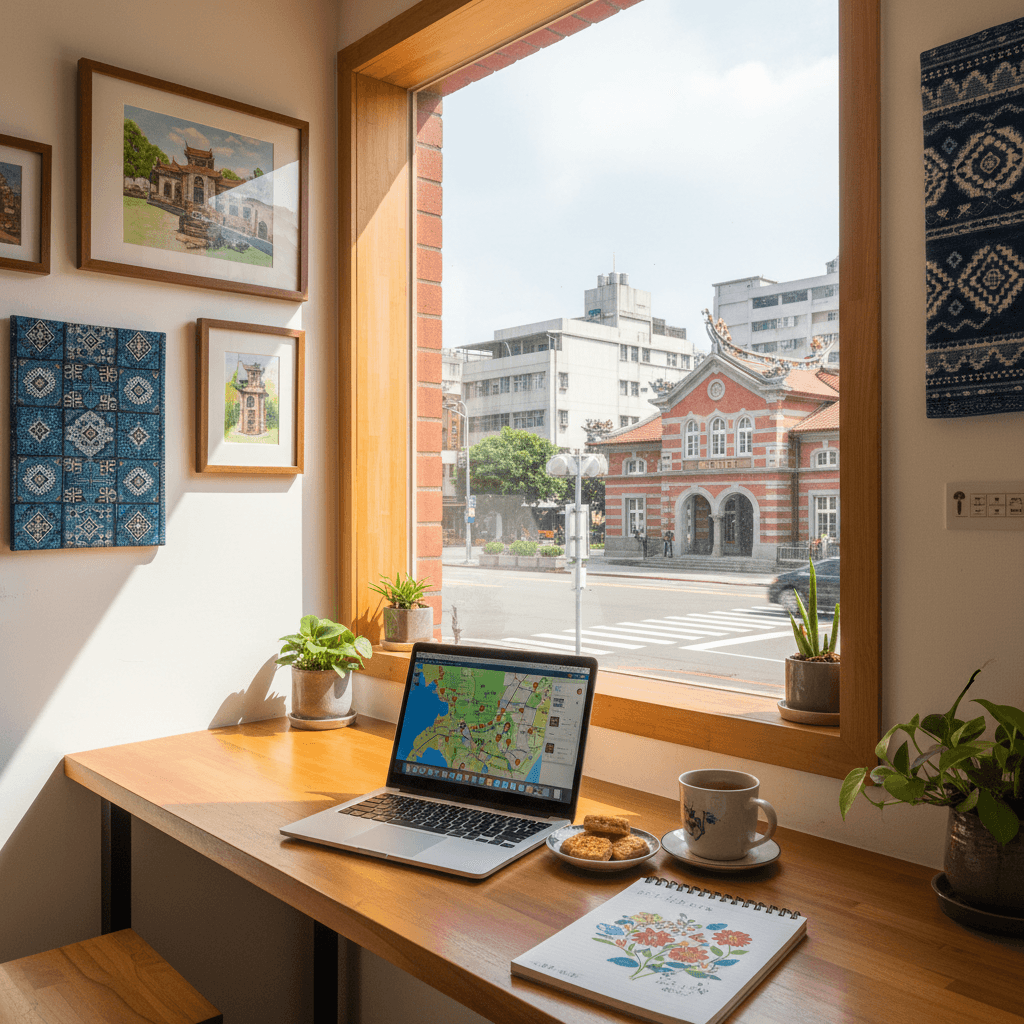
Miaoli City
🇹🇼 Taiwan
The Hakka Heartland Reset
If Taipei is Taiwan's high-octane engine, Miaoli is its deep, slow breath. Located about 90 minutes south of the capital, this isn't a place where you'll find glass skyscrapers or a 24/7 clubbing scene. Instead, Miaoli offers a rugged, mountain-to-ocean transition that feels remarkably grounded. It is the heart of Taiwan's Hakka culture, which translates to a vibe that is industrious yet incredibly quiet. For nomads, the emotional payoff here is the lack of performance; you aren't competing with thousands of other remote workers for a seat at a trendy cafe. You're just living.
The city serves as a basecamp for a much larger outdoor playground. Most travelers arrive expecting a sleepy provincial town and are surprised by the sheer scale of the landscape. You can spend your morning working from a high-altitude tea plantation in Tongluo and your afternoon watching the sunset over the Taiwan Strait in Zhunan. It feels less like a city and more like a collection of connected villages, each with its own pace. It is the kind of place where the local shopkeeper will remember your coffee order by day three, and the "rush hour" consists of a few extra scooters at a red light.
The Local Rhythm
Life in Miaoli revolves around the sun and the stomach. In the mornings, the city is surprisingly active with traditional markets, but by mid-afternoon, a heavy, peaceful stillness settles over the streets. This is the best time to get work done. While you won't find dedicated coworking hubs with neon signs and networking mixers, the cafe culture is robust and welcoming. Establishments like Donghai Xu Coffee offer reliable WiFi and plenty of power outlets without the "hurry up and leave" pressure common in Taipei.
When the sun goes down, the action shifts to the night markets. The Yingcai Night Market, open on Wednesdays, Fridays, and Saturdays (closed Sundays, which move to Houlong Night Market), is the local living room. Unlike the tourist-packed markets in the north, Yingcai is where families gather and students hang out. You can grab Hakka stir-fry or mochi for NT$50 to NT$150 and actually find a place to sit and eat it. It’s unpretentious, affordable, and authentic.
What Sets It Apart
Miaoli is defined by its "slow city" certification, and it takes that reputation seriously. It is one of the few places in Taiwan where you can truly experience "beach mode" and "mountain mode" in the same twenty-four-hour cycle. Nomads who have stayed here for years, like Jili, often point to the Tongluo Tea Factory as the ultimate office. Imagine a glass-walled workspace overlooking rows of tea bushes with a pot of local Oriental Beauty tea at your side for the price of a standard latte. It is a zen-like productivity that’s hard to replicate in a concrete jungle.
The trade-off for this tranquility is a dependency on wheels. To really "get" Miaoli, you need a scooter. Public transport exists, but the magic happens on the winding backroads between the old streets of Nanzhuang and the coastal dunes of Houlong. It’s a destination for the self-sufficient nomad who prefers a hiking trail over a cocktail bar and a quiet sunset over a crowded networking event.
Cost of Living Breakdown
- Budget Tier (NT$20,000 to NT$30,000/month): This covers a bed in a local guesthouse or a basic older apartment, eating almost exclusively at night markets and local noodle shops, and using the bus system.
- Mid-Range (NT$30,000 to NT$50,000/month): The sweet spot for most nomads. This includes a comfortable private studio, a monthly scooter rental for about NT$300 per day, and frequenting the better cafes and Hakka restaurants.
- Comfortable (NT$50,000+/month): This allows for a premium apartment or a long-stay at a resort like Beautiful Landscape, car rentals for weekend trips, and high-end dining at mountain tea houses.
The Neighborhood Vibe
- Miaoli City: The most practical choice for solo travelers. It’s walkable, close to the Yingcai Night Market, and has the highest density of work-friendly cafes.
- Tongluo: Perfect for those who want total silence. It’s home to the iconic tea factory and offers a more rural, expat-friendly atmosphere among long-term residents.
- Zhunan/Houlong: Best for the "surf and turf" crowd. You’re right by the coast, though you’ll deal with more wind and fewer urban amenities.
- Nanzhuang: A cultural hub with century-old streets. It’s great for a weekend immersion in Hakka history, though it gets busy with domestic tourists on Saturdays.
The Price of the Quiet Life
Miaoli City is where your bank account finally gets a breather. While Taipei prices continue to climb, Miaoli remains one of the most affordable corners of Taiwan for remote workers who don't mind trading neon lights for mountain views. You can live a high quality life here for a fraction of what you would spend in the capital, provided you're willing to embrace the local pace.
Most digital nomads find that a monthly budget of NT$30,000 to NT$50,000 covers a comfortable mid range lifestyle. This includes a decent apartment, daily cafe visits, and a scooter rental for weekend coastal runs. If you're on a strict budget, you can get by on NT$20,000 to NT$30,000 by sticking to hostels and the legendary street food scene at Yingcai Night Market.
Housing and Accommodation
Rent is the biggest win here. A modern studio or one bedroom apartment in Miaoli City typically runs between NT$10,000 and NT$20,000 per month. If you head further out to rural spots like Tongluo or the coastal area of Zhunan, those prices drop even further. For short term stays, travelers often use Tou Yuan Motel or verify local listings or the Beautiful Landscape Resort as a base while scouting for long term rentals on local Facebook groups like Room Abroad.
Eating and Drinking
The "Din Tai Fung Index" proves Taiwan is already a bargain, but Miaoli's Hakka cuisine takes it a step further. You'll find yourself eating incredibly well without trying.
- Street Food: Budget NT$50 to NT$150 for a full meal at night markets. Don't miss the Hakka mochi or savory snacks at the Yingcai market on Wednesdays and Fridays.
- Mid Range Dining: A sit down meal in Nanzhuang Old Street or a local Hakka restaurant usually costs NT$200 to NT$400.
- Cafes and Coworking: Since dedicated coworking spaces are rare, you'll likely work from spots like Donghai Xu Coffee or the Tongluo Tea Factory. Expect to spend NT$100 to NT$200 for a seat and a drink, which usually includes fast WiFi and power outlets for the afternoon.
Transportation and Connectivity
Public transport exists, but it isn't the MRT. To really enjoy Miaoli, you need your own wheels. Expats almost universally recommend renting a scooter, which costs about NT$400-600 per day or significantly less for a monthly lease. It's the only way to reach the best tea farms and beaches on your own schedule.
For getting in and out of the city, the HSR (High Speed Rail) is your best friend. A trip from Taoyuan Airport to Miaoli Station is about NT$150 and takes less than an hour. Once you're in town, make sure you have an EasyCard with at least NT$500 loaded; it works for buses, trains, and even convenience store snacks.
Digital Nomad Essentials
Staying connected is cheap and reliable. You can grab a local SIM from Chunghwa Telecom or Taiwan Mobile for NT$300 to NT$500, giving you plenty of data for a month. If you prefer the eSIM route, Airalo works perfectly across the region. If you're planning a longer stay, the new Digital Nomad Visa (launched January 2025) allows up to 180 days initial stay, with extensions possible for a total maximum of 2 years, provided you can prove your remote income.
For Nomads: Miaoli City & Tongluo
If you're coming to Miaoli to actually get work done, the city center is your most logical base. It's the only area where you'll find a concentrated "cafe culture" reliable enough for a four hour deep-work session. Donghai Xu Coffee is the local favorite; it has solid WiFi, plenty of sockets, and a quiet atmosphere on the second floor. Most nomads here appreciate the walkability of the city core, especially with the Yingcai Night Market popping up on Wednesdays, Fridays, and Saturdays. You can grab dinner for under NT$150 and be back at your laptop in minutes.
For those who don't mind a 20 minute scooter ride for a better view, Tongluo is the move. It's home to the Tongluo Tea Factory, which has become a legendary "unofficial" coworking space. It's an open, Zen inspired building with floor to ceiling windows overlooking tea plantations. As long as it isn't a public holiday, it's quiet, has free WiFi, and offers a massive productivity boost. Rent in these areas is significantly lower than Taipei, usually hovering between NT$10,000 and NT$20,000 for a decent studio.
- Vibe: Low key, functional, and culturally authentic.
- Top Spot: Donghai Xu Coffee for focus; Tongluo Tea Factory for inspiration.
- Daily Cost: Around NT$800 to NT$1,200 including a scooter rental.
For Solo Travelers: Zhunan & Houlong
Solo travelers looking for a "beach mode" lifestyle should head toward the coast. Zhunan and Houlong offer a rugged, windswept coastline that feels worlds away from the mountain fog of the interior. It’s less about luxury resorts and more about raw nature. You'll find wide beaches that are perfect for clearing your head after a day of travel. The Houlong Night Market on Sundays is a major draw, offering a more local, less polished experience than what you'd find in larger cities.
The main trade off here is infrastructure. You'll absolutely need a scooter to get around, as public buses are infrequent. However, the sense of freedom is hard to beat. If you're staying here, look for small guesthouses or local B&Bs near the train stations. It’s a great spot to meet local surfers or photographers who frequent the coast for the sunset views.
- Best for: Sun seekers, surfers, and photographers.
- Transport: Scooter is mandatory; rentals cost about NT$300 per day.
- Social Scene: Weekend night markets and beachside hangouts.
For Families and Hikers: Nanzhuang
Nanzhuang is the cultural heart of the region and the best fit for families or those who want immediate access to trails. The neighborhood is famous for its Old Street, a labyrinth of three narrow alleys packed with Hakka snacks and traditional crafts. It’s much more atmospheric than the city center, though it gets crowded with domestic tourists on Saturdays and Sundays. For families, it’s a safer, slower environment with plenty of outdoor space for kids to run around.
Hikers use Nanzhuang as a gateway to the surrounding mountains. There are numerous well marked trails that lead into the cedar forests. While there isn't a massive expat community here, the locals are incredibly welcoming, and the air quality is some of the best in Taiwan. Expect to pay a bit of a premium for accommodation here, especially in the boutique "minshus" or homestays that dot the hillsides.
- Vibe: Scenic, historic, and family friendly.
- Food: Authentic Hakka dishes like Osmanthus jam and sticky rice.
- Pros: Immediate access to nature and cultural landmarks.
For Long Term Expats: The Periphery
Expats who have settled in Miaoli for the long haul often choose the outskirts of the city or nearby Toufen. These areas offer a better balance of modern conveniences, like larger supermarkets and better healthcare access, without the noise of the city. Since Taiwan is incredibly safe, you can walk these neighborhoods at 3 AM without a second thought. Most long termers recommend joining Facebook groups like "Room Abroad" to find housing, as many of the best deals aren't listed on English websites. You'll likely want to invest in a car or a high quality scooter if you plan to stay more than a few months, as the rural beauty of Miaoli is best explored on your own schedule.
- Housing: Private apartments are affordable, often starting at NT$12,000.
- Healthcare: Easy access to regional hospitals using your EasyCard for transport.
- Language: Mandarin and Hakka are dominant; keep Google Translate handy.
Digital Infrastructure in the Hakka Heartland
Miaoli isn't Taipei, and for most nomads, that's exactly the point. You won't find sleek, multi-story coworking franchises with neon signs and networking mixers here. Instead, the work culture is decentralized and integrated into the city's slow-burn lifestyle. It's the kind of place where you trade a dedicated desk for a view of a tea plantation or a quiet corner in a family-run cafe.
The good news is that Taiwan's world-class internet infrastructure doesn't stop at the city limits. Whether you're tucked away in a rural homestay in Tongluo or a rental in the city center, you can expect stable, high-speed fiber. Most nomads find that a combination of a solid 5G data plan and a few reliable "work-friendly" cafes is more than enough to stay productive.
Top Spots to Get Work Done
While dedicated coworking spaces remain rare, several local establishments have stepped up to fill the void. These spots are accustomed to people staying for a few hours with a laptop, provided you keep the coffee orders flowing.
- Tongluo Tea Factory: This is the gold standard for remote work in the region. Located about 20 minutes from the city center, it features floor-to-ceiling windows overlooking manicured tea gardens. It's quiet on weekdays, offers free WiFi, and provides a zen environment that beats any office. Most nomads aim for the window seats to maximize the view.
- Donghai Xu Coffee: A favorite within Miaoli City itself. It spans two floors and is well-equipped with power sockets and reliable WiFi. The atmosphere is focused, making it a reliable "office" for a four-hour deep work session.
- Starbucks (Miaoli Locations): It's a cliché for a reason. If you're in a pinch, the local Starbucks branches are safe bets. It's common practice in Taiwan to leave your laptop on the table while you grab a refill or use the restroom; the safety levels are that high.
Connectivity and SIM Cards
Don't rely solely on cafe WiFi. Having a local SIM is vital for using Uber, registering for YouBike, or tethering when you're working from a beach in Zhunan. Expect to pay between NT$300 and NT$500 for a 10GB to 30GB plan, though unlimited plans are also widely available for long-term stays.
- Chunghwa Telecom: Generally considered to have the best coverage in the mountainous areas surrounding the city. Pick one up at the airport on arrival or at their service centers in town.
- Taiwan Mobile: A solid runner-up with competitive pricing for short-term prepaid cards.
- Airalo (eSIM): The most convenient option for immediate data upon landing, though physical local SIMs often provide better value for heavy data users.
Practical Workflow Tips
Because Miaoli is spread out, your "commute" to a workspace often requires a scooter. Most nomads recommend renting one for about NT$300 per day to keep your options open. If you're planning to work from Nanzhuang Old Street or the coast, check the weather first. The mountain areas can get misty, and the coastal regions in Houlong get quite windy, which might interfere with your "beach mode" video calls.
Power outages are rare, but if you're heading into the more rural Hakka villages for a "workation," it’s smart to carry a power bank. Most cafes are happy to let you plug in, but the smaller, traditional tea houses might have limited outlets compared to the more modern spots in the city center.
A Gold Standard for Personal Safety
Taiwan is consistently ranked as one of the safest places on the planet, and Miaoli City is no exception. In fact, the rural, community-focused nature of the county makes it feel even more secure than the larger hubs like Taipei or Kaohsiung. You can comfortably walk alone at 3 AM without a second thought; street crime and pickpocketing are virtually non-existent here.
Expats and long-term nomads often joke about the "laptop test" in local cafes. It is common practice to leave your MacBook and phone at a table in Donghai Xu Coffee while you head to the restroom or step outside for a call. You will find your belongings exactly where you left them. For solo female travelers, the environment is exceptionally welcoming. There are no "no-go" zones or neighborhoods to avoid in Miaoli; the biggest safety concern you are likely to face is a stray dog on a mountain path or the occasional aggressive scooter driver.
Navigating the Healthcare System
While Miaoli feels rural, you are never far from high-quality medical care. Taiwan’s healthcare system is world-class, and even in smaller cities, the standards remain high. For minor ailments, local clinics (診所 - zhěnsuǒ) are everywhere. You can usually walk in without an appointment, pay a small out-of-pocket fee, and be seen by a doctor within 30 minutes. Most doctors speak at least basic English, as medical textbooks in Taiwan are largely in English.
For more serious issues or specialized care, Da-Chien General Hospital in Miaoli City is the primary facility. It provides a full range of emergency and outpatient services. If you require highly specialized treatment or an English-speaking international wing, the High Speed Rail (HSR) can get you to major medical centers in Hsinchu or Taichung in under 20 minutes.
Practical Health and Emergency Info
- Emergency Numbers: Dial 119 for an ambulance or fire department and 110 for the police.
- Pharmacies: Look for the green cross sign. Pharmacists can often provide over-the-counter medication for colds, allergies, or stomach issues without a prescription.
- Payment: Most clinics and hospitals are cash-only for those without a National Health Insurance (NHI) card, though larger hospitals may accept credit cards. Keep your receipts for travel insurance reimbursement.
- Health Insurance: If you are staying on the new 2025 Digital Nomad Visa, check your eligibility for the NHI system. Most short-term nomads rely on private international insurance like SafetyWing or World Nomads.
Environmental Safety
Since Miaoli is an outdoor-centric destination, you should keep an eye on the weather. The region is prone to heavy rain during the typhoon season from July to October. If a typhoon warning is issued, stay indoors; the winds in the coastal areas of Houlong and Zhunan can be particularly intense. On the flip side, the air quality in Miaoli is generally much better than in the industrial corridors of western Taiwan, thanks to the surrounding mountains and lack of heavy industry.
If you are exploring the hiking trails around Nanzhuang or the tea plantations in Tongluo, stay on marked paths. While the wildlife is mostly harmless, Taiwan does have several species of venomous snakes. They generally avoid humans, but it is smart to wear sturdy shoes and watch your step in tall grass.
The Freedom of Two Wheels
If you want to experience Miaoli like a local, you need to get comfortable on a scooter. While Taipei is famous for its world class subway, Miaoli is spread out and rural. Most nomads find that renting a scooter for around NT$400-600 per day is the only way to truly bridge the gap between their downtown apartment and the tea gardens of Tongluo or the beaches in Zhunan. It gives you the flexibility to chase the blue skies without waiting on a bus schedule that might only see three arrivals a day in the mountain areas.
For those without a local license, Uber is surprisingly reliable and cheap for shorter hops within Miaoli City. It saves you the headache of looking for parking near the Yingcai Night Market on a busy Friday night. If you’re just staying within the city center, YouBike stands are scattered around key locations. You'll need a local SIM card to register for the app, but once you're set up, it's the best way to get from your studio to a cafe like Donghai Xu Coffee for a morning work session.
Trains and High-Speed Rail
Getting into Miaoli from the airport or other hubs is remarkably efficient thanks to the Taiwan High Speed Rail (HSR). A ticket from Taoyuan Airport to Miaoli Station costs roughly NT$150 and takes less than an hour. However, keep in mind that the HSR station is located in Houlong, which is about a 15 to 20 minute drive from the actual city center. Travelers often take a local train or a quick taxi to bridge that final gap.
- Local Trains (TRA): These are your best bet for day trips to nearby spots like Zhunan or the old streets in Nanzhuang. They are frequent, cheap, and easy to use with an EasyCard.
- Inter-city Buses: While slightly more confusing for non-Mandarin speakers, buses connect the more remote Hakka villages. Use Google Maps to track real time arrivals, as paper schedules are often outdated.
- EasyCard: This is your lifeblood in Taiwan. You can buy one at any 7-Eleven for a NT$100 deposit. It works on all buses, trains, and even for buying snacks at convenience stores.
Walking the Old Streets
While the region as a whole requires wheels, the specific neighborhoods of Miaoli City and the various "Old Streets" are best explored on foot. Nanzhuang Old Street, for instance, is a maze of narrow alleys and Hakka food stalls that no vehicle could fit through. Expats recommend wearing sturdy shoes if you plan on hitting the trails around the tea factories, as the transition from "work mode" to "nature mode" often happens in a matter of minutes.
Essential Navigation Apps
Don't try to wing it without a few specific tools on your phone. Language barriers can be high here compared to the capital, so these apps act as your digital translator and navigator.
- Google Maps: Surprisingly accurate for bus timings and train platforms in Miaoli.
- Uber: Best for late night returns when buses have stopped running.
- YouBike 2.0: Essential for short urban trips; requires a local phone number for the initial SMS verification.
- Bus+: A local favorite for tracking long distance coach arrivals more accurately than Google.
Most long term nomads suggest getting a local SIM from Chunghwa Telecom or Taiwan Mobile immediately upon arrival. Having a stable data connection for NT$300 to NT$500 a month makes navigating the rural mountain roads significantly less stressful, especially when you need to translate a road sign or call a taxi from a remote tea farm.
The Local Linguistic Landscape
In Miaoli, you're stepping into the heartland of Taiwan's Hakka community. While Mandarin is the universal language for business and daily life, you'll hear the melodic, rhythmic tones of the Hakka dialect everywhere, from the stalls at Yingcai Night Market to the tea plantations in Tongluo. For a digital nomad, this creates a distinct atmosphere that feels worlds away from the internationalized bubble of Taipei.
English proficiency here is notably lower than in the capital. While younger staff at specialty spots like Donghai Xu Coffee might speak some English, your local noodle vendor or scooter rental agent likely won't. Most expats find that "survival Mandarin" isn't just a bonus here; it's a daily tool. You'll rely heavily on visual cues and the legendary patience of the locals, who are generally thrilled to see a foreigner making an effort to explore their corner of the island.
Essential Communication Tools
Since you can't always count on verbal English, your smartphone becomes your primary translator. Most travelers find these three tools non-negotiable for getting by in Miaoli:
- Google Translate: The camera feature is a lifesaver for reading menus at Nanzhuang Old Street or deciphering signs at the train station. Download the Mandarin Chinese pack for offline use.
- Line: This is the "everything app" of Taiwan. Whether you're coordinating with a landlord or asking a cafe owner about their holiday hours, everyone uses Line. It's much more common than WhatsApp or iMessage.
- Google Maps: Beyond navigation, the reviews often contain photos of menus. If you're at a local spot with no English, you can simply point to a photo of a dish someone else posted.
Key Phrases for Your Pocket
Locals appreciate the effort, even if your tones aren't perfect. Start with these basics to smooth over your daily interactions:
- Nǐ hǎo: Hello. Use this for everyone, from the 7-Eleven clerk to your neighbor.
- Xiè xie: Thank you. You'll say this constantly.
- Duō shǎo qián?: How much? Useful for street food where prices aren't always clearly marked.
- Bù yào táng / Bù yào bīng: No sugar / No ice. If you're ordering tea at a local stand, they'll ask you for your preference on both.
- Tíng chē: Park the car/scooter. Helpful when asking where to leave your ride.
Connectivity and Data
Staying connected is rarely an issue because Taiwan's digital infrastructure is world-class. Even in the more rural stretches of Miaoli, you'll usually find strong 4G or 5G signals. For a seamless transition, most nomads recommend picking up a local SIM or setting up an eSIM before leaving the airport.
- Local Carriers: Chunghwa Telecom and Taiwan Mobile offer the best coverage in hilly areas. Expect to pay between NT$300 and NT$500 for a 10 to 30 day unlimited data plan.
- eSIM Options: If your phone supports it, Airalo is a favorite for immediate data upon landing, though it's often slightly more expensive than a physical local card.
- Public WiFi: You'll find free WiFi in major train stations and government buildings. Most cafes, including the Tongluo Tea Factory, provide reliable, fast connections for those working on the go.
Social Etiquette and Non-Verbal Cues
Communication in Miaoli is as much about manners as it is about words. Tipping is not a thing here; it can actually cause confusion or awkwardness if you try. When paying at a shop or a night market stall, it's polite to use both hands when handing over your EasyCard or cash. It's a small gesture that signals respect in Hakka and Taiwanese culture.
If you find yourself in a linguistic pickle, don't panic. Taiwanese people are famously helpful. If a shopkeeper doesn't understand you, they'll often call over a younger person or a neighbor who might speak a bit more English to help bridge the gap. A smile and a "Xiè xie" go a long way in these rural areas where the pace of life is slower and people have the time to be patient with you.
When to Pack Your Bags
Miaoli isn't your typical year round tropical paradise. Because it sits between the mountains and the sea, the weather here has more personality than the flat coastal cities. Most nomads agree that summer is the sweet spot for visiting. While the rest of Taiwan is sweltering, Miaoli's mountain proximity and coastal breezes in places like Zhunan make the heat much more bearable. You'll get those crisp blue skies that make the Tongluo tea plantations look like a postcard, perfect for setting up your laptop by a window at the Tongluo Tea Factory.
The typhoon season typically runs from July through October. It sounds intense, but for a digital nomad, it usually just means a few days of heavy rain where you'll want to hunker down in a cozy spot like Donghai Xu Coffee with a strong WiFi signal. Just keep an eye on local weather apps; the wind can get surprisingly whipped up near the Houlong coast during these storms.
The Best Months for Outdoor Work
If you're coming for the "beach mode" lifestyle, aim for May through September. This is when the water is warmest and the winds are calmest. Expats living in the area often recommend May in particular because you can catch the Tung Blossom season, where the hillsides look like they've been dusted with snow. The temperature usually hovers between 25°C and 30°C, which is ideal for riding a scooter between Nanzhuang Old Street and the city center without freezing or melting.
- Spring (March to May): Mild and misty. Great for hiking the mountain trails, though it can be a bit humid. Bring a light waterproof jacket.
- Summer (June to August): Hot and sunny. Best for beach days in Zhunan. Expect temperatures around 30°C+.
- Autumn (September to November): The most stable weather. Clear skies and comfortable temperatures around 22°C to 26°C.
- Winter (December to February): Surprisingly chilly. The "Miaoli Wind" is famous here, and temperatures can drop to 12°C or 15°C. You'll want a real coat, especially if you're staying in the more rural Hakka villages.
What to Avoid
Winter is generally the "low season" for a reason. From December through February, the moisture from the sea combined with the mountain air creates a damp cold that gets into your bones. Since many older apartments and budget rentals don't have central heating, you might find yourself working in a puffer jacket. If you hate the cold, skip the winter months entirely.
Travelers also suggest avoiding the Lunar New Year period (usually late January or February) unless you've booked your accommodation months in advance. The city slows down, many local Hakka eateries close for family time, and transport prices for trains and HSR tickets spike. However, if you want to see the local culture at its peak and don't mind the crowds at Yingcai Night Market, it's a unique experience.
A Quick Seasonal Checklist
- Best for Budget: Late October and November. The weather is perfect, but the summer tourist crowds have vanished, and you can often find better monthly rates on local rentals.
- Best for Nature: April and May. The greenery is at its peak and the tea farms are incredibly lush.
- Worst for Scootering: January. The crosswinds on the coastal roads can be legitimately sketchy for inexperienced riders.
Connectivity and Digital Essentials
Taiwan's internet infrastructure is world class, and Miaoli is no exception. You'll find high speeds even in rural tea gardens, making it easy to hop on a Zoom call from the mountains. Most nomads pick up a local SIM from Chunghwa Telecom or Taiwan Mobile at the airport. Expect to pay around NT$300 to NT$500 for a solid data package. If you prefer an eSIM, Airalo works flawlessly here.
For daily operations, download Google Translate and Google Maps immediately. English isn't widely spoken in Miaoli compared to Taipei, so the camera translation feature is a lifesaver for reading menus. You'll also want Uber for quick rides and YouBike for short hops around the city center. To register for YouBike, you'll need a local phone number and an EasyCard.
Money and Budgeting
Miaoli is significantly more affordable than Taipei or Taichung. You can live comfortably here on NT$30,000 to NT$50,000 per month, depending on how often you rent a car or eat at upscale tea houses. Cash is still king at night markets and smaller Hakka eateries, so keep a stash of bills on you.
- EasyCard: This is your most important tool. You can buy one at any 7-Eleven or FamilyMart for a NT$100 deposit. Use it for buses, trains, and even at convenience stores.
- Banking: Use Wise for international transfers to keep fees low. ATMs are everywhere, usually tucked inside convenience stores, and most accept foreign debit cards.
- Tipping: There is no tipping culture in Taiwan. In some mid-range restaurants, a 10 percent service charge might be added to the bill automatically.
Getting Around the County
The biggest hurdle for nomads in Miaoli is transportation. While the city center is walkable, the best spots like Tongluo Tea Factory or the Nanzhuang Old Street are spread out. Public buses exist but aren't frequent enough for a busy schedule.
Most long term residents recommend renting a scooter for about NT$400-600 a day. It gives you the freedom to hit the beaches in Zhunan or the mountain trails without waiting an hour for a bus. If you're coming from the airport, take the HSR (High Speed Rail) to Miaoli Station. It costs about NT$150 from Taoyuan and takes less than an hour.
Safety and Local Etiquette
Taiwan is incredibly safe. It's common to see people leave their laptops on a table at Donghai Xu Coffee while they use the restroom. You can walk alone at 3 AM in almost any neighborhood without a second thought. However, keep these cultural norms in mind to stay on the locals' good side:
- Remove your shoes: If you're entering a home or certain traditional guesthouses, always take your shoes off at the door.
- Respect the temples: Miaoli has beautiful local shrines. Feel free to take photos, but stay quiet and don't block people who are praying.
- Trash Talk: Taiwan has a strict recycling system. Don't just toss everything in one bin; follow the local guides for plastic, paper, and food waste.
Visa Regulations
As of January 2025, Taiwan has introduced a specific Digital Nomad Visa. This allows you to stay for 180 days, and it's renewable for up to 2 years. You'll need to provide proof of remote employment and sufficient funds. For many travelers, the standard 90 day visa free entry is enough for a seasonal stay, but the new nomad visa is a game changer for those wanting to settle into the Hakka lifestyle long term.
Weather and Packing
The best time to be in Miaoli is during the summer months when the skies are blue and the mountain air is crisp. Be prepared for the typhoon season from July to October. During these months, heavy rain can shut down mountain roads, so keep an eye on local weather apps. Winters are mild but can get extremely windy, especially in coastal areas like Houlong. Pack a light, windproof jacket regardless of the season.
Need visa and immigration info for Taiwan?
🇹🇼 View Taiwan Country GuideHidden Gem
Worth the effort