Mexico City
🇲🇽 Mexico
The CDMX Experience
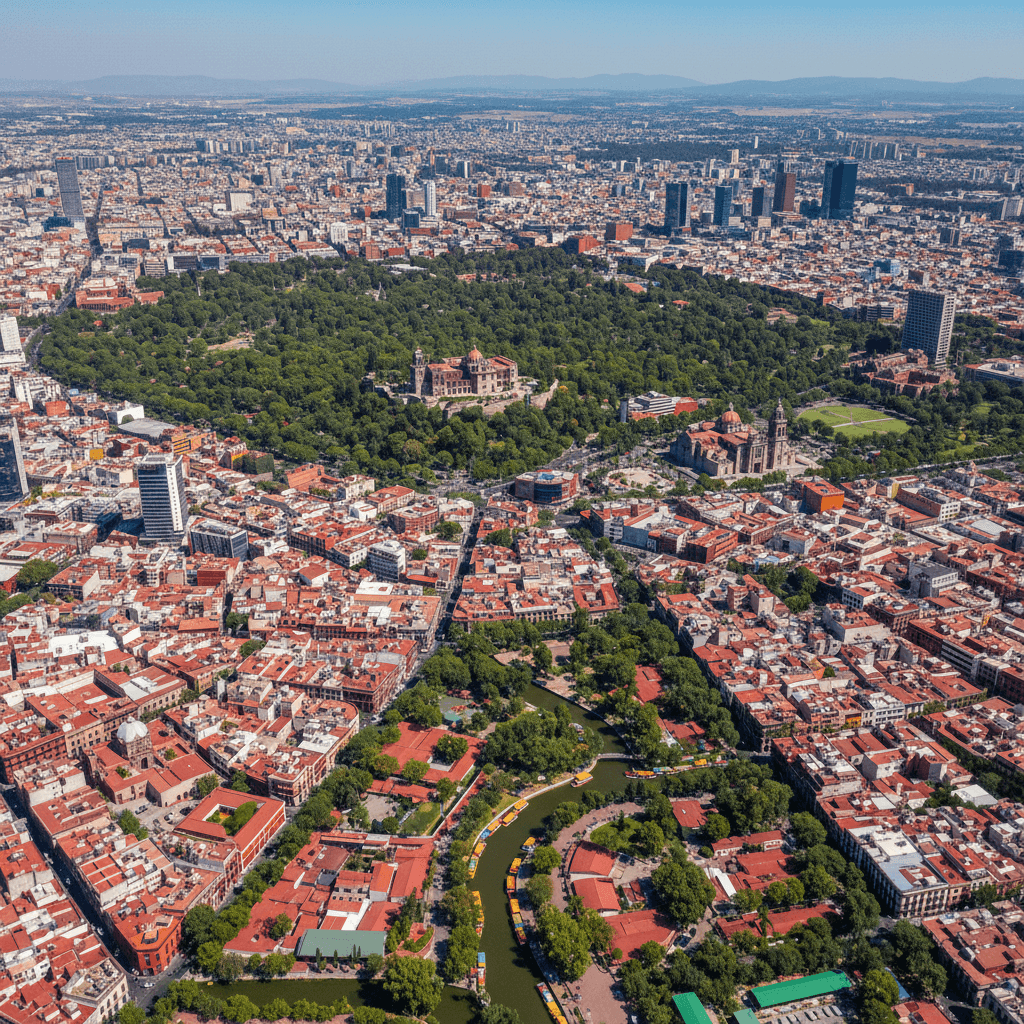
Mexico City is a high-altitude fever dream that manages to feel both ancient and futuristic at the same time. While other nomad hubs might feel like temporary playgrounds, CDMX feels like a life you could actually lead. It is a place of massive jacaranda trees, art deco architecture, and a food scene that makes most other global capitals look pedestrian.
You’ll spend your mornings in Roma Norte or Condesa, neighborhoods that feel more like Parisian boulevards than North American streets. The vibe here is social and caffeinated. You’ll see nomads working from sidewalk tables at Cafe Negro or Panaderia Rosetta, where the smell of guava rolls competes with the scent of diesel and street tacos. It is an addictive, energetic environment where a world-class meal costs less than a coffee in San Francisco.
The city is a massive sprawl, but the nomad lifestyle usually centers on a few walkable pockets. Life here moves at a pace that is fast enough to be exciting but slow enough for a three-hour lunch. Most nomads find that the sheer depth of the city keeps them coming back; you can spend a year here and still find a new neighborhood, gallery, or cantina every single weekend.
The Cost of Comfort
Living here is significantly more affordable than in New York or London, though prices in the "nomad bubble" have risen lately. You can live a very high-quality life if you’re earning in USD or Euros. Most travelers find that $2,500 USD per month buys a very comfortable mid-range lifestyle, including a nice apartment and frequent dining out.
- Budget (~$1,500 USD): Shared housing, heavy use of the $0.30 metro, and sticking to the city's incredible street food.
- Mid-range (~$2,500 USD): A private 1BR in Roma or Juarez, daily coworking, and regular dinners at trendy spots.
- Comfortable ($4,000+ USD): A luxury flat in Polanco, high-end gym memberships, and frequenting Michelin-listed restaurants.
Where to Plant Your Flag
Choosing a neighborhood is the most important decision you'll make here. Each zone has a distinct personality, and because traffic is famously heavy, you'll likely spend 80% of your time within a 2-mile radius of your apartment.
Roma Norte
This is the epicenter of the nomad world. It’s walkable, filled with colonial mansions, and has the highest density of English-speaking cafes. It’s pet-friendly and vibrant, though it can feel a bit like a bubble. Expect to pay $1,200 to $1,500 USD for a decent furnished studio.
Condesa
Just west of Roma, Condesa is leafier and more residential. It’s centered around Parque Mexico and Parque España, offering a European feel with plenty of bike lanes. It’s safe, stylish, and perfect for those who want a bit more greenery.
Juarez
If you want to be near the action but find Roma too "curated," Juarez is the move. It’s slightly grittier in parts but feels more authentic. It’s home to the city’s Koreatown and offers better rental deals, usually 20% cheaper than Roma.
Polanco
This is the Beverly Hills of Mexico City. It’s polished, safe, and expensive. While it lacks the bohemian soul of Roma, it’s the best choice for those who want high-end shopping, luxury malls, and corporate-level security.
Logistics and Connectivity
The infrastructure for remote work is excellent. Fiber internet is standard in most modern apartments, often reaching speeds of 200 to 500 Mbps. If your home WiFi flickers, coworking spaces are everywhere. Most nomads recommend Selina or local spots in Roma for a day pass, which usually costs between $10 and $20 USD.
For mobile data, grab a Telcel SIM card at any OXXO convenience store. It’s about $10 USD for a solid data pack. If you want to hit the ground running, an Airalo eSIM works perfectly the moment you land at AICM airport.
Getting around is simple if you use Uber or Didi. Rides usually cost between $3 and $8 USD. Avoid the street taxis; they are less safe and harder to track. For the brave, the EcoBici bike-share app is a fantastic way to bypass the city's notorious gridlock for about $10 USD a week.
Safety and Reality Checks
The biggest misconception about CDMX is that it’s inherently dangerous. In the central neighborhoods like Roma, Condesa, and Polanco, most nomads feel perfectly secure walking around during the day. However, street smarts are mandatory. Don't flash expensive jewelry, keep your phone tucked away on the street, and stick to Ubers after dark. The biggest daily "dangers" are actually the air pollution during the dry season and the occasional earthquake tremor.
Health-wise, the private hospitals in Polanco are world-class. Pharmacies are on every corner and can handle most minor issues for a few dollars. Just remember the golden rule: never drink the tap water. Stick to the "garrafones" (large water jugs) provided by your host or filtered water at restaurants.
The Price of the Chilango Lifestyle
Mexico City isn't the dirt cheap paradise it was a decade ago, but for most digital nomads, it still offers an incredible quality of life for a fraction of the cost of San Francisco or London. You can live a very high-end lifestyle here for what you'd spend on a basic studio apartment in Brooklyn. The city rewards those who know how to mix high and low, like grabbing a $2 street taco for lunch and heading to a $50 tasting menu in Polanco for dinner.
Most solo nomads find that a monthly budget of $2,500 allows for a comfortable, mid-range lifestyle. This covers a stylish one-bedroom in a trendy area, frequent dining out, and daily Ubers. If you're on a tighter budget, you can get by on $1,500 by opting for shared housing or living in slightly more "local" neighborhoods like Juárez or San Rafael. On the flip side, $4,000 a month buys a luxury experience with a doorman building in Polanco and a dedicated desk at a top-tier coworking space.
Breaking Down the Monthly Essentials
Your biggest expense will undoubtedly be rent. Prices in the "nomad bubble" have risen significantly due to demand. If you're looking for a furnished apartment on a month-to-month basis, here is what to expect in the most popular hubs:
- Roma Norte and Condesa: Expect to pay between $800 and $1,500 for a decent studio or one-bedroom. These are the most walkable, cafe-heavy areas where English is widely spoken.
- Juárez: A bit more central and slightly more affordable, with rents ranging from $700 to $1,200. It's grittier but very trendy.
- Polanco: The Beverly Hills of CDMX. Rents here rarely dip below $1,200 and can easily climb to $2,500 for modern, high-security buildings.
- Coyoacán: Better for those staying long-term who want a quiet, historic vibe. You can find beautiful spots for $600 to $1,000, though you'll be further from the main nomad meetups.
Daily Sustenance and Socializing
Food is where your budget can really flex. You can eat like a king on any budget here. Most nomads find themselves eating out or ordering via Rappi (the go-to delivery app) more often than cooking because the value is so high.
- Street Food: A plate of five tacos or a tlacoyo usually costs between $1 and $3. It's fast, delicious, and ubiquitous.
- Mid-range Restaurants: A sit-down dinner with a drink in Roma will set you back $15 to $25.
- Coffee and Coworking: A latte at a laptop-friendly spot like Cafe Negro or Quentin is about $3 to $4. A day pass at a professional coworking space like WeWork or Publico costs $10 to $20, while monthly memberships average $150 to $300.
- Groceries: If you shop at local mercados rather than high-end supermarkets like City Market, you can keep your weekly bill under $40.
Transport and Connectivity
Getting around is remarkably cheap. While the metro is efficient at just $0.30 per ride, it gets incredibly crowded during rush hour. Most expats and nomads rely on Uber or Didi for safety and convenience. A typical 20-minute cross-town trip usually costs between $4 and $8.
For your phone, don't rely on roaming. Pick up a Telcel SIM card at any OXXO convenience store. $10 to $20 will get you enough data for the month. If you want to hit the ground running, an eSIM from Airalo works well, though it's pricier than a local physical SIM. Most apartments in the central neighborhoods now offer fiber optic internet with speeds between 200 and 500 Mbps, making it one of the most reliable cities in Latin America for remote work.
Practical Tips for Saving Pesos
Cash is still king in smaller shops and markets, so keep some pesos on you. Use a card like Wise or Revolut to avoid hefty bank fees at ATMs. When dining out, a 10% to 15% tip is standard. Finally, always use the EcoBici bike-share app. At roughly $30 for an entire year, it's the most cost-effective way to navigate the flat, bike-friendly streets of Condesa and Roma without getting stuck in the city's infamous traffic.
The Nomad Crowd: Roma Norte and Juárez
If you're looking for the heart of the digital nomad scene, Roma Norte is where you'll land. It's the city's creative engine, filled with 19th-century mansions converted into coworking spaces and third-wave coffee shops. You can walk from a morning session at Publico or Huerto Roma Verde to a late-night mezcal bar without ever needing an Uber. While it's the most expensive nomad hub with studio rents ranging from $800 to $1,500 USD, the convenience of having English-speaking baristas and high-speed fiber internet everywhere makes it the default choice for first-timers.
Just across Avenida Chapultepec lies Juárez. It’s slightly more gritty but rapidly becoming the preferred alternative for those who find Roma too polished. It's walkable, lively, and often 10% to 20% cheaper than its neighbor. Nomads here frequent the cafes in the Zona Rosa or head to the nearby Selina coworking hub for community events. You'll sacrifice some of the lush greenery found in Roma, but you're closer to the historic center and the Paseo de la Reforma business district.
- Roma Norte Rent: $800 to $1,500 USD for a furnished 1BR.
- Juárez Rent: $700 to $1,200 USD for a furnished 1BR.
- Vibe: High energy, laptop-friendly, social, and very international.
Expats and Professionals: Polanco
Polanco is the Beverly Hills of Mexico City. It's where you'll find luxury high-rises, high-end shopping on Avenida Presidente Masaryk, and top-tier private hospitals. Expats with corporate budgets or those seeking a more curated, secure environment gravitate here. It’s the least "local" feeling neighborhood, but it offers a level of comfort and safety that's hard to beat. Most residents rely on Ubers to get around because the neighborhood is sprawling, though the area near Lincoln Park is quite walkable.
Dining here is an event. You're within walking distance of world-class restaurants like Pujol, though expect to pay $50 USD or more for a meal. Rent is the highest in the city, often starting at $1,200 USD and easily climbing past $2,000 USD for modern apartments with 24/7 security and amenities like gyms or rooftop pools.
- Polanco Rent: $1,200 to $2,000+ USD.
- Dining: $30 to $100 USD per person for upscale experiences.
- Best For: Professionals, luxury seekers, and those prioritizing security.
Families and Long-Termers: Condesa and Coyoacán
Condesa sits right next to Roma and feels like a massive urban garden. It's famous for Parque México and Parque España, where you'll see more professional dog walkers than cars. It’s a favorite for families and expats who want a European lifestyle. The streets are lined with Art Deco architecture and outdoor cafes that are incredibly pet-friendly. It’s vibrant but feels more like a community than a tourist zone, though the weekend crowds can get thick near the parks.
For those who want to escape the central hustle entirely, Coyoacán is the historic soul of the city. Located further south, it’s famous for the Frida Kahlo Museum and its cobblestone streets. It’s much quieter at night, making it ideal for families or writers who need peace. You’ll find great local markets and spots like Cafe Negro, which is a local favorite for working. The downside is the commute; getting to the city center can take 40 to 60 minutes in traffic, so it’s best if you don't need to head north often.
- Condesa Rent: $900 to $1,600 USD.
- Coyoacán Rent: $600 to $1,100 USD.
- Highlights: Massive parks, historic plazas, and a slower pace of life.
Solo Travelers: Roma Sur and San Rafael
Solo travelers looking to stretch their budget without losing the social connection often head to Roma Sur or San Rafael. Roma Sur is just a short walk from the action of Roma Norte but feels significantly more authentic. You’ll find more traditional $3 USD taco stands and local fruit markets here. It’s a great middle ground where you can still access the nomad meetups but live in a building with more locals than Airbnb guests.
San Rafael is the "up and coming" pick. It’s an old theater district with grand, slightly faded architecture. It’s much more affordable than the central bubble, but it’s close enough that a $4 USD Uber ride gets you to the heart of the nightlife. It’s perfect for solo travelers who want a private apartment on a budget while remaining a quick bike ride away from the coworking hubs.
- Budget Rent: $500 to $900 USD for a studio or shared housing.
- Transport: Use EcoBici bikes ($5 to $10 USD per day) to bridge the gap between these areas and the main hubs.
- Safety: Stick to well-lit main streets at night; these areas are safe but require more street smarts than Polanco.
Connectivity on the Ground
Mexico City has undergone a massive digital transformation, making it one of the most reliable hubs in Latin America for remote work. Fiber optic internet is the standard in Roma Norte, Condesa, and Juárez, with speeds typically ranging between 200 and 500 Mbps. Most modern apartments and coworking spaces come equipped with backup systems, so you won't be left hanging during the occasional afternoon thunderstorm in the rainy season.
For mobile data, skip the international roaming fees and head to any OXXO convenience store. You can grab a Telcel or Movistar SIM card for about $10 to $20 USD per month, which usually covers more data than you will actually need. If you prefer to be connected the second you land at MEX airport, Airalo or Holafly eSIMs are the go-to choices for nomads, though they are slightly pricier than local physical SIMs.
Street smarts apply to your tech too. While the WiFi is snappy, public networks in parks can be spotty. Many travelers keep a Solis hotspot as a secondary backup, especially if they plan on working from some of the more historic, thick-walled buildings in Coyoacán where signal penetration can be tricky.
Top Coworking Spaces
The coworking scene here is competitive and high-end. You aren't just paying for a desk; you are paying for community events, yoga classes, and reliable power. Expect to pay $10 to $20 USD for a day pass or $150 to $300 USD for a monthly membership.
- Selina (Roma & Downtown): A favorite for those who want to network. It is more than a workspace; it is a social hub where you can find workshops and tours.
- Publico: With multiple locations in areas like Juárez and Condesa, this spot is known for its sleek design and rooftop terraces. It feels more "professional" and less "backpacker."
- WeWork locations (check current availability as company underwent restructuring): They are predictable, air-conditioned, and offer the most consistent phone booths for private calls.
The Cafe Office Culture
If you prefer the hum of a coffee shop over a formal office, you are in luck. Mexico City has a deep-rooted cafe culture that is incredibly welcoming to laptops, provided you keep the coffee flowing. In Roma Norte and Condesa, it is common to see rows of nomads parked at communal tables.
- Cafe Negro (Coyoacán): This is a staple for those staying further south. It has plenty of outlets, strong WiFi, and excellent pastries. It gets busy on weekends, so aim for a Tuesday morning session.
- Buna (Roma Norte): Known for having some of the best beans in the city. It is great for deep focus work, though seating can be tight during the lunch rush.
- Cardinal Casa de Café: A quiet, cozy spot in Roma that nomads recommend for its relaxed atmosphere and respectful noise levels.
Practical Logistics
When choosing where to set up shop, keep these neighborhood specifics in mind:
- Roma & Condesa: High nomad density. You will find English-speaking staff and menus, plus the highest concentration of laptop-friendly cafes.
- Juárez: A bit more grit but plenty of value. The cafes here are often less crowded than those in Roma.
- Polanco: The upscale choice. Everything is more expensive here, but the infrastructure is top-tier and the environments are very quiet.
Most nomads find that a hybrid approach works best. Use a coworking space for $150 USD a month to handle your heavy meetings and video calls, then migrate to a local cafe in the afternoons to soak in the city's energy. Just remember to bring a universal power adapter, though most modern buildings use the same two-prong plugs found in the US and Canada.
Keeping Your Cool in CDMX
Mexico City often gets an unfair reputation for being dangerous. The reality for most digital nomads is far more nuanced. If you stick to the central hubs like Roma Norte, Condesa, Juárez, and Polanco, you'll likely feel as safe as you would in major European or American cities. These neighborhoods are highly walkable during the day, with plenty of people out walking dogs or working in sidewalk cafes.
Most safety issues involve petty theft rather than violent crime. Pickpockets operate in crowded areas and on the metro, so keep your phone in your front pocket and don't hang your bag on the back of your chair at restaurants. At night, even in the nice areas, it's better to call an Uber or Didi rather than walking long distances alone. Nomads generally advise against using "street taxis" hailed from the curb; stick to the apps where the ride is tracked and the price is set.
The city's outer zones and certain neighborhoods like Tepito or parts of Iztapalapa are best avoided entirely unless you're with a local who knows the area well. Use common sense: don't flash expensive jewelry or stacks of cash, and pay attention to your surroundings. If a street feels too quiet or poorly lit, turn back and head toward a main avenue.
Healthcare and Medical Services
You'll find excellent healthcare in Mexico City, particularly in private hospitals that cater to expats and wealthy locals. Facilities like ABC Medical Center in Santa Fe or Observatorio and Hospital Española in Polanco offer world-class care with many English-speaking doctors on staff. If you have an emergency, dial 911, though response times can be slow due to the city's notorious traffic.
For minor issues like a cold or a stomach bug, look for a Farmacia San Pablo or Farmacia del Ahorro. Many of these have a "consultorio" attached where you can see a doctor for about $2 to $5 USD. They'll give you a prescription on the spot that you can fill right at the counter. Most medications are very affordable, often costing a fraction of what they do in the US.
One health risk that catches nomads off guard is the air quality and altitude. CDMX sits at over 7,300 feet, which can cause headaches or shortness of breath during your first few days. Drink plenty of water and take it easy on the mezcal until you've acclimated. The air pollution can also be tough on your lungs during the dry season from October to April, so keep an eye on local air quality apps if you have asthma.
Practical Wellness Tips
- Don't drink the tap water: This is the golden rule. Even locals don't drink it. Use filtered water for everything, including brushing your teeth if you have a sensitive stomach. Most apartments provide a "garrafón" (a 20-liter water jug) that costs about $3 USD to replace.
- Street food safety: Look for stalls with a high turnover and a line of locals. If the cook is handling money and food with the same bare hands, move on to the next spot.
- Travel Insurance: Most nomads recommend having a policy that covers private hospital stays. Without it, a trip to a top-tier clinic can get expensive quickly, though still usually cheaper than US prices.
- Earthquake preparedness: The city has a sophisticated early warning siren system. If you hear a loud, oscillating siren, head to the designated "punto de reunión" (meeting point) outside immediately.
Emergency Contacts
- General Emergencies: 911
- Locatel (Non-emergency assistance and info): 55 5658 1111
- Tourist Police: 55 5208 9898
- Red Cross (Ambulance): 55 5395 1111
The Daily Commute
Mexico City is massive, but as a nomad, your world usually shrinks to a few key neighborhoods. If you're staying in Roma Norte, Condesa, or Juárez, your primary mode of transport is your own two feet. These areas are incredibly walkable, with wide sidewalks and tree-canopied streets that make getting to your morning chilaquiles a breeze. For anything beyond a ten block radius, most nomads lean heavily on Uber or DiDi. It's affordable, usually costing between $3 and $8 USD for a cross-town trip, and it saves you from navigating the city's notorious traffic on your own.
When you're in a rush or trying to beat the Friday afternoon gridlock, the Metro is your best friend. It's one of the most extensive systems in the world and costs about $0.25 to $0.40 USD per ride depending on recent fare adjustments. It's fast and efficient, though it gets incredibly packed during rush hour. For a slightly more scenic public transit experience, the Metrobús runs in dedicated lanes down major arteries like Insurgentes. It's a great way to skip the line of cars, just make sure to grab a rechargeable smart card at any station kiosk first.
Pedal Power and Scooters
The city has made huge strides in bike friendliness. EcoBici is the local bike-share program, and you'll see the red bikes at stations every few blocks in the central zones. A day pass costs about 130 MXN (~$6.50 USD), but if you're staying a month, the annual or multi-day plans are a steal. The city shuts down the massive Paseo de la Reforma every Sunday morning for cyclists and runners, which is a ritual you shouldn't miss.
- EcoBici: Best for short hops between Roma and Condesa.
- Scooters: Various apps operate in the city, though availability fluctuates based on local regulations.
- Walking: Stick to the central "colonias" for a car-free lifestyle.
Airport Arrivals and Departures
Getting from Benito Juárez International (MEX) to your Airbnb is straightforward if you know the drill. While there are plenty of official taxi stands inside the terminal, they're often overpriced. Most nomads prefer to call an Uber. You'll usually need to meet your driver at a specific gate number outside the arrivals hall. Expect to pay between $15 and $25 USD depending on the time of day and surge pricing. If you're traveling light and on a budget, the Metrobús Line 4 connects the airport directly to the city center for about $0.50 USD.
Practical Transport Tips
Traffic in CDMX is a living, breathing entity. A trip that takes 15 minutes at 10:00 AM might take an hour at 6:00 PM. Always check Google Maps or Waze before you head out to see if the Metro might actually be faster than a car. If you're using rideshare apps at night, travelers recommend double-checking the license plate and driver photo before hopping in, especially when leaving bars or late-night taquerias.
- Peak Hours: Avoid major moves between 8:00 AM to 10:00 AM and 6:00 PM to 9:00 PM.
- Safety: Stick to registered app rides rather than hailing green-and-white taxis on the street.
- Women-Only Spaces: The Metro and Metrobús have designated sections for women and children at the front of the trains/buses, which are strictly enforced during busy hours.
Regional Travel
For weekend escapes to places like Teotihuacán or Tepoztlán, you have two solid choices. The bus system in Mexico is surprisingly luxury-tier. Lines like ETN or Primera Plus offer wide reclining seats and snacks for a fraction of what you'd pay for a bus in the US or Europe. Alternatively, many nomads split an Uber for the hour-long trip to the pyramids, which is convenient if you're traveling in a small group and want to set your own schedule.
The Language Barrier (or Lack Thereof)
In the nomad bubbles of Roma Norte and Condesa, you can often get by with just the basics. English is widely spoken in trendy cafes, coworking spaces, and high end restaurants. Staff in these areas are used to international crowds, and you'll find that many menus are bilingual.
Once you step outside these specific neighborhoods or head to a local tianguis (street market), the dynamic shifts. Spanish is the heartbeat of the city. While younger Chilangos—the nickname for city residents—often have a good grasp of English, older generations and service workers in less touristy spots like Juárez or Coyoacán generally don't. Most nomads find that picking up a few phrases goes a long way in building rapport with locals.
Travelers often say that Mexicans are incredibly patient with learners. Even a butchered "Gracias" or "Buen día" is met with a smile. If you're stuck, use Google Translate with the offline Spanish pack downloaded. It's a lifesaver for reading signs or explaining specific dietary needs at a taco stand.
Staying Connected
Reliable internet is the backbone of the CDMX nomad experience. Most modern apartments in the central corridor offer fiber optic connections with speeds ranging from 200 to 500 Mbps. However, older buildings can have thick concrete walls that kill WiFi signals, so always ask for a speed test screenshot before booking a long term stay.
For mobile data, Telcel is the undisputed king of coverage. You can grab a SIM card at any OXXO convenience store for about $5 USD plus recharge. Topped up with a "Sin Límite" plan, you'll get a decent chunk of data and unlimited social media usage for around $15 to $20 USD per month. If you want to hit the ground running, Airalo or Holafly eSIMs work well, though they're pricier than local options.
Coworking and Cafe Culture
The city has a massive cafe culture where working from your laptop is socially acceptable. Spaces like Cafe Negro in Coyoacán are famous for their nomad friendly atmosphere, plenty of outlets, and strong coffee. If you need a more professional setup with phone booths for Zoom calls, the coworking scene is world class.
- Day passes: Typically cost between $10 and $20 USD.
- Monthly memberships: Range from $150 to $300 USD depending on the amenities.
- Top spots: Look into Selina in the city center for a social vibe or the various boutiques in Roma for a quieter work environment.
Practical Communication Tips
Mexican Spanish has its own flavor. You'll hear the word "ahorita" constantly. While it literally translates to "right now," in Mexico City it can mean anything from five minutes to five hours from now. It's less of a time commitment and more of a polite acknowledgement.
- Greetings: Always start an interaction with "Buenos días" (morning) or "Buenas tardes" (afternoon). It's considered rude to jump straight into a request.
- Tipping: At restaurants, a 10% to 15% tip is standard. Check your bill for the word "propina" to ensure it hasn't already been added.
- Safety: Use Uber or Didi rather than hailing street taxis. The apps allow you to share your location with friends and avoid any language confusion regarding the fare.
Expats recommend joining local Facebook or Slack groups for Roma and Condesa. These are great for finding language exchange partners or getting real time updates on which cafes currently have the best WiFi. Overall, communication in CDMX is a 4 out of 5 for ease, provided you have a translation app and a bit of patience.
The High-Altitude Rhythm
Mexico City sits at over 7,300 feet, which means the weather rarely fits the tropical stereotype of Mexico. Instead, you get a temperate, highland climate that stays spring-like for most of the year. Most nomads find the air crisp in the mornings, requiring a light jacket even in the sunnier months, with temperatures typically hovering between 60°F and 75°F (15°C to 24°C).
The city operates on two main settings: the dry season and the rainy season. Because of the elevation, the sun is intense during the day, but as soon as it drops behind the skyline, the temperature dips quickly. You'll want to pack layers if you plan on working from a sidewalk cafe in Roma Norte or heading out for late-night tacos in Juarez.
The Golden Window: October to April
If you want the best possible experience, aim for the window between late October and April. This is the dry season, characterized by clear blue skies and very little rainfall. It's the peak time for the nomad community because the weather is predictable and perfect for walking between coworking spaces like Selina or Publico.
- November: This is a favorite for many travelers. You get the Day of the Dead celebrations, the weather is mild, and the city feels alive with energy.
- January and February: These are the "coldest" months. Nighttime lows can hit 45°F (7°C). Since many older apartments in Condesa don't have central heating, you might find yourself sleeping under heavy blankets or buying a small space heater.
- March and April: The city turns purple as the Jacaranda trees bloom. It's easily the most photogenic time to be there, though it's also when the heat starts to peak before the rains arrive.
The Rainy Season: May to September
From May through September, the humidity picks up and the afternoon deluges become a daily ritual. It's rarely a wash-out where it rains all day. Instead, you'll have bright, sunny mornings followed by a massive, theatrical thunderstorm around 4:00 PM or 5:00 PM.
Expats usually plan their deep-work blocks during these afternoon storms. If you're out and about, you'll notice the street vendors suddenly appearing with $5 USD umbrellas the second the first drop hits. While the rain helps clear out some of the city's notorious air pollution, it can make traffic a nightmare. An Uber that usually takes 15 minutes can easily turn into an hour-long crawl when the streets are wet.
When to Avoid the Crowd
While there isn't necessarily a "bad" time to visit, May can be tough. It's often the hottest month, and if the rains haven't started yet, the air quality can get pretty rough. Nomads with asthma or respiratory sensitivities often head to the coast or the mountains during this stretch to avoid the smog trapped in the valley.
If you're looking for lower rent prices, try searching for mid-term stays starting in June or July. Because it's the rainy season, the influx of short-term tourists slows down slightly, giving you a bit more leverage when negotiating a monthly rate on a furnished studio in neighborhoods like Roma Sur or Escandón.
Practical Climate Tips
- Hydration is key: Between the high altitude and the dry air, you'll get dehydrated faster than you realize. Always carry a reusable bottle, but never fill it from the tap. Stick to the massive 20-liter "garrafones" of filtered water that most Airbnbs provide.
- Sun protection: Don't let the cool breeze fool you. The sun at this altitude is strong. Most locals and long-termers wear sunscreen daily, even if it looks overcast.
- The "Chilango" Uniform: You'll rarely see locals in shorts, even when it's warm. To blend in and stay comfortable through the temperature swings, stick to jeans, sneakers, and a versatile mid-weight jacket.
Getting Connected
You won't struggle for speed here. Fiber internet is the standard in Roma and Condesa, with most apartments and coworking spaces hitting 200 to 500 Mbps. For a reliable workspace, Selina in Roma Norte is a classic hub for community events, while Cafe Negro in Coyoacán is a favorite for those who prefer working with a pastry and a lively atmosphere.
Pick up a Telcel or Movistar SIM card at any OXXO convenience store for about $10 USD. If you want to hit the ground running, download an eSIM via Airalo before you land. Most nomads carry a Solis hotspot as a backup, though power outages are rare in the central neighborhoods.
The Monthly Budget
Mexico City is affordable compared to London or New York, but prices in nomad hotspots have climbed. You can live comfortably on $2,500 USD a month, though budget travelers make it work on $1,500 USD by sticking to street food and shared housing.
- Housing: A furnished one bedroom in Roma or Juárez usually runs between $800 and $1,500 USD. In Polanco, expect to pay $1,200 to $2,000 USD for a high end setup.
- Food: Street tacos are a steal at $1 to $3 USD. A mid range dinner out will cost you $10 to $20 USD, while fine dining at world class spots starts around $50 USD.
- Work: Expect to pay $10 to $20 USD for a coworking day pass or $150 to $300 USD for a monthly membership.
Neighborhood Breakdown
Choosing where to base yourself changes the experience entirely. Most newcomers gravitate toward the central "bubble" for walkability and English speaking staff.
Roma Norte
This is the heart of the nomad scene. It is incredibly walkable, packed with third wave coffee shops, and very pet friendly. The downside is the price; it is one of the most expensive areas for short term rentals.
Condesa
Right next to Roma, this area feels like a leafy European park. It is safer and slightly quieter than Roma but can feel a bit touristy. It is perfect if you want to be near the nightlife but still have a view of green trees from your balcony.
Juárez
A bit more "gritty" but rapidly gentrifying, Juárez is cheaper than Roma and perfectly located. It has a great cafe culture and feels a bit more local while still being central.
Polanco
If you have a higher budget and prefer luxury malls and high end dining, this is the spot. It is very safe but less "bohemian" than Roma and often requires a car or Uber to get around.
Navigating the City
Traffic is the city's biggest headache. For short trips, use EcoBici, the city's bike share program; it costs about $5 to $10 USD for a day pass. For longer hauls, Uber and Didi are the gold standard for safety and convenience, usually costing $3 to $8 USD per trip.
The metro is incredibly cheap at $0.30 USD per ride and often faster than a car during rush hour. However, it gets extremely crowded. If you are coming from the airport, stick to Uber or authorized airport taxis; avoid hailing cabs on the street. Expect to pay about $15 to $25 USD for a ride to the city center.
Safety and Health
Common sense goes a long way. Stick to well lit, populated areas at night and keep your phone tucked away while walking. While neighborhoods like Roma and Polanco are generally safe, avoid wandering into outer boroughs alone.
The healthcare system is excellent, especially at private hospitals in Polanco. Pharmacies are everywhere and stock affordable generics for most needs. One non negotiable rule: do not drink the tap water. Stick to filtered or bottled water, even for brushing your teeth if you have a sensitive stomach.
Social Life and Language
Spanish is the primary language, but you will find plenty of English speakers in the cafes of Condesa. Learning basic phrases like "¿Cuánto cuesta?" (how much?) and "Gracias" (thank you) will earn you plenty of respect from locals.
For meeting people, Facebook groups and Slack communities are very active. Nomads often meet up at Selina or through language exchanges in Roma. The city's 180 day tourist visa makes it easy to stay long enough to build a real community.
Need visa and immigration info for Mexico?
🇲🇽 View Mexico Country GuideNomad Haven
Your home away from home
Monthly Budget Estimates
More cities in Mexico
Mazatlán
🇲🇽 Mexico
Querétaro
🇲🇽 Mexico
San Cristóbal de las Casas
🇲🇽 Mexico