Mestia
🇬🇪 Georgia
The Rugged Heart of Svaneti
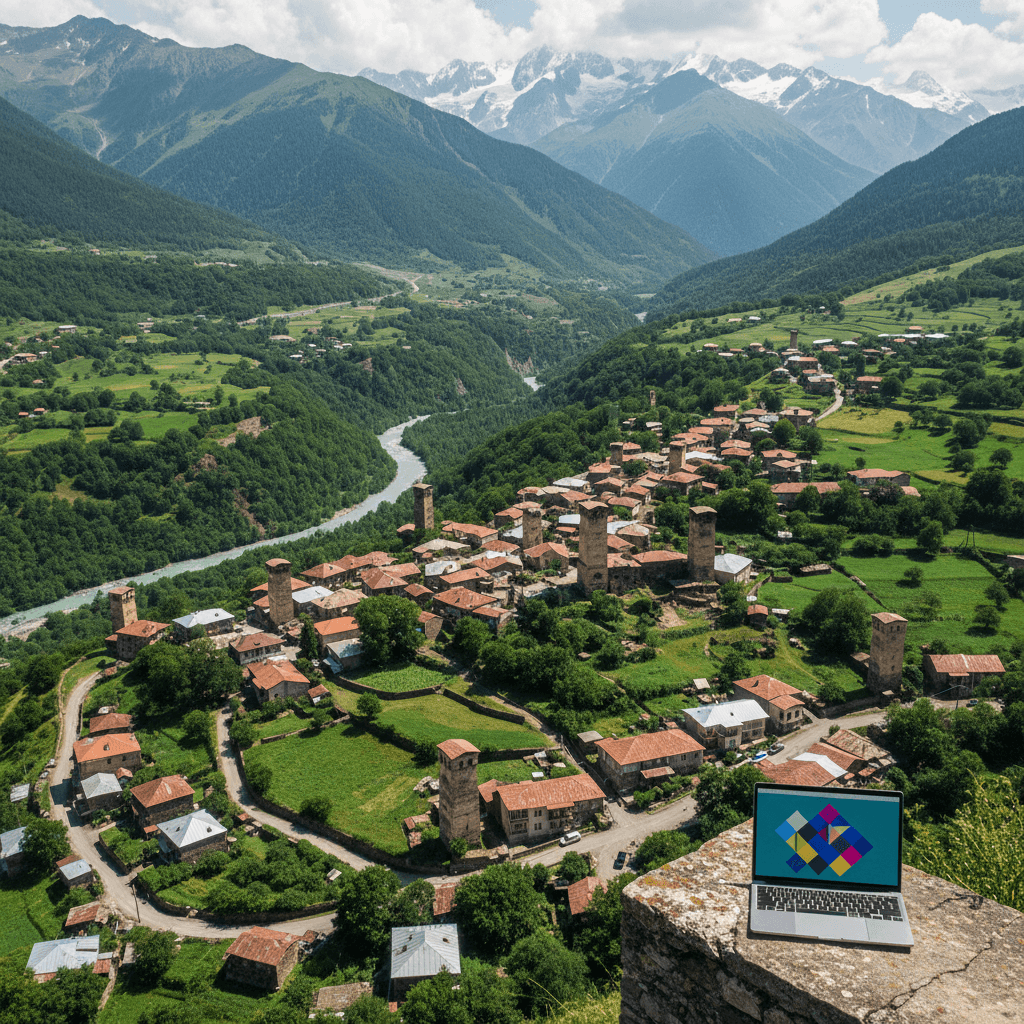
Mestia isn't your typical digital nomad hub. You won't find glass-walled coworking spaces or third-wave coffee shops on every corner. Instead, you'll find a skyline dominated by UNESCO-listed Svan tower houses and the jagged, snow-capped peaks of the Greater Caucasus. It is a place that feels ancient, isolated, and fiercely independent, shaped by the unique Svan culture and its polyphonic traditions.
For most nomads, Mestia serves as a high-altitude "reset" button. It is where you go when you're burnt out on the urban grind of Tbilisi or Batumi and need to swap screen time for alpine air. The vibe is slow, nature-paced, and raw. You'll share the dirt roads with wandering cows and hikers preparing for the trek to Ushguli, all while living in a town that feels like it’s still catching up to the 21st century.
The Reality of Remote Work
Being honest about the logistics is important. Infrastructure here is basic. While Georgia’s one-year visa-free stay makes long-term visits easy, Mestia’s internet rarely exceeds 20-50 Mbps in the better guesthouses. Power outages happen, especially during the heavy snows of December through March or the rainy shoulder seasons of May and October.
Expats usually treat Mestia as a one to two-week base rather than a permanent home. It attracts the "adventure nomad" who values a morning hike to the Chaladi Glacier more than a high-speed fiber connection. If your job requires constant Zoom calls, you might struggle; if you’re a writer, developer, or creative on a deep-work sprint, the mountain silence is unbeatable.
Cost of Living & Base Camps
Living here is remarkably affordable, often 30-50% cheaper than Tbilisi. Most nomads base themselves near Queen Tamar Square to stay close to the few reliable cafes and the marshrutka (minibus) hub. You won't find many private apartments on standard rental sites; instead, the community revolves around long-stays in established guesthouses.
- Central Mestia: The heartbeat of the town. This is where you’ll find Nino Ratiani’s Guesthouse, a legendary spot among travelers for its communal dinners and reliable-ish WiFi. Expect to pay $200 to $300 per month for a simple room in a central guesthouse.
- Outskirts (Latali or Upper Mestia): Best if you want total silence and immediate trail access. It’s quieter and cheaper, but you’ll be further from the few grocery stores and pharmacies.
- Daily Expenses: A local meal of kubdari (meat-filled bread) or khinkali costs between $3 and $7. A monthly budget of $800 to $1,100 allows for a very comfortable, adventure-filled life here.
The Emotional Draw
The magic of Mestia is in the sensory details. It’s the smell of woodsmoke in the evening, the sound of distant folk singing, and the sight of Mount Ushba looming over the valley. It feels like a frontier. Social life happens around shared tables in guesthouses like Nino Ratiani’s Guesthouse, where you’ll swap trail maps and weather reports with people from all over the world.
You don't come here for the nightlife, which is mostly limited to a few bars near the square. You come here to feel small against the mountains. It’s a place that demands you put down your phone and look up. If you can handle the spotty connectivity and the four-hour winding drive from Zugdidi to get here, you'll find a mountain sanctuary that stays with you long after you've descended back to the lowlands.
Living in the Svaneti highlands feels like a step back in time, but your wallet won't feel the pinch. While Tbilisi has seen prices climb recently, Mestia remains remarkably affordable, especially if you're willing to trade city luxuries for mountain air. Most nomads find they can live comfortably here on a budget of $1,100 to $1,500 USD per month, though minimalist hikers often get by on closer to $800.
The Monthly Breakdown
- Budget Tier ($800 to $1,100): This covers a basic room in a central guesthouse, plenty of street food like kubdari, and using the local marshrutkas for transport. You'll likely be working from your guesthouse or local cafes.
- Mid-Range ($1,100 to $1,500): This gets you a more private stay at places like the Nino Ratiani Guesthouse, regular meals out at local sit down spots, and the occasional private taxi to nearby trailheads.
- Comfortable ($1,500+): At this level, you're looking at boutique accommodations like the Rock Hotel style rooms, renting your own 4x4 for weekend trips, and dining at the best spots in town every night.
Housing and Rent
You won't find many modern apartment complexes here. Instead, the rental market is dominated by guesthouses and small family run lodges. Long term stays are usually negotiated in person or through Facebook groups rather than real estate sites. Expect to pay between $200 and $300 for a basic central room, while more updated spaces with reliable heating can go for $500 or more.
Most expats recommend staying near Queen Tamar Square if you want to be close to the few cafes with decent WiFi. If you prefer quiet, the outskirts of town offer stunning views of the stone towers for lower prices, but you'll be sacrificing proximity to the grocery stores and pharmacies.
Food and Dining
Food is one of the biggest draws for the budget conscious. You can grab a massive khachapuri or a meat filled kubdari for $2 to $5 at a street stall. A full dinner with wine at a mid range restaurant usually lands between $7 and $12. If you're looking for a more "upscale" evening with multiple courses and Svaneti salt seasoned specialties, you'll rarely spend more than $25.
Groceries are limited to small local markets. Prices are low, but the selection is basic. For specialty items or international brands, travelers often stock up in Zugdidi or Tbilisi before heading up the mountain.
Connectivity and Logistics
Since there are no dedicated coworking spaces in Mestia, your "office" cost is usually the price of a coffee or a meal. Budget about $2 to $5 a day if you plan to work from cafes. For mobile data, a Magti or Beeline SIM card is a must. You can get 20GB of data for roughly $10, which is a lifesaver when the guesthouse WiFi inevitably flickers during a storm.
Transport and Gear
Mestia is highly walkable, so your daily transport cost is often zero. However, getting to the legendary village of Ushguli will cost about $10 to $15 for a seat in a shared 4x4. If you're looking to explore on two wheels, e-bike rentals from local shops run around $20 per day. For those planning to stay through the winter, gear rental for skiing or snowboarding is surprisingly cheap compared to European Alps standards, though prices fluctuate based on the season.
Central Mestia: The Nomad Base
If you're heading to Svaneti to keep a foot in the digital world while surrounded by the Caucasus, you'll want to stay near Queen Tamar Square. This is the heart of town where the few reliable Wi-Fi signals live. It's the only area where you're within a five minute walk of the grocery stores, pharmacies, and the marshrutka station for when you need to head back to Zugdidi.
Most nomads set up shop at Nino Ratiani Guesthouse or similar spots that have evolved to accommodate laptop workers. You won't find a dedicated coworking space here, so your "office" will likely be a wooden balcony or a corner in a cafe like Laila. It gets crowded during the peak summer months of July and August, but the convenience of being near the only stable infrastructure makes the tourist noise tolerable.
- Proximity: Everything is walkable. You can hit the trail to the Cross or the Zuruldi cable car right from your door.
- Connectivity: Best chance for 30 to 50 Mbps speeds, though you should still keep a Magti SIM card with a heavy data pack as a backup.
- Cost: Monthly guesthouse stays can be negotiated down to $200 to $400 depending on your haggling skills and the season.
Upper Mestia and Outskirts: The Expat Retreat
For those staying longer than a week who don't mind a steep walk, the upper slopes offer the classic Svaneti aesthetic. You'll be living among the UNESCO listed stone towers rather than the newer tourist builds. This area feels more like a lived in village than a transit hub. It's quieter, the air is crisper, and the views of Mount Banguriani are unobstructed.
Expats who prefer a kitchen and some silence usually look for independent rentals or smaller family run stays here. Be prepared for a lack of amenities; you'll be hauling your groceries uphill and the internet can be finicky when the clouds roll in. It's the perfect spot if your work is asynchronous and you value a slow pace over proximity to a latte.
- Atmosphere: Authentic Svan life with cows in the street and polyphonic singing echoing from nearby homes.
- Rent: Expect to pay $300 to $500 for better quality rooms or small apartments with a view.
- Drawback: It's a 15 to 20 minute hike into the center for supplies.
Latali and Mulakh: Solo Travelers and Adventure Seekers
If you're a solo traveler on a budget or an adventurer who uses a bed only for sleeping, look toward the edges of town or the neighboring community of Mulakh. These spots are rugged. You're effectively trading modern comforts for immediate access to the Ushguli trekking routes. It's common to find very basic rooms for $10 to $15 a night that include a massive Svan breakfast.
Socializing here happens around communal dinner tables rather than bars. You'll meet plenty of hikers and photographers, but very few people trying to join a Zoom call. It's the best place to experience Kubdari (meat filled bread) made the traditional way, but the lack of services means you're largely self reliant.
- Vibe: Total isolation and mountain immersion.
- Transport: You'll rely on $10 to $15 jeep rides or long walks to get anywhere.
- Safety: Very safe, though solo hikers should always check in with their hosts before heading into the peaks.
Mestia for Families
Families usually stick to the flatter areas near the Seti Square or slightly toward the airport. The terrain in Mestia is unforgiving, so staying where the roads are paved makes life with kids significantly easier. There's a small clinic in the center for minor scrapes, and the local pharmacies are surprisingly well stocked with the basics. Many families opt for boutique stays like Rock Hotel which provide a bit more predictable comfort and space than a standard guest room.
- Convenience: Easy access to the Hatsvali ski lift via taxi, which is a big hit for kids in the winter.
- Food: Close to bakeries where you can grab fresh Shotis Puri for a few cents.
- Healthcare: You're near the local emergency post, though serious issues require a 3 to 4 hour drive to Zugdidi.
The Connectivity Reality Check
If your job involves heavy video rendering or constant Zoom calls, Mestia is going to test your patience. While Tbilisi is a fiber optic dream, this mountain outpost relies on infrastructure that often feels as rugged as the surrounding peaks. Most guesthouses provide Wi-Fi that hovers between 20 and 50 Mbps, which is plenty for Slack and emails but can get shaky during the frequent afternoon storms or peak evening hours when everyone is back from their hikes.
There are currently no dedicated coworking spaces in Mestia. You won't find the sleek, ergonomic setups of Tbilisi's Terminal or Impact Hub here. Instead, the local "office" is usually a wooden terrace at a guesthouse or a corner table in a cafe. The lack of a professional hub means you'll need to be self reliant and comfortable working in social environments.
Best Spots to Log In
Most nomads gravitate toward Nino Ratiani's Guesthouse. It's a legendary spot in the community, not just for the hospitality, but because they understand the needs of travelers who aren't just there to trek. The common areas are comfortable, and the connection is among the most stable in the village center.
For a change of scenery, head to the cafes near Queen Tamar Square. While the Wi-Fi is hit or miss, the atmosphere is unbeatable. A few specific spots to try include:
- Cafe Laila: The unofficial heart of Mestia. It's great for people watching and has decent enough signal for light tasks, though it gets loud in the evenings with folk music.
- Lushnu Qor: A bit quieter during the day, making it a better bet for deep work sessions.
- Ertis Kava: This is arguably the best "coffee shop" vibe in town, serving actual espresso drinks that will satisfy your caffeine cravings while you clear your inbox.
Mobile Data: Your Secret Weapon
Since landline internet is prone to drops, a local SIM card is mandatory. Don't wait until you get to the mountains to set this up. Grab a Magti or Beeline (now branded as Cellfie) SIM in Zugdidi or Tbilisi before you head up the pass. Magti is widely considered the gold standard for coverage in the Svaneti region.
- Magti: Expect to pay around $10 USD for 20GB of data. Their "Cocktail" packages are popular for nomads.
- Signal Strength: You'll get solid 4G in the center of Mestia. However, once you start the trek toward Ushguli or head up the Zuruldi ridge, the signal vanishes almost instantly.
- Hotspotting: Many long term visitors end up using their phone as a primary hotspot when guesthouse Wi-Fi fails. It's often faster than the local routers.
Managing the "Mountain Tax"
Electricity in the Svaneti region can be temperamental. Winter snows or heavy summer rains can occasionally knock out power for a few hours. Savvy nomads always keep their laptops and power banks at 100% charge. If you have a critical meeting, it's better to host it from a central cafe that might have a backup generator rather than a remote guesthouse on the outskirts of town.
The social side of work here happens naturally. Since there's no formal coworking community, you'll meet other digital nomads at breakfast tables or over a $3 liter of house wine after 5:00 PM. It's a small, tight knit circle where everyone shares tips on which cafe has the fastest upload speeds that week.
Practical Checklist for Remote Work
- Backup Power: A high capacity power bank is a lifesaver during local outages.
- Noise Canceling Headphones: Essential if you're working from Cafe Laila or a shared guesthouse patio.
- Offline Maps: Download the Google Translate Georgian pack and local maps before you arrive, as you can't count on a signal while navigating the backstreets.
- VPN: While Georgia's internet is generally unrestricted, a VPN helps maintain security on the open Wi-Fi networks found in village cafes.
Staying Safe in the Svaneti Highlands
Mestia is remarkably safe when it comes to human interaction. Petty crime is almost non-existent here, and you'll likely feel comfortable walking through the center of town at any hour. The locals take immense pride in their hospitality, and the Svan code of honor generally means travelers are treated with respect. Most nomads find the biggest "threat" is simply an over-enthusiastic invitation to drink Chacha with a guesthouse host.
The real risks in Mestia are environmental. This is a rugged, high-altitude environment where the weather turns on a dime. If you're heading out on the popular trek to Ushguli or hiking toward the Chaladi Glacier, always check the local forecast. Travelers often underestimate the terrain; staying on marked trails is vital because off-trail areas are prone to landslides in summer and avalanches in winter.
- Solo Hikers: Never head into the mountains alone without notifying your guesthouse host of your intended route and expected return time.
- Night Safety: While the town is safe, street lighting is spotty once you leave Queen Tamar Square. Carry a headlamp or use your phone light to avoid tripping on uneven cobblestones or encountering wandering livestock.
- Winter Hazards: From December to March, icy paths are common. If you aren't experienced with mountain driving, avoid renting a car; the road from Zugdidi is notorious for rockfalls.
Healthcare Facilities and Limitations
Healthcare in Mestia is basic. There is a small medical clinic in town that can handle minor issues like stitches, altitude sickness, or basic infections, but it isn't equipped for major emergencies or complex surgeries. For anything serious, you'll be evacuated to Zugdidi, which is a 3 to 4 hour drive, or Kutaisi.
Most expats recommend carrying a robust personal first-aid kit. While there are pharmacies located along the main strip that stock standard medications, specific prescriptions can be hard to find. If you rely on particular maintenance meds, bring a full supply from Tbilisi or your home country.
- Emergency Number: Dial 112 for all emergency services. This is the standard EU-style system and they usually have English-speaking operators available.
- Travel Insurance: This is non-negotiable for Svaneti. Ensure your policy specifically covers "high-altitude trekking" or "backcountry skiing" if you plan on hitting the slopes at Hatsvali or Tetnuldi.
- Water Safety: The tap water in Mestia is generally fresh mountain water and many locals drink it, but nomads with sensitive stomachs often stick to bottled water or use a filtration bottle to avoid any adjustment issues.
Practical Wellness Tips
The altitude in Mestia sits at about 1,500 meters. While not high enough to cause severe altitude sickness for most, you might feel a bit more winded than usual during your first 48 hours. Stay hydrated and take it easy on the alcohol during your first two nights. For digital nomads, the physical environment is the biggest adjustment. The air is incredibly clean, but the sun is intense at this elevation; high-SPF sunscreen is a daily requirement even when it feels cool outside.
For dental work or specialized consultations, don't bother looking locally. You'll want to head back to Tbilisi, where world-class private clinics like Medi or American Hospital Tbilisi offer high-quality care at prices much lower than in Western Europe or the US. Think of Mestia as a place for a digital detox and physical adventure, but keep your major medical needs reserved for the capital.
The Walkable Core
Mestia is a compact mountain town where your own two feet are your primary mode of transport. The main strip is only about 2km long, stretching out from Queen Tamar Square. Most nomads base themselves right in the center to stay close to the few cafes with decent WiFi and the small grocery shops. You can walk from one end of town to the other in about 20 minutes, though the cobblestones and steep side streets might slow you down.
While the town is walkable, the terrain is rugged. If you are staying in the outskirts like Latali or Upper Mestia, prepare for some serious uphill climbs to get home after dinner. Most guesthouses are clustered around the square, making it easy to hop between your room and the local khachapuri spots without needing a vehicle.
Regional Connections: Marshrutkas
The backbone of Georgian transport is the marshrutka (a yellow or white minibus). In Mestia, these congregate near the main square. There is no formal bus station with a digital ticker; you just look for the sign in the window or ask the drivers hanging around nearby. It is a loud, bumpy, and social way to travel that most expats embrace for its low cost.
- Zugdidi: This is the most common route for those coming from Tbilisi. The trip takes 3 to 4 hours and costs roughly $10.
- Ushguli: For a day trip to this higher altitude UNESCO site, expect to pay $10 to $15 for a round trip. These are usually seasonal and depend on the snow levels.
- Tbilisi: Direct vans exist, but it is a grueling 8 to 9 hour journey. Most travelers recommend breaking it up with a stop in Kutaisi or taking the train from Zugdidi.
Taxis and Private Drivers
You won't find Bolt or Yandex Go functioning reliably here like you would in Tbilisi or Batumi. Taxis in Mestia are almost exclusively 4WD vehicles, usually Mitsubishi Delicas, because the mountain roads demand high clearance. If you need a ride to a trailhead or the airport, you'll need to negotiate a price upfront with a driver at the square.
A taxi to Queen Tamar Airport, which is only about 5km away, typically runs around $10. For longer trips into the mountains where marshrutkas don't go, nomads often team up to split the cost of a private driver for the day, which can range from $40 to $70 depending on the distance and the driver's patience.
Driving Yourself
Renting a car in Mestia itself is difficult and expensive. If you want the freedom of your own wheels, expats recommend renting a 4WD in Tbilisi or Kutaisi and driving up. Be warned that the road from Zugdidi to Mestia is prone to landslides and falling rocks, especially during the rainy months of May and October.
Within the town, some guesthouses like Nino Ratiani have started offering e-bike rentals for around $20 a day. These are great for exploring the valley floor, but the battery won't last long if you try to tackle the heavy vertical climbs toward the glaciers.
Air Travel
Mestia has one of the most scenic airports in the world, Queen Tamar Airport. Flights are operated by Vanilla Sky and connect to Natakhtari (near Tbilisi) and Kutaisi. Tickets are incredibly cheap, often around $30 to $35, but they are notoriously hard to book.
Flights sell out weeks in advance and are frequently cancelled at the last minute due to unpredictable mountain weather. Most nomads treat a flight as a "nice if it happens" bonus, but always keep a backup plan involving a marshrutka and a long playlist.
Transport Costs at a Glance
- Marshrutka to Zugdidi: $10
- Shared Jeep to Ushguli: $15 (return)
- Airport Taxi: $10
- E-bike Rental: $20 per day
- Vanilla Sky Flight: $30 to $35
The Linguistic Landscape
In the high reaches of Svaneti, communication is a layered experience. While Georgian is the official language, you'll frequently hear Svan spoken among locals. This is an unwritten Kartvelian language that even most Georgians from Tbilisi can't understand. It's a fascinating part of the local identity, though as a nomad, you won't be expected to learn it. You'll get by primarily with Georgian, a bit of Russian, and a growing, albeit limited, amount of English.
English proficiency sits around 20% to 30% in the center of Mestia. You'll find it spoken at popular spots like Nino Ratiani’s Guesthouse or the cafes surrounding Queen Tamar Square. However, once you step into smaller guesthouses or head out toward Latali and Mulakh, English drops off significantly. Most travelers find that younger Georgians in the tourism sector speak decent English, while older generations are much more comfortable in Russian.
Essential Tools and Phrases
Don't rely on finding a fluent speaker for every transaction. Digital nomads recommend downloading the Georgian offline pack on Google Translate before you head up the mountain. Since the script is unique and beautiful but notoriously difficult to read, the camera translation feature is a lifesaver for reading menus or signs at the local pharmacies.
Learning a few Georgian basics goes a long way with the locals. It shows respect for the culture, which Svans value deeply. Start with these:
- Gamarjoba: Hello
- Madloba: Thank you
- Ki / Ara: Yes / No
- Sakhshi interneti? Is there internet in the house?
- Gamarjos! Cheers! (Expect to hear this often if you're invited to a supra)
Connectivity and Digital Communication
Communication isn't just about what you say, it's about staying connected. The internet in Mestia is famously temperamental, often hovering between 20 and 50 Mbps. If you're planning to work, don't rely solely on guesthouse WiFi. Expats recommend picking up a Magti or Beeline SIM card in Zugdidi before you start the trek into the mountains. A data pack usually costs around $10-15 for 10-20GB depending on provider.
Signal strength is generally fair in the town center, but it disappears quickly once you hit the trails toward Ushguli or the Abano Pass. If you need to make local calls or coordinate with a driver for a $10 marshrutka ride, having a local number is much more reliable than trying to use WhatsApp on spotty WiFi.
Social Etiquette
Communication in Svaneti often happens over food and drink. If you're staying in a traditional guesthouse, you might be invited to a meal featuring local specialties like kubdari. If a toast is raised, it's polite to stop talking and listen. Respect for the "tamada," or toastmaster, is a cornerstone of Georgian social life. While the vibe is relaxed, avoid sensitive political topics or criticizing local customs, as mountain pride is strong here. A simple "madloba" for the hospitality is the best way to bridge any linguistic gap.
The Sweet Spot: June through August
If your goal is to conquer the trails to Ushguli or the Koruldi Lakes without sinking into mud or snow, aim for the summer window. From June to August, daytime temperatures hover comfortably between 15°C and 25°C. It is the only time of year when the high altitude passes are reliably clear, making it the peak season for hiking nomads who want to work in the morning and hit the ridges by 3 PM.
The air is crisp, the wildflowers are out, and the village feels alive with travelers sharing stories over kubdari in the square. Just keep in mind that this is Mestia at its most crowded. Guesthouses like Nino Ratiani fill up fast, and while the "crowds" are nothing compared to Tbilisi, you will want to book your room at least a few weeks in advance to secure a spot with decent WiFi.
The Winter Lockdown: December to March
Mestia transforms into a jagged, white fortress once winter hits. Temperatures regularly drop to -10°C, and the town takes on a much more isolated, quiet character. This is prime time for skiers and snowboarders heading to Hatsvali or Tetnuldi, but it is a tough sell for full time remote work. Power outages become more frequent when the snow piles up, and the heating in older stone guesthouses can be hit or miss.
Most nomads find that winter is better for a one week ski retreat rather than a month long stay. If you do come during the cold months, pack heavy wool layers and a reliable power bank. The upside is the price; you can often negotiate long stay rates at boutique spots like Rock Hotel for significantly less than the summer peak.
Managing the Shoulder Seasons
The transitional months of May and October are the wildcards of the Caucasus. Expect roughly 10 to 15 rainy days per month, which can turn the unpaved side streets of Mestia into a slushy mess.
- April and May: The snow starts melting, but the higher trails remain blocked. Temperatures average around 12°C. It is quiet and cheap, but your hiking options are limited to the lower valleys.
- September and October: This is actually many locals' favorite time. The autumn colors in the valley are spectacular, and the daytime highs of 15°C are perfect for walking. The rain starts picking up in late October, signaling the end of the trekking season.
Seasonal Survival Kit
No matter when you arrive, the mountain weather is famously moody. Travelers often say you can experience three seasons in a single afternoon hike. Your packing list should reflect the reality of high altitude living:
- A high quality rain shell: Essential for those sudden afternoon thunderstorms in July.
- Offline Maps: Download the Georgia pack on Google Maps or Maps.me, as signal drops the moment you leave the main square.
- Cash for Marshrutkas: The vans to Zugdidi or Ushguli cost about $10 to $15 and rarely take card, especially when the weather turns bad and drivers are in high demand.
- Sunscreen: The 2,000+ meter elevation means the sun is much stronger than it feels in the cool breeze.
If you are looking for that perfect balance of productivity and adventure, aim for early September. The summer crowds have thinned out, the internet is slightly less strained, and the trails are still wide open before the first snow dusts the Svan towers in November.
Connectivity and Tech Setup
Internet is the biggest hurdle for anyone trying to work from the Caucasus mountains. You can expect speeds between 20 and 50 Mbps in central guesthouses, but it's prone to dropping during storms or heavy snow. There aren't any formal coworking spaces yet, so your best bet is setting up shop at Nino Ratiani Guesthouse or Cafe Laila near the main square. Most nomads find that working from their guesthouse dining room is the standard way to get things done.
Don't rely on your accommodation's WiFi alone. Grab a Magti or Beeline SIM card before you head up the mountain, ideally at the bus station in Zugdidi. A 20GB data package costs roughly $10 and provides a necessary backup when the landline fails. Signal is decent in the center of town but disappears quickly once you hit the hiking trails toward Ushguli.
Money and Banking
While Mestia feels remote, the financial side is surprisingly modern. Wise and Revolut cards work at most ATMs in Queen Tamar Square. If you're staying long term, you can even open a local account with Bank of Georgia or TBC using just your passport, which gives you access to their slick mobile apps. Cash is still king for $10 marshrutka rides and small village guesthouses, so keep a stash of lari on you at all times.
Getting Around the Peaks
Mestia is small enough that you'll do almost everything on foot. For longer trips, the local transport system relies on marshrutkas (minibuses). A ride to Ushguli usually costs between $10 and $15 and takes about 3 hours depending on road conditions. There's no Uber or Yandex Go here; if you need a lift, you'll have to negotiate with the drivers hanging out near the square.
- Queen Tamar Airport: Located 5km from town. Flights from Tbilisi are cheap but frequently cancelled due to weather.
- E-bike Rentals: Available at some guesthouses for about $20 per day if you want to explore the outskirts without the leg work.
- Car Rentals: Most expats recommend renting a 4x4 in Tbilisi if you want total freedom, as local rentals are limited and expensive.
Safety and Health
This is one of the safest regions in Georgia regarding crime. The real dangers are environmental. If you're planning on hiking, especially in winter (December to March), never go off-trail alone due to avalanche risks. The local clinic can handle minor scrapes and altitude headaches, but for anything serious, you're looking at a 4 hour drive to Zugdidi or Kutaisi.
Cultural Etiquette
Svan culture is distinct and deeply traditional. When visiting the Orthodox churches or the ancient Svan towers, dress modestly. If you're invited to a meal, you'll likely encounter a Tamada (toastmaster). It's polite to wait for the toast before drinking your wine. Always remove your shoes before entering a local home or guesthouse bedroom; it's a small gesture that goes a long way with your hosts.
Language and Communication
Georgian and the local Svan dialect are the primary languages. English proficiency is relatively low, hovering around 20% to 30% in tourist spots. You'll find that older residents speak Russian, while younger cafe staff usually know enough English to help you out. Download the Google Translate offline pack for Georgian before you arrive. A few phrases like Gamarjoba (hello) and Madloba (thanks) will earn you plenty of smiles.
Need visa and immigration info for Georgia?
🇬🇪 View Georgia Country GuideHidden Gem
Worth the effort
Monthly Budget Estimates
More cities in Georgia
Batumi
🇬🇪 Georgia
Telavi
🇬🇪 Georgia
Kutaisi
🇬🇪 Georgia