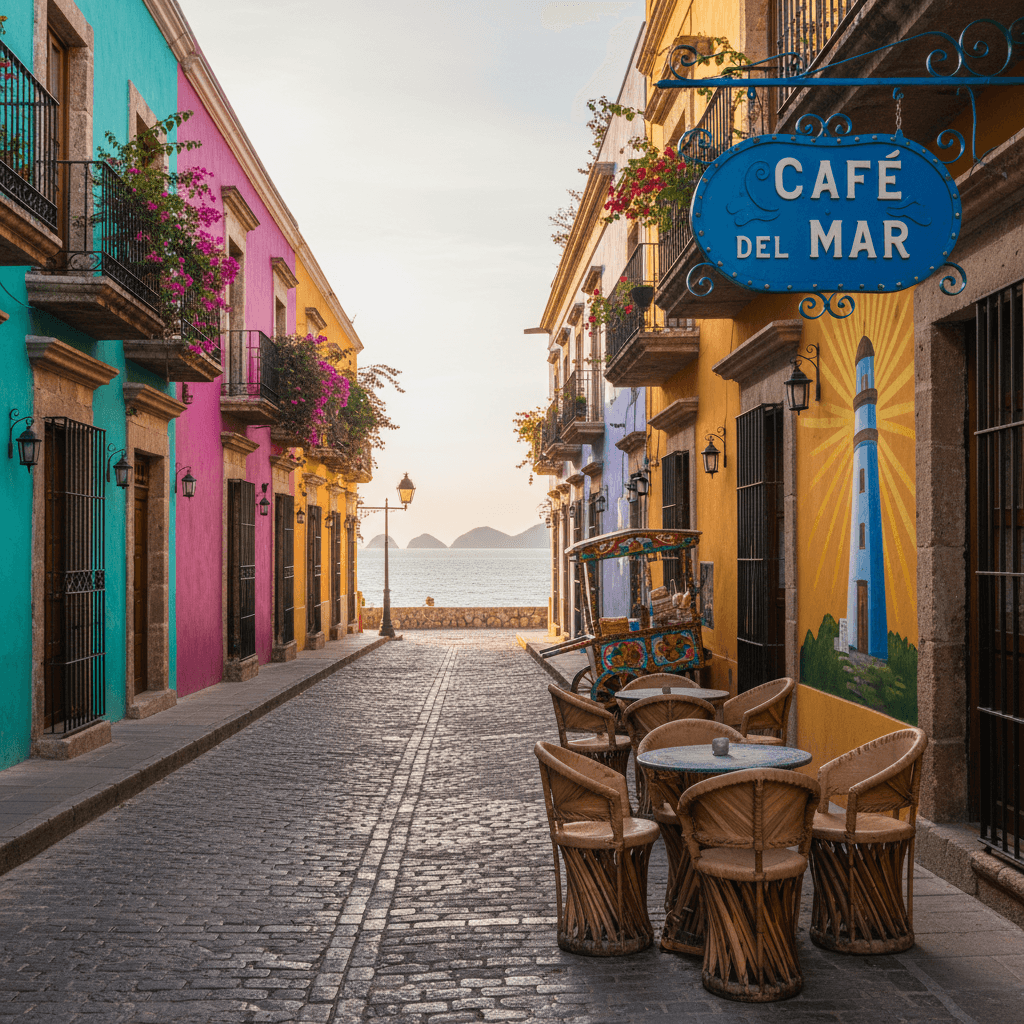
Mazatlán
🇲🇽 Mexico
The Pearl of the Pacific
Mazatlán is an anomaly in the Mexican beach circuit. While destinations like Playa del Carmen or Tulum feel like they were built specifically for tourists, Mazatlán is a real city that just happens to have 21 kilometers of malecón (seaside promenade). It is gritty, elegant, and unapologetically Mexican all at once. You will find 19th-century colonial plazas just a few blocks away from high-rise condos and one of the longest seaside promenades in the world.
The vibe here is noticeably slower than the frantic pace of Mexico City or the spring-break energy of Cabo. It has a "working man's beach town" soul, where the local shrimp fleet is just as important as the tourism industry. For nomads, this means you aren't living in a tourist bubble. You are grabbing coffee in Plaza Machado while locals discuss politics and children play under the palms. It is a place where you can actually get work done during the day because the city doesn't feel like a 24/7 party, though the nightlife is there if you want it.
What Sets It Apart
The defining characteristic of Mazatlán is its balance. It hosts the third-largest Carnaval on the planet, yet on a random Tuesday in November, the streets of Olas Altas feel like a sleepy Mediterranean village. It is one of the few places in Mexico where you can live in a beautifully restored colonial mansion in Centro Histórico and still be a five-minute walk from a surf break.
Expats and long-term travelers often point to the "authentic" feel as the primary draw. You won't find a Starbucks on every corner here. Instead, you'll find pulmonías, the city's unique open-air taxis that look like souped-up golf carts, blasting banda music as they zip along the coast. It is loud, colorful, and smells like salt air and grilled marlin.
The Nomad Reality Check
If you are looking for a massive community of twenty-something tech bros and daily networking mixers, Mazatlán might feel a bit quiet. The international community here leans heavily toward retirees from Western Canada and the US Pacific Northwest. However, the nomad scene is gaining momentum. People are moving here because it is roughly 40% to 50% cheaper than Puerto Vallarta, and the infrastructure is catching up fast.
- The Pros: Incredible seafood (try the aguachile), deep-rooted local culture, and high-speed internet that is reliable enough for Zoom calls.
- The Cons: The coworking scene is still in its infancy compared to Medellín or CDMX, and the humidity in the summer can be punishing.
- The Community: It is easy to make friends, but you'll likely be hanging out with a mix of local Mazatlecos and older expats rather than a pure "nomad" crowd.
Cost of Living Breakdown
Mazatlán offers some of the best value for your dollar in North America. You can live a very comfortable, upper-middle-class lifestyle for a fraction of what you would pay in a US coastal city.
Mid-Range Monthly Budget (Solo)
- Total: $1,600 to $2,000 USD
- Housing: $750 USD for a modern 1BR near the water.
- Groceries: $400 to $500 USD using local markets like Mercado Pino Suárez.
- Dining & Fun: $300 USD; a dinner for two with drinks usually runs between $16 and $27 USD.
- Utilities: $70 to $100 USD, though this spikes if you run the AC 24/7.
Premium Monthly Budget (Couple)
- Total: $2,500 to $3,500 USD
- Housing: $1,200 to $1,800 USD for a luxury 2BR condo with a pool and ocean view.
- Domestic Help: $60 to $100 USD for weekly housekeeping.
- Entertainment: $500 USD, including frequent fine dining and theater tickets at the Angela Peralta.
The emotional payoff of living here is the sunset. Every evening, the entire city seems to migrate toward the malecón to watch the sky turn neon orange. It is a ritual that reminds you why you chose the nomad life in the first place; the ability to close your laptop and be standing on the sand three minutes later is a luxury that never gets old.
The Value Proposition
Mazatlán is widely considered one of Mexico's best kept secrets for your wallet. If you've looked at the skyrocketing prices in Puerto Vallarta or Playa del Carmen, you'll find Mazatlán a breath of fresh air. It's roughly 40% to 50% cheaper than Puerto Vallarta, giving you that Pacific Coast lifestyle without the premium price tag. Most nomads find they can live a high quality life here for a fraction of what they'd spend in the US or Europe.
Monthly Budget Tiers
How much you spend depends heavily on how close you want to be to the waves. For a solo traveler on a Budget Tier, expect to spend between $1,200 and $1,500 USD per month. This usually involves a shared apartment or a basic studio further back from the beach, with a daily spending limit of about $28 USD for food and local transit.
For those looking for a Mid-Range Tier lifestyle, a budget of $1,600 to $2,000 USD is the sweet spot. This covers a comfortable one bedroom apartment, utilities, groceries, and enough left over for regular dinners out and weekend trips. Couples or those seeking a Premium Tier experience should plan for $2,000 to $3,000 USD. At this level, you're looking at modern two bedroom condos in areas like Cerritos or the Marina, often with ocean views and building amenities.
The Cost Breakdown
- Housing: A mid-range furnished one bedroom typically runs around $747 USD. If you need more space, two bedroom apartments range from $800 to $1,800 USD depending on the neighborhood.
- Utilities: Budget $70 to $100 USD for your electricity, water, gas, and high speed internet. Keep in mind that heavy AC use in the summer months can spike your electric bill.
- Groceries: Most residents spend between $400 and $520 USD monthly. Shopping at local mercados for produce and seafood will keep this number on the lower end.
- Dining Out: A nice dinner for two with drinks in the Centro Histórico usually costs between $16 and $27 USD. Street tacos or local seafood joints are significantly cheaper.
- Lifestyle Extras: Professional housekeeping is incredibly affordable at $60 to $100 USD per month. For entertainment like massages or live theater, $200 USD goes a long way.
Neighborhood Price Points
Location is the biggest variable in your Mazatlán budget. The city is spread out, and price tags shift quickly as you move away from the Malecón.
Centro Histórico & Olas Altas
- Vibe: Colonial charm meets the beach. Very walkable with the best restaurant access.
- Rent: Mid-range to high. Expect to pay a premium for renovated historic homes.
- Best for: Nomads who want to be in the heart of the action.
Gaviotas & Lomas de Mazatlán
- Vibe: Established, quieter residential areas slightly inland from the Golden Zone.
- Rent: Moderate. You get more square footage for your dollar here.
- Best for: Long term expats looking for a community feel.
Cerritos
- Vibe: Upscale, modern, and a bit further north. High rise condos and gated communities.
- Rent: Higher end. This is where you'll find the $1,500+ USD luxury rentals.
- Best for: Families and those who prefer a resort atmosphere.
Healthcare and Logistics
One of the biggest financial draws for the expat community is the cost of care. Healthcare in Mazatlán is often a small fraction of US prices, even at high quality private hospitals. For daily transit, the iconic Pulmonías (open air taxis) are affordable for quick trips, though many nomads prefer using ride hailing apps like Uber for transparent pricing. If you're staying long term, a local Telcel SIM card is a cheap necessity for staying connected while you're out exploring the 21 kilometers of seaside promenade.
For Digital Nomads and Young Professionals
If you need to be within walking distance of a laptop-friendly cafe and a sunset beer, Centro Histórico and the Malecón area are your best bets. This is the heart of the action, where colonial architecture meets the Pacific. You'll find the most reliable internet speeds here, and while there isn't a massive coworking scene yet, spots like Looney Bean and various cafes along the coast serve as unofficial offices for the remote crowd.
Olas Altas is a specific pocket within this area that nomads swear by. It feels like a mix of old-world Mexico and a laid-back surf town. It’s walkable, packed with restaurants, and puts you right on the water. Expect to pay around $750 USD for a decent one-bedroom apartment, though prices can spike if you want a direct ocean view.
- Vibe: Social, historic, and high-energy.
- Rent: $700 to $1,200 USD for modern studios or renovated colonial flats.
- Pro Tip: Stick to the streets a few blocks back from the Malecón to save on rent while keeping the beach access.
For Expats and Long-Term Residents
Expats, particularly those from Canada and the US, tend to gravitate toward Gaviotas and Lomas de Mazatlán. These neighborhoods offer a more established residential feel with quieter streets and better proximity to North American-style amenities. It is a bit more suburban but still close enough to the Golden Zone (Zona Dorada) for dining and shopping.
If you want a higher-end lifestyle, Cerritos is the go-to. Located at the northern tip of the city, it features modern high-rise condos and gated communities. It’s much quieter than downtown, making it ideal for those who don't mind a short drive or bus ride to get to the historic center. You’ll find some of the best beaches here, away from the heavy cruise ship crowds.
- Vibe: Relaxed, community-oriented, and comfortable.
- Rent: $800 to $1,800 USD for a two-bedroom condo or house.
- Pro Tip: You’ll likely want a car or a regular budget for Pulmonías if you live out in Cerritos.
For Families
Families usually look for security and space, which makes the gated communities near the golf courses or the Marina Mazatlán area the top choices. These zones offer a sterilized version of the city with paved sidewalks, private security, and proximity to international schools. The Marina area is particularly great because it’s flat, easy to navigate with strollers, and has plenty of family-friendly restaurants overlooking the boats.
- Vibe: Safe, quiet, and suburban.
- Amenities: Access to pools, playgrounds, and private docks.
- Rent: $1,200 to $2,500 USD for larger family homes.
For Budget Travelers and Solo Explorers
If you’re looking to stretch your dollars, head to Centro (the actual downtown, away from the tourist plazas) or neighborhoods just inland from the coast. These areas are authentically Mexican, meaning you’ll shop at the local Mercado Pino Suarez rather than a high-end grocery store. The prices for street food and local cantinas here are significantly lower than in the tourist zones.
Solo travelers often find that living in these local "barrios" helps them integrate faster. You’ll be surrounded by locals rather than other travelers, which is great for practicing Spanish. While these areas lack the polish of the resort zones, they are where you’ll find the true soul of the city at a fraction of the cost.
- Vibe: Gritty, authentic, and busy.
- Rent: $400 to $600 USD for basic apartments.
- Daily Spend: Around $30 USD covers your food and local transport easily.
Connectivity and Speed
Mazatlán isn't quite at the level of Mexico City or Playa del Carmen when it comes to a dedicated "nomad infrastructure," but it's catching up fast. Most modern apartments and hotels offer reliable fiber optic connections. You can generally expect speeds between 50 Mbps and 150 Mbps in the tourist zones and Centro Histórico. It's plenty for Zoom calls and uploading large files, though it's always smart to ask your host for a speed test screenshot before booking a long term stay.
For mobile data, Telcel is the undisputed king. Their coverage is the most consistent across the city and along the Malecón. You can grab a SIM card at any OXXO convenience store for about $5 USD and load it with a "Sin Límite" package. A 4GB plan usually runs around $15 USD and includes unlimited social media data. AT&T Mexico is a decent backup, but Telcel's 5G rollout in Mazatlán is much more robust.
Coworking Spaces
The coworking scene here is still in its boutique phase. You won't find massive global chains, but the local spots offer a more personal, community driven vibe. Most nomads gravitate toward the following locations:
- Local Hubs: Various smaller business centers operate in the Lomas de Mazatlán area. These are often shared with local entrepreneurs, which is a great way to meet people outside the expat bubble.
- Expect to pay: Daily passes typically range from $15 to $25 USD, while monthly memberships hover around $200 to $250 USD.
Laptop Friendly Cafes
Since dedicated coworking spaces are limited, the "cafe office" culture is huge here. Mazatlán has a fantastic coffee scene, particularly in Centro Histórico and Olas Altas. If you're planning to work from a cafe, just remember the unwritten rule: buy a drink or snack every two hours to keep the staff happy.
- Looney Bean: A staple for the remote work crowd in Olas Altas. It has a great view of the water, reliable WiFi, and plenty of power outlets. It gets busy in the mornings, so arrive early if you need a prime spot.
- Cafferium: Located in the Lomas neighborhood, this spot is quieter and more focused. The internet is snappy, and the atmosphere is geared toward productivity rather than social lounging.
- Rico's Coffee: You'll find a few of these around town, including a popular one in the Golden Zone. They are consistent, have decent AC, and are used to people staying for a few hours with a laptop.
Digital Nomad Community
The community in Mazatlán is a mix of seasoned "snowbirds" and a growing wave of younger remote workers. While you won't find a nomad meetup every night of the week, the scene is very welcoming. Most networking happens organically at the Malecón or through local Facebook groups like "Mazatlán Digital Nomads" or "Mazatlán Expats."
If you need a change of pace, the 21 kilometer Malecón has several spots with public WiFi, though it's better for answering a few Slack messages than doing deep work. The sea breeze and the view of the Pacific make for a pretty unbeatable "office" for an hour or two. Just keep a VPN active when using any public or cafe network to stay secure.
Staying Safe in the Pearl of the Pacific
Mazatlán has a different energy than the high-intensity tourist hubs of Cancun or Los Cabos. Because it's a working port city with a deep-rooted local population, the safety dynamic feels more integrated. Most expats and digital nomads settle into the coastal strip between Olas Altas and Cerritos, where the atmosphere is generally relaxed and community-oriented.
The city does have a reputation to manage due to its location in Sinaloa, but long-term residents will tell you the reality on the ground is quite different from the headlines. Most crime is non-violent and opportunistic, such as petty theft. You'll see a visible police presence along the Malecón and in the Centro Histórico, which helps maintain a sense of security in the areas where nomads spend 90% of their time.
- Stick to the Golden Zone and Centro: These areas are well-lit and active until late at night.
- Use common sense with tech: Don't leave your MacBook unattended at a beach cafe while you go for a swim.
- Stick to registered transport: While the city is walkable, use Uber or a Pulmonía (the city's iconic open-air golf cart taxis) after dark rather than wandering into unfamiliar residential neighborhoods away from the coast.
- Atmospheric awareness: If you're out late in the Machado Square area, keep your phone in your pocket and stay aware of your surroundings as the crowds thin out.
Healthcare Quality and Access
One of the biggest draws for the expat community here is the quality of medical care relative to the price. You can get world-class treatment for a fraction of what you'd pay in the US or Canada. Most private hospitals in Mazatlán have English-speaking staff and modern diagnostic equipment.
For routine issues, Farmacias del Ahorro or Farmacias Similares are everywhere. Many have a small doctor's office attached where you can get a consultation for about $3 to $5 USD. It's incredibly efficient for minor ailments like "Turista" or sinus infections.
Top Medical Facilities
- Sharp Hospital: This is the gold standard for expats. It's a full-service private hospital located near the Golden Zone. They are used to dealing with international insurance and have many English-speaking specialists.
- Hospital Marina Mazatlán: A modern facility located further north, popular with those living in the Cerritos or Marina areas.
- Clinica del Mar: A reliable option for emergency services and specialized consultations.
Insurance and Costs
While out-of-pocket costs are low, nomads should still carry international health insurance like SafetyWing or Genki for emergencies. If you're planning to stay long-term on a temporary residency visa, you might look into local private insurance or even the IMSS (Mexican social security) if you qualify, though most expats prefer private care for the speed and comfort.
Expect to pay around $30 to $50 USD for a specialist visit without insurance. Lab work and imaging are also significantly cheaper; an ultrasound or blood panel rarely exceeds $100 USD. Most pharmacies are well-stocked, but if you have a specific brand-name prescription, it's smart to bring a three-month supply and the physical prescription to show a local doctor for a Mexican equivalent.
Practical Health Tips
The biggest health hurdle for newcomers isn't crime or tropical disease, it's the sun and the water. The Mazatlán heat is no joke, especially from July through September. Dehydration and heat exhaustion can sneak up on you while you're working from a patio.
- Don't drink the tap water: Even locals don't do it. Stick to the 20-liter "garrafones" delivered to your door for about $2 USD.
- Sun protection: The Pacific sun is intense. If you're walking the 21-kilometer Malecón, do it before 9:00 AM or after 5:00 PM.
- Pharmacy Apps: Download the Rappi app; they can deliver over-the-counter meds and hydration salts directly to your Airbnb if you're feeling under the weather.
The Iconic Pulmonía Experience
You can't talk about getting around Mazatlán without mentioning the Pulmonía. These are open air, golf cart style taxis that have become the city's trademark. They're perfect for catching a breeze while moving between the Centro Histórico and the Golden Zone. Expect to pay between $5 and $10 USD for most short hops. Just make sure to agree on the price before you hop in, as they aren't metered.
Ride Hailing and Traditional Taxis
Uber and DiDi both operate in Mazatlán, providing a reliable and often cheaper alternative to the tourist oriented Pulmonías. Most digital nomads prefer these apps because the pricing is transparent and you can avoid the "gringo tax" sometimes applied to foreigners. A typical 15 minute ride across town usually costs around $3 to $6 USD. If you prefer traditional cabs, look for the "Serranos" (red and white taxis) or "Verdes" (green and white taxis) which are everywhere.
Public Buses (Camiones)
The local bus system is surprisingly efficient if you're on a budget. The green "Sábalo Centro" buses are the most popular route for expats and nomads because they run the entire length of the beachfront, connecting the Marina and Cerritos to the historic center. Rides cost about $0.75 USD (13 to 15 Pesos). While they can get crowded and the drivers sometimes treat the streets like a racetrack, they're the fastest way to cover long distances for pennies.
The Malecón: A Walker's Paradise
Mazatlán boasts one of the longest seaside promenades in the world, stretching for 21 kilometers. If you live in neighborhoods like Olas Altas or the Malecón area, your primary mode of transport will likely be your own two feet. The walkway is wide, well maintained, and stays active with runners and walkers from sunrise until well past dark. It's the best way to soak in the Pacific sunsets while heading to dinner.
Biking and Scooters
The city has been investing in bike lanes along the Malecón, making cycling a viable and scenic way to commute. You'll find several rental shops in the Golden Zone where you can grab a bike for the day or week. While there isn't a massive app based scooter scene yet, the flat terrain along the coast makes it easy for those who choose to buy or rent their own wheels.
Getting to and from MZT Airport
Mazatlán International Airport is about 20 kilometers from the main tourist zones. You have a few options when you land:
- Airport Taxis: These are pre paid at a kiosk inside the terminal. Expect to pay $25 to $35 USD for a private car.
- Collective Shuttles: A "colectivo" van is a great budget choice if you're solo, costing roughly $10 to $12 USD per person.
- Ride Hailing: Uber can drop you off at the airport, but picking up passengers directly at the terminal can be tricky due to local regulations. Most savvy travelers walk a short distance off airport property to catch an Uber for about $15 USD.
Navigation Tips for Nomads
The city layout is fairly linear along the coast, so it's hard to get truly lost. Most nomads find that a combination of walking the Malecón for exercise and using Uber for grocery runs or late night trips is the perfect balance. If you're staying for several months, consider the bus for your daily commute to save a significant amount of money over time.
Mazatlán is one of those rare places where you can get by with very little Spanish, but you'll have a much deeper experience if you pick up the basics. Because the city has a massive community of full-time expats from Western Canada and the US, English is widely spoken in the tourist zones and upscale neighborhoods. However, the city's charm lies in its authenticity, and that means the local mechanics, market vendors, and bus drivers usually stick to Spanish.
The Language Balance
In neighborhoods like Olas Altas and the Golden Zone, you'll find that most restaurant staff and shop owners speak decent English. If you're staying in Cerritos or Gaviotas, the expat presence is so established that English is almost a default in social settings. Most nomads find they can navigate daily life, from grocery shopping to ordering a pulmonía, with just a few key phrases and a smile.
That said, Mazatlán isn't a "gringo bubble" like parts of Cabo or Cancun. Step three blocks away from the malecón into a local colonia, and you'll need Spanish to communicate. Locals are incredibly patient and warm, often going out of their way to help you if they see you're trying. Travelers often say that even a "poquito" of Spanish goes a long way in building rapport with the Mazatlecos.
Communication Tools & Tech
Since the digital nomad infrastructure is still catching up to places like Playa del Carmen, you can't always rely on everyone having a high-tech setup. WhatsApp is the lifeblood of communication here. Whether you're booking a hair appointment, messaging a landlord, or ordering water delivery, you'll do it through WhatsApp. Make sure your profile is set up before you arrive.
- Google Translate: Use the camera feature for menus and the "conversation" mode for more complex interactions like setting up utilities.
- Local SIM Cards: Don't rely on roaming. Pick up a Telcel SIM card at any OXXO convenience store. They offer the best coverage in Sinaloa.
- Spanish Classes: If you're staying for a few months, consider a local language school in Centro Histórico. It's a great way to meet the growing community of remote workers while sharpening your skills.
Social Nuances
Communication in Mazatlán is often more about the "vibe" than just the words. It's a polite culture. Always start an interaction with a "Buenos días" or "Buenas tardes" before asking for something. Expats recommend learning the local slang, like "mande" (a polite way of saying "pardon?") or "qué onda" (what's up), to blend in better.
For remote work, the language of business is increasingly digital. While you'll hear plenty of English in the cafes where nomads congregate, your landlord or the person fixing your AC will likely communicate via voice notes in Spanish. If your Spanish is rusty, those voice notes are actually a blessing, you can play them back as many times as you need or run the transcript through a translator.
Key Logistics for Communication
- Mobile Data: A Telcel "Amigo" plan is the standard. You can top up 200 to 500 pesos at any corner store for plenty of data.
- Internet Speeds: Most modern apartments in the Malecón area offer 50 to 100 Mbps, which is plenty for Zoom calls, though it's always smart to have your phone as a hotspot backup.
- Emergency Numbers: Dial 911 for emergencies. In the tourist areas, there are often English-speaking operators, but it's not guaranteed.
Mazatlán doesn't follow the same tropical rules as the Caribbean side of Mexico. Because it sits right where the Pacific meets the Sea of Cortez, the weather has distinct moods. You'll find a "perfect" window for productivity and a "steamy" window where your air conditioning bill becomes your biggest monthly expense.
The Golden Window: November to April
This is when the city truly shines. The humidity drops, the skies stay a crisp blue, and daytime temperatures hover between 70°F and 80°F (21°C to 27°C). It's the ideal time for nomads who like to work from the outdoor cafes in Olas Altas or take sunset walks along the 21-kilometer malecón without breaking a sweat.
The social calendar peaks during these months too. You'll catch the Mazatlán Carnaval in February or March, which locals proudly claim is the third-largest in the world. If you're planning to be here for those dates, book your housing at least four months in advance. Prices for short-term rentals in Centro Histórico can double or triple during the festivities.
- Vibe: Energetic, social, and dry.
- Attire: Light layers. You'll want a light sweater or hoodie for the breezy evenings by the ocean.
- Nomad Tip: This is the high season for "snowbirds" from Western Canada and the US, so coworking spots and popular cafes get crowded early.
The Shoulder Season: May and October
May is a sweet spot for those looking for a deal. The winter crowds head north, but the intense summer heat hasn't quite settled in yet. You can often negotiate better monthly rates on apartments in Gaviotas or Cerritos during this time. October is similar, though it carries a slightly higher risk of rain as the tropical storm season winds down.
The Humid Reality: June to September
If you aren't a fan of heat, summer in Mazatlán will be a challenge. Temperatures regularly climb into the 90s°F (32°C+), but it's the 80% humidity that really hits you. Most digital nomads who stay year-round find themselves shifting their schedule to do all outdoor errands before 10:00 AM.
This is also the rainy season. Expect dramatic afternoon thunderstorms that turn the streets into temporary rivers. While the rain usually doesn't last all day, the clouds can occasionally mess with satellite-based internet if your rental doesn't have a hardwired fiber connection.
- Pros: The city is much quieter, the landscape turns lush and green, and you'll have the beaches almost entirely to yourself.
- Cons: High electricity costs. Running the AC 24/7 can add $100 to $150 USD to your monthly budget.
- Safety Note: Hurricane season peaks in August and September. While direct hits are rare, it's something to monitor on local weather apps.
Best Time for Your Budget
For the best balance of cost and comfort, aim for late October or early November. You'll beat the massive influx of winter tourists, secure a better rental rate, and enjoy the cooling air. If you're on a strict budget and don't mind the heat, July and August offer the lowest prices on luxury condos, but you'll likely spend those savings on cold drinks and electricity to keep your workspace habitable.
Money and Budgeting
Mazatlán is a breath of fresh air for your wallet, especially if you're coming from overpriced hubs like Tulum or Puerto Vallarta. You can expect to live well here for 40% to 50% less than in Mexico's more famous resort towns. A solo traveler can get by on $1,200 to $1,500 USD per month, while a couple living a high-end lifestyle with a beachfront condo and frequent dinners out will rarely top $3,000 USD.
Cash is still king for street food and small shops, but most restaurants and grocery stores take cards. If you're planning your monthly budget, here is a realistic breakdown of what you'll spend:
- Mid-range 1BR apartment: $750 USD
- Monthly groceries: $400 to $520 USD
- Utilities (Internet, Water, Gas): $70 to $100 USD
- Dinner for two with drinks: $16 to $27 USD
- Weekly housekeeping: $15 to $25 USD per visit
Staying Connected
While Mazatlán hasn't quite reached the "coworking capital" status of Mexico City, the infrastructure is solid. Most modern apartments in areas like Lomas de Mazatlán or Marina Mazatlán offer reliable high-speed fiber optic internet. You'll find that the café culture is the primary way nomads get work done here. Places like Looney Bean in Olas Altas are local staples for those who need a caffeine fix and a stable connection.
For mobile data, grab a Telcel SIM card as soon as you land. It has the best coverage in the state of Sinaloa. You can top up at any OXXO convenience store, which are on almost every corner. Most nomads use a VPN for an extra layer of security when hopping between public networks along the Malecón.
Getting Around Town
The city is surprisingly easy to navigate. If you live in Centro Histórico or near the Malecón, your own two feet are your best asset. For everything else, you have some unique options:
- Pulmonías: These are Mazatlán's signature open-air taxis. They look like souped-up golf carts and are perfect for catching a breeze. Always agree on the price before you hop in.
- Ride-Hailing: Uber and similar apps work here and are generally the most transparent way to get around without haggling.
- Biking: With 21 kilometers of seaside promenade, biking is a legitimate way to commute. Many locals and expats use the Malecón to get from the golden zone to the historic center.
Health and Safety
Most expats and remote workers gravitate toward the coastal strip, which is generally well-patrolled and active at all hours. Like any city, it's smart to keep your wits about you at night and stick to well-lit areas. The local community is tight-knit, and you'll often see neighbors looking out for one another.
Healthcare is a major draw for the expat crowd. The facilities are modern, and the costs are a fraction of what you'd pay in the US or Canada. Many doctors in the private hospitals speak English, and pharmacies are everywhere. It's a good idea to have a private insurance plan that covers international hospitals, as these offer the quickest service and most modern equipment.
Language and Culture
You can get by with English in the tourist heavy areas like the Zona Dorada, but Mazatlán is a "real" Mexican city first and a resort second. Learning basic Spanish will change your experience entirely. It helps you negotiate prices, order the best off-menu seafood, and connect with the locals who are famously warm and welcoming. If you're here in February, prepare for Carnaval. It's the third-largest in the world, and the entire city shuts down to party. It's an incredible experience, but don't expect to get much deep work done during that week.
Need visa and immigration info for Mexico?
🇲🇽 View Mexico Country GuideEasy Landing
Settle in, no stress