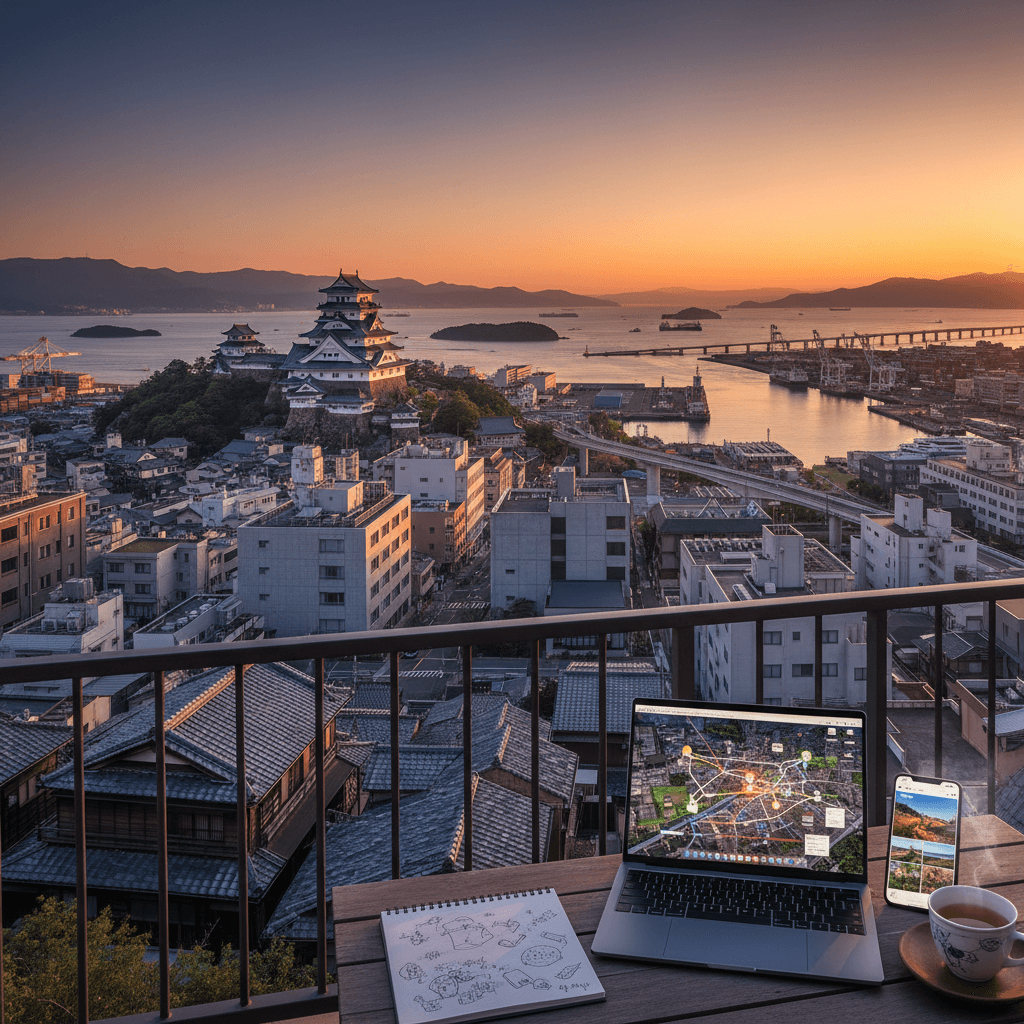
Matsuyama
🇯🇵 Japan
The Slow Living Capital of Shikoku
If Tokyo is a high speed rail and Osaka is a neon fever dream, Matsuyama is a deep, restorative exhale. It is the largest city on Shikoku island, yet it feels more like a collection of interconnected villages than a concrete jungle. You aren't coming here for a massive tech scene or high energy networking events; you're coming here because you want to see what Japan looks like when the tourist crowds thin out and the pace of life actually allows for a conversation with your barista.
The vibe is defined by a strange, beautiful tension between ancient history and a sleepy, modern coastal town. You'll spend your mornings working from a quiet cafe and your evenings soaking in Dogo Onsen, one of the oldest hot springs in the country. There is a palpable sense of pride among the locals here. They know they have something special, but they aren't in a rush to sell it to the highest bidder. It is a city that rewards the patient nomad who doesn't mind a bit of a language barrier in exchange for genuine hospitality.
A Different Kind of Nomad Life
Let's be realistic about the setup here. You won't find a WeWork on every block. The nomad community is small, tight knit, and largely underground. Instead of sterile coworking spaces, the remote work culture revolves around a growing wave of third-wave coffee shops and traditional kissaten. Places like Flying Scotsman or the Progresso Studyroom serve as unofficial offices for the few expats and digital workers in town. It is the kind of place where you'll likely be the only person with a laptop in the room, so being respectful of cafe etiquette is a must.
The emotional experience of Matsuyama is one of profound safety and belonging. It is a city where the tram system still uses vintage wood paneled cars, and the castle sits on a hill overlooking everything like a silent guardian. It feels like a secret you've stumbled upon. Most nomads find that while the infrastructure for "hustle culture" is missing, the infrastructure for a high quality of life is everywhere. You trade the convenience of English signage for a community that actually recognizes you after your third visit to the local izakaya.
The Connectivity Reality Check
Connectivity is the one area where you need to be proactive. Unlike the major hubs, public Wi-Fi is spotty at best and nonexistent at worst. If you try to rely on city hotspots, you'll spend more time troubleshooting than working. Most successful long termers here swear by pocket Wi-Fi devices or eSIMs from providers like Ubigi or Airalo. If you're looking for a local physical SIM, head to the Bic Camera or Yodobashi near the station to look at NTT Docomo or SoftBank plans, but be prepared to show your residence card or passport.
Living here requires a bit of DIY spirit. There aren't many "plug and play" nomad hubs, but the trade-off is a cost of living that makes Tokyo look like a robbery. You can find a decent lifestyle here for a fraction of the price of the capital, provided you're willing to navigate the world in Japanese or with a very trusty translation app. It is a city for the seasoned traveler who wants to stop being a "visitor" and start being a neighbor.
Matsuyama at a Glance
- The Pace: Slow, deliberate, and incredibly polite.
- The Crowd: Mostly locals, university students, and a handful of intrepid expats.
- The Work Style: Independent. You'll be creating your own routine in local cafes rather than joining a coworking hub.
- The Major Draw: The ability to end every single workday in a 3,000 year old hot spring for a few hundred yen.
- Communication: English levels are lower than in Honshu. Learning basic Japanese phrases isn't just helpful; it is your ticket to a social life.
The Price of Authenticity
Living in Matsuyama feels like a financial breath of fresh air compared to the wallet draining prices of Tokyo or Kyoto. It is a mid sized city where your yen stretches significantly further, especially when it comes to the basics of life. Most expats find that their monthly expenses drop by 25% to 40% after moving here from the capital. It is the kind of place where you can enjoy a high quality of life on a modest budget, provided you are willing to trade some big city conveniences for a slower pace.
Housing and Neighborhoods
Rent will be your biggest saving. While you won't find many dedicated nomad coliving spaces yet, the local apartment market is very accessible if you use agencies like Leopalace21 or Village House, which are often more foreigner friendly. Most nomads look for spots near Okaido for the proximity to shops or Dogo if they want a more historic vibe.
- Studio Apartment (City Center): Expect to pay between 45,000 and 65,000 JPY ($300 to $430 USD) per month.
- Two Bedroom Apartment: Prices usually range from 75,000 to 100,000 JPY ($500 to $670 USD).
- Utilities: Budget about 15,000 JPY ($100 USD) for electricity, gas, and water, though this spikes in the humid summer months when the AC is blasting.
Food and Dining
Eating out is a highlight here because the local citrus and seafood are incredibly cheap. You can grab a hearty bowl of Taimeshi (sea bream rice) for about 1,200 JPY ($8 USD). If you are on a budget, the local Fuji supermarkets or the Mitsukoshi basement food hall offer discounted bento boxes after 7:00 PM that can cut your dinner cost to under 600 JPY ($4 USD).
- Cheap Lunch: 800 to 1,100 JPY ($5 to $7 USD) for a set meal at a local shokudo.
- Dinner with Drinks: 3,000 to 4,500 JPY ($20 to $30 USD) at an izakaya in the Nibancho district.
- Coffee: A latte at a modern spot like Park Side Cafe or Flying Scotsman runs about 550 JPY ($3.70 USD).
Connectivity and Working
Since free public Wi-Fi is hit or miss, you have to factor in the cost of staying connected. Most remote workers rely on a Ubigi or Airalo eSIM for immediate data, but for a long stay, a physical SIM from Sakura Mobile or Mobal is better. Coworking options are still catching up, but Tech Hub Matsuyama is a solid choice for a professional desk.
- Mobile Data: 3,000 to 5,000 JPY ($20 to $33 USD) per month for a decent data plan.
- Coworking Daily Pass: Usually around 1,500 to 2,000 JPY ($10 to $13 USD).
- Pocket Wi-Fi Rental: Roughly 6,000 to 8,000 JPY ($40 to $53 USD) per month if your apartment lacks fiber.
Transportation and Leisure
Matsuyama is flat and incredibly bike friendly. Most residents buy a used mama-chari bicycle for around 10,000 JPY ($67 USD) and rarely use public transit. The iconic orange trams are charming and cost a flat 200 JPY ($1.35 USD) per ride, which is perfect for rainy days. For relaxation, a soak at the legendary Dogo Onsen Honkan costs around 700 JPY ($4.70 USD), making it one of the most affordable luxury rituals in the world.
Overall, a single person can live comfortably in Matsuyama on 180,000 to 220,000 JPY ($1,200 to $1,470 USD) per month. This covers a nice central apartment, frequent dining out, and plenty of weekend trips around Shikoku. It is a sustainable choice for those who want the Japanese experience without the Tokyo price tag.
For Digital Nomads: Okaido and Gintengai
If you need to be within walking distance of a caffeine fix and a stable connection, stick to the city center near the Okaido and Gintengai covered arcades. This is the heartbeat of Matsuyama. While the city lacks the massive coworking hubs found in Tokyo, you will find reliable spots like the Matsuyama City Library which offers quiet zones for deep work. Most nomads gravitate toward the modern cafes tucked into the side streets here, such as Flying Scotsman, where the coffee is strong and the atmosphere is conducive to clearing your inbox.
- Rent: ¥55,000 to ¥85,000 for a modern studio or serviced apartment.
- Vibe: Urban convenience with easy access to the tram line.
- Connectivity: Best area for finding pocket Wi-Fi rental shops and cafes with decent speeds.
For Expats and Long-Term Residents: Katsuyama and Shizukawa
Expats who plan to stay for a few months usually look toward the Katsuyama area, located just east of the castle greenery. It feels more like a residential neighborhood but keeps you close enough to the action. You'll find more spacious apartments here compared to the cramped studios downtown. For those looking for a quieter, more suburban life, Shizukawa is popular because it's near Ehime University. The presence of the university means more affordable grocery stores and a slightly more international feel, even if the "international" community here is relatively small.
- Rent: ¥45,000 to ¥75,000 for older but larger two bedroom units.
- Food: Plenty of local izakayas and supermarkets like Fuji where prices are lower than the city center.
- Atmosphere: Quiet, tree lined streets with a local, lived in feel.
For Families: Dogo and Ishite
Families often prefer the Dogo area, though not directly in the tourist center near the famous onsen. The residential pockets surrounding Dogo Park are fantastic for kids. You have wide open green spaces, the Ehime Children's Castle a short drive away, and a much slower pace of life. Ishite is another solid choice, known for its proximity to historic temples and reputable local primary schools. Since international schooling is limited in Matsuyama, most expat parents here enroll their children in local schools or opt for distance learning programs.
- Rent: ¥80,000 to ¥120,000 for a small house or a large three bedroom apartment.
- Safety: Extremely high, even by Japanese standards; kids often walk to school alone.
- Perks: Proximity to public parks and the therapeutic Dogo hot springs for weekend relaxation.
For Solo Travelers and Short Tech-Retreats: Mitsuhamato
If you are a solo traveler looking for a more creative, coastal atmosphere, check out Mitsuhamato. This old port district has seen a recent influx of artists and young entrepreneurs renovating old wooden houses into galleries and cafes. It is about a 15 minute train ride from the city center via the Iyotetsu Railway. It is not the place for someone who needs a corporate office environment, but it is perfect if you want to soak in the Seto Inland Sea views and live a slower, more intentional life while you work on a project.
- Rent: ¥40,000 to ¥60,000 for renovated traditional spaces or guesthouses.
- Transportation: Requires a bike or a train pass as it is removed from the main tram circuit.
- Social: Easy to meet locals at the small harbor front bars and community workshops.
Connectivity Realities
If you are coming from Tokyo or Seoul, the first thing you will notice in Matsuyama is that the free public Wi-Fi is hit or miss. While the city is modern, it does not have that blanket of open networks you might expect. Most nomads here rely heavily on eSIMs or a pocket Wi-Fi device to stay productive. If you try to hop between public hotspots, you will likely spend more time authenticating on login pages than actually getting work done.
For a reliable connection, your best bet is to pick up a local SIM from Bic Camera near the Matsuyama City Station. Providers like NTT Docomo and SoftBank offer the best coverage if you plan on taking your laptop into the foothills or out toward the coast. Expect to pay around 3,000 to 5,000 yen for a decent monthly data package. If you are staying long term, look into Sakura Mobile or Mobal since they are much easier for expats to set up without a local bank account.
Coworking Spaces and Work Hubs
The coworking scene in Matsuyama is smaller than in the big metros, but what it lacks in quantity, it makes up for in focus. You won't find a massive community of thousands here, but you will find dedicated desks and quiet environments. Tech-Hub Matsuyama is a popular choice for developers and digital creatives, offering a professional atmosphere that is a bit more serious than your average coffee shop.
Prices for a day pass at local hubs usually hover around 1,000 to 2,000 yen, while monthly memberships can range from 10,000 to 15,000 yen. These spaces are generally open during standard business hours, so if you are working a US or European time zone, you will likely be working from your apartment late at night.
The Cafe Work Culture
Matsuyama has a fantastic blend of old school kissaten and modern third wave coffee shops. While the traditional spots are great for a quick caffeine fix, they aren't always laptop friendly. For longer sessions, head toward the Okaido or Gintengai shopping arcades. You will find several modern cafes with power outlets and decent speeds where nobody will give you a hard time for staying a couple of hours.
- Starbucks Coffee: Located near the Dogo Onsen station, it is a reliable fallback with consistent speeds, though it gets crowded on weekends.
- Sanwa Coffee: A local favorite where the atmosphere is calm enough for deep work.
- Tully's Coffee: Usually offers plenty of seating and accessible power outlets for charging your gear.
Practical Workflow Tips
Since the nomad community here is still growing, you won't find many organized meetups on platforms like Meetup.com. Most networking happens organically in the smaller coworking hubs or at local izakayas in the evening. If you need to print documents or scan files, the 7-Eleven and Lawson convenience stores are your best friends. Their multi copy machines are incredibly easy to use via the PrintSmash or NetPrint apps.
One thing to keep in mind is that many local businesses still prefer cash, though the tech scene is pushing more toward digital payments like PayPay. Having a Wise card or a Revolut account will save you a lot of headache with exchange rates, but always keep a few 1,000 yen notes in your bag for those smaller cafes that haven't quite made the digital jump yet.
A High Standard of Safety
Japan is famous for being one of the safest countries on the planet, and Matsuyama takes that reputation even further. While Tokyo has its crowded districts and Osaka has its gritty corners, Matsuyama feels like a quiet neighborhood where everyone knows their neighbor. You can comfortably walk through the Okaido shopping arcade or the residential streets of Dogo at 2:00 AM without a second thought. Serious crime is almost nonexistent here; the biggest "danger" you’re likely to face is a cyclist on a sidewalk or forgetting your umbrella at a cafe.
For solo travelers and women, the city is incredibly welcoming. You'll see local children walking to school alone or taking the tram by themselves, which speaks volumes about the community trust. If you happen to lose your wallet or phone at a Starbucks or on the Iyo Railway, there is a very high probability it will be turned into the nearest Koban (police box) with every yen still inside. It’s still smart to keep your wits about you, but the constant low-level anxiety of being pickpocketed just isn't part of the lifestyle here.
Navigating the Healthcare System
If you get sick, you’re in good hands, though the process looks a bit different than in the West. Matsuyama has excellent facilities, but English proficiency among staff can be hit or miss. Matsuyama Red Cross Hospital is one of the largest and most reliable options in the city. They have a wide range of specialists and are generally better equipped to handle international patients than smaller neighborhood clinics.
Most clinics in Japan don't require an appointment; you simply walk in, take a number, and wait. You’ll need to bring your National Health Insurance (NHI) card if you're on a long-term visa, or your travel insurance documents if you're just passing through. Under the national system, you typically pay 30% of the total cost, which usually makes a standard doctor's visit cost between 2,000 and 5,000 yen. Pharmacies are usually located right next door to clinics, making it easy to grab your prescription immediately after your consultation.
Emergency Services and Preparedness
In an emergency, the numbers to remember are 119 for fire or ambulance and 110 for police. Dispatchers in Ehime Prefecture are increasingly trained to handle English calls, but speaking slowly and clearly is key. If you need a late-night pharmacy, look for a Walgreens-style chain like Cosmos or Lady Drug, though keep in mind that many don't stay open 24 hours.
Natural disasters are a reality in Japan, and Matsuyama is no exception. While the city is somewhat shielded by the Seto Inland Sea, it can still experience typhoons and earthquakes. Local expats recommend downloading the Safety Tips app, which provides real-time alerts in English. Most apartment buildings and hotels have clearly marked evacuation routes, and it's worth taking five minutes to locate your nearest "Hinanjyo" (evacuation site), which is usually a local park or elementary school.
Health Essentials for Nomads
- Tap Water: The water in Matsuyama is perfectly safe to drink and actually quite delicious, as much of it comes from the Ishizuchi mountain range.
- Health Insurance: If you're on the new Digital Nomad Visa, ensure your private insurance covers at least 10 million yen in medical expenses, as this is a strict entry requirement.
- Pharmacies: For basic cold meds or painkillers, look for the "Drugstore" sign. Note that Japanese dosages are often weaker than what you might be used to back home.
- Air Quality: Generally excellent, though some people experience "Kosa" (yellow dust) allergies in the spring months.
The Streetcar Pace
Getting around Matsuyama feels a bit like stepping back in time, but in the best way possible. The city center is dominated by a charming, vintage streetcar system operated by Iyotetsu. It's the most practical way to hop between the main hub of Okaido and the historic Dogo Onsen area. You'll mostly see the classic orange cars, but keep an eye out for the Botchan Train, a replica steam locomotive that chugs through the streets. It costs a bit more than the standard fare, but it's a fun rite of passage when you first arrive.
Most nomads find that a flat fare of 200 yen per ride makes the streetcar an easy choice for mid-day meetings or grocery runs. If you're planning a heavy day of errands, grab a 1-day pass for 800 yen. Just remember that these vintage trams don't always have the most robust climate control, so prepare for some heat in the peak of summer.
Mastering the Iyotetsu Network
Beyond the streetcars, the Iyotetsu suburban trains connect you to the outskirts and the port. If you're staying near Matsuyama City Station (often called Shieki by locals), you'll have easy access to three different train lines. This is the real transit heart of the city, distinct from the JR Matsuyama Station which handles the long-distance travelers coming from elsewhere in Shikoku or Honshu.
- IC Cards: While Tokyo's Suica or Pasmo cards work on JR lines, the local Iyotetsu buses and trams use their own system called ICY Card. It's worth picking one up at the Shieki station office if you're staying longer than a week.
- Airport Limousine Bus: You can get from Matsuyama Airport to the city center in about 20 to 30 minutes for roughly 950 yen. It's much cheaper than a taxi and drops you right at major landmarks like the Okaido shopping arcade.
- The Port Connection: If you're heading to Hiroshima via the Super Jet ferry, the rimousin bus from the city center to Matsuyama Sightseeing Port is your best bet.
Two Wheels are Better Than Four
Matsuyama is remarkably flat once you get away from the castle hill, making it a dream for cyclists. Expats here almost universally recommend buying a "mama-chari" (a sturdy, basket-equipped city bike) or using the city's rental scheme. Because the digital nomad community is smaller here, you won't find a massive bike-share app presence like you might in Osaka, but local rental shops near the station offer daily rates around 500 to 1,000 yen.
Cycling is often faster than the streetcar for short distances, especially when you're navigating the covered shotengai (shopping arcades). Just be mindful of the designated parking zones. The city is strict about impounding bikes left haphazardly on sidewalks, and getting your ride back from the pound is a 2,000 yen headache you don't want.
Walking and Connectivity Challenges
The downtown core is highly walkable, particularly around the Okaido and Gintengai arcades. These pedestrian-only zones are where you'll find the best concentration of third-wave coffee shops to work from. However, don't expect to rely on public Wi-Fi while you're on the move. Outside of major Starbucks locations or high-end hotels, the signal is spotty at best.
Travelers often say that a dedicated pocket Wi-Fi or a local eSIM is the only way to navigate the bus routes effectively, as Google Maps is your primary tool for deciphering the Japanese-heavy bus schedules. If you're venturing out to the coastal areas or the mountains, having that constant data connection is a safety requirement, not just a luxury.
Taxi Basics
Taxis are plentiful near the stations and major hotels, but they're the most expensive way to get around. The base fare usually starts around 600 to 700 yen. While apps like Go or Uber are starting to gain some traction in Japan, in Matsuyama, you're still more likely to find success by hailing one on the street or asking a cafe worker to call one for you. Most drivers don't speak much English, so have your destination written in Japanese or pinned on your map ready to show them.
The Language Barrier in Shikoku
Expect a much steeper learning curve in Matsuyama than you would find in Tokyo or Osaka. While the city is famous for its hospitality, English isn't widely spoken once you step away from the ticket counters at Matsuyama Airport or the main desk at the Dogo Onsen Honkan. Most locals are incredibly patient, but you'll find that daily life moves much smoother if you've got the basics of Japanese down.
The local dialect is called Iyo-ben. It's known for being softer and more polite sounding than the harsher tones of Osaka. You'll often hear people end their sentences with "ken" instead of the standard "kara" when explaining a reason. While you don't need to master the dialect, learning a few local phrases will earn you immediate respect at the neighborhood izakayas in Okaido.
Navigating Without English
Street signs in the city center and near major landmarks like Matsuyama Castle are bilingual, but the menus at smaller, authentic spots in the Gintengai shopping arcade usually aren't. You'll want to have Google Lens ready to go for instant translations of kanji. Most expats here find that "point and order" works fine, especially since many restaurants still use plastic food displays or iPad menus with photos.
If you're heading into the mountains or smaller coastal towns nearby, the English disappears almost entirely. In these spots, a simple "Sumimasen" (excuse me) and "Arigato" (thank you) go a long way. If you're staying for a few months, consider enrolling in a few classes at the Matsuyama International Center (MIC). They offer affordable Japanese language lessons and are a great hub for meeting the small but dedicated expat community.
Connectivity and Digital Tools
Don't count on finding open Wi-Fi networks as you wander. Matsuyama is still a "bring your own connection" kind of town. Most digital nomads here rely on a Ubigi or Airalo eSIM for their phones to stay connected while riding the vintage trams. For your laptop, a physical pocket Wi-Fi device from a provider like Sakura Mobile or Mobal is the standard move if your accommodation's speeds aren't up to par.
Since you'll be relying heavily on translation and navigation apps, your data usage will be higher than usual. Here are the tools most residents consider non-negotiable:
- Google Maps: Essential for the tram schedules, which are surprisingly punctual but confusing for first-timers.
- DeepL: Far more accurate than Google Translate for nuanced Japanese sentences.
- VoiceTra: A high-quality translation app developed by a Japanese research institute that handles the local accent better than most.
- Line: This is the primary way everyone communicates in Japan. If you make a local friend or need to message a business, they'll ask for your Line ID, not your phone number.
The Social Etiquette of Communication
Communication here is as much about what you don't say as what you do. Matsuyama has a relaxed, slow-paced vibe, and being loud on your phone in public or on the tram is a major faux pas. If you need to take a work call, step inside a "Mister Donut" or one of the modern cafes near Ehime University where the student chatter provides a bit of a sound buffer.
When you're paying for things, remember that money is usually placed on a small tray rather than handed directly to the cashier. It's a silent form of communication that keeps things orderly. Even if your Japanese is non-existent, a slight bow when entering or leaving a shop communicates all the respect you need to get by comfortably.
The Sweet Spot of Shikoku
Matsuyama sits on the western coast of Shikoku island, tucked between the calm Seto Inland Sea and the rugged mountains of the interior. Because it's shielded by two major mountain ranges, the city avoids the extreme rainfall seen in other parts of Japan. You'll find a climate that's surprisingly mild, often compared to the Mediterranean. It's the kind of place where you can comfortably walk to a local cafe or the castle grounds for most of the year without feeling like you're melting or freezing.
Spring: The Golden Window
If you want the quintessential Japanese experience, aim for late March through May. This is when the city truly wakes up. The cherry blossoms at Matsuyama Castle usually peak around early April, and the weather is crisp enough for a light jacket but warm enough for outdoor work sessions. Highs settle around 20°C (68°F) by May, making it the most pleasant time for nomads who enjoy exploring the city on foot or by the vintage streetcars.
Keep in mind that Golden Week (late April to early May) brings a surge of domestic tourists. Hotel prices can double, and local spots like Dogo Onsen will have long wait times. If you're planning a stay during this window, book your accommodation at least three months in advance.
Summer: Humidity and Festivals
From late June to August, the heat turns up. It's not just the temperature, which hits about 32°C (90°F), but the humidity that hits you. June marks the start of the rainy season, though Matsuyama gets less rain than Tokyo. You'll want to seek out air-conditioned cafes like Flying Scotsman during the midday heat.
- July: The humidity peaks. Carry a portable fan and stay hydrated with Pocari Sweat from the ubiquitous vending machines.
- August: The city hosts the Matsuyama Festival with traditional dance and fireworks. It's loud, colorful, and sweaty.
- Typhoon Season: Be aware that August and September can occasionally see storms that disrupt ferry services to Hiroshima or flights from Matsuyama Airport.
Autumn: The Local Favorite
Many long term residents argue that October and November are actually better than spring. The humidity vanishes, leaving behind clear blue skies and sharp, cool air. The autumn foliage at Ishite-ji Temple is spectacular, usually peaking in mid-November. For digital nomads, this is the best time for "workations" because the weather is predictable and the tourist crowds are thinner than in the spring. Expect daytime highs around 16°C to 21°C (60°F to 70°F).
Winter: Chilly but Manageable
Winter in Matsuyama, from December to February, is cold but rarely brutal. Snow is a rare event in the city center, though you'll see it dusting the peaks of the nearby mountains. Temperatures usually hover around 5°C to 10°C (41°F to 50°F). This is the absolute best time to take advantage of the city's hot spring culture. There's nothing quite like walking through the chilly streets of Dogo in a traditional yukata robe before dipping into the 42°C (107°F) waters of the Asuka-no-Yu bathhouse.
When to Visit: Summary
- Best Overall: October to November for perfect working weather and stunning colors.
- Best for Socializing: April, when the parks are full of people celebrating under the blossoms.
- Cheapest Stays: January and February, excluding the New Year period, offer the lowest rates on monthly rentals.
- Worst for Heat: August, unless you plan on staying indoors with high-powered AC.
Most nomads find that a three-month stay starting in either late September or late March gives the best balance of comfortable weather and local events. Since the city isn't as saturated with remote workers as Kyoto, you won't have to fight for a seat at your favorite coffee shop, regardless of the season.
Connectivity and Tech Setup
You shouldn't expect the seamless public Wi-Fi coverage found in Tokyo's Shibuya or Shinjuku districts. Matsuyama is a bit more old school, and finding an open signal on the street is rare. Most seasoned nomads here rely on an Ubigi or Airalo eSIM for immediate data, though for a long term stay, a physical pocket Wi-Fi device from Ninja WiFi is the gold standard for stability.
If you need to buy local hardware or a SIM card, head to Bic Camera or Yodobashi Camera near the city center. The major providers are NTT Docomo, au, and SoftBank. Just keep in mind that many local contracts require a residence card, so short term visitors usually stick to prepaid data cards which can be topped up at Lawson or 7-Eleven convenience stores.
Workspace Culture
The nomad community here is cozy and tight knit rather than massive. You won't find a coworking space on every block, but the ones that exist are high quality. Matsuyaman Space is a popular spot where you can get a day pass for around 1,500 to 2,000 yen. It's a great place to meet local entrepreneurs who are usually happy to chat if you catch them during a coffee break.
For a more casual vibe, the city's coffee scene is a mix of traditional kissaten, which are quiet, old fashioned tea rooms, and modern third wave shops. These cafes are great for an hour or two of laptop time. Just be respectful of the smaller shops during lunch rushes; it's generally better to move on once the midday crowd arrives.
Money and Daily Costs
Cash is still very much the king of Shikoku. While you can use credit cards at major hotels and department stores like Iyotetsu Takashimaya, you'll need yen for smaller izakayas, temples, and local trams. Most expats use Seven Bank ATMs found inside 7-Eleven stores because they accept almost all international debit cards and have English menus.
Tipping is a big no here. If you leave a few coins on the table, the server will likely chase you down the street to return them. Service is already factored into the price, and the hospitality is naturally high. For groceries, Fuji and Sunny Mart are the go to supermarket chains. You can find decent bento boxes for 500 to 800 yen if you go after 7:00 PM when they start marking down prices for the evening.
Navigating the City
The best way to get around is the charming old streetcar system. It's flat fare, usually around 200 yen per ride, and connects the main train station to the Dogo Onsen area. If you're staying for more than a week, buy an ICOCA or Paspy card to tap on and off without fumbling for change.
Biking is the other local favorite. The city is mostly flat, and you can rent a silver "mamachari" bike for a few hundred yen a day. It's the most efficient way to explore the backstreets of the Okaido shopping arcade or the residential pockets around Matsuyama University.
Family and Long Term Stays
If you're traveling with kids, be aware that international school options are basically non existent in the city. Most families who need English language curriculum look toward Hiroshima or Osaka. However, for a short immersion, the local parks and the Matsuyama City Library are very welcoming. For healthcare, the Matsuyama Red Cross Hospital is one of the larger facilities and usually has staff who can assist in English if you have an emergency.
Need visa and immigration info for Japan?
🇯🇵 View Japan Country GuideHidden Gem
Worth the effort