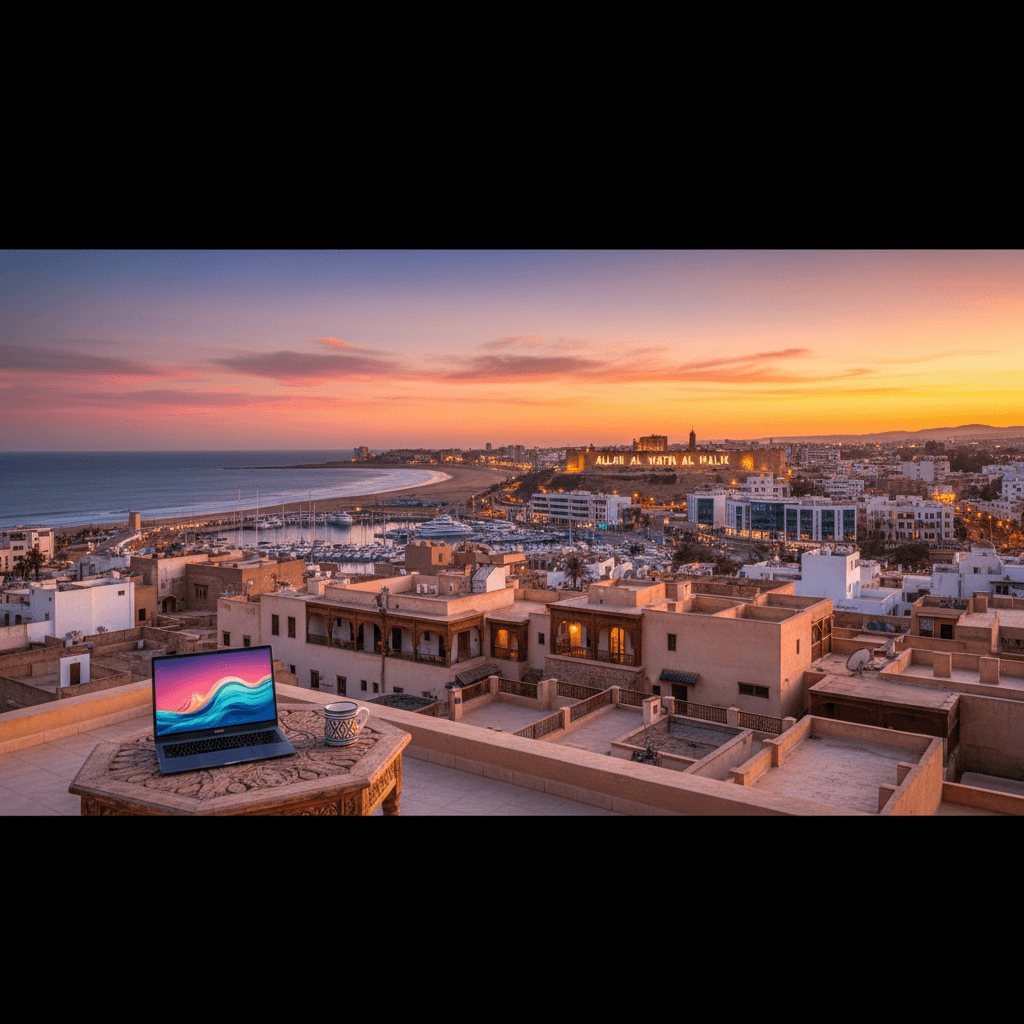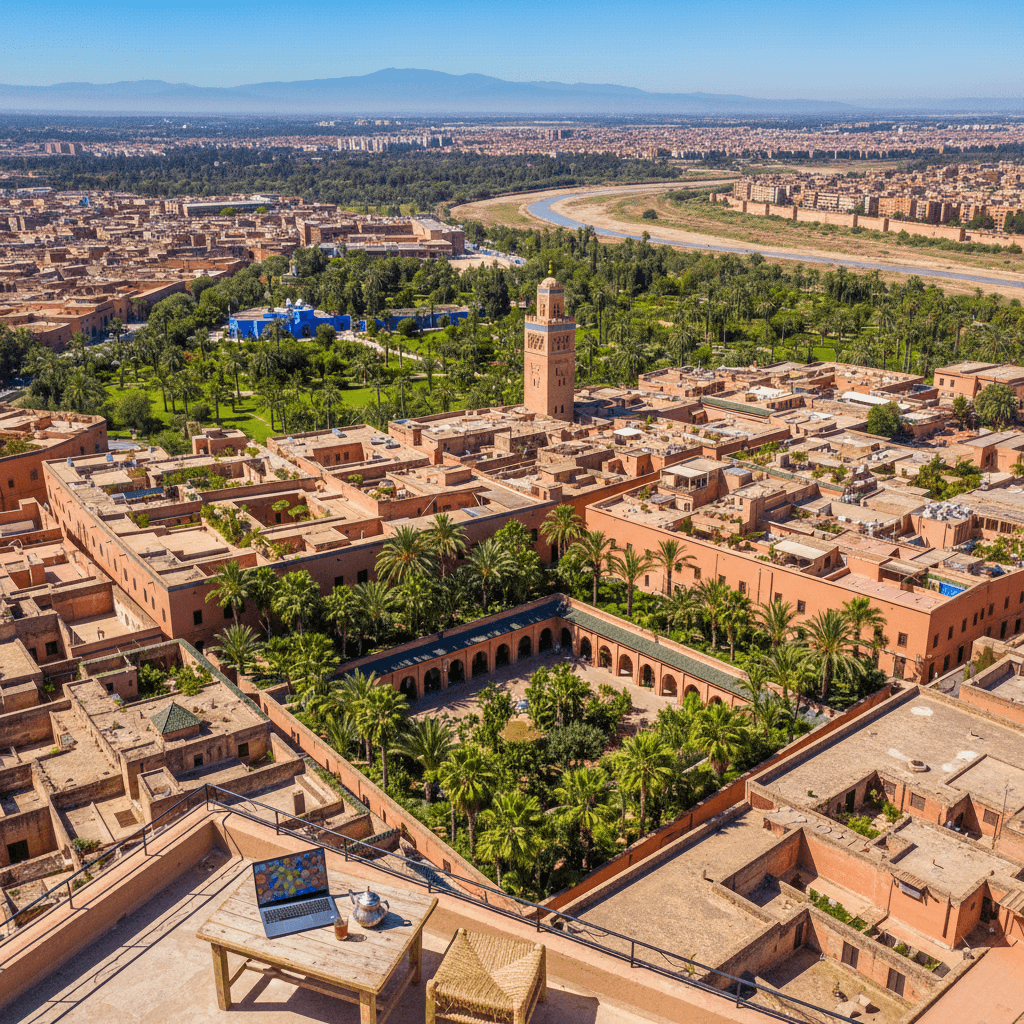
Marrakech
🇲🇦 Morocco
The Red City Pulse
Marrakech isn't a city you simply visit; it's a city you survive and eventually fall in love with. It hits you all at once with the scent of cumin and orange blossoms, the roar of motorbikes weaving through alleys barely wide enough for a donkey, and the hauntingly beautiful call to prayer echoing off terracotta walls. It’s high-octane, beautiful, and occasionally exhausting. For nomads, the draw is the sheer intensity of the experience paired with a cost of living that averages around $1,400-$2,000 per month.
The city operates on two distinct frequencies. You have the ancient soul of the Medina, where life hasn't changed much in centuries, and the polished, modern edge of the New Town. You'll spend your mornings on rooftop terraces overlooking the Atlas Mountains and your afternoons navigating the chaos of the souks. It’s a place for those who want their workday to feel like an adventure, though you'll need a thick skin for the constant haggling and the 40°C heat if you visit during the summer months of June through August.
Living Costs & Nomad Tiers
Your budget goes remarkably far here. Fresh produce and eggs will cost you about $1, and the exchange rate is easy to track at roughly 10dh to $1 USD. Most nomads find they can live comfortably without ever feeling like they're pinching pennies.
- Budget ($1,200/month): This covers a basic apartment or modest riad room, plenty of street food from Jemaa el-Fnaa, and using local transport.
- Mid-range ($1,500+/month): This is the sweet spot for most. It gets you a modern one-bedroom in Guéliz, daily cafe sessions, and a membership at a coworking space.
- Comfortable ($2,000+/month): At this level, you’re looking at upscale riads, frequent dining at high-end spots like those in Hivernage, and private drivers or frequent rideshares.
The Neighborhood Breakdown
Choosing where to plant your laptop is the most important decision you'll make in Marrakech. The vibe shifts dramatically from one gate to the next.
Guéliz
- The Vibe: Modern, French-influenced, and functional. This is where the "real" work happens.
- Pros: Reliable fiber internet, western-style cafes like Cafe LOBO, and modern apartments with air conditioning.
- Cons: Lacks the historic "Aladdin" aesthetic of the old city.
The Medina
- The Vibe: Pure, unadulterated history. Think Ben Youssef Madrasa and Bahia Palace right at your doorstep.
- Pros: Totally walkable, incredible food, and home to the Outsite coliving community.
- Cons: Stressful levels of foot traffic, unreliable Wi-Fi in older thick-walled riads, and the mental tax of being "on" every time you step outside.
Hivernage
- The Vibe: The posh, leafy neighborhood for business and luxury.
- Pros: Quiet streets, high-end hotels, and a great middle ground for expats who want peace.
- Cons: More expensive and further from the central action.
The Remote Work Scene
While the Medina might have spotty Wi-Fi, the city as a whole is catching up fast. You can expect 30 to 60 Mbps fiber in most modern rentals. If you need a dedicated desk, Coworking L’BLASSA and Fraktal are the go-to hubs for the community. Cowork in Marrakech is another solid option for meeting other professionals.
Socializing often happens on rooftops at sunset. The nomad community here is the largest in Morocco, and it's incredibly active. Between the Outsite WhatsApp groups and meetups in the New Town, you won't be lonely for long. Just remember to carry cash; while cards work in Guéliz boutiques, the souks and smaller cafes run entirely on dirhams.
Practical Realities
Safety is generally high, even for solo female travelers, though the "Medina hustle" can feel aggressive until you learn to ignore it. For health, you’ll need proof of insurance if you plan on applying for residency. Most visitors stick to the 90-day visa-free entry, but a nomad visa is available for those looking to stay longer. If you’re coming for work, aim for the shoulder seasons of March to May or October and November. The weather is perfect, the light is golden, and you won't be melting into your keyboard.
The Bottom Line
Marrakech is widely considered one of the most affordable hubs for remote workers who want an exotic backdrop without the high price tag. Most nomads find they can live comfortably on about $1,500 per month if they're mindful of their spending. The local currency, the Moroccan Dirham, is easy to track since 10dh is roughly equal to $1 USD. This makes haggling in the souks and calculating dinner tips much simpler than in other North African destinations.
While the Medina offers an intense sensory experience, it can be a stressful place to live long term. Expats usually recommend the modern neighborhood of Guéliz for a more predictable lifestyle. You'll pay a bit more for a contemporary apartment there, but you'll gain reliable fiber internet and proximity to western style cafes.
Monthly Budget Tiers
- The Budget Nomad ($1,200): You'll likely stay in a modest studio or a shared riad, stick to $1 street food like msemen or harira soup, and use public transport or walk. This tier covers the basics while letting you soak up the city's energy.
- The Mid-Range Professional ($1,500+): This allows for a one bedroom apartment in Guéliz, regular lunches at spots like Cafe LOBO, and a dedicated membership at a coworking space like Fraktal or L'BLASSA.
- The Comfortable Expat ($2,000+): At this level, you're looking at a high end modern apartment, frequent dinners in upscale riads, and taking private taxis or rideshares rather than walking through the heat.
Housing and Neighborhoods
Rent is your biggest variable. In the Medina, you can find traditional rooms, but the thick clay walls often kill WiFi signals. Most nomads who need to get work done choose Guéliz or Hivernage. These areas feel more like a French city, featuring wide boulevards and apartments with modern wiring. If you're looking for community, Outsite has a presence here that includes a WhatsApp group for meeting other travelers.
- Guéliz: Best for productivity. Expect modern amenities, fast 4G/5G coverage, and easier access to grocery stores.
- The Medina: Best for short stays. It's walkable and atmospheric, but the constant haggling and tourist crowds can lead to burnout if you live in the heart of it.
- Hivernage: A polished, professional area popular with expats and business travelers who want a quieter environment.
Eating and Transit
Food costs are remarkably low if you eat like a local. Fresh produce and eggs at the markets usually cost around $1. Street food stalls in Jemaa el-Fna are iconic, though nomads often prefer the quieter rooftop cafes for a working lunch. A mid-range meal at a cafe will typically run you between $8 and $15.
Getting around is cheap but requires a bit of patience. Short taxi rides are the standard way to move between the New Town and the Medina. Most trips within the city center are inexpensive, often costing only a few dollars. Just be prepared to negotiate the price before you get in, as meters aren't always used for tourists.
Connectivity and Practicalities
Reliable internet is the holy grail in Marrakech. While many cafes claim to have WiFi, it can be spotty. Fiber optic speeds of 30 to 60 Mbps are becoming more common in Guéliz. Professionals usually supplement this by getting a local SIM card with a generous data plan; the 4G and 5G rollout is strong in the modern zones.
Keep in mind that Marrakech is a cash heavy society. While you can use cards in Guéliz boutiques or high end hotels, you'll need dirhams for almost everything in the souks and for taxis. Most travelers enter on a 90 day visa free stay. If you plan to stay longer, you'll need to look into a residency permit, which requires proof of health insurance, a local bank account, and a formal rental contract.
The Digital Nomad Choice: Guéliz
If you need to get actual work done, Guéliz is your home base. Built during the French protectorate, this neighborhood trades the ancient labyrinth for wide boulevards, reliable fiber optic internet, and a grid system that doesn't require a GPS every time you leave the house. It's the most modern part of the city, where you'll find the highest concentration of western style apartments and high speed WiFi.
Most nomads gravitate here because it feels like a functional city. You can spend your mornings at Coworking L'BLASSA or Fraktal, then grab a flat white at Cafe LOBO without the constant sales pressure found in the old city. It's also where you'll find the best grocery stores and gym memberships. While it lacks the "Aladdin" aesthetic, the 10 minute taxi ride to the historical sites makes it a fair trade for productivity.
- The Setup: Expect to pay around $1,500 a month for a mid range lifestyle here.
- Connectivity: This is the hub for 30 to 60 Mbps fiber connections.
- Community: You'll likely meet others through the Outsite WhatsApp group or local meetups at rooftop bars.
The Solo Traveler Hub: The Medina
Living in the Medina is an exercise in sensory management. If you're traveling solo and want total immersion, neighborhoods like Mouassine or areas near Jemaa el-Fna put you in the thick of the action. You'll be surrounded by spice markets, snake charmers, and centuries of history right outside your heavy wooden riad door.
It's walkable, social, and incredibly atmospheric, but it comes with a high "hassle factor." Between the tourist crowds and the constant haggling, it can be draining for long term stays. Most solo travelers find that a few weeks here is plenty before they crave the quiet of the New Town. If you do stay, look for riads that specifically advertise fiber internet, as thick stone walls are notorious for killing 4G signals.
- Cost: Budget around $1,200 if you're sticking to street food and basic rooms.
- Vibe: High adrenaline and social, but exhausting for introverts.
- Tip: Carry cash in 10dh increments for small purchases, as cards are rarely accepted in the souks.
The Expat and Professional Balance: Hivernage
Hivernage is where the city's upscale energy lives. It sits between the chaos of the Medina and the commercial feel of Guéliz, offering a polished, leafy environment. It's the neighborhood of choice for established expats and business travelers who want luxury villas or high end apartments without the grit of the center.
The streets are wider and quieter here, making it one of the few places in Marrakech where you can go for a peaceful evening stroll. It's home to some of the city's best fine dining and nightlife, though you'll pay a premium for the privilege. It feels safe, manicured, and significantly more international than the rest of the city.
- Living Costs: Comfortable living here starts at $2,000 per month.
- Atmosphere: Calm, professional, and affluent.
- Pros: Best balance of modern amenities and proximity to the Jardin Majorelle.
The Family Friendly Retreat: Suburbs and Guéliz
For families, the Medina is generally a "visit but don't live" zone. The narrow alleys and lack of green space make it difficult with strollers or active kids. Instead, families usually look toward the northern parts of Guéliz or the gated communities further out. These areas offer proximity to international schools and larger residential complexes with pools.
Safety is a major plus here, as Marrakech is generally very welcoming to children. You'll find easier access to healthcare and pharmacies in these modern districts. The pace is slower, the noise levels are lower, and you're closer to family friendly spots like the ANIMA Gardens or the YSL Museum.
- Best Months: Aim for March to May or October and November to avoid the 40°C summer heat.
- Requirements: If you're staying long term, you'll need a rental contract and proof of health insurance for residency.
- Transport: Taxis are cheap and plentiful, usually costing just a few dollars for cross town trips.
The Digital Infrastructure
Marrakech is a city of two halves when it comes to getting work done. In the ancient Medina, you are at the mercy of thick stone walls and outdated wiring. While many riads claim to have high speed internet, the reality is often patchy signals that struggle to penetrate courtyard architecture. If you are planning to take Zoom calls from a traditional guesthouse, always ask for a speed test screenshot first.
For a reliable professional setup, most nomads head straight to Guéliz. This modern district is the hub for fiber optic connections, where speeds typically range between 30 and 60 Mbps. The 4G and 5G coverage across the city is surprisingly robust, making a local SIM card your best friend. Inwi, Orange, and Maroc Telecom are the main players. You can pick up a SIM at the airport or any small kiosk for a few dollars; data is cheap and works well as a hotspot backup when the riad Wi-Fi inevitably dips.
Top Coworking Spaces
The coworking scene in Marrakech is intimate but growing, focused on community rather than corporate sterile environments. These spaces are vital for escaping the heat and the sensory intensity of the streets.
- Coworking L'BLASSA: Located in the heart of Guéliz, this is arguably the most popular spot for serious deep work. It has a modern, industrial aesthetic, reliable air conditioning, and a community of local entrepreneurs and international remote workers.
- Fraktal: A great choice if you want a more creative, artistic vibe. It feels less like an office and more like a collaborative studio, perfect for those in design or marketing who want to network with the local creative scene.
- Cowork in Marrakech: This space offers flexible desks and a straightforward professional environment. It is a solid fallback if you need a guaranteed quiet zone for a few hours.
- Outsite Marrakech: If you are staying here, you gain access to an exclusive WhatsApp group. This is the pulse of the nomad community in the city, used for organizing dinners, rooftop drinks, and weekend trips to the desert.
Cafe Culture and Remote Work
If you prefer the hum of a cafe over a dedicated office, Marrakech has plenty of options, though you should choose your spots wisely to avoid being "that person" in a crowded tourist cafe. Rooftop spots are iconic for sunset views of the Atlas Mountains, but the midday glare can make screens unreadable.
Cafe LOBO is a favorite for the digital crowd. It feels like a slice of Europe in Morocco, offering excellent coffee, fast Wi-Fi, and a menu that caters to western tastes. It is one of the few places where you will see rows of laptops without getting a side-eye from the staff. For a more traditional atmosphere, look for cafes in the Hivernage district, which tend to be quieter and more business oriented than the chaotic spots near Jemaa el-Fnaa.
Connection Stats and Costs
- Average Fiber Speed: 40 to 60 Mbps in modern districts like Guéliz.
- Mobile Data: Very affordable; expect to pay roughly $1 USD per GB.
- Coworking Rates: While prices vary by season, day passes generally hover around $15 to $20 USD, with significant discounts for monthly memberships.
- Best Connectivity Zone: Guéliz and Hivernage for stability; Medina for "digital detox" vibes.
Most nomads find that a hybrid approach works best here. Use the coworking spaces for your heavy lifting and client meetings during the day, then retreat to a Medina rooftop in the late afternoon to clear your inbox while the call to prayer echoes across the city. Just remember to carry cash for your cafe tabs, as many smaller spots still do not accept cards for small purchases.
Staying Safe in the Red City
Marrakech is surprisingly safe for a city that feels like total chaos on the surface. Most nomads and solo female travelers give it a solid 4 out of 5 for safety. You'll likely feel more overwhelmed by the sensory input than by any actual threat. The main thing to watch out for isn't crime, it's the intense mental fatigue that comes from the constant haggling and attention in the Medina.
Pickpocketing can happen in crowded spots like Jemaa el-Fnaa, but it's not more common than in any major European capital. The local "guides" who offer to show you the way when you look lost in the labyrinthine souks are usually just looking for a tip. A polite but firm "No, thank you" or "La, shukran" usually does the trick. If you feel like the pressure is getting too much, duck into a cafe or a riad. The vibe changes instantly once you're behind those thick clay walls.
For those who want a break from the hustle, Guéliz is the go-to neighborhood. It's the modern side of town where the streets are wider, the sidewalks are paved, and people generally leave you alone. It's the best place to base yourself if you want to walk around at night without feeling like a target for every shopkeeper on the block.
Healthcare and Medical Services
While the city is safe, the healthcare system requires a bit of planning. You won't find a massive public hospital on every corner that meets Western standards, so most expats and long-term nomads stick to private clinics. These facilities in the Guéliz and Hivernage districts are modern and well-equipped for most routine issues or emergencies.
- Pharmacies: You'll see green neon crosses all over the city. Pharmacists in Morocco are highly trained and can often give medical advice or provide over-the-counter treatments for minor ailments like "Delhi belly" or heat exhaustion.
- Insurance: If you're planning on staying long-term for residency, having proof of health insurance is a hard requirement. Even for short stays, don't skip it. Private medical bills can add up quickly if you need specialized care.
- Hydration: The summer heat is no joke, often soaring above 40°C. Stick to bottled water, which is cheap and available everywhere, to avoid any stomach issues that might ruin your work week.
Emergency Essentials
Digital nomads usually keep a few local numbers saved just in case. While you hopefully won't need them, it's better to have them ready on your local SIM. Most doctors in private clinics speak French and Arabic, but you can find English-speaking staff in the more upscale areas of Hivernage.
- Police: Dial 19 in urban areas.
- Ambulance/Fire: Dial 15.
- Private Clinics: Look for Clinique Internationale Marrakech or Polyclinique du Sud for high-standard emergency care.
One final tip for your well-being: watch your step. The narrow streets of the Medina are shared by pedestrians, donkeys, and motorbikes that zoom past at high speeds. It sounds like a cliche until you're nearly clipped by a scooter carrying three people and a ladder. Keep your ears open, stay to the right, and you'll navigate the city just fine.
The Art of the Move
Navigating Marrakech is a lesson in patience and sensory management. It's a city of two speeds: the frantic, wheel-spinning chaos of the Medina and the wide, French-style boulevards of Guéliz. Most nomads find that while the Medina is the heart of the experience, it's rarely the place you want to be when you're late for a Zoom call. The streets are a tangle of donkey carts, motorbikes, and pedestrians, so give yourself a 15-minute buffer for any appointment.
Walking is your primary mode of transport within the ancient city walls. The narrow souks aren't built for cars, and even if they were, you'd be stuck behind a spice cart in seconds. It's highly walkable if you have a sense of direction, but travelers often say that Google Maps is notoriously unreliable in the deeper parts of the labyrinth. Download an offline map and look for landmarks like the Koutoubia Mosque to orient yourself.
Taxis and Ride-Hailing
When you need to cover more ground, "Petit Taxis" are the way to go. These small beige cars are everywhere and can be flagged down easily. They're incredibly affordable, usually costing around 10dh to 20dh (roughly $1 to $2 USD) for a short trip between Guéliz and the Medina entrance. Always ask the driver to turn on the meter ("le compteur") before you pull away. If they refuse, it's often easier to just hop out and flag the next one; there's never a shortage.
For longer hauls or groups of more than three, you'll need a "Grand Taxi." These are larger vehicles that run on set routes or can be hired privately. While ride-hailing apps aren't as dominant here as in Europe or the US, they are starting to gain traction for those who want to avoid the pricing dance. Expect a 10-minute ride to get you from the modern center to major sites like the Jardin Majorelle.
Getting to and from the Airport
Marrakech Menara Airport is conveniently close to the city center. A taxi to most riads or hotels should cost between 70dh and 150dh, depending on your haggling skills and the time of day. There is also an airport bus (Line 19) that runs every half hour and drops off near Jemaa el-Fnaa and major hotels for about 30dh. It's a solid, air-conditioned option if you aren't carrying heavy luggage through the heat.
Practical Transit Tips
- Cash is King: You won't find a taxi in Marrakech that takes credit cards. Keep a stash of small 10dh and 20dh notes handy, as drivers rarely have change for larger bills.
- The Night Rate: Be aware that taxi fares legally increase by 50% after 8:00 PM. Don't be surprised if the meter starts at a higher base rate during the evening.
- Safety on Wheels: While motorbikes are the local favorite for zipping through traffic, they aren't recommended for newcomers. The driving style is aggressive, and the narrow alleys of the Medina make for a steep and dangerous learning curve.
- Inter-City Travel: If you're planning a weekend trip to Essaouira or Casablanca, the Supratours and CTM bus stations near the train station are your best bet. They are reliable, comfortable, and very cheap.
Overall, getting around is cheap but requires high energy. Most expats recommend staying in Guéliz or Hivernage if you want a more predictable commute, saving the Medina walks for when you're in the mood for the hustle.
The Linguistic Mix
In Marrakech, your tongue will need to be as flexible as your schedule. The city operates on a complex layer of Darija (Moroccan Arabic) and French. While you might expect English to be the universal bridge, it is often limited to high end hotels or younger crowds in the creative sectors. Most nomads find that French is the true functional language for daily life, from reading menus in Guéliz to negotiating a lease.
Darija is the soul of the streets. It is quite different from Modern Standard Arabic, so even if you have studied the latter, you will likely find the local dialect a bit of a curveball. Expats recommend learning at least a handful of basic greetings and numbers in Darija. It goes a long way in building rapport with shopkeepers and taxi drivers who might otherwise see you only as a tourist.
Communication in the Souks
The Medina is where your communication skills are truly tested. Haggling is a verbal sport here, and it is almost entirely conducted in a mix of French and broken English. If you look like a foreigner, traders will likely initiate contact in English, but switching to a few words of Arabic or French often signals that you are a resident rather than a day tripper. This can sometimes lead to more reasonable starting prices.
Keep a translation app like Google Translate or DeepL on your phone, but don't rely on them for complex conversations in the souks. Connectivity can be spotty deep in the stone corridors, and the fast pace of trade doesn't always allow for typing out phrases. Carrying cash is the most important "language" in the markets; most stalls won't touch a credit card, and having small 10dh or 20dh notes makes every transaction smoother.
Digital Connectivity and Apps
For remote work, the language of the city is fiber optic. While the Medina is notorious for thick stone walls that kill Wi-Fi signals, the modern neighborhood of Guéliz is where most nomads set up shop. You can expect speeds between 30 and 60 Mbps in dedicated workspaces. If you are heading to a cafe like Cafe LOBO to get some emails done, the staff usually speak enough English to get you onto the guest network without much fuss.
To stay connected on the move, grab a local SIM card immediately. Maroc Telecom and Inwi offer strong 4G and 5G coverage in the city center. You can top up these cards at small kiosks (hanouts) found on almost every corner. Just ask for a "recharge" and specify if you want data (internet) or calling minutes.
Key Phrases for Daily Life
- Salam Alikoum: The standard greeting (Peace be upon you). Use this instead of "Hello" to start on the right foot.
- Labas: How are you? or I am fine. It is the most versatile word in your vocabulary.
- Afak: Please. Use it constantly.
- Shukran: Thank you.
- Lla: No. Very useful when being followed by persistent guides in the Medina.
- Bsh’hal: How much?
Social Integration
Marrakech has the largest nomad community in Morocco, which makes social communication much easier than in more remote towns. If you feel isolated by the language barrier, head to coworking spots like Fraktal or Coworking L'BLASSA. These hubs are the primary spots for meeting English speakers. Many nomads also join the Outsite WhatsApp group to find meetups, which helps bypass the struggle of navigating local social circles where French is the dominant tongue.
If you plan on staying longer than the 90 day visa free period, communication becomes more formal. You will need to deal with local authorities for residency, and this is where having a French translator or a local friend is almost mandatory. Documents, police clearances, and rental contracts will rarely be in English, so factor that into your planning if you intend to make the Red City a long term base.
The Sweet Spot for Productivity
Timing your stay in Marrakech is the difference between a productive, breezy experience and being confined to your air conditioning. Most nomads agree that the shoulder seasons are the goldilocks zone. March, April, and May offer mild temperatures that make walking between Guéliz and the Medina actually enjoyable. During these months, you can comfortably work from a rooftop cafe like Cafe LOBO without the sun melting your laptop.
October and November are equally fantastic. The intense summer heat has faded, but the evenings remain warm enough for dinner in the square. This is also when the nomad community is most active, as people flock back to the city to avoid the European winter. You'll find the coworking spaces like Coworking L'BLASSA buzzing with more networking events during these windows.
Surviving the Summer Scorcher
If you're planning to visit between June and August, be prepared for a challenge. Temperatures regularly soar above 40°C (104°F). The city slows down significantly during the afternoon, and the Medina becomes a furnace. Most long term residents try to head toward the coast to towns like Essaouira during this time or simply stay indoors until the sun sets.
If you do stay during the summer, prioritize housing in Guéliz or Hivernage. Modern apartments here are much more likely to have reliable, high powered AC units compared to traditional riads in the Medina, which often rely on thick walls and small windows that can feel stifling in a heatwave.
Winter in the Red City
Winter in Marrakech is a bit of a wildcard. From December to February, the days are often sunny and crisp, perfect for clear views of the snow capped Atlas Mountains. However, don't let the desert location fool you; it gets surprisingly chilly at night. Since many traditional buildings aren't equipped with central heating, you might find yourself working in a puffer jacket if your riad doesn't have a space heater.
Planning Around Local Rhythms
Beyond the thermometer, keep an eye on the lunar calendar for Ramadan. While the city remains open, the pace of life changes drastically. Many cafes and restaurants close during daylight hours, and the usual high energy of the souks dips until sunset. Some nomads love the quiet focus this brings to their work day, while others find the limited dining options a bit of a hurdle. If you want the full, high octane Marrakech experience, check the dates before you book your flight.
Quick Seasonal Guide
- Peak Season (March to May, Sept to Nov): Best for walking, outdoor meetings, and day trips. Expect temperatures between 20°C and 28°C.
- The Heat (June to August): Intense sun and 40°C+ days. Stick to modern apartments with AC and work late nights.
- The Chill (December to February): Sunny days but cold nights. Pack layers and confirm your accommodation has heating.
For those looking to balance work and exploration, aim for April or October. You'll get the best of the Mediterranean climate, reliable enough weather for desert treks on the weekends, and a social scene that's at its peak.
The Cost of Living
Marrakech is one of the most wallet-friendly hubs for remote workers, especially if you're coming from Europe or North America. You can live comfortably on about $1,200 a month if you're mindful of your spending. Fresh groceries are incredibly cheap; expect to pay about $1 for a carton of eggs or a bag of local produce. The exchange rate is easy to track, as 10dh usually sits right around $1 USD.
- Budget ($1,200/month): This covers a basic apartment, plenty of street food, and getting around via public transport or walking.
- Mid-range ($1,500+/month): This gets you a modern one-bedroom in Guéliz, regular meals at cafes, and a dedicated coworking membership.
- Comfortable ($2,000+/month): This allows for an upscale apartment, frequent fine dining in riads, and using rideshares for most trips.
Where to Set Up Your Base
Choosing the right neighborhood is the difference between being productive and being overwhelmed. Most long-term nomads head straight for Guéliz. It's the modern, French-built part of town where you'll find reliable fiber internet, Western-style cafes, and apartments with actual soundproofing. It lacks the ancient charm of the center, but it's much easier to live in day-to-day.
If you want the classic experience, the Medina is where the action is. It's walkable and packed with history, but the constant haggling and tourist crowds can be exhausting. Many people find the internet in older riads to be hit-or-miss. For a middle ground, Hivernage offers a more polished, business-oriented vibe that's popular with expats who want a quieter pace.
Internet and Coworking
Fiber internet is becoming the standard, with speeds often hitting 30 to 60 Mbps in modern areas. However, don't rely solely on your accommodation's WiFi. Pick up a local SIM card immediately; the 4G and 5G coverage is strong and affordable. If you need a professional environment, check out Coworking L'BLASSA or Fraktal. Cowork in Marrakech is another solid choice for meeting other professionals.
For a more casual afternoon, the cafe culture is fantastic. Cafe LOBO is a favorite for its modern design and fast connection. Many nomads also work from rooftop cafes in the Medina for the views, though these are better for clearing your inbox than taking high-stakes video calls.
Getting Around and Staying Safe
The city is generally very safe, even for solo travelers, earning a 4 out of 5 safety rating from the community. The "danger" here is mostly just the mental fatigue from the chaotic streets. Taxis are the primary way to get around; they're cheap and can get you to spots like Jardin Majorelle in about 10 minutes from most central points. Just make sure the meter is on or agree on the price before you get in.
Cash is still king here. While some upscale spots in Guéliz take cards, you'll need dirhams for the souks, street food, and small shops. Keep small bills on you for easier transactions.
When to Go and How to Stay
Timing your visit is everything. The best weather happens in March, April, May, and again in October and November. Avoid the summer at all costs if you can. Between June and August, temperatures regularly soar above 40°C, making it nearly impossible to be productive or enjoy the city during the day.
Most visitors get 90 days visa-free. If you want to stay longer, you can look into a residency permit or a nomad visa. You'll usually need proof of health insurance, a local housing contract, and a clean police record from your home country. For a quick arrival, the Evisa system is now available for many nationalities, making the entry process much faster.
Need visa and immigration info for Morocco?
🇲🇦 View Morocco Country GuideHidden Gem
Worth the effort
Monthly Budget Estimates
More cities in Morocco
Imsouane
🇲🇦 Morocco
Ouarzazate
🇲🇦 Morocco
Essaouira
🇲🇦 Morocco