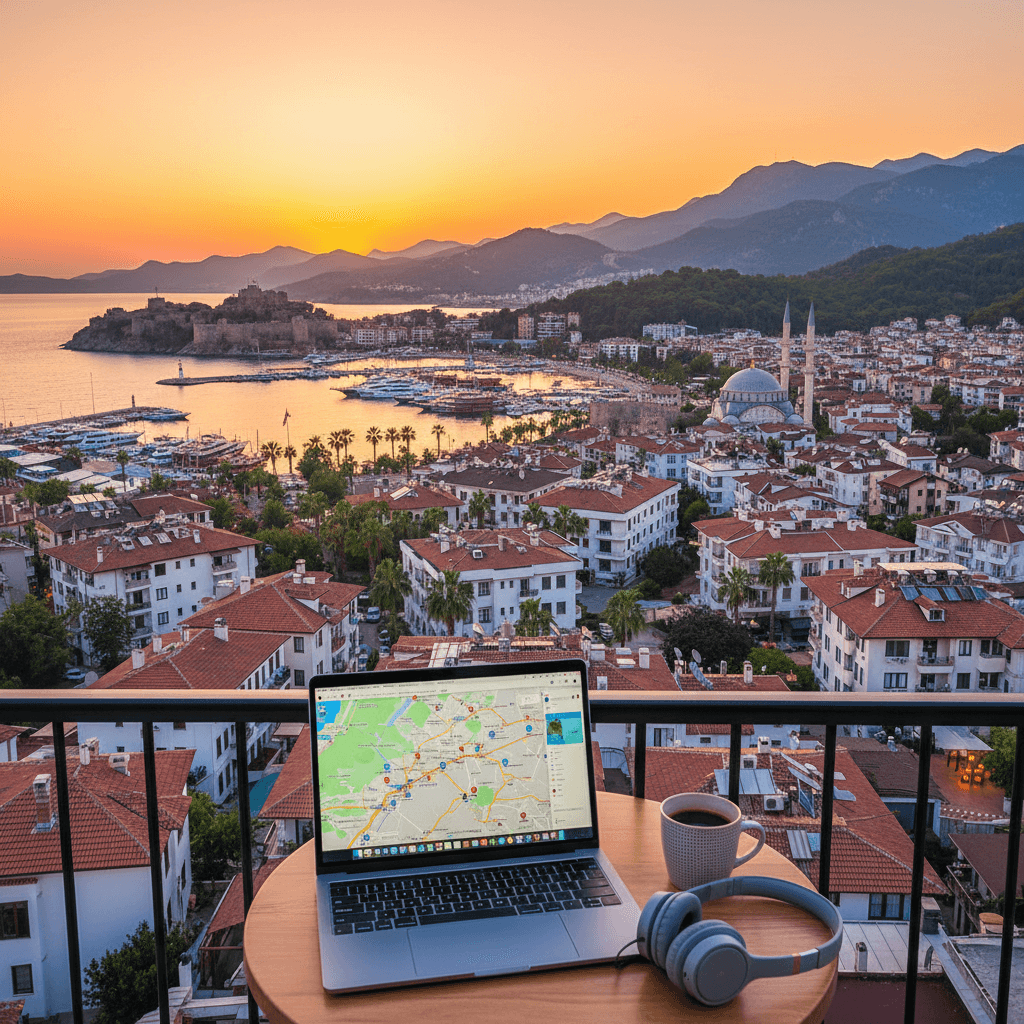
Marmaris
🇹🇷 Turkey
The Vibe: Where the Forest Meets the Sea
Marmaris occupies a unique space in the Turkish Mediterranean. While Istanbul provides the urban chaos and Bodrum offers high-end glitz, Marmaris feels like a high-functioning coastal retreat. It is a town defined by its geography; the mountains are thick with pine forests that seem to tumble directly into the turquoise waters of the Aegean. For nomads, the energy is productive but undeniably relaxed. You are more likely to start your morning with a swim or a hike than a subway commute.
The town operates at a moderate pace. It is busy enough to feel alive, especially around the massive marina, but it lacks the frantic edge of Turkey's larger hubs. There is a deep-seated sailing culture here that dictates the local rhythm. You'll see nomads working from the decks of sailboats or taking long lunch breaks at waterfront cafes. It is a place where "work-life balance" isn't a buzzword, it’s just the standard operating procedure.
What Nomads Love (and Hate)
The biggest draw for remote workers in 2025 is the infrastructure. Unlike some island destinations where the internet is an afterthought, Marmaris offers 5G speeds reaching 78 Mbps for about $30 a month. You can take a high-stakes video call from a cafe like Kahve Dünyası without worrying about your connection dropping. The community is also a major plus. There is a solid expat and nomad scene that congregates for Sunday morning coffees and beach cleanups, making it easy to build a social circle quickly.
However, Marmaris isn't without its quirks. The peak summer months of July and August can feel overwhelming as the tourist crowds descend and temperatures climb toward 35°C. If you prefer a quiet, contemplative workspace, you might find the marina area a bit noisy during these months. Most long-term residents prefer the "shoulder seasons" of April to June and September to October, when the weather is perfect and the streets belong to the locals again.
Cost of Living Breakdown
Marmaris remains surprisingly affordable compared to European coastal hubs. While prices have risen across Turkey, your dollar or euro still goes a long way here. Most solo nomads find they can live comfortably on a budget of $1,500 to $2,000 per month, though you can certainly scrape by on $1,000 if you opt for local neighborhoods and street food.
- Housing: A modern 1-bedroom apartment near the marina usually runs between $400 and $600 per month. If you move toward the beachside areas like Icmeler, you can find spots for $300 to $500.
- Food: Local staples like kebabs or simit cost $2 to $5. A nice seafood dinner with meze at a mid-range restaurant will set you back about $15, while upscale dining at the marina hits the $30 mark.
- Connectivity: Unlimited data SIM cards from Turkcell or Vodafone are standard at $30. Coworking passes at spaces like Yeni Hub Marmaris, starting from GBP 50/month.
- Transport: The local dolmuş (minibus) is the hero of Marmaris, costing less than $1 per ride.
The Emotional Experience
Living in Marmaris feels like being let in on a secret. There is a specific kind of peace that comes from finishing a project at 5:00 PM and being on a boat or a hiking trail by 5:15 PM. The locals are famously hospitable, and it’s common to be offered tea while waiting for a haircut or browsing the markets in the Old Town. It is a place that encourages you to slow down, look at the horizon, and remember why you chose the nomad life in the first place. You aren't just visiting a resort; you're joining a community that values the sea, the sun, and a good cup of Turkish coffee.
The Price of Paradise
Marmaris hits a sweet spot for nomads who want the turquoise coast without the eye-watering price tags of Bodrum or the urban chaos of Istanbul. While Turkey's economy has seen its share of fluctuations, this marina town remains remarkably affordable if you're earning in a stronger currency. Most people find they can live a high-quality lifestyle here for a fraction of what they'd spend in Western Europe or North America.
The local currency is the Turkish Lira, but many large-scale expenses like monthly rentals or boat charters are often discussed in Euros or USD. For your day-to-day life, you'll be using Lira, and that's where the real savings happen. Expect to spend significantly less than you would in Izmir while enjoying a much more relaxed, sea-centric pace.
Monthly Budget Tiers
- The Budget Nomad ($800 to $1,200): You're likely sharing an apartment or staying in a modest Airbnb a few blocks back from the beach. You'll stick to local lokantas for meals and use the dolmuş to get around.
- The Mid-Range Professional ($1,500 to $2,000): This is the most common tier. It covers a private one-bedroom apartment near the Marina, regular coworking passes, and plenty of dinners out with a few drinks.
- The High-End Expat ($2,500+): At this level, you're looking at a private villa or a high-spec apartment with sea views, frequent upscale dining at the marina, and perhaps a weekend boat rental.
Housing and Utilities
Rent is your biggest variable. If you want to be in the heart of the action near the Marina, expect to pay a premium for the convenience and the community. Moving just a bit further out toward the beachside areas like Icmeler or Long Beach can save you a few hundred dollars a month.
- Central Marina Studio/1BR: $450 to $900 per month (20,000-40,000 TRY).
- Beachside Apartment: $300 to $500 per month.
- Utilities (Electricity, Water, Heating): $60 to $100 depending on AC usage in the summer.
- High-Speed Internet: Around $30 per month for a reliable home setup or a 5G data plan.
Eating and Drinking
Dining out is one of the best parts of living in Marmaris. You can grab a quick, filling meal for the price of a coffee back home, or splurge on fresh seafood while watching the yachts come in. Local markets are fantastic for fresh produce if you prefer to cook, which will drive your costs down even further.
- Street Food (Kebabs or Simit): $2 to $5.
- Mid-range Restaurant Meal: $10 to $15 for a full spread of meze and a main course.
- Upscale Marina Dining: $20 to $30 per person for a high-end experience.
- Local Beer (Efes) at a Bar: $3 to $5.
- Coffee at Kahve Dünyası: $2 to $4.
Transport and Workspace
Getting around is cheap and efficient. Most nomads find the town very walkable, especially if they're based near the Marina or Old Town. For longer trips, the local minibus system, known as the dolmuş, is the way to go. It's reliable and costs pennies.
- Dolmuş Ride: $0.50 to $1.
- Taxi/BiTaksi Trip: $5 to $10 for most cross-town hops.
- Dalaman Airport Shuttle: $10 to $15.
- Coworking at eOfis: $10 for a day pass or up to $50 for weekly access.
One pro tip from the local expat community: try to handle your major shopping at the weekly markets rather than the supermarkets. Not only is the quality of the fruit and vegetables better, but you'll also save a significant amount on your monthly grocery bill. Most nomads find that $300 a month for groceries allows them to eat like royalty.
The Marina District: Best for Nomads and Networkers
If you want to be where the action is, the Marina area is the place to plant your flag. This is the heart of the nomad scene in Marmaris, where you'll find the best balance of work-ready infrastructure and social life. It's incredibly walkable, meaning you can bounce from your apartment to a morning coffee at Kahve Dünyası and then head over to eOfis for a few hours of deep work without ever needing a taxi.
- Vibe: Modern, social, and professional. You'll hear plenty of English and see people working on laptops overlooking the yachts.
- Connectivity: This area boasts the most reliable fiber and 5G coverage, often hitting speeds of 78 Mbps.
- Rent: Expect to pay between $400 and $600 for a decent one bedroom apartment or studio.
- Pros: Immediate access to networking events, Sunday morning coffee meetups, and the highest density of English speaking expats.
- Cons: It gets loud during the peak summer months when the vacation crowds arrive.
Long Beach and Siteler: Best for Solo Travelers and Sun Seekers
Solo travelers looking for a more laid back, beach focused lifestyle usually head south toward Long Beach (Uzunyalı) or Siteler. It's far enough from the central hub to feel relaxed but close enough that a $1 dolmuş ride gets you to the Marina in ten minutes. The lifestyle here revolves around the waterfront promenade, which is perfect for morning runs or sunset cycling.
- Vibe: Relaxed and breezy. It feels like a continuous holiday without the frantic energy of the town center.
- Rent: Slightly more affordable than the Marina, with beachside Airbnbs ranging from $300 to $500.
- Food: Plenty of cheap eats like $3 kebabs and $1 simit from local bakeries.
- Pros: Direct sea access and a very active community of solo travelers who meet up for beach cleanups or evening drinks.
- Cons: Some businesses in this area are seasonal and might close or scale back during the winter.
İçmeler: Best for Families and Long-Term Expats
Located at the end of the bay, İçmeler is technically its own little suburb but functions as a quieter neighborhood of Marmaris. It's the top choice for families or expats who want more space and a slower pace of life. The streets are wider, the parks are well maintained, and the backdrop of pine forested mountains is stunning. It feels safer and more residential than the central districts.
- Vibe: Peaceful and family oriented. It has a "village" feel despite having modern amenities and great healthcare facilities nearby.
- Housing: You're more likely to find larger villas or multi bedroom apartments here. A comfortable family setup usually starts around $2,500 per month for a private villa.
- Transport: The water taxi to Marmaris center is a favorite for kids and visitors, costing about $5 to $10.
- Pros: Excellent air quality, less noise pollution, and a very welcoming local community.
- Cons: It's a 15 to 20 minute commute to the main coworking hubs in the center.
Old Town (Castle District): Best for Culture Seekers
For those who want to wake up in a postcard, the area surrounding Marmaris Castle is unmatched. It's a maze of cobblestone alleys, whitewashed houses, and bougainvillea. It's not the most practical place for a nomad with a heavy monitor setup, but for a solo traveler who wants an authentic Turkish experience, it's perfect.
- Vibe: Historic and charming. You'll be living among locals and small boutique pensions.
- Workability: Not ideal for home offices due to older thick stone walls that can mess with WiFi signals, though 4G hotspots work well.
- Pros: Incredible atmosphere, authentic markets, and some of the best hidden seafood spots in the city.
- Cons: Very hilly and mostly car free, so be prepared to carry your groceries up a lot of stairs.
Connectivity and Speeds
Marmaris has quietly become a reliable hub for remote work, largely because the infrastructure finally caught up with the scenery. You can expect solid 4G and 5G coverage throughout the marina and central districts. Average mobile speeds hover around 40 Mbps for 4G and can reach up to 78 Mbps on 5G networks, which is more than enough for seamless video calls or uploading large files.
Most nomads opt for an unlimited data SIM or a portable hotspot to stay mobile. You'll likely pay around $30 per month for a heavy-use data plan. Turkcell is generally the favorite for its consistent coverage, though Vodafone and Turk Telekom have competitive packages available at the airport or shops near the marina. If you're staying in an Airbnb or a local apartment, always ask for a speed test; while most modern buildings have fiber, some older spots in the Old Town might still rely on slower ADSL lines.
Coworking Spaces
While Marmaris doesn't have the sheer volume of spaces you'd find in Istanbul, the options available are professional and well-equipped. Yeni Hub Marmaris is the main coworking space offering monthly passes from GBP 300, providing a structured environment that feels like a real office. It's a lifesaver when you need a ergonomic chair and a quiet zone for deep work.
The community at these hubs is a mix of digital nomads, local entrepreneurs, and the occasional yacht captain managing charters. It's the best place to network if you're looking for collaborators or just want to meet people who aren't on a two-week vacation. Most of these spaces provide high-speed backup internet, which is a great insurance policy against the occasional coastal power flicker.
Working from Cafes
The cafe culture in Marmaris is thriving, and many shop owners are used to seeing laptops. Kahve Dünyası is a staple for the local nomad crowd. It's spacious, the WiFi is reliable, and nobody will give you a hard time if you linger over a coffee for a few hours. The marina area is packed with similar spots that offer sea views, though the noise levels can spike during the lunch rush.
- Kahve Dünyası: Great for informal sessions and reliable power outlets.
- Marina Cafes: Best for morning work before the tourist crowds arrive; look for spots with "Free WiFi" signs.
- Icmeler Beachfront: Good for light admin work with a view, though the connection can be spotty during peak summer hours.
Practical Tips for Staying Connected
If you're planning to work from a sailboat or a more remote villa in the hills, don't rely solely on the local WiFi. Travelers often recommend carrying a backup eSIM or a local SIM card as a hotspot. The terrain around Marmaris is hilly, and while the center is a tech stronghold, signals can drop once you head deep into the forest or out toward the more secluded bays.
Most nomads find that a combination of a dedicated workspace for "heavy" work days and a favorite marina cafe for "light" days provides the perfect balance. Just keep in mind that during the height of summer, the heat can make outdoor working difficult; look for spots with strong air conditioning if you're visiting between July and August.
A Safe Haven on the Turquoise Coast
Marmaris feels remarkably secure, even compared to other Mediterranean hubs. Most nomads find the atmosphere in the Marina and Old Town areas to be relaxed and welcoming. Since the local economy relies heavily on international tourism and the yachting community, there is a strong collective effort to keep the streets safe and hassle-free for visitors.
Violent crime is rare here. You'll often see expats walking home from the Marina after late-night drinks without a second thought. However, standard common sense still applies. Travelers often say that while the main strips are well-lit and active, you should stay aware of your surroundings in the quieter, unlit backstreets of the Old Town late at night. Pickpocketing isn't a major issue, but keep an eye on your tech if you're working from a crowded beachside cafe during the peak July and August season.
Healthcare Standards and Facilities
The quality of healthcare in Marmaris is a pleasant surprise for many digital nomads. The town is equipped with modern infrastructure and private hospitals that rival those in Western Europe. Expats recommend private facilities like Ahu Hospital or Yucelen Hospital, where English-speaking staff are the norm and wait times are minimal.
- Private Medical Care: High-end facilities with modern diagnostic equipment. Most international insurance plans are accepted, though you'll often pay upfront and claim back later.
- Pharmacies (Eczane): You'll find these on almost every corner. They are highly professional, and pharmacists can often provide advice or over-the-counter meds for minor ailments without a doctor's visit.
- Dental Care: Many nomads take advantage of the high-quality, affordable dental clinics in town while they're visiting.
Emergency Information
If you do run into trouble, the emergency system is streamlined. Turkey uses a universal emergency number, 112, which handles ambulance, fire department, and police services. For specific police matters, you can also dial 155. Most operators in a tourist-heavy area like Marmaris will have someone on hand who speaks English.
For minor health concerns, the "Nöbetçi Eczane" (pharmacy on duty) system ensures that at least one pharmacy in the neighborhood stays open 24 hours a day, including Sundays and holidays. You can usually find the name and address of the nearest open pharmacy posted in the window of any closed one.
Practical Safety Tips for Nomads
While the town is safe, the summer heat can be a health risk of its own. Temperatures often hit 35°C or higher in August; nomads usually shift their deep work hours to the early morning or late evening to avoid the midday sun. Stay hydrated and don't underestimate the Aegean sun when you're out on a boat or hiking the forest trails.
If you're planning to stay long-term on a Digital Nomad Visa, you'll need to secure local health insurance as part of your residency application. This is generally affordable and gives you access to the public healthcare system, though most expats still prefer to supplement this with private coverage for faster service and better facilities.
The Local Lifeline: Dolmuş and Beyond
Movement in Marmaris revolves around the dolmuş, those ubiquitous turquoise-banded minibuses that act as the town's circulatory system. They're incredibly efficient and cost between $0.50 and $1 per ride. You don't need a formal station; just a quick wave from the sidewalk usually gets them to pull over. They run frequently between the central marina, the beach zones, and Siteler, making it easy to hop from a morning deep-work session to a sunset swim without a car.
For those living near the Marina or in the Old Town, your primary mode of transport will likely be your own two feet. These areas are highly walkable, though the Old Town's cobblestone streets near the Castle can get steep and slippery. If you're based further out toward Long Beach or Icmeler, the flat, scenic promenade is perfect for cycling. You can rent a bike or an electric scooter at the marina for roughly $10 a day, which is a favorite move for nomads who want to avoid the summer traffic heat.
Taxis and Ride-Hailing
While Turkey has its own ride-hailing apps like BiTaksi, their availability in Marmaris can be hit or miss compared to Istanbul. Most expats rely on the yellow taxi stands found on almost every major corner. These stands usually have a call button on a nearby tree or pole; press it, and a cab typically appears within minutes. A standard trip across town will run you between $5 and $10. Always ensure the meter is running, though most drivers in this region are used to the expat community and are generally straightforward.
Arriving from the Airport
Marmaris doesn't have its own airport. You'll likely land at Dalaman (DLM), which is about 90 minutes away. You have three main ways to bridge the gap:
- Havaş or Muttaş Shuttle Buses: These are the go-to for budget-conscious travelers. They are timed to flight arrivals and cost approximately $8 (roughly 360 TL). They'll drop you at the main Marmaris bus station (Otogar), from where you can grab a quick taxi to your Airbnb.
- Private Transfers: Many nomads pre-book these through local agencies. It’s a door-to-door service that usually costs around $40 to $50. It's the best option if you're hauling heavy monitors or luggage.
- Yellow Taxis: Expect to pay $50 or more. It’s the most expensive route and rarely faster than a private transfer.
Exploring the Coast
Since Marmaris is a major sailing hub, "getting around" often involves being on the water. If you're looking to visit neighboring spots like Turunç or even Rhodes, Greece, the water taxis and ferries are your best bet. Small shuttle boats run regularly from the harbor to nearby bays for a few dollars. For a weekend escape, the ferry to Rhodes takes about an hour, though you'll need to keep your visa requirements in mind if you're staying on the Turkish Digital Nomad Visa.
If you want total freedom to explore the lush forests and ancient ruins surrounding the town, renting a car is a solid move. Local agencies offer better deals than the big international brands, often starting around $30 to $40 per day. Just be prepared for aggressive local driving styles and limited parking near the marina during the peak July and August season.
The Linguistic Landscape
You'll find that Marmaris is one of the most accessible cities in Turkey for English speakers. Because the local economy revolves around the massive international marina and the yachting industry, English proficiency is remarkably high in the central districts. Most nomads find they can handle everything from apartment leases to complex boat repairs without a translator.
In the Marina Area and along the Long Beach strip, restaurant staff, shop owners, and healthcare professionals usually speak fluent English. You'll also encounter a fair amount of Russian and German, reflecting the diverse expat community that calls this coast home. If you head into the Old Town or visit the local weekly markets, English levels drop slightly, but the locals are famous for their patience and will often use gestures or translation apps to make sure you get what you need.
Essential Turkish for Daily Life
While you can survive on English alone, learning a few Turkish basics changes the vibe of your interactions. It signals respect for the culture and often leads to better service or a spontaneous glass of tea. Expats recommend mastering these few greetings and questions:
- Merhaba (Hello): The standard greeting you'll use everywhere.
- Teşekkürler (Thank you): Or the slightly easier Sağol.
- Ne kadar? (How much?): Use this at the markets in the Old Town.
- Hesap, lütfen (The bill, please): Essential for finishing up those long lunches at Kahve Dünyası.
- Kolay gelsin (May it be easy for you): A polite phrase to say to anyone working, from your barista to a construction worker.
Digital Tools and Communication
Even with high English levels, Turkish grammar and signage can be confusing. Most travelers say the Google Translate offline Turkish pack is a lifesaver, especially when reading grocery labels or official government documents. The "camera translate" feature is particularly helpful for menus in smaller, authentic lokantas.
For local communication, WhatsApp is the undisputed king. Whether you are booking a hair appointment, talking to your landlord, or joining the Sunday morning nomad coffee meetups, everything happens over WhatsApp. You'll rarely need to make a traditional phone call.
Connectivity and SIM Cards
Staying connected is easy, but you'll want to get a local SIM as soon as you arrive to avoid roaming charges. Turkcell is generally considered the premium choice with the best coverage if you plan on taking boat trips or hiking in the surrounding forests. Vodafone and Turk Telekom are solid alternatives and often slightly cheaper.
- Unlimited or high-data tourist SIMs: Around $35-40 for 20-25GB over 28 days.
- 5G Speeds: Expect up to 78 Mbps in the center, which is more than enough for heavy video conferencing.
- 4G Speeds: Reliable at 40 Mbps even in more residential beachside areas.
If you're staying for more than 120 days, be aware of Turkey's mobile phone registration laws. Your foreign phone's IMEI will eventually be blocked unless you pay a significant tax, so many long term nomads eventually buy a cheap local handset or rely on mobile hotspots to keep their primary devices online.
Social Etiquette
Communication in Marmaris is often warm and indirect. Don't be surprised if a simple business transaction involves five minutes of small talk about your day or where you're from. It's a social culture, and rushing straight to the point can sometimes feel slightly rude to locals. If someone offers you tea (çay), it's a gesture of hospitality; accepting it, even if you only stay for a few minutes, is the best way to build rapport with the people in your neighborhood.
The Sweet Spot: Shoulder Season
If you want the perfect balance of productivity and Vitamin D, aim for the shoulder seasons. April to June and September to October are the goldilocks months. During these windows, temperatures hover between 20°C and 28°C. It is warm enough to take your laptop to a seaside cafe like Kahve Dünyası but cool enough to hike the surrounding pine forests without melting.
Most nomads prefer the autumn stretch. The Aegean Sea remains warm enough for a post-work swim well into late October, and the frantic energy of the summer tourism peak has faded. You will find it much easier to snag a quiet table with a reliable power outlet in the Marina area once the July crowds head home.
Surviving the Summer Heat
July and August are intense. Temperatures frequently climb above 35°C, and the humidity can make a midday walk to a coworking space feel like a marathon. This is when Marmaris is at its loudest and most expensive. The town fills with holidaymakers, and the "relaxed coastal vibe" gets traded for a high-energy resort atmosphere.
If you are here during the peak, do what the locals do: work early, retreat to an air-conditioned apartment during the afternoon, and start your social life after 8:00 PM. Most expats find that a high-quality cooling system is a non-negotiable requirement for any Airbnb or rental during these two months.
The Winter Wind-Down
From November through March, Marmaris transforms into a sleepy coastal town. Temperatures stay mild, usually between 10°C and 15°C, but this is the rainy season. While you won't see snow, short and heavy rain showers are common. Many of the beachfront bars and seasonal businesses close down, but the Marina and Old Town remain functional for the year-round expat community.
Winter is the best time for deep work. Rent prices often drop significantly, and the lack of tourist distractions makes it easy to focus on big projects. Just keep in mind that the town feels much smaller during these months; if you crave a high-energy social scene, you might find the winter months a bit too quiet.
Quick Seasonal Breakdown
- Spring (April to June): Best for hiking and outdoor work. Expect 20°C to 25°C. Moderate prices and manageable crowds.
- Summer (July to August): Hot and crowded. Temperatures often hit 35°C+. Best for social butterflies and sun seekers, but expect higher rent and noise.
- Autumn (September to October): The nomad favorite. The sea is 24°C, the air is pleasant, and the town settles into a productive rhythm.
- Winter (November to March): Quiet and rainy. Temperatures around 12°C. Ideal for budget-conscious travelers and those who prefer solitude.
A Practical Planning Note
When booking your stay, check if your accommodation has heating for the winter months. Many Turkish coastal apartments are built to stay cool in summer, which means they can get surprisingly chilly and damp during a rainy January. A simple split-unit air conditioner with a heat setting is usually enough to keep your workspace comfortable.
Connectivity and Tech Setup
Staying connected in Marmaris is surprisingly smooth for a coastal town. You can expect solid speeds, with 4G averaging 40 Mbps and 5G reaching up to 78 Mbps in central areas. Most nomads recommend grabbing a local SIM from Turkcell or Vodafone as soon as you land; an unlimited data plan typically runs around $30 per month.
For a structured work environment, eOfis is the go-to coworking spot, offering day passes for roughly $10 and weekly options up to $50. If you prefer a more relaxed vibe, Kahve Dünyası is a favorite for its reliable WiFi and laptop friendly atmosphere. Just keep a mobile hotspot handy if you plan to work from the more remote beach cafes or the hilly Old Town, where signals can occasionally dip.
Cost of Living Breakdown
Marmaris provides a high quality of life that's generally more affordable than Istanbul or nearby Bodrum. Depending on your lifestyle, here is what to budget monthly:
- Budget ($800 to $1,200): Sticking to shared Airbnbs, frequenting street food stalls for $2 kebabs, and using the local dolmuş for transport.
- Mid-range ($1,500 to $2,000): Living in a private 1-bedroom apartment near the marina, dining out at seafood spots for $15, and using coworking spaces.
- Comfortable ($2,500+): Renting a private villa, frequenting upscale marina restaurants where meals hit $30, and taking private taxis or boat charters.
Getting Around the City
The dolmuş (minibus) is the lifeblood of Marmaris transit. These white vans run constantly between the city center, the Marina, and Icmeler for about $0.50 to $1 per ride. It's an efficient way to get around without a car.
For more flexibility, you can rent bikes or scooters at the marina for approximately $10 a day. The waterfront is incredibly flat and bike friendly. If you're arriving from Dalaman Airport, skip the expensive $50 taxi and hop on the Havaş or Muttaş shuttle buses for about $10; the trip takes roughly 90 minutes.
Health and Safety
The town is very safe for expats and solo travelers. Standard precautions apply, but the Marina and Old Town areas are well lit and active late into the night. If you run into trouble, the universal emergency number is 112, while the police can be reached at 155.
Healthcare is a major draw here. The local private hospitals are modern and staffed with English speaking doctors. Pharmacies (Eczane) are everywhere and can handle minor ailments or provide over the counter medications easily. Most nomads find the medical infrastructure far exceeds what they expect from a "resort town."
Social Life and Integration
The social scene revolves around the water. Nomads often meet up for Sunday morning coffees at the marina or join local sailing clubs for Friday evening drinks. If you want to meet people quickly, look for beach cleanup events or expat mixers in the Marina area.
While Turkish is the local language, you'll find that English is widely spoken in shops, restaurants, and professional settings. Learning a few basics like Merhaba (Hello) or Teşekkürler (Thanks) goes a long way, but you won't struggle to navigate daily life with just English and a translation app.
When to Visit
Timing is everything in Marmaris. The "sweet spot" is April to June or September to October. During these months, the weather is a perfect 20 to 25°C, and the summer crowds haven't arrived or have already left. Avoid July and August if you can; temperatures often soar above 35°C and the tourist influx makes the central areas feel cramped and noisy.
Need visa and immigration info for Turkey?
🇹🇷 View Turkey Country GuideNomad Haven
Your home away from home